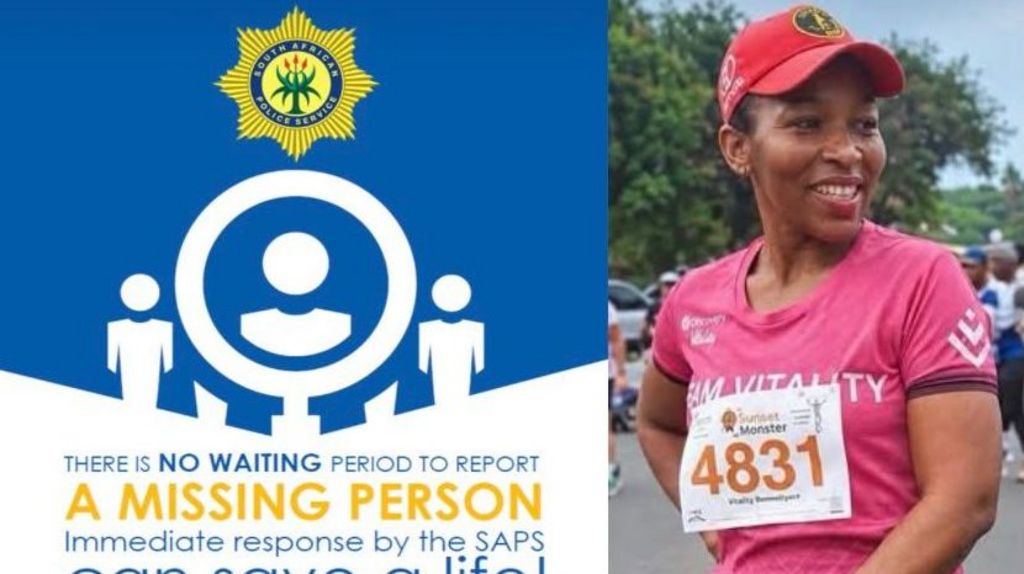
In the wake of a multi-day nationwide search for a missing South African runner, law enforcement has confirmed the death of 29-year-old Elizabeth Moselakgomo, one of five women whose partially clothed, bruised remains have been discovered in the same region east of Johannesburg. The grim string of discoveries has reignited widespread fear and public anger over South Africa’s long-standing crisis of gender-based violence (GBV), a crisis that data from UN Women places among the most severe in the world.
Moselakgomo, an avid runner affectionately known to her community as “Tsontso” and a mother to an 8-year-old daughter, went missing last week during a routine daily jog, prompting a widespread public appeal for information to locate her. Her body was recovered in Kempton Park this past Saturday, and formal identification was completed by her family members on Monday. In a disturbing development that same Monday, a fifth female body matching the same half-naked, injured description was found just 25 kilometers from the original recovery site. That body was spotted by a commuter on his way to work, according to South African Police Service (SAPS) spokesperson Brigadier Athlenda Mathe.
While SAPS has stopped short of linking the five deaths to a single serial killer, officials have acknowledged that the striking similarities between the cases are alarming enough to issue a urgent public advisory. Authorities are urging all women in the Kempton Park area to avoid solitary walking or running, especially in remote, low-traffic regions where assistance would be hard to call. To date, one arrest has been made in connection with the first discovered body, and the suspect remains in police custody as investigations continue. SAPS has now assembled a dedicated task force to probe all five cases, and the remaining four victims have not yet been formally identified.
Moselakgomo’s death has resonated deeply across the country, with tributes pouring in for the runner and widespread social media conversation about the constant threat women in South Africa face in daily life. Keamo Sefularo, a fellow runner who knew Moselakgomo through their local running club, told the BBC that the string of discoveries has left local women deeply unsettled. “It’s sad to know that every woman in South Africa… can’t just go outside. You can’t just go to the shop and buy flowers… because you are always in danger,” Sefularo said, adding that Moselakgomo’s disappearance had weighed heavily on the entire running community.
Reflecting on the tragedy, Sefularo questioned whether the outcome would have been different if Moselakgomo had not been running alone. “As we always say, when we go out for runs, there’s safety in numbers,” she noted, sharing the personal safety precautions she takes every time she runs, including varying her daily route and only sticking to open, high-visibility areas where other people can see her.
The public conversation around the killings echoes longstanding data on GBV in South Africa: UN Women figures show that the rate of female homicide in the country is five times the global average, making it one of the most dangerous places in the world to be a woman. Many South Africans have taken to social media to express their shared anxiety over the constant need to plan their movements around safety. “Women are not free if we have to calculate where, when and with whom we can walk, run or exist safely”, user Lesedi Ledwaba wrote in a viral post on platform X.
Women’s advocacy groups have condemned the repeated failures of state institutions to curb the crisis of femicide in the country. Merlize Jogiat, a representative of advocacy group Women for Change, called the latest discoveries infuriating. “What is the purpose of having a protective service like the police if we have to make sure… we are [protecting] ourselves,” Jogiat asked. She argued that the core issue stems not from a lack of legislation, but from poor implementation of existing GBV laws, and said that collective public pressure from mass citizen action is the only way to force meaningful change.
Moselakgomo’s family has spoken publicly to thank the South African public for their widespread support during the search for the mother of one, and specifically praised her 8-year-old daughter, who first raised the alarm when her mother did not return home from her run.