作者: admin

  • US and Iran trade strikes as ceasefire comes under renewed strain

    US and Iran trade strikes as ceasefire comes under renewed strain

    A rapid cycle of reciprocal strikes between the United States and Iran this week has pushed a months-long fragile ceasefire to its most severe test in the two-month truce, drawing multiple Gulf nations directly into the spiraling escalation and stoking global fears of a wider regional conflict.

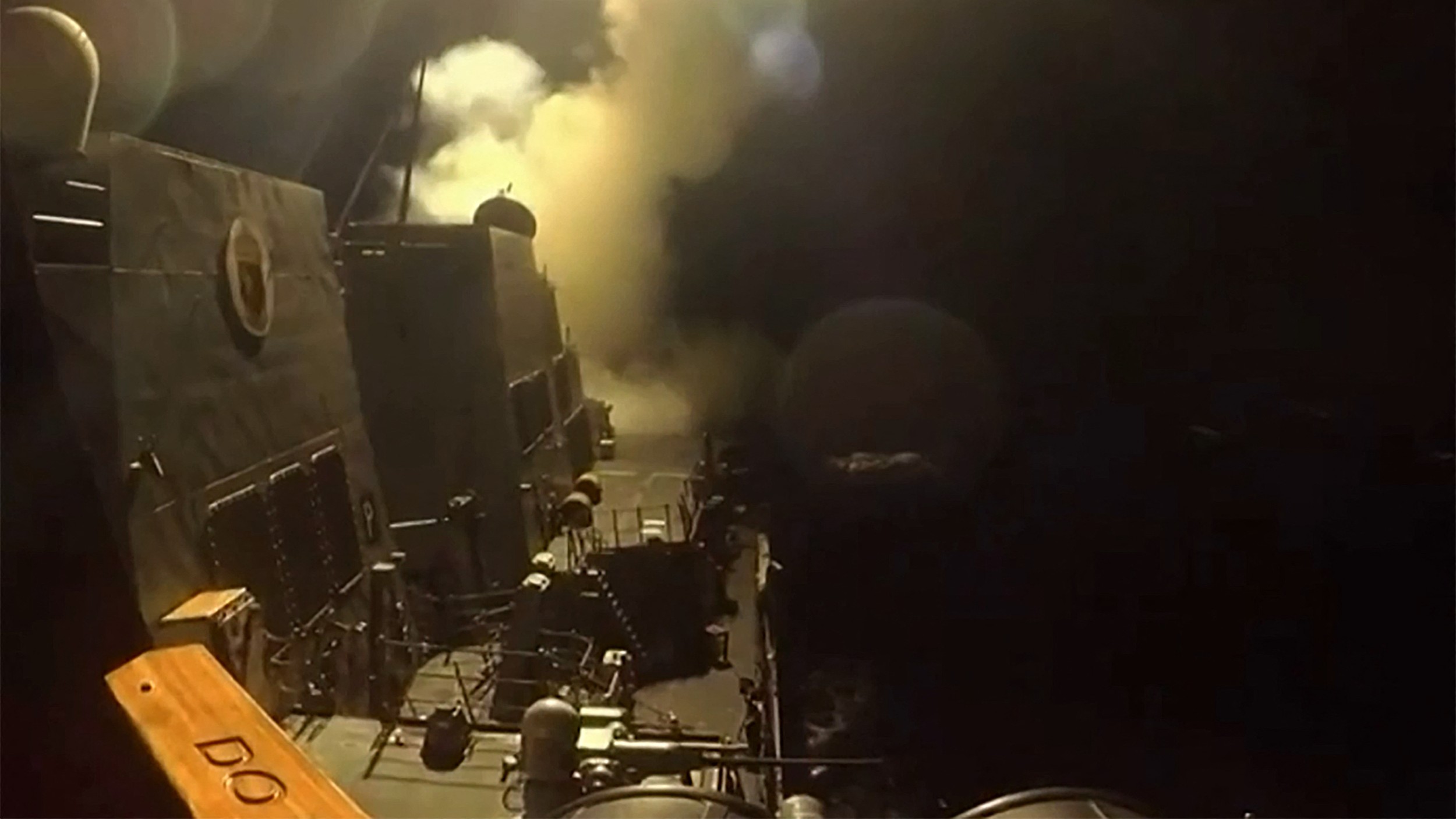
    The outbreak of renewed hostilities traces back to the downing of a U.S. military helicopter near the Strait of Hormuz earlier this week. In response, Washington launched targeted strikes against Iranian military installations, with U.S. officials confirming the operations were designed to knock out Iranian surveillance networks, communications infrastructure and air defense systems that the U.S. says pose an ongoing threat to American troops and commercial shipping transiting key regional waterways.

    U.S. Central Command announced the first wave of coordinated strikes wrapped up after launching at 5:15 p.m. Washington time on Wednesday, which fell in the early hours of Thursday local time in Iran. The operation drew on joint assets from the U.S. Marine Corps, Air Force and Navy, which deployed precision-guided munitions against targets spanning multiple Iranian locations. Iranian state media reported loud explosions across multiple provinces, including coastal areas near the Strait of Hormuz — Bandar Abbas, Qeshm Island and Minab — as well as sites in Karaj, Nazarabad and Pishva close to the Iranian capital of Tehran. Local reports confirmed at least three people suffered injuries in Tehran province.

    The strikes came after U.S. President Donald Trump publicly accused Iran of deliberately dragging out ceasefire negotiations to end the three-month conflict. Speaking Wednesday, Trump claimed Tehran had been “playing us for suckers” and warned the Islamic Republic would “have to pay the price” for the delay. U.S. Secretary of Defense Pete Hegseth further signaled that military pressure would remain on the table, noting that if directed by the president, Washington would continue to “negotiate with bombs.”

    On Thursday, Iran’s foreign ministry issued a formal condemnation of the U.S. attacks, stating the strikes had rendered the nearly two-month-old ceasefire “practically meaningless” and held Washington fully accountable for any “extremely serious consequences” that stem from the escalation.

    In line with its promise of retaliation, the Islamic Revolutionary Guard Corps (IRGC), Iran’s elite military force, announced it had launched counterstrikes against U.S.-affiliated military targets in three regional states: Bahrain, Kuwait and Jordan. Iranian state media reported the retaliatory operation used both drones and ballistic missiles, striking facilities including the headquarters of the U.S. Fifth Fleet based in Bahrain, air bases in Kuwait, and the al-Azraq airbase in northern Jordan.

    Bahrain triggered an air raid alert Wednesday after Iranian reports confirmed the U.S. base in the country had been targeted, with the interior ministry urging residents to stay calm and move to designated safe shelters. In Kuwait, authorities ordered a temporary closure of the country’s airspace early Thursday and diverted all incoming commercial flights over risks to civil aviation posed by the Iranian strikes. Kuwaiti military confirmed its air defense systems were actively engaging “hostile aerial targets,” before later announcing commercial air traffic had resumed normal operations. Jordan’s military confirmed Thursday that its integrated air defense systems and combat aircraft intercepted 20 missiles launched from Iran that were headed toward the Azraq area in Zarqa governorate, roughly 80 kilometers east of the capital Amman. The military added that falling missile debris caused no casualties or material damage, despite the large-scale attack. The IRGC has claimed its 12 ballistic missiles scored direct hits on al-Azraq airbase and its command center, destroying key facilities and aircraft on the tarmac. The IRGC’s claims have not yet been independently verified by third-party observers.

    The escalating confrontation has also spread to the Sea of Oman, one of the world’s most critical chokepoints for global energy trade. According to Iran’s Mehr News Agency, the Iranian governor of Sirik county confirmed a U.S. projectile struck an Iranian cargo barge in the Gulf of Oman early Thursday. This attack marks one of multiple strikes on vessels with Indian crew members carried out by U.S. forces this week. The 150-tonne barge, owned by local Sirik residents and carrying essential consumer goods from the Omani port of Khasab, was hit roughly five nautical miles off the Khasab coast. All five crew members were rescued by passing commercial vessels and brought to Omani shores for care, the official added.

    This week alone, U.S. forces have disabled three commercial tankers transiting the vital waterway as part of enforcement of a blockade on Iranian ports, a campaign that has left three seafarers dead. Indian national newspaper The Hindu confirmed Tuesday that two Indian crew members were killed and a third remains missing after a U.S. attack on the Palau-flagged oil tanker Settebello off the Omani coast.

    Iranian media reported Thursday that the Iranian navy had also struck two vessels attempting to transit the Strait of Hormuz. U.S. Central Command has rejected claims that commercial shipping through the strait has been halted, confirming that commercial vessels continue to move in and out of the waterway without widespread disruption.

    Global energy markets reacted immediately to the escalation, with oil prices climbing higher Thursday as traders priced in the risk of prolonged disruption to energy shipments. Major Gulf stock markets also pulled back, reflecting broad investor concern that the confrontation could expand far beyond direct U.S.-Iran exchanges.

    Speaking to Fox News, Trump claimed U.S. forces launched 49 Tomahawk cruise missiles in the latest strikes, and added that Iranian leadership reached out to him directly mid-bombing to request an end to the operations. The IRGC has flatly denied the claim, dismissing it as a propaganda effort to cover up Washington’s failing position in the three-month conflict.

    Despite the sharp military escalation, diplomatic channels have remained active to de-escalate the crisis. Qatari negotiators traveled to Tehran Wednesday after holding consultations with U.S. officials in Washington, in a last-ditch effort to bridge the remaining policy gaps between the two sides. The Qatari delegation departed Tehran Thursday after concluding their talks.

    United Nations Secretary General Antonio Guterres has issued an urgent warning against a return to full-scale open war between the two countries. Iran’s UN ambassador Amir Saeid Iravani emphasized that no sustainable long-term agreement can be reached through threats or the use of military force.

    The latest exchange of strikes comes after weeks of stalled negotiations over a permanent deal to end the conflict, which first erupted in February when the U.S. and Israel launched joint strikes against Iranian targets. Tehran has repeatedly insisted that any final peace settlement must include a binding ceasefire in Lebanon, where Israeli forces have continued to bombard civilian areas. The ongoing Lebanese campaign has killed 3,696 people since March, while Hezbollah has continued its cross-border strikes targeting Israeli military positions.
  • Man accused of killing Minnesota lawmaker and husband pleads guilty

    Man accused of killing Minnesota lawmaker and husband pleads guilty

    Last June, a shocking act of targeted political violence left a Minnesota state legislator and her spouse dead, and another lawmaker and his wife injured. Now, almost a year after the attack, the man charged with carrying out the shootings has entered a guilty plea as part of a negotiated deal that removes the possibility of capital punishment, according to multiple United States media reports.

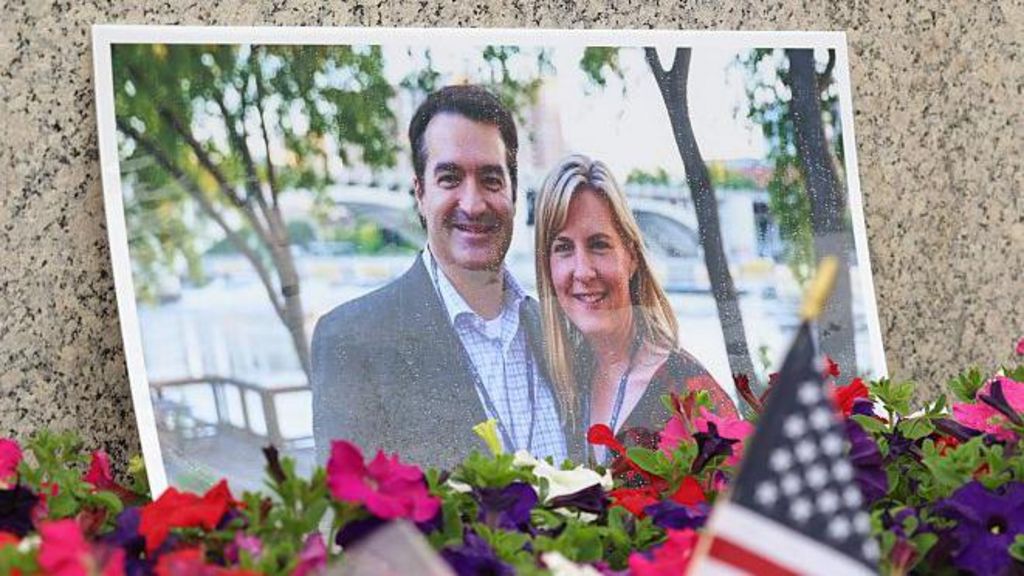
    Vance Boelter, the 57-year-old suspect, formally confessed to pulling the trigger that killed Representative Melissa Hortman, 52, and her husband Mark Hortman, 55, at the couple’s private residence in Brooklyn Park, Minnesota. The attack did not end there: Boelter is also alleged to have traveled to the home of fellow state legislator John Hoffman minutes later, where he shot Hoffman and his wife Yvette. Both survived the assault despite sustaining serious injuries.

    Under the terms of the federal plea agreement, Boelter pleaded guilty to six criminal charges, including two counts of first-degree murder, one count of attempted murder, and multiple counts of stalking, prosecutors confirmed. Prosecutors with the U.S. Attorney’s Office had previously announced they would not pursue a death sentence, clearing the way for the negotiated deal. Prosecutors are now recommending that the court hand down a sentence of two consecutive life sentences plus an additional 40 years of prison time, local Minnesota news outlets have confirmed.

    Crucially, the plea deal only applies to federal charges brought in the case. State-level charges against Boelter are still pending, and Minnesota state officials confirmed that the judicial process for those counts will move forward independently in the coming months.

    In the wake of the guilty plea, family members of the slain lawmaker spoke publicly about their ongoing grief, describing the attack as a devastating, unfathomable loss to their family and to the state of Minnesota. In the months after the shooting last year, thousands of Minnesotans gathered across the state to pay their respects to Hortman, a 16-year veteran of the state legislature who was widely praised for her work on climate policy and public education reform.

  • BBC tours UFC arena at White House

    BBC tours UFC arena at White House

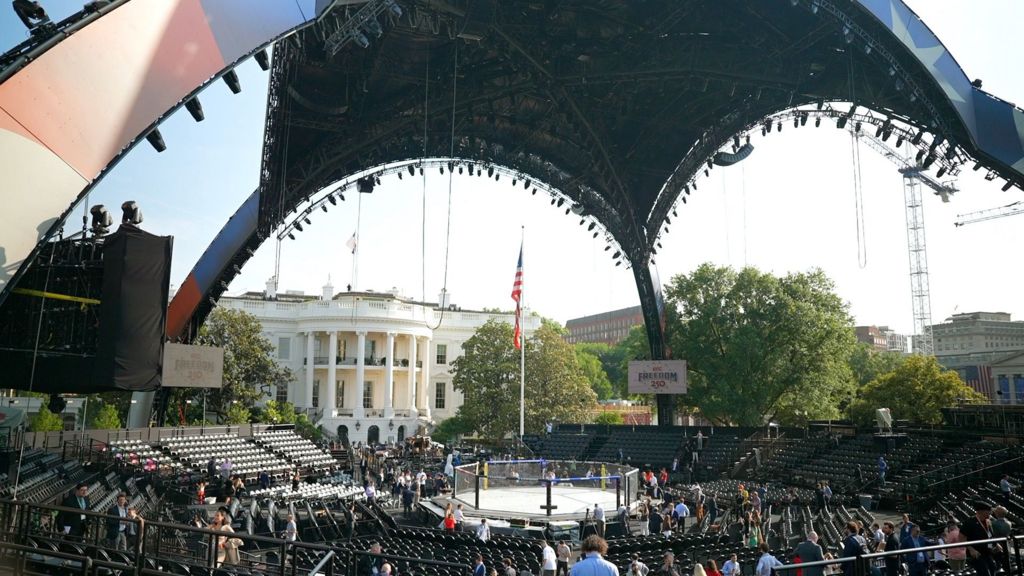
    In a moment that blends high-profile combat sports with the pinnacle of U.S. political space, a BBC White House correspondent has gained early access to the one-of-a-kind temporary venue set to host a groundbreaking Ultimate Fighting Championship (UFC) bout on June 14.

    Bernd Debusmann, the outlet’s veteran White House reporter, was offered an exclusive preview tour of the custom-built arena, which marks an unprecedented coming-together of professional mixed martial arts and the grounds of the U.S. executive residence. The event, set to take place on June 14, will be the first major professional MMA event hosted on White House property, making the construction of the temporary facility a historic undertaking that has drawn attention from both political and sports circles.

    During the tour, Debusmann got an up-close look at the preparations underway to convert a section of the White House grounds into a fully functional fight venue, with work ongoing to finalize seating, the octagon fighting area, and broadcast infrastructure ahead of the upcoming matchup. The unusual placement of a professional sports event at the White House has already sparked widespread curiosity, as the location is most commonly associated with state visits, policy announcements, and official presidential functions rather than high-octane combat sports competitions.

  • Three ships attacked by the US in three days: What we know

    Three ships attacked by the US in three days: What we know

    Over a three-day period in mid-June 2026, three commercial tankers operating in the Gulf of Oman have been targeted by United States military strikes, leaving at least three Indian seafarers dead and triggering sharp diplomatic pushback from New Delhi against Washington. The attacks come as part of a sweeping US naval blockade imposed on Iranian ports that began in mid-April, a response to Tehran’s decision to close the Strait of Hormuz, a critical global chokepoint through which roughly 20 percent of the world’s total oil and natural gas supplies transit annually.

    The most recent strike unfolded early Thursday morning, when a US warplane launched two Hellfire missiles into the engine compartment of the cargo tanker Jalveer. US Central Command (Centcom), which oversees American military operations in the Middle East, confirmed the attack, stating the vessel had violated the Iran blockade by attempting to transport Iranian crude oil and that its crew repeatedly ignored instructions to stop for inspection. Maritime risk firm Vanguard reported the Jalveer issued an emergency alert shortly after the strike noting a catastrophic fire had broken out in its engine room. Distress calls intercepted by BBC Verify show the crew contacted Oman’s Royal Navy and a nearby commercial vessel for rescue, with one crew member explicitly blaming the US for intentionally targeting a civilian merchant ship. Satellite imagery analyzed by BBC Verify confirms thick plumes of smoke rising from the Jalveer following the attack. Indian officials later confirmed all 20 Indian crew members on board were safely evacuated by Omani naval forces. Notably, ship tracking records show the Jalveer has operated regularly between Gulf ports and multiple Indian ports over the past year, and the vessel has never been officially sanctioned by the US for Iranian ties.

    The deadliest attack of the three came on Wednesday, when US forces struck the tanker Settebello, killing three Indian sailors and leaving 21 others in need of rescue. Centcom says the Settebello also violated the blockade by carrying Iranian oil and that its crew failed to respond to repeated directives. The vessel is owned by Indian shipping firm Aqua Aurora Shipping Lines and managed by the United Arab Emirates-based IOS Marine FZE, which has issued a categorical denial of the US claims. The company says it had no affiliation with Iran or Iranian oil shipments, and that US forces never made any attempt to contact the vessel before launching the strike, calling on Washington to release public evidence of its claimed communications. While the Settebello has never been officially US-sanctioned, it is listed as a high-risk vessel by the non-proliferation campaign group United Against Nuclear Iran, which accuses it of moving Iranian crude. Ship tracking data shows the vessel made multiple voyages from the Gulf to Chinese ports in Zhoushan and Lianyungang over the past six months, and its tracking beacon has been inactive since May 31. IOS Marine reports the vessel had been anchored and stationary for roughly 10 days before the strike, and BBC Verify satellite imagery from June 8 places the vessel approximately 120 kilometers off Oman’s port of Sohar. India’s shipping minister Sarbananda Sonowal called the incident deeply unfortunate, confirming the bodies of the three deceased sailors would be repatriated to India as quickly as possible.

    The first of the three strikes hit the tanker Marivex on Monday. The vessel was already sanctioned by the US for Iranian links under its previous name, Arihant, and its owner, Arihant Shipping Inc, is also subject to American sanctions. Centcom confirmed an F/A-18 Super Hornet jet launched from the USS Abraham Lincoln aircraft carrier hit the vessel’s engineering and steering compartments with a precision munition, after accusing it of transporting hundreds of thousands of barrels of Iranian fuel oil and bitumen in the Gulf since July 2025. Ship tracking records show the Marivex last docked at Iran’s Bandar Abbas port in early April to load cargo before sailing to two ports on India’s west coast, Mangaluru and Karwar. After the strike, the disabled vessel issued a desperate distress call obtained by BBC Verify from the Forward Seaman’s Union of India (FSUI), with crew reporting a massive onboard fire and that the ship was sinking, pleading “send help” to rescuers. Omani military helicopters eventually responded and evacuated all 24 Indian crew from the burning vessel.

    Centcom has declined to respond to questions from BBC Verify about whether it notified Indian or Omani government officials ahead of any of the three strikes, a lack of advance coordination that has amplified anger in New Delhi. The Indian government has formally condemned the series of attacks, issuing a statement calling for an immediate end to the targeting of commercial shipping and civilian infrastructure in the region. New Delhi also summoned the deputy chief of mission of the US embassy in New Delhi to lodge an official diplomatic protest against the attacks.

    The strikes have sparked widespread concern across India over the safety of the country’s massive maritime workforce, which numbers nearly 300,000 seafarers working on commercial vessels globally, with more than 18,000 currently operating in the Gulf region alone. India’s shipping ministry reports that 13 Indian-flagged vessels remain stranded in the Strait of Hormuz amid the ongoing blockade and heightened tensions. Harsh V Pant, a senior analyst at the Observer Research Foundation in New Delhi, noted that seafarers have almost no influence over the geopolitical disputes that put their lives at risk, despite bearing the full brunt of conflict. He added that while the attacks will increase friction in already strained India-US relations, a full rupture in bilateral ties is unlikely. Seafarer advocacy groups have echoed these concerns, calling for urgent international action to protect civilian maritime workers. “Seafarers are workers. They are not soldiers,” the FSUI said in a statement Thursday, adding that “the international community cannot remain a silent spectator while seafarers are forced to navigate through conditions resembling a war zone.” As of mid-June, Centcom reports it has disabled nine vessels and redirected 135 others since the blockade of Iranian ports went into effect in April.

  • US administration investigating Iran war critic Trita Parsi, says report

    US administration investigating Iran war critic Trita Parsi, says report

    A growing political controversy has emerged following a new report from the Free Press revealing that the second Trump administration has opened an official investigation into Trita Parsi, one of the most vocal and high-profile critics of Washington’s aggressive military policy toward Iran, with deportation explicitly listed as a potential outcome of the probe.

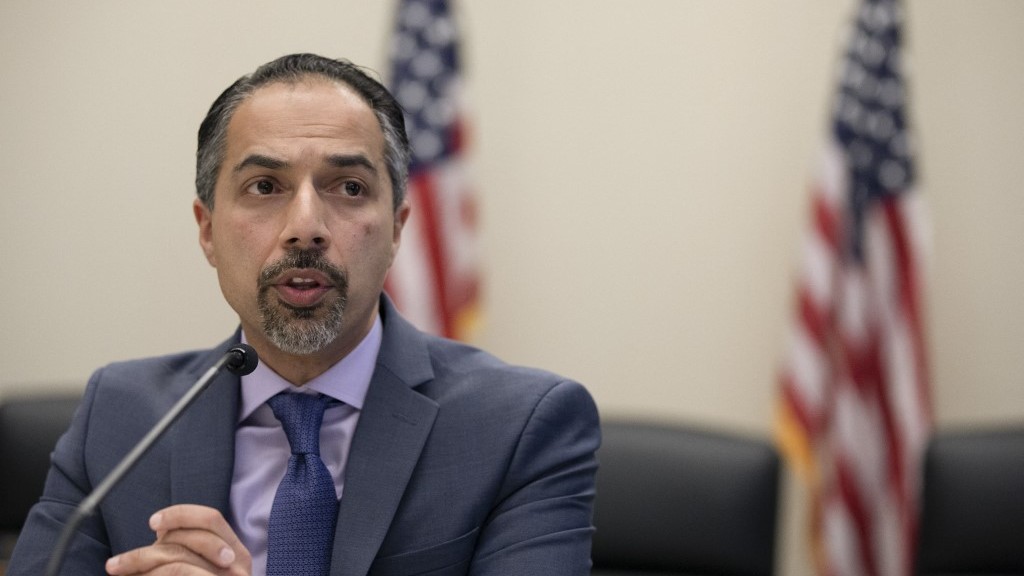
    Parsi, who holds dual Iranian and Swedish citizenship, occupies key leadership roles in two major U.S. foreign policy organizations: he is co-founder and executive vice president of the Quincy Institute for Responsible Statecraft, and also co-founded the National Iranian-American Council (NIAC). For years, he has been an outspoken opponent of ongoing U.S. military strikes and aggressive posture against Iran, and has recently amplified criticism of U.S. backing for Israel’s military campaign in Gaza and attacks on Lebanon.

    Notably, Parsi is himself a public critic of Iran’s Islamic Republic; his family fled the country decades ago to escape political persecution by the ruling government, and he has faced repeated attacks from both Iranian monarchist factions and pro-Trump conservatives over his anti-war stance.

    A senior Trump administration official speaking to the pro-Trump outlet confirmed that Secretary of State Marco Rubio has explicitly framed the administration’s push to target individuals accused of advancing the interests of U.S. adversaries at the expense of American security. “Anyone who seeks to undermine the US, we’re taking a hard look at,” the official stated.

    The investigation into Parsi is part of a wider, escalating crackdown on people of Iranian descent based in the United States that launched shortly after the U.S.-Israeli joint offensive against Iran began in February. In April, Hamideh Soleimani Afshar and her daughter Sarina were taken into federal custody and had their U.S. residency permits revoked, after far-right political influencer Laura Loomer incorrectly identified the pair as relatives of the late former Iranian military commander Qassem Soleimani. Despite the pair’s repeated, unrefuted denials of any connection to Soleimani, they remain detained in a Texas facility as of the latest reporting. That same month, U.S. authorities also detained multiple relatives of former Iranian minister Masoumeh Ebtekar and revoked their green cards.

    In comments given to Middle East Eye (MEE) in May, Parsi warned that any potential diplomatic deal between Washington and Tehran would depend entirely on the U.S. willingness to rein in unprovoked Israeli military aggression across the Middle East. “If Trump either cannot or will not do so, then the value of any agreement with Washington comes sharply into question,” Parsi said. He added that a fragile ceasefire that leaves Israel free to restart hostilities on its own terms – while the U.S. remains unable to avoid being pulled back into open conflict – cannot deliver long-term regional stability, drastically reducing any benefit of a diplomatic agreement with the United States.

    MEE reached out to both the U.S. State Department and the Department of Homeland Security to request comment on the investigation into Parsi and the broader crackdown, but neither agency had issued a response by the time of this report’s publication.

  • Belfast ‘hit list’ of migrants’ homes circulated ahead of second night of riots

    Belfast ‘hit list’ of migrants’ homes circulated ahead of second night of riots

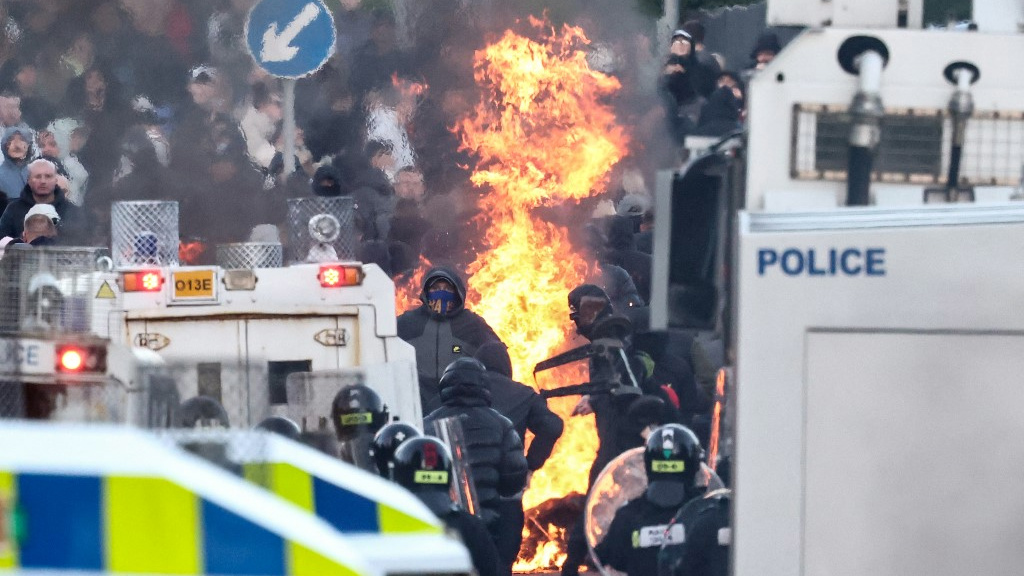
    Belfast, the capital of Northern Ireland, has been rocked by a second consecutive night of violent anti-migrant rioting, after a circulated \”hit list\” targeting homes of foreign-born residents led masked, balaclava-clad rioters to launch coordinated attacks on ethnic minority communities across the city.\n\nThe unrest traces its origin to a knife attack carried out Monday by Hadi Alodid, a 30-year-old Sudanese asylum seeker who had previously been granted indefinite leave to remain in the United Kingdom. Alodid is currently facing charges of attempted murder, with many public commentators characterizing the assault on 38-year-old Stephen Ogilvie as an attempted beheading. Ogilvie, the attack victim, suffered catastrophic injuries including the loss of his left eye and severe lacerations across his face. In a remarkable display of empathy released Wednesday, Ogilvie’s family pushed back against attempts to exploit the attack for division, stating: \”We have many migrants who make a deeply valuable contribution to our country. We do not want this terrible tragedy to divide people and fuel hostility.\”\n\nViolence first erupted across Belfast on Tuesday night, when hundreds of masked rioters set fire to residential properties and vehicles overwhelmingly owned by ethnic minority residents. Targeting homes listed as belonging to migrants, asylum seekers and refugees, rioters were recorded kicking in doors, smashing windows, and shouting threats to force all foreigners out of the area. A local Middle Eastern-owned supermarket was completely destroyed by arson, and video footage showed children being evacuated from adjacent homes as nearby structures burned. Local pastor Jack McGee confirmed to the BBC that residents were driven from their properties solely \”because they’re black.\”\n\nBy Wednesday evening, the unrest continued as rioters clashed with officers from the Police Service of Northern Ireland (PSNI) near a Belfast hotel that houses migrant arrivals. The PSNI confirmed it had received urgent reports from multiple \”extremely distressed\” families who found their addresses included on the circulated hit list, and issued a formal warning that sharing the document could constitute a criminal offense. \n\nFootage from the scene shows police deploying water cannons and firing plastic bullets to disperse crowds, while rioters ripped bricks from local buildings to hurl at officers and infrastructure. Rioters set fire to abandoned structures and wheelie bins, blocked major thoroughfares with makeshift roadblocks assembled from street furniture, and operated overt checkpoints to stop passing vehicles and screen for non-white drivers. \n\nThe unrest was not confined to Northern Ireland: parallel anti-migrant demonstrations broke out across the UK on Tuesday night, including in Glasgow, Scotland, where 300 masked men marched through city streets and assaulted random passersby. Police locked Muslim worshippers inside Glasgow Central Mosque for their own protection after crowds surrounded the religious building.\n\nPolitical leaders across the UK have uniformly condemned the violence, though sharp divisions have emerged over its root causes. British Prime Minister Keir Starmer described the disorder as \”shocking and completely unacceptable\” during a Wednesday statement. Scottish First Minister John Swinney directly blamed anti-immigration figures like Nigel Farage for stoking the racial tensions that led to violence. Northern Ireland First Minister Michelle O’Neill echoed the condemnation, saying: \”Groups of masked men burning families out of their homes is nothing less than disgusting cowardice. This has nothing to do with community. This is outright thuggery.\” Green Party leader Zack Polanski framed the unrest as part of a broader coordinated movement, warning: \”What we are witnessing in Belfast is not an isolated incident – it is part of a coordinated far-right pattern playing out across these islands… We will not allow racism and fascism to be normalised on any of our streets.\”\n\nNigel Farage, leader of the right-wing Reform UK, pushed back against these claims, arguing that the violence stemmed from legitimate public fear unaddressed by mainstream politicians. \”Things kicked off in Belfast last night in a very big way, and things will continue to kick off,\” he said Wednesday. \”I’m very open about the fact that some very bad actors get involved in this stuff, but not the vast majority. The vast majority are fearful. The vast majority want action. They actually want something done to make their streets safer and nothing is being proposed.\”\n\nHigh-profile public figures with large platforms had already encouraged protests before the rioting began on Tuesday. Controversial far-right activist Tommy Robinson, born Stephen Yaxley-Lennon, joined billionaire X (formerly Twitter) owner Elon Musk in urging followers to demonstrate over the Monday knife attack. Hours before the first riot, Musk posted on his platform: \”Only by protesting REPEATEDLY and LOUDLY will there be any change!!\” On Wednesday, he doubled down on his stance, writing: \”Murderous migrants beheading innocent people in their home town is what’s making people angry, not “social media”!\

  • Everything to know about Canada’s men’s team at the 2026 World Cup

    Everything to know about Canada’s men’s team at the 2026 World Cup

    For a nation long synonymous with ice hockey dominance, Canada is preparing to write an unprecedented new chapter in its men’s football history this June. Making its first consecutive appearance at the FIFA World Cup, the Canadian men’s national team – known affectionately as Les Rouges, or The Reds – steps onto the global stage as a co-host of the 2026 tournament, with group stage matches held in two of the country’s largest urban hubs: Toronto and Vancouver. This historic home-field appearance comes as Canada seeks to shake off decades of underperformance at football’s most prestigious competition.

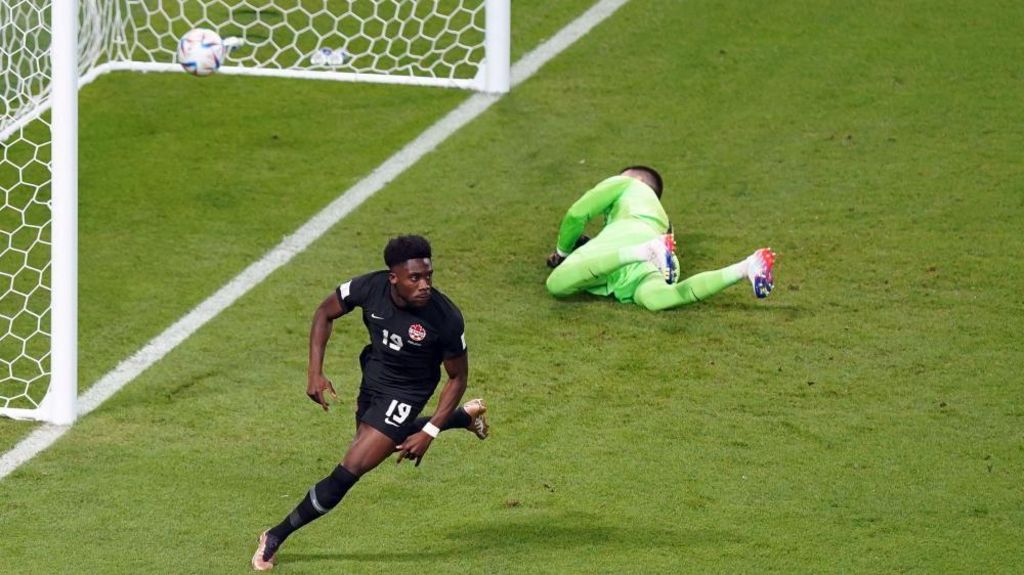
    Canada’s World Cup legacy is a modest one by global standards. Since their debut appearance in 1986, the national side has never claimed a single tournament win, never advanced past the group stage, and has scored just two goals across its entire World Cup history. The most iconic of those came in 2022 Qatar, when Bayern Munich star Alphonso Davies – widely regarded as Canada’s greatest ever men’s footballer – headed home the nation’s first World Cup goal against Croatia, cementing his place in Canadian sports history. Now, four years later, Les Rouges head into the 2026 tournament with clear, grounded ambitions: secure their first ever World Cup win, and punch their ticket to the knockout stage out of Group B.

    That goal is far from out of reach, according to Stephen Hart, a former head coach of Canada’s national team who currently leads the Halifax Tides. Hart argues that the current squad boasts the caliber of talent required to make that long-awaited breakthrough, pointing to the growing number of Canadian players plying their trade in top European leagues and elite competitions like the UEFA Champions League. Today’s roster features players contracted to some of the continent’s biggest clubs, including Bayern Munich, Juventus, Porto, and Olympique de Marseille.

    Current head coach Jesse Marsch, a 52-year-old American who previously managed Leeds United, has built a squad that reflects Canada’s long-standing commitment to multiculturalism, a core part of the nation’s identity. Beyond any on-pitch results, Hart says a successful run – particularly progression past the group stage – would deliver a transformative boost to football’s grassroots popularity across the country, calling the potential impact “massive” for growing domestic interest in the sport.

    At the heart of Canada’s aspirations is captain Alphonso Davies, a player whose story is as remarkable as his on-pitch talent. Born to Liberian parents in a Ghanaian refugee camp, Davies moved to Canada at the age of five, working his way up from the country’s youth football system to win multiple domestic titles and the 2020 Champions League with Bayern Munich, becoming the first Canadian men’s player to claim the competition. Though officially a defender, Davies has scored 15 goals for Canada, a testament to his dynamic attacking ability. Few observers believe Canada can achieve its World Cup goals without their star captain at full strength – but a recent hamstring injury has thrown his availability into question, with Davies unlikely to feature in the team’s opening match this Friday. While Hart notes the squad has temporary cover to fill the role, he says Davies is in a league of his own, bringing unique inspiration, tactical flexibility, and dynamic play that can change the course of a match.

    Davies isn’t the only key talent set to lead Canada’s charge, however. Hart highlights several other difference-makers capable of powering the team past the group stage. Forward Jonathan David, the nation’s all-time leading international goalscorer with 39 goals to his name, comes into the tournament off a transitional first season with Juventus, where he notched eight goals, and will be eager to find the back of the net on home soil. Twenty-seven-year-old midfielder Tajon Buchanan, plying his trade at Spanish side Villarreal, brings another source of dynamic attacking play after scoring seven goals in the 2025-26 season. Veteran defender Richie Laryea, 31, of Toronto FC, adds much-needed experience to Canada’s backline as they aim to keep opposition attacks at bay. “These are all players that, on their best day, are very difficult for opposition teams to deal with,” Hart notes.

    Injury concerns hang over more than just Davies, with key defenders Moise Bombito and Ali Ahmed also carrying fitness issues heading into the tournament. FIFA rules allow Canada to make last-minute adjustments to their squad up to 24 hours before kickoff of their opening match, giving the coaching staff flexibility to address these issues.

    Marsch, who took over the Canadian job ahead of the 2024 Copa America and led the side to a fourth-place finish, brings a wealth of top-level experience to the role. A former player, he served as an assistant coach for the United States national team at the 2010 World Cup in South Africa just months after hanging up his boots, making him the first American to ever lead Canada’s men’s side.

    Canada kicks off its group stage campaign against Bosnia and Herzegovina in Toronto at 15:00 EDT on June 12, followed by a match against Qatar in Vancouver at 18:00 EDT on June 18, and concludes group play against Switzerland in Vancouver at 15:00 EDT on June 24. Hart says the opening fixture against Bosnia and Herzegovina – a side that knocked out four-time World Cup champions Italy in qualifying – is a must-win if Canada wants to keep its knockout stage dreams alive. “I always think that in a tournament, it’s imperative you win the first game,” Hart explains. “Once you win the first game, it puts you at a certain mental ease. You get confidence, you’ve got three points on the board, and you approach the remaining games with far less anxiety.”

    Against Qatar, the 2022 co-host that failed to advance out of the group stage four years ago, Hart believes Canada can secure a positive result if they limit unforced errors, calling the Qatari side unpredictable but beatable. For Canada’s final group match against Switzerland – the toughest opponent in Group B – Hart says a draw would be a strong outcome for the co-hosts.

    Full Canada 2026 World Cup Squad:
    Goalkeepers: Dayne St. Clair (Inter Miami), Maxime Crepeau (Orlando City), Owen Goodman (Crystal Palace)
    Defenders: Alistair Johnston (Celtic), Derek Cornelius (Marseille), Richie Laryea (Toronto FC), Niko Sigur (Hajduk Split), Joel Waterman (Chicago Fire), Luc de Fougerolles (Fulham), Moise Bombito (Nice), Alphonso Davies (Bayern Munich), Alfie Jones (Middlesbrough)
    Midfielders: Stephen Eustaquio (Porto), Ismael Kone (Sassuolo), Tajon Buchanan (Villarreal), Mathieu Choiniere (Los Angeles FC), Ali Ahmed (Norwich City), Nathan Saliba (Anderlecht), Liam Millar (Hull City), Jayden Nelson (Austin FC), Jacob Shaffelburg (Toronto FC), Jonathan Osorio (Toronto FC)
    Forwards: Jonathan David (Juventus), Cyle Larin (Southampton), Tani Oluwaseyi (Villarreal), Promise David (Union SG)

  • Weather pattern El Nino is here and could reach historic intensity

    Weather pattern El Nino is here and could reach historic intensity

    The world has officially entered an El Niño event, the United States’ National Oceanic and Atmospheric Administration (NOAA) announced Thursday, with leading climate scientists warning the periodic weather pattern could strengthen to one of the most intense recorded since 1950 by the end of 2023, amplifying already record-breaking global warming fueled by fossil fuel emissions.

    El Niño is a naturally occurring climate cycle defined by above-average surface water temperatures across the central and eastern equatorial Pacific Ocean. This shift reshapes global wind and precipitation patterns, often triggering widespread erratic and extreme weather that ripples across every inhabited continent. The cycle emerges roughly every two to seven years, and most events persist between nine and 12 months, peaking in the final months of a calendar year.

    In NOAA’s latest official advisory, agency scientists calculated there is a 62 percent probability that El Niño will grow into a “very strong” event during the November-to-January period, a strength that would place it among the most powerful El Niño events documented in observational records stretching back to 1950. “El Niño is here, and it could be one for the history books,” NOAA meteorologist Haley Thiem explained in a public explainer video from the agency.

    Unlike many routine weather events, strong El Niño carries compounding risks for a planet already gripped by long-term warming from human-caused greenhouse gas emissions. Scientists warn that the additional ocean heat released by El Niño will push global average temperatures even higher, supercharging a wide range of extreme weather events from droughts to catastrophic flooding.

    Global climate experts warn the combined pressure of long-term climate change and a record-strength El Niño could push global temperatures to unprecedented new levels. “The combination of fossil fuel-caused climate change and a potential super El Niño event makes a terrible team,” noted Marc Alessi, a representative for the Union of Concerned Scientists. “It could easily push global temperatures to record levels.” Alessi added that growing research links anthropogenic climate change to increasingly intense El Niño events, even though the pattern itself is naturally occurring.

    For vulnerable communities across the globe, the arrival of a strong El Niño is far more than a routine climate forecast—it is an urgent warning of impending humanitarian crisis. “It’s not just another weather forecast, it’s a deadly siren to be feared,” said Mohamed Adow, director of Nairobi-based climate think tank Power Shift Africa. “It means failed rains, dying crops, rising food prices, and families pushed to the edge yet again.”

    Governments across Central America’s arid “Dry Corridor,” a region spanning parts of Guatemala, Honduras, El Salvador and Nicaragua, have already raised national alert levels in preparation for the event. The region has repeatedly faced devastating drought linked to past El Niño events, and authorities are already bracing for potential famine-level food insecurity. The Guatemalan government has already pre-positioned 1.1 million food rations to distribute in the event of a declared food security emergency. In East Africa, Adow added, extreme weather from El Niño will hit communities already reeling from back-to-back years of overlapping drought and flooding.

    International climate agencies outside the U.S. echo NOAA’s grim forecast. “The odds are strongly in favor of a moderate to strong, or probably strong to record-breaking, event at this stage,” Carlo Buontempo, director of the European Union’s Copernicus Climate Change Service, told Agence France-Presse.

    United Nations Secretary-General António Guterres has already urged global leaders to treat the forecast intense El Niño as the urgent climate wake-up call it represents. “El Niño conditions will pour fuel on the fire of a warming world,” Guterres said earlier this month. “The only effective response is climate action equal to the crisis — ending the addiction to fossil fuels, accelerating the shift to renewables, protecting the most vulnerable, and delivering early warning systems for all.”

  • Brazil reports drop in Amazon deforestation rates, pushing back on US tariff accusations

    Brazil reports drop in Amazon deforestation rates, pushing back on US tariff accusations

    SAO PAULO — In a direct challenge to one of the core justifications the Trump administration cited for imposing new trade barriers on Brazil, Brazilian environmental and space officials unveiled dramatic new data Thursday showing a steep decline in Amazon rainforest deforestation rates.

    According to joint figures released by Brazil’s National Institute for Space Research (INPE) and the Ministry of Environment, deforestation across the Brazilian Amazon fell 61.4% in May 2026 compared to the same month in 2025, marking the lowest May deforestation total ever recorded. Even with the sharp decline, 370 square kilometers (nearly 143 square miles) of forest were still cleared last month. In the Cerrado, a threatened central Brazilian savanna that has been heavily targeted by large-scale agribusiness operations, deforestation also dropped by 12% over the same period.

    Environment Minister João Paulo Capobianco told reporters that May typically sees elevated deforestation activity, as it marks the beginning of the Amazon’s dry season, when land clearing operations become easier. Cumulatively, over the 10-month monitoring period from August 2025 through May 2026, Amazon deforestation is already down 37.5% compared to the same period a year earlier. Capobianco said the trend puts Brazil on track to hit its lowest annual deforestation rate on record once full-year data is finalized in the second half of 2026.

    The new data comes less than a week after the Trump administration formally proposed 25% additional tariffs on all Brazilian imports, claiming the South American nation engages in unreasonable trade practices that harm U.S. commerce. A U.S. Trade Representative investigation leading up to the tariff announcement specifically cited illegal deforestation in Brazil as a core complaint, alongside claims of unfair Brazilian trade policies.

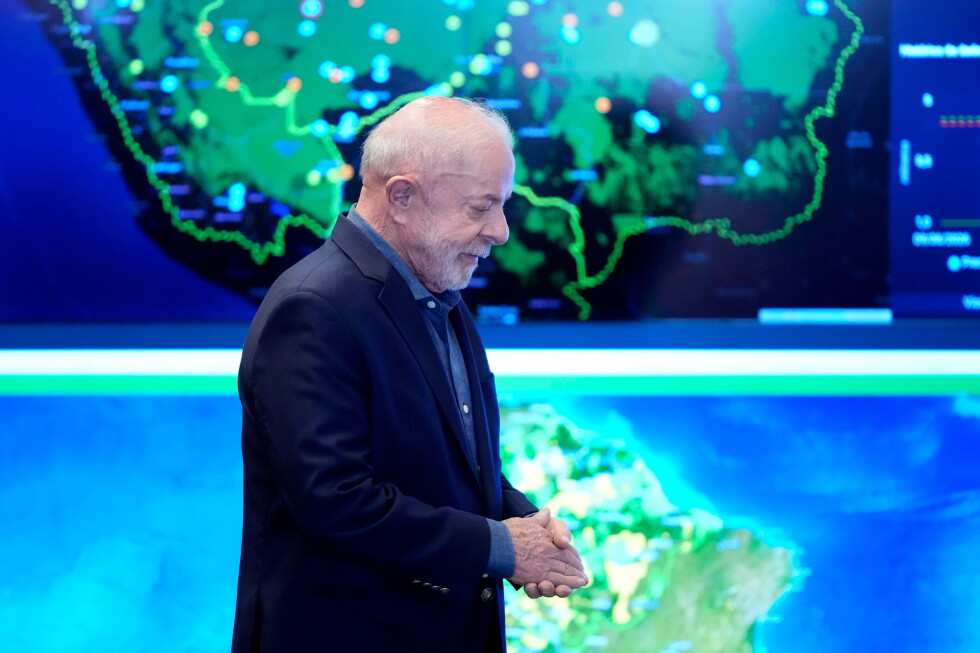
    Capobianco argued that the updated deforestation numbers completely debunk the U.S. claims, saying “the unfair and unfounded accusation by the United States, which cited deforestation to justify imposing tariffs” has no basis in fact. Brazilian President Luiz Inácio Lula da Silva, who was present for the announcement, echoed the criticism, doubling down on his rejection of the U.S. framing.

    Lula noted that the Trump administration previously lied about a U.S. trade deficit to justify earlier tariffs on Brazilian goods last year, and has now shifted to false claims about deforestation. “They don’t understand the work we are doing to bring deforestation down to zero by 2030. This is not a decision by any COP or by the United Nations. It is a decision of our government,” Lula said. “It’s a matter of justice, of Brazil’s contribution to the planet, fulfilling our obligation to avoid deforestation as much as possible. Preventing deforestation benefits Brazil, benefits the Amazon and benefits the world.”

    Deforestation is the single largest contributor to Brazil’s greenhouse gas emissions, which drive global climate change. As the world’s largest tropical rainforest, the Amazon plays an outsized role in regulating global climate patterns; scientific research has linked widespread Amazon forest loss to disrupted agricultural output as far away as the U.S. Midwest and Western Europe, alongside accelerating planetary warming.

    After declining for decades following record highs in the 1990s and early 2000s, deforestation surged again during the 2019–2022 presidency of Jair Bolsonaro, whose administration rolled back nearly all major environmental protections and enforcement for the Amazon. Since Lula returned to office in 2023, however, deforestation has fallen steadily, hitting its lowest annual level in a decade last year.

    Even with the recent progress, the Amazon still faces a range of ongoing and emerging threats. Forest degradation driven by wildfires, illegal logging, and drought now impacts roughly 40% of the rainforest, and in recent years has outpaced full clear-cutting as the leading source of forest damage. A strong El Niño event this year is expected to worsen these risks, bringing higher temperatures and drier conditions that increase the likelihood of large-scale wildfires across the basin.

    This climate and environmental reporting from The Associated Press receives funding from multiple private foundations, with AP retaining full editorial control over all content.

  • Deadly Sudan drone strike targets funeral procession

    Deadly Sudan drone strike targets funeral procession

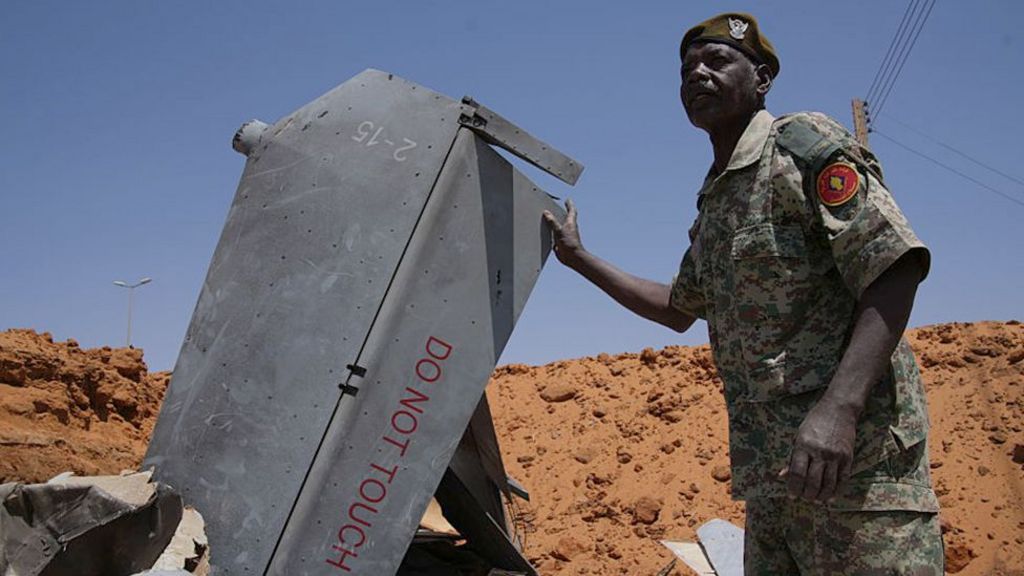
    A devastating drone attack targeting a funeral gathering at a cemetery in the central Sudanese city of El-Obeid has left at least four people dead and multiple others wounded, two prominent Sudanese human rights advocacy organizations have confirmed. The Sudan Doctors Network and Emergency Lawyers have jointly placed responsibility for the strike on the Rapid Support Forces (RSF), the country’s main paramilitary faction fighting against the national army in the ongoing civil conflict.

    Emergency Lawyers added that the cemetery attack is just one incident in a sustained campaign of drone strikes that has rocked El-Obeid since Wednesday evening. Across this series of assaults, at least 23 people have been killed to date. The RSF has not yet issued any public statement or response to the allegations.

    Strategically positioned in Sudan’s oil-rich Kordofan region, El-Obeid is currently held by Sudan’s regular army and has emerged as one of the most critical battlegrounds in the country’s three-year civil war. The conflict erupted in early 2023 after a bitter power struggle between the army’s top leadership and RSF command collapsed the country’s transitional ruling agreement, breaking out into open nationwide fighting.

    Geographically, El-Obeid sits as a critical buffer between RSF-held territories in western Sudan and the majority army-controlled eastern regions. Analysts widely note that control of the broader Kordofan region grants effective command over Sudan’s entire national oil supply and a large portion of the country’s total land area, making the fight for El-Obeid strategically decisive for both warring factions.

    Beyond the cemetery strike, Emergency Lawyers documented additional drone strikes hitting civilian residential areas, the airport district, and zones surrounding a local army base. Thirteen of the total confirmed fatalities occurred when civilians gathered near previously destroyed homes to assess damage or search for missing loved ones, the organization said. Five more civilians were killed in earlier strikes earlier in the week, and a fourth attack on Thursday killed a truck driver who was transporting emergency food supplies to residents of the embattled city.

    Local residents described scenes of widespread destruction and despair following the strikes. “It is tragic. The roofs of houses collapsed on their occupants. When you look at some houses, you feel no-one could have survived,” one El-Obeid resident told AFP news agency in the hours after the latest attacks.

    The two rights groups have emphasized that the past week’s strikes are part of a systematic pattern of repeated attacks on civilian targets in El-Obeid that has stretched over multiple days. Three years into the conflict, Sudan now faces what the United Nations has called the world’s worst ongoing humanitarian crisis. More than 11 million Sudanese people have been displaced from their homes by the fighting, and an estimated 28 million people across the country face acute levels of food insecurity. While no fully verified, comprehensive death toll exists for the conflict, independent analysts estimate that at least 50,000 people have been killed since fighting began.