作者: admin

  • Novel ‘firewall’ boosts battery safety

    Novel ‘firewall’ boosts battery safety

    Battery safety has long been a critical pain point for the global energy storage and consumer electronics industries, and a team of Chinese researchers has now delivered a transformative solution that upends decades of conventional industry thinking. In a newly published study in *Nature Energy*, the team introduced an innovative liquid electrolyte that activates instantly when a battery overheats, forming a protective ‘firewall’ that stops catastrophic thermal runaway before it can begin. This work also marks the first time researchers have demonstrated full thermal runaway prevention in commercial-scale sodium-ion batteries, a milestone that could reshape the future of energy storage.

  • Scientists tackle pain relief with fewer risks

    Scientists tackle pain relief with fewer risks

    For millions of people living with persistent chronic pain worldwide, the search for an effective pain management solution free from dangerous dependency and tolerance has remained one of modern medicine’s most pressing unmet needs. Now, a research team from Zhejiang University in Hangzhou, China, has announced a groundbreaking advance that could transform this landscape: two newly engineered chemical compounds that retain cannabis’s proven pain-relieving properties while fully eliminating the side effects of addiction, cognitive impairment, and tolerance that have long restricted the drug’s medicinal use. Published in the peer-reviewed journal Cell on April 13, 2026, the study marks a potential turning point for patients seeking safer alternatives to opioids, a class of painkillers that drives a global public health crisis of overdose and addiction.

    Cannabis has been used for therapeutic purposes for millennia, from ancient Roman healing practices to contemporary clinical settings. Despite this long history, legal and medical regulators have strictly limited its widespread medical adoption, due to the core challenge researchers call “dissociating toxicity from efficacy,” according to Li Xiaoming, lead researcher and vice-president of Zhejiang University. Put simply, the scientific community has struggled for decades to separate cannabis’s therapeutic pain-relieving effects from its harmful side effects, which include addiction, altered cognitive function, and the development of drug tolerance that reduces effectiveness over time.

    The team’s breakthrough centers on a better understanding of cannabinoid receptor 1 (CB1), a specialized protein found on the surface of brain nerve cells. In biological terms, receptors act as molecular “locks” on cell surfaces: when a matching chemical “key” — such as the active compounds found in cannabis — binds to the lock, it triggers a signal cascade inside the cell that alters brain function. Li’s team uncovered a previously unclarified structural detail of the CB1 receptor: it acts like a molecular fork in the road, capable of sending signals down two entirely separate cellular pathways. One pathway produces the desired therapeutic effect of pain relief, while the second is responsible for triggering all of the unwanted side effects, from addiction to tolerance.

    Traditional cannabis-based medications act as non-specific molecular keys that unlock both pathways at once, leading to unavoidable side effects. To overcome this limitation, the research team leveraged artificial intelligence models to design so-called “biased” chemical compounds, precision-engineered to bind to CB1 in a configuration that only activates the pain-relief pathway. Li characterized this cutting-edge development as a form of highly precise “chemical surgery,” where molecules are tailored at the atomic level to avoid the problematic side-effect mechanism entirely.

    The newly developed compounds underwent rigorous preclinical laboratory testing, where they demonstrated significant effectiveness against two major types of persistent pain: inflammatory pain caused by injury or tissue swelling, and neuropathic pain, a debilitating chronic condition triggered by nerve damage. Most critically, test subjects showed no evidence of addictive behavior, no reduction in the drugs’ pain-relieving effectiveness over extended testing periods, and fewer negative impacts on motor function and body temperature compared to traditional cannabis-derived pain treatments.

    This advance builds on the team’s foundational 2023 discovery, when they first mapped the full atomic structure of CB1 bound to the signaling protein responsible for triggering side effects. By decoding the exact molecular mechanism of the harmful pathway, the team was able to design compounds that avoid interacting with that mechanism entirely. Currently, the researchers are refining the molecular structure of the two lead compounds and conducting additional preclinical safety validation, in preparation for human clinical trials. Li emphasized that the team’s ultimate goal is to translate this basic scientific discovery into a widely accessible new class of pain medications that can meaningfully improve quality of life for millions of chronic pain patients around the globe.

  • Mine scars healed with green technology

    Mine scars healed with green technology

    For decades, the sky over Songwan Village, tucked in the industrial heart of Daye, central China’s Hubei Province, was often choked by a thick, gritty dust that blew from the region’s hundreds of active mines. 57-year-old Zuo Zijian, who has lived in the village his entire life, recalls the grim reality of life in a mining community: on clear, windy days, the mineral dust was so dense it burned residents’ eyes and left them gasping for air, while heavy rain turned unpaved roads into muddy swamps that were nearly impassable.

    Daye’s rich mineral deposits fueled China’s rapid industrial expansion for more than a century, building the foundation of the nation’s heavy industry while leaving a legacy of environmental devastation. Decades of intensive extraction stripped the landscape bare, drained local ecosystems, and left thousands of acres of abandoned mining pits scarring the countryside. By 2008, the city’s mineral reserves had been depleted to the point that China’s State Council officially designated Daye a “resource-depleted city,” forcing local leaders and residents to make a fateful choice: allow the city to fade into industrial decline, or reimagine the very mining pits that built the city as a launching pad for a new, sustainable future.

    Today, that choice has delivered a remarkable transformation. The air over Songwan Village is now crisp and clear, and the once-barren hillsides that were stripped of vegetation by mining activity are now covered in dense, thriving green forest. The turning point for the village came when the large, abandoned Baoshan mining pit on its outskirts was redeveloped into a cutting-edge production facility for Lyuye Hydrogen Energy Co, turning a long-standing environmental hazard into a high-value asset for China’s fast-growing green economy.

    Daye’s strategic pivot from a historic “mining capital” to a leading green energy hub aligns perfectly with the priorities laid out in China’s newly released 15th Five-Year Plan (2026-2030), which centers on accelerating the transition to a low-carbon economy and meeting national carbon reduction targets. As the central government has set a binding goal of cutting carbon intensity by 17 percent by 2030, former resource-dependent cities like Daye are stepping forward to turn their industrial legacies into assets for the nation’s clean energy transition. What was once a landscape of ecological damage is now becoming a core part of China’s rapidly expanding green hydrogen sector, turning century-old mining scars into economic opportunity.

    For a city that anchored China’s mining industry for generations, the ecological restoration and economic reinvention of Daye delivers three layers of critical benefits: it heals longstanding damage to the natural environment, creates high-quality new jobs for former mining workers, and builds a sustainable, forward-looking economic base that aligns with global efforts to combat climate change. The transformation of Daye stands as a working model for resource-depleted cities across the world, showing how industrial history can be reimagined to deliver both environmental and economic prosperity.

  • Police fire rubber bullets as Paraguay derby abandoned

    Police fire rubber bullets as Paraguay derby abandoned

    On a Sunday matchday in Asuncion, Paraguay’s most anticipated domestic football fixture — the capital city Superclasico between league giants Olimpia and Cerro Porteno — collapsed into chaos, forcing officials to call off the game just 29 minutes after kickoff following widespread violent clashes between supporters and law enforcement. The match between the top two clubs in Paraguay’s Division de Honor carried high stakes: six points separated first-place Olimpia from defending 2025 Torneo Clausura champions Cerro Porteno, making the result critical to the season’s title race. When the violence broke out, hundreds of panicked spectators fled the stands and surged onto the playing pitch to escape the unrest, as police responded to the disorder by firing rubber bullets and tear gas into crowd sections.
    Witnesses on site confirmed the unrest began when unidentified individuals set off multiple firecrackers in the stands reserved exclusively for Cerro Porteno supporters. The disturbance quickly escalated into full-scale confrontation between fans and security forces: one local witness told reporters a supporter managed to seize a police riot shield and paraded it through the stands as a trophy, intensifying the chaotic atmosphere.
    By the time order was partially restored, local law enforcement had detained approximately 100 fans connected to the violence. While there has been no official confirmation of injuries among supporters, at least six police officers were hospitalized with a range of serious wounds. David Torales, a spokesperson for a local Asuncion hospital, confirmed the officers suffered multiple injuries including head trauma, lacerations, and suspected stab wounds, with one officer remaining in critical condition.
    In an official statement following the clashes, Paraguayan police emphasized that officers intervened rapidly to protect all spectators in attendance. “Our priority was to contain the violence as quickly as possible to prevent further harm to civilians and staff,” the statement read, adding that authorities are currently working to identify and prosecute the individuals who instigated the unrest, with plans to push for permanent bans from future sporting events for those found responsible.
    The match was tied 0-0 at the time of abandonment, and the outcome of the fixture will now be determined by the Paraguayan Football Association (APF) disciplinary tribunal, under existing league rules. APF regulations clearly state that if a match is forced to be suspended due to unrest caused by one team’s supporters, that team forfeits the match and the opposing side is awarded three points. However, the two club presidents have already taken opposing stances in the lead-up to the tribunal ruling.
    Olimpia president Rodrigo Nogues confirmed his club will formally file a request to be awarded the full three points from the abandoned fixture. In contrast, Cerro Porteno president Blas Reguera has pushed back against any potential forfeiture, arguing that as the host club for the match, Olimpia bore full legal and operational responsibility for stadium security, shifting blame for the unrest away from his side’s supporters.
    The incident has sparked renewed debate around fan violence and stadium security protocols in Paraguayan top-flight football, with authorities promising a full review of safety measures ahead of future high-profile derby matches.

  • EU hosts Palestinian leader in conference about security and peace in Gaza and the West Bank

    EU hosts Palestinian leader in conference about security and peace in Gaza and the West Bank

    BRUSSELS – As global diplomatic focus remains glued to escalating crises in Iran and Lebanon, more than 60 countries have dispatched senior representatives to the Belgian capital for a high-stakes meeting focused on rebuilding stability, advancing security, and securing a durable long-term peace across Israel, the West Bank, and Gaza. The conference, co-hosted by Belgian Foreign Minister Maxime Prévot and European Union High Representative for Foreign Affairs Kaja Kallas, convenes amid growing pessimism over the viability of the decades-old two-state solution, one of the most widely backed frameworks for regional peace.

    Opening the meeting on Monday, Prévot acknowledged the steadily shrinking window for a two-state outcome, marked by persistent Israeli attacks in the occupied West Bank and ongoing widespread destruction across war-battered Gaza. “We observe without naivety that the two-state solution is being made more difficult by the day,” Prévot told attendees. “But Belgium and many European and Arab partners continue to believe that this remains the only realistic path to a lasting peace, for Israelis, for Palestinians and for the stability of the entire region.”

    The European Union, a bloc of 27 member states, stands as the largest single donor to the Palestinian Authority, which has been led by 90-year-old President Mahmoud Abbas from its Ramallah headquarters for 20 years. Unlike previous United States-led initiatives, the EU has declined to join the Board of Peace established by former U.S. President Donald Trump, opting instead to anchor its diplomatic approach in United Nations multilateralism and established international legal norms. Even so, the bloc has made clear it is eager to avoid being sidelined from diplomatic efforts in a volatile region that shares a direct maritime border with Europe across the Mediterranean.

    Growing public outrage across Europe over the catastrophic humanitarian situation in Gaza has pushed a majority of EU leaders to publicly condemn Israel’s conduct of its war against Hamas and ramp up pressure on Prime Minister Benjamin Netanyahu’s government. A recent political shift, which saw the ouster of longtime Hungarian Prime Minister Viktor Orbán – a staunch Netanyahu ally – has cleared the way for a possible shift in EU policy, with growing momentum within the bloc for tougher measures. These potential actions include targeted sanctions against extremist Israeli settlers in the West Bank and even the temporary suspension of some formal ties with Israel.

    Palestinian residents of the West Bank have reported that Israeli authorities have exploited the distraction of regional tensions following the Iran conflict to tighten their control over the occupied territory. Settler violence against Palestinian communities has surged in recent weeks, and the Israeli military has enacted sweeping new wartime movement restrictions on civilian residents, citing ongoing security needs.

    Speaking at the Brussels conference on Monday, Palestinian Prime Minister Mohamed Mustafa laid out his administration’s vision for post-war Gaza, calling for a unified governing structure for the territory. “Gaza requires ‘one state, one government, one law and one goal,’” Mustafa said. He emphasized that a unified security framework under the legitimate Palestinian Authority must guide coordination between any future international stabilization force, Palestinian security institutions, and global partners. “Security must not be fragmented,” he added. Mustafa also put forward two core demands for a lasting peace: the gradual, controlled disarmament of all armed groups operating in Palestinian territory, and a full unconditional withdrawal of Israeli military forces from the Gaza Strip following any ceasefire.

  • Pope Leo visits Angola’s diamond-rich northeast

    Pope Leo visits Angola’s diamond-rich northeast

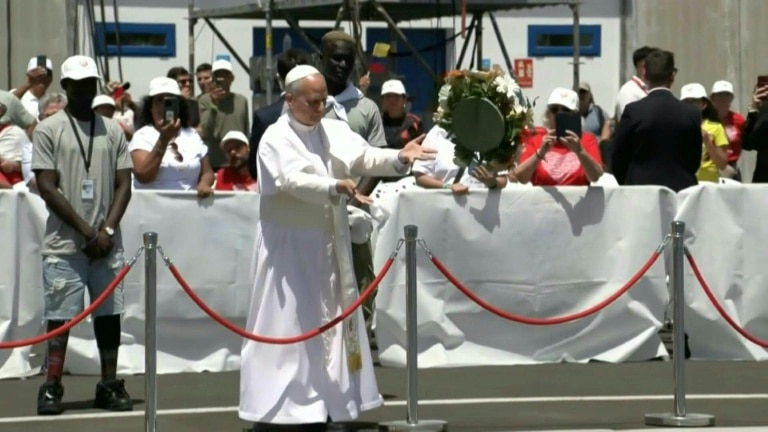
    Pope Leo XIV began the eighth day of his ambitious 11-day, four-nation African pilgrimage on Monday, traveling to Angola’s remote, diamond-abundant northeastern region — the third stop on his journey that has centered on addressing systemic inequality and extractive harm across the continent.

    Departing from Angola’s capital Luanda, the pontiff flew 800 kilometers east to Saurimo, the capital of historically marginalized Lunda Sul province. This region sits adjacent to Catoca, Angola’s largest diamond mining operation, which accounts for roughly 75% of the country’s total diamond output.

    Angola holds a position as one of Africa’s leading producers of both crude oil and diamonds, yet widespread prosperity remains out of reach for much of its population. Official World Bank data indicates that nearly one-third of Angolans live below the international poverty line. Lunda Sul exemplifies this gap: despite sitting atop the country’s most valuable mineral reserves, the province struggles with pervasive poverty, decades of underinvestment in public infrastructure, and severe environmental degradation linked to unregulated mining activity.

    The 70-year-old pontiff’s first scheduled activity in Saurimo was an open-air mass held mid-morning, which organizers projected would draw an estimated 30,000 worshippers from across the surrounding region. Following the service, Leo is set to visit a local residential facility for elderly residents, a stop designed to highlight the Catholic Church’s outreach to communities underserved by limited public services in the province.

    Since arriving in Angola on Saturday, the pope has doubled down on a core theme of his African tour: condemning the damaging impacts of unchecked natural resource extraction. During his opening address to senior government officials, including Angolan President Joao Lourenco, Leo questioned the human and ecological cost of prioritizing profit over community well-being. “How much suffering, how many deaths, how many social and environmental disasters are caused by this logic of exploitation,” he told the assembled audience.

    On Sunday, one day before his trip to Lunda Sul, Leo led a mass in Luanda attended by more than 100,000 people. There, he urged Angolans to move beyond the deep divisions left by the country’s decades-long civil war, calling for collective action to build a more equitable future. He specifically called for systemic change to root out graft, saying he hoped “the scourge of corruption will be healed by a new culture of justice and sharing.”

    Later on Monday, the pontiff is scheduled to meet with local Catholic clergy to discuss pressing challenges facing the Church in Angola, including limited institutional resources and the rapid growth of evangelical Protestantism across the country.

    Leo XIV is only the third sitting pope to visit Angola, following trips by John Paul II in 1992 and Benedict XVI in 2009. The country only emerged from a brutal 27-year civil war in the 2000s, a conflict that broke out immediately after it gained independence from Portugal in 1975 and left deep economic and social scars that persist to this day.

    The pope’s 18,000-kilometer African tour launched one week ago in Algeria, continued with a stop in Cameroon, and will conclude with a three-day visit to Equatorial Guinea from April 21 to 23.

  • Japan issues an advisory for northern coastal areas for a slightly increased risk of a mega-quake

    Japan issues an advisory for northern coastal areas for a slightly increased risk of a mega-quake

    On Monday, a 7.5 magnitude preliminary earthquake shook the seabed off northern Japan’s Sanriku coast, triggering immediate tsunami warnings, mass evacuations, and a rare official advisory warning of an elevated risk of a subsequent massive quake over the coming week.

    According to Japan’s Cabinet Office and the Japan Meteorological Agency (JMA), the shallow tremor — which struck at roughly 0753 GMT at a depth of just 10 kilometers near the Chishima Trench — has left a 1% probability of a catastrophic mega-quake striking the region within the next seven days. Officials emphasized that the advisory, only the second such notice issued in the past four months, is not a formal earthquake prediction, but urged local residents to prioritize emergency preparedness, including checking stockpiles of non-perishable food and updating emergency go-bags, while continuing regular daily activities.

    Within an hour of the initial quake, JMA detected an 80-centimeter tsunami at Kuji Port in Iwate Prefecture, followed by a smaller 40-centimeter surge at a second port in the same region. Immediately after the tremor, JMA issued a full tsunami alert warning of potential waves reaching up to 3 meters, ordering coastal and riverside residents to evacuate to higher ground immediately. By contrast, the U.S.-based Pacific Tsunami Warning Center later confirmed that the overall tsunami threat from the event had fully passed.

    Local disaster management authorities issued non-binding evacuation orders covering more than 128,000 residents across Iwate and three other northern prefectures. Public broadcaster NHK footage showed crowds of residents driving to elevated parks and safe shelters, with many leaving work and school abruptly to reach higher ground. In Tomakomai, a Hokkaido town, one resident told reporters he picked his child up from cram school directly and drove to a hilltop park, where he planned to remain until official alerts were lifted.

    As of the latest updates, no significant structural damage, injuries, or casualties have been recorded across the affected region. Japan’s Nuclear Regulation Authority confirmed that all nuclear power facilities in northern Japan remained fully operational with no abnormalities detected, and the Fire and Disaster Management Agency said assessments of critical infrastructure including power grids are still ongoing, with no harm reported so far.

    This latest seismic event comes on the heels of another 7.5 magnitude quake that struck the same broader region in December 2023, which injured dozens of people and prompted an identical mega-quake advisory that ultimately proved unnecessary when no major subsequent quake occurred.

    Monday’s advisory also arrives amid a somber national milestone: 2026 marks 15 years since the catastrophic 9.0 magnitude 2011 Tohoku earthquake and tsunami that devastated northern Japan. That disaster killed more than 22,000 people, displaced nearly 500,000 residents, and triggered a catastrophic meltdown at the Fukushima Daiichi Nuclear Power Plant. Roughly 160,000 people fled Fukushima Prefecture in the wake of the disaster due to radiation contamination, and more than a decade later, around 26,000 of those displaced have never returned to their hometowns, having resettled elsewhere, facing continued exclusion from contaminated areas, or holding long-term concerns over residual radiation exposure.

    JMA officials have additionally warned local residents to remain vigilant for strong aftershocks across the region throughout the coming week.

  • Oil price jump fails to lift Australian sharemarket as Middle East conflict hits banks

    Oil price jump fails to lift Australian sharemarket as Middle East conflict hits banks

    Escalating geopolitical tensions between the United States and Iran, sparked by the seizure of an Iranian vessel near the strategically critical Strait of Hormuz, sent global oil prices jumping by as much as 8% on Monday — but the move failed to lift Australian equities, which closed barely changed in a choppy session of mixed sector performance.

    The benchmark S&P/ASX 200 eked out a marginal 6.4-point gain, or 0.07%, to settle at 8,953.30, while the broader All Ordinaries index added an even smaller 5.4 points, equivalent to 0.06%, to end the day at 9,174.10. The Australian dollar also posted a minor uptick, rising 0.24% to buy 71.51 U.S. cents by market close.

    Across the benchmark’s 11 sectors, the day split evenly: six finished in positive territory while five closed lower. The most counterintuitive movement came from the energy sector, which led the declines despite Monday’s dramatic surge in Brent Crude prices. The global oil benchmark climbed as high as 8% intraday before settling at $95.50 U.S. ($133.30 Australian) as investors priced in growing supply risk from the disrupted Strait of Hormuz, through which roughly 20% of global oil supplies transit daily.

    Major Australian energy stocks posted steep losses: Woodside Energy fell 2.93% to $31.77, Santos dropped 1.31% to $7.55, and fuel retailer Ampol slid 3.19% to $31.88. Viva Energy was an even bigger laggard, plummeting 9.09% to $2.30 after resuming trading following a major fire at its Geelong refinery the previous week.

    Losses across energy were largely offset by strong gains in consumer-facing stocks and most of the financial sector. Retail giant Wesfarmers, which owns brands including Bunnings and Kmart, led consumer discretionary gains with a 2.44% jump to $74.63. Electronics retailer JB Hi-Fi added 0.55% to $76.49, and furniture chain Harvey Norman gained 0.88% to $4.61.

    Among the big four banks, three closed higher: Commonwealth Bank of Australia rose 1.08% to $180.15, Westpac added 0.73% to $40.02, and ANZ nudged up 0.03% to $37.93. The outlier was National Australia Bank, which tumbled 3.60% to $41.02 after the lender disclosed it was boosting provisions for bad debt ahead of its first-half results, citing rising risk from the ongoing Middle East conflict involving the U.S., Israel and Iran. The bank now forecasts total impairment costs of up to $706 million, up from a previous projection of $485 million before the escalation of regional tensions.

    Another company caught in the crossfire of Middle East uncertainty was engineering firm Worley, which dropped 5.84% to $11.13 after warning that ongoing conflict would delay operational activities and contract awards, dragging down its full-year 2026 financial outlook.

    The only major standout on the day was buy now, pay later provider Zip Co, which extended a Friday rally with a 7.73% gain to $2.51 on Monday. The surge followed a bullish quarterly update released Friday that showed third-quarter cash earnings before interest and tax jumped 41.5% year-over-year, driven primarily by robust revenue growth in the U.S. market. The stock had already rallied 13.66% on Friday.

    Market analysts noted that overall trading sentiment remained muted as investors adopt a wait-and-see approach to evolving geopolitical developments. “Markets are in a holding position as they await more news out of the US and Iran conflict,” said Tony Sycamore, market analyst at IG. “Either the data will break or the blockade will break. When you talk about the data breaking, we aren’t at that point although Japan, New Zealand and the UK inflation will give an indication. We also have a ceasefire coming up and I don’t think anyone thinks the ceasefire won’t be extended.”

    Additional uncertainty filtered through markets following conflicting reports around planned regional peace talks: U.S. officials confirmed Vice President JD Vance would join a diplomatic delegation traveling to Pakistan for talks, but Iranian state media has already indicated Tehran will not attend the negotiations, dashing early hopes of a near-term de-escalation of tensions.

  • US releases video of forces seizing Iranian ship

    US releases video of forces seizing Iranian ship

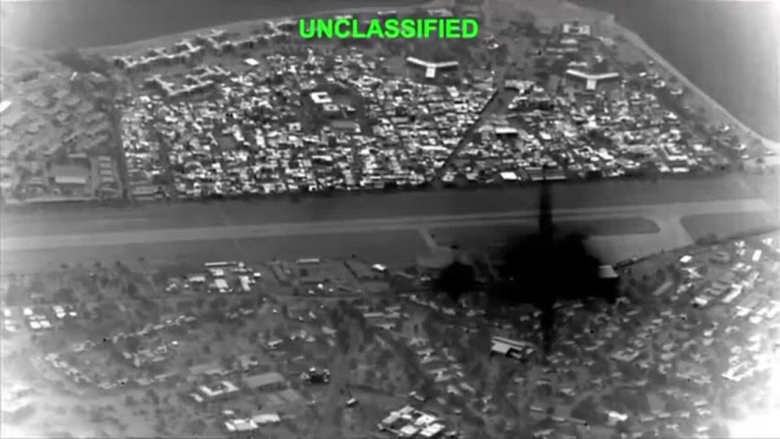
    In a public announcement, former U.S. President Donald Trump has confirmed that American military forces carried out the interception of an Iranian-flagged cargo ship operating in the Gulf region, an operation framed as part of ongoing U.S. naval blockade activities in the strategically vital waterway. The seizure, which comes amid long-running tensions between Washington and Tehran, marks a visible escalation of maritime assertiveness by U.S. forces in one of the world’s busiest and most geopolitically significant shipping lanes. A video recording of the interception operation has been officially released by U.S. authorities, providing public visual documentation of the naval action that is expected to draw sharp reaction from Iranian officials and reverberate across global diplomatic circles. The Gulf region handles roughly a third of the world’s seaborne oil trade, making any disruption or escalation of naval tensions there a matter of widespread international concern. This interception adds another layer to the protracted standoff between the United States and Iran over maritime security, trade, and regional geopolitical influence.

  • Iran-US peace talks hang in the balance

    Iran-US peace talks hang in the balance

    As a fragile ceasefire between Iran and the United States enters its final week, tentative diplomatic progress has failed to resolve escalating tensions in the strategically critical Strait of Hormuz, leaving upcoming peace talks hanging in the balance and global energy markets bracing for fresh volatility.

    Both sides have acknowledged limited momentum in indirect negotiations mediated by third parties over recent days, but neither has offered guarantees that hostilities will end immediately once the current ceasefire expires. The latest standoff erupted Saturday, just days ahead of the ceasefire deadline, after Iranian military officials reasserted full armed control over the waterway that carries roughly one-fifth of the world’s daily oil shipments, bringing commercial shipping traffic to a near-standstill.

    The clash over access to the strait follows conflicting moves from both capitals. On Friday, Iranian Foreign Minister Abbas Araghchi announced in an X post that the Strait of Hormuz would remain fully open to all commercial vessels along a pre-coordinated route for the remainder of the ceasefire, in alignment with the existing truce agreement covering Lebanon. That post remains public as of publication.

    But days after Iran agreed to allow managed passage for a limited number of commercial and oil vessels as a goodwill gesture tied to ongoing negotiations, Ebrahim Zolfaghari, spokesperson for Iran’s Khatam al-Anbiya Central Headquarters, confirmed Saturday that full control of the strait had been restored to Iranian armed forces. Zolfaghari accused Washington of repeated violations of the negotiated terms, labeling the ongoing U.S. naval blockade of Iranian ports an act of state-sponsored piracy and maritime theft.

    Iran’s top parliamentary speaker Mohammad Baqer Qalibaf reinforced Tehran’s dual approach in a Saturday national televised address, confirming that while diplomatic talks remain active, the country’s military is fully prepared for any escalation of hostilities. Qalibaf emphasized that Iran harbors no trust in U.S. commitments, framing the country’s current strategy as a “diplomacy of power” that has left Iran victorious on both the battlefield and at the negotiating table. He dismissed the U.S. naval blockade as a misguided move from an aggressor that failed to achieve its goals through military pressure, noting that Tehran’s resolve has only strengthened since the ceasefire took effect. Proposals for a long-term agreement, he added, have been relayed via third countries including Pakistan and have already undergone full review by Iran’s Supreme National Security Council, 36 days into the open conflict.

    U.S. President Donald Trump, for his part, struck a combative tone Saturday while confirming that indirect talks were showing early signs of progress. Trump insisted the U.S. would not be blackmailed by Tehran, lambasting Iran’s military capacity and suggesting the ongoing conflict amounted to an enforced regime change. “They have no navy, they have no air force, they have no leaders. They have nothing. Actually … it is regime change,” Trump said, adding that Washington would maintain a tough negotiating position.

    According to maritime intelligence provider Lloyd’s List, reported by Al Jazeera, commercial traffic through the strait came to a complete halt Saturday after Iranian forces opened fire on multiple vessels attempting to transit the waterway. While a small number of ships moved through earlier in the day, warnings via radio that the strait was back under “strict management and control by the (Iranian) armed forces” pushed all traffic back to a standstill by Saturday evening. Audio of one incident, shared widely by international media, captures the panicked crew of the oil tanker Sanmar Diego alerting Iranian naval forces that they had received official clearance to proceed moments after coming under fire from Iranian gunboats. On Sunday, Iranian forces turned away two additional oil tankers flying the flags of Botswana and Angola, which Tasnim News Agency reported had attempted to cross the strait “illegally.”

    The next round of indirect peace talks is set to get underway this week in Islamabad, Pakistan. Trump announced Sunday on Truth Social that U.S. negotiating delegates would arrive in the Pakistani capital Monday night, and two anonymous Pakistani security sources confirmed to Al Jazeera that talks are expected to convene before Friday. The sources also noted two U.S. C-17 Globemaster cargo aircraft have already landed at Rawalpindi’s Noor Khan Airbase, and major roads connecting the airbase to Islamabad’s secure Red Zone have been temporarily closed to accommodate heightened security arrangements for the negotiations.

    Now in its eighth week, the Iran-U.S. conflict has already triggered the single largest shock to global energy supplies in modern history. The de facto closure of the strait sent crude oil prices soaring in the early weeks of fighting, and while prices fell roughly 10 percent last Friday and global stock markets rose on hopes that commercial traffic would resume, the latest disruption has left hundreds of vessels and an estimated 20,000 seafarers stranded in the Persian Gulf, waiting for clearance to transit the strategic waterway, according to shipping industry sources.