作者: admin

  • India thumps the Dutch and Australia routs Bangladesh at Women’s T20 World Cup

    India thumps the Dutch and Australia routs Bangladesh at Women’s T20 World Cup

    The ICC Women’s T20 World Cup at Headingley, Leeds delivered two lopsided group-stage results on Wednesday, headlined by a career-defining all-round performance from India’s Shafali Verma that silenced recent critics and secured the biggest run victory in India’s Women’s World Cup history.

    India faced the Netherlands in the first-ever T20 meeting between the two sides, and the Indian batting unit turned in a historic performance, posting a tournament-best total of 209 for five off their 20 overs. The outing belonged to Verma, who entered the match facing growing questions over her 2024 form: her average this year sat at just 23.13 runs, a sharp drop from 52.12 in 2023 when she reestablished her reputation as one of the game’s most dangerous big hitters. After a disappointing six-run dismissal against Pakistan in her prior outing, Verma bounced back to score her first fifty of the tournament, finishing with 55 off 34 balls that included 10 fours. She was dropped in the cover field exactly as she brought up her half-century, and her opening stand with star Smriti Mandhana reached 115 runs in the 12th over before the partnership broke.

    Mandhana matched Verma’s aggressive form, notching back-to-back World Cup fifties with 74 runs off 47 balls, highlighted by four consecutive boundaries off Dutch bowler Silver Siegers. After India’s batting set an imposing target, the team’s spin attack dismantled the Netherlands’ batting order, with Verma adding another layer to her historic day: the 25-year-old finished with three wickets for 20 runs from her off-spin, making her only the third player in Women’s World Cup history to score a half-century and take three wickets in a single match, joining West Indies’ Hayley Matthews and South Africa’s Sune Luus. Slow left-armer Shree Charani put the finishing touches on the collapse, taking four wickets for 19 runs including three wickets in a single over, as the Netherlands slumped from a solid 96-3 to be all out for 114 in 17.3 overs. The 95-run margin marked India’s largest victory by runs in any Women’s T20 World Cup to date.

    Speaking after the match, Verma addressed her recent form slump, saying: “Happy to be back with some runs. I just practiced hard to get my shots again. When balls were not coming on I just went for singles so it was a mature innings.”

    In the earlier match on the same Headingley pitch, six-time tournament champions Australia maintained their unbeaten start to the competition, chasing down a low Bangladesh total of 77 for eight in just 9.3 overs to secure a nine-wicket win. On an overcast day suited to seam bowling, Australia’s bowlers dominated from the first over, with Kim Garth taking two wickets in the powerplay, while captain Sophie Molineux and star all-rounder Ellyse Perry, named player of the match, each claimed two wickets. Bangladesh collapsed to 27 for five by the eighth over, flirting with their own World Cup record low total of 46, but battled through to pass the mark in the 15th over. Opener Georgia Voll bounced back from a duck on her tournament debut against South Africa to finish unbeaten on 45 off 32 balls, including a towering six over the bowler’s head, to guide Australia to an early victory. Australia will next face the Netherlands on Saturday.

    Injury updates emerged as a major side story on the day, with multiple key players sidelined for upcoming matches. Australia’s Phoebe Litchfield, who opened the tournament with a 50 against South Africa, will miss the next three matches with a quadriceps injury, while star all-rounder Ash Gardner missed the Bangladesh clash with an ankle sprain. Host nation England suffered a significant blow, as captain Nat Sciver-Brunt will miss two matches after re-injuring her left calf; she was forced to retire hurt on 48 against Ireland on Tuesday. India also lost young all-rounder Shreyanka Patil during Wednesday’s match, after she appeared to twist her ankle and had to be carried from the field.

    Bangladesh captain Nigar Sultana acknowledged her side’s struggles in the batting department after the defeat, noting that the team has faced long-term challenges developing power-hitting talent: “We have been looking for a few players like power hitters. It’s pretty difficult to find batters like that.”
  • NATO chief downplays US military cutbacks as top commander makes backup plans

    NATO chief downplays US military cutbacks as top commander makes backup plans

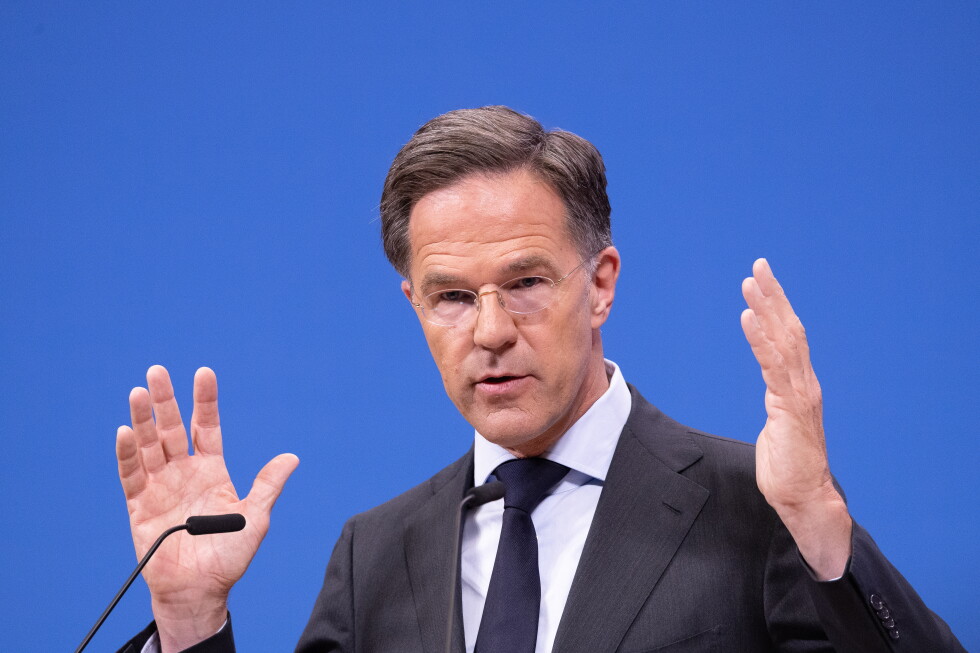
    BRUSSELS — Ahead of a pivotal gathering of NATO defense ministers that he will chair this week, alliance Secretary-General Mark Rutte has sought to ease allied anxiety over the Trump administration’s decision to scale back the U.S. military contribution to collective defense contingency plans for Europe.

    On June 3, the Pentagon notified NATO partners that the United States would no longer commit a suite of high-value military assets — including an aircraft carrier and its accompanying support vessels, aerial refueling tankers, and dozens of fighter jets — to European defense in the event of a crisis triggered under Article 5 of NATO’s founding charter. In response to this shift, NATO’s American supreme allied commander has begun developing alternative contingency plans to rebalance alliance defense posturing across the continent.

    Rutte was quick to frame the adjustment as a procedural update to planning, not a drawdown of existing U.S. military presence on the continent. “This is not about where forces and assets are currently located,” Rutte told reporters Wednesday, clarifying that the change only revises commitments for when collective defense plans are activated. “It’s about who would do what if our defense plans were activated. So, let’s say in case of an Article 5 situation.”

    Article 5, the cornerstone of NATO’s collective security guarantee, binds the alliance’s 32 member states to treat an armed attack on one ally as an attack on all. While the provision does not legally mandate any member to deploy military force, a broad majority of allies would typically contribute to a collective response. The U.S. currently maintains the largest military force and most expansive defense capabilities across the alliance, and the Trump administration has confirmed it has no plans to withdraw U.S. nuclear weapons deployed in Europe — a core component of NATO’s nuclear deterrence strategy. The shift in commitments comes as the U.S. reorients its global military focus to counter growing strategic competition from China in the Indo-Pacific region.

    NATO’s core operational framework for coordinating collective defense, the NATO Force Model, outlines which assets from member states will be made available to alliance commanders across the first six months of a conflict, spanning peace, crisis, and full war. According to Rutte, alliance commander U.S. General Alex Grynkewich has assessed that existing and upcoming capabilities from other NATO member states are largely sufficient to fill the gaps created by the U.S. drawdown in planning commitments. “The overall picture is looking good,” Rutte said.

    Even so, some European allies have expressed surprise at the range of assets being withdrawn from U.S. commitments, as many of these capabilities are already in short supply across European armed forces. The Trump administration has set a deadline for allies to outline their plans to replace the missing assets or adjust defense planning to account for the gap in advance of the July 7-8 NATO summit scheduled to be held in Ankara, Turkey. Ahead of the summit, European and Canadian allies are expecting to receive more detailed clarification of U.S. plans from U.S. Defense Secretary Pete Hegseth at this week’s Brussels meeting, after Hegseth skipped the alliance’s previous defense minister gathering in February.

    The recent policy shift has already sown confusion among allies. Last month, Trump announced plans to deploy an additional 5,000 U.S. troops to Poland, a move that bewildered alliance partners even as his administration continues to reiterate its goal of reducing, not expanding, the overall U.S. military footprint in Europe.

    Separate from the changes to collective defense planning, additional U.S. troop drawdowns are already underway in the Balkans. Last Friday, NATO military headquarters announced it would downsize the alliance’s Kosovo Security Force (KFOR), with U.S. troops expected to make up a significant portion of the departing personnel. Currently, 590 U.S. troops are deployed with KFOR, making the U.S. the second-largest contributing nation to the mission behind Italy, which deploys 907 personnel. The U.S. also maintains a contingent of Black Hawk helicopters at its large Camp Bondsteel base in Kosovo.

    KFOR first deployed to the region in 1999 to maintain peace between Kosovo and Serbia after the end of the Kosovo War. At its peak, the mission counted more than 50,000 personnel across all contributing nations, and force levels have been gradually reduced for decades as regional tensions eased. In 2023, however, NATO deployed an additional 1,000 troops to the region after a new wave of violent unrest erupted. On Wednesday, Rutte confirmed the latest drawdown will see more than 1,000 total personnel depart KFOR, consistent with Grynkewich’s assessment that security conditions in Kosovo are now stable enough to “optimize” the mission’s size.

  • Killing of Russian artist in Poland has hallmarks of political assassination, prime minister says

    Killing of Russian artist in Poland has hallmarks of political assassination, prime minister says

    WARSAW, Poland — Polish Prime Minister Donald Tusk has publicly stated that the fatal shooting of a Russian artist critical of the Kremlin’s leadership in eastern Poland bears all the markings of a coordinated political assassination, as international law enforcement continues a sprawling investigation into the killing.

    The victim, Robert Kuzovkov, who worked under the pseudonym Semyon Skrepetsky, was gunned down at close range near his residence in the eastern Polish city of Biala Podlaska early Monday morning, regional prosecutors confirmed in an official statement released Tuesday.

    Speaking at a press briefing in Warsaw Wednesday, Tusk laid out preliminary findings that point toward a politically motivated killing. “Everything points to this being a political murder,” Tusk told reporters. “But we must wait for concrete evidence and more definitive indications. Because if that proves to be the case — if the killing was ordered by Russia — then it is an extremely serious matter from an international perspective. It would constitute an act of state terrorism.”

    Polish law enforcement initially detained two Belarusian citizens shortly after the shooting as persons of interest, but Tusk confirmed Tuesday that both have been released, as investigators found no evidence tying them directly to the crime. Tusk emphasized that the investigation remains in its active evidence-gathering phase, noting that the complexity of the case has slowed progress. “The case is difficult. If a hired killer is involved, identifying that person is unfortunately not an easy task,” he added. In a revealing detail, the prime minister confirmed that Polish security authorities had previously offered Skrepetsky protection over concerns for his safety, an offer the artist ultimately declined.

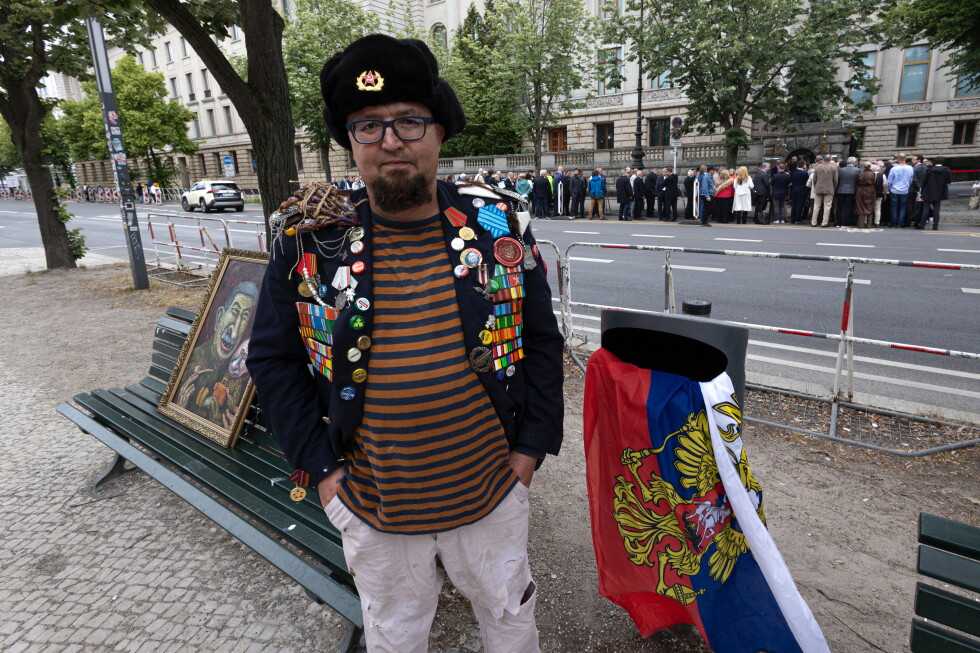
    Polish prosecutors laid out the context for the killing in their Tuesday statement, confirming that through his artistic work, Skrepetsky consistently and publicly expressed sharp criticism of the current policies of the Russian government. The artist, who fled Russia for exile in Poland, became known for his unflattering portraits of Russian President Vladimir Putin, Chechen leader Ramzan Kadyrov, and other senior Russian political figures. One of his most provocative works depicts Putin being held in the arms of former Soviet dictator Josef Stalin.

    Just one day before his death, on Sunday, Skrepetsky published a new video to his YouTube channel showing a protest he carried out in Berlin on June 12 — Russia’s annual Sovereignty Day holiday — where he placed a Russian national flag into a public trash can.

    Prosecutors detailed the sequence of the attack: at approximately 9:45 a.m. Monday, an unidentified male suspect approached Skrepetsky near his home, fired two shots, then moved in to fire three additional rounds at close range before fleeing the scene. Skrepetsky died instantly from multiple gunshot wounds to the head, chest, and back.

    The killing comes amid a growing pattern of alleged targeted attacks against Russian government opponents exiled in Europe, dating back to Russia’s full-scale invasion of Ukraine in 2022. To date, Russia has been repeatedly accused of orchestrating assassination attempts against dissidents and anti-Kremlin activists across the continent, including targeted plots against exiled opponents living in France and Lithuania.

    In recent months, European security officials have uncovered multiple high-profile plots linked to Russian operatives. German authorities recently broke up planned assassination attempts targeting the head of a German weapons manufacturer that supplies arms to Ukraine, as well as a senior Ukrainian military official. Earlier this year, Polish law enforcement arrested a suspect in what authorities confirmed was a plot to assassinate Ukrainian President Volodymyr Zelenskyy during a visit to the country. In 2024, a defected Russian military helicopter pilot was also killed in a targeted attack in Spain, with Russian intelligence operatives named as the primary suspects in that killing.

  • Microhistory pioneer Carlo Ginzburg, who gave voice to the marginalized, dies at 87

    Microhistory pioneer Carlo Ginzburg, who gave voice to the marginalized, dies at 87

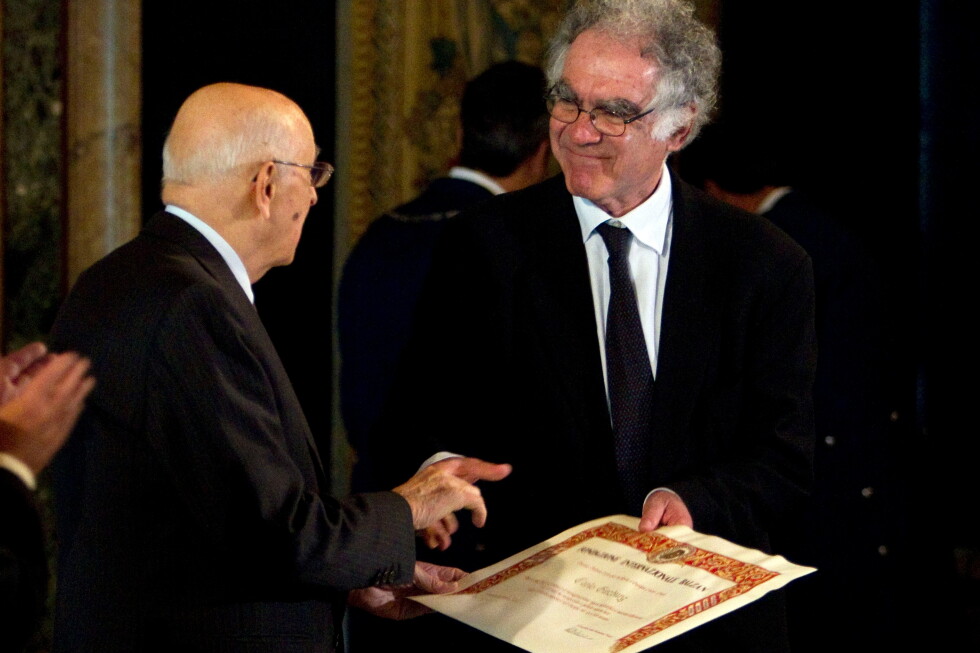
    Carlo Ginzburg, the trailblazing Italian historian whose innovative scholarship redefined modern historical inquiry by centering the long-silenced perspectives of marginalized communities, passed away on Wednesday at the age of 87 in Bologna, a northern Italian city. The confirmation of his death came from Scuola Normale Superiore di Pisa, the prestigious academic institution where Ginzburg once studied as a student and later served as an emeritus professor.

    Widely recognized as the founding father of microhistory, Ginzburg developed a radical new approach to studying the past that rejects broad, top-down macro-historical frameworks in favor of focused, granular analysis of small, specific subjects — from a single ordinary individual, to a tight-knit local community, to one isolated historical event. This method, he argued, unlocks far broader, more universal themes and structural tensions that shape larger historical narratives, a insight that upended centuries of traditional historiographical practice.

    As one of the most influential voices in 20th and 21st century historical studies, Ginzburg also pioneered the groundbreaking “evidential paradigm” — an interpretive framework that centers seemingly insignificant clues, fragmented traces and overlooked small details to reconstruct the lived experiences of people pushed to the margins of dominant historical records created by ruling elites.

    Ginzburg first honed his approach through early research into the benandanti, a little-known pagan fertility movement that operated in Italy’s Friuli region between the 16th and 17th centuries. Members of the group practiced shamanic healing, but were targeted as heretics by the Roman Inquisition. His research into the cult, which traced its origins to pre-Christian Central European spiritual traditions, formed the foundation of his first published book in 1966.

    He solidified his global reputation with his 1976 landmark work *The Cheese and the Worms*, still widely regarded as one of the most important texts in modern Italian historiography. The book centers on the heresy trial of Menocchio, a 16th-century Friulian miller who was prosecuted for sharing unorthodox views about the origins of the universe and the nature of Jesus Christ. Drawing exclusively on surviving Inquisition trial records, Ginzburg masterfully demonstrated that the same documents created by ruling authorities to suppress dissent also contain hidden traces of that dissent, showing how power and resistance exist side-by-side in historical archives. Through this intimate small-scale case study, he illuminated far-reaching cultural frictions between elite educated culture and grassroots popular culture, as well as the enduring tension between state and religious authority and individual dissent.

    Born in Turin in 1939, Ginzburg grew up in a family deeply committed to intellectual life and anti-fascist resistance: his mother Natalia Ginzburg was one of Italy’s most celebrated 20th century writers, and his father Leone Ginzburg was a prominent anti-fascist activist who was persecuted for his opposition to Benito Mussolini’s regime. Over the course of his decades-long academic career, Ginzburg held teaching positions at top global institutions, including Harvard University, Yale University, Princeton University and the University of California, Los Angeles. His body of work has been translated into more than 30 languages, reaching a global audience of scholars and general readers alike.

    Ginzburg’s contributions to historical scholarship earned him dozens of the highest international honors in the humanities, including the Prix Aby Warburg, the Balzan Prize for Social and Political Sciences, the Antonio Feltrinelli Prize, and the Humboldt Research Award.

    In a 2023 interview with Italian cultural magazine *Lucy*, Ginzburg emphasized that his methodological approach was not limited to academic historical research. He argued that the practice of prioritizing small clues and centering marginalized perspectives should be applied to “everyday life” as a tool to build deeper, more empathetic understanding of other people.

    In a formal statement following Ginzburg’s death, Scuola Normale Superiore paid tribute to his transformative impact on the field, noting that he “changed the way of practicing the historian’s craft.” The institution added that Ginzburg’s work “restores voice to those who lack it, shows that the rigor of proof is a form of justice, and upholds a demanding idea of truth.”

    Ginzburg is survived by his two daughters: Silvia, an art historian, and Lisa, a published writer and essayist. They are his children from his marriage to Anna Rossi-Doria, a fellow historian who preceded him in death.

  • A 16-month-old and his mother recover from Ebola in rare good news from outbreak in Congo

    A 16-month-old and his mother recover from Ebola in rare good news from outbreak in Congo

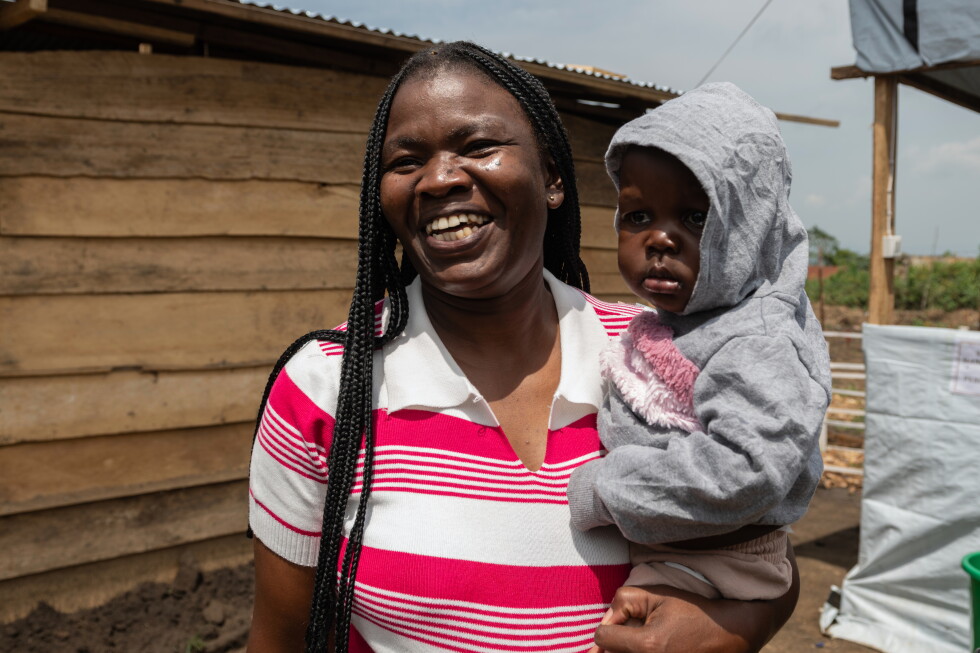
    In the conflict-stricken eastern Democratic Republic of the Congo, a glimmer of hope has emerged amid a rapidly spreading Ebola crisis: a 16-month-old infant and his mother have successfully overcome the deadly virus and been discharged from a local treatment center. The pair left the Rwampara Treatment Center near Bunia, the capital of Ituri province — the current epicenter of the outbreak — on Tuesday, alongside five other patients who also achieved full recovery from Ebola.

    For Kahindo Mireille Pierrette, the mother of the recovering infant, the relief and joy of her child’s survival are overwhelming. “The joy is immense given the state he was in at first,” she shared. “If you had seen him before, you wouldn’t believe he could have this strength now.” Pierrette explained that she rushed her son to the treatment center in late May, after he developed frightening Ebola symptoms: uncontrollable bleeding from the mouth and nose, and extreme weakness that left him barely able to move. Dr. Modet Camara, a clinical lead at the treatment facility, confirmed that the infant received a positive Ebola result via PCR testing on his second day of admission, and was immediately placed on targeted supportive care including antibiotics to manage secondary infections.

    As of Tuesday, Congo’s Ministry of Health has confirmed 837 Ebola cases and 196 confirmed deaths since the outbreak was formally declared on May 15. However, public health officials warn the true case count is almost certainly higher, because the virus began spreading undetected for weeks before official confirmation was announced. To date, only 49 patients across the affected region have recovered from the virus, according to government data.

    What makes this outbreak particularly challenging for response teams is that it is driven by the rare Bundibugyo Ebola strain, a variant for which no approved vaccines or specific antiviral treatments currently exist. This marks a departure from Congo’s 16 previous Ebola outbreaks, which were overwhelmingly caused by the more common Zaire strain — a variant for which an effective, approved vaccine is already available.

    More than 90% of all current cases are concentrated in Ituri province, though infections have also been documented in neighboring North Kivu and South Kivu provinces, and the virus has already crossed the international border into Uganda. Speaking during a virtual meeting of African heads of state on Tuesday, Africa Centres for Disease Control and Prevention Director-General Jean Kaseya issued a stark warning about the outbreak’s trajectory: if spread is not rapidly contained, it could surpass the 2014–2016 West African outbreak to become the deadliest Ebola event on record. Kaseya highlighted that tens of thousands of close contacts of confirmed Ebola patients have not yet been traced and monitored, creating a large pool for potential further transmission.

    The 2014 West African outbreak remains the worst Ebola event in recorded history, with more than 28,000 confirmed cases and over 11,000 reported deaths across Guinea, Liberia, and Sierra Leone.

    Multiple structural challenges are hampering containment efforts in eastern Congo. The United Nations Office for the Coordination of Humanitarian Affairs estimates that years of ongoing armed conflict have displaced nearly one million people across Ituri province. As communities flee persistent attacks and move frequently through the region’s vast, dense forest landscape, which is crisscrossed by poor roads and dotted with remote villages that can take days to reach, contact tracing teams struggle to track exposed individuals and limit new transmissions. Additional complications come from the region’s large population of artisanal miners, who regularly move between remote mining sites in the mineral-rich province, making consistent monitoring of potential exposures nearly impossible. Local cultural preferences for traditional healers over formal hospital care have also slowed response efforts, as many infected people delay seeking treatment and continue to interact with their communities while contagious.

  • Bystanders rush to rescue aircraft passengers after fiery Texas crash

    Bystanders rush to rescue aircraft passengers after fiery Texas crash

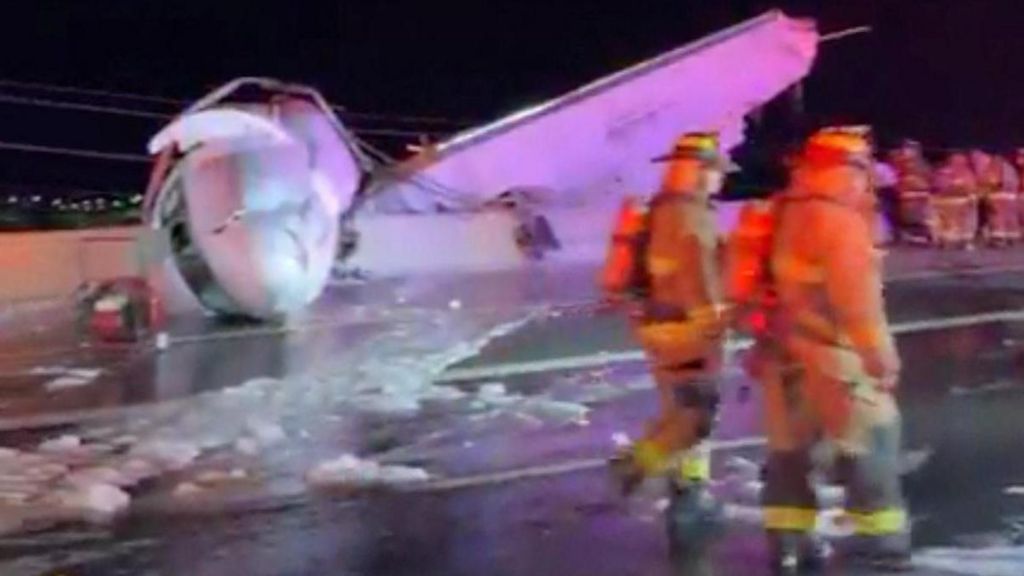
    On Tuesday, a dramatic private jet crash unfolded on a major Texas highway just outside Laredo, prompting an immediate, courageous response from bystanders and emergency personnel who rushed to rescue trapped passengers. Cell phone video of the incident captured the group using a makeshift set of tools — a shovel and a sledgehammer — to break through sections of the downed aircraft, prying open an exit to pull five survivors to safety before first responders secured the scene.

    According to Gilberto Sanchez, director of Laredo International Airport, the aircraft was en route from Los Cabos, Mexico, to Austin, Texas, when its flight crew alerted air traffic control at Laredo that the jet was experiencing critical mechanical failures, initiating preparations for an emergency landing. The crash occurred just 150 miles, or 240 kilometers, southwest of San Antonio, in the immediate vicinity of the airport.

    Laredo Police Department investigators confirmed that one of the six people on board the private jet was killed in the crash. The identity of the deceased has not been released pending next-of-kin notification. All five survivors were transported to local medical facilities for treatment, and officials confirmed Wednesday that all remain in stable condition. Responding to the incident, five first responders were later treated for smoke inhalation after working to extinguish the fire that broke out on impact.

    Investigator Jose Baeza of the Laredo Police Department noted that a civilian vehicle traveling on the highway was hit by the aircraft during the crash, though officials have not yet confirmed which part of the jet made contact with the car. Social media posts from witnesses in the area showed heavy black smoke billowing from the wreckage, with large flames visible along the fuselage in the immediate aftermath of the crash.

    The crash forced an immediate full closure of Loop 20, a major arterial highway serving the Laredo area. Laredo police confirmed that the highway will remain closed to all traffic through Wednesday as investigators from multiple agencies, including the Federal Bureau of Investigation and the National Transportation Safety Board, conduct a full on-site investigation into the cause of the crash.

  • Watch: Japan’s unusual course on avoiding a bear attack

    Watch: Japan’s unusual course on avoiding a bear attack

    Across Japan, 2024 has already seen an unprecedented spike in human-bear conflicts, with total confirmed bear attacks on people hitting a record high that far outpaces any previous year recorded in national wildlife data. As dangerous encounters between humans and these wild animals become increasingly common in both rural and semi-urban areas, regional authorities are stepping up emergency preparedness to protect local communities and visitors.

  • ‘Why bother?’: Trump no longer feels the need to seize Iran’s uranium

    ‘Why bother?’: Trump no longer feels the need to seize Iran’s uranium

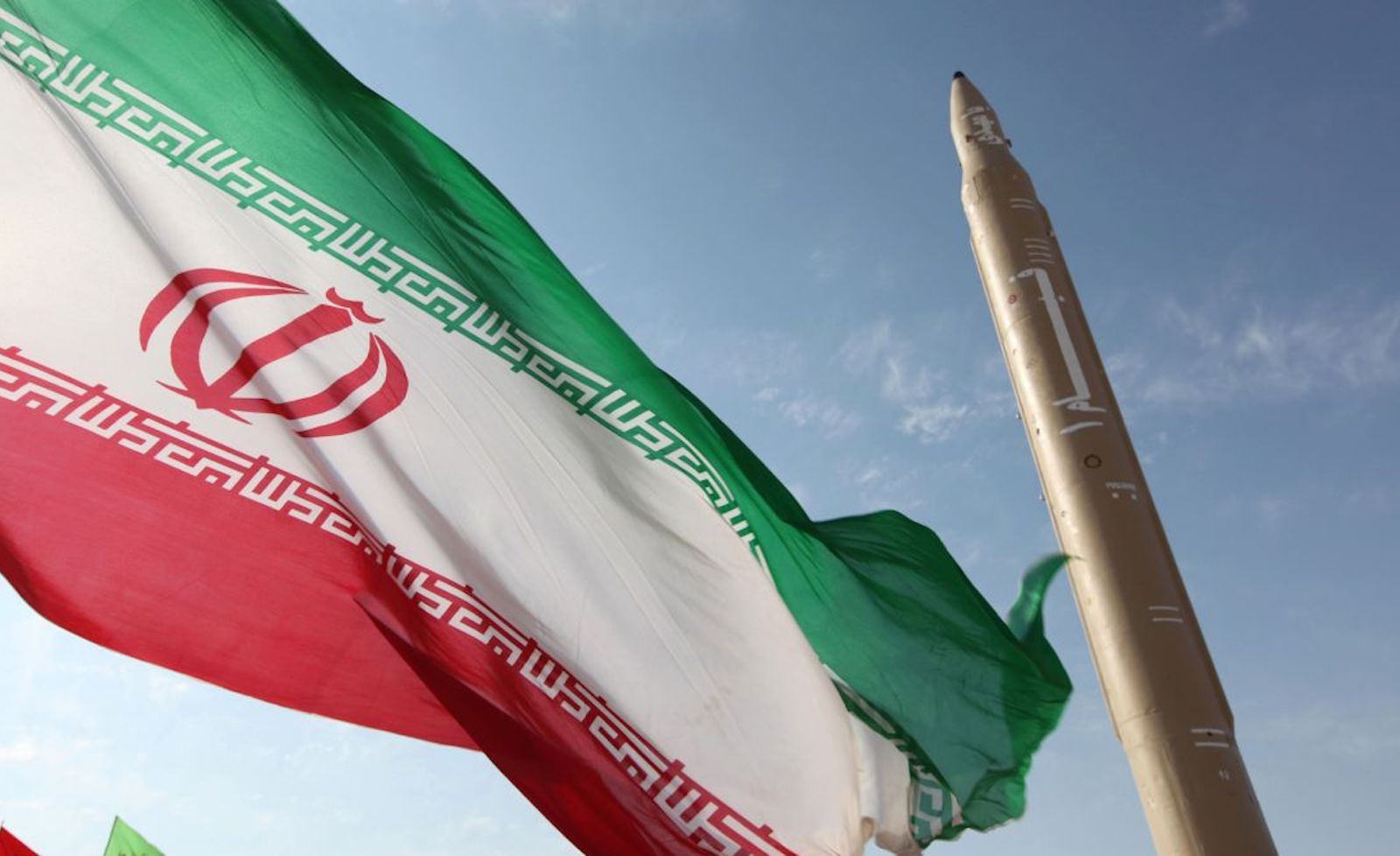
    Just one day after formalizing a ceasefire memorandum of understanding with Iran to end the unprovoked war launched jointly with Israel in February, U.S. President Donald Trump has dramatically softened his long-stated top priority for the conflict: seizing Iran’s stockpiles of highly enriched uranium. Speaking Tuesday on the sidelines of the Group of Seven summit in France, Trump asserted there was “no rush” to recover the nuclear material from sites targeted by U.S. airstrikes in June 2025.

    In comments that contradicted months of public messaging from Trump and his senior national security team, the president downplayed both the urgency and the value of the uranium he had once framed as an existential threat requiring immediate military action. “Taking the highly enriched uranium is something the U.S. wants psychologically, but not enough to prioritize extracting it right away,” Trump said, even suggesting that a case could be made that the effort to seize the material was not worth the logistical challenge at all.

    Noting that only the United States and China possess the specialized heavy equipment required to extract the uranium, Trump added: “Frankly, to go get it—we’re going to go get it—but to go get it is a big deal. You could make the case, ‘Why do you even bother?’ because it’s not very valuable, you know. It’s probably half a million dollars worth, it’s not very valuable stuff.”

    Trump’s shift comes 24 hours after he and Iranian officials announced the MOU that halted hostilities, a conflict during which Iran effectively closed the Strait of Hormuz, disrupting global energy supplies and sending oil prices soaring across international markets. The president told The New York Times that the agreement caps Iran’s uranium enrichment at levels that can never be repurposed for military use. However, anonymous White House officials speaking to The Washington Post clarified that full details of Iran’s nuclear program oversight remain unresolved, with formal negotiations set to unfold over the next two months. The question of whether nuclear talks would proceed separately from ceasefire negotiations had been a major sticking point for U.S. negotiators in the lead-up to the MOU.

    When pressed on criticism that the new agreement fails to secure any new nuclear concessions that were not already enshrined in the 2015 Joint Comprehensive Plan of Action (JCPOA)—the Obama-era deal that Trump abandoned during his first term, which traded sanctions relief for nuclear limits—the president pushed back. He reiterated that the new deal permanently restricts Iran’s uranium enrichment to nonmilitary purposes only.

    Supporters of the administration, including former National Security Council chief of staff Alex Gray, have defended the agreement as a historic breakthrough, claiming it marks the first time the U.S. has permanently blocked Iran’s path to a nuclear weapon. Iran has consistently maintained, even before the February invasion, that its entire nuclear program is intended exclusively for peaceful civilian energy purposes.

    But foreign policy analysts say Trump’s Tuesday comments expose inconsistencies in the administration’s justifications for the war. Foreign policy analyst Logan McMillen argued that the president’s downplaying of the uranium is an implicit admission that the material was always a false pretext for the conflict. “The real purpose was to punish Iran for the crime of being an independent economic power that refused to participate in America’s petro economy,” McMillen said.

    CNN’s Aaron Blake points out that this latest shift is far from the first time Trump has sent contradictory messages about Iran’s nuclear program. Just weeks ago, Trump wrote on social media that Iran’s uranium would be unearthed by U.S. experts—working with Iran and the International Atomic Energy Agency—and destroyed. But as far back as April, he told Reuters that U.S. strikes had left Iran’s uranium buried deep enough that he “didn’t care” about its location. Two weeks after that April comment, he insisted the U.S. “had to take that nuclear dust,” then told Fox News later that destroying the stockpile was “not necessary except from a public relations standpoint.”

  • Spinners Zampa and Davies shine as Australia wins opening T20 vs Bangladesh

    Spinners Zampa and Davies shine as Australia wins opening T20 vs Bangladesh

    In the opening fixture of a three-match Twenty20 international series between Australia and Bangladesh hosted in Chattogram on Wednesday, a disciplined spin attack from the visitors laid the foundation for a four-wicket victory, with slow bowlers Adam Zampa and Joel Davies sharing six wickets between them to dismantle the home side’s batting lineup.

    A notable milestone also marked the match: leg-spinner Nikhil Chaudhary, the first India-born male cricketer to earn a cap for Australia’s national team in six decades, chipped in with one wicket to cap his historic appearance. Australia’s spin unit dominated from the middle overs onward, bowling Bangladesh all out for just 131 runs inside 19 overs.

    Chasing a modest total, Australia got off to a rocky start, losing returning opener Mitchell Marsh — who was back in the side after missing the preceding ODI series with an ankle injury — and fellow opener Josh Inglis in quick succession. But Cooper Connolly, whose match-winning 149 in the final ODI rescued Australia from a potential series sweep just days prior, stepped up again to anchor the run chase. Striking four fours and three sixes, the batter compiled a steady 47 runs to steer Australia closer to the target.

    Connolly shared a valuable 40-run third-wicket partnership with Tim David, who contributed 20 runs, before he was caught off the bowling of Abdul Gaffar, who claimed his maiden international wicket on his T20 debut. The left-arm fast bowler finished his opening outing with strong figures of 2 wickets for 32 runs. Australia ultimately crossed the finish line in 18.2 overs, finishing on 133 for 6 to claim the first win of the series.

    For Bangladesh, the match was played under new leadership: regular captain Litton Das was forced out of the fixture with a calf injury sustained in the third ODI, forcing Tawhid Hridoy to step in as stand-in skipper. Hridoy won the pre-match toss and opted to bat first, but the decision failed to pay off, as no home batter could mount a sustained resistance against Australia’s controlled spin attack. While Bangladesh got off to a promising start at 39 for 1 after the first five overs, Zampa and Davies sparked a dramatic batting collapse that saw the home side lose seven wickets for just 60 runs, capping their disastrous batting performance.

    The second match of the three-match T20 series is scheduled to take place this Friday, with Bangladesh looking to bounce back and level the series before the deciding final fixture.

  • Bolivia signs $20m deal with US to fight drug trafficking, foreign ministry says

    Bolivia signs $20m deal with US to fight drug trafficking, foreign ministry says

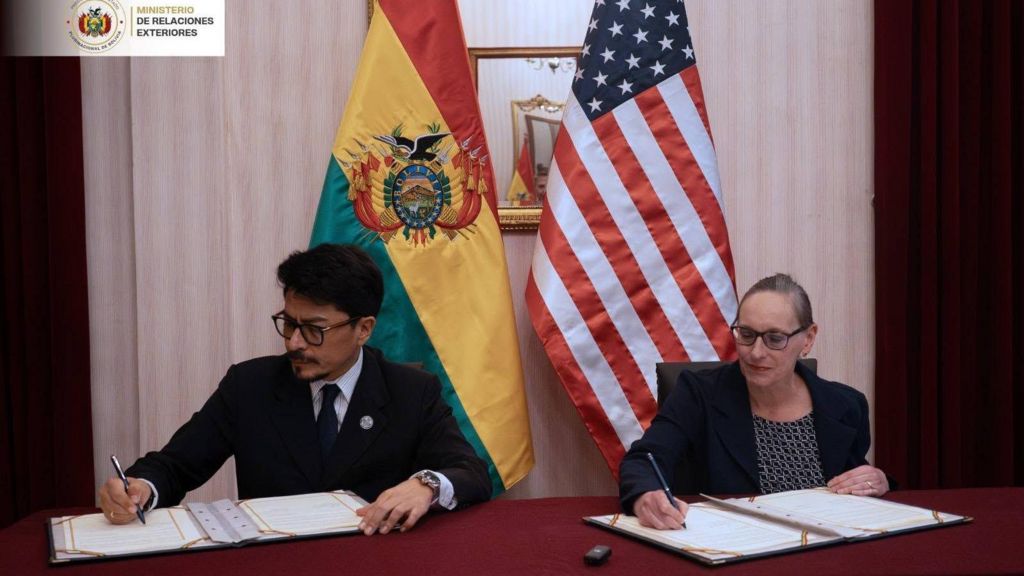
    Nearly two decades after Bolivia expelled the U.S. Drug Enforcement Administration (DEA) from its territory under former President Evo Morales, the Andean nation has marked a sharp reversal of course by inking a new bilateral counter-narcotics cooperation agreement with the United States. The landmark deal, signed in Bolivia’s administrative capital La Paz, will see Washington provide up to $20 million (£15 million) to train and equip local Bolivian security forces for the joint campaign against transnational drug smuggling, Bolivia’s foreign ministry confirmed.

    As the world’s third-largest producer of coca, the base raw material for cocaine, Bolivia holds significant strategic importance in global counter-narcotics efforts. This new agreement is the clearest signal yet of warming relations between the two countries following the election of centrist President Rodrigo Paz. Since taking office, Paz has moved Bolivia back into alignment with U.S. security priorities in the Western Hemisphere, most recently joining the Shield of the Americas, a regional security initiative spearheaded by the United States.

    The signing comes less than two weeks after Paz appointed Ernesto Justiniano, the country’s recently named “drug czar,” as Bolivia’s new defense minister. In March of this year, Paz joined 12 other regional leaders at the inaugural Shield of the Americas summit hosted by U.S. President Donald Trump in Florida. In recent weeks, alliance member states have thrown their public support behind Paz amid a growing wave of anti-government protests and road blockades targeting his administration. In a joint statement released May 21, the coalition reaffirmed that it “stands with the government of Bolivia” and voiced deep concern over protests aimed at subverting constitutional order and destabilizing the democratically elected government.

    While counter-narcotics collaboration is the core of the new Bolivia-U.S. deal, the broader Shield of the Americas initiative is framed by its creators as a campaign to combat what it labels “narco-terrorism.” As part of his stated pledge to block illicit drugs from reaching U.S. consumers, President Trump has also authorized U.S. military forces to target watercraft suspected of smuggling controlled substances across international waters. Since early September, these strikes have killed more than 200 people in Caribbean and Pacific waters, a tactic that has drawn sharp criticism from legal experts who argue the operations violate fundamental norms of international law.

    In the most recent of these strikes, confirmed by U.S. Southern Command (Southcom) on Tuesday, one person aboard the targeted vessel was killed and two others survived. Southcom claims intelligence confirmed the vessel was involved in active drug trafficking operations, but has not released any public evidence to back this assertion. The U.S. embassy in Bolivia has confirmed to Agence France-Presse that Washington will “work closely with the Bolivian government to provide training, equipment, and other forms of support” under the new agreement. The BBC has also reached out to the embassy for additional comment, and Bolivia’s foreign ministry says the overarching goal of the pact is to strengthen domestic institutions responsible for public security, criminal investigation, and countering transnational organized crime.