作者: admin

  • UK: Newham council investigates Labour mayoral candidate’s past flat purchase

    UK: Newham council investigates Labour mayoral candidate’s past flat purchase

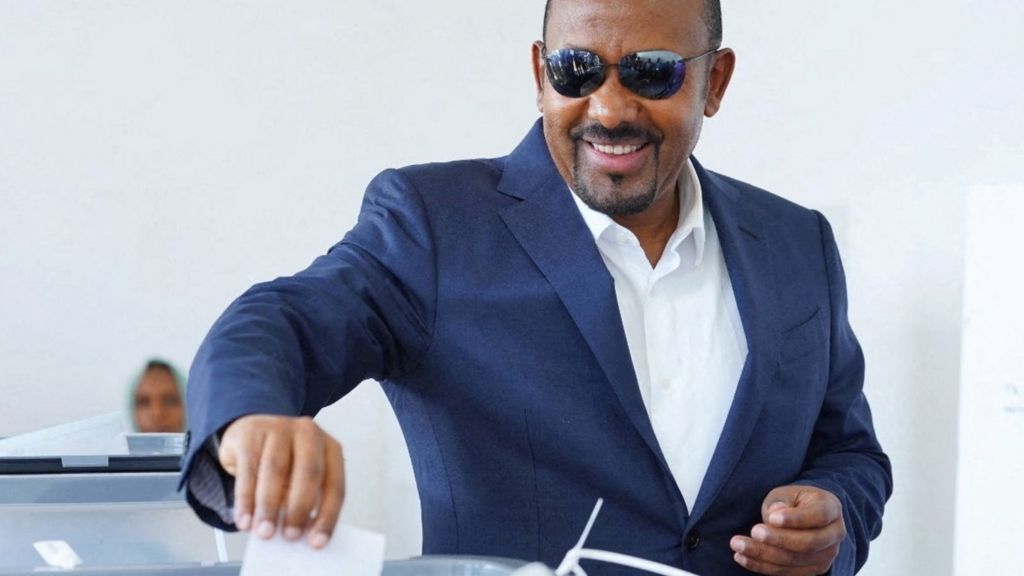
    As campaigning intensifies ahead of England’s critical local elections on May 7, a high-profile dispute over a former council property has upended the mayoral race in London’s Newham borough, placing Labour’s lead candidate Forhad Hussain under increasing scrutiny.

    The controversy centers on a one-time council flat that Hussain, then a senior sitting councillor in Newham, purchased in 2016 with financial support from the local authority he served. Last month, a public interest referral was submitted to Newham Council’s monitoring officer, chief executive, and independent external auditors, calling for a formal probe into the transaction. The referral requests investigation into “the acquisition and disposal of a council-derived housing asset by an individual who held elected public office within the authority [Newham] at the relevant time,” a document obtained by Middle East Eye (MEE) confirms.

    Hussain has issued a firm denial of any improper conduct in the deal. Correspondence dated April 17 from auditors Ernst & Young to a local resident, also seen by MEE, confirms that the council’s monitoring officer has launched an inquiry into the complaint. The letter notes that after the complainant raised the issue with the council’s interim chief executive, the local authority committed to a full investigation, and the monitoring officer has agreed to update auditors on the probe’s progress.

    Earlier reporting from local outlet London Centric pointed out that Land Registry records indicate the property was transferred via a process typically reserved for Right to Buy, a UK government scheme that allows sitting council tenants to purchase their rented homes at significant discounted rates. London Centric also highlighted that the purchase price Hussain paid the council for the publicly owned property in 2016 is not listed on public Land Registry records. Three years after purchasing the flat, Hussain sold it for £255,000.

    In an interview with MEE, Hussain pushed back against these claims, rejecting the characterization of the purchase as an improper Right to Buy transaction. He explained the flat was an empty council property offered to eligible buyers through the council’s own Newham New Share shared ownership scheme, a program open to all qualifying Newham residents. “My wife and I were registered for that scheme, expressed interest in the property, and were successful through the same process available to other eligible Newham residents,” he said.

    Hussain added that the council independently valued the property at £190,000, and he and his wife paid their agreed share of the full market value, with no negotiation and no discount comparable to those offered through Right to Buy. He clarified that when the couple later paid off the council’s remaining stake in the property, as outlined in the terms of the shared ownership scheme, they did so at the property’s current increased market value. “Any suggestion that I benefited from my position is categorically untrue. I did not receive preferential treatment at any stage,” Hussain said.

    The candidate also disputed claims that an investigation is currently active, saying, “I have been informed that no new investigation is taking place, and any previous enquiries into this matter have already been concluded.” Newham Council declined to provide any comment on the dispute when contacted by MEE, and the national Labour Party also did not respond to requests for comment.

    The controversy has broken as mayoral campaigning in Newham reaches a fever pitch. During a recent local radio debate, Green Party mayoral candidate Areeq Chowdhury raised questions about the transaction, arguing that “there are serious questions about why that was issued as a Right to Buy. It was an empty flat, apparently an empty flat, issued as a Right to Buy.” Chowdhury confirmed that the council’s monitoring officer has launched an investigation, rejecting Hussain’s claim that the matter is already closed: “the idea that it is a closed matter is false.”

    In response, Hussain dismissed the allegations as entirely baseless and accused Chowdhury of engaging in “gutter politics.”

    The May 7 elections will see more than 5,000 council seats up for grabs across 136 English local authorities, in what is widely viewed as the first major electoral test for Prime Minister Keir Starmer’s Labour government since he took office in July 2024. The Green Party is positioning itself as a left-wing challenger to Labour, and Newham is one of the key target boroughs where the party hopes to seize control of both the council and the mayoralty from Labour. Independent candidate Mehmood Mirza, representing Newham Independents and backed by Jeremy Corbyn’s Your Party, is also contesting the mayoral post.

  • A Kashmir tourist hotspot became a deadly bloodbath. A year on, the pain remains unbearable

    A Kashmir tourist hotspot became a deadly bloodbath. A year on, the pain remains unbearable

    It has been exactly 12 months since a brutal militant attack targeting tourists in the scenic Himalayan town of Pahalgam, Indian-administered Kashmir, snatched 26 innocent lives and shattered dozens of families forever. The attack, counted among the deadliest assaults on civilians in the restive region in decades, did not just trigger a dramatic escalation of cross-border tensions between nuclear-armed neighbors India and Pakistan – it also left a generations-long trail of private pain that time has not erased, only reshaped. For the widows and parents of the victims, learning to live with absence has become a daily, quiet act of resilience, carried out in vastly different ways that all bear the weight of unthinkable loss.

    The contested region of Kashmir has been claimed in full by both India and Pakistan since the 1947 partition of the subcontinent, with the two nations splitting control of the territory and fighting multiple full-scale wars over it. On April 22, 2025, militants opened fire on civilians visiting Baisaran Valley, a stunning alpine meadow that draws thousands of tourists to Pahalgam every year. Most of those killed were young Hindu men, many of whom were at the very start of their adult lives: newlyweds, rising professionals, whose futures were cut down in an act of targeted violence.

    In the immediate aftermath, New Delhi formally accused Pakistan of enabling the attack, claiming the assault was carried out by a militant group based on Pakistani soil – a claim Islamabad quickly and firmly denied. Two weeks after the killings, India launched preemptive air strikes targeting what it said were militant group training bases inside Pakistani territory. The strike set off four days of intense cross-border shelling and aerial exchanges that pushed the two nuclear-armed powers to the brink of full-scale conflict, until a widely unexpected ceasefire was announced to de-escalate tensions. While international attention has long moved on from that crisis, for the families of the 26 victims, the grief remains an unshakable daily presence.

    For 26-year-old Aishanya Dwivedi, the attack stole her husband Shubham just two months after their wedding. Today, in the Kanpur home she once shared with Shubham, the bedroom they lived in remains frozen in time. Every item – the unmade bed, the standing cupboard, even the small wall mirror Shubham installed after she joked about the empty space above their dresser – sits exactly where it was the day they left for their Kashmir holiday. “That side of the bed is still Shubham’s,” Aishanya explains, gesturing to the unused half she keeps piled with pillows. “I never sit or lie there. I even avoid it in my sleep.”

    Aishanya still recalls the day of the attack in sharp, unwavering detail. After arriving in Kashmir with a group of 11 family members, the couple ventured alone to the Baisaran Valley meadow while the rest of their group stayed behind in Pahalgam. As they walked through the grass, a man approached them, asked Shubham what his religion was, and opened fire. Aishanya says she begged the attackers to kill her too, but they left her alive, alone with the grief that would shape the rest of her life.

    “I didn’t get enough time to build a lifetime of memories with him,” Aishanya told BBC Hindi in an interview marking the one-year anniversary. “But the memories he did give me are enough to carry me through the rest of my life.” Her phone lock screen still holds an unposed candid from their wedding day, and she often scrolls through her photo gallery to find old pictures of Shubham, replaying old voice notes and videos to hold onto the smallest details: the sound of his laugh, the way he would giggle at bad jokes.

    In the months after the attack, Aishanya found that speaking publicly about Shubham and her grief became a form of quiet therapy. What started as answering questions from reporters and family friends became a way to keep his memory alive, even when it drew harsh online backlash. After she publicly called out Prime Minister Narendra Modi for failing to name the Pahalgam victims in his parliamentary address following India’s air strikes, she was targeted by online trolls who criticized her public grief. But the harassment has not silenced her. “I will speak, I will go out, I will do everything I want,” she says. “Those people have no right to tell me how to grieve my husband.”

    Every evening, Aishanya sits with her in-laws for an hour, and the three of them talk about Shubham, circling back to the same small stories and memories, each time softening the edge of the pain just a little. She has started writing down her feelings, and even though she often ends up crying mid-entry, she says releasing the pain is a necessary part of healing. A trained classical dancer, she has not yet been able to return to the stage – “My feet just won’t move,” she says – but she holds out hope that she will find her way back to the art one day. Small, unexpected moments still feel like signs Shubham is with her: a rainbow visible from a plane window while playing one of his favorite songs, a glance at the full moon from her balcony that brings a split second of feeling he is right beside her. “The grief of losing a husband will never go away completely,” she says. “But that doesn’t mean we have to stop living.”

    For another family, grief takes a far quieter form. Rajesh Narwal lost his 26-year-old son Vinay, an Indian naval officer who was just six days into his honeymoon in Kashmir when he was killed in the attack. In the hours after the shooting, a photograph of Vinay’s bride sitting motionless beside his body spread virally across Indian social media, becoming a searing symbol of the attack’s senseless brutality. Today, back at the Narwal family home, none of Vinay’s belongings have been unpacked from the bags he brought on his honeymoon. Most family members still cannot bring themselves to say his name out loud, and the family has not hung a single photograph of him anywhere on the walls.

    “None of us can find the courage to talk about it,” Rajesh says. “We can’t even bear to put his photo up.” But the memories do not stay buried. Rajesh still finds himself automatically falling into old routines: when he comes home from work every day, he still half-expects Vinay to be waiting in the courtyard, ready for their daily game of cricket, a ritual they kept from Vinay’s childhood through his early adulthood. “We just don’t know how to process this pain. We’re still grieving, every single day,” Rajesh says. “I can distract myself at work, but the second I walk through the front door, it feels like someone presses on a raw nerve. The pain is unbearable.”

    One year after the attack that upended their lives, both families have carved out different ways to live with the hole the violence left behind. One keeps memory alive through open, unapologetic speech; the other holds it close through silence. Both are learning to rebuild their lives around the absence of the people they loved, carrying their memories forward even as they learn to breathe again. The attack that shook South Asia and brought two nuclear powers to the edge of war is now remembered most vividly not in official statements or security briefings, but in the frozen bedrooms and quiet courtyards of the families who will never be the same.

  • Trump says he expects ‘great deal’ with Iran, unlikely to extend ceasefire

    Trump says he expects ‘great deal’ with Iran, unlikely to extend ceasefire

    WASHINGTON, D.C. — In a candid interview with CNBC on Tuesday, former U.S. President Donald Trump shared his latest outlook on diplomatic negotiations with Iran, saying he remains confident that Washington will ultimately reach a favorable agreement with Tehran even as he ruled out extending the current temporary ceasefire, which is set to expire this Wednesday.

    When discussing the shifting landscape of Iran’s leadership, Trump argued that the removal of the country’s top former figures has created an unexpected shift in the negotiation dynamic. “We’ve taken out their leaders, frankly, which does complicate things in one way, but these leaders are much more rational,” he told the business news network. Trump also suggested that Iran has little alternative but to reach a negotiated settlement with the United States, adding “I think they have no choice.”

    Pressed on whether he would consider extending the current truce to create more time for diplomatic dialogue, Trump offered a definitive rejection of the idea, saying “Well, I don’t want to do that.” The comment comes amid heightened tensions in the Middle East, with the clock ticking down on the temporary ceasefire that has paused active military clashes between the two sides in recent weeks. The rejection of an extension has left regional observers watching closely to see whether diplomatic progress can be achieved before the truce lapses, or whether active hostilities will resume after Wednesday.

  • Young talent time: Maroons name five rookies for women’s Origin opener as life begins without the legendary Ali Brigginshaw

    Young talent time: Maroons name five rookies for women’s Origin opener as life begins without the legendary Ali Brigginshaw

    The Queensland Maroons are entering an unprecedented new chapter of women’s State of Origin rugby league, headlined by the selection of five first-time contenders for next week’s opening series clash in Newcastle. The major squad shake-up comes as the side adapts to life without Ali Brigginshaw, the legendary playmaker who defined a generation of Maroons football and retired from the Origin circuit this offseason, compounded by a season-ending knee injury to star half Tarryn Aiken that forced new head coach Nathan Cross to make sweeping, high-stakes selection calls.

    Stepping into the critical playmaking roles left vacant by Brigginshaw are experienced utility Lauren Brown and exciting young rookie Chantay Kiria-Ratu, tasked with steering Queensland’s charge to reclaim the State of Origin shield. Brown, who stepped into the halfback role for the third and final match of last year’s series, retains the number seven jersey – a position she has already delivered iconic results in, slotting a match-winning field goal in wet, challenging conditions during 2024 to secure a critical victory for the Maroons. Her veteran leadership will be paired with Kiria-Ratu, who turned heads with a standout 2024 NRLW season for the Cronulla Sharks and now faces the biggest test of her fledgling professional career on rugby league’s biggest women’s state stage.

    Cross’ appointment itself marks a break from the Maroons’ recent past, taking over from long-serving coach Tahnee Norris after Queensland surrendered the series title to New South Wales last year. Along with the new-look playmaking duo, four other new faces will get their chance to shine: winger Phoenix-Raine Hippi is named in the starting 17 for her Origin debut, while forward Otesa Pule will make her first Queensland appearance from the interchange bench. Young talents Ivana Lolesio and Destiny Mino-Sinapati round out the five rookies, earning spots in the 20-person extended squad as the side chases an upset to end NSW’s growing dynastic ambitions.

    Star power remains at the core of the Maroons’ lineup, with Brisbane Broncos standouts Tamika Upton and Julia Robinson named in the starting side, forming a dangerous attacking edge that looms as the primary threat to NSW’s hopes of back-to-back series titles. The full Queensland squad will assemble for pre-match camp this Thursday, as Cross and his group look to prove that a youth-focused rebuild can deliver immediate results on the Origin stage. The full 20-person squad for game one is: 1. Tamika Upton, 2. Julia Robinson, 3. Rory Owen, 4. Shenae Ciesiolka, 5. Phoenix-Raine Hippi, 6. Chantay Kiria-Ratu, 7. Lauren Brown, 8. Makenzie Weale, 9. Jada Ferguson, 10. Jessika Elliston, 11. Sienna Lofipo, 12. Romy Teitzel, 13. Keilee Joseph, 14. Emma Manzelmann, 15. Otesa Pule, 16. Chelsea Lenarduzzi, 17. Brianna Clark, 18. Ivana Lolesio, 19. Destiny Brill, 20. Destiny Mino-Sinapati.

  • Eurovision 2026: Over 1000 artists call for boycott for ‘normalising’ Israel’s genocide

    Eurovision 2026: Over 1000 artists call for boycott for ‘normalising’ Israel’s genocide

    A growing international movement of artists and cultural figures is escalating pressure on the European Broadcasting Union (EBU) to bar Israel from the 2026 Eurovision Song Contest, with more than 1,100 signatories backing a public boycott call over Israel’s ongoing military campaign in Gaza that critics label genocide. The open letter, released jointly Tuesday by campaign coalitions No Music for Genocide and the Palestinian Campaign for the Academic & Cultural Boycott of Israel (a core part of the global Boycott, Divestment and Sanctions movement), argues that allowing Israel to compete serves to whitewash the country’s military actions against Palestinian civilians.

    Co-signed by high-profile names including rapper Macklemore, British singer Paloma Faith, Irish rap group Kneecap, British trip-hop collective Massive Attack, and multiple former Eurovision champions, the letter challenges the moral legitimacy of holding the 70th edition of the contest in Vienna next year against the backdrop of crisis in Gaza. “How can any performer or Eurovision fan in good conscience participate at the contest’s next edition in Austria amidst US-Israeli plans for hyper-surveilled concentration camps in ‘New Gaza’?” the letter reads. “There are moments in time when passive silence is not an option. We refuse to be silent when Israel’s genocidal violence soundtracks and silences Palestinian lives.”

    A core pillar of the signatories’ criticism is the EBU’s widely decried double standard in its handling of conflicting geopolitical conflicts. In 2022, just weeks after Russia launched its full-scale invasion of Ukraine, the EBU quickly moved to ban Russia from competing, arguing that the “unprecedented crisis” meant Russian participation would “bring the competition into disrepute.” More than 30 months into Israel’s military operations in Gaza, which the Gaza Ministry of Health reports has killed over 72,000 people, the EBU has repeatedly rejected calls to eject Israel and upheld the eligibility of Israeli public broadcaster Kan to enter the contest.

    “The EBU’s hypocritical responses to Russia’s and Israel’s crimes have removed any illusion of Eurovision’s claimed ‘neutrality’,” the letter continues. “Yet more than 30 months of genocide in Gaza – alongside ethnic cleansing and land theft in the besieged West Bank – aren’t considered sufficient to apply the same policy to Israel.”

    The boycott call comes after a months-long chain of protests that have already split the 2026 contest. When the EBU rejected a proposal to hold a binding vote on expelling Israel during its December governing body meeting, five member broadcasters from Iceland, Ireland, the Netherlands, Slovenia, and Spain announced they would withdraw from the Vienna event entirely. Reporting from Israeli outlet Ynet last year confirmed that Israeli President Isaac Herzog assembled a dedicated lobbying team to pressure EBU member states directly, with the explicit goal of blocking the binding vote that Israeli officials anticipated they would lose.

    The open letter praised the withdrawing countries for their stance, adding that organizers also commend “the many national selection finalists committing to refuse to go to Eurovision.” This wave of protest follows a high-profile individual act of resistance from 2024 Eurovision champion Nemo, the Swiss winner who returned their trophy earlier this year after the EBU confirmed Israel would be allowed to compete in the 2025 contest. As the 2026 event approaches, the boycott campaign continues to gain momentum among cultural workers, putting increasing pressure on the EBU to reverse its stance on Israeli participation.

  • Israeli settlers kill two Palestinians, including student, in Ramallah school attack

    Israeli settlers kill two Palestinians, including student, in Ramallah school attack

    On a Tuesday in the occupied West Bank, a deadly attack carried out by Israeli settlers at a local school left two Palestinians dead and at least four others wounded, according to regional medical and official sources. The Palestinian Ministry of Health released the identities of the fatal victims: 14-year-old student Aws Hamdi al-Nassan and 32-year-old Jihad Marzouq Abu Naiem. The assault unfolded at a school in al-Mughayyir, a village located northeast of the Palestinian administrative center of Ramallah.

    Local human rights group Al-Baidar documented escalating tensions in the area just moments before the shooting. The organization confirmed that groups of settlers, wearing uniforms nearly identical to standard Israeli military attire, had launched an earlier attempt to forcibly expel local Palestinian farmers from their agricultural land south of al-Mughayyir. When the settlers entered the cultivated plots to block farmers from accessing and working their property, tensions rose rapidly, setting the stage for the subsequent violent attack. A post from Quds News Network on social platform X (formerly Twitter) further clarified that five students were hit by live fire during the incident, with one suffering a life-threatening gunshot wound to the head.

    The deadly school attack is not an isolated incident: it comes amid a dramatic, well-documented spike in daily settler violence targeting Palestinian communities across the occupied West Bank. On the same day as the al-Mughayyir shooting, separate incidents of Israeli settler disruption and infrastructure destruction were recorded across the region. In the northern Jordan Valley’s Khirbet Samra area, Israeli settlers backed by Israeli military forces intercepted and detained a passing commercial truck, blocking it from continuing its route and disrupting local transportation routes. Hours later, Israeli forces carried out the demolition of al-Maleh primary school, another blow to Palestinian civilian infrastructure in the area.

    While settler violence against Palestinians in the West Bank is a longstanding issue, data confirms that the frequency and severity of these attacks have increased sharply since October 2023. In addition to growing use of live ammunition by settlers, the region has seen a systematic campaign of forced displacement targeting Palestinian nomadic communities. Official figures from the Wall and Settlement Resistance Commission underscore the scale of the escalation: the group recorded 497 separate attacks against Palestinians and their property across the occupied West Bank in March alone, a surge that left nine Palestinians dead in that single month.

    This report was originally published by Middle East Eye, an outlet that provides independent, in-depth coverage of developments across the Middle East, North Africa, and surrounding regions.

  • Five new colors enhance rapeseed flower appeal

    Five new colors enhance rapeseed flower appeal

    A research team based at Jiangxi Agricultural University has marked a notable breakthrough in ornamental rapeseed cultivation, adding five brand-new flower colors to push the total number of available distinct hues to 80. This innovation is designed to reinvigorate rural rapeseed-focused agritourism and drive more integrated, sustainable development across China’s rural regions.

    Leading the project is Fu Donghui, a researcher from the university’s School of Agricultural Sciences. He explained that prior to this year’s development, the team had successfully cultivated 75 unique rapeseed colors by 2025. The five new additions expand the visual range of ornamental rapeseed varieties, opening up new possibilities for scenic agricultural attractions.

    For decades, vast rapeseed fields across China have drawn millions of spring tourists every year, drawn by their iconic vivid golden yellow blooms. These seasonal floral displays have grown into one of the most popular rural tourism draws, supporting countless local small businesses from accommodation to catering. However, the universal single yellow color has long created unaddressed challenges for the tourism sector. Fu notes that the lack of visual variation can quickly lead to aesthetic fatigue for repeat visitors, shortening the seasonal tourism window and limiting long-term industry growth.

    To solve this problem, Fu’s team spent years refining targeted breeding techniques. Working with pollen samples provided by a research collaborator in Shifang, Sichuan Province, the scientists used a combination of crossbreeding, backcrossing and self-pollination methods to rearrange and recombine flower color genes from a wide range of existing rapeseed materials. After years of deliberate, selective breeding, the team successfully stabilized five completely new, distinct color combinations that can be reliably reproduced for commercial planting.

    The breakthrough is expected to extend the appeal of rapeseed tourism, creating more visually diverse scenic attractions that can draw visitors for longer seasons. Beyond tourism, the development of multi-colored ornamental rapeseed varieties also creates new income streams for rural farmers, supporting broader rural revitalization efforts across China by linking agricultural production with leisure tourism.

  • US student finds connection to China through classical poetry

    US student finds connection to China through classical poetry

    For many international learners of Chinese, the path to understanding the heart of Chinese culture rarely follows a straight line. For JongMay Urbonya, an American serving as an ambassador for the HSK Chinese Proficiency Test, that deep connection to China was unlocked through the concise, emotion-drenched lines of classical Chinese poetry. In a recent feature shared by China Daily, Urbonya opened up about her enduring love for this ancient literary art form, explaining how even the shortest poetic verses carry layers of profound feeling and timeless allure that resonate across cultural divides. A particular favorite of Urbonya’s is Li Qingzhao, the iconic Song Dynasty poet celebrated for her subtle, intimate explorations of love, loss, and everyday life. Urbonya notes that the delicate, deeply human emotions woven into Li’s works remain just as moving today as they were nearly a thousand years ago, holding power to touch readers regardless of their nationality or cultural background. For Urbonya, classical Chinese poetry is far more than just an academic subject or a language learning tool. It acts as a bridge that transcends the boundaries of time, cultural tradition, and national borders, offering her a uniquely intimate window into the values, perspectives, and soul of China. What began as a study of language has grown into a deeply personal connection to the country and its centuries-old cultural heritage, showing how art and literature can build unexpected bonds between people across the globe.

  • Polite robber thanks clerk after Ohio hotel theft

    Polite robber thanks clerk after Ohio hotel theft

    A peculiar incident that has drawn widespread public attention unfolded at a hotel in Ohio, where a suspect accused of theft displayed bafflingly polite behavior throughout the entire crime, even thanking the clerk before making his exit.

    Surveillance footage captured the entire sequence of events, offering a clear look at the suspect’s unusual opening to the illegal encounter. Rather than launching directly into a threatening demand, the individual first greeted the front desk clerk with a casual, almost cordial “How are you doing?”, a greeting more commonly exchanged between acquaintances than between a criminal and their victim.

    After completing the theft of funds or property from the hotel clerk, the suspect did not rush out in a panic or escalate the confrontation with additional aggression. In an unexpected twist that has left both the local community and online observers stunned, he closed the interaction by uttering a sincere-sounding “thank you” before calmly leaving the premises.

    Local law enforcement has confirmed that they are currently reviewing the surveillance footage to identify the suspect and are asking any members of the public with information about the incident to come forward to assist with the investigation. The bizarre contrast between the serious nature of the robbery and the suspect’s uncommonly polite demeanor has turned this small-town crime story into a viral talking point across social media platforms, with many users sharing the clip and joking about the suspect’s odd sense of etiquette.

  • Torture and beating photos seized during Lyons gang raids in Spain

    Torture and beating photos seized during Lyons gang raids in Spain

    A years-long joint transnational law enforcement operation targeting a notorious Scottish organized crime syndicate has uncovered shocking evidence of violent abuse, in a major breakthrough that has taken down the group’s operating network across Spain. Over 100 photographs depicting brutal torture and beatings were seized from a Fuengirola apartment on the Costa del Sol, a property linked to the Lyons criminal gang, during a wave of raids carried out last month by Spain’s Guardia Civil.

    The disturbing images, which were found hidden inside a piece of furniture, show victims with severe injuries including broken limbs, traumatic head wounds, and a graphic depiction of a mutilated arm. Investigative teams from both Scotland and Spain are now working urgently to identify the people pictured in the photos, a process that has yet to confirm where the alleged violent crimes were committed. Currently, detectives say it is more probable that the abuses occurred outside of Spain, and the evidence has been shared via Interpol with Police Scotland to advance cross-border inquiries. While it remains a remote possibility that the photos were sourced from the internet to intimidate the gang’s rivals, law enforcement officials are treating the images as evidence of actual violent crimes.

    The raids in Spain that uncovered the photos capped a three-year joint investigation between the Guardia Civil and Police Scotland, part of a broader international law enforcement initiative dubbed Operation Armorum. Seven suspected gang members were arrested or turned themselves in to Spanish authorities following 19 separate search warrants executed across private properties in Barcelona, Malaga, Fuengirola, and Mijas. As of the latest update, 24 foreign nationals are now under investigation for varying levels of involvement in the syndicate’s activities. Two of the seven detained in Spain have been remanded in pre-trial custody, while the remaining five have been released on bail with strict conditions: they have surrendered their passports and are barred from leaving the country.

    Beyond the torture photos, law enforcement seized a large cache of criminal assets during the raids, including electronic devices, a substantial amount of untraceable cash, corporate documents, luxury high-end watches, and cryptocurrency wallets linked to the syndicate. Turkish law enforcement has also joined the operation, locating and freezing high-value assets tied to the gang in their jurisdiction. To date, Operation Armorum has resulted in 15 arrests across multiple countries around the globe.

    The operation has also led to the capture of the syndicate’s alleged top leader, 45-year-old Steven Lyons. After Lyons was deported from Bali to the Netherlands, a European Arrest Warrant issued by the lead investigating judge in Malaga led to his detention in Amsterdam on March 28. Lyons had entered Indonesia from Singapore just days before his arrest, and he now faces extradition proceedings to face charges in Spain. His wife, Amanda Lyons, was arrested separately in Dubai and is also awaiting extradition to Spain.

    Spain’s Guardia Civil, one of the country’s two national law enforcement agencies, a paramilitary force tasked with combating serious organized crime and high-level security threats, confirmed that the gang’s entire operating network in Spain has been fully dismantled. An additional 20 suspects remain under active investigation in connection with the syndicate’s activities, and multiple international arrest warrants have been issued as the investigation continues to unfold.