作者: admin

  • How Keir Starmer will be replaced as UK prime minister and who could succeed him

    How Keir Starmer will be replaced as UK prime minister and who could succeed him

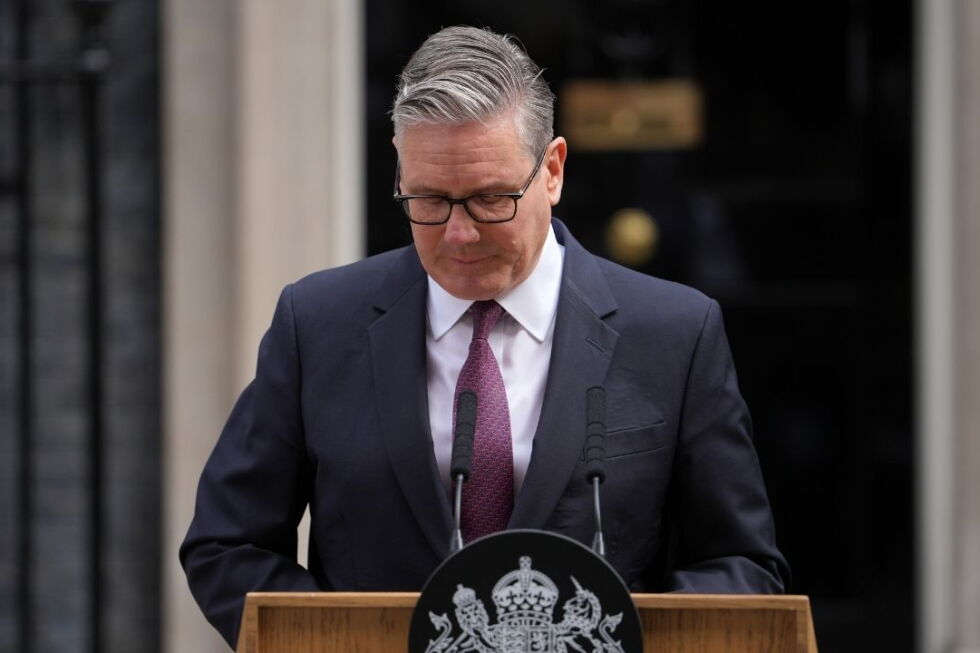
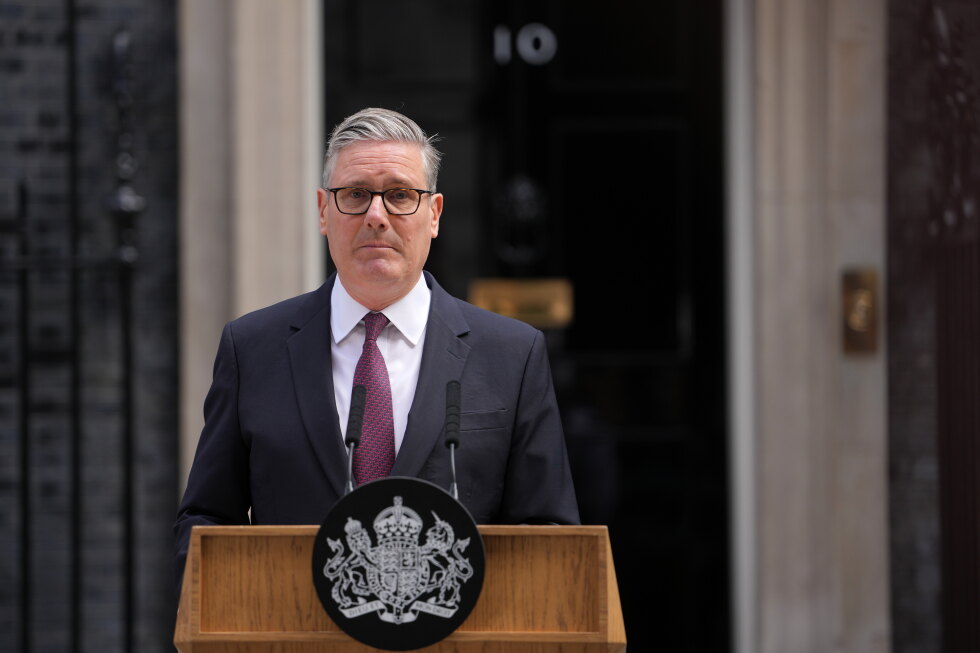
    LONDON — In a seismic shake-up of British midterm governance, Prime Minister Keir Starmer announced Monday he would resign from his roles as prime minister and leader of the ruling Labour Party, acknowledging he no longer holds the confidence of Labour’s parliamentary rank and file. He will remain in office only until a successor is selected, a transition that could be completed as early as mid-July.

    The political domino effect that led to Starmer’s exit was triggered last week by a landslide by-election win for Andy Burnham, the former popular mayor of Greater Manchester, in the northwest England constituency of Makerfield. Within hours of Starmer’s resignation statement delivered outside 10 Downing Street, Burnham — who will be re-sworn in as a member of Parliament this week after a decade serving in city-level governance — formally confirmed he will stand to replace Starmer as Labour leader and prime minister.

    Burnham’s decisive Makerfield victory has positioned him as the undisputed frontrunner in the leadership race. Against a backdrop of plummeting national poll ratings for Labour and heavy losses in May’s local elections, Burnham defied all political expectations: he fended off a strong challenge from the anti-immigration Reform UK, consolidated support from left-leaning minor parties, and lifted Labour’s vote share in the seat to nearly 55%. Political analysts note that if this level of support is replicated nationwide in the next general election, Labour would retain its hold on government. The next formal general election is not required to be held until 2029, and UK electoral law allows ruling parties to replace their leader — and thus prime minister — midterm without triggering a national vote.

    In his Downing Street statement, Starmer did not name Burnham explicitly, but conceded with graciousness that he was no longer the best candidate to lead Labour into the next national election. “The country expects stability, seriousness and a continued focus on the issues that matter most and that is what it will get,” Burnham told reporters ahead of his journey to London on Monday, adding that the leadership transition must be carried out in an orderly, responsible manner.

    Per the timeline laid out by Starmer, Labour’s National Executive Committee will open candidate nominations on July 9. If Burnham runs unopposed, he could be confirmed as the new party leader as soon as the following week. A contested leadership election would push the final result into September.

    Burnham has already secured a major early endorsement: Wes Streeting, who stepped down as Health Secretary last month and was widely expected to launch his own leadership bid, announced he would back Burnham instead. Streeting argued Burnham is the only candidate capable of defeating the nationalist, anti-immigration agenda of Reform UK, led by Nigel Farage, which has overtaken Labour in national opinion polls since the 2024 general election. “We could spend the summer exaggerating small differences, or we can roll up our sleeves and help him to deliver the change our party and our country needs,” Streeting said.

    Other potential contenders have not yet publicly commented on the leadership race. These include Starmer’s former deputy Angela Rayner, who resigned last September over an unpaid property tax controversy, and former Armed Forces Minister Al Carns, who quit last week in protest of Starmer’s defense funding plans. Many Labour parliamentarians have publicly called for a unanimous coronation of Burnham to allow him to move into 10 Downing Street before the party’s annual autumn conference, though Burnham declined to comment on whether he prefers an unopposed transition when asked by reporters.

    To qualify for the leadership contest, candidates must first secure the backing of 20% of Labour’s House of Commons lawmakers — a threshold of 81 votes. Candidates who clear that hurdle must then win support from either 5% of local constituency Labour parties or at least three affiliated groups, such as trade unions and cooperative societies. Once the candidate list is finalized, eligible Labour members and affiliate representatives will vote through a ranked-choice electoral system, with the first candidate to secure more than 50% of the vote declared the winner. After the result is confirmed, King Charles III will formally invite the new leader to form a government and take office as prime minister.
  • Czech public broadcasters stage warning strike over government plan to change funding

    Czech public broadcasters stage warning strike over government plan to change funding

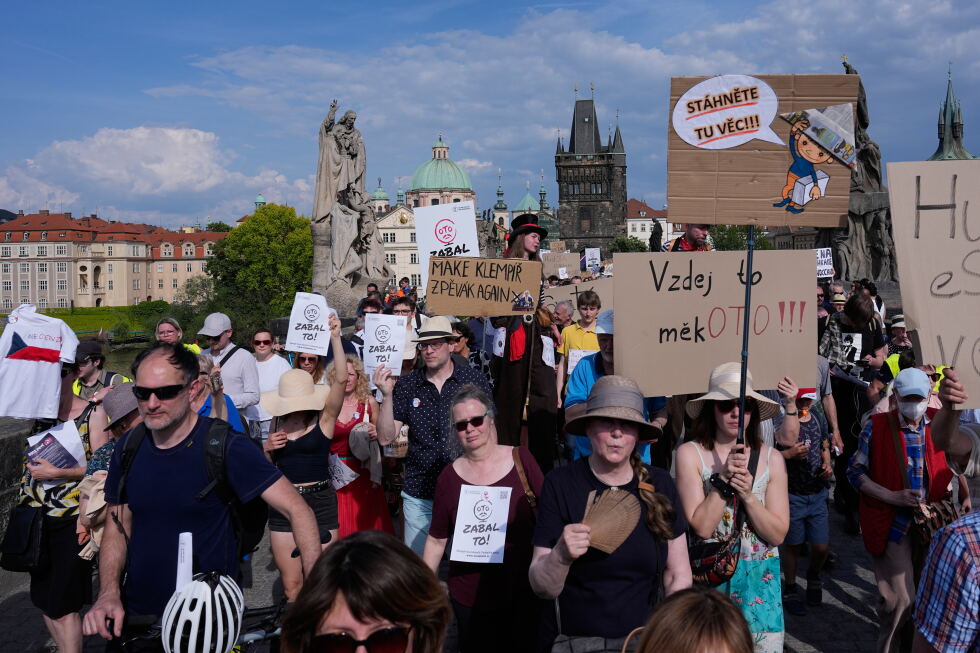
    On Monday, dozens of journalists and radio employees linked arms to form a human chain encircling Czech Public Radio’s headquarters in Prague, launching a 24-hour warning strike to push back against the ruling coalition’s controversial plan to restructure public broadcaster financing. The proposed policy, which was formally approved by the cabinet of populist Prime Minister Andrej Babiš last week, would scrap the long-standing system of viewer and listener license fees paid by individual households and private businesses, replacing that funding stream with direct allocations from the national state budget starting in 2025.

    The government’s overhaul has sparked widespread public outcry and repeated protests, with media workers and free press advocates warning that the shift would open the door to undue political interference and erode the core independence of Czech public media. Critics draw parallels to other central European countries led by populist governments, specifically pointing to Slovakia under Prime Minister Robert Fico and Hungary under former Prime Minister Viktor Orbán, where political control over public media has become widely documented.

    Beyond the threat to editorial independence, the plan also carries steep financial consequences for the institutions: official projections show public broadcasters would face an immediate 15% cut to their total annual budget in the first year of the new policy. Leaders of both public radio and public television have confirmed the funding reduction would force hundreds of layoffs across the two outlets, slash original content production, and lead to the cancellation of dozens of popular ongoing programs.

    During Monday’s strike, radio staff dressed all in black to symbolize what they call a threat to the future of independent public media. In a coordinated act of protest, most regular programs were delayed by one minute at the start of the broadcast, and the station intentionally limited access to its online and social media platforms for the duration of the 24-hour action. Strike organizers have confirmed they are already planning additional escalated protest steps in the coming weeks, but have not yet released details of what those actions will entail.

  • Pope Leo XIV warns wars are ‘fed’ faster than people as aid money dries up

    Pope Leo XIV warns wars are ‘fed’ faster than people as aid money dries up

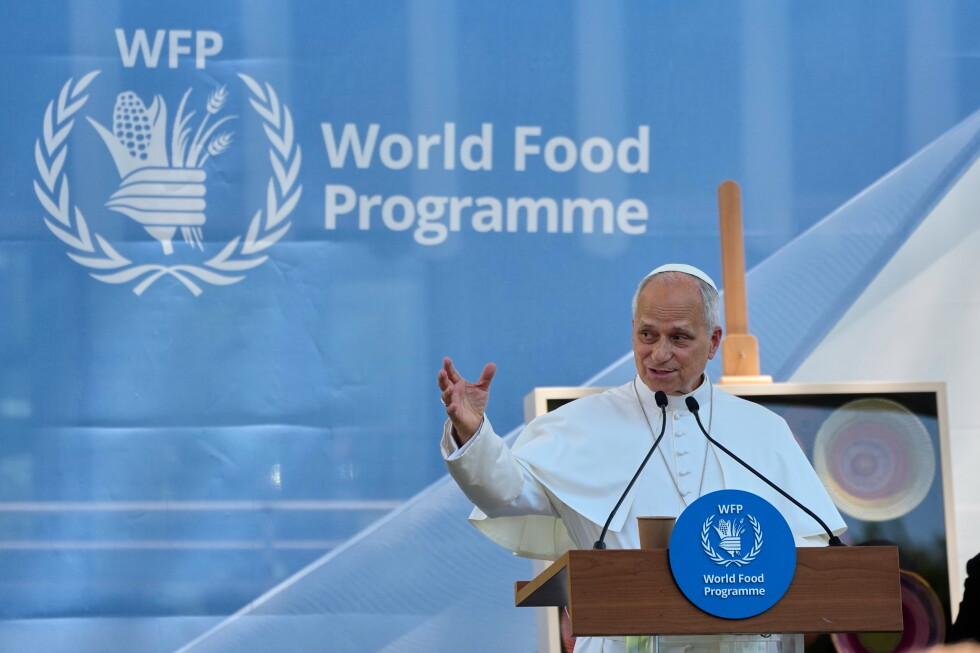
    ROME — In a stark rebuke of broken global priorities, Pope Leo XIV delivered a urgent address Monday to the governing body of the United Nations World Food Program (WFP) in Rome, calling out the lopsided reality that enables war to be funded far more easily than vulnerable communities can be fed. His appeal comes as the global food assistance system grapples with crippling funding gaps even as humanitarian needs surge to unprecedented levels across the globe.

    Pope Leo echoed a warning first issued by his predecessor, the late Pope Francis, during a visit to the WFP a decade ago, criticizing the systemic political and administrative barriers that slow or block life-saving aid from reaching hungry populations, while military spending and weapons flows to conflict zones continue without interruption. “Whereas forms of aid and development projects are obstructed by involved and incomprehensible political decisions, skewed ideological visions and impenetrable customs barriers, weaponry is not,” the pope told the assembly. “In effect, conflicts are ‘fed’ more readily than people are nourished.”

    His intervention comes on the heels of a recent WFP report that lays bare the scale of the funding crisis: global contributions for food assistance have plummeted roughly 59% since 2022, even as the number of people facing acute food insecurity has risen sharply. While there was a small bright spot last week, when the United States announced an $800 million pledge to the WFP that the agency says will support more than 38 million vulnerable people across at least 37 countries, the organization’s broader $10 billion funding appeal for 2026 remains drastically underfunded.

    The current funding shortfall follows years of shifting U.S. commitments to global humanitarian aid. For decades, the U.S. Agency for International Development served as the backbone of global relief efforts, but the Trump administration abolished the agency last year, slashing $60 billion in overall global assistance. A partial reset in December restored limited funding to the WFP and included a $218 million contribution to UNICEF, but it has not come close to closing the gap left by earlier cuts.

    Pope Leo warned that today’s interconnected crises — from ongoing armed conflicts to climate disruption and global economic inequality — have evolved from temporary emergencies into persistent, structural realities. He argued that the existing global order is not simply failing to address hunger, but actively reproducing the conditions that push millions into food insecurity. Describing a fractured international system marked by deep mistrust between nations, the pope noted that countries increasingly prioritize narrow national interests over collective global cooperation, even as widespread hunger acts as a core driver of further instability, irregular migration and new conflict.

    Framing the issue as a matter of fundamental human dignity rather than just a humanitarian challenge, Pope Leo urged global leaders to reframe their policy priorities to center the inherent worth of every person. “Every human person possesses an inherent and inalienable dignity that remains intact regardless of circumstance, condition or social status,” he said. He called on governments to cut bureaucratic red tape, dismantle barriers that block aid delivery, and reallocate global resources away from endless military spending to end the global hunger crisis.

  • Salah celebrates historic win with fans in Vancouver

    Salah celebrates historic win with fans in Vancouver

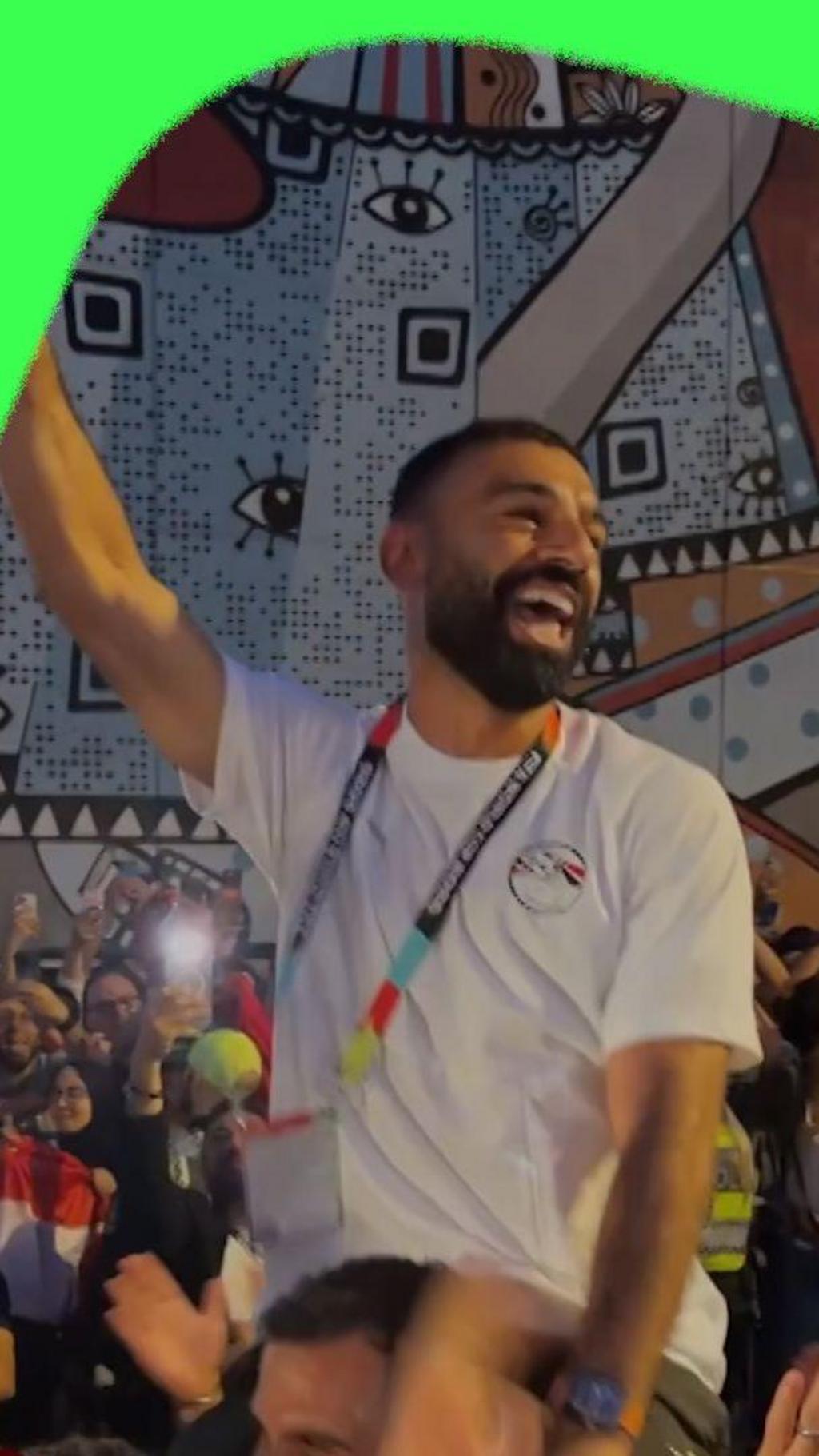
    A landmark moment in Egyptian football history has sparked joyful celebrations, with star forward Mohamed Salah leading street festivities alongside teammates and supporters in Vancouver following the North African nation’s first-ever win at the FIFA World Cup. The groundbreaking result ends a long drought of World Cup victories for Egypt, delivering a moment of national pride that transcended borders even for squad members and fans gathered abroad in Canada. Videos and on-the-ground reports capture the jubilant scene, where Salah and his fellow players joined fans in dance, reveling in the achievement that has cemented this match as a defining entry in Egyptian football lore. For years, Egypt’s national team had competed on the world’s biggest football stage without claiming a win, making this breakthrough result far more than a simple match victory—it is a historic milestone for the country’s football program. Supporters gathered in Vancouver joined fans across the globe in marking the occasion, turning city streets into an impromptu celebration of the long-awaited win that was capped by a decisive goal from Salah, who turned past World Cup disappointment to deliver the historic performance.

  • ‘China Shock’ seen as cover of protectionism

    ‘China Shock’ seen as cover of protectionism

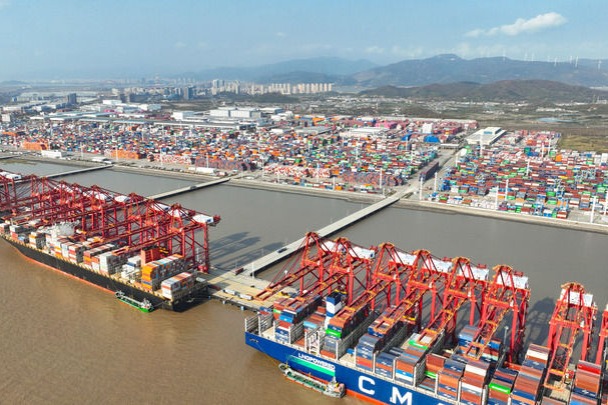
    As Western rhetoric around the so-called “China Shock 2.0” gains increasing traction ahead and during the recent G7 summit, global trade experts have pushed back against the narrative, arguing it is little more than a deliberate political construct designed to shield Western protectionist trade policies, rather than an evidence-based economic analysis.

    The rehashed “China Shock” framing, experts warn, carries severe risks for the global economy: it threatens to erode the post-WWII multilateral trading system, fragment cross-border supply chains, and drive up production and consumer costs worldwide. Instead of viewing China’s steady industrial and technological advancement through a hostile lens, major Western economies should embrace collaborative engagement, they say, to harness China’s unparalleled production capacity for shared global growth.

    The debate reignited during the three-day G7 summit, which concluded last Wednesday. European Commission President Ursula von der Leyen opened the line of criticism, first implying without naming a specific country that “some countries produce too much and do not consume enough”, framing this dynamic as an increasingly dangerous threat to global economic stability. She later explicitly targeted China, calling China’s persistent trade surplus with the European Union “unsustainable”.

    Von der Leyen’s remarks align with the growing “China Shock 2.0” narrative that has circulated in Western policy circles in recent months. Last month, the London-based Centre for European Reform think tank published a report claiming a new wave of Chinese competition is sending disruptive shocks through global goods markets, and many Western outlets amplified this narrative during the G7 summit to justify new trade restrictions targeting China.

    Jian Junbo, director of the Center for China-Europe Relations at Fudan University’s Institute of International Studies, explained that the entire “China Shock” framework centers on unsubstantiated claims about imbalanced trade, with a specific focus on China’s manufacturing goods surplus with Western economies.

    Sun Chenghao, head of the US-Europe Program at Tsinghua University’s Center for International Security and Strategy, noted that the current wave of hype around “China Shock 2.0” is fundamentally a political project, not an economic assessment. “It layers together Western anxieties over eroding industrial competitiveness, the rising costs of the green energy transition, and broader great power strategic competition with China, before reframing all these domestic issues as a Chinese ‘security threat’ for public consumption,” Sun explained.

    The original “China Shock” thesis was first coined by Western economists in the 2000s, arguing that China’s export boom after joining the World Trade Organization displaced millions of manufacturing jobs in the United States and disrupted Western labor markets. Sun pointed out that the core logic of the updated 2.0 version has not shifted: both iterations blame China for internal economic challenges that Western economies have failed to address themselves, from uneven industrial restructuring to widening income inequality to mounting competitive pressure in advanced technology sectors.

    Tu Xinquan, dean of the China Institute for WTO Studies at the University of International Business and Economics in Beijing, echoed this assessment. He emphasized that what Western commentators label a “China Shock” is simply the natural outcome of market competition and the dynamics of comparative advantage in global trade. “For decades, developed countries grew accustomed to holding unchallenged technological dominance,” Tu noted. “Now that they face a legitimate, competitive market rival, they are quick to abandon the free market principles they have spent decades promoting to the rest of the world.”

    Contrary to the narrative that frames China’s industrial upgrading as a global threat, experts argue that China’s progress has been a net benefit to the global economy, bringing affordable high-tech goods to markets around the world, boosting aggregate productivity, and improving consumer welfare on a global scale.

    James Pethokoukis, a senior fellow at the Washington-based American Enterprise Institute, laid out this positive dynamic in a December article published on the think tank’s website. Pethokoukis acknowledged that China’s rapid economic growth has reduced the United States’ relative share of global GDP, but noted that it has delivered tangible benefits to American consumers by lowering the cost of a vast range of goods and cutting input costs for American manufacturers. The U.S. economy as a whole is “absolutely richer” from trade with China, he concluded, even if its global relative share has shrunk.

    Tu further explained that China’s massive, integrated production base, paired with intense domestic competition that drives efficiency, allows Chinese manufacturers to deliver high-technology goods at drastically lower prices than international competitors, a dynamic that benefits consumers and businesses worldwide. This impact is particularly visible in the global renewable energy sector, where Chinese solar panels, wind turbines, and electric vehicles have driven down costs dramatically, accelerating the global clean energy transition.

    Official Chinese trade data underscores this impact: Chinese renewable energy products are exported to more than 200 countries and regions worldwide, and Chinese manufacturing innovation has cut global solar power generation costs by more than 80 percent and wind power costs by more than 60 percent over the past two decades.

    Sun warned that the Western push to frame normal industrial competition as a security threat carries long-term risks for the global economy. Over time, he said, this pan-securitization of trade will push up global production costs, reduce consumer welfare, fragment interconnected supply chains, and further erode the WTO-centered multilateral trading system that has underpinned global growth for decades.

    Against this backdrop, trade and international relations experts are calling for a more rational, objective approach to China’s economic development, urging Western policymakers to pursue collaborative trade frameworks that drive shared global prosperity, rather than erecting new barriers.

    Jian, from Fudan University, argued that what Western commentators call a “shock” is nothing more than normal market competition, which is inherently healthy for global market growth and prosperity. Blocking legitimate competition, he said, would only hold back overall economic development. “In this context, it is crucial to view this competition rationally and objectively, embracing a market-oriented mindset and promoting self-growth through cooperation with competitors,” Jian noted.

  • Keir Starmer’s resignation speech in full

    Keir Starmer’s resignation speech in full

    LONDON – In an unexpected announcement delivered on Monday, British Prime Minister Keir Starmer confirmed he will step down as leader of the governing Labour Party, just 24 months after securing a historic landslide general election victory that ended 14 years of Conservative rule.

    Opening his statement with reflection on his political journey, Starmer described walking into Downing Street after the 2024 election as the proudest moment of his life. He recalled the state of the Labour Party when he took over its leadership six years prior, noting that many political commentators and insiders had written the party off entirely. At that time, Starmer said, critics insisted Labour was politically, financially and morally bankrupt, and that a parliamentary majority — let alone a landslide win — was out of reach.

    Those doubters were proven wrong, Starmer emphasized, because he led a root-and-branch transformation of the party. His leadership purged the organization of the antisemitism that had eroded public trust, rebuilt confidence in Labour’s handling of the economy, defense and national security, and repositioned the party as a patriotic institution proud to stand alongside Britain’s national identity. All of these reforms, he noted, were pursued not for the sake of holding power, but to deliver tangible improvements for the British public.

    Outlining the Labour government’s achievements over its two years in office, Starmer highlighted a string of policy gains: an outperforming economy with growth faster than most European peers, consistent wage growth that outpaces inflation, billions in new private and public investment for major infrastructure projects, an end to a decade of austerity policies, the fastest reduction in National Health Service waiting lists in 17 years, the most sweeping expansion of worker and renter rights in a generation, the largest increase in defense spending since the end of the Cold War, reduced irregular small boat crossings across the English Channel, winding down costly asylum seeker hotel accommodations, new protections for minors from harmful social media content, and the lifting of 500,000 children out of household poverty.

    On the global stage, Starmer added his government had restored Britain’s international reputation, reaffirming the country’s commitment to democratic values, the rule of law, unwavering support for Ukraine’s sovereignty, and repaired fractured diplomatic ties with European allies, while securing new favorable trade agreements.

    “Change promised by a Labour government. Change fought for by a Labour government, change delivered by a Labour government,” Starmer said.

    He went on to explain that the core question facing the party now is not whether he could deliver power and begin the work of national renewal — a challenge he says has already been addressed. Instead, the debate centers on whether he is the right leader to take the party into the next general election. After receiving the parliamentary party’s answer to that question, Starmer said he accepts the outcome with good grace.

    “Every decision I’ve taken has been about putting the country I love first. That is why I will resign as leader of the Labour Party,” he stated. Starmer confirmed he had already notified King Charles III of his decision in a morning audience.

    Under the transition plan outlined by Starmer, the Labour Party’s National Executive Committee will launch a leadership contest with nominations opening on July 9 and concluding before parliament’s summer recess. If a competitive contest is held, the process will deliver a new leader before parliament reconvenes in September. Starmer will remain in office as Prime Minister through the duration of the contest, and pledged to oversee a smooth, orderly handover of power to his successor. He also promised full and unequivocal support to the next leader, noting they will inherit a country far stronger and fairer than the one Starmer took responsibility for two years prior, better positioned to tackle future challenges and secure Labour a second consecutive term in government.

    In closing, Starmer extended gratitude to his parliamentary colleagues, friends, Downing Street staff and the UK civil service for their dedication and support over the past six years. He added that after leaving office, he will prioritize his family, saying he looks forward to devoting more time to being a husband to his wife Vic, who he described as a constant rock through both triumph and turmoil, and a father to his children, who he called his greatest pride and joy.

  • Late singer Oliver Tree’s body returned to US after helicopter crash

    Late singer Oliver Tree’s body returned to US after helicopter crash

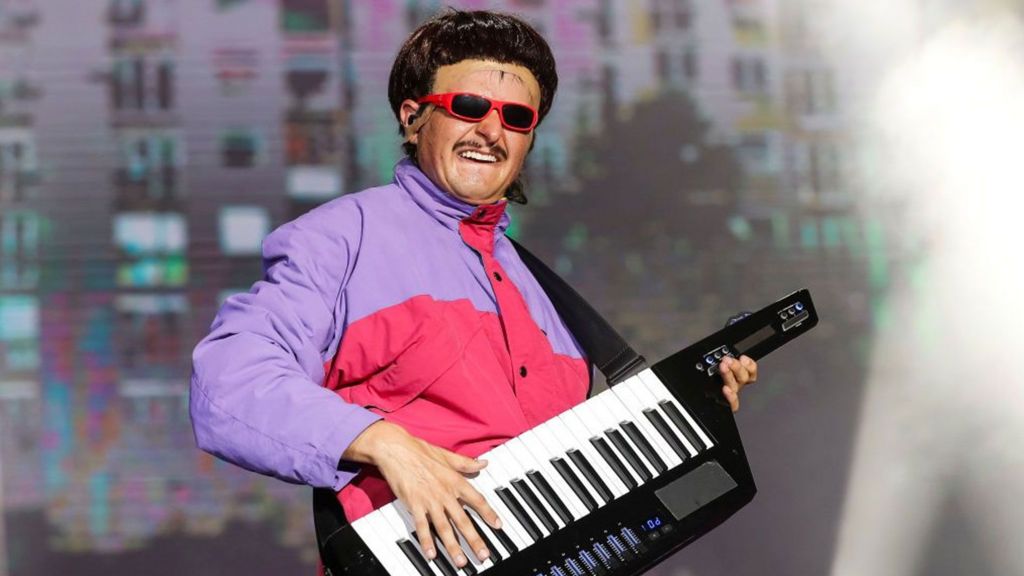
    Nearly a week after a tragic mid-air helicopter collision killed seven people including 32-year-old American musician and internet personality Oliver Tree over Rio de Janeiro, the singer’s remains have been returned to his home state of California, allowing him to “finally rest” according to a statement from his family posted to his official Instagram account.

    Tree first catapulted to mainstream fame in 2016 after his unique artistic persona and music went viral across social media platforms. Born Oliver Tree Nickell in Santa Cruz, California in 1993, he became instantly recognizable for his signature bowl-cut hairstyle and a string of chart-topping hits, including fan-favorite tracks *Life Goes On*, *Miss You*, and *Alien Boy*. At the time of his passing, Tree had just launched a global tour, wrapping his most recent performance in São Paulo, Brazil on June 6. He was scheduled to continue the tour with stops in Lisbon, Portugal in early July, followed by three UK shows in Glasgow, Manchester, and London this coming September.

    In the heartfelt statement shared to his account, Tree’s family announced they would honor the entertainer’s final wish, laid out in his will before his death, by launching a charitable foundation in his name. Named the Dr. Oliver Tree’s Extremely Epic Grant For Baby Geniuses, the organization will carry forward Tree’s lifelong goal of spreading joy, love, and artistic creativity to communities around the world.

    The post concluded with a message of gratitude to the millions of fans who have rallied around Tree’s loved ones in the wake of the accident. “Thank you for your constant love, support and positivity” during these extremely difficult times, the statement read. “Love you all so much, Oliver would be so proud of every one of his supporters, friends and family. Peace be with Oliver.”

  • ‘I witnessed Maradona’s Hand of God’ – a goal still talked about 40 years on

    ‘I witnessed Maradona’s Hand of God’ – a goal still talked about 40 years on

    It was a completely unplanned afternoon that would go on to stick with me for the rest of my life. At 17 years old, I had never stepped foot inside a professional football stadium, and I had zero interest in the sport. But a last-minute phone call would land me a front-row spot to one of the most iconic matches in World Cup history: the 1986 quarter-final between Argentina and England.

    That morning, my family had no plans for the day. Then a call came in: a friend of my father had two extra tickets he couldn’t use, and he offered them to my mother and I. My father hesitated. It had been less than five years since the Falklands War ended, and he feared lingering political tensions would spill over into the stands between Argentinian and English supporters. My mother, though, did not overthink it. This was the World Cup, she argued – a once-in-a-lifetime experience that no teenager should miss. We were going.

    I treated my first ever football match like I was heading to a night out, not a sporting event. I pulled on my nicest clothes, caked on far more makeup than I needed, and spent more time daydreaming about meeting attractive foreign fans than focusing on the legendary players we were going to watch. My mother gave me a raised eyebrow but let me have my fun. The buzz started long before we reached the stadium, as we drove across Mexico City. Flags flapped out of every car window, and strangers yelled shared chants across stalled traffic. I joined right in, screaming “Viva México!” alongside everyone else, even though Mexico had already been knocked out of the tournament. Football didn’t matter to me then, but being part of that electric collective moment did.

    Walking into the Azteca Stadium for the first time took my breath away. The sheer size of it, the deafening noise, the explosion of color from fans’ kits and face paint – it felt like the entire world had converged on that single spot. Fans from every corner of the globe packed the stands, singing, laughing, and decked out in costumes. I barely paid attention to the kickoff; I was far too caught up joining the Mexican wave, swept along in the crowd’s rhythm. The match itself felt distant, almost like a background detail.

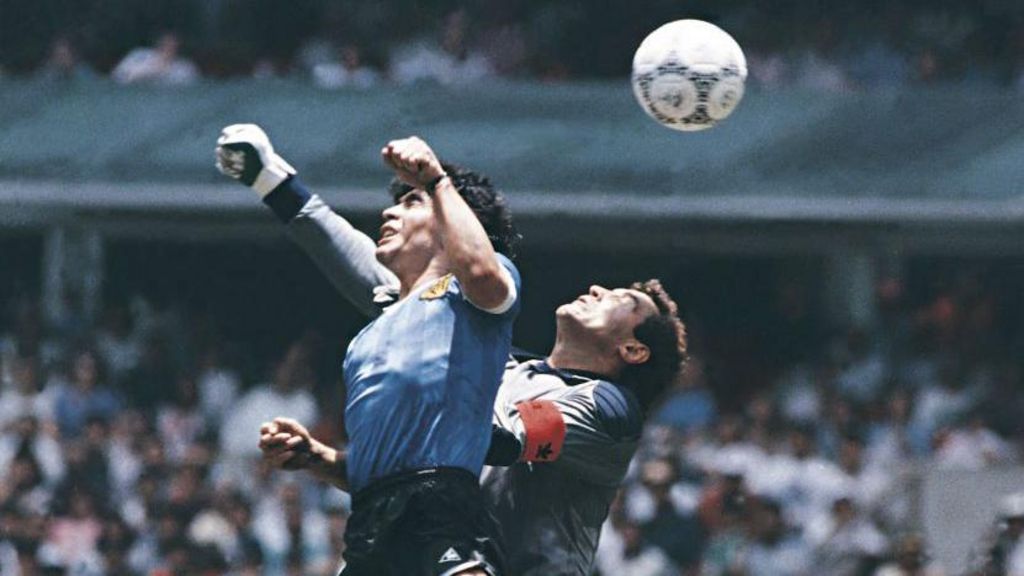
    Then everything changed in an instant. Suddenly, the entire stadium was on its feet. There was a burst of celebration, then confusion, then shouting as arguments broke out across the stands. It was a moment that would be debated for decades. The ball floated high above England’s penalty area, and Argentina’s Diego Maradona launched himself into the air to contest it with England goalkeeper Peter Shilton, who jumped to punch the ball clear. Instead, the ball bounced off Maradona and trickled over the goal line.

    At first glance, it looked like a clear header. For me, that was the moment the football stopped being background noise and became the only thing that mattered. Fans around me immediately started questioning the call: had he really scored with his head, or had he used his hand to push it in? Loud boos and protests rang out from the section of English supporters. Confused, I turned to the man sitting next to me and asked what all the commotion was. He explained Maradona had punched the ball into the net with his hand, but the referee had missed the foul and allowed the goal to stand. I was puzzled, and I had no idea in that moment that I had just watched one of the most infamous incidents in sports history. It would later become known globally as the “Hand of God”, named for Maradona’s own famous quip after the match: the goal had been scored “a little bit with my head, and a little bit with the hand of God.”

    The stands were still buzzing with heated debate over the controversial goal, so much so that almost everyone nearly missed what came four minutes later: Maradona’s second, far more extraordinary goal of the match. When I look back on that day, the Hand of God is not what I remember first. What sticks with me is that second run of play. Unlike the chaotic celebration that followed the first goal, the entire stadium went dead silent as Maradona dribbled the ball up the pitch from his own half.

    He spun past two English defenders right at the start of the run, then wove side to side down the field, dodging tackle after tackle, until he broke into the penalty area and slotted the ball into the back of the net. In an instant, the silence exploded into roars. I remember sitting there thinking: this is why people love football. Now I get it. What amazed me most was that even some of the English fans sitting near us joined in the applause, awed by the sheer brilliance of the play.

    When the final whistle blew, Argentina had sealed a famous 2-1 victory. As my mother and I walked back to our car, what stuck with me wasn’t just the match – it was the feeling of being inside the Azteca, a vast, iconic venue woven into the fabric of Mexico’s national history. It was more than just a stadium; it was part of our collective memory. Just one year earlier, Mexico City had been shattered by a devastating earthquake that left whole neighborhoods in rubble. I could still vividly remember the weeks after the disaster, when the air smelled of dust and grief, and the whole city held its breath. The Azteca had been one of the largest refuges for families who had lost their homes, a place where they found shelter and hope. Just standing there felt profound, almost sacred, yet outside those walls, the city had transformed into a joyful, alive hub of global celebration.

    As we walked, we ate tacos and fresh fruit covered in chile and lime from street vendors, talking and laughing, and I felt an overwhelming sense of pride in being Mexican. We laughed about how we leaned into every warm, loud stereotype of our country – the bright colors, the sombreros, worn with humor and defiance – and how as hosts, we opened our doors to the world with generosity and joy. Even the tournament’s official mascot, a chile pepper wearing a sombrero, captured that spirit perfectly: bold, playful, and unmistakeably Mexican.

    It took me many years to fully understand what I had witnessed that day. Football never became a huge passion of mine even after that match, but that moment has never faded. The first goal will always be controversial, it angered millions then and still sparks debate decades later, and when I later lived and worked in Argentina, my friends never missed a chance to tease my English colleagues about the Hand of God. But that controversy often overshadows what I saw next: a goal so spectacular, so breathtaking, that I would never have believed it possible if I hadn’t seen it with my own eyes. For me, that second goal is the one worth celebrating – the moment a 17-year-old girl who didn’t care about football finally understood why the sport captivates the world.

  • Three dead in Philippines high school shooting over bullying ‘grudge’

    Three dead in Philippines high school shooting over bullying ‘grudge’

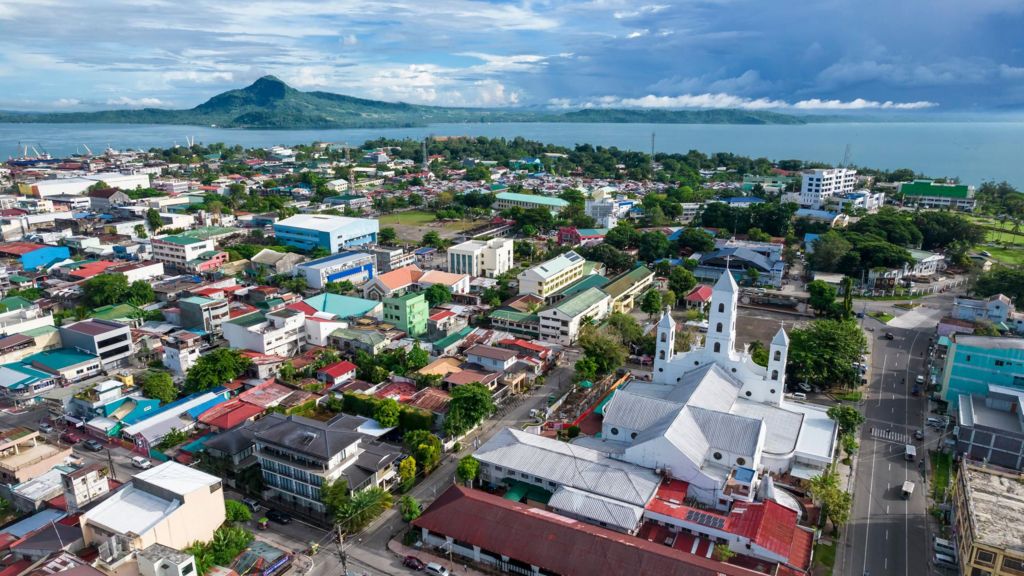
    A devastating targeted attack at a central Philippine high school has left three students dead and seven others injured after two teenage boys opened fire inside a classroom, in what law enforcement officials describe as an extremely rare school shooting for the Southeast Asian nation. The incident, which unfolded at San Jose National High School in Tacloban City, has prompted urgent national calls for stronger gun safety practices at home and improved student welfare monitoring in schools, after investigators confirmed the attack was driven by a long-held grudge over persistent bullying.

    The two suspects, aged 14 and 15, carried out the attack with two illegally accessed firearms: a .38 caliber revolver and a 9mm pistol that was registered to a police officer, who is a relative of one of the teenagers and has since been taken into custody for failing to secure her weapon. Following the shooting, one suspect was arrested at the scene within minutes, while the second turned himself in to authorities a short time later.

    Colonel Allen Rae Co, national spokesperson for the Philippine National Police, told reporters on Monday that the teen perpetrators walked directly into the classroom without warning and opened fire immediately. As of the earliest stages of the investigation, it remains unclear whether the pair’s intended targets were actually present in the room at the time of the attack. Of the seven injured people, three suffered direct gunshot wounds, while four were hurt during the panicked evacuation that followed the start of the shooting.

    A key emerging detail from the investigation has raised serious questions about whether the attack could have been prevented. Co confirmed that investigators discovered violent social media content posted by one of the suspects, showing the teen firing a gun in advance of the attack. He described these posts as clear warning signs, or “red flags,” that were overlooked by people around the teens.

    “This is very obviously red flags… we’re not putting blame on anybody, but if anybody was able to monitor these red flags, this could have been prevented,” Co told reporters.

    Gun violence remains a persistent challenge across the Philippines, but targeted shootings at schools are exceptionally uncommon. Local law enforcement confirmed this is the first recorded school shooting in Tacloban City in modern history. The tragedy has sparked outrage from victims’ families, who are demanding accountability for how the teenagers gained access to deadly weapons.

    Jennelyn Badoria, the mother of a 15-year-old student killed in the attack, told Agence France-Presse that anyone who allowed the minors to access the firearms must face legal consequences. “I’m asking that the gun owners be charged, because the guns wouldn’t have ended up in the children’s hands if it weren’t for them,” Badoria said in an interview outside the school campus.

    Local police officials have echoed that call, urging all Filipino households that own firearms to take greater responsibility for securing their weapons. Evalyn Diaz, a representative of Tacloban City Police, urged parents “to be more responsible, hide their firearms, make sure those are properly hidden, talk to their children” about the dangers of unsecured weapons.

    National leaders and education authorities have responded to the tragedy with statements of grief and a commitment to systemic review. Claire Castro, spokesperson for President Ferdinand Marcos Jr., said the president had been deeply “saddened by what happened” and acknowledged that the attack would spark profound grief and fear among all affected families. The Philippine Department of Education released a statement expressing “deep concern” and calling for national prayer for the victims and their families.

    Working alongside national police, the education ministry has launched a full review of national school safety protocols, anti-bullying policies, and student mental health and behavioral monitoring systems, to identify gaps that allowed this attack to occur.

    Philippine national police data shows that overall gun violence across the country has declined steadily in recent years, with just under 5,000 recorded gun-related incidents nationwide in 2024. Tacloban City, located on Leyte Island in the central Visayas region roughly one hour’s flight from the national capital Manila, is home to roughly 250,000 people. The city is still recovering from the devastation of Super Typhoon Haiyan in 2013, which killed more than 6,000 people across the region and pushed thousands of households into deeper poverty.

  • DR Congo Ebola cases top 1,000

    DR Congo Ebola cases top 1,000

    KINSHASA, June 22 — Health authorities in the Democratic Republic of the Congo (DRC) announced in an updated epidemiological briefing on Sunday that the total number of confirmed Ebola cases across the country has crossed the 1,000 threshold, marking a worrisome milestone in the ongoing outbreak.

    Latest official data released by the DRC Ministry of Health puts the current cumulative confirmed caseload at 1,003. As of the update, the outbreak has claimed 254 lives, bringing the overall case fatality rate to 25.3 percent. Of the active cases, 365 patients are currently receiving care in isolation facilities or hospital wards, while 100 people who contracted the virus have successfully recovered and been discharged.

    The outbreak is concentrated across three provinces in the eastern part of the country, where public health teams are working to trace all close contacts of confirmed cases to slow transmission. Current data shows that just 58 percent of identified contacts are successfully being monitored and followed up, a gap that response teams are working to address.

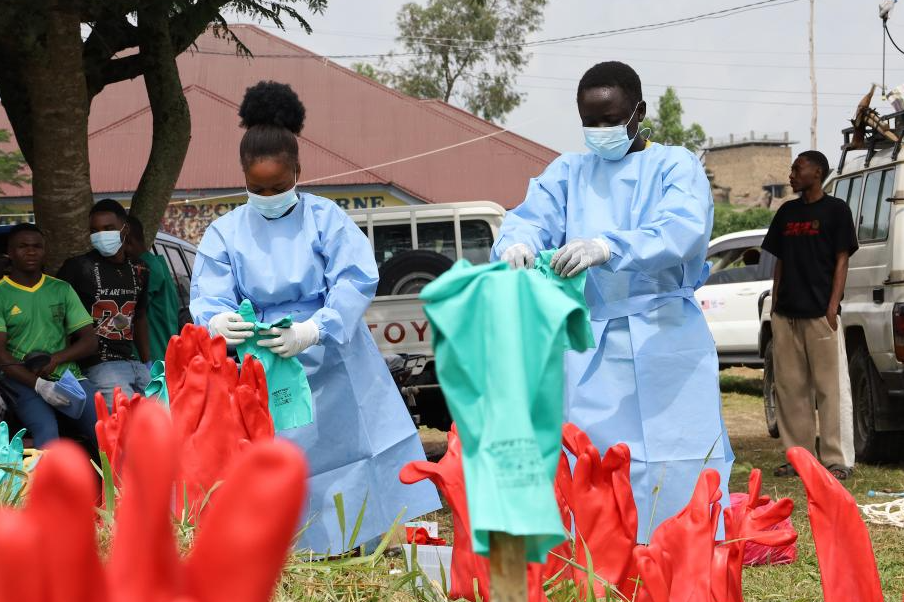
    Even as case numbers continue to climb, health authorities emphasize that all outbreak response operations remain fully active. Response measures include enhanced pathogen surveillance at border crossings and community levels, expanded public outreach and education campaigns to raise awareness of transmission risks, and ongoing work to boost clinical case management and expand diagnostic testing capacity across affected regions. The photo provided, captured on June 16 at an Ebola treatment center in Rwampara, eastern DRC, shows frontline health workers drying disinfected protective gloves ahead of their next shift caring for patients.