作者: admin

  • A construction crane falls on a passenger train in northeastern Thailand, killing at least 12 people

    A construction crane falls on a passenger train in northeastern Thailand, killing at least 12 people

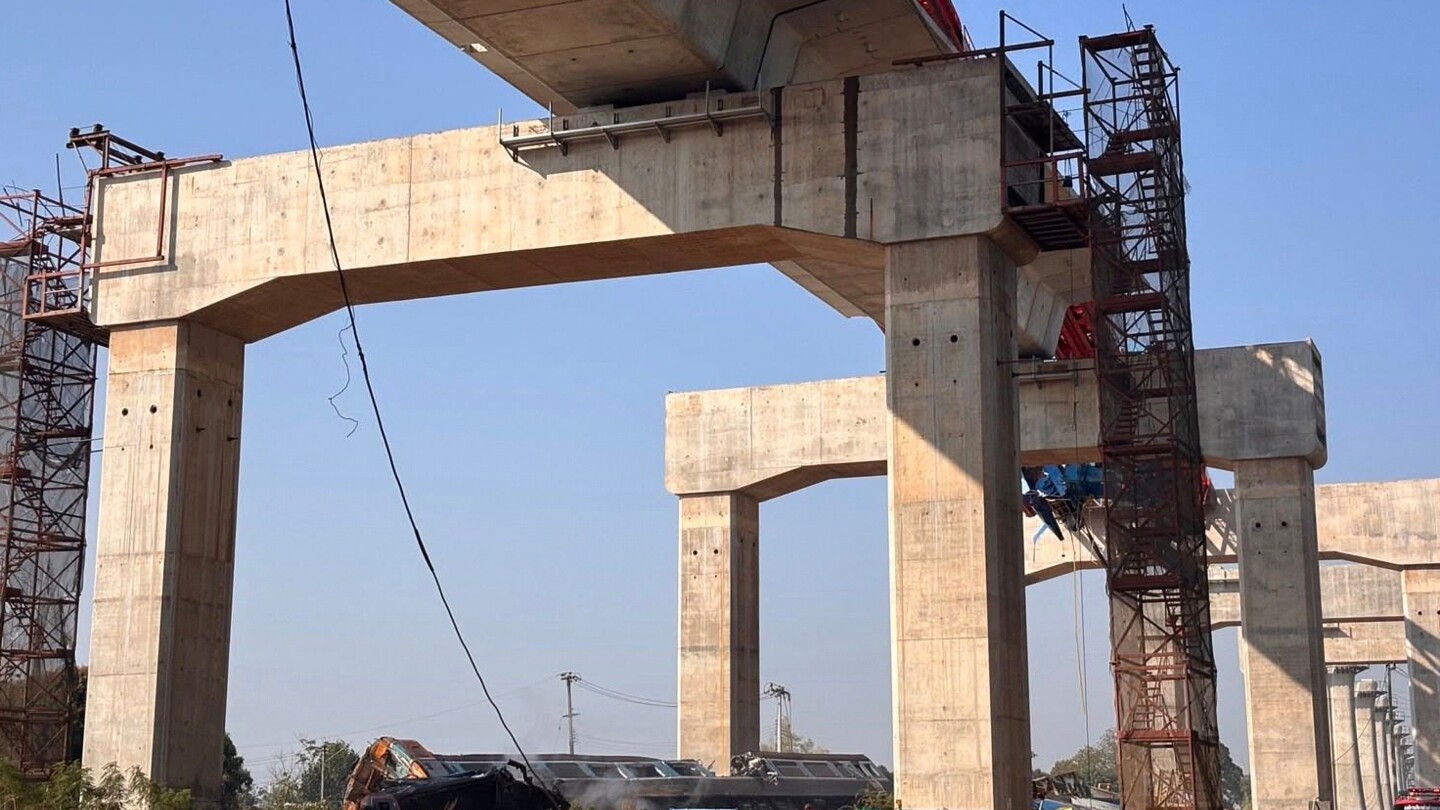
    A catastrophic construction accident in northeastern Thailand resulted in significant casualties on Wednesday when a massive crane collapsed onto a moving passenger train. The incident, which occurred in the Nakhon Ratchasima province, involved a crane that was part of an elevated high-speed railway construction project plummeting onto an active train traveling from Bangkok to Ubon Ratchathani province.

    The impact caused immediate derailment of the train cars followed by a serious fire outbreak. Emergency response teams from the Nakhon Ratchasima Public Relations Department quickly mobilized to the scene, working to contain the blaze and initiate rescue operations for passengers potentially trapped within the wreckage.

    According to official statements from Transport Minister Piphat Ratchakitprakan, the tragedy claimed the lives of at least 12 individuals among the 195 passengers and crew aboard the train at the time of the accident. Minister Ratchakitprakan has immediately ordered a comprehensive investigation into the circumstances leading to the crane failure and subsequent derailment, focusing on construction safety protocols and regulatory compliance within the infrastructure project.

  • Japanese and South Korean leaders jam to K-pop hits at a summit

    Japanese and South Korean leaders jam to K-pop hits at a summit

    In an unprecedented display of cultural diplomacy, Japanese Prime Minister Sanae Takaichi and South Korean President Lee Jae Myung transformed their bilateral summit in Nara into an impromptu musical collaboration. The leaders, following Tuesday’s formal discussions in Takaichi’s hometown, surprised observers by engaging in a joint drumming performance to popular K-pop anthems.

    Dressed in customized athletic jackets, the two heads of state seated themselves at a drum kit for a session featuring BTS’s global hit “Dynamite” and Kpop Demon Hunters’ “Golden.” The spontaneous performance, captured in an official video released by the Prime Minister’s office on Wednesday, showcased a rare moment of camaraderie between the neighboring nations’ leaders.

    The musical initiative was personally orchestrated by Takaichi, who revealed her background as an avid drummer during her university years and confessed her enduring passion for heavy metal music. President Lee expressed profound gratitude for the unique diplomatic gesture, noting on his social media platform that drumming had represented a long-cherished personal aspiration.

    Reflecting on the symbolic nature of their musical synchronization, Lee drew parallels to international relations, observing that just as they gradually aligned their rhythms while respecting individual differences, so too could Japan and South Korea enhance their cooperation through progressive steps.

    Takaichi praised her counterpart’s rapid musical acquisition, noting in her video commentary that Lee mastered basic drumming techniques within minutes. The Japanese leader reaffirmed her commitment to advancing bilateral relations through continued close communication and proactive implementation of their ‘shuttle diplomacy’ framework, emphasizing the importance of stable and forward-looking development in Japan-South Korea relations.

  • LA28 organizers promise ‘affordable’ Olympics tickets

    LA28 organizers promise ‘affordable’ Olympics tickets

    In a landmark announcement on Tuesday, LA28 Olympic organizers unveiled an ambitious ticketing strategy designed to ensure the 2028 Games remain both accessible and financially inclusive. The initiative, heralded as unprecedented in Olympic history, will see one million tickets priced at a symbolic $28, while approximately one-third of all available tickets (around 4.6 million) will be offered at $100 or less.

    The announcement was made during a ceremonial lighting of the Olympic cauldron at Los Angeles’ historic Memorial Coliseum, attended by approximately 300 Olympians and Paralympians. LA28 Chairman Casey Wasserman emphasized that affordability and inclusion form the cornerstone of their planning philosophy. “From the beginning, we’ve been clear: access to these games belongs to everyone,” Wasserman stated. “These games have to be affordable and inclusive.”

    The ticketing process will commence with a global registration lottery opening Wednesday at 7:00 AM local time (1500 GMT). Prospective attendees worldwide can register for a random draw that will allocate time slots for ticket purchases beginning in April. This approach aims to create equitable access opportunities for fans across economic backgrounds.

    The affordability initiative appears partly responsive to recent criticism of major sporting events’ ticketing strategies. FIFA faced significant backlash over “extortionate and astronomical” pricing for the 2026 World Cup across the United States, Canada, and Mexico, ultimately forcing the football governing body to introduce limited $60 tickets.

    LA28 executives highlighted additional indicators of public enthusiasm, noting over 150,000 volunteer applications already received. Chief Executive Reynold Hoover characterized this response as evidence of widespread community support, stating: “That’s nearly 150,000 supporters saying ‘I want to be a part of this, I want to be a part of history.’”

    The emotional significance of accessible pricing was underscored by Janet Evans, LA28’s Chief Athlete Officer and four-time Olympic gold medalist in swimming. Recalling her transformative experience attending the 1984 Los Angeles Olympics as a 12-year-old spectator, Evans noted: “Making tickets accessible and affordable for everyone here in the city of Los Angeles is going to inspire young people… because that’s what the Olympics do—they inspire people.”

  • Qatar joins US ‘Pax Silica’ as it races to catch up with Gulf neighbours on AI

    Qatar joins US ‘Pax Silica’ as it races to catch up with Gulf neighbours on AI

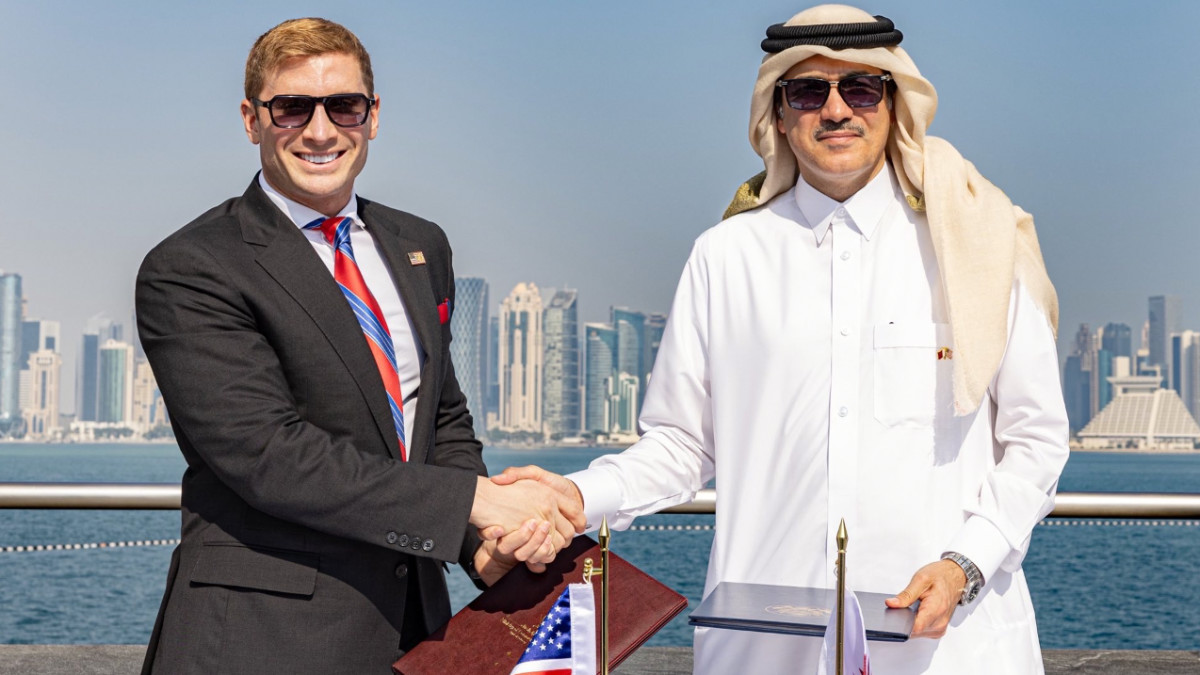
    In a significant move to bolster its technological standing, Qatar has officially entered the United States’ “Pax Silica” initiative, a coalition focused on securing global artificial intelligence and semiconductor supply chains. The agreement, formalized on Monday, positions the gas-rich Gulf nation as the first regional partner in this strategic framework, which includes close US allies such as Australia, Israel, Japan, South Korea, and the United Kingdom, alongside financial hub Singapore.

    The US State Department heralded the partnership as emblematic of a “new geopolitical consensus” where economic security is inextricably linked to national security. The department’s statement emphasized Qatar’s commitment to investing in secure energy, advanced technology, and critical minerals supply chains, deeming the nation an “indispensable partner.” This collaboration is expected to unlock joint ventures in digital infrastructure, advanced manufacturing, logistics, mineral refining, and energy projects.

    This development highlights the US’s increasing reliance on its oil and gas-rich Gulf partners to fuel its ambition to dominate the burgeoning AI industry, a strategic pivot at a time when many Western nations face fiscal constraints. While neighbors Saudi Arabia and the United Arab Emirates (UAE) have been more aggressive early movers in AI, lobbying the previous Trump administration for advanced chips, Qatar has been methodically building its capacity. Together, these Gulf states command trillions in sovereign wealth capital ready for deployment.

    Qatar’s recent initiatives signal a determined catch-up effort. In December, it established Qai, a dedicated AI development and investment company under the umbrella of its massive $524 billion Qatar Investment Authority (QIA). This followed a September investment in leading AI firm Anthropic by the QIA. Furthermore, a landmark $20 billion joint investment agreement was signed in December between Qai and US asset manager Brookfield to develop AI infrastructure within Qatar and on a global scale.

    The Gulf’s competitive advantage extends beyond capital. Nations like Saudi Arabia are leveraging ultra-cheap energy—with commercial electricity prices 30-50% below the global average—to attract energy-intensive AI companies and data centers, a compelling offer amid rising energy costs frustrating US consumers.

  • Asian benchmarks are mixed after Wall Street pulls back and global uncertainty grows

    Asian benchmarks are mixed after Wall Street pulls back and global uncertainty grows

    Asian financial markets exhibited divergent trends on Wednesday as regional political developments and a Wall Street pullback from record highs created a complex trading environment.

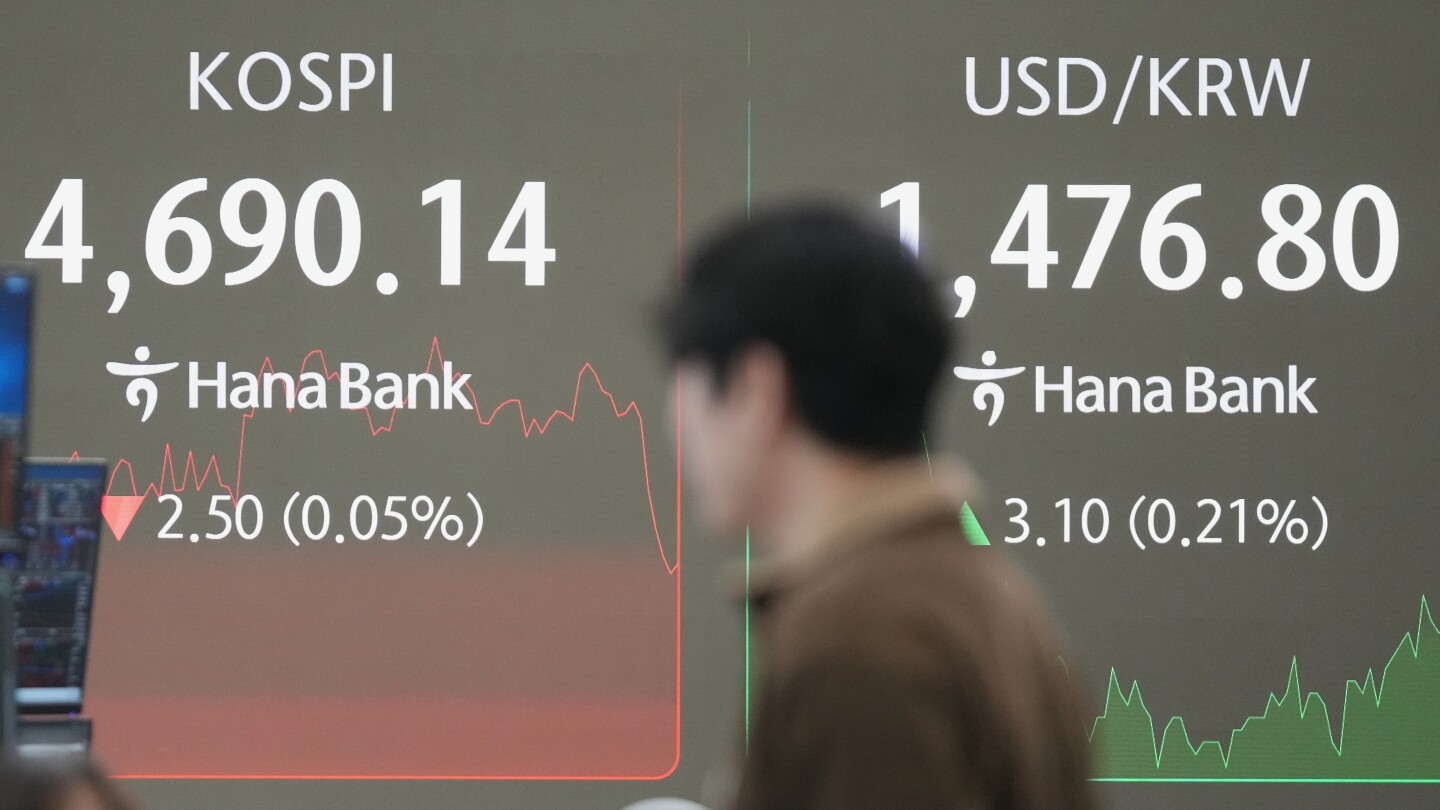
    Japan’s Nikkei 225 index surged 1.6% to 54,413.92 amid speculation about potential general elections, while Australia’s S&P/ASX 200 slipped 0.1% to 8,798.80. South Korea’s Kospi declined 0.1% to 4,687.32 despite diplomatic developments that saw Japanese Prime Minister Sanae Takaichi and South Korean President Lee Jae Myung commit to enhanced economic and security cooperation during their Tuesday meeting.

    Chinese markets demonstrated strength with Hong Kong’s Hang Seng gaining 0.8% to 27,055.14 and the Shanghai Composite jumping 1.2% to 4,187.14. This positive momentum occurred against a backdrop of heightened geopolitical tension, as former President Donald Trump announced new 25% tariffs on imports from countries conducting business with Iran, where activist reports indicated protest-related casualties had exceeded 2,500.

    The mixed Asian performance followed a Wall Street retreat from record levels, with the S&P 500 declining 0.2% from its all-time high amid varied corporate earnings results. The Dow Jones Industrial Average experienced a substantial drop of 398 points (0.8%), while the Nasdaq composite slipped 0.1%.

    Corporate earnings season presented challenges as JPMorgan Chase reported both profit and revenue below analyst expectations, causing a 4.2% stock decline. CEO Jamie Dimon maintained economic optimism, noting continued consumer spending and general business health. Delta Air Lines shares fell 2.4% despite exceeding profit expectations, due to revenue shortfalls and conservative 2026 profit forecasts.

    Healthcare companies emerged as market bright spots, with Moderna soaring 17.1% after raising its 2025 revenue forecast and providing updates on several products including a potential seasonal flu vaccine awaiting regulatory approval.

    Bond markets saw Treasury yields ease following inflation data that largely met economist expectations, strengthening predictions of at least two Federal Reserve interest rate cuts in 2026. The latest inflation report showed consumer prices rose 2.7% annually, slightly exceeding expectations and remaining above the Fed’s 2% target.

    Energy markets showed minimal movement with benchmark U.S. crude dipping to $60.97 per barrel, while currency markets saw the U.S. dollar holding steady against the yen and euro.

  • West Bank Bedouin community driven out by Israeli settler violence

    West Bank Bedouin community driven out by Israeli settler violence

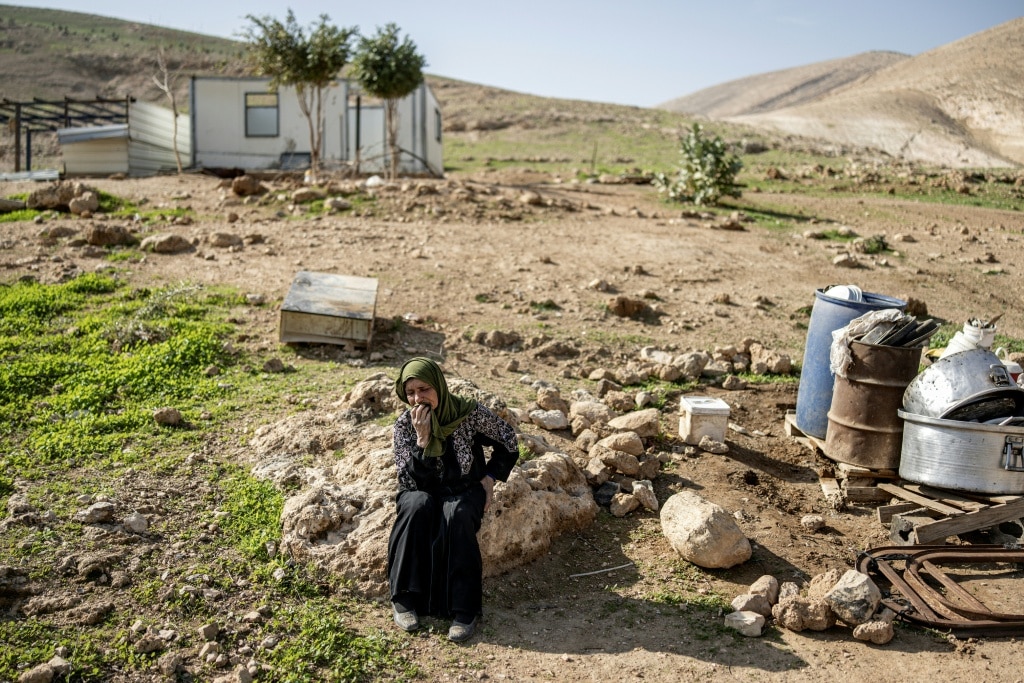
    In a distressing exodus, Bedouin communities in the occupied West Bank are being systematically displaced following relentless violence from Israeli settlers, marking a severe humanitarian crisis in the region. The semi-nomadic herders of Ras Ein al-Auja, who have inhabited these lands for generations, now dismantle their homes under duress, with approximately half of the village’s 130 families already fleeing their ancestral territories.

    This displacement pattern represents what watchdog organizations term ‘pastoral colonialism’—a strategy where settlers use agricultural expansion and livestock competition to force indigenous populations off contested lands. According to United Nations documentation, October alone witnessed an unprecedented 260 settler attacks against Palestinian communities, creating an environment of pervasive fear and instability.

    Beyond physical violence, settlers have employed sophisticated tactics to render Bedouin life unsustainable. Critical water sources have been diverted, power supplies systematically cut, and grazing lands appropriated. The community’s namesake spring in Ras Ein al-Auja—once the lifeblood of their self-sufficient existence—was commandeered in May, severing their primary water access.

    Despite military assurances of increased presence and monitoring technology implementation, residents report inadequate protection and frequent arrests when attempting to defend their properties. “If you defend your home, the police or army will come and arrest you. We can’t do anything,” lamented Naif Zayed, echoing the community’s desperation.

    The displacement creates a devastating ripple effect, as displaced families attempting to resettle in other rural areas face repeated evictions. Farhan Jahaleen, a Bedouin representative, notes that families previously displaced from Jiftlik village faced secondary displacement in the Jordan Valley, revealing a pattern of persistent territorial pressure.

    Spray-painted slogans reading “No future in Palestine” now adorn West Bank roadways, encapsulating the collective despair of communities witnessing the erosion of their centuries-old pastoral traditions and cultural identity under expanding settlement regimes.

  • Actor Kiefer Sutherland arrested over alleged assault of ride-share driver

    Actor Kiefer Sutherland arrested over alleged assault of ride-share driver

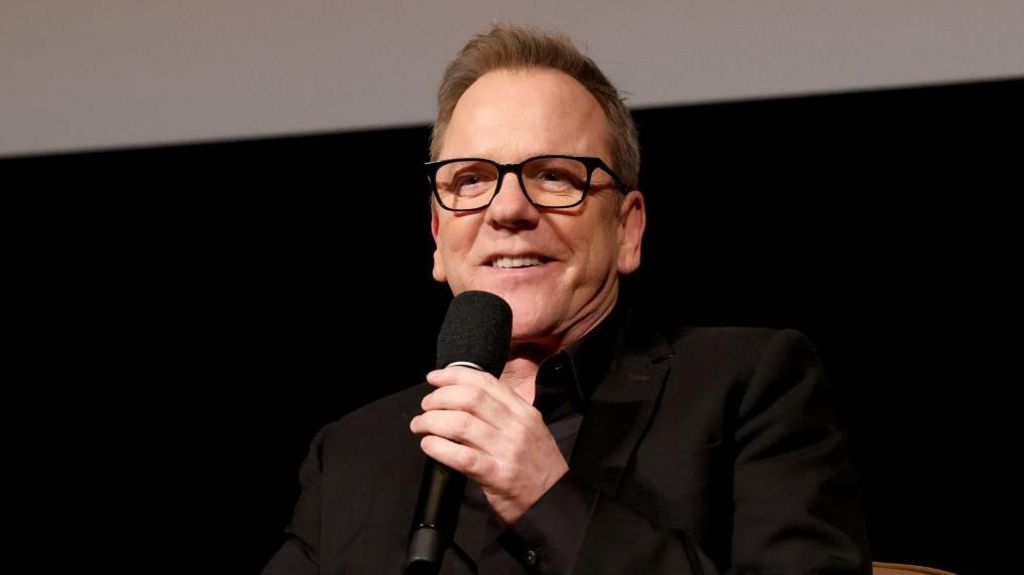
    Renowned Canadian actor Kiefer Sutherland found himself in legal turmoil following his arrest in Hollywood on allegations of physically assaulting and issuing criminal threats to a ride-share driver. The incident occurred at approximately 12:15 AM PST on Monday at the intersection of Sunset Boulevard and Fairfax Avenue, according to the Los Angeles Police Department’s Hollywood Division.

    The LAPD confirmed that Sutherland entered the vehicle and subsequently engaged in physical altercation with the driver, though authorities noted the victim sustained no injuries during the confrontation. The 59-year-old actor, best known for his iconic portrayal of counterterrorism agent Jack Bauer in the thriller series ’24’ and as the accidental president in ‘Designated Survivor,’ was taken into custody and later released after posting $50,000 bail.

    Sutherland, son of legendary actor Donald Sutherland, is scheduled to appear in court on February 2nd to address the charges. This incident marks another chapter in the actor’s history with law enforcement, which includes previous arrests for driving under the influence and probation violation in 2007 that resulted in a 48-day jail sentence, as well as prior assault charges in 2009 that were ultimately dismissed. His most recent encounter with police occurred in 2020 for an illegal U-turn maneuver in Hollywood.

    The LAPD’s Hollywood Division has launched a full investigation into the circumstances surrounding the alleged assault. Representatives for the acclaimed actor have not yet responded to media inquiries regarding the incident.

  • US Supreme Court appears likely to uphold restrictions on transgender athletes

    US Supreme Court appears likely to uphold restrictions on transgender athletes

    The United States Supreme Court appears poised to uphold state-level prohibitions preventing transgender women and girls from competing on female sports teams in educational institutions. During extensive oral arguments spanning over three hours on Tuesday, a majority of justices demonstrated inclination toward validating athletic bans enacted across multiple states.

    The court examined consolidated cases originating from Idaho and West Virginia, where plaintiffs challenge statutes mandating sports team designation based on biological sex recorded at birth. In Idaho, a transgender college student contends the prohibition violates constitutional equal protection guarantees, while a West Virginia high school student asserts the ban contravenes federal civil rights legislation.

    Idaho Solicitor General Alan Hurst defended the state’s pioneering 2020 legislation, arguing before the court that ‘Idaho’s law classifies on the basis of sex, because sex is what matters in sports. It correlates strongly with countless athletic advantages, like size, muscle mass, bone mass and heart and lung capacity.’

    Justice Brett Kavanaugh highlighted the national divide in approaches, questioning judicial intervention ‘when half the states are allowing transgender athletes to participate, half are not’ amid ongoing societal debate. With the court’s 6-3 conservative majority, the three liberal justices and plaintiffs’ counsel advocated for narrow adjudication or complete dismissal of the cases.

    Notably, Idaho plaintiff Lindsay Hecox has withdrawn from university sports and attempted to retract her lawsuit, while West Virginia’s case involves a single student, Becky Pepper-Jackson, who sought to join her school’s track team at age 11.

    The proceedings revealed complex legal considerations regarding historical discrimination comparisons and physiological competitive advantages. Lawyers for the athletes suggested distinguishing between transgender athletes using testosterone-suppressing medication and others, emphasizing that mitigated ‘sex-based advantages’ might permit competition without undermining women’s sports.

    This judicial review occurs against a political backdrop where recent polling indicates bipartisan opposition to transgender participation in women’s sports, and follows the court’s previous conservative alignment in upholding restrictions on youth gender transition treatments. A final decision is anticipated in June, potentially establishing nationwide precedent for one of America’s most contentious social policy debates.

  • China had a record $1.2 trillion trade surplus in 2025, as exports rose 6.6% in December

    China had a record $1.2 trillion trade surplus in 2025, as exports rose 6.6% in December

    China achieved an unprecedented trade surplus of nearly $1.2 trillion in 2025, according to official data released Wednesday, marking a significant expansion from the previous year’s $992 billion. The record imbalance emerged as robust exports to emerging markets compensated for declining shipments to the United States amid escalating trade tensions.

    Customs statistics reveal China’s annual exports grew 5.5% to reach $3.77 trillion, while imports remained stagnant at $2.58 trillion. December performance exceeded expectations with exports climbing 6.6% year-on-year in dollar terms, accelerating from November’s 5.9% increase. Import growth simultaneously strengthened to 5.7% from 1.9% the previous month.

    The export surge has become a crucial economic stabilizer, maintaining growth near Beijing’s 5% target despite domestic challenges including a prolonged property sector crisis that continues to suppress consumer confidence. This export momentum has simultaneously triggered international concerns about market disruption from competitively priced Chinese goods.

    Geographic trade patterns show a dramatic realignment as shipments to South America, Southeast Asia, Africa, and Europe have substantially offset reduced exports to the United States following the return of President Donald Trump and his intensified trade policies.

    Financial institutions project sustained export performance through 2026. BNP Paribas’ chief China economist Jacqueline Rong notes: “We continue to expect exports to act as a major growth driver this year.” Natixis senior economist Gary Ng forecasts approximately 3% export growth for 2026, slightly moderating from 2025’s 5% expansion, with the trade surplus expected to remain above $1 trillion.

    The International Monetary Fund has meanwhile urged Chinese authorities to address economic imbalances by accelerating the transition from export dependency toward domestic demand stimulation and investment diversification.

  • US official says Venezuela freeing Americans in ‘important step’

    US official says Venezuela freeing Americans in ‘important step’

    In a significant diplomatic development, Venezuela’s interim government has initiated the release of multiple American detainees from its prisons. The move comes just days after U.S. military operations resulted in the capture of former president Nicolás Maduro and his wife on January 3rd, an operation that reportedly resulted in over 100 casualties according to official accounts.

    The U.S. State Department, through an anonymous official, characterized the prisoner release as ‘an important step in the right direction’ by Venezuela’s transitional authorities. While specific details regarding the number of freed individuals or their identities remain undisclosed, confirmation has been provided that multiple American citizens are involved in this humanitarian gesture.

    This development occurs against the backdrop of Venezuela’s tumultuous political landscape following the controversial 2024 presidential election. Maduro had been declared victorious amid widespread allegations of electoral manipulation, leading to substantial protests and subsequent detentions of demonstrators. The recent U.S. military intervention that apprehended Maduro and his spouse, who now confront drug trafficking charges in American courts, precipitated this diplomatic shift.

    Concurrently, Venezuela has restored access to the social media platform X, ending a blockade imposed by Maduro’s administration in August 2024 following his contested reelection. The platform had served as a crucial communication channel until its suspension, which occurred after Elon Musk, X’s owner, engaged in public disputes with the Venezuelan leadership.

    Delcy Rodríguez, previously Maduro’s vice president and now acting president, has signaled a transitional approach. Her updated social media profile emphasizes national unity and economic stability while the Maduro account continues to display messages supporting the deposed leader.

    The United States has consistently prioritized the liberation of citizens detained abroad, having previously negotiated similar arrangements with Maduro’s government. This latest prisoner release represents a tangible outcome of the shifting power dynamics in Caracas following the change in leadership.