作者: admin

  • Former Shanxi CPPCC chairman sentenced to life in prison for bribery

    Former Shanxi CPPCC chairman sentenced to life in prison for bribery

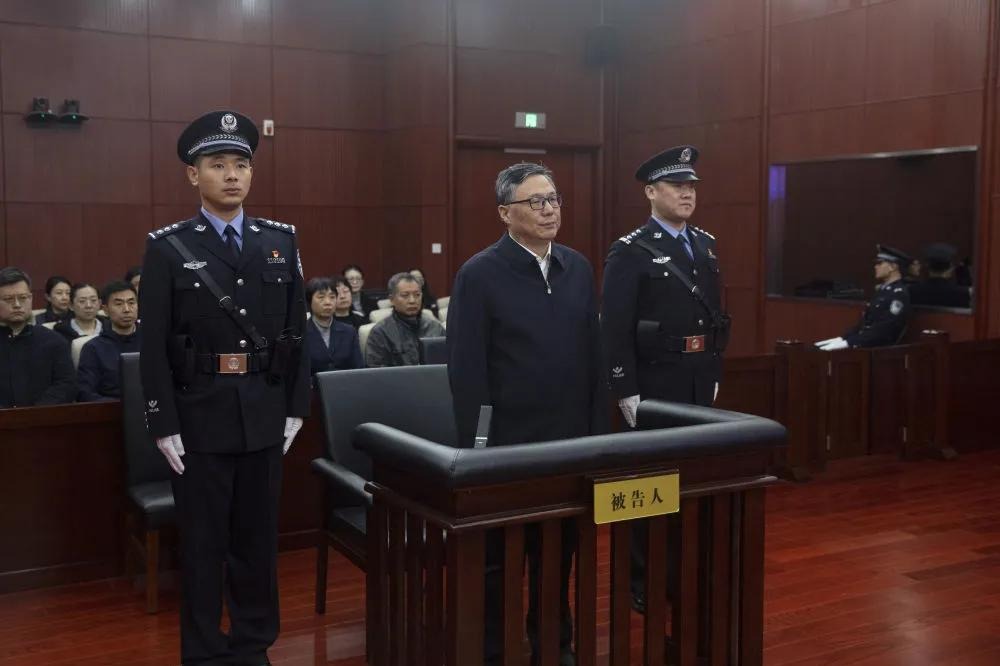
    In a significant ruling against corruption, Wu Cunrong, former chairman of the Shanxi Provincial Committee of the Chinese People’s Political Consultative Conference (CPPCC), has been sentenced to life imprisonment by the Beijing No. 2 Intermediate People’s Court. The verdict, delivered on Friday, marks the culmination of a high-profile case that has drawn national attention.

    The court determined that Wu abused his official positions across multiple regions—including Chongqing, Anhui, and Shanxi—over an 18-year period from 2006 to 2024. His corrupt activities involved leveraging authority in project approvals, land-use conversions, and business operations to illicitly accumulate more than 127 million yuan (approximately $18.44 million) in bribes.

    In addition to life imprisonment, the court ordered the permanent deprivation of Wu’s political rights and the confiscation of all personal assets. All illicit gains and associated interests will be reclaimed by the state treasury.

    The judicial panel characterized the scale of bribes as “extremely large” and noted the “severely damaging” impact of Wu’s actions on public interests. However, the sentence reflected certain mitigating factors: Wu voluntarily disclosed bribery details previously unknown to investigators, demonstrated cooperation throughout the proceedings, and made active efforts to return illegal proceeds.

    Wu, a 62-year-old native of Anhui Province, began his political career in 1985 after joining the Communist Party of China in 1984. He held several key positions, including Mayor of Hefei and Party Chief of the city, before assuming the role of Deputy Mayor of Chongqing in 2017. His tenure as chairman of Shanxi’s CPPCC began in January 2023 and ended abruptly when he came under investigation in December 2024.

    Following his expulsion from the Party and removal from public office in June 2025, Wu was formally indicted three months later. The public trial took place in Beijing late last year, culminating in this week’s sentencing.
  • Shanghai Disney’s 10th birthday party begins

    Shanghai Disney’s 10th birthday party begins

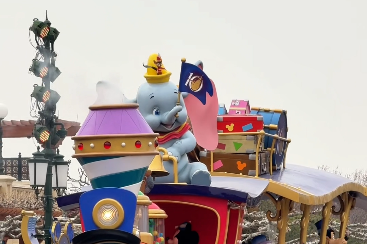
    Shanghai Disney Resort officially commenced its grand 10th anniversary festivities on March 20, 2026, marking a significant milestone in its operational history. The celebration launch was strategically aligned with the United Nations’ International Day of Happiness, creating a symbolic connection between Disney’s brand philosophy and global happiness advocacy.

    Andrew Bolstein, President and General Manager of Shanghai Disney Resort, emphasized the intentional selection of this date, stating that the Disney experience fundamentally represents the physical manifestation of joy and contentment. The resort has prepared an extensive array of exclusive experiences and special programming to commemorate this decade of entertainment excellence in China’s premier entertainment destination.

    The anniversary celebration introduces innovative guest experiences across the entire resort, including limited-edition merchandise, distinctive culinary offerings, and reimagined entertainment spectacles. This milestone event not only celebrates past achievements but also showcases Shanghai Disney’s ongoing commitment to delivering world-class entertainment experiences that blend Disney’s legendary storytelling with unique Chinese cultural elements.

    The resort’s decade of operation has established it as a cornerstone of China’s tourism industry, attracting millions of visitors annually and significantly contributing to the local economy. The anniversary celebrations are expected to draw increased visitation from both domestic and international tourists seeking to participate in this historic moment for one of Asia’s most prominent theme parks.

  • Farming in Dunhuang murals

    Farming in Dunhuang murals

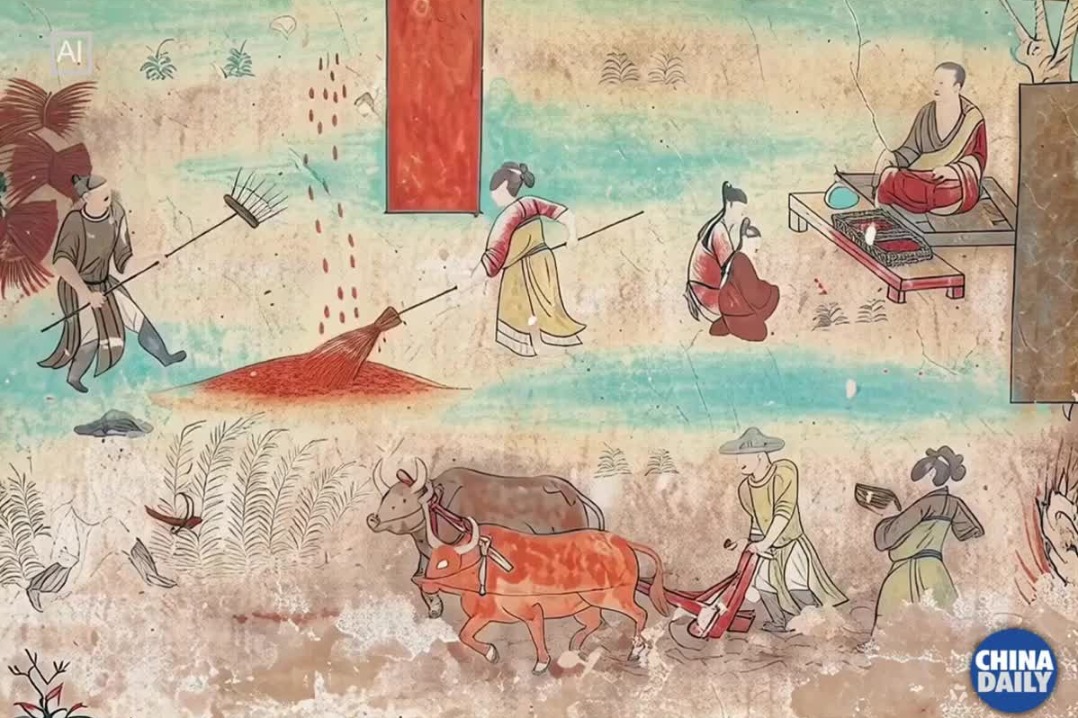
    A remarkable mid-Tang Dynasty (618-907) mural from the Dunhuang caves in Northwest China’s Gansu province offers a vivid window into ancient agricultural traditions coinciding with the Spring Equinox. This culturally significant artwork, preserved for over a millennium, depicts farmers and their cattle commencing seasonal fieldwork during this important solar term that began on March 20.

    The meticulously preserved mural showcases the sophisticated farming techniques and rural生活方式 that characterized China’s agricultural civilization during the Tang Dynasty’s golden age. The artwork forms part of the extensive Dunhuang Mogao Grottoes collection, a UNESCO World Heritage site containing some of the world’s most exceptional Buddhist art spanning ten dynasties.

    Archaeological experts note that such murals provide invaluable insights into the daily lives, tools, and seasonal practices of ordinary people during historical periods often documented primarily through official records and elite perspectives. The Spring Equinox depiction particularly highlights how ancient Chinese agricultural societies synchronized their farming activities with the 24 solar terms—an agricultural calendar system still influencing rural practices today.

    The preservation of these murals represents ongoing efforts by Chinese cultural authorities to protect and study the Dunhuang caves, which contain approximately 45,000 square meters of murals and more than 2,400 painted sculptures. Recent conservation technologies have enabled researchers to analyze these artworks in unprecedented detail, revealing information about historical climate patterns, crop varieties, and farming implements used over a thousand years ago.

  • Gulf’s decades-long strategy of sporting investment rocked by Mideast war

    Gulf’s decades-long strategy of sporting investment rocked by Mideast war

    The escalating Middle East conflict has delivered a severe blow to the Gulf region’s decades-long strategy of leveraging global sports investments to transform its international image and diversify oil-dependent economies. What began as a transformative economic vision has now encountered unprecedented security challenges that threaten the very foundation of this ambitious project.

    Recent weeks have witnessed the cancellation or postponement of numerous high-profile sporting events across the Gulf nations, including the highly anticipated ‘Finalissima’ football match featuring Lionel Messi’s Argentina against European champions Spain in Doha. The disruptions extend to Formula One grands prix in Bahrain and Saudi Arabia, Qatar’s Moto GP, Asian Champions League matches, and the World Endurance Championship round—all casualties of regional instability.

    According to security analysts, the Gulf had successfully projected itself as an island of stability amidst regional turmoil, investing billions in state-of-the-art stadiums and infrastructure modernization. Qatar’s successful hosting of the 2022 World Cup represented the pinnacle of this strategy, with Saudi Arabia poised to follow with the 2034 tournament.

    Sports industry experts identify three fundamental pillars supporting the Gulf’s athletic ambitions: strategic sponsorship of events and federations; acquisition of prominent football clubs like Manchester City and Paris Saint-Germain; and hosting international competitions. The current conflict primarily impacts the third pillar, though the reputational damage affects the entire ecosystem.

    James Dorsey of Singapore’s S. Rajaratnam School of International Studies emphasizes that the region has suffered ‘significant reputational damage’ that will require substantial effort to repair. However, Qatari media representatives maintain that despite immediate setbacks, the broader sports investment strategy remains fundamentally unchanged.

    Academic experts specializing in sports politics suggest that international sporting federations will likely return to the Gulf once hostilities cease, drawn by the region’s proven financial capabilities and organizational professionalism. The calendar already includes future commitments such as Saudi Arabia hosting the 2027 Asian Cup and Qatar organizing the basketball World Cup that same year, with Olympic ambitions for 2036.

    The ultimate resolution of these sporting aspirations hinges critically on how the current conflict concludes. A stabilized regional environment could rejuvenate the Gulf’s athletic ambitions, while prolonged instability or heightened tensions might fundamentally challenge the viability of hosting major international events in the region.

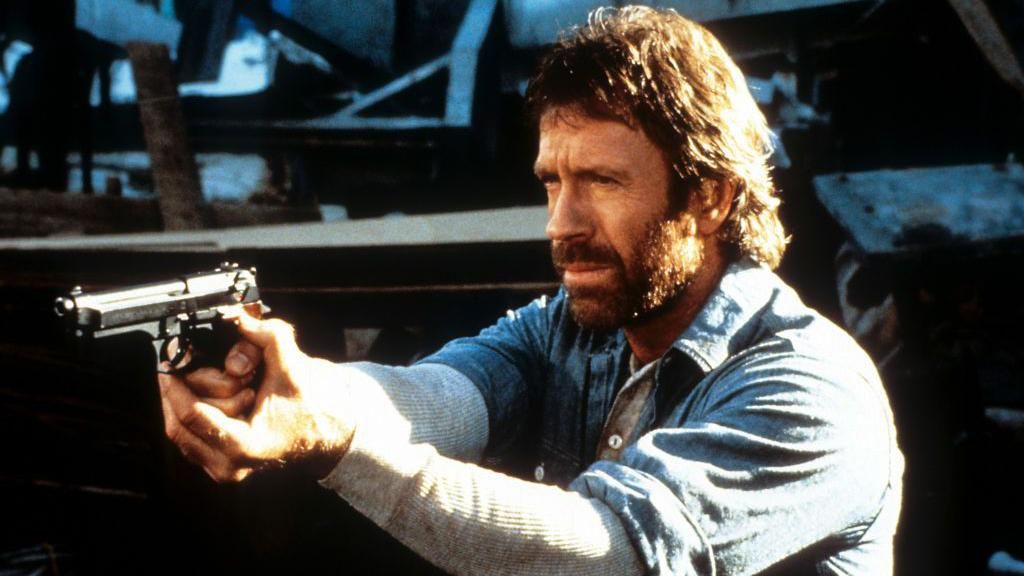
  • Chuck Norris, martial artist and Hollywood movie star, dies aged 86

    Chuck Norris, martial artist and Hollywood movie star, dies aged 86

    The entertainment world is mourning the loss of martial arts legend and Hollywood action star Chuck Norris, who passed away at age 86. Tributes from colleagues, family members, and political figures have flooded social media and news outlets worldwide, celebrating the life and legacy of the iconic performer.

    Norris’s family announced his sudden passing through an emotional Instagram statement, describing him as a devoted husband, loving father and grandfather, and the heart of their family. “He lived his life with faith, purpose, and an unwavering commitment to the people he loved,” the statement read, noting how his “work, discipline and kindness inspired millions around the world.”

    Fellow action stars offered heartfelt remembrances of Norris. Swedish actor Dolph Lundgren, who shared the screen with Norris, stated he “always looked up to him as a role model,” while Sylvester Stallone praised Norris as “All American in every way” and “a great man” whom he enjoyed working with.

    Born Carlos Ray Norris in Oklahoma in 1940, Norris’s journey to stardom began during his military service in South Korea where he first trained in martial arts. He eventually earned black belts in multiple disciplines including karate, taekwondo, and Brazilian jiu jitsu, and founded his own martial art called chun kuk do. His competitive success in karate championships during the 1960s paved the way for his film career.

    Norris’s breakthrough role came when martial arts superstar Bruce Lee invited him to play the final villain in the 1972 classic “The Way of the Dragon.” Norris once humorously recalled their conversation about the fight’s outcome: “I said to Bruce, ‘Well, who wins?’ And he says, ‘I win, I’m the star of this movie.’ I say, ‘Oh, you want to beat the world champion?’ And he said, ‘No I don’t, I want to kill the world champion.’”

    Following advice from friend Steve McQueen, Norris transitioned into acting full-time, appearing in numerous 1970s and 1980s action films including “Breaker! Breaker!,” “Good Guys Wear Black,” “Missing In Action,” and “Delta Force.” He achieved household name status through his starring role as Cordell Walker in the popular CBS series “Walker, Texas Ranger,” which ran from 1993 to 2001.

    Beyond his screen career, Norris promoted fitness through his martial arts schools, was an outspoken supporter of conservative politics, and became an internet phenomenon through “Chuck Norris facts” that humorously exaggerated his toughness and abilities.

    Texas Governor Greg Abbott honored Norris as someone who “electrified generations of conservatives” and “embodied the toughness, grit, and patriotism that makes Texas supreme.”

    Norris is survived by his wife Gena O’Kelley and five children. His granddaughter Greta Norris poignantly captured the dual nature of his legacy: “You all knew Chuck Norris as the man that counted to infinity twice… The world truly lost an icon and I lost my grandpa.”

  • Hi! Your package from Weifang, China is on its way

    Hi! Your package from Weifang, China is on its way

    The humble shipping notification “Hi! Your package from Weifang, China is on its way” has become an increasingly common sight in global e-commerce, signaling the rise of this Shandong province city as a manufacturing and export juggernaut. From agricultural products to industrial components, Weifang’s manufacturing footprint now spans continents, connecting Chinese production with international markets through sophisticated supply chains.

    Recent reporting from China Daily highlights how Weifang has transformed into a critical node in global trade networks. The city’s exports range from perishable goods transported “from port to plate” to everyday consumer items and specialized industrial products. This expansion reflects China’s broader strategy of strengthening international economic connections through regional manufacturing hubs.

    Weifang’s emergence coincides with China’s continued dominance in global manufacturing, with the city developing particular expertise in multiple industrial sectors. The integration of digital technologies has further enhanced Weifang’s competitive advantage, with AI-powered logistics and virtual commerce becoming increasingly central to its export model.

    The city’s success story forms part of China’s broader economic narrative during the early implementation period of the 15th Five-Year Plan (2026-2030), which emphasizes technological upgrading and international market integration. As global supply chains continue evolving in the post-pandemic era, Weifang represents how Chinese manufacturing centers are adapting to meet changing international demand patterns while maintaining competitive pricing and reliability.

  • CBS News shuts down radio service after nearly 100 years

    CBS News shuts down radio service after nearly 100 years

    CBS News announced the termination of its radio broadcasting service this May, concluding nearly a century of audio news dissemination. The decision forms part of a broader restructuring initiative that will eliminate approximately 6% of the workforce, impacting over 60 employees. More than 700 affiliate stations nationwide will be affected when the service ceases operations on May 22.

    Editor-in-Chief Bari Weiss and President Tom Cibrowski disclosed the difficult choice in an internal communication Friday, acknowledging that economic pressures and evolving radio programming strategies rendered continuation unsustainable. “While this was a necessary decision, it was not an easy one,” they stated, emphasizing that certain newsroom divisions must contract to enable strategic growth areas.

    The move occurs amidst significant corporate transformation following David Ellison’s acquisition of Paramount Global last year. The technology scion, whose father Larry Ellison maintains close ties with former President Trump, initiated substantial content modernization efforts at CBS News. Ellison appointed Weiss—a former New York Times opinion writer and vocal critic of partisan media bias—to lead editorial reforms last October.

    Weiss’s tenure has already witnessed notable developments, including the departure of high-profile journalists like Anderson Cooper and controversial editorial decisions. In December, she withdrew a 60 Minutes segment about Trump-era deportations to El Salvador, asserting the reporting insufficiently advanced the story. Simultaneously, she has spearheaded digital expansion plans, announcing new contributor hires and restructured online news coverage in January.

    The organization maintains its content-sharing partnership with BBC News, which remains editorially independent despite the collaboration. Leadership characterizes these changes as essential adaptations to industry evolution, noting that “new audiences are burgeoning in new places” requiring strategic investment shifts.

  • Music Review: BTS’ long-awaited comeback album ‘ARIRANG’ is an exciting experiment

    Music Review: BTS’ long-awaited comeback album ‘ARIRANG’ is an exciting experiment

    NEW YORK — Global music phenomenon BTS has dramatically ended their nearly four-year musical hiatus with the release of their fifth studio album, “ARIRANG.” The 14-track project marks a significant moment in popular culture as the septet’s first complete group effort since all seven members—RM, Jin, Jimin, V, Suga, Jung Kook, and j-hope—completed South Korea’s mandatory military service.

    The album’s title draws profound cultural significance from the traditional Korean folk song of the same name, which explores universal themes of longing, separation, and love. This conceptual foundation establishes “ARIRANG” as both a triumphant reintroduction and a bold artistic statement from the record-breaking ensemble.

    Musically, the project demonstrates BTS’s evolution while honoring their origins. The opening half prominently features trap and hip-hop influences, paying homage to their early rap-focused recordings. The explosive opener “Body to Body” immediately establishes this dual narrative by incorporating melodies from the traditional “Arirang” folk tune.

    The album’s architectural complexity emerges through carefully crafted transitions, including the haunting interlude “No. 29,” which incorporates reverberations from South Korea’s National Treasure No. 29—the Divine Bell of King Seongdeok. This historical artifact sonically bridges the album’s aggressive opening section with its diverse genre explorations in pop.

    The creative reunion appears to have fueled exceptional artistic productivity. Group leader RM contributed to every track except the interlude, with substantial creative input from all members. Suga and j-hope co-created multiple compositions including “Body to Body,” “Merry Go Round,” and “Normal,” while Jimin co-wrote “They Don’t Know ‘Bout Us” and “Into the Sun.” V participated in creating “2.0” and co-wrote “Into the Sun,” with Jung Kook contributing to four tracks including “Hooligan.”

    International production talent elevates the album’s sonic landscape. Mike WiLL Made-It, Ryan Tedder, Kevin Parker of Tame Impala, and Diplo bring distinctive flavors to the project. Diplo injects Jersey club energy into “FYA,” while Parker’s dreamy psych-pop production defines “Merry Go Round.” The album continually surprises listeners with stylistic shifts—from Taylor Swift-esque hooks in “Normal” to distorted trip-hop in “Like Animals,” followed by trap-pop resurgence in “They Don’t Know ‘Bout Us” and R&B harmonies in “Please.”

    The acoustic finale “Into the Sun” builds to a resonant rock crescendo, concluding an album that deliberately avoids repeating past successes. Unlike their previous English-language pop hits like “Dynamite” and “Butter,” “ARIRANG” presents a more authentic representation of their artistic vision through bilingual compositions and avant-garde ambitions.

    This release represents BTS reclaiming their position at music’s apex entirely on their own terms, blending Korean cultural heritage with global appeal while demonstrating matured artistic sophistication and creative fearlessness.

  • Xinxiang in Henan initiates public prosecution against Shi Yongxin

    Xinxiang in Henan initiates public prosecution against Shi Yongxin

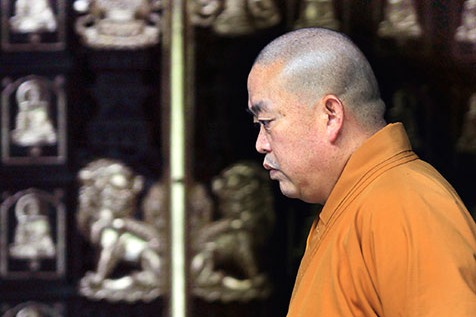
    The Xinxiang People’s Procuratorate in China’s Henan province has formally initiated legal proceedings against Shi Yongxin, the former abbot of Shaolin Temple, on March 20. The intermediate people’s court of Xinxiang received the public prosecution case detailing multiple financial crime allegations against the prominent religious figure.

    Shi Yongxin, born Liu Yingcheng, had held the distinguished position as the 30th abbot of the historic Songshan Shaolin Temple since 1999, overseeing one of China’s most iconic Buddhist institutions. The charges brought against him include duty-related embezzlement, misappropriation of funds, bribery by non-state functionaries, and offering bribes.

    Throughout the review and prosecution phase, judicial authorities followed standard legal protocols by informing the defendant of his procedural rights according to Chinese law. The process included formal interrogation sessions with Shi Yongxin and consideration of arguments presented by his defense counsel, ensuring due process within China’s legal framework.

    The case represents a significant development in China’s ongoing anti-corruption efforts, particularly within religious institutions that operate substantial financial operations. Shaolin Temple, renowned globally for its martial arts traditions and Buddhist teachings, maintains considerable assets and revenue streams from tourism, cultural performances, and international branches.

    Legal experts anticipate this prosecution will set important precedents for accountability within religious organizations, while international observers monitor how China’s legal system handles cases involving high-profile religious figures. The timing of the prosecution coincides with increased scrutiny of financial practices within religious institutions across China.

  • Coroner ‘not satisfied’ boxer Hatton intended to take own life

    Coroner ‘not satisfied’ boxer Hatton intended to take own life

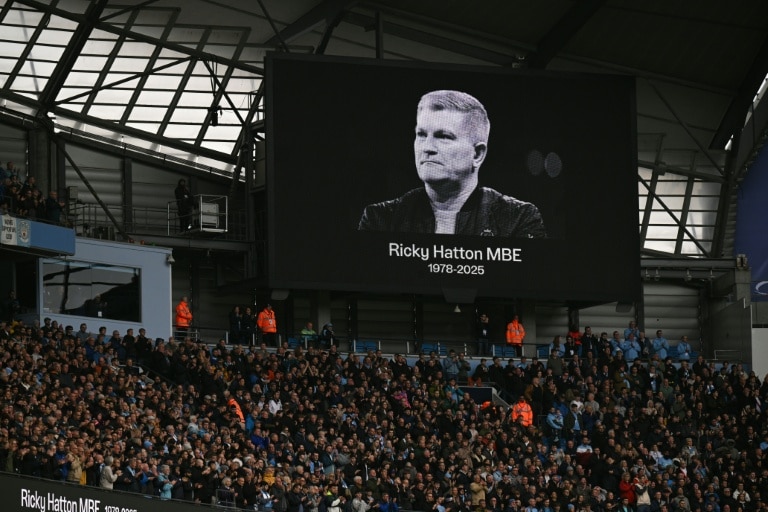
    In a landmark inquest verdict, Senior Coroner Alison Mutch has declared insufficient evidence exists to determine whether boxing legend Ricky Hatton intended to end his own life prior to his September 2025 death. The judicial inquiry revealed compelling circumstances complicating traditional suicide classification, including extensive future planning by the athlete and absence of any suicide note.

    Hatton, the 46-year-old former world champion boxer, was discovered unresponsive at his Manchester-area residence by his manager on September 14th. Medical examination confirmed hanging as the technical cause of death, yet the coroner’s court received testimony indicating Hatton had been making substantial personal and professional plans for the coming months.

    Forensic analysis presented during proceedings documented significant alcohol intoxication at time of death, with blood alcohol levels substantially exceeding legal driving limits. Additional toxicology reports identified residual traces of cocaine and cannabis, though not at physiologically active concentrations.

    Most notably, post-mortem neuropathological examination revealed definitive evidence of chronic traumatic encephalopathy (CTE), the degenerative brain condition associated with repeated head trauma characteristic of combat sports. This finding introduces complex medical considerations regarding neurological impairment and decision-making capacity.

    Coroner Mutch delivered a narrative verdict—a legal conclusion describing circumstances without attributing specific intent—stating: “When evaluating the totality of evidence including his future planning, absence of explanatory notes, significant alcohol impairment, and diagnosed CTE pathology, I cannot be satisfied he formed conscious intention to end his life.”

    Family members attending the proceedings described Hatton as a devoted father who had reportedly been in remarkably positive spirits despite previously documented struggles with substance abuse. Testimony indicated the athlete had appeared happier than he’d been in years preceding the incident.

    The case highlights growing concerns about neurological health in contact sports and the complex interplay between brain trauma, substance use, and mental health determinations in legal proceedings.