作者: admin

  • Deniz Undav’s World Cup success for Germany lifts Yazidi and Kurdish pride

    Deniz Undav’s World Cup success for Germany lifts Yazidi and Kurdish pride

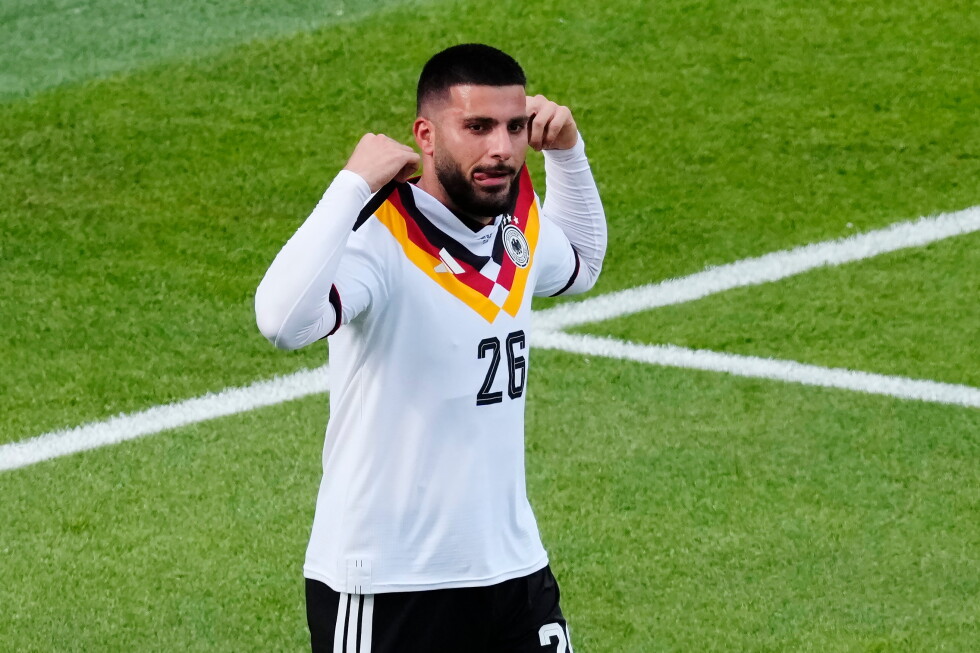
    HOUSTON — As one of the breakout surprise stars of the 2026 FIFA World Cup, German striker Deniz Undav has climbed the tournament’s goal-scoring ranks through a standout run as a substitute. Beyond his on-pitch success, however, the 29-year-old forward carries a far greater weight: he stands as the first global sports representative for two long-persecuted, stateless communities that can never field their own official World Cup side. Born to Yazidi refugee parents and raised in Germany, Undav identifies as a Kurdish Yazidi, and his historic tournament run has sparked overwhelming joy and renewed visibility for Yazidi and Kurdish communities across the Middle East and Europe.

    Since entering the German lineup as a substitute, Undav has notched three goals and two assists, putting him just behind tournament leading scorers including Lionel Messi of Argentina, France’s Kylian Mbappé and Brazil’s Vinicius Jr. in the early standings. Speaking to reporters this week, Undav said he hopes his performance inspires young people across the globe, especially those who share his cultural and religious background.

    “I always get the news from my parents how they view me, how they see me and it’s making me proud, you know, that we finally have somebody,” he told reporters.

    Undav’s roots stretch across the Middle East: his mother traces her family line to a now-abandoned village near Khirbet al-Ghazal, a small Yazidi settlement in northeastern Syria. On Thursday night, dozens of community members gathered in the home of local Yazidi leader Ismail Dalaf to cheer on Undav during Germany’s match against Ecuador, many sharing family ties with the striker’s maternal line. Most residents of Undav’s mother’s original village left decades ago, driven out by economic instability or the violence of Syria’s 15-year civil war.

    For Dalaf, Undav’s rise is more than a sports story: it is a cultural turning point.

    “Undav’s World Cup performance has made him a symbol that shows Yazidis can reach a higher position and be seen with respect,” Dalaf said in an interview. “When people see a Yazidi entering the field, scoring goals and changing the result of matches, it changes public perception. It tells the world that Yazidis have a role in the world.”

    Kurds are the world’s largest stateless ethnic group, with roughly 30 million people living as minorities across Turkey, Iraq, Iran and Syria. Yazidis, a Kurdish-speaking monotheistic religious minority with ancient roots in the region, number roughly 1 million globally, with the largest concentration centered in Iraq’s Sinjar region, home to the faith’s most holy Lalish Temple. An estimated 235,000 Yazidis now reside in Germany, most having resettled after the 2014 Islamic State genocide that killed thousands of Yazidi and abducted thousands more, who were labeled heretics by the militant group. Many of those who survived remain displaced to this day.

    Irfan Ortac, chair of the Central Council of Yazidis in Germany, said Undav’s success has shifted global conversations about his community away from endless stories of trauma.

    “Until now, we have mostly been known as victims of violence,” Ortac said. “Whenever we spoke about Yazidis, we always had to talk about genocide, discrimination, and displacement. It makes us very proud and happy to be able to talk about something positive.”

    In Iraq, the global center of Yazidi life, community leaders have also embraced Undav’s run. “It makes me very happy to see a Yazidi bringing our name to the World Cup and playing in front of the whole world,” said Luqman Sleiman, spokesperson for the Lalish Temple. Diyar Bakir, a 29-year-old Yazidi from Sinjar whose community survived the 2014 IS onslaught, said he dreams of traveling to Germany one day to watch Undav play in person.

    “His family came from a place where his ethnicity and religion were not appreciated, yet he is now recognized and valued by a great team like Germany,” Bakir said. “He emerged from the womb of suffering, and we wish him every success.”

    Undav’s path to stardom has not been without hostility. He has faced repeated online and in-person abuse targeting his Yazidi-Kurdish heritage. Last year, when his club VfB Stuttgart played an away match against Turkey’s Fenerbahce, the striker was targeted with obscene chants about his mother. Two Kurdish anti-discrimination organizations documented a surge in racist, ethnically motivated insults targeting Undav on social media after the match. The striker also faced backlash from some Turkish fans after choosing to represent Germany at the international level, rather than Turkey, a path other German-born players of Turkish heritage have taken.

    But amid the abuse, Undav’s popularity has skyrocketed, and his presence has sparked a broader shift in conversations about migration, identity and belonging in Germany, a country that has welcomed millions of refugees from the Middle East over the past two decades.

    Düzen Tekkal, a German documentary filmmaker and author of Kurdish Yazidi heritage who co-founded Scoring Girls, a nonprofit that offers free soccer programming to girls from marginalized backgrounds, said the “Deniz Undav effect” extends far beyond the soccer pitch.

    “There definitely is a Deniz Undav effect and it’s very important,” Tekkal said. “It lets children who share our heritage celebrate who they are and feel they belong in Germany at a time when migration is often treated as a political problem. It is no coincidence that he plays with this lightness and freedom. People are asking how come he’s so good under pressure or he can cope with so much pressure? Because he doesn’t know it any other way. That is the DNA, that is the resilience. … That’s how he scores these goals because what is that pressure compared to being Kurdish or Yazidi?”

    After scoring against Curacao in the team’s opening group stage match, Undav celebrated with a traditional Yazidi jig, hands clasped behind his back. He was joined in the dance by German star Antonio Rüdiger, a Black German player who has faced repeated racist and anti-Muslim abuse throughout his career. Tekkal called the moment one of the most iconic of the entire tournament, regardless of how Germany fares in the coming matches.

    “Dancing is a form of expressing resistance for us,” Tekkal emphasized. “We dance on the graves of our dead. Our mantra is that resistance is life. He’s dancing there for his forefathers who were oppressed.”

    For many stateless Kurdish fans, Undav’s run gives them a team to cheer for at the World Cup, the global stage that excludes stateless communities by rule. Mahmoud Kanabi, a Kurd from Irbil who moved to Berlin in 2020 and works at a Kurdish restaurant in the city, bought his first ever Germany jersey this year because of Undav.

    “Unfortunately, for us Kurds, we don’t have a team because we don’t have a country,” Kanabi said. “Now, when a Kurdish player is in a team, we have to be fans of it. It doesn’t matter what team it is.”

    Reporting for this article was contributed by Martany in Irbil, Iraq; Fahey in Berlin; Ellingworth in Duesseldorf, Germany; and AP Sports Writer Ron Blum in East Rutherford, New Jersey. This coverage is part of AP’s religion reporting partnership with The Conversation US, supported by funding from Lilly Endowment Inc., with the AP solely responsible for all content.
  • Ireland stuns India in a historic first cricket win as Sooryavanshi sits out

    Ireland stuns India in a historic first cricket win as Sooryavanshi sits out

    In a landmark result that shook international men’s cricket, Ireland earned its first ever victory over India in a T20 international fixture at Belfast’s Stormont ground on Friday, just months after India secured back-to-back T20 World Cup titles. The historic upset came as India opted to rest 15-year-old batting sensation Vaibhav Sooryavanshi, whose senior team debut has been one of the most anticipated events in the global cricket community following his breakout IPL performance that saw him top the tournament’s batting averages against some of the world’s top bowlers.

    Ireland won the toss and chose to bat first, and got off to a rocky start, slipping to 51 runs for the loss of four wickets early in the innings. But a resilient lower-middle order fightback dragged the hosts to a competitive total of 182 for 9 wickets by the end of their 20 overs. The standout of Ireland’s batting performance was Gareth Delany, who delivered a blistering late finish, smashing three consecutive sixes off Indian paceman Prasidh Krishna before falling for 49 off 32 deliveries. Wicketkeeper-batter Lorcan Tucker, who stepped into captaincy after five of Ireland’s first-choice players picked up injuries, also contributed a quickfire 50 off 35 balls to anchor the recovery.

    India’s bowling attack made an early impact, with Harshit Rana claiming three powerplay wickets to leave Ireland reeling, and finished with Arshdeep Singh taking 2 wickets for 28 runs and Axar Patel claiming 2 for 33. However, dropped catches off both Tucker and Delany proved costly for the reigning world champions, allowing Ireland to post a challenging total.

    Chasing 183 for victory, India’s innings got off to a promising start via opener Abhishek Sharma, who raced to 49 off just 20 deliveries before being caught in the deep. But the visitors collapsed from there, losing regular wickets across the innings and being bowled out for 148 with seven balls still left in the chase, handing Ireland a 34-run historic win.

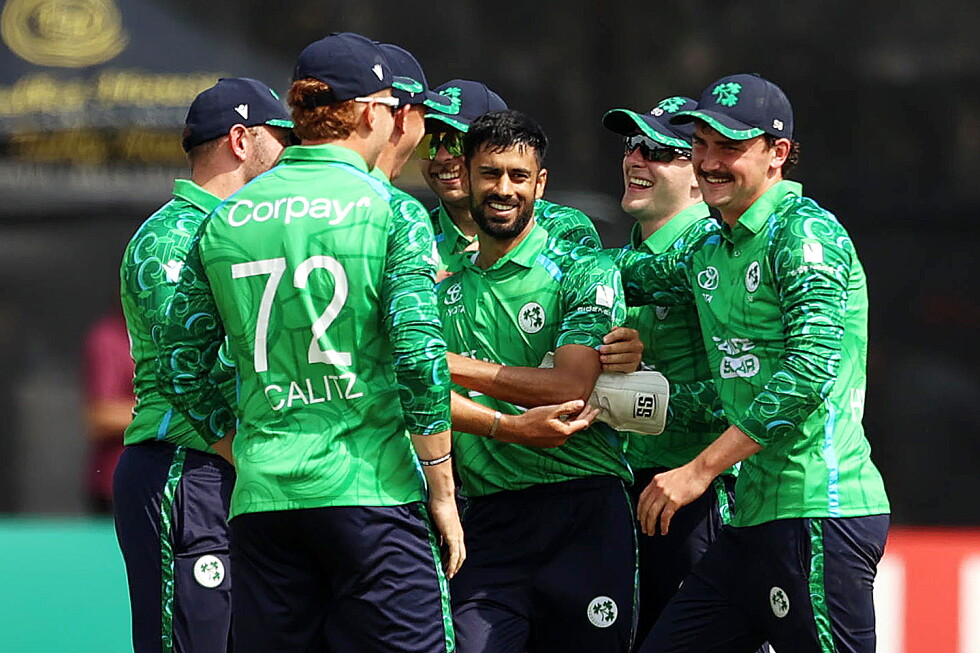
    The day belonged to Ireland’s two debutant bowlers, who produced match-winning performances on their first senior international appearance. India-born left-arm fast bowler Jai Moondra picked up 2 wickets for 25 runs, dismissing star Indian opener Sanju Samson with his very first delivery in international cricket, then later claimed the wicket of Shivam Dube, India’s last recognised top-order batter, caught and bowled. Medium-pacer Matt Hollard was even more impressive, claiming Indian captain Shreyas Iyer, Ishan Kishan, and Washington Sundar to finish with figures of 3 wickets for 28 runs. Left-arm spinner Matthew Humphreys matched Hollard’s return, also taking 3 for 28, despite injuring his hand while attempting a difficult caught-and-bowled chance. Strapping his hand up, Humphreys closed out the match by dismissing Harshit Rana and Arshdeep Singh in the 19th over, and was mobbed by jubilant teammates after the final wicket.

    India entered the match as heavy favourites, having won their second consecutive T20 World Cup in March, and retained seven players from that title-winning starting lineup for Friday’s fixture. Iyer, captaining the side for this series, noted after the match that the team opted to rest Sooryavanship to stick with the proven core that delivered the world title. “(Sooryvanshi) is a gun player but we have some tremendous players who have done well for us so we are backing them. He will get his chance,” Iyer said. This was Iyer’s first T20 international appearance since 2023.

    Reflecting on the upset defeat, Iyer emphasised that the result would be a key learning moment for his side. “We are not going to forget what happened and there’s a lot to learn from this game. Going to come out all guns blazing in the next game,” he added.

    Ireland’s stand-in captain Tucker called the win over the world champions one of the most special results of his career, played out in front of a home crowd. “It’s pretty special to beat the world champions at home. We scrapped through the game, we had some tough periods but we stuck to it, we were diligent,” Tucker said.

    The two sides will face off in the second and final T20 of the series at the same Stormont ground on Sunday, before India travels to England for a five-match series against the hosts.

  • Nicholas Rossi, accused of faking death and fleeing US to Scotland after rape charges, has died

    Nicholas Rossi, accused of faking death and fleeing US to Scotland after rape charges, has died

    A convicted sexual assailant who spent years evading American justice by faking his own death and fleeing across continents has died while in custody at a Utah correctional facility, state law enforcement officials confirmed Friday.

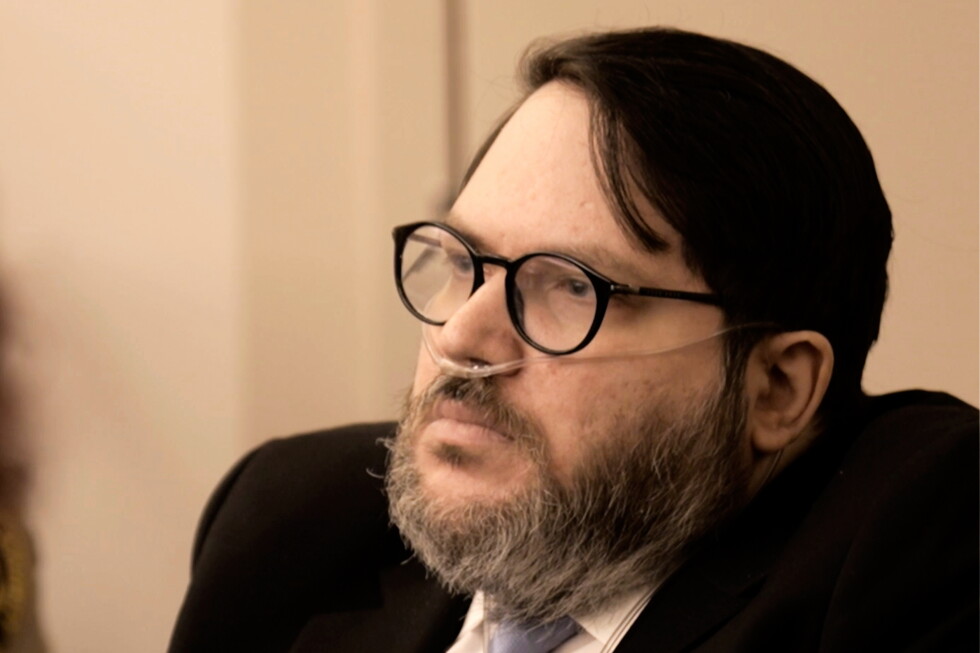
    Thirty-eight-year-old Nicholas Rossi, also known by the alias Nicholas Alahverdian, passed away Thursday night due to complications from a pre-existing chronic health condition, according to Richard Piatt, public information officer for the Utah Department of Corrections. Piatt confirmed that Rossi had made the personal decision to discontinue ongoing medical treatment prior to his death, and that both his surviving family members and the victims of his crimes have been formally notified of his passing. Details of Rossi’s specific health issues have not been released per privacy regulations, but court observers noted he appeared throughout his 2025 trial in a wheelchair and required supplemental oxygen during proceedings.

    Rossi’s death closes out a years-long, international manhunt that began in 2018, when investigators matched Rossi’s DNA to a decades-old unprocessed rape kit collected from an earlier assault. Following the 2018 charges, a staged online obituary was published in early 2020 claiming Rossi had died from non-Hodgkin lymphoma on February 29 of that year. But investigators and people close to Rossi—including his former legal counsel and a former foster family—immediately raised doubts about the claim of his death, launching a cross-border search that would span multiple years.

    After faking his death, Rossi fled the United States for Europe, eventually settling in Scotland where he was arrested in 2021 while receiving treatment for COVID-19. Hospital staff recognized him from the international arrest warrant by his unique tattoos, including a forged Brown University crest inked on his shoulder—Rossi had never actually attended the Ivy League institution. Even after his arrest, he continued to obstruct justice, claiming he was a innocent Irish orphan named Arthur Knight who had been wrongfully framed for crimes he did not commit. Investigators ultimately confirmed that Rossi used more than a dozen separate aliases over decades to avoid detection and evade law enforcement.

    Rossi was finally extradited back to the United States from Scotland in 2024 to stand trial for two sexual assault charges brought by Utah prosecutors. In 2025, he was convicted on both counts and sentenced to serve a minimum of 10 years in state prison. During the trial, details of his abusive pattern of behavior emerged: one victim told the court Rossi raped her in her apartment after she confronted him for stealing money from her to purchase a computer. A second victim, who met Rossi through a personal advertisement posted to Craigslist, said the pair became engaged within weeks of meeting, during which time Rossi pressured her to cover all of his living expenses, lend him $1,000 to prevent eviction, and take on personal debt to purchase their engagement rings. The trial judge ultimately labeled Rossi a “serial abuser of women” during sentencing.

    At his October 2024 sentencing hearing, Rossi again maintained his innocence, claiming “I am not guilty of this. These women are lying.” Local prosecutors noted Wednesday that despite his continued claims of innocence, Rossi never escaped accountability for his crimes. “Mr. Rossi was a sexual predator who tried to escape accountability,” said Salt Lake County prosecutor Sim Gill. “The survivors of his heinous acts have the consolation that he died in prison with the knowledge of the crimes he committed.”

  • Trump threatens 100% tax on European imports if countries impose tax on digital services

    Trump threatens 100% tax on European imports if countries impose tax on digital services

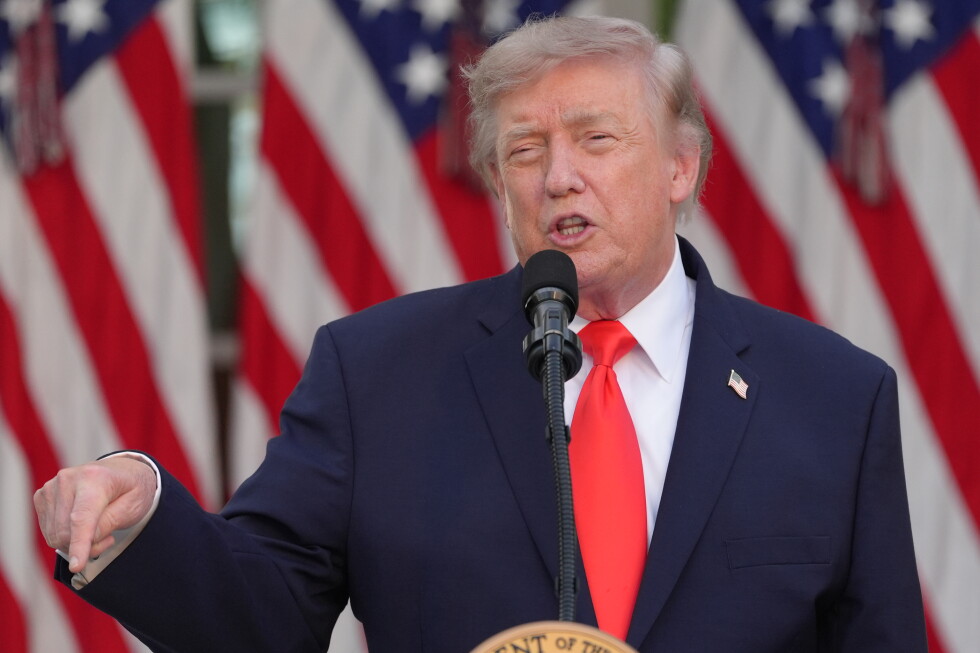
    The simmering transatlantic trade dispute over digital service taxes erupted into a new standoff Friday, as former U.S. President Donald Trump issued an ultimatum threatening steep 100% import tariffs on any nation moving forward with levies targeting American digital firms.

    In a public social media post, Trump specifically called out European countries that he claims are preparing to imminently roll out new digital tax regimes. For years, the U.S. leader has leveraged tariff threats to discourage such policies, as a growing number of governments across the globe seek new tax revenues from the digital economy — a sector overwhelmingly dominated by large U.S. tech corporations.

    “Please let this statement serve to represent that any Country that imposes such a Tax will immediately be met with a 100% TARIFF on any and all Goods sent to the United States of America,” Trump wrote in the post. He added that the proposed tariffs would override all previously negotiated bilateral and multilateral trade agreements. While the threat applies to all countries pursuing digital taxes, Trump’s post centered European nations as the primary target.

    Policy analysts warn the aggressive move could escalate into a full-scale transatlantic trade war. If the 27-nation European Union chooses to retaliate against the tariffs, the resulting trade disruption would push up consumer prices, slow global economic growth, and unravel years of incremental trade progress between the two blocs.

    The European Commission swiftly pushed back against Trump’s threat Friday. “Unilateral measures targeting such legitimate policies are unjustified. If pursued, the EU will respond swiftly and decisively to defend its rights and regulatory autonomy,” said commission spokesperson Olof Gill. Gill emphasized that the EU’s digital tax framework is non-discriminatory, applying equally to all large tech firms regardless of their country of origin.

    This is not the first time Trump has threatened tariffs over digital taxation. Last August, he issued a similar warning, arguing that foreign digital tax and regulatory policies “are all designed to harm, or discriminate against, American Technology.”

    The latest tariff threat comes ahead of a July 4 deadline for the implementation of a U.S.-EU tariff deal reached earlier this year. The agreement, first negotiated tentatively by European Commission chief Ursula von der Leyen during a 2024 visit to Trump’s Scottish golf resort, caps most tariffs on EU exports to the U.S. at 15% after months of fractious internal debate within the bloc. Notably, digital service taxes were excluded from the deal, leaving the issue as the most intractable sticking point in U.S.-EU trade relations.

    The U.S. government has already opened Section 301 trade investigations into foreign digital service taxes under the 1974 Trade Act, but it remains unclear whether Trump will follow through on his latest threat, or how the tariffs would be structured if implemented. It is also unknown whether the administration would roll out broad tariffs immediately or target specific countries initially.

    Outside the EU, the United Kingdom — which left the bloc in 2020 — has already enforced a 2% digital services tax since that year, applied to revenues earned by search engines, social media platforms, and online marketplaces that derive value from UK-based users. UK policymakers justified the tax by arguing that long-standing corporate tax rules for digital businesses have created a mismatch between where profits are taxed and where economic value is actually generated. The tax includes revenue thresholds that mean it applies almost exclusively to large multinational corporations, with the stated goal of ensuring big global tech firms pay a fair share to support UK public services.

  • ‘Repel the enemy’: Crimean Tatars have become a key asset for Ukraine’s war effort

    ‘Repel the enemy’: Crimean Tatars have become a key asset for Ukraine’s war effort

    On the outskirts of Kyiv, just a short distance from Ukraine’s battered capital, a small gathering of Crimean Tatars finishes their weekly Friday prayers at the Kyiv Islamic Cultural Centre with the traditional Islamic greeting of taslim. Among them is 60-year-old Isa Akayev, a veteran warrior who walks out of the prayer hall last, his frame still bearing the quiet dignity of a man who has spent more than a decade fighting for his people.

    Akayev retired from frontline service in December, but he still proudly wears a shirt emblazoned with the insignia of Ukraine’s Military Intelligence, paired with his traditional beard and taqiyah skullcap. Seated on a handcrafted traditional Crimean wooden bench in the centre’s hallway – a space that also houses the Religious Administration of Muslims of Crimea – he reflects on how dramatically the character of war has shifted since he first took up arms.

    “War has changed a lot. The head-on assaults we carried out years ago are impossible today,” he explained in an interview with Middle East Eye. “Now, the fighting is dominated by heavy artillery and FPV drones. A single kill zone can extend up to 30 kilometers, and infantry have to move on foot to avoid giving away their position to enemy surveillance.” This new era of high-intensity, long-range warfare, the battle-hardened Tatar acknowledges, is no longer suited to his experience as a ground commander.

    Akayev’s fight stretches back to 2014, when Russian forces invaded and occupied the Crimean Peninsula. Within weeks of the occupation, he founded the Crimea Battalion, the first all-Tatar military unit fighting in defense of Ukrainian sovereignty and the rights of Crimea’s indigenous Muslim community. At the time of the 2014 annexation, more than 250,000 Crimean Tatars lived on the peninsula, most having only recently returned to their ancestral homeland after decades of mass deportation under Soviet rule.

    Moscow’s 2014 annexation, which followed a hastily organized referendum widely condemned as illegitimate by the United Nations and the vast majority of the international community, has been met with unwavering resistance from the Crimean Tatar community. Since Russia launched its full-scale invasion of Ukraine in February 2022, that resistance has grown far more visible, with distinct Crimean Tatar military units serving alongside regular Ukrainian forces on frontlines across the country, explains Filiz Tutku Aydin, a political science professor at Ankara’s Social Sciences University. Alongside Akayev’s original Crimea Battalion, these units include the Noman Celebicihan Battalion and the Grey Wolves squad.

    Crimean Tatars, whether serving in these dedicated formations or integrated into Ukraine’s regular armed forces, have paid a devastating price for their resistance, with dozens killed in combat. When a Tatar soldier falls in battle, the community publicly honors him as a shaheed, or martyr, a reflection of the deep spiritual meaning that the fight to liberate Crimea holds for the entire people, Aydin notes.

    Beyond frontline military service, Crimean Tatars have risen to key positions of leadership within the Ukrainian government. Most notably, Rustem Umerov, a prominent Crimean Tatar politician and close advisor to Ukrainian President Volodymyr Zelensky, served as Ukraine’s Minister of Defense from September 2023 to July 2025. For Akayev, Umerov’s appointment was a historic breakthrough: he became the first Crimean Tatar ever to hold a Ukrainian cabinet position, carrying profound symbolic weight for the entire community.

    Today, between 30,000 and 50,000 Crimean Tatars live as displaced members of the community on mainland Ukraine, where they remain deeply engaged in political and civic action to advance their cause, while more than 200,000 remain on the peninsula under Russian occupation, according to Russian government statistics. In 2023, displaced Tatar leaders launched the Crimean Front, a cross-sector platform that unites business owners, volunteers, and civil society organizations to coordinate support for the war effort and keep global attention focused on their struggle.

    “The whole point of this platform is to remind the world that Crimean Tatars are constantly contributing to the fight for liberation,” explains Lenur Mambetov, one of the Crimean Front’s co-founders. “We all share one goal: not just to push back the Russian invader, but to take back our land and return home to Crimea.”

    Russian rule has grown increasingly repressive on the peninsula since 2022, with widespread crackdowns on any expression of pro-Ukrainian or pro-Tatar identity, making the liberation of Crimea an existential priority for the community. “For Crimean Tatars, Ukraine’s victory is even more important than it is for ethnic Ukrainians. As a displaced people fighting to rebuild our community, this is a matter of life and death,” Aydin says.

    Akhtem Seitablayev, a prominent Ukrainian-Crimean Tatar actor, screenwriter, and director who heads the Kyiv-based Crimean House, a state-funded cultural institution dedicated to supporting displaced Crimeans, echoes this urgency. “Of the more than 300 political prisoners held by Russia in occupied Crimea, the vast majority are Crimean Tatars. That alone makes clear where our community stands on the occupation,” he says.

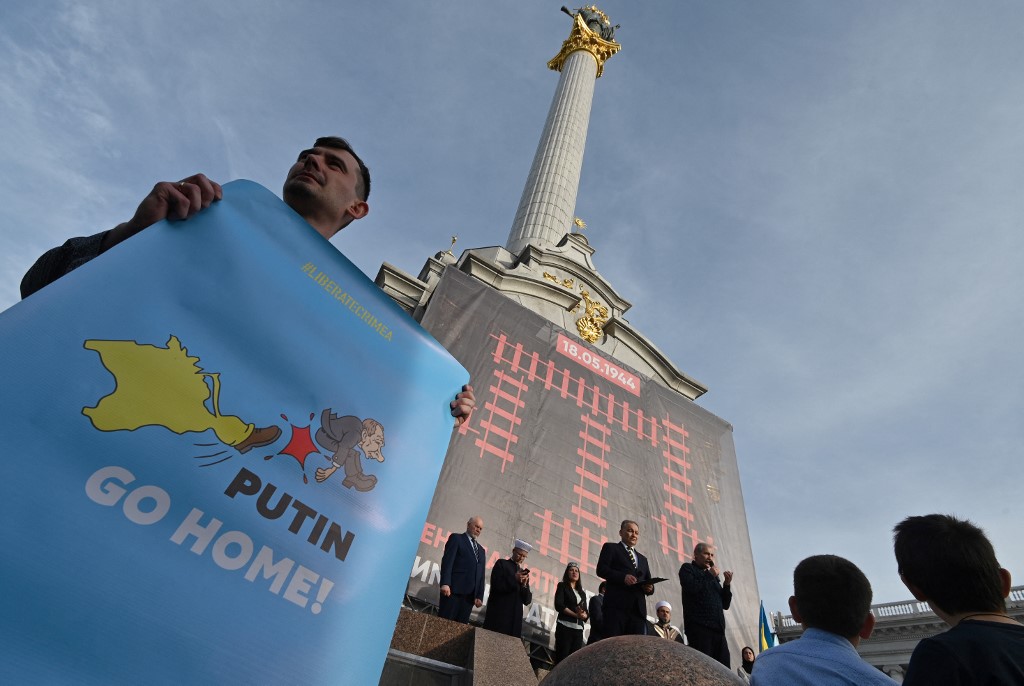
    Seitablayev, who joined the Ukrainian army after the 2022 full-scale invasion, continues to lead cultural initiatives to preserve Crimean Tatar memory and build international awareness of their struggle. The hallways of Crimean House are lined with posters from films about Crimean history, including his award-winning 2013 historical drama *Haytarma*, which chronicles the 1944 Soviet mass deportation of Crimean Tatars.

    Known to the Tatar people as surgunlik, or exile, the 1944 deportation was one of the largest forced population transfers of the Stalin era. Over just three days, Soviet authorities deported more than 190,000 people – overwhelmingly Crimean Tatars, alongside smaller groups of Greeks, Armenians, and other non-Slavic communities – to Central Asia via overcrowded cattle trains, erasing nearly all trace of Tatar cultural and political life from the peninsula. Many scholars classify the deportation as ethnic cleansing, while Crimean Tatars universally recognize it as an act of genocide. The deportation killed tens of thousands through starvation, disease, and exposure, shattered Tatar cultural institutions, and scattered the community across a global diaspora that has never been able to fully reassemble on its homeland. Like Akayev and Mambetov, Seitablayev was born in Uzbekistan, where most deported Tatars were resettled, and only returned to Crimea following the collapse of the Soviet Union in 1991.

    *Haytarma* is regularly screened at Ukrainian embassies around the world ahead of May 18, the annual national day of remembrance for the 1944 deportation. Seitablayev attended a screening in Berlin earlier this year, and notes that international interest in Crimean Tatar art and storytelling has grown dramatically since 2014, and especially after the 2022 full-scale invasion. “That growing interest is something we deeply welcome,” he says.

    To amplify their cause, Crimean Tatars have leveraged a far-flung global diaspora that stretches from Central Asia to North America and Western Europe. The largest and most politically influential diaspora community is based in Turkey, where hundreds of thousands of Tatars settled beginning in the late 18th century, after the Russian conquest of Crimea and amid growing persecution under Tsarist rule. With shared Turkic linguistic and cultural roots, and close geographical proximity to Crimea, Turkey has long been a safe haven for displaced Tatars, and the diaspora there grew further after the 2014 annexation and 2022 full-scale invasion.

    “Turkey has been a reliable partner for us: it has held the same position since 2014, supporting Ukraine’s territorial integrity and rejecting the legality of the occupation of Crimea,” says Refat Chubarov, chairman of the Mejlis, the elected representative body of the Crimean Tatar people. The Mejlis has emerged as a key diplomatic channel for Ukraine during the war, with Chubarov and other leaders regularly engaging with international officials to highlight the plight of Tatars under Russian rule. Most recently, Chubarov took part in the 2025 Antalya Diplomacy Forum, where he held talks with Turkish government officials focused on the ongoing repression of Crimean Tatars and continued support for Ukraine.

    While Turkey has not provided direct military assistance to Crimean Tatar units, the Crimean Front has built close humanitarian partnerships with Turkish authorities, and has also secured support from other Muslim-majority nations including Saudi Arabia, Qatar, and the United Arab Emirates. After the destruction of the Kakhovka Dam in 2023, Saudi Arabia provided emergency humanitarian aid through the Crimean Front, while the UAE donated critical power generators for displaced communities, Mambetov says. Beyond the Middle East, Crimean Tatar diaspora communities across Canada and Europe work closely with Ukrainian diaspora groups to advocate for sanctions on Russia and support for Ukraine’s territorial claims.

    For decades after the collapse of the Soviet Union, relations between the Ukrainian government and the Crimean Tatar community were marked by mutual mistrust, shaped by decades of Soviet propaganda that framed Tatars as a disloyal minority. That has changed dramatically under President Volodymyr Zelensky, who has taken a series of historic steps to formalize the recognition of Crimean Tatar rights and identity. In April 2025, Zelensky signed a presidential decree dedicated to protecting the distinct national identity of the Crimean Tatar people and formally recognizing the legal status of the Mejlis, a move the community has hailed as a landmark milestone after decades of campaigning.

    Chubarov recalls that for years after 1991, lingering Soviet-era influence left many Ukrainians viewing Russians as “closest brothers” while viewing returning Crimean Tatars with suspicion. “Many saw us returning from exile as a threat. Some politicians even claimed we wanted to seize the peninsula for ourselves or bring it under Turkish influence,” he says.

    Today, that distrust has given way to growing partnership and integration. In 2023, Zelensky established a new annual tradition of hosting an official iftar dinner for Crimean Tatar leaders during the Muslim holy month of Ramadan, a gesture that took the community by surprise. “It was a shock. For a Ukrainian president to give that level of recognition to Muslims and Crimean Tatars was completely unprecedented,” Mambetov says. In 2024, Zelensky unveiled a national memorial in central Kyiv to commemorate the victims of the 1944 surgunlik deportation, extending recognition of Crimean Tatar history from the political sphere to the national historical memory of Ukraine.

    “Since 2014, public perceptions of Crimean Tatar art, culture, and identity have changed dramatically, for the better,” Seitablayev says. “To some extent, the war helped push that change forward, but I also believe it was part of the Almighty’s plan.” Mambetov adds that many Ukrainians have also let go of old prejudices against Islam, with growing public understanding of the Crimean Tatar community’s faith and traditions.

    The steps Kyiv has taken to guarantee the integration and autonomy of the Crimean Tatar community are now enshrined in Ukrainian law, and have built deep trust between the Ukrainian government and the Crimean Tatar independence movement, Aydin explains. “Ukraine understands that integrating Crimean Tatars is a necessary step to eventually re-integrate Crimea after liberation,” she says, adding that this policy also eliminates any risk of separatist sentiment within the community.

    For Crimean Tatars, the pursuit of cultural autonomy and full membership within a sovereign Ukrainian state is not contradictory – it is the core of their political stance, Aydin notes. That position is shared by the Mejlis and all leading figures of the community.

    “Allah ordained that Crimea is part of Ukraine, so how could we go against His will?” Akayev says with a smile. Even as some Western politicians, including former U.S. President Donald Trump, have floated the idea of ceding control of Crimea to Russia as part of a potential peace deal, Akayev rejects any such compromise out of hand.

    “I do not know what the future holds, but as long as God gives me strength, I will continue to fight by every means permitted by Sharia for our homeland to return to us,” he says. “Because the graves of my ancestors are there. Because I want to be buried there myself. Because without Crimea, there would be no Crimean Tatars.”

  • ‘I was doxxed’: UK doctors welcome BMA protections for criticism of Israel

    ‘I was doxxed’: UK doctors welcome BMA protections for criticism of Israel

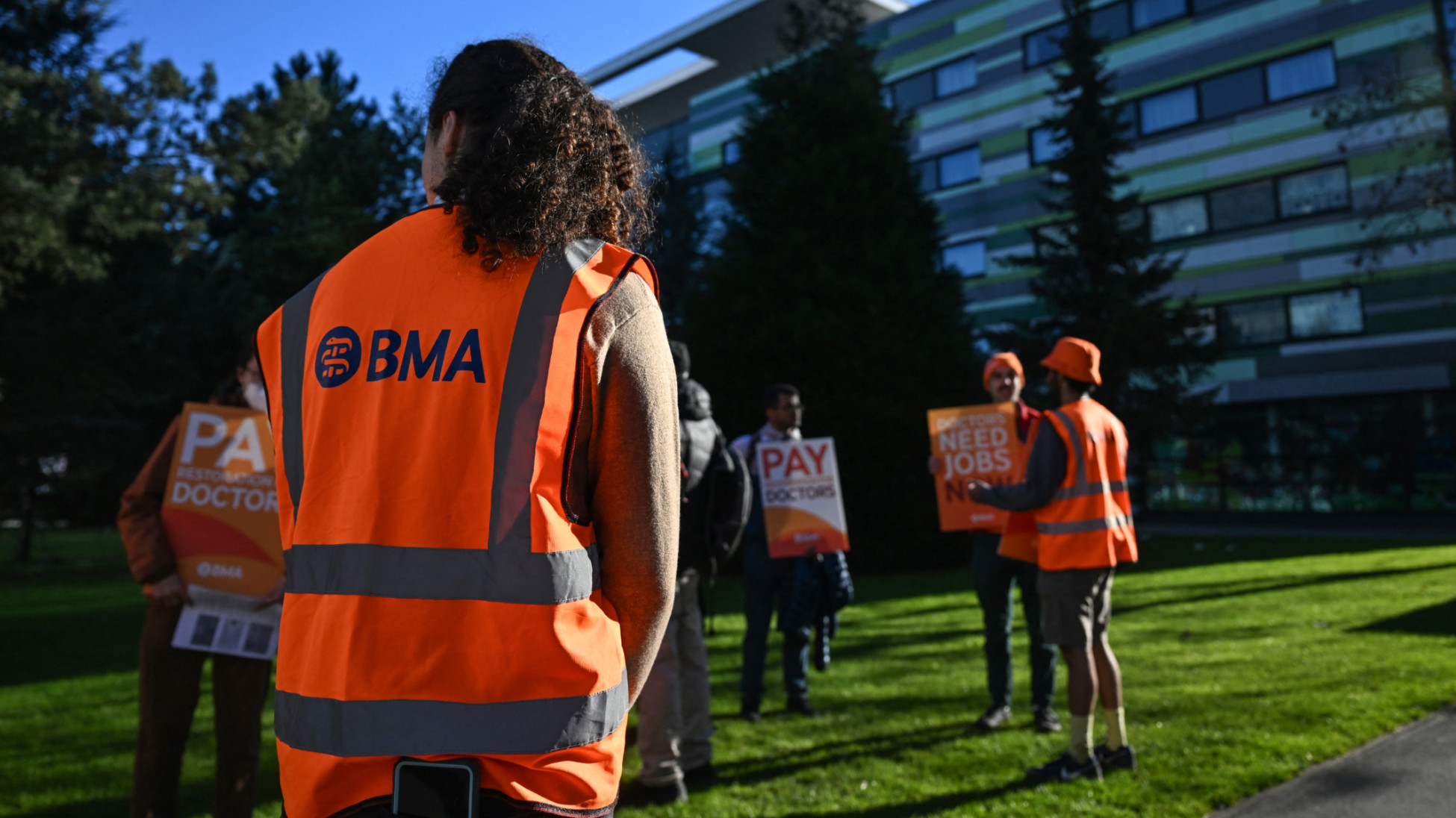
    At its annual representatives meeting this week, the British Medical Association (BMA)—the body representing more than 200,000 doctors across the United Kingdom—passed a landmark motion rejecting the adoption of the International Holocaust Remembrance Alliance (IHRA) working definition of antisemitism within the National Health Service (NHS). The vote marks the highest-profile pushback yet against UK government policies that healthcare workers say are being used to stifle legitimate criticism of Israel’s actions in Gaza and suppress advocacy for Palestinian human rights.

    The approved motion does more than reject the definition: it calls for an urgent independent inquiry into how the IHRA framework has impacted lawful political speech and professional expression regarding Israel’s military campaign in Palestine. It also affirms the right of UK healthcare institutions to push back against attempts to use the definition to shut down public debate over alleged war crimes and human rights violations. With the motion’s passage, BMA members are now authorized to lobby the UK government, NHS England, and key sector stakeholders to reverse current policy aligned with the IHRA definition.

    In an official statement provided to Middle East Eye (MEE), the BMA emphasized the core motivation behind the vote: “Doctors have witnessed in horror the humanitarian crisis that has unfolded during the Middle East conflict, with the devastating loss of civilian life and in particular, the attacks on healthcare workers and healthcare facilities, and must be able to legitimately challenge the actions of states and armed forces without being unfairly accused of any kind of discrimination, or threatened with disciplinary action.”

    The BMA’s decision comes in direct response to policy moves from the UK’s Department of Health and Social Care (DHSC), which earlier this month formally backed the findings of a government-led review into anti-Jewish hate in the NHS. That review, led by controversial government antisemitism adviser Lord John Mann, centers the IHRA definition—a document long mired in debate for its framing that critics say conflates legitimate criticism of the Israeli state with antisemitism. The Mann review’s recommendations include mandatory antisemitism training for all NHS staff, a ban on political symbols in NHS workplaces, and a prohibition on doctors and nurses attending political protests while in official uniform.

    Weeks before the BMA vote, MEE revealed that a cross-coalition of UK healthcare workers had already submitted an open letter to the DHSC calling for an immediate halt to the rollout of the Mann review’s recommendations. At this week’s annual meeting, BMA delegates passed a separate emergency motion backing that call to pause implementation. Though some attendees alleged the motion amounted to antisemitism and called for it to be pulled from the agenda, the BMA’s internal legal team confirmed the motion complied with all rules, and it passed after full debate.

    The vote follows a growing pattern of disciplinary action and regulatory investigations targeting UK doctors who have publicly criticized Israel’s actions in Gaza. Many of these cases have explicitly cited the IHRA definition to justify disciplinary measures, giving the BMA’s decision immediate personal stakes for hundreds of medical professionals across the country.

    London-based emergency doctor Dr. Nadeem Crowe is one of the most high-profile doctors targeted: he was abruptly suspended from his role at London’s Royal Free Hospital mid-shift in August 2024 after an anonymous complainant used the IHRA definition to label his social media posts about Palestinian rights as antisemitic. The suspension was only lifted after Crowe was pressured to delete the posts, with hospital leadership threatening a full formal investigation if he refused to comply.

    Crowe described the personal and professional toll of the action in an interview with MEE: “I know the reality of this weaponisation intimately – after dedicating 15 years to my clinical career, I was abruptly suspended following an anonymous complaint that used the IHRA definition to brand my private social media posts regarding Palestinian rights as ‘antisemitic’. It completely derailed my career, and the toll has been severe personally – this hostile regulatory overreach profoundly aggravated a long-standing clinical anxiety disorder, forcing me onto sick leave, requiring increased medication, and causing severe emotional and psychological distress. Being stripped of your livelihood mid-shift over your identity and humanitarian beliefs doesn’t just impact your job, it rips you apart emotionally.”

    Crowe has since filed a legal claim against the hospital trust alleging racial discrimination and harassment, and is awaiting a court ruling on the case. He called the BMA’s vote to reject the IHRA definition a long-overdue win for healthcare workers’ rights. “For too long, this deeply flawed framework has been misapplied, serving instead to systematically stifle legitimate political speech, humanitarian concern, and criticism of the state of Israel. The BMA is finally standing up for intellectual honesty and the rights of healthcare professionals to speak out on global humanitarian crises,” he said.

    Another UK doctor, Dr. Nizar Mhani, has faced a barrage of repeated anonymous complaints over his public criticism of Israel’s military campaign in Gaza, all citing the IHRA definition. Though every investigation launched by his regulator and hospital has cleared him of any wrongdoing, he said the campaign of complaints was explicitly designed to intimidate him into silence. “There are malicious groups who have been canvassing for complaints against me, on the grounds that I allegedly support terrorism and am an antisemite. Their intention was to harass me into feeling intimidated to the point where I was no longer able to criticize Israel or support the Palestinian cause. I was doxxed, webpages were set up with my details on, and information shared about how to complain about me. I’ve had investigations by my regulator and my hospital, and every single one has concluded there is no case to answer and that I committed no wrongdoing,” Mhani told MEE.

    Despite the harassment, Mhani said he has no plans to stop speaking out. “I don’t think I will stop speaking out – the price I’m paying is small compared to what Palestinians are going through,” he said. He welcomed the BMA’s rejection of the IHRA definition, calling it a deeply flawed and overly politicized framework that has been weaponized to target pro-Palestine healthcare workers.

    Alongside rejecting the IHRA definition and pausing the Mann review rollout, BMA delegates passed two additional key votes this week. The first called for an immediate end to vexatious complaints against doctors, which the union says are regularly used to misuse UK medical regulatory processes to intimidate and harass staff who speak out on Middle East issues. The second vote opposes the General Medical Council (GMC), the UK’s medical regulator, having the legal authority to appeal rulings issued by its own independent tribunal service—a power that allows the GMC to re-investigate and re-sanction doctors who have already been cleared of all allegations.

    That vote aligns with legal action the BMA launched earlier this month challenging the GMC’s appeal power, which many healthcare workers say is being explicitly used to crack down on pro-Palestine advocacy. The most prominent example of this is the case of prominent British-Palestinian surgeon Dr. Ghassan Abu Sitta, who was cleared of allegations of antisemitism and glorifying terrorism brought by the pro-Israel lobby group UK Lawyers For Israel. Despite the tribunal’s ruling clearing Abu Sitta, the GMC has since launched an appeal to overturn the verdict.

    Abu Sitta told MEE the appeal lays bare how the regulator has become a tool for political pressure from pro-Israel lobby groups. “The decision by the GMC to appeal to the High Court to overturn the findings of its two tribunals and to effectively say it needs a third attempt to find a judge who will give it the right political verdict highlights the extent to which the regulator has become a tool for political pressure at the hands of UK Lawyers For Israel. All of the complaints against me came from UK Lawyers For Israel, and that in itself highlights the complicity of the GMC in pandering to an organisation that says it exists to wage lawfare against those that it considers the enemy of Israel,” he said.

    Abu Sitta added that doctors hold a unique moral responsibility to speak out on human suffering they witness, and that targeting them for that testimony is an attempt to silence the truth. “Doctors are in a unique position to become bearers of witness to human suffering in a way no other profession can – those who are behind this oppression want to silence the witnesses’ statements, and punish them by having them thrown out of the profession,” he said.

    In a response to MEE’s request for comment on the BMA’s votes and the Abu Sitta case, a GMC spokesperson defended the regulator’s actions, saying: “Our focus is protecting the public, and we are satisfied given the nature of the allegations that it is right that we appeal in [Dr Abu Sitta’s] case. We operate independently of both the government and the medical profession, and make all of our fitness to practise decisions on the facts of each case, assessing whether there is any current or ongoing risk to public protection, public confidence in the medical profession, and professional standards and conduct.”

    Mhani echoed the BMA’s concerns about the GMC’s appeal power, saying the mechanism is being exploited by political lobby groups to target dissenting doctors. “This is a dangerous lever to the processes that exist, and it is being used as a vehicle for political entities and lobby groups who are putting pressure on the GMC to overturn decisions. The regulator runs the risk of becoming a vehicle for abuse and a conduit for harassment towards its registrants, and it is slowly becoming unfit for purpose,” he said.

    In a final vote reaffirming core professional rights, BMA delegates voted to uphold all doctors’ right to freedom of speech on political issues, matters of public conscience, international conflict, and international humanitarian law. Delegates noted that widespread belief among UK doctors that political pressure is unduly influencing GMC disciplinary processes, with restrictions on speech only being enforced when that speech supports Palestinian rights. Mhani summarized that view, saying: “It is only now that opinions have been shared in support of the Palestinian cause that apparently political views are sensitive and need curtailing, and this in and of itself is part of the dehumanisation of Palestinians.”

  • Congo files an ICJ case against Rwanda over decades of violence in eastern Congo

    Congo files an ICJ case against Rwanda over decades of violence in eastern Congo

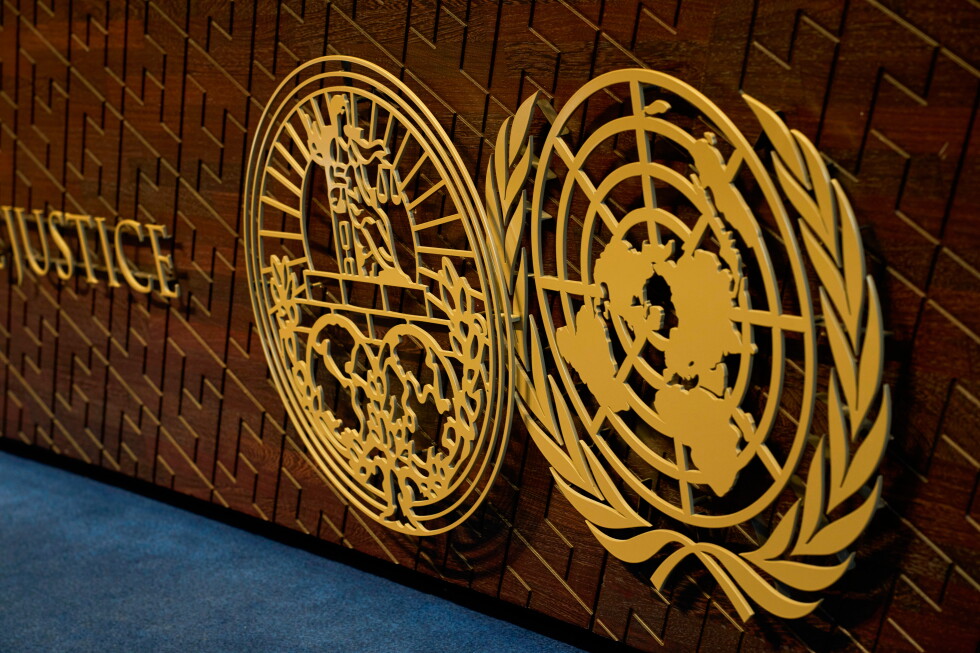
    In a landmark legal move that escalates long-simmering tensions between two central African neighbors, the Democratic Republic of Congo announced Friday it has initiated formal proceedings against Rwanda at the International Court of Justice (ICJ), the United Nations’ highest tribunal for inter-state disputes. The filing seeks to hold Rwanda legally accountable for more than 30 years of widespread violence that has devastated the mineral-rich eastern region of Congo, leaving millions of civilians displaced and suffering systemic human rights abuses.

    Congo’s legal application accuses Rwanda of violating multiple foundational international conventions, including pacts banning genocide, racial discrimination, torture, and systemic discrimination against women. The legal documents outline that since the early 1990s, civilian communities in eastern Congo have endured mass targeted killings, extrajudicial executions, widespread torture, systematic sexual violence, mass forced displacement, and ongoing ethnic and gender-based persecution perpetrated by Rwandan-backed armed factions.

    The conflict that has torn eastern Congo apart for generations has roots stretching back to the 1994 Rwandan genocide, when Hutu militias responsible for the mass killings fled across the border into eastern Congo to escape prosecution. In the decades that followed, Rwanda has repeatedly deployed cross-border military incursions and armed proxy groups, justifying its actions as necessary to neutralize the remaining Hutu extremist fighters and safeguard Rwanda’s national security. However, both Congolese officials and the U.S. government have long alleged that Rwanda uses the security threat as a cover to gain control over eastern Congo’s vast reserves of valuable strategic minerals, which are critical to global tech and manufacturing supply chains.

    Today, the region remains mired in instability as government forces and allied militias battle more than 100 active armed factions. The most powerful and disruptive of these groups is the M23 movement, which has been repeatedly linked to Rwandan support. M23 fighters launched sweeping offensive operations in early 2023, rapidly seizing key strategic population centers including the major eastern city of Goma and expanding their territorial control across large swathes of North Kivu province.

    The United Nations has classified the ongoing crisis in eastern Congo as “one of the most protracted, complex, serious humanitarian crises on Earth.” More than 6 million people have been displaced by the decades of violence, according to U.N. data, with millions more facing acute food insecurity and limited access to basic humanitarian aid.

    In its filing, Congo named a litany of Rwandan-backed rebel groups that it holds responsible for the decades of bloodshed, with the M23 topping the list of accused factions. The Congolese legal team is asking the ICJ to issue a formal ruling that Rwanda bears international legal responsibility for the violations, order an immediate halt to all Rwandan-backed hostile activities within Congolese territory, require formal assurances that such actions will not be repeated in the future, and order substantial reparations to be paid to both the Congolese government and the civilian victims of the violence.

    Responding to the filing, the ICJ confirmed in a public statement that it had received Congolese application to institute proceedings, but has not yet made any determination on whether the court has jurisdiction to hear the full case. The Rwandan government has not issued any immediate public response to the new legal action. While Rwanda has consistently denied any official support to armed groups operating inside Congo, U.N. expert panels have published multiple findings documenting concrete evidence that Rwandan military personnel have fought alongside M23 fighters and directly directed the group’s military operations.

    This new legal filing marks the third time Congo has attempted to bring Rwanda before the ICJ over the cross-border conflict. The first case was voluntarily withdrawn by Congolese authorities in 2001, and the court dismissed the second attempt in 2006 for lack of jurisdiction, finding that Rwanda had not ratified all of the international treaties cited by Congo, or had entered formal reservations that barred the court from hearing the dispute.

    The landmark legal action comes amid stalled diplomatic efforts to resolve the conflict: separate U.S.- and Qatar-mediated peace negotiations between Congolese and Rwandan officials have so far failed to produce a durable ceasefire or lasting political settlement. Just one day before the ICJ filing was announced, the U.S. government imposed new economic sanctions on a Rwanda-based gold refinery, Gasabo Gold Refinery, which U.S. officials say forms part of a transnational criminal network that operates in coordination with M23 to illegally extract and smuggle gold out of eastern Congo. U.S. officials emphasized the sanctions are intended to support ongoing diplomatic peace efforts by cutting off a key source of funding for the armed group.

    The new legal challenge adds another layer of complexity to an already intractable regional crisis, setting the stage for a high-stakes international legal showdown that could shape the future of security and stability in central Africa.

  • Mother dies saving daughter in Venezuela earthquakes

    Mother dies saving daughter in Venezuela earthquakes

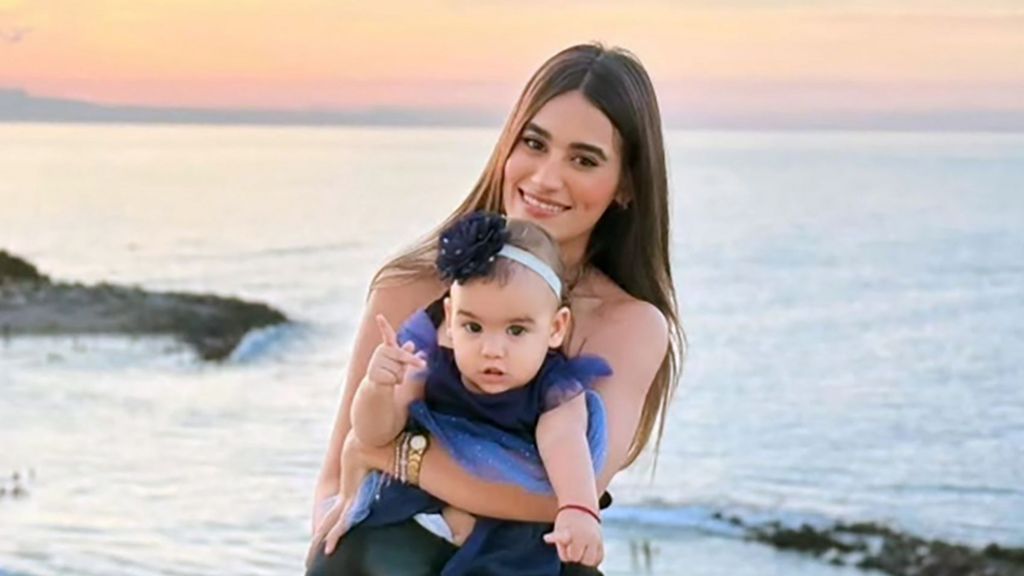
    Deadly twin earthquakes that rocked central Venezuela near the capital Caracas this week have left hundreds dead, thousands injured, and countless families shattered by grief—including that of Venezuelan professional footballer Héctor Bello, whose partner Andrea gave her own life to protect their young toddler.

    Bello first shared the devastating news of Andrea’s death in a heartfelt Instagram post that quickly spread across social media, confirming that Andrea pushed their small child out of harm’s way as buildings collapsed around them during the two powerful tremors. In his emotional tribute, Bello wrote that he will one day share the full story of Andrea’s bravery with their surviving daughter: how she chose to sacrifice herself to save the little girl’s life, how she stayed by her side until her final breath, and how her courage never wavered even in the face of catastrophe.

    The disaster, which struck on Wednesday, has been one of the deadliest seismic events to hit Venezuela in recent decades. As of the latest updates, official death tolls have climbed to at least 589 people, with more than 2,980 others injured. Rescue teams continue to sift through collapsed rubble in search of additional survivors, three days after the quakes hit, and hundreds of people remain unaccounted for. Multiple foreign nationals are among those confirmed dead: four Spanish citizens, one Portuguese national, and two Brazilian citizens, according to statements from their respective governments. An estimated 106 Spanish nationals are still missing, Spanish media reported, citing the country’s foreign ministry.

    Portuguese President António José Seguro issued a formal message of solidarity to the Venezuelan people and to Portuguese residents affected by the disaster, extending condolences to all those who have lost loved ones.

    After the quakes, Bello traveled immediately to Caracas to be with his daughter, who was hospitalized for observation alongside her aunt, who was also in the building when it collapsed. In an overnight update posted Friday, Bello shared that both his daughter and her aunt were in stable condition, though they would remain in the hospital for further monitoring. He thanked supporters for their messages of comfort as he navigated what he called “immense pain,” leaving him “all alone” to raise their daughter.

    In a raw, vulnerable Instagram story shared after the tragedy, Bello opened up about his overwhelming grief and uncertainty, asking, “How do I explain to your daughter that you lost your life to save hers, and that I wasn’t there to do anything? How do I explain it? Give me strength now.”

    Local Venezuelan football media organization Cumaná de Campeones also confirmed Andrea’s death in a separate tribute, noting that she was recovered from the rubble of the family’s residential building while their daughter emerged alive from the collapse. U.S.-based Spanish-language news outlet Univision also independently verified the tragedy.

    As identification of victims continues and rescue operations stretch into their fourth day, communities across Venezuela and the international community are rallying to support affected families, while stories of extraordinary sacrifice like Andrea’s have drawn an outpouring of sympathy from people around the world.

  • Greece is paying fishermen to catch toxic toadfish invading the warming Mediterranean

    Greece is paying fishermen to catch toxic toadfish invading the warming Mediterranean

    Climate change has triggered an unprecedented biological shift in the Mediterranean Sea, pushing a toxic, invasive species northward into Greek waters—and prompting Athens to roll out an unusual solution to contain the disruption: a cash-for-catch bounty program targeting the dangerous invader.

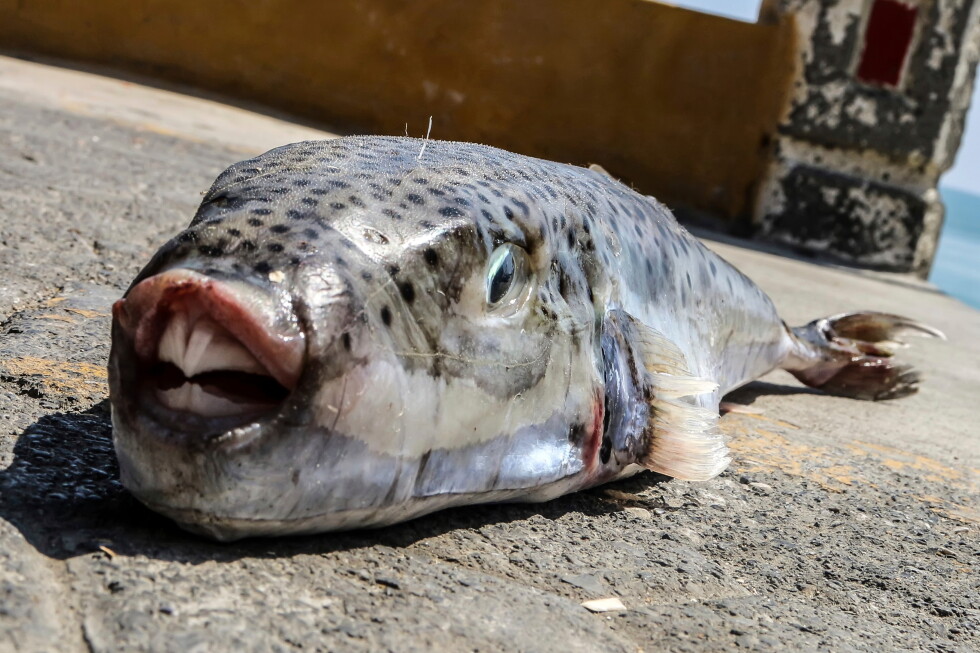
    The species in question is the silver-cheeked toadfish, a member of the pufferfish family native to tropical marine ecosystems. Identified by its streamlined torpedo frame and distinct human-like teeth, the creature carries an extremely potent neurotoxin in its skin and internal organs that can trigger fatal heart failure if ingested by humans.

    While Greek authorities have confirmed no sightings of the toadfish in popular resort bathing zones around Greek islands, the invasive species has already caused severe economic damage to fishing communities operating off the coast of Crete and other nearby island groups. Local fishermen report that the toadfish routinely tear through commercial fishing nets to feed on already caught target species, leaving gear destroyed and catches depleted.

    Giorgos Kyriakakis, a representative of a Cretan fishermen’s association, explained the scope of the problem in an interview with Greek public broadcaster ERT on Friday. “It’s got to the point where we might go out fishing one day and then spend the next three days fixing our nets,” Kyriakakis said. “They eat our catch and damage our nets — that’s very costly.”

    Ecologists trace the toadfish’s arrival in the Mediterranean to two interconnected factors: the species originally entered the sea via the Suez Canal from the Red Sea, and rapidly expanding northward as ocean temperatures rise due to human-caused climate change. The invasion of this toxic species is not unique to Greece; neighboring Cyprus launched an identical cash bounty program earlier this year to address its own toadfish infestation.

    Greece’s formal program launched Friday, with the government offering a payout of 5.33 euros per kilogram (equivalent to roughly $2.75 per pound) for every toadfish turned in by fishermen. According to Agriculture Minister Margaritis Schinas, a former vice president of the European Commission, this is the first time Greece has implemented a targeted eradication measure of this kind.

    All collected toadfish will be frozen at local government facilities before being incinerated to prevent the neurotoxin from entering the food supply, Schinas confirmed. He also noted that the program, which initially covers only the currently affected island regions, will likely be expanded to all Greek territorial waters in the coming months to stop the species from spreading further.

    Public anxiety around the toadfish has grown in recent weeks after Greek fishing crews shared viral videos online showing the species biting through solid objects including soda cans and wooden planks, highlighting the strength of its jaws. In response to rising public concern, the Greek Red Cross issued an official public health advisory, outlining first aid procedures for bite-related bleeding and warning the public of the lethal risk posed by the neurotoxin stored in the fish’s organs.

    Despite the valid concerns of fishing communities, medical and tourism stakeholders on Crete have urged the public to avoid overreaction. In a joint statement released Friday by 16 local medical and tourism associations, leaders emphasized that the presence of the toadfish in Mediterranean waters has been documented by scientists for years, and there is no immediate or hidden threat to recreational swimmers.

    “Marine predators do not threaten the safety of visitors and residents,” the statement read. “Exaggeration is often a feature of public debate.”

  • Canada’s rat and asbestos plagued official residence gets a lifeline

    Canada’s rat and asbestos plagued official residence gets a lifeline

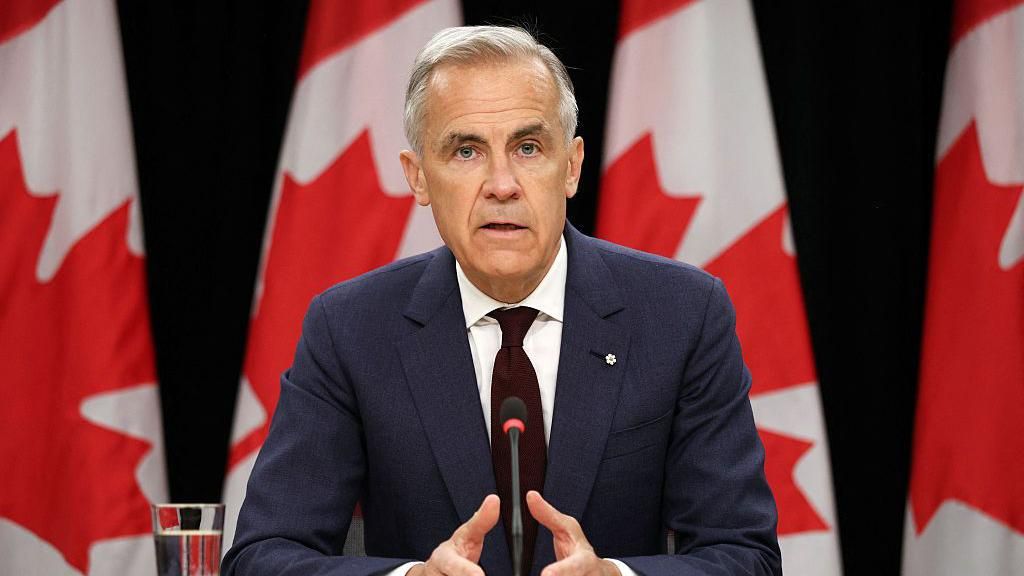
    After more than a decade of sitting abandoned and crumbling into disrepair, Canada’s iconic prime ministerial official residence at 24 Sussex Drive is finally set to be restored, after Prime Minister Mark Carney unveiled a long-awaited, community-focused national restoration plan on Friday.

    Widely recognized as Canada’s equivalent to the White House in the U.S. or 10 Downing Street in the UK, the 19th-century property has been uninhabitable since the 2010s, plagued by systemic neglect. Years of deferred maintenance left the building with severe hazards including asbestos-contaminated walls, toxic mould infestations, and widespread rodent problems, earning it the label of a “national embarrassment” from industry experts. Preliminary remediation work completed in 2024 cleared the site of asbestos, mould, and pests, but major structural and cosmetic renovations remain needed to make the residence safe and usable again.

    The price tag for full restoration is currently estimated at over C$100 million (US$71 million). For years, this cost has deterred successive Liberal and Conservative governments from moving forward with taxpayer-funded repairs, as successive administrations chose to prioritize other policy areas over restoring the historic property.

    Under the new plan outlined by Carney, the federal government will not draw on public funds for the majority of the project. Instead, the Rideau Hall Foundation will lead a national crowdfunded fundraising campaign to cover a large portion of the costs. To prevent corporate influence and ensure transparency, Carney announced strict rules for the campaign: only individual Canadian residents and registered philanthropic organizations will be eligible to donate, donation amounts will be capped, and a full public list of all contributors will be released once the campaign concludes.

    Alongside the fundraising push, the government will launch a national design competition open exclusively to Canadian architecture firms. Teams will submit renovation proposals that honor the building’s historic character while updating it to meet modern accessibility, security, and sustainability standards. An independent jury will review all submissions and select a winning design by July 2025.

    In remarks announcing the plan, Carney emphasized that 24 Sussex Drive holds deep national significance. Over its history, the residence has housed 10 Canadian prime ministers and hosted global leaders including Queen Elizabeth II and Winston Churchill. Carney acknowledged that the property had “not been cared for with the respect that it deserves” for decades, noting that while he is unlikely to ever move into the residence himself during his premiership, his government is committed to leaving a functional, respected national asset for future Canadian leaders.

    Explaining the decision to avoid full taxpayer funding, Carney said his administration has prioritized pressing domestic policy goals, including expanding the supply of affordable housing across Canada and strengthening national economic growth. He added that the project aligns with a broader public commitment to shared national heritage, noting that Canadians hold a collective sense of ownership over the iconic property. “This is their house,” Carney said. “It is a symbol of the nation.”

    Joseph Clark, an associate professor of architecture at the University of Toronto, noted that while 24 Sussex Drive is far more modest in scale and grandeur than its global counterparts like the White House, its cultural and political importance to Canada remains unmatched.