作者: admin

  • Hand-stitched Indian ship arrives in Oman to rousing welcome

    Hand-stitched Indian ship arrives in Oman to rousing welcome

    The Indian Navy’s traditionally crafted wooden sailing ship INSV Kaundinya has successfully completed a 17-day maritime journey from India to Oman, arriving in Muscat on Wednesday to a ceremonial water salute. This remarkable vessel, constructed entirely without engines or metal fastenings, embarked from Porbandar on India’s western coastline on December 29th, retracing ancient trade routes that once connected Indian civilization with global trading partners.

    Built using historical shipbuilding techniques that predate modern naval engineering, INSV Kaundinya represents a significant archaeological reconstruction. The vessel’s construction involved stitching wooden planks together with coir rope derived from coconut fiber, sealed with natural resin instead of modern adhesives. Propelled solely by square sails harnessing favorable winds, the ship embodies maritime traditions that were once commonplace throughout the Indian Ocean region.

    The vessel’s design inspiration originates from a 5th-century painting within the Ajanta caves of western India, considered among the few surviving visual records of early Indian seafaring technology. With no existing blueprints from that historical period, naval architects relied extensively on iconographic evidence and historical documentation to recreate the ship’s authentic form.

    Notable cultural elements adorn the vessel, including sails displaying Gandabherunda motifs (a mythical two-headed bird representing Lord Vishnu) and solar symbols. The bow features a sculpted Simha Yali—a mythical creature from South Indian lore—while the deck showcases a symbolic Harappan-style stone anchor, each element carefully selected to evoke India’s rich maritime heritage.

    Construction of INSV Kaundinya commenced in September 2023, culminating in its launch in Goa in February 2025. Among the crew members was Sanjeev Sanyal, an economic advisor to Prime Minister Narendra Modi, who documented the voyage through regular social media updates. Commander Hemant Kumar, the officer-in-charge, described the journey as both “exhilarating” and “adventurous,” noting challenges including extreme heat without air conditioning, basic sleeping arrangements, and periods of seasickness. The return schedule to India remains undetermined at this time.

  • Australia’s Washington envoy to step down early

    Australia’s Washington envoy to step down early

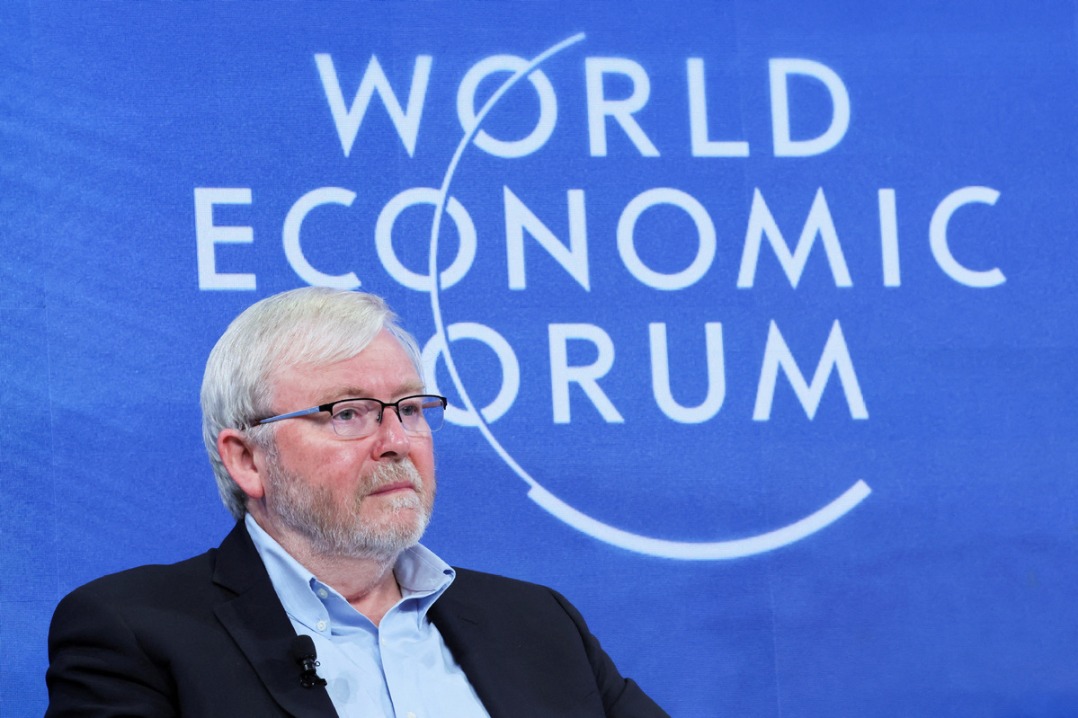
    In a significant diplomatic development, Australia’s Ambassador to the United States Kevin Rudd will conclude his Washington posting nearly a year ahead of schedule, Prime Minister Anthony Albanese confirmed on Tuesday. The former Australian prime minister will depart his position in March 2026 to assume leadership of the prestigious Asia Society think tank, where he will focus on US-China relations.

    Rudd, recognized as one of Australia’s most prominent China experts and a former diplomat who served in Beijing, has spent three years representing Australian interests in Washington. Prime Minister Albanese expressed profound appreciation for Rudd’s “tireless contribution to our national interests” during his tenure, clarifying that the decision to leave early was entirely Rudd’s personal choice.

    The ambassador’s next role will see him serving as global president of the Asia Society and directing its Center for China Analysis, marking his second leadership stint with the organization dedicated to Asia-Pacific affairs since its 1956 founding. Rudd characterized his future work as addressing “the core question for the future stability of our region and the world” through the think tank’s platform.

    According to China-Australia relations expert James Laurenceson, while Rudd’s departure removes an authoritative voice on China from the diplomatic corps, Australia’s fundamental approach to managing the complex China-US-Australia relationship will remain consistent. The next ambassador will continue prioritizing dialogue, diplomacy, and trade while simultaneously seeking US support for strategic balancing against China through mechanisms like the AUKUS security partnership.

    The announcement comes amid ongoing scrutiny of Rudd’s past criticisms of former President Donald Trump, which were deleted from social media following the 2024 election. Official statements indicated the deletion aimed to prevent misinterpretation of these personal views as reflecting Australian government positions. The Australian government stated that an announcement regarding Rudd’s successor would be made in due course.

  • ‘Not a luxury’: Fury as community bank closes 15 branches, forcing some to drive 150km for services

    ‘Not a luxury’: Fury as community bank closes 15 branches, forcing some to drive 150km for services

    A prominent Australian customer-owned financial institution is confronting significant criticism following its decision to shutter multiple physical locations across the country. People First Bank, formed through the recent merger of Heritage Bank and People’s Choice Credit Union, has announced plans to close 15 branch offices and three agency outlets, triggering concerns about customer abandonment in regional communities.

    The Financial Sector Union has vehemently opposed the decision, highlighting that the closures contradict previous commitments made during the 2022 merger negotiations that guaranteed branch network stability. According to union representatives, the banking network has already contracted by approximately 40 percent since the consolidation was finalized in 2023.

    Julia Angrisano, National Secretary of the Financial Sector Union, criticized the institution for prioritizing profitability over community service. “While publicly professing support for customers and communities, the bank’s actions demonstrate contradictory priorities,” Angrisano stated. “Local banking services are being systematically eliminated despite the organization reporting consistently rising profits.”

    The closures will disproportionately affect vulnerable demographic groups including elderly customers, individuals with disabilities, and small business owners who depend on in-person banking services. Certain Queensland communities including Oakey and Pittsworth will be left without any physical banking facilities, forcing residents to travel distances up to 150 kilometers to access face-to-face financial services.

    Bank executives have defended the decision as necessary adaptation to evolving consumer behavior. Chief Customer Officer Maria-Ann Camilleri characterized the move as “difficult but inevitable,” noting that less than one percent of transactions now occur through physical branches with fewer than 0.7 percent of customers regularly utilizing in-person services.

    The institution has committed to retaining all affected employees through alternative role offerings and emphasized that digital banking services remain available through mobile applications and internet platforms. Additionally, customers will maintain access to cash services via ATMs, EFTPOS systems, and Australia Post banking facilities located near the affected branches.

    Despite these assurances, the union maintains that the bank’s 7 percent profit increase during the previous financial year undermines claims of financial necessity driving the branch closures.

  • China’s huge trade surplus brings limited boost to forex reserves

    China’s huge trade surplus brings limited boost to forex reserves

    Despite a new round of tariff impositions initiated by former US President Donald Trump in April 2025, China’s trade surplus soared to an unprecedented $1.19 trillion, according to data released by the General Administration of Customs. This remarkable figure represents a significant increase from the $992 billion surplus recorded in 2024. The surge was primarily driven by a 5.5% year-on-year increase in exports, which reached $3.77 trillion, while imports remained stagnant at $2.58 trillion.

    However, this record trade performance presents a puzzling discrepancy when examined alongside China’s foreign exchange reserves. Data from the People’s Bank of China revealed that forex reserves grew by only $160 billion throughout 2025, reaching $3.36 trillion by December. This minimal increase means that merely 13% of the massive trade surplus actually flowed into the country’s reserves, continuing a pattern of stability within the $3.01-3.33 trillion range maintained over the past decade.

    Financial columnist Dao Ge, based in Beijing, explains several factors contributing to this phenomenon. ‘The $992 billion trade surplus in 2024 wasn’t entirely earned in US dollars,’ Dao notes. ‘A substantial portion was settled in yuan and other currencies, meaning the actual dollar accumulation might have been approximately $200 billion.’ Additional pressures on reserve balances include outbound spending by Chinese tourists and students, profit remittances by foreign companies operating in China, and overseas investments by Chinese state-owned enterprises (SOEs).

    Chinese SOEs have increasingly utilized renminbi for purchasing crude oil from heavily sanctioned nations including Venezuela, Iran, and Russia, as well as minerals from various African countries. These nations can then use the currency to acquire Chinese goods or convert it into global currencies through markets like Hong Kong.

    The record surplus appears contradictory to the widespread narrative of manufacturing relocation to Southeast Asian countries such as Vietnam, Thailand, and Indonesia, which has reportedly left numerous factory workers unemployed. Some international commentators have raised concerns about potentially inflated export data, alleging that certain companies might be fabricating export records to claim tax rebates illegally.

    Notable cases include a Liaoning company that illegally obtained tax rebates worth 212 million yuan ($30 million) through fabricated export transactions, and a Wuhan-based supply-chain firm that created fictitious export records involving over 200 million yuan in offshore cargo value. According to Shanghai Metals Market, approximately 30% of China’s steel exports in 2023 and 2024 involved fake invoice-based exports.

    The central government implemented new regulations effective October 1, 2025, to combat these practices, though comprehensive national estimates of their impact on trade statistics remain unavailable.

    Wang Jun, Vice Head of the General Administration of Customs, attributes China’s strong trade performance to strategic policy support, robust domestic market demand, and industrial strength. Key drivers include targeted government measures to help exporters secure orders, China’s large consumer base sustaining import demand, and the country’s complete industrial system supporting export growth.

    Despite these strengths, Wang acknowledges significant challenges ahead: ‘Global trade momentum is weakening as economic growth slows, geopolitical tensions persist, policy uncertainty remains high, and trade costs continue to rise.’ International organizations have subsequently downgraded their forecasts for global trade growth in 2026.

    Nevertheless, China’s exports of high-tech products rose 13.2% year-on-year, contributing 2.4 percentage points to overall export growth. Notably, China became a net exporter of industrial robots for the first time. The country’s growing dominance in robotics was evident at CES 2026 in Las Vegas, where Chinese companies represented 21 of the 38 exhibitors showcasing humanoid robots, demonstrating rapid commercialization of robotics innovation.

  • US imposes tariff of 25 pct on certain advanced computing chips

    US imposes tariff of 25 pct on certain advanced computing chips

    The United States has implemented a substantial 25 percent tariff on select advanced computing chips, marking a significant escalation in its trade policy approach toward the technology sector. This decisive measure, which took effect in early 2026, represents one of the most aggressive tariff impositions on high-tech components in recent years.

    The tariff specifically targets cutting-edge computing processors essential for artificial intelligence systems, data centers, and high-performance computing applications. Industry analysts indicate this move will directly impact the cost structure of numerous technology companies relying on these specialized semiconductors for their operations and product development.

    This protectionist measure emerges amid ongoing global competition for technological supremacy, particularly in the semiconductor sector where the United States has been seeking to strengthen domestic manufacturing capabilities. The tariff is expected to reshape supply chain dynamics and potentially accelerate the reshoring of advanced chip production to American soil.

    Market reactions have been immediate, with several major tech corporations announcing price adjustments for their computing products and services. The financial implications are projected to extend beyond the technology sector, potentially affecting industries ranging from automotive to healthcare that increasingly depend on advanced computing capabilities.

    Trade experts suggest this policy could trigger retaliatory measures from trading partners and potentially disrupt the global semiconductor ecosystem that has become increasingly interconnected over the past decade. The long-term impact on innovation cycles and technological advancement remains a subject of intense debate among economists and industry leaders.

  • Trump to host Venezuelan opposition leader sidelined by US

    Trump to host Venezuelan opposition leader sidelined by US

    Former US President Donald Trump is preparing to welcome Venezuelan opposition figure Maria Corina Machado at the White House this Thursday, marking a significant diplomatic engagement with a pro-democracy activist whose movement his administration previously marginalized. This meeting occurs against the backdrop of Trump’s recent cordial communications with Venezuela’s current leadership, signaling potential shifts in American foreign policy toward the South American nation.

    The scheduled discussion follows Trump’s notably positive characterization of his telephone conversation with Venezuela’s interim president Delcy Rodriguez, during which he expressed satisfaction with the current political arrangement maintaining Nicolás Maduro’s allies in power. Trump publicly praised Rodriguez as a ‘terrific person’ and applauded the ‘terrific progress’ achieved since US forces captured Maduro and his spouse in a military operation.

    Machado, awarded the Nobel Peace Prize last year for her persistent democratic activism under constant threat of imprisonment, intends to redirect attention toward Venezuela’s political transition—an issue recently overshadowed by economic considerations, particularly access to Venezuelan petroleum resources. The opposition leader recently made a daring escape by boat to accept her Nobel recognition in Oslo and has not returned to her homeland since.

    Notably, Trump has expressed visible dissatisfaction about not receiving the Nobel Prize himself, describing the omission as a ‘major embarrassment’ for Norway. Machado has offered to share her award with the former president, who indicated in a Fox News interview that he would consider such a gesture ‘a great honor,’ despite the Nobel Institute’s clear stance that prizes are non-transferable.

    Concurrent with these developments, Venezuela has released approximately 70-180 political prisoners under US pressure, though hundreds remain detained. Authorities have conducted these releases discreetly at unconventional locations to avoid media coverage and celebrations, according to documentation from human rights organizations and opposition groups.

  • US to pause immigrant visa processing from 75 countries over public assistance concerns

    US to pause immigrant visa processing from 75 countries over public assistance concerns

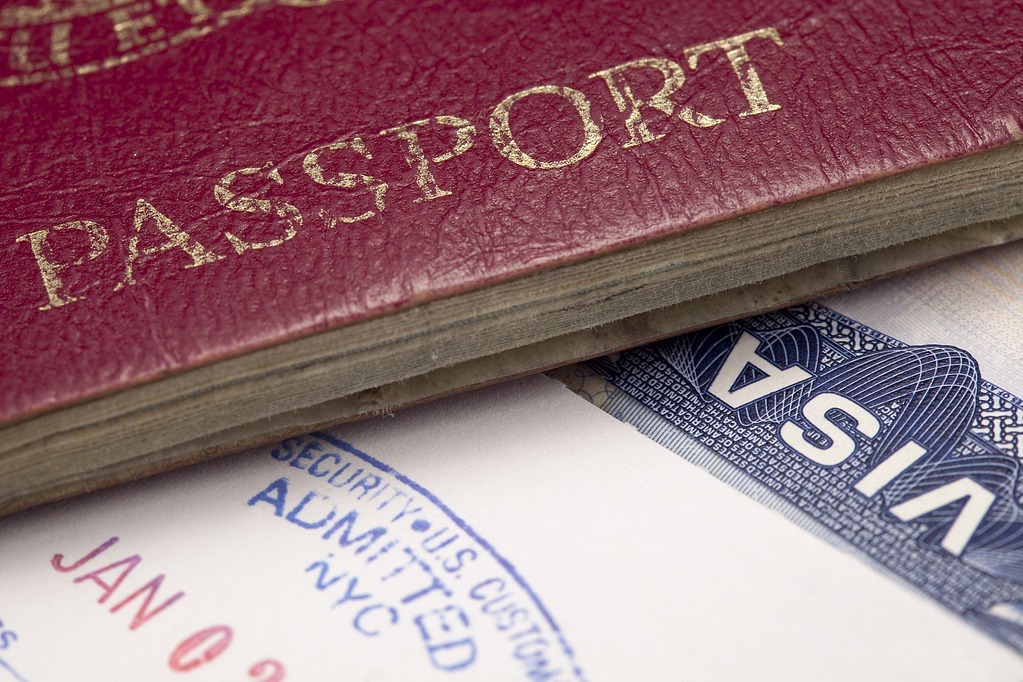
    The United States State Department has announced a significant suspension of immigrant visa processing from 75 countries, citing concerns over immigrants becoming dependent on public assistance programs. The policy shift, announced on Wednesday, will take effect January 21 and affects nations including Somalia, Haiti, Iran, and Eritrea.

    Principal Deputy Spokesperson Tommy Pigott stated the pause will remain while the department reassesses immigration procedures to prevent the admission of foreign nationals likely to require welfare and public benefits. In U.S. immigration terminology, a “public charge” refers to individuals deemed likely to rely on government assistance for basic necessities.

    The decision follows the Trump administration’s recent expansion of travel restrictions, which now encompass 39 countries facing complete or partial entry bans. This visa processing suspension represents the latest in a series of immigration policy changes under the current administration, which has revoked over 100,000 visas since President Trump took office nearly one year ago.

    The full list of affected countries has not been publicly released, raising questions about the criteria used for selection. The move aligns with President Trump’s previously stated intention to “permanently pause migration from all Third World Countries,” which he expressed on his Truth Social platform following a shooting incident in the U.S. capital involving an Afghan national that resulted in the death of a National Guard member.

  • BHP and mining giants power ASX 200 gains as tech stocks falter

    BHP and mining giants power ASX 200 gains as tech stocks falter

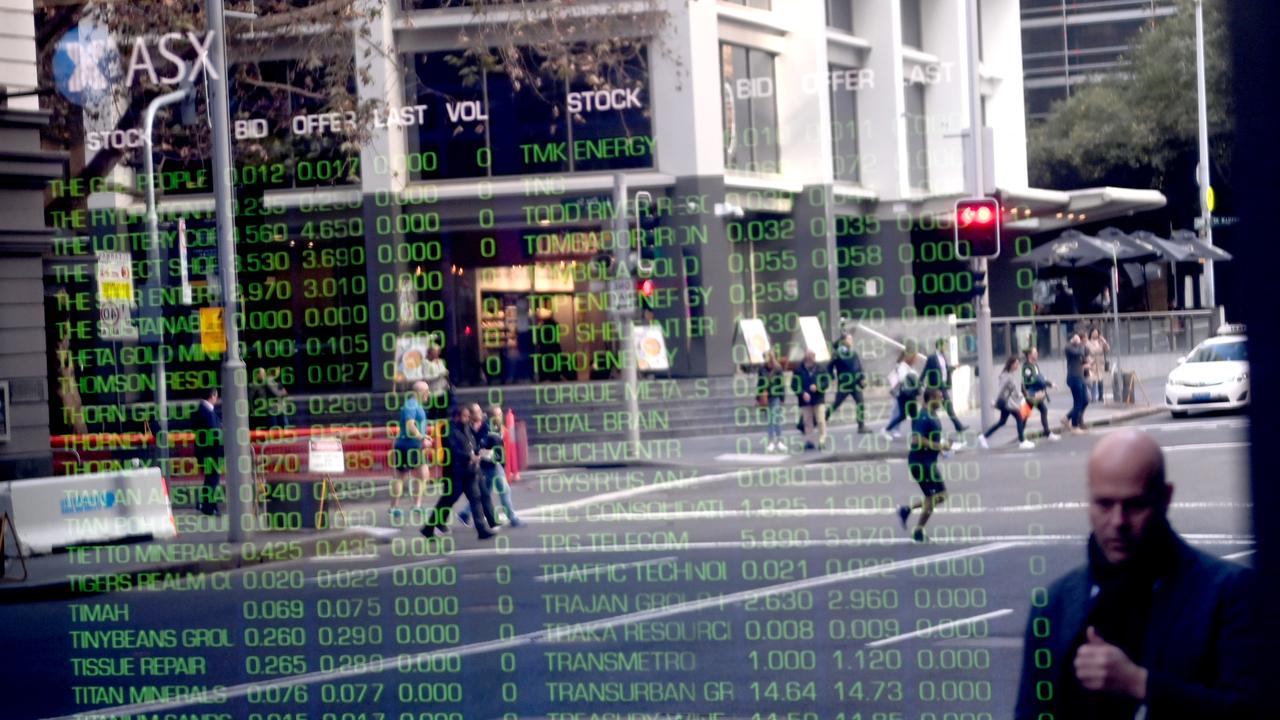
    Defying a weak overnight session on Wall Street, the Australian sharemarket has notched its fourth consecutive day of gains, propelled primarily by a resurgent mining sector. The benchmark S&P/ASX 200 advanced decisively, adding 41.10 points, or 0.47 per cent, to close at 8,861.70. The broader All Ordinaries index also climbed, rising 32.40 points, or 0.35 per cent, to settle at 9,184.20. In currency markets, the Australian dollar experienced a slight retreat, trading at 66.76 US cents. The trading session presented a mixed picture overall, with six of the eleven sectors finishing in positive territory. The materials sector emerged as the unequivocal leader, posting a robust gain of 1.09 per cent. The healthcare sector also contributed significantly to the market’s upward momentum. Mining behemoth BHP Group Ltd. was a standout performer, its shares surging 2.60 per cent to $49.37, edging it closer to overtaking Commonwealth Bank as the nation’s largest listed entity. Rio Tinto and Fortescue Metals Group also closed higher, gaining 0.37 per cent and 0.44 per cent, respectively. BlueScope Steel witnessed a spectacular leap of 4.17 per cent to $31.00, fueled by ongoing takeover speculation. Simultaneously, South32 shares hit a two-year peak of $4.14, buoyed by skyrocketing copper prices. Market analyst Tony Sycamore from IG noted that the resilience of commodity stocks successfully insulated the local bourse from international weakness. ‘The resilience is largely thanks to the resurgent ASX200 Materials sector, which delivered its third successive fresh record high this week,’ Sycamore stated, highlighting an impressive 8.45 per cent month-to-date gain for the sector. Healthcare heavyweight CSL Ltd. jumped 1.03 per cent, while ResMed climbed 2.42 per cent. The energy sector managed to trade in the green despite a 5 per cent slump in oil prices due to eased geopolitical tensions concerning Iran. All four major banks reversed early losses to finish higher, with ANZ leading the charge with a 2.58 per cent gain. However, the information technology sector faced substantial headwinds, mirroring a sell-off on the tech-heavy Nasdaq. Life360, Xero, and Megaport all fell sharply, dropping between 3.95 and 5.12 per cent. In individual company news, Treasury Wine Estates shares slumped 4.85 per cent following a broker downgrade from Citi. Conversely, respiratory imaging firm 4DMedical soared 5.59 per cent after securing a $150 million institutional placement.

  • Palestine Action-linked prisoners end hunger strike

    Palestine Action-linked prisoners end hunger strike

    In a significant development for activist movements and UK-Israel defense relations, three prisoners affiliated with Palestine Action have terminated their prolonged hunger strike following the British government’s decision to withhold a multi-billion-pound contract from Elbit Systems UK, the British subsidiary of the Israeli arms manufacturer. The cessation marks the conclusion of the longest hunger strike in British penal history.

    Heba Muraisi and Kamran Ahmed, who had abstained from both food and water for over sixty days, alongside Lewie Chiaramello—who managed his Type 1 Diabetes while engaging in an alternating-day hunger strike for 46 days—agreed to end their protest late Wednesday. This decision coincided with urgent medical warnings that the strikers were nearing fatal organ failure.

    Simultaneously, four additional protesters—Teuta Hoxha, Jon Cink, Qesser Zuhrah, and Amu Gib—who had previously suspended their strikes in late 2023, formally agreed not to resume their action. The collective resolution brings a close to a highly publicized campaign that highlighted intersections of activism, incarceration, and international arms trading.

    The advocacy group Prisoners for Palestine condemned the ongoing detention of these individuals, labeling it a permanent stain on Britain’s democratic credentials. The organization asserted that Britain is effectively holding political prisoners in service of a foreign regime engaged in genocide, a statement that underscores the deeply polarized perspectives on the Gaza conflict.

    Family members expressed both relief and unresolved anger. Audrey Corno, a relative of Teuta Hoxha, described the ordeal as a ‘painfully traumatic experience’ for loved ones, noting that while victory is declared, critical refeeding processes and long-term health impacts for Muraisi and Ahmed remain a serious concern.

    Nida Gib, related to protester Amu Gib, sharply criticized the Labour government’s silence throughout the crisis, accusing ministers of attempting to isolate dissidents who challenge Britain’s complicity in overseas conflicts. She highlighted the harsh treatment prisoners endured, including being handcuffed to hospital beds during refeeding, and vowed that the movement built around this case would continue to demand accountability and expose perceived injustices.

  • Horrific footage captures moment Melbourne truck driver bashed outside Clyde North home while family sleeps

    Horrific footage captures moment Melbourne truck driver bashed outside Clyde North home while family sleeps

    A disturbing violent incident unfolded in Melbourne’s southeastern suburb of Clyde North early Thursday morning, leaving a local truck driver with significant injuries. At approximately 5:30 a.m., a 42-year-old man was preparing to depart for work from his Brumich Way residence when two unidentified assailants launched a surprise attack.

    Closed-circuit television footage obtained by authorities depicts the harrowing sequence of events. The visual evidence allegedly shows one individual striking the victim in the head with sufficient force to propel him backward onto the roadway. A second assailant then joined the assault, with both men proceeding to punch and kick the defenseless victim while he lay incapacitated on the ground.

    Despite sustaining a fractured skull and broken nose in the brutal beating, the victim demonstrated remarkable resilience by managing to return to his household where family members remained asleep during the altercation. His sister, Suman, provided a chilling account to Nine News, describing extensive blood distribution throughout the home and on the victim’s face. She characterized the assault as potentially lethal in intent, stating the attackers appeared determined to ensure his demise through targeted head trauma.

    Victoria Police representatives confirmed the victim received hospital treatment for injuries classified as non-life threatening. Law enforcement officials conducted comprehensive area searches but failed to locate the perpetrators. Although the precise motivations remain undetermined, authorities have explicitly stated they are not treating this as a random act of violence. The criminal investigation continues with police urging residents possessing relevant information or additional surveillance footage to contact Crime Stoppers immediately.