作者: admin

  • Woman who accused high-profile twins of sexual assault found dead in Australia

    Woman who accused high-profile twins of sexual assault found dead in Australia

    In a significant development within the high-profile Alexander brothers case, Kate Whiteman, the first woman to publicly accuse real estate moguls Oren and Alon Alexander of sexual assault, was found deceased in Australia late last year. The New South Wales coroner’s office has concluded its investigation, determining her death as non-suspicious.

    Whiteman, 45, had filed a lawsuit in March 2024 alleging the brothers sexually assaulted her in New York in 2012. Her case triggered a cascade of allegations that ultimately led to the arrest of Oren, Alon, and their older brother Tal on sex trafficking charges months later.

    The Alexander brothers, who maintain their innocence and have pleaded not guilty, are scheduled to face trial at the end of January. Their PR representative stated they were unaware of Whiteman’s death and suggested the timing of this revelation “invites obvious questions” ahead of trial.

    The case has expanded significantly since Whiteman’s initial allegations. The day after her lawsuit, Rebecca Mandel filed similar claims against Oren and Alon, alleging she was drugged and assaulted at a 2010 party. By February 2025, at least 17 women had filed civil lawsuits with accusations spanning Miami, Manhattan, and Moscow.

    In December 2024, the FBI arrested all three brothers, who now face more than 10 sex trafficking offenses. Prosecutors allege the brothers “worked together and with others to engage in sex trafficking” since at least 2010, claiming they have interviewed over 60 women who report being raped by at least one of the brothers.

    Defense attorneys have characterized the charges as government “overreach” and maintain the evidence will prove the allegations false. The brothers have been held without bail at Brooklyn’s Metropolitan Detention Center for the past 13 months as they await trial.


  • Investigation after Air India jet engine sucks in cargo container at Delhi airport

    Investigation after Air India jet engine sucks in cargo container at Delhi airport

    India’s aviation authority has initiated a comprehensive investigation following a serious ground incident at Delhi International Airport involving an Air India Airbus A350 aircraft. The wide-body jet ingested a cargo container into its right engine while taxiing with passengers aboard, causing significant engine damage and grounding the aircraft.

    The incident occurred early Thursday morning at approximately 05:25 local time amid challenging visibility conditions caused by dense fog. The aircraft, flight AI105 bound for New York, had previously returned to Delhi shortly after takeoff due to the temporary closure of Iranian airspace, necessitating rerouting of numerous flights.

    According to India’s Ministry of Civil Aviation, the cargo container had accidentally dislodged from a ground vehicle and fallen onto the taxiway intersection. An Air India spokesperson elaborated that the container fell after a wheel detached from a cart being towed by a baggage handling vehicle. The vehicle operator reportedly noticed the approaching aircraft and departed the area, inadvertently leaving the fallen container behind.

    The Directorate General of Civil Aviation (DGCA) confirmed that approximately 240 passengers and between six to eight crew members were onboard during the incident. While no injuries were reported, photographic evidence shared by DGCA on social media platform X revealed substantial damage to the engine casing and fan blades, along with metallic debris scattered across the taxiway.

    This event has intensified scrutiny regarding ground safety protocols at India’s increasingly congested airports. The incident follows a June 2023 DGCA audit that identified 51 safety violations across major Indian airports and airlines, including concerns about faded runway markings, inadequate maintenance procedures, crew fatigue, and unauthorized cockpit access.

    Air India has acknowledged potential disruptions on select A350 routes as the damaged aircraft undergoes repairs. The airline currently operates six Airbus A350 aircraft primarily on long-haul routes to destinations including London and New York, though specific affected routes remain unspecified.

    Aviation experts emphasize that such incidents, while rare, highlight the critical importance of rigorous ground handling procedures and enhanced safety protocols during adverse weather conditions, particularly at rapidly expanding aviation hubs like Delhi.

  • ‘Hobbit houses’ that might just save a Moldovan village

    ‘Hobbit houses’ that might just save a Moldovan village

    Nestled in the Moldovan countryside, the village of Rogojeni has earned the nickname “hobbit village” for its unique subterranean dwellings that resemble structures from J.R.R. Tolkien’s Middle-earth. These traditional ‘basca’ houses, built partially underground to naturally regulate temperatures against Moldova’s extreme seasonal shifts, have become an unexpected beacon of hope for a community facing depopulation.

    With only 30 residents remaining in a village that once housed 200, Mayor Ruslan Groza acknowledges the existential threat facing Rogojeni. “We genuinely fear the potential disappearance of our village given the drastic population decline,” stated Groza, who has made tourism development central to his preservation strategy. Since restoring one dwelling as a museum in 2020, tourist interest has steadily grown, putting Rogojeni on the international travel map.

    The cultural appeal extends beyond architecture to living traditions. Visitors like Sangkyoung Lee, a 22-year-old South Korean student, experience immersive cultural exchanges, including participation in traditional pig roasts ahead of Orthodox Christmas celebrations. Inside the museum-house, guests savor authentic Moldovan cuisine—pig stew, polenta with sheep cheese, pickles, and local wine—served in rooms adorned with vibrantly colored, hand-sewn carpets.

    This cultural revival occurs against a stark demographic backdrop. Moldovan villages have lost nearly half a million inhabitants since 2014, with approximately one million citizens now living abroad, primarily in EU countries. Many settlements have become ghost towns, with Rogojeni’s abandoned school and church standing as crumbling monuments to this exodus.

    Yet hope persists through cultural champions like Mariana Groza, the mayor’s wife. A literature teacher who has embraced traditional crafts, she operates a workshop creating embroidery and folk costumes, sharing these traditions globally via TikTok. “Not a single day passes without me sewing cross-stitch or crocheting,” she explained. “Promoting our traditions is essential to our identity.”

    During recent pre-Christmas celebrations, village women—including octogenarians—performed traditional carols accompanied by accordion music. The ceremony concluded with the throwing of wheat grains to wish prosperity upon attendees, blending performance with participatory ritual. For elderly residents like Maria Ardeleanu, these interactions with tourists bring joyful connection amid loneliness, while simultaneously preserving unique knowledge about living in these distinctive earth-sheltered homes.

  • Fraudsters flee Cambodia’s ‘scam city’ after accused boss taken down

    Fraudsters flee Cambodia’s ‘scam city’ after accused boss taken down

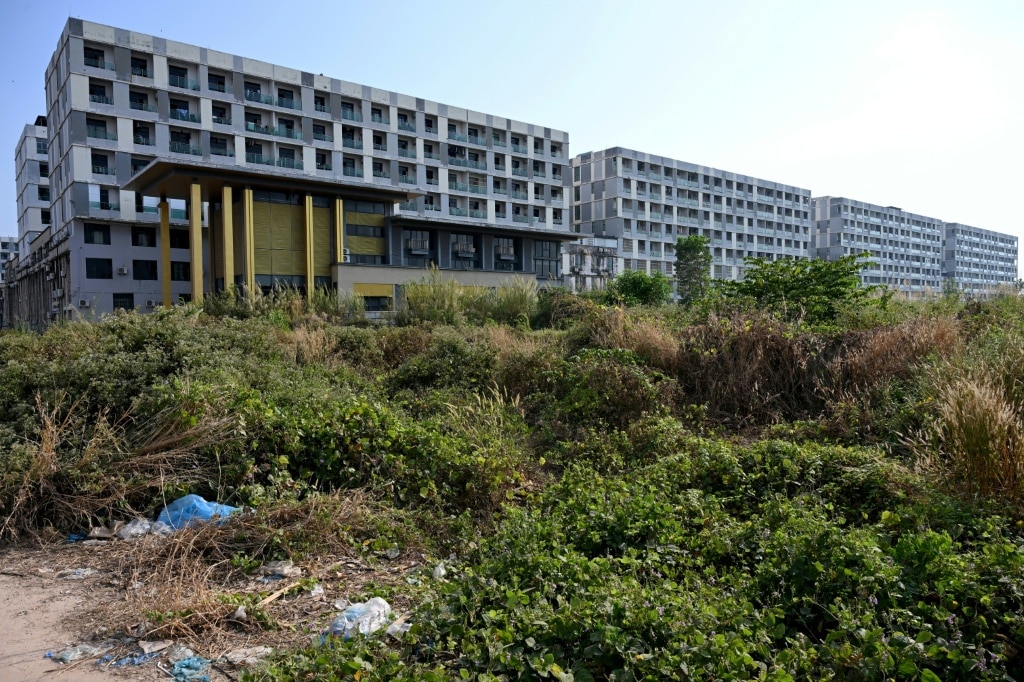
    A dramatic exodus unfolded in Cambodia’s coastal city of Sihanoukville this week as hundreds of suspected cyberfraud operators evacuated compounds following the high-profile arrest and extradition of alleged scam kingpin Chen Zhi to China. Witnesses described chaotic scenes with individuals hauling computers, luggage, and personal belongings while boarding various vehicles including tuk-tuks, luxury SUVs, and coaches.

    The mass departure from notorious hubs like Amber Casino occurred amid Cambodia’s announced crackdown on multibillion-dollar cybercrime operations that have transformed Sihanoukville into a global scam epicenter. These criminal enterprises typically lure victims worldwide through fake romantic relationships and fraudulent cryptocurrency investments, generating estimated global losses up to $37 billion annually according to UN data.

    While Cambodian authorities claim to have raided 118 scam locations and arrested approximately 5,000 people over six months, analysts suggest many operations received advanced warning. Former anti-trafficking NGO head Mark Taylor described ‘preemptive shifting of scam center resources’ as potentially indicating collusion between operators and officials—a strategy that simultaneously boosts government anti-crime credentials while allowing criminal networks to survive and adapt.

    The situation reveals complex transnational dimensions with China increasingly pursuing scam figures across Southeast Asia. Many workers at these facilities remain vulnerable—some willing participants but others trafficked foreign nationals coerced into operation under threat of violence. As one Bangladeshi evacuee noted while blending into the departing crowd: ‘This is about survival now.’

  • China’s commercial rocket launches new satellites from sea

    China’s commercial rocket launches new satellites from sea

    China has achieved another milestone in its commercial space program with the successful offshore launch of the CERES-1 Y7 rocket from waters near Shandong province. The early morning operation, conducted at 4:10 am Beijing Time on Friday, marked a significant advancement in China’s maritime space capabilities.

    The Taiyuan Satellite Launch Center orchestrated the complex maritime mission that successfully placed multiple satellites into their predetermined orbit. These satellites form part of the expanding Tianqi constellation, which represents China’s growing ambitions in satellite networking and global connectivity solutions.

    This launch demonstrates China’s increasing sophistication in flexible launch operations, utilizing maritime platforms to enhance operational flexibility and potentially reduce costs compared to traditional land-based launches. The CERES rocket series, developed by Chinese private aerospace company Galactic Energy, has established itself as a reliable workhorse for China’s commercial space sector.

    The successful mission underscores China’s rapid progress in developing its commercial space industry, which has seen substantial growth and technological innovation in recent years. Maritime launches offer distinct advantages including expanded launch windows, reduced population safety concerns, and the ability to position launches closer to the equator for improved payload efficiency.

    This achievement positions China among a select group of nations capable of executing complex offshore space operations, highlighting the country’s maturing aerospace capabilities across both state and commercial sectors.

  • Ten photos from across China: Jan 9 – 15

    Ten photos from across China: Jan 9 – 15

    China Daily Information Co (CDIC) has formally asserted its intellectual property rights over all content published across its digital platforms. The comprehensive copyright notice specifies that all materials—including text, photographs, and multimedia information—remain the exclusive property of CDIC and are protected under Chinese copyright law.

    The company explicitly prohibits any form of republication or unauthorized use of its content without obtaining prior written authorization. This policy applies to all digital assets created since 1994, establishing CDIC’s longstanding commitment to protecting its journalistic and creative outputs.

    Technical recommendations accompany the legal notice, with the organization advising visitors to utilize browsers with 1024*768 resolution or higher for optimal viewing experience. The publication also displays its official publishing license (0108263) and registration number (130349), reinforcing its status as a regulated media entity.

    Additionally, the platform provides navigation options for prospective employees and partners, including sections for advertising inquiries, general contact information, and employment opportunities specifically tailored for expatriates seeking positions within the organization.

  • Man accused of violently assaulting Labor figure Tim Picton returns to court to face more assault charges

    Man accused of violently assaulting Labor figure Tim Picton returns to court to face more assault charges

    A 20-year-old man currently facing charges for the alleged assault that left Western Australian Labor strategist Tim Picton in a coma has now been charged with a separate violent attack occurring just two days prior. Brodie Jake Dewar appeared in Armadale Magistrates Court on Friday to address allegations concerning a Christmas Day incident in Kalamunda, where he is accused of striking a 40-year-old man in the head, causing the victim to fall and hit his head on pavement.

    The recent court appearance adds another layer to the serious violent charges against Dewar, who was already in custody for the December 27th attack outside a Perth nightclub. In that incident, authorities allege Dewar struck Mr. Picton in the head approximately at 5:30 am, resulting in the victim hitting his head on the pavement and remaining hospitalized in a coma since the assault.

    Mr. Picton represents a significant figure in both political and mining sectors, having served as a key strategist behind former Premier Mark McGowan’s landslide 2021 election victory and currently holding the position of director of strategy at mining giant Mineral Resources. He is also the brother of South Australian Health Minister Chris Picton.

    The family of Mr. Picton released a statement characterizing him as “a much loved father, husband, brother and son, as well as a friend to so many across Australia.” Dewar has been remanded in custody as both cases proceed through the judicial system, with the latest charges involving acts causing bodily harm or danger.

  • In their words: Greenlanders talk about Trump’s desire to own their Arctic island

    In their words: Greenlanders talk about Trump’s desire to own their Arctic island

    NUUK, Greenland — The Arctic island of Greenland has become an unexpected focal point in international diplomacy following U.S. President Donald Trump’s expressed interest in acquiring the territory, including suggestions of potential military action. This semiautonomous Danish territory finds itself at the center of a geopolitical storm that has profoundly impacted its citizens.

    Greenlandic Minister Naaja Nathanielsen revealed the psychological toll on the population, stating that anxiety has become pervasive with “people not sleeping, children are afraid, and it just fills everything these days” during a parliamentary meeting in London.

    The situation escalated following a White House meeting between Trump and Danish officials, where a “fundamental disagreement” regarding Greenland’s status was acknowledged. Trump’s dismissive characterization of Denmark’s defensive capabilities in Greenland as “two dog sleds” has been particularly damaging to Greenlandic cultural pride.

    Mari Laursen, a law student and former fishing trawler worker, criticized Trump’s remarks as “undermining us as a people,” highlighting the historical cooperation between Greenlandic hunters and U.S. forces during World War II when dog sled teams helped detect Nazi German presence. “The Arctic climate and environment is so different from maybe what Americans are used to,” Laursen explained. “A dog sled is more efficient. It can go where no warship and helicopter can go.”

    Greenlanders uniformly rejected Trump’s claims of Russian and Chinese naval activity in their waters. Lars Vintner, a heating engineer, stated bluntly: “I think he should mind his own business. We are only 57,000 people. The only Chinese I see is when I go to the fast food market.” Fisherman Gerth Josefsen corroborated this assessment, noting he had only seen “a Russian fishing boat ten years ago.”

    Many Greenlanders perceive economic motivations behind American interest, particularly regarding the island’s untapped mineral resources and oil reserves. Shop worker Maya Martinsen, 21, asserted: “I know it’s not national security. I think it’s for the oils and minerals that we have that are untouched,” suggesting Americans were treating her homeland as a “business trade.”

    The potential loss of Greenland’s social benefits under American administration concerns many residents. Student Tuuta Mikaelsen, 22, emphasized: “There are laws and stuff, and health insurance…we can go to the doctors and nurses…we don’t have to pay anything. I don’t want the U.S. to take that away from us.”

    Greenlandic parliament member Juno Berthelsen, whose opposition party campaigns for independence, reported conducting multiple daily media interviews throughout the crisis. He advocated for diplomatic solutions, noting that “a lot of Republicans as well as Democrats are not in favor of having such an aggressive rhetoric and talk about military intervention.”

    Berthelsen concluded with a definitive statement on Greenland’s sovereignty: “It is our country. Greenland belongs to the Greenlandic people.”

  • A South Korean court sentences Yoon to 5 years in prison on charges related to martial law decree

    A South Korean court sentences Yoon to 5 years in prison on charges related to martial law decree

    SEOUL, South Korea — In a landmark judicial decision, South Korea’s Seoul Central District Court has imposed a five-year prison term on former President Yoon Suk Yeol. This verdict, delivered on Friday, represents the initial outcome in a series of eight criminal proceedings against the ousted leader, stemming primarily from his controversial imposition of martial law in December 2024.

    The court convicted Yoon on multiple charges including obstruction of justice by resisting detention orders, falsification of official documents related to the martial law proclamation, and circumventing legally required full Cabinet approval procedures. Presiding Judge Baek Dae-hyun emphasized during the televised ruling that severe punishment was warranted due to Yoon’s demonstrated lack of remorse and his continued presentation of ‘hard-to-comprehend excuses’ regarding his actions.

    This sentencing occurs against the backdrop of more serious pending charges, notably a rebellion case where prosecutors have sought the death penalty. Independent counsel alleges that Yoon’s martial law declaration constituted an attempted rebellion aimed at consolidating and extending his presidential authority. The rebellion trial verdict, expected next month, could potentially result in life imprisonment or capital punishment despite South Korea’s de facto moratorium on executions since 1997.

    Yoon’s defense team has previously characterized prosecution demands as politically motivated and legally unfounded. The former president maintains that his martial law decree was merely intended to alert citizens about parliamentary obstructionism rather than establish prolonged military rule. Legal experts suggest that while the death penalty appears unlikely given the absence of casualties and brief duration of martial law, substantial prison terms across multiple cases remain probable.

  • Trump’s Fed fight looks like something from another country

    Trump’s Fed fight looks like something from another country

    A remarkable political confrontation unfolding between former President Donald Trump and Federal Reserve Chair Jerome Powell bears striking resemblance to emerging market crises, according to global economists and former central bankers. The escalating tension has drawn comparisons to Argentina’s economic turmoil and Turkey’s inflationary spiral, raising questions about the resilience of U.S. institutions.

    Martin Redrado, Argentina’s former central bank chief who was fired in 2010 for resisting government pressure to use reserves for debt payments, recognizes the pattern. ‘This seems more like an emerging market story,’ Redrado told the BBC, expressing surprise at seeing similar dynamics in the United States, traditionally considered a global model of institutional stability.

    The conflict has intensified through multiple fronts: Trump’s public accusations that Powell has mishandled the economy by keeping interest rates too high, his August move to dismiss top policymaker Lisa Cook (now challenged at the Supreme Court), and the recent revelation that the Fed faces a Department of Justice criminal probe regarding property renovation cost overruns—which Powell has dismissed as ‘pretext.’

    Prominent economists have used unusually strong language to describe the situation. Jason Furman, former head of Barack Obama’s Council of Economic Advisers, stated: ‘This is what you do in banana republics, not what should happen in the United States of America.’ Former Fed Chair Janet Yellen echoed this concern in a CNBC interview, warning that Trump’s approach represents ‘the road to a banana republic.’

    Academic research supports these concerns. A study of 118 central banks between 2010-2018 found approximately 10% faced political pressure for lower rates each year, particularly in countries with nationalist or populist leaders. University of Texas economist Carola Binder’s research shows such pressure typically precedes higher inflation, as seen in Turkey where President Erdogan cycled through three central bank heads in three years while inflation soared past 50%.

    While market reaction remains muted—interpreted as confidence in the Fed’s ability to maintain independence—analysts warn the situation could test investor faith. The dollar has already fallen 8% against a basket of currencies over the past year, with some analysts linking this to concerns about institutional integrity.

    The Fed’s independence rests more on convention than legal design, with global rankings placing it in the bottom third for legal independence features. However, its committee structure—with 12 members having staggered terms—provides some insulation from political pressure.

    As the Supreme Court prepares to hear arguments about Cook’s firing and Trump considers whether to reappoint Powell when his term ends in May, the world watches whether U.S. institutions will withstand pressures that have damaged economies elsewhere.