作者: admin

  • Taiwan hails its ‘best’ trade deal with US, as China protests

    Taiwan hails its ‘best’ trade deal with US, as China protests

    Taiwanese Premier Cho Jung-tai has characterized the newly established US-Taiwan trade agreement as the most favorable tariff arrangement available to nations maintaining trade surpluses with Washington. This assessment emerged alongside strong condemnation from Chinese officials in Beijing regarding the bilateral pact.

    The groundbreaking agreement, negotiated following former President Donald Trump’s proposed sweeping tariffs on multiple US trading partners, reduces US tariffs on Taiwanese goods to 15% in exchange for substantial investments totaling $250 billion within the American technology sector. This tariff rate aligns with those previously extended to the European Union, Japan, and South Korea, representing a significant reduction from the initially proposed 32% rate that was later adjusted to 20%.

    Premier Cho emphasized the strategic importance of this development, stating: “This demonstrates that the US views Taiwan as an important strategic partner. Our objective has been to lower mutual tariffs, and according to negotiation outcomes, Taiwan has successfully secured 15% tariffs without additional fees.”

    The arrangement includes specific provisions benefiting multiple industries: automotive and wood furniture sectors receive the 15% tariff rate without supplementary charges, while certain aerospace components gain complete tariff exemption. Semiconductor producers investing in the United States will qualify for preferential tariff treatment, including exemptions.

    The agreement establishes an economic partnership framework that will facilitate the creation of world-class industrial parks across the United States, aimed at bolstering domestic manufacturing capabilities. The US Department of Commerce described the pact as “a historic trade deal that will drive a massive reshoring of America’s semiconductor sector.”

    China’s Foreign Ministry spokesperson Guo Jiakun expressed firm opposition to the agreement, reiterating Beijing’s position against any sovereign-implicating agreements between countries maintaining diplomatic relations with China and Taiwan, which China claims as its territory.

    The timing of the agreement coincides with Taiwan Semiconductor Manufacturing Company’s (TSMC) announcement of plans to increase capital spending by nearly 40% this year, following a 35% surge in quarterly net profit driven by artificial intelligence demand. TSMC has committed approximately $165 billion to US investments and is accelerating construction of new fabrication plants in Arizona.

    The agreement requires ratification by Taiwan’s parliament, where opposition lawmakers have raised concerns about potential impacts on the island’s domestic semiconductor industry. Despite these concerns and ongoing geopolitical tensions with China, Taiwan prioritized strengthening economic relations with the United States, according to trade expert Ryan Majerus, a former official in both Trump and Biden administrations.


  • Julio Iglesias denies sexual assault allegations

    Julio Iglesias denies sexual assault allegations

    Spanish music icon Julio Iglesias has publicly refuted serious allegations of sexual assault and human trafficking brought forward by two former employees. The 82-year-old recording artist, whose career spans decades with over 300 million records sold, issued a formal denial via Instagram following reports initially published by Spanish and U.S. media outlets.

    The accusations, currently under investigation by Spain’s national judiciary, originate from a domestic worker and physiotherapist who were employed at Iglesias’s Caribbean residences in the Bahamas and Dominican Republic during 2021. They allege they endured a coercive environment characterized by sexual harassment, restricted mobility, excessive working hours without breaks, and surveillance of personal communications.

    According to advocacy organizations Women’s Link Worldwide and Amnesty International, the complaint details potential crimes of human trafficking for forced labor and violations of sexual freedom. The women’s testimonies describe a pattern of abuse that included working up to 16-hour days without time off and having their movements controlled.

    In his response, Iglesias expressed profound sadness over the allegations, stating: ‘I deny having abused, coerced, or disrespected any woman. These accusations are absolutely false and deeply sadden me.’ He emphasized his commitment to defending his dignity and revealing what he characterizes as the complete truth.

    The case has drawn divided reactions, with some former associates defending Iglesias’s character while media investigations claim to have corroborating evidence including photographic documentation, communication records, and medical reports. The national court’s investigation continues as it examines crimes allegedly committed beyond Spanish borders.

  • Xinjiang official, famed as a ‘rural influencer’, dies after fall from horse

    Xinjiang official, famed as a ‘rural influencer’, dies after fall from horse

    The innovative government official He Jiaolong, whose social media prowess earned her nationwide recognition as a ‘rural influencer,’ has tragically passed away at age 47 following a horseback riding accident during official duties. The incident occurred on January 11th while she was filming preliminary segments for an agricultural e-commerce program in Bole city, located within Xinjiang’s Bortala Mongolian Autonomous Prefecture.

    According to official reports from Xinjiang Daily, He sustained severe head injuries from the fall and was immediately transported to a local medical facility. Despite coordinated efforts between regional health authorities and national specialists who conducted remote consultations, her condition remained critical. She was subsequently transferred to a hospital in Urumqi for intensive care but ultimately succumbed to her injuries on the evening of January 14th.

    He served as director of Xinjiang’s Agricultural Product Brand Development and Marketing Service Center, operating under the regional Department of Agriculture and Rural Affairs. She pioneered a novel approach to rural development by leveraging digital platforms to promote local agricultural specialties and tourism destinations. Her Douyin account amassed an impressive 6.4 million followers and 65 million likes across approximately 800 short videos.

    The official gained national prominence in 2020 while serving as deputy head of Zhaosu county in the Ili Kazak Autonomous Prefecture. Her innovative livestreaming sessions generated substantial economic benefits, including 14 million yuan ($2 million) in agricultural sales within just five months. A particularly memorable promotional video featuring her galloping across snowfields in a vibrant red cloak accumulated over 600 million views across multiple platforms.

    Beyond her commercial success, He maintained strict ethical standards, accepting no income beyond her government salary and directing all viewer donations to public welfare programs. Her work earned both regional and national honors, cementing her legacy as a transformative figure in rural development through digital innovation.

  • Education bolstered to meet strategic needs

    Education bolstered to meet strategic needs

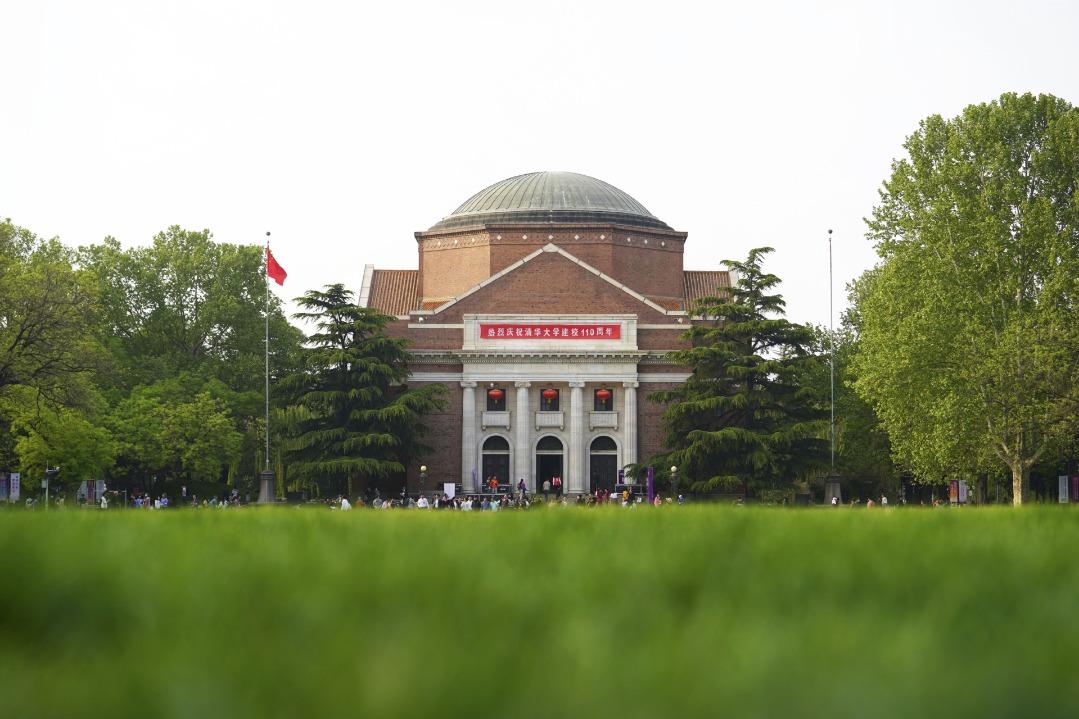
    China is poised to launch the third iteration of its ambitious ‘Double World-Class’ initiative in 2026, representing a significant evolution in the nation’s higher education strategy. This comprehensive program aims to cultivate world-class universities and academic disciplines that directly serve national strategic objectives and regional development priorities.

    The initiative, operating on five-year cycles with competitive selection mechanisms, completed its inaugural phase (2016-2020) with 137 participating institutions. The subsequent round expanded to 147 universities while eliminating the previous distinction between ‘world-class universities’ and ‘world-class disciplines’—a strategic move to reduce institutional hierarchy.

    According to education policy experts, the third phase introduces several critical innovations. Professor Gao Hang, Vice-Dean of Renmin University’s School of Education, emphasizes that this round will strengthen connections between academic institutions and industrial innovation ecosystems. ‘The fundamental objective is transforming universities into active contributors to national economic and technological advancement,’ Gao stated.

    The Ministry of Education reports that ‘Double World-Class’ institutions already produce over 50% of China’s master’s graduates, 80% of doctoral graduates, and 90% of urgently needed high-level professionals. The new phase will address previous challenges including excessive competition and talent poaching while providing additional support to populous provinces and central/western regions.

    Policy researchers Lan Wenting and Wu Ni from the China National Academy of Educational Sciences note that universities will be categorized into three distinct types: research-intensive, application-oriented, and vocational institutions. This classification system enables specialized development according to national requirements, with research universities focusing on breakthrough innovation, applied universities strengthening industry collaboration, and vocational institutions developing skilled professionals.

    The selection process is expected to include more specialized institutions in fields such as medicine, agriculture, and emerging technologies. The dynamic adjustment mechanism will continue, maintaining quality control through performance-based warnings and removals, though experts anticipate limited exclusions in the upcoming cycle.

    Scheduled for official release in 2027, the third-round list is expected to feature strategic expansion in fields critical to national security and technological independence, particularly emphasizing interdisciplinary collaboration and emerging academic domains.

  • New finding to help probe dark matter

    New finding to help probe dark matter

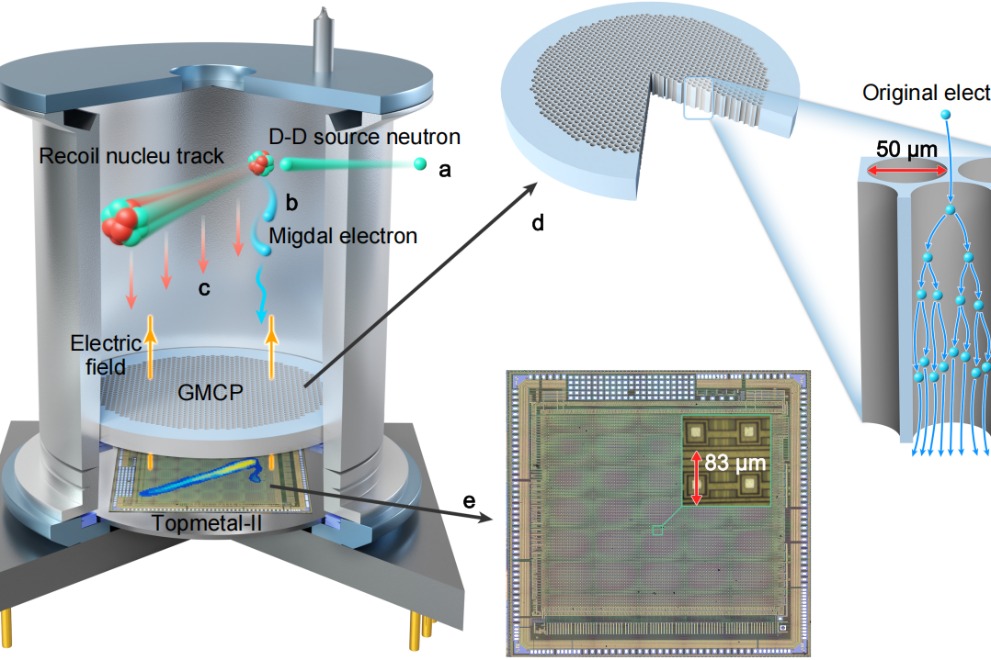
    In a historic breakthrough bridging decades of theoretical physics, Chinese researchers have achieved the first experimental confirmation of the Migdal effect—a discovery with transformative implications for detecting dark matter, the invisible substance constituting approximately 85% of the universe’s mass.

    The landmark findings, published in Nature, validate a 1939 prediction by Soviet physicist Arkady Migdal, who theorized that a nuclear recoil event—such as a collision with a dark matter particle—could produce a rapid shift in the atom’s electric field, ejecting an orbiting electron. For nearly 90 years, this phenomenon remained experimentally unverified due to its minuscule scale and susceptibility to background interference from cosmic radiation.

    To overcome these challenges, a multidisciplinary team led by the University of Chinese Academy of Sciences engineered a specialized high-precision gas detector integrated with custom microchip technology—essentially an “atomic camera” capable of tracking individual atomic trajectories and electron emissions.

    After bombarding gas molecules with neutrons and analyzing over 800,000 candidate events, researchers identified six unambiguous signals exhibiting the Migdal effect’s distinctive signature: dual particle tracks emanating from identical points—one from the recoiling nucleus and another from the ejected electron. The results achieved five-sigma statistical confidence, particle physics’ gold standard for discovery.

    Professor Yu Haibo of UC Riverside noted: “Direct observation of the Migdal effect has been a longstanding experimental challenge. Multiple international teams attempted detection without success. This breakthrough is genuinely exciting.”

    The discovery arrives as physicists pivot from searching for heavy dark matter particles (WIMPs) toward lighter alternatives. Traditional detectors struggle to register faint nuclear recoils from lightweight particles, but the Migdal effect effectively converts these imperceptible events into measurable electronic signals.

    “By capturing the ejected electron’s full energy, our detector theoretically achieves 100% efficiency,” explained co-leader Professor Zheng Yangheng. “This work solidifies the Migdal effect’s theoretical foundation and provides crucial experimental validation.”

    Looking ahead, the team plans to optimize detector performance and study the effect across different materials. Professor Liu Qian revealed: “Extending observations to other elements will provide essential data for detecting even lighter dark matter particles.” Professor Liu Jianglai, lead scientist of China’s PandaX experiment, emphasized this represents “a crucial first step” toward practical dark matter detection applications.

  • New guideline focuses on addressing everyday climate-linked health risks

    New guideline focuses on addressing everyday climate-linked health risks

    China has launched a groundbreaking national initiative to transform how the nation addresses climate-related health challenges through a newly released comprehensive guideline. The multi-departmental framework, developed jointly by the China Meteorological Administration, Ministry of Civil Affairs, and Ministry of Culture and Tourism among seven government bodies, represents a paradigm shift in proactive health management by integrating meteorological data with healthcare delivery systems.

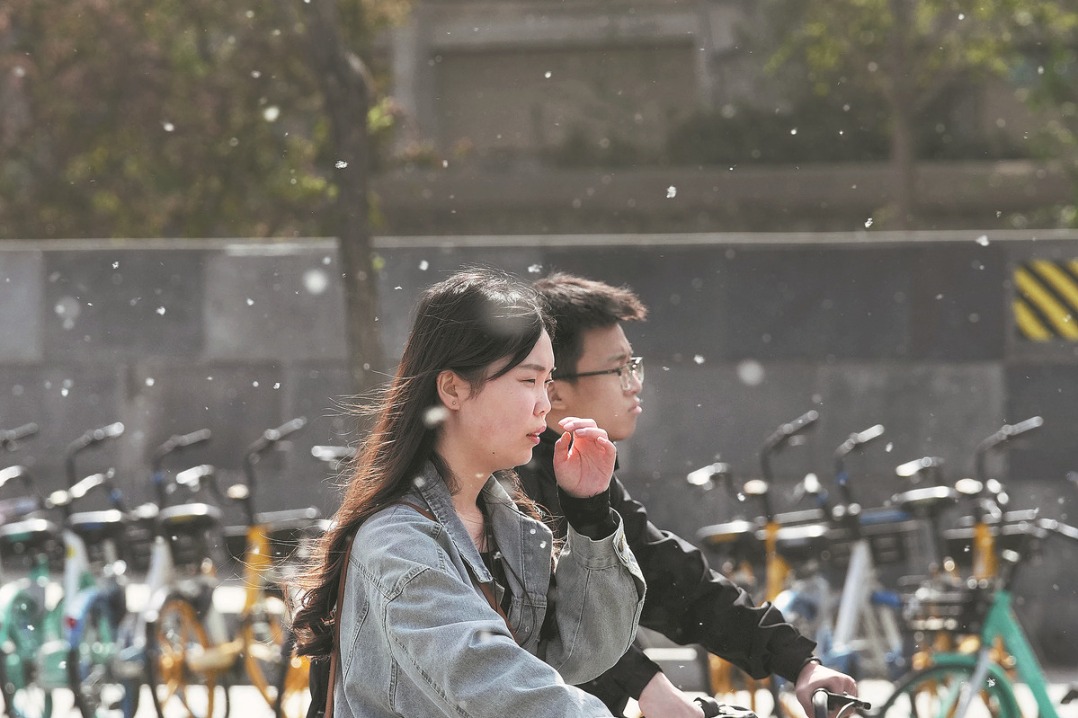
    The strategic document specifically targets pervasive climate-health concerns including seasonal pollen allergies affecting approximately 250 million citizens with allergic rhinitis, joint pain exacerbated by cold waves, and weather-aggravated chronic conditions. This initiative responds to documented increases in allergy-related medical treatments throughout northern China, where recent seasons have witnessed earlier onset and intensified symptoms compared to historical patterns.

    Municipal authorities have already implemented countermeasures such as strategic tree trimming, frequent ground moistening, and specialized park maintenance—including triple-daily washing of cypress trees in Beijing’s green spaces to mitigate pollen dispersion. The guideline formalizes these efforts while mandating the development of innovative insurance products incorporating meteorological indicators including heat indexes, cold spells, pollen concentration metrics, and influenza trends.

    Elderly populations receive particular emphasis within the new framework due to heightened vulnerability to climatic conditions. The policy requires local authorities to publish specialized climate health advisories for seniors and implement tailored support mechanisms for nursing institutions and isolated elderly residents. Pilot programs will integrate meteorological healthcare with elderly services, exercise regimens, and tourism opportunities to address aging population challenges.

    The administration will conduct nationwide assessments to create a unified climate health resource map, identifying regional advantages for developing specialized health programs. These include dry climate recuperation initiatives in northwestern regions and forest-based therapy programs in the southwest for chronic disease management.

    Further innovations include integrating meteorological services with tourism offerings and traditional Chinese medicine practices, while developing climate livability assessments to transform favorable weather conditions into regional economic advantages. This comprehensive approach positions China at the forefront of climate-health integration, turning environmental factors into measurable health benefits.

  • Mainland college students present Kunqu classic ‘The Peony Pavilion’ in Taipei

    Mainland college students present Kunqu classic ‘The Peony Pavilion’ in Taipei

    In a significant cultural exchange event, university students from mainland China presented a special campus youth edition of the classical Kunqu Opera “The Peony Pavilion” in Taipei on January 15, 2026. This performance marked the first time a production entirely performed by mainland college students was staged in Taiwan, occurring exactly twenty years after the original youth version premiered in the same city.

    The production originates from an innovative cultural preservation project initiated in 2024, designed to engage young generations in safeguarding Kunqu Opera—a 600-year-old performing art form recognized by UNESCO as an Intangible Cultural Heritage. The current campus version represents an abridged adaptation of the complete nine-hour performance, which typically unfolds across three consecutive evenings.

    Fifty selected students from twenty-nine different universities across mainland China participated in this ambitious undertaking. Despite minimal prior professional training in the ancient art form, these dedicated performers underwent nearly nine months of intensive instruction before debuting their production in Suzhou, Jiangsu Province—the historical birthplace of Kunqu Opera—in April 2025.

    The production maintains the exquisite costumes and sophisticated stage design of the original youth version created by renowned Taiwan-based novelist Pai Hsien-yung. Now 88 years old, Pai has dedicated years to promoting Kunqu Opera among younger audiences. In a pre-performance statement, he emphasized that the primary objective remains helping college students appreciate Kunqu’s aesthetic beauty and develop closer connections to traditional Chinese culture.

    Professor Zhao Tianwei, chief planner of the production and art professor at Southeast University, described the campus version as representing a contemporary model for transmitting China’s fine traditional culture through young practitioners. He expressed hope that Taiwanese youth audiences would gain deeper appreciation and understanding of Kunqu by witnessing their mainland peers performing this classical art form on stage.

    Since its initial 2004 premiere, the youth version of “The Peony Pavilion” has been presented at over a dozen universities, consistently maintaining young audiences as its primary focus. The current cross-strait cultural presentation continues this tradition while fostering meaningful artistic dialogue between mainland Chinese and Taiwanese communities.

  • Ukraine’s young skiers practice in a bombed-out Olympic training base

    Ukraine’s young skiers practice in a bombed-out Olympic training base

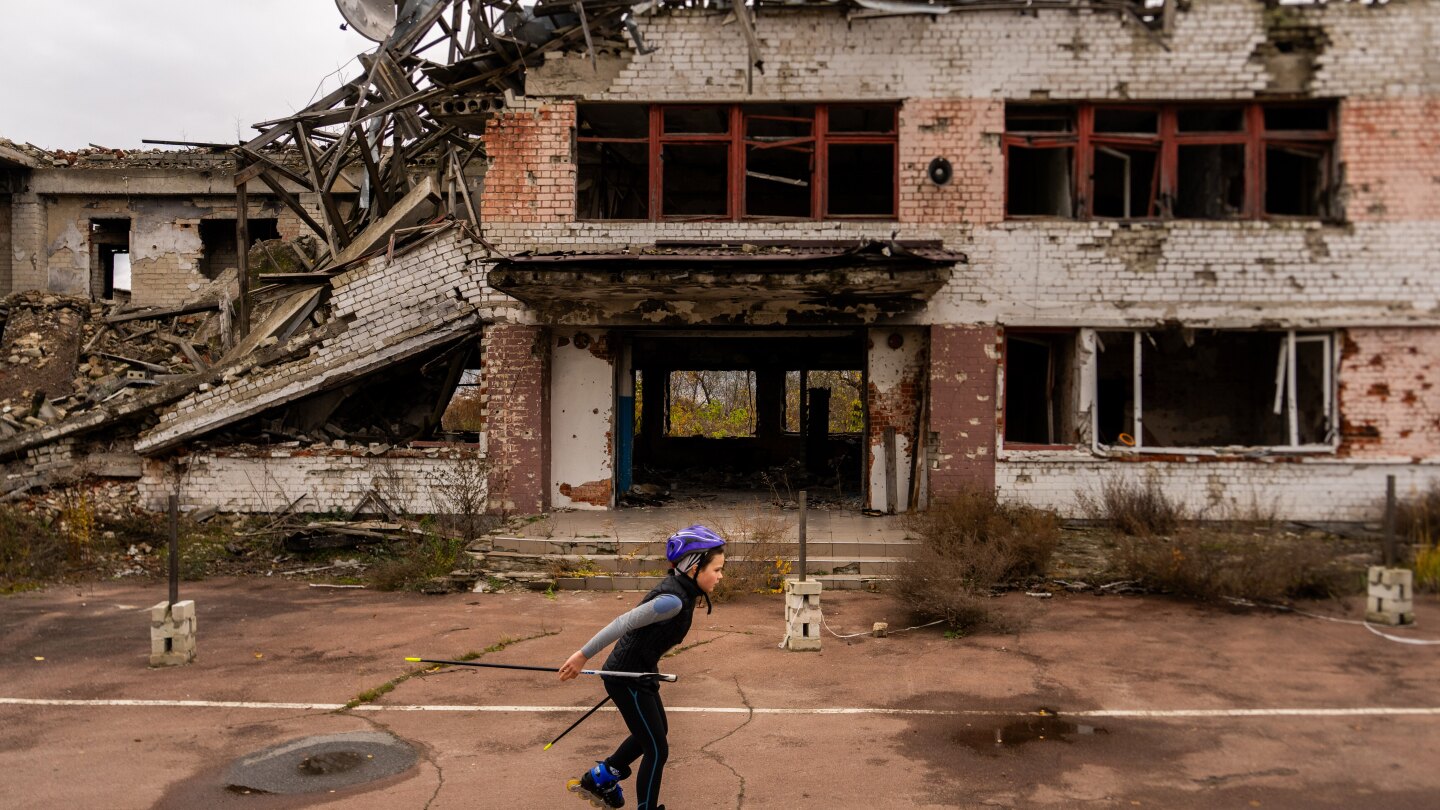
    CHERNIHIV, Ukraine — In the war-scarred landscapes of northern Ukraine, a remarkable story of resilience unfolds daily at the Sports Ski Base of the Olympic Reserve. Approximately 350 young cross-country skiers and biathletes continue their training regimen amidst the persistent threats of aerial attacks, transforming their athletic pursuits into acts of national defiance.

    The sprawling complex, which produced Ukraine’s first Olympic medalist, now operates with bombed-out dormitories and restricted training areas due to unexploded ordnance. Training sessions proceed with surreal normalcy until air raid sirens pierce the silence, triggering swift but practiced evacuations to underground shelters.

    Mykola Vorchak, a 67-year-old coach, observes profound psychological adaptation among his athletes. “We have adapted so well—even the children—that sometimes we don’t even react,” he noted in an October interview. “Although it goes against safety rules, the children have been hardened by the war.”

    The facility lies on the outskirts of Chernihiv, a city two hours north of Kyiv that remains a regular target for attacks on energy infrastructure. Athletes train on blast-marked asphalt tracks using roller skis during non-winter months and practice shooting with laser rifles at electronic targets. The sporadic buzz of drones and subsequent explosions form an ever-present backdrop to their athletic development.

    The complex’s historical significance adds poignancy to its current state. Valentyna Tserbe-Nesina, who won bronze at the 1994 Lillehammer Games—Ukraine’s first Olympic medal as an independent nation—described her shock upon visiting the damaged facility. “I went inside, up to my old room on the second floor. It was gone—no windows, nothing,” she recalled, noting how fire had consumed the trophies they had left behind.

    Among those training at the damaged facility is Khrystyna Dmytrenko, 26, who will represent Ukraine at the upcoming Milan Cortina Winter Olympics. Having completed a tour in Ukraine’s territorial defense forces in 2022, she now sees sports as a demonstration of national strength. “We represent Ukraine on the international stage,” Dmytrenko stated, “letting other countries see our unity, strength and determination.”

    The upcoming Games carry additional significance as Russian athletes may compete in certain events after International Olympic Committee vetting, though without national symbols. This context makes the training efforts in Chernihiv particularly symbolic, with former Olympic biathlete Nina Lemesh noting that some young athletes who began training during wartime have already become international champions in their age groups.

    Standing beside the destroyed dormitories, Lemesh expressed confidence in Ukraine’s athletic future: “Fortunately, Ukrainians remain here. They always will. This is the next generation of Olympians.”

  • Big cargo drone aces elevated test flight

    Big cargo drone aces elevated test flight

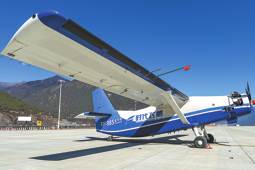
    China’s aerospace sector has achieved a significant technological breakthrough with the successful completion of an ambitious high-altitude flight test by the FP-985 Taurus, a large fixed-wing cargo drone. The unmanned aircraft demonstrated exceptional performance during a transprovincial journey across some of China’s most challenging plateau terrain.

    The prototype embarked on its landmark mission from Mainling Airport in Nyingchi, located within the Xizang Autonomous Region. This airport presents exceptional operational difficulties due to its elevation of approximately 2,900 meters and its precarious positioning within narrow, cloud-enshrouded river valleys. The drone, laden with regional specialties including traditional butter tea and yak dairy products, navigated the complex western foothills of the Himalayan mountains during its carefully planned route.

    Following three hours and forty-four minutes of flight, covering approximately 800 kilometers and reaching altitudes of 7,500 meters, the aircraft executed a precision landing at Kangding Airport in Sichuan’s Garze Tibetan Autonomous Prefecture. Situated at over 4,200 meters above sea level, Kangding ranks among the world’s highest-altitude airports. The demonstration continued as the drone departed Kangding, ultimately concluding its 1,200-kilometer journey at Beichuan Yongchang Airport in Mianyang.

    Developed by Aerospace Times Feipeng, a subsidiary of China Aerospace Science and Technology Corporation, the FP-985 Taurus represents a specialized solution for operations in geographically complex regions including plateaus and remote islands. The aircraft boasts impressive technical specifications: maximum takeoff weight of 5.7 metric tons, payload capacity exceeding 2 tons, and an operational range beyond 2,000 kilometers.

    Engineered for versatility, the drone features short takeoff and landing capabilities adaptable to both standard and poorly-equipped airfields. Advanced systems include comprehensive anti-icing and de-icing mechanisms, lightning protection, and enhanced wind resistance.

    The manufacturer emphasizes the drone’s potential to transform logistics in remote high-altitude regions, addressing persistent challenges of extended transit times, elevated risks, and limited transportation alternatives. The company projects that unmanned low-altitude transportation will significantly improve the delivery efficiency of agricultural products and time-sensitive supplies across western China, while simultaneously supporting regional economic development, major infrastructure projects, and enhanced emergency response capabilities.

  • Famed safari park shuts as deadly floods strike South Africa

    Famed safari park shuts as deadly floods strike South Africa

    South Africa’s northern regions are grappling with catastrophic flooding that has claimed at least 19 lives and triggered large-scale emergency operations. The disaster has particularly devastated Limpopo and Mpumalanga provinces, where relentless torrential rains have caused severe flooding, prompting President Cyril Ramaphosa to personally visit affected communities.

    The humanitarian tragedy includes the death of a five-year-old boy in Giyani, Limpopo, whose family received presidential condolences during Ramaphosa’s damage assessment tour. The South African Weather Service has escalated warnings to red level 10—the highest alert—predicting additional rainfall and urging extreme caution in flood-prone areas.

    Emergency protocols have been activated nationwide, with military units and helicopter teams deployed to execute rescue missions in the most severely impacted zones. Authorities have issued critical safety guidelines advising residents to remain indoors, avoid flooded roads, relocate valuables and livestock to elevated areas, and disconnect electrical sources.

    One of South Africa’s premier tourist destinations, Kruger National Park, has suspended all visitor activities and initiated aerial evacuations of guests and staff members. Climate scientists attribute the increasing frequency and intensity of southeastern Africa’s flooding to climate change, which has amplified storm systems in the Indian Ocean region.

    The government continues to coordinate disaster response efforts while meteorological services monitor ongoing weather patterns that threaten to exacerbate the already dire situation across multiple provinces.