作者: admin

  • Queensland RSL’s Anzac Day decision condemned by Indigenous elder

    Queensland RSL’s Anzac Day decision condemned by Indigenous elder

    Australia’s annual Anzac Day commemorations have been roiled in fresh national debate this year over the inclusion of Welcome to Country and Acknowledgment of Traditional Custodians ceremonies, after a regional Queensland Returned and Services League (RSL) branch drew widespread backlash for removing the Indigenous recognition ritual from its flagship Dawn Service.

    The controversy centered on the Townsville RSL, based in the northern Queensland garrison city with deep, enduring ties to Australia’s military history. Thousands attended the city’s 2024 Anzac Day Dawn Service, where the traditional Welcome to Country and acknowledgment of First Nations peoples was omitted from the official program.

    Prominent Indigenous elder and academic Professor Gracelyn Smallwood condemned the RSL’s decision in comments to Seven News, calling the move “very disgraceful”. She emphasized the erased contributions of Indigenous Anzacs, who fought for Australia alongside non-Indigenous soldiers but returned home to systemic exclusion: denied the pensions, land grants, and citizen rights granted to their white counterparts.

    When approached for comment on the decision, Townsville Mayor Nick Dametto’s spokesperson distanced the local government from the choice, noting that event programming falls exclusively under the RSL’s control. The Townsville RSL itself has not yet issued a public response to the criticism, after repeated requests for comment.

    Townsville was not the only site of division around the ritual this Anzac Day. Booing broke out during Welcome to Country ceremonies at major Dawn Services in three of Australia’s largest cities: Perth, Sydney, and Melbourne, stoking national discussion over the place of Indigenous recognition in major public events.

    The backlash has drawn commentary from senior political figures across the ideological spectrum. Federal Opposition Leader Angus Taylor told ABC Insiders that while the public booing was “absolutely unacceptable”, he echoed the frustrations of some Australians by arguing that Welcome to Country ceremonies have become “overused” in national events. Taylor claimed that frequent, widespread inclusion of the ritual has diluted its meaning, saying “they are devalued” through overuse, and argued for fewer ceremonies to preserve their significance.

    Western Australia’s Aboriginal Affairs Minister Don Punch hit back at Taylor and state opposition leader Basil Zempilas, accusing the pair of embracing a populist stance that ignores the cultural importance of the ritual. Punch pushed back against critics of the practice, noting that while some hold strongly negative, often racist views of Welcome to Country, the ritual is a core part of respecting Australia’s First Nations heritage. “What a Welcome to Country is, it’s saying g’day, saying welcome to the land, it’s respecting First Nations culture,” he explained.

    Elsewhere across the country, many Anzac Day services maintained the longstanding practice of including Indigenous recognition. In far north Queensland’s Cairns, for example, the official program included an acknowledgment of country paired with a traditional didgeridoo performance, mirroring protocols at most major services including Sydney’s Martin Place Dawn Service, where Aunty or Uncle Raymond Minniecon delivered the official Welcome to Country this year.

  • US considering sending stranded Afghans in Qatar to the Congo, advocacy group says

    US considering sending stranded Afghans in Qatar to the Congo, advocacy group says

    Nearly three years after the chaotic 2021 U.S. withdrawal from Afghanistan, more than 1,100 Afghan allies with verified ties to the U.S. military and government remain trapped in a geographic and bureaucratic limbo at Camp As Sayliyah, a U.S.-operated military base tucked into Qatar’s arid desert. What was supposed to be a maximum 21-day waiting period for U.S. resettlement has stretched into years, leaving the group confined to the base with no legal permission to reside in Qatar, forbidden from leaving the compound. One resident previously described the facility to Middle East Eye as little more than an open-air prison.

    Now, a new and deeply controversial proposal has sparked outrage from refugee advocacy groups: transfer the entire cohort to the Democratic Republic of Congo for permanent resettlement, according to #AfghanEvac, a leading advocacy organization working to evacuate and resettle Afghan allies.

    The Trump administration, which took office in 2025, originally ordered the Camp As Sayliyah facility closed by March 31 of this year, giving the stranded Afghans a firm deadline to find a new host country after the administration reversed prior commitments to bring all vetted allies to the U.S. To date, no permanent resettlement destination had been publicly confirmed, until details of the DRC plan emerged during a recent virtual press briefing held by #AfghanEvac last week.

    Shawn VanDriver, president of #AfghanEvac, told reporters that the current proposal would send Afghan interpreters, former special operations personnel, and immediate family members of more than 150 current and recently separated U.S. service members to a country grappling with multiple overlapping crises. The DRC already hosts over 600,000 displaced people from regional conflicts, is engaged in active armed hostilities with Rwanda, and is classified by the United Nations as one of the world’s worst humanitarian displacement emergencies. The U.S. State Department also maintains a Level 3 travel advisory for the DRC, a strong official warning that advises U.S. citizens against all non-essential travel to the country due to widespread violence, crime, and political instability.

    “This plan cannot stand,” VanDriver emphasized, arguing that forcing vulnerable Afghans who worked alongside the U.S. to resettle in an active conflict zone violates every commitment Washington made to these allies.

    U.S. State Department officials have neither confirmed nor denied the DRC proposal, stating only that the agency is actively working to identify viable resettlement options for all Camp As Sayliyah residents. In a statement emailed to Middle East Eye, a department spokesperson framed third-country resettlement as a “positive resolution” that would allow Afghans to build new lives outside Afghanistan while upholding U.S. national security priorities. The spokesperson added that the agency maintains regular direct communication with residents, and would not disclose details of ongoing negotiations due to the sensitivity of the process.

    Middle East Eye’s request for comment to the Department of Homeland Security, asking whether new DHS Secretary Markwayne Mullin – who has a public record of supporting Afghan ally resettlement efforts – has been involved in discussions, was redirected to the State Department.

    The controversy has already sparked partisan finger-pointing over the years-long delay. The Trump administration has blamed the prior Biden administration for what it calls a rushed, flawed vetting process for Afghan allies evacuated after the 2021 withdrawal. But Jon Finer, Biden’s former deputy national security advisor, pushed back against that characterization during the #AfghanEvac briefing. He clarified that the evacuation operation for Afghan allies, dubbed Operation Enduring Welcome, was not an unplanned emergency pullout, but a structured, deliberate resettlement pipeline.

    Finer also confirmed that the Biden administration preserved and strengthened the strict enhanced vetting frameworks developed over decades, including those put in place during the first Trump administration. “They are, by design and by implementation, the most vetted lawful immigrants to the United States among all the categories of people who come,” Finer said of the Camp As Sayliyah residents, adding that all 1,100 people currently held at the base have already completed full vetting for U.S. immigration. #AfghanEvac’s data confirms that more than 200,000 Afghans have already successfully been resettled in the U.S. through this exact same vetting process with no reported security incidents.

    Earlier this year, the State Department launched a controversial voluntary departure program, offering cash payments to Afghans who leave the base on their own. Then-Assistant Secretary of State Samir Paul Kapur told lawmakers in February that 150 Afghans had already accepted the payments, but Camp As Sayliyah residents told Middle East Eye that many of those who accepted the offer had no other viable option and chose to return to Afghanistan, where they face targeted violence from the Taliban for their past work with the U.S.

    VanDriver rejected framing the program as a voluntary choice, noting that Afghans were given only two unacceptable options: return to Taliban-controlled Afghanistan or relocate to a conflict zone in the DRC. “You cannot call a choice voluntary when the two options are Congo and the Taliban, civil war or an oppressor who wants to kill you,” VanDriver said. “That is not a choice. That is a confession extracted under duress.”

    Last weekend, VanDriver led a bipartisan congressional delegation to visit the Camp As Sayliyah facility, where his organization collected a video plea from 14-year-old stranded resident Zahra. In her message, addressed to U.S. First Lady Melania Trump, Zahra asked simply for “a peaceful life, a chance to get a better education, and a brighter future” that the U.S. had promised her and her family for their service alongside American forces.

  • Rescuers trying to reach 3 people trapped in damaged train car after crash in Indonesia

    Rescuers trying to reach 3 people trapped in damaged train car after crash in Indonesia

    BEKASI, INDONESIA – Rescue operations stretched into a second day Tuesday as first responders fought to free three people still trapped inside a crumpled women-only commuter rail car following a high-impact rear-end collision that claimed at least seven lives on the outskirts of Indonesia’s capital Jakarta.

    The crash unfolded Monday at Bekasi Timur Station, when a long-distance intercity train, identified as the Argo Bromo Anggrek, collided with the back of a stationary commuter train. The targeted rear car was a designated women-only carriage, a widely implemented policy across Indonesia’s public transit system designed to reduce sexual harassment of female passengers.

    Officials from state-owned railway operator PT Kereta Api Indonesia confirmed that 81 people injured in the collision have been transported to area hospitals for urgent medical care. All 240 passengers aboard the long-distance train escaped without life-threatening harm, according to agency updates.

    PT Kereta Api Indonesia CEO Bobby Rasyidin told reporters Tuesday that the complex extrication process has moved deliberately, prioritizing the safety of trapped victims and responding first responders. “The evacuations are taking a long time … and we’re doing it very carefully,” Rasyidin said from the crash site.

    Jakarta Police Chief Asep Edi Suheri confirmed that law enforcement and national transport investigators have launched a full probe into what led to the fatal incident. Rasyidin noted preliminary observations suggest a signal disruption may have been a contributing factor, tied to an earlier separate incident where another commuter train hit a broken-down taxi on a nearby level crossing.

    “For the full, accurate chronology of events, we are leaving it to the National Transportation Safety Committee to investigate the cause of this accident in greater detail,” Rasyidin added.

    This deadly collision adds to a growing pattern of preventable disasters on Indonesia’s aging, underfunded national railroad network. Just 10 months prior to this incident, in January 2024, another head-on collision between two trains in West Java province left four people dead and dozens more injured.

  • Trump uses assassination try to justify expanding spying powers

    Trump uses assassination try to justify expanding spying powers

    On a Saturday evening just outside the venue of the annual White House Correspondents’ Dinner, a violent exchange of gunfire erupted between an armed suspect identified as Cole Tomas Allen and law enforcement officers. The shooting came just days before a critical congressional deadline to reauthorize Section 702 of the Foreign Intelligence Surveillance Act (FISA), a controversial law granting U.S. intelligence agencies broad warrantless surveillance powers that is set to expire at the end of this week. Within hours of the incident, former President Donald Trump moved quickly to tie the shooting to his ongoing campaign to extend the program, arguing the attempted attack proved the FBI must retain the authority to collect the communications of U.S. citizens without prior judicial approval.

    In a Sunday interview with Fox News, Trump doubled down on his earlier position, stating he is personally willing to forgo his own security protections to secure a multi-year extension of Section 702, and claimed all Americans should be willing to make the same tradeoff for the sake of national safety. “It’s really needed for national security,” Trump told Fox anchor Jacqui Heinrich. “Iran is decimated, and we got a lot of information by using FISA… I’m willing to give up my security for the military because ultimately that’s to me the highest cause is, you know, the safety of our nation.”

    Unlike traditional surveillance authorities that require judges to approve individual warrants for targeting U.S. persons, Section 702 explicitly permits U.S. intelligence agencies to collect the electronic communications of foreign nationals located overseas without a warrant. Because thousands of these foreign targets regularly communicate with American citizens, the law also allows agencies to vacuum up the emails, text messages, and phone calls of unwitting U.S. residents without prior judicial review, with approximately 350,000 foreign targets currently monitored under the program. When Heinrich noted that investigators have not confirmed whether Allen was radicalized by any foreign individual or extremist group, she asked Trump if the shooting highlighted the urgent need to retain the surveillance tool, prompting Trump to pivot to longstanding grievances over past FISA use against his 2016 campaign.

    Trump complained that former FBI Director James Comey abused FISA powers to obtain a warrant to surveil a former Trump campaign aide during the agency’s investigation into 2016 Russian election interference, before incorrectly claiming FISA powers had been used to support U.S. military actions against Iran and in an incursion into Venezuela earlier this year. To date, no public evidence has connected Allen, the suspected shooter, to any foreign actors; investigators have confirmed Allen appears to have acted alone, and a document he left behind references his Christian beliefs and criticizes the Trump administration’s policies on immigrant detention, anti-drug bombing operations in maritime waters off the Americas, and military strikes in Iran that hit an elementary school.

    Critics of an un reformed Section 702 extension have pushed back on Trump’s attempts to tie the shooting to the surveillance debate, noting that the incident actually undermines the argument that the program is necessary to stop lone attacks with no foreign ties. Jordan Liz, an associate professor of philosophy at San José State University, argued in a recent Common Dreams column that despite sweeping claims from Trump, congressional Republicans, and intelligence leaders that Section 702 has stopped dozens of terror attacks, there is almost no public evidence to back up these assertions. Liz pointed out that only one independently verified, well-documented case exists of the program disrupting a terror attack on U.S. soil: the 2009 plot to bomb the New York City subway system. In that case, the NSA used Section 702 to track communications between an al-Qaeda courier and plotter Najibullah Zazi, who was residing in the U.S., but the NSA only obtained the courier’s email address from British intelligence partners — meaning the successful disruption was as much a product of international intelligence sharing as it was of Section 702 itself. Worse, Liz argued, the incident actually highlights how Trump’s repeated attacks on U.S. allies ultimately weaken, rather than strengthen, American national security.

    The push to extend Section 702 has already roiled Congress in recent weeks, with two separate extension bills — one for an 18-month term and another for five years — failing to pass earlier this month. Opponents of the bills uniformly objected to the lack of meaningful privacy reforms, particularly a critical loophole that allows government agencies to purchase private personal data about U.S. citizens from commercial data brokers without first obtaining a warrant. After the initial proposals failed, House Speaker Mike Johnson, a Louisiana Republican, unveiled a new compromise last week that would extend the program for three years, require the FBI to submit monthly reports on its searches of American data to an internal oversight official, and impose nominal penalties for misuse of the program. Privacy advocates have dismissed these reforms as wholly inadequate, noting they do nothing to end the practice of warrantless backdoor searches of U.S. citizens’ data.

    The House Rules Committee was scheduled to convene Monday to advance the new bill to a full floor vote, and top congressional Democrats have already mobilized opposition to the measure. Rep. Jamie Raskin of Maryland circulated a memo to colleagues last week urging them to reject the Republican proposal, arguing that it “continues the disastrous policy of trusting the FBI to self-police and self-report its abuses of Section 702 and backdoor searches of Americans’ data… FBI agents can still collect, search, and review Americans’ communications without any review from a judge.”

    The bill’s path to passage remains uncertain, as four House Democrats broke with their party earlier this month to support a procedural vote advancing the reauthorization, joining all House Republicans. Privacy advocacy groups have ramped up pressure on these four Democrats — Josh Gottheimer and Tom Suozzi of New Jersey, Marie Gluesencamp Perez of Washington, and Jared Golden of Maine — to flip their positions on the latest proposal. “It all comes down to those four and where they are going to land,” Hajar Hammado, senior policy adviser at advocacy group Demand Progress, told The Intercept on Monday. “If they are going to continue to try to hand Trump and White House homeland security adviser Stephen Miller warrantless surveillance authorities without any sort of checks or reforms that make sure they’re not violating civil liberties.”

  • AFL 2026: Hawthorn has plans to stop Collingwood’s Nick Daicos in Thursday’s blockbuster

    AFL 2026: Hawthorn has plans to stop Collingwood’s Nick Daicos in Thursday’s blockbuster

    Ahead of one of the most anticipated AFL matches of the season, Hawthorn Football Club senior coach Sam Mitchell has remained tight-lipped about his full game plan, but confirmed his coaching staff has prepared multiple strategic approaches to shut down Collingwood Magpies superstar Nick Daicos when the two sides face off on Thursday night.

    Currently riding a six-match winning streak, the Hawks have emerged as one of the most in-form teams in the 2024 AFL competition. However, Mitchell acknowledges that securing a seventh consecutive victory will depend heavily on his side’s ability to limit Daicos’ impact across the ground. While Hawthorn defender Finn Maginness successfully neutralized Daicos in their 2023 matchup, Mitchell stressed that relying on a single tactic would be insufficient against the young, rapidly improving star.

    In a playful press interaction, Mitchell joked about keeping his strategies under wraps, telling reporters: “That’s a good question, have you got any ideas? No? Me neither.” He later confirmed: “We’ve got a couple of things up our sleeve that we’ll use, you’ll find out on Thursday night, hopefully we can stop him.”

    Mitchell noted that Maginness’ 2023 performance remains a reliable option in Hawthorn’s tactical toolkit, but the 22-year-old Collingwood gun has elevated his game considerably since that clash. “Just because it worked once, it doesn’t mean it works again. Nick, even though he was a star from the first game he played, he’s improved his game year-on-year. He’s better now than what he was this time last year, so how we stop him is a big challenge,” Mitchell explained.

    The coach also emphasized that his staff has mapped out multiple contingency plans, accounting for the ripple effects of limiting Daicos’ involvement. “So if we stop him, what does it open up for them is something we need to weigh up because he’s obviously a potent player wherever he plays and we certainly need to have plan A, B and C for Nick Daicos,” he added.

    The blockbuster comes off the back of a hard-fought win for Hawthorn against the Gold Coast Suns in Tasmania last weekend. Mitchell used the post-match press conference to highlight clear growth in his young side, particularly in their ability to manage momentum shifts throughout matches – a key area of focus following their exit from the 2023 finals series at the preliminary final stage.

    “One of the areas we needed to work on was managing momentum and with that comes a little bit of maturity,” Mitchell said. “When I looked at our game last week, it felt like a bit more of a mature performance. It wasn’t just run and gun at all costs and it wasn’t slow it down at all costs. We picked and chose how to defend and how to attack different moments in the game and we felt like that gave us better opportunities to control momentum.”

    Mitchell acknowledged that the side still has room for improvement after conceding several unforced goals against the Suns, but framed the overall performance as a clear step forward in the team’s development. “We didn’t get it all right – we gave away some easy goals at different stages – but the thinking behind it I felt was a much more mature version of what we want to be,” he said.

    Drawing a parallel to past premiership-winning sides, Mitchell noted that consistent success at the highest level requires a foundational level of team maturity that complements the club’s young, exciting playing group. “If you look at premiership sides historically, there’s a level of maturity across their team. Hopefully we play with a young, vibrant energy that people want to come and see and they’re still going to do their celebrations. But underlying it is a level of maturity that is needed to win big games.”

  • Australian banks demand US tech giants pay their fair share of tax

    Australian banks demand US tech giants pay their fair share of tax

    Australia’s domestic banking sector is ramping up public pressure for regulatory and tax reform, after releasing new industry data that starkly exposes the wide gap between the financial contributions of local banks and large U.S. technology firms operating in the country.

    The 2025 Contribution Gap report, published by the Australian Banking Association (ABA), calculates that the entire Australian banking sector paid a total of $16 billion in taxes and government levies during the 2024-2025 financial year. This puts the industry’s effective tax rate at 40%, making it the second-highest contributing sector to Australian public finances, behind only the mining industry which reported $70 billion in combined taxes and royalty payments. Breaking down the contributions of the nation’s largest lenders, the report notes Commonwealth Bank of Australia paid $3.4 billion in tax, National Australia Bank paid $2.6 billion, Westpac Banking Corporation contributed $2.2 billion, and ANZ Group paid $1.6 billion.

    In contrast, the ABA’s analysis of three of the biggest U.S. technology companies offering bank-adjacent services in Australia found the trio paid a combined total of just $515 million in local taxes. Of that sum, Alphabet Inc. paid $323 million, Apple contributed $153 million, and Meta Platforms paid only $39 million — a sum less than 1.2% of the total tax paid by the four major domestic banks alone.

    Beyond the tax gap, the report also highlights broader regulatory imbalances between the two industries. Australian banks employ more than 30 times the number of local workers than the major U.S. technology firms operating in the country, and carry binding legal obligations to combat financial crime, cyber fraud, and money laundering that do not apply to the same extent to big tech platforms. The sector has also invested billions of dollars to build and maintain core national digital financial infrastructure, including $2 billion for the national New Payments Platform, $1.5 billion to implement the federal government’s Consumer Data Right open banking framework, and $100 million for Confirmation of Payee scam protection technology.

    ABA chief executive Simon Birmingham, a former Australian finance and foreign minister, emphasized that domestic banks have no issue meeting their tax and regulatory obligations to support Australian communities. “Australia’s banks pay their fair share of tax to fund critical public services, and do the heavy lifting when it comes to fighting financial crime,” Birmingham said. “Unfortunately, there is a current regulatory imbalance that is seeing global technology platforms and multinational payments firms deliver bank-like services here in Australia, without bearing proportionate regulatory and fiscal responsibilities.”

    The ABA warned that if the contribution gap is allowed to continue growing unchecked, it will erode public revenue that funds essential services from healthcare to education, and threatens the long-term fiscal sustainability of the Australian economy. Birmingham has called on the federal government to intervene to level the competitive playing field, requiring large foreign multinationals offering financial services to fall under the same regulatory framework as domestic banks, and to increase scrutiny of their local tax contributions to ensure they pay their fair share.

  • AFL 2026: Melbourne coach Steven King on Harrison Petty, Jai Culley injuries

    AFL 2026: Melbourne coach Steven King on Harrison Petty, Jai Culley injuries

    A major health scare for Melbourne AFL defender Harrison Petty has ended with an unexpected positive update: the blurred vision that forced him out of last Sunday’s win over Brisbane is almost certainly the result of a severe vestibular migraine, not a concussion as initial fears suggested.

    Petty was removed from the field in the closing stages of the Demons’ thrilling clash against the Lions after he suddenly became disoriented following an uncontested kick. Immediately after the match, head coach Steven King confirmed the player had reported sudden blurred vision, which sparked widespread concern given Petty’s documented history of previous concussions, including a high-impact collision with a teammate during a 2018 training camp.

    Speaking to media ahead of Melbourne’s upcoming test match against Sydney at the Sydney Cricket Ground on Tuesday morning, King shared the much-anticipated results of multiple medical assessments that have all but ruled out a concussion diagnosis. “He’s going well, he’s had a lot of tests done and I think at this stage we’ve ruled out concussion even though we’ve put him in the protocols to look after his welfare,” King told reporters. While one final test result is still pending, King said extensive evaluations conducted by external medical consultants have pointed to a migraine as the root cause of Petty’s episode.

    “At this stage it looks some type of migraine – which is great news,” King said. “He’s still in the protocols, but we’re really bullish on him getting through. If he gets through protocols this week, he’ll be in a really good place to potentially play. We just want to make sure he gets through and ticks off the boxes he needs to, so that’s a great result for Harrison and for us.”

    King also pushed back on suggestions that Petty’s past concussion history was linked to this latest incident, noting that the defender felt surprisingly well immediately after the match – a symptom that did not align with a typical concussion presentation. “Remarkably, he was actually pretty good after the game, which sort of told us it might not be as simple as concussion,” King explained. Acknowledging he was not a medical expert, he clarified that the issue was classified as a vestibular migraine, and there was no connection to the player’s previous head injuries. “This was more a vestibular migraine – I am not sure if that’s the word, I am not a medical expert, so I can’t give too much opinion on it, but it’s not linked at all. It was probably the best scenario for us and outcome we could’ve hoped for, really.”

    In addition to the update on Petty, King addressed questions surrounding young player Jai Culley’s recent knee concern, confirming that an earlier routine check-up for minor knee discomfort was unrelated to the season-ending ACL rupture Culley later suffered. “No fear at all. I think players come off all the time to get assessed by doctors and Jai’s one incident was pretty obvious that’s where it happened,” King said. “I think a lot of players when they come off and complain of sort of (injury), you do get assessed, whatever part of the body. He’s fine, unfortunately it was that one incident which took place.”

  • LIV Golf postpones June event set for New Orleans: reports

    LIV Golf postpones June event set for New Orleans: reports

    The upstart Saudi-backed LIV Golf circuit has been forced to delay its planned debut tournament in New Orleans, Louisiana, multiple U.S. outlets reported Monday, a decision that comes as the series faces looming financial uncertainty following reports that Saudi Arabia’s Public Investment Fund (PIF) is preparing to end its financial backing of the league ahead of its fifth season.

    The new four-day event was originally scheduled to take place June 25–28 at Bayou Oaks Golf Course, located within New Orleans’ City Park. Both sports outlet The Athletic and local New Orleans broadcaster WDSU confirmed the postponement, which was agreed upon during a meeting last Friday between LIV Golf CEO Scott O’Neil and Louisiana Economic Development Secretary Susan Bourgeois. An official public announcement of the change is expected as early as Tuesday.

    As of Monday evening, the New Orleans tournament still remained listed on LIV Golf’s official 2026 schedule website. While both sides have expressed interest in revisiting the idea of hosting a revised LIV event in the city this fall, the league’s entire 2026 season is currently scheduled to wrap up in August, putting that timeline in question.

    Louisiana had invested heavily to attract the tournament, earmarking $2 million in public funds for course upgrades at the state-owned City Park venue and setting aside an additional $3 million hosting fee. State officials projected the event would generate up to $70 million in local economic activity for the New Orleans region. Under the terms of the postponement agreement, LIV will return $1 million of the $1 million already disbursed to the league according to WDSU, while The Athletic reports the refund total will be $1.2 million, with the remaining upgrade funds counted as a permanent public improvement to the state-owned golf facility. No additional public funds will be allocated to the tournament going forward.

    The postponement has amplified growing questions about the future of LIV Golf, which launched in 2022 with the goal of disrupting the professional golf world by poaching top PGA Tour talent with massive, nine-figure contracts. Jon Rahm of Spain, one of the highest-profile defections, has won the last two LIV season titles, but the league has struggled to build consistent global viewership and fan engagement. In a sign of those ongoing challenges, several high-profile players including Brooks Koepka and Patrick Reed have already returned to the PGA Tour, with more potentially following.

    The 2026 LIV Golf season remains on track for its next scheduled stop, set for May 7–10 at Trump National Golf Club in Washington D.C.’s Virginia suburbs. The circuit currently has other planned stops in South Korea in May, Spain in June, and England in July before wrapping the season with three U.S. events in August: a tournament at Trump National Bedminster in New Jersey, an event in Indianapolis, and the season-ending team championship in Michigan scheduled for August 27–30.

  • What the King and Queen did on their first day in the US

    What the King and Queen did on their first day in the US

    The opening day of the British King and Queen’s visit to the United States kicked off with a formal welcome aligned with longstanding diplomatic protocol, marking the start of a high-profile bilateral engagement between the two close allies. Immediately after their aircraft touched down on U.S. soil, the royal couple proceeded to the White House, where they were received in a formal greeting by then-U.S. President Donald Trump. The meeting served as an early opportunity for diplomatic exchange, highlighting the enduring relationship between the United Kingdom and the United States. Following their warm welcome at the executive residence, the monarchs traveled to the United Kingdom’s official diplomatic mission in the U.S. capital, paying a visit to the British Embassy to meet with stationed diplomatic staff and observe the mission’s ongoing work. This first full day of activities set the tone for the rest of their visit, which was focused on strengthening diplomatic, cultural, and economic ties between the two nations.

  • Taylor Swift files to trademark her voice amid AI clone boom

    Taylor Swift files to trademark her voice amid AI clone boom

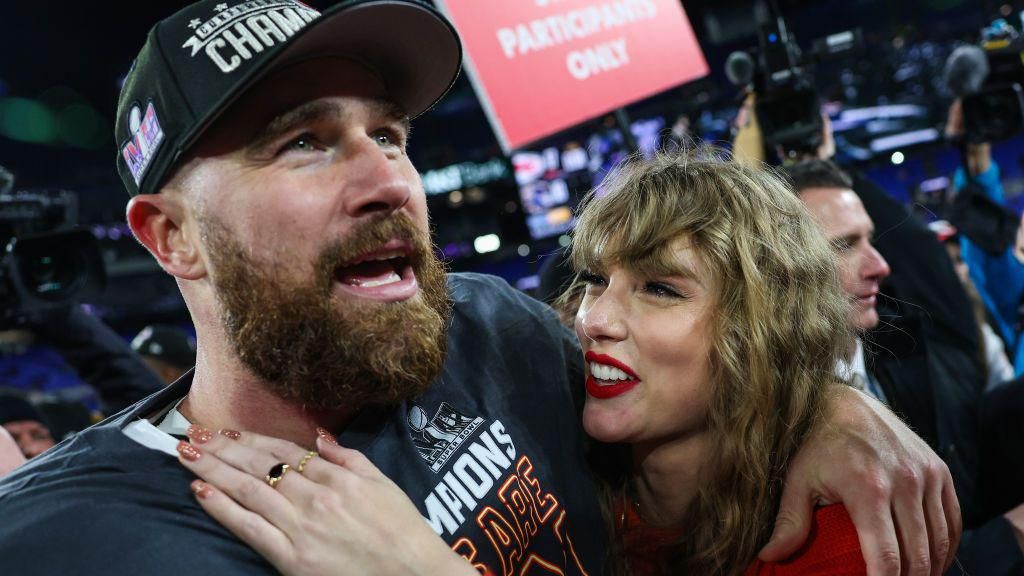
    As artificial intelligence cloning technology grows more accessible and unregulated, global pop superstar Taylor Swift has taken official steps to shield her distinctive voice from unauthorized exploitation, joining a small but growing group of high-profile creators fighting to protect their intellectual property in the AI age.

    Swift has filed two trademark applications with the United States Patent and Trademark Office (USPTO) centered on her voice, according to filings first uncovered by intellectual property attorney Josh Gerben. The submissions include two separate sound recordings that each open with the singer’s recognizable greeting “Hey, it’s Taylor” before promoting her recently released October album *The Life of a Showgirl*. A third filing submitted Friday includes an official promotional photograph of Swift performing on stage. No additional details about the scope of the requested trademark protections have been made public in the filings, and Swift’s publicist did not immediately provide comment when reached by Agence France-Presse.

    Swift’s move mirrors a similar step taken by Academy Award-winning actor Matthew McConaughey in recent years, who filed his own USPTO application to protect his voice from unauthorized AI replication. McConaughey’s filings include audio of two of his most iconic lines: the oft-quoted “Alright, alright, alright!” from his 1993 breakout role in *Dazed and Confused*, as well as his personal mantra “Just keep livin’, right?” alongside a collection of other short signature phrases.

    The growing push for voice protection from A-list creators comes as rapid advances in generative AI have drastically lowered the barrier to creating convincing deepfake vocal clones. Where replicating a person’s voice once required hours of source recordings and days of processing, modern AI models can generate a nearly indistinguishable synthetic voice from a 30-second clip in mere seconds.

    This technological leap has sparked widespread anxiety among performers and creators, who warn that unregulated AI can duplicate their voice and likeness for unauthorized commercial use, scams, or deepfake content without any compensation or consent. In response, a handful of U.S. state legislatures have begun updating privacy and intellectual property laws to address the gap. Most existing state laws only ban malicious or for-profit unauthorized use, but a small number of regions have adopted broader protections — most notably Tennessee’s 2024 ELVIS Act, named for music icon Elvis Presley, which extends sweeping intellectual property protections to creators’ likenesses and voices.

    To date, legal action by performers against unauthorized AI cloning remains relatively rare. The highest-profile case came in 2023, when A-list actor Scarlett Johansson filed a lawsuit against the developer of the Lisa AI app. Johansson alleged the app created an unauthorized AI avatar matching her likeness to use in a commercial advertisement without her permission or compensation.