作者: admin

  • Dubai: Can a tenant let a relative stay in the house?

    Dubai: Can a tenant let a relative stay in the house?

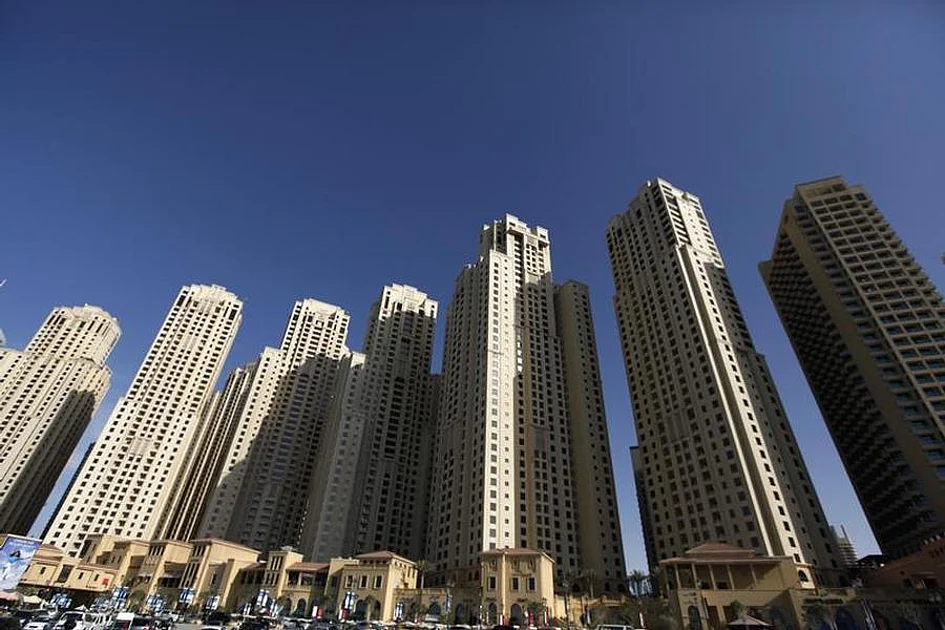
    Dubai’s rental market, a cornerstone of its dynamic urban landscape, operates under a clearly defined legal framework that governs landlord-tenant relationships. A common query among the city’s vast expatriate population concerns the permissibility of hosting relatives in a leased property. The answer, rooted in Dubai Law No. (26) of 2007, provides crucial guidance for tenants seeking to avoid contractual breaches.

    According to Article 19 of the statute, a tenant is expressly entitled to occupy and utilize a rented property strictly for the purpose mutually agreed upon within the tenancy contract. Crucially, this right does not extend to altering the property’s nature of use or permitting occupation by others in a manner that contradicts the original agreement with the landlord.

    The legal provisions become more specific regarding third-party occupancy. Article 24 of the Dubai Rent Law explicitly states that a tenant is prohibited from renting out the apartment—or any segment of it—to another individual. Furthermore, subleasing to another party is strictly forbidden unless the landlord has provided explicit written consent. This clause is designed to protect the property owner’s rights and maintain control over who resides on their premises.

    In practical scenarios, such as a tenant wishing to temporarily host a cousin searching for employment, the application of the law requires careful consideration. While a brief, temporary stay by an immediate family member might not necessitate formal permission, the situation changes dramatically with prolonged residence. Tenants are strongly advised to meticulously review any additional terms and conditions annexed to their specific tenancy contract, which may outline protocols for extended family members.

    Legal experts emphasize that transparency with the landlord remains the safest approach. Proactive communication and seeking written approval, even for temporary arrangements, can prevent potential disputes, ensure compliance with tenancy laws, and foster a positive landlord-tenant relationship in Dubai’s regulated housing market.
  • Trump invites leaders to ‘Board of Peace’; Israel objects to lineup

    Trump invites leaders to ‘Board of Peace’; Israel objects to lineup

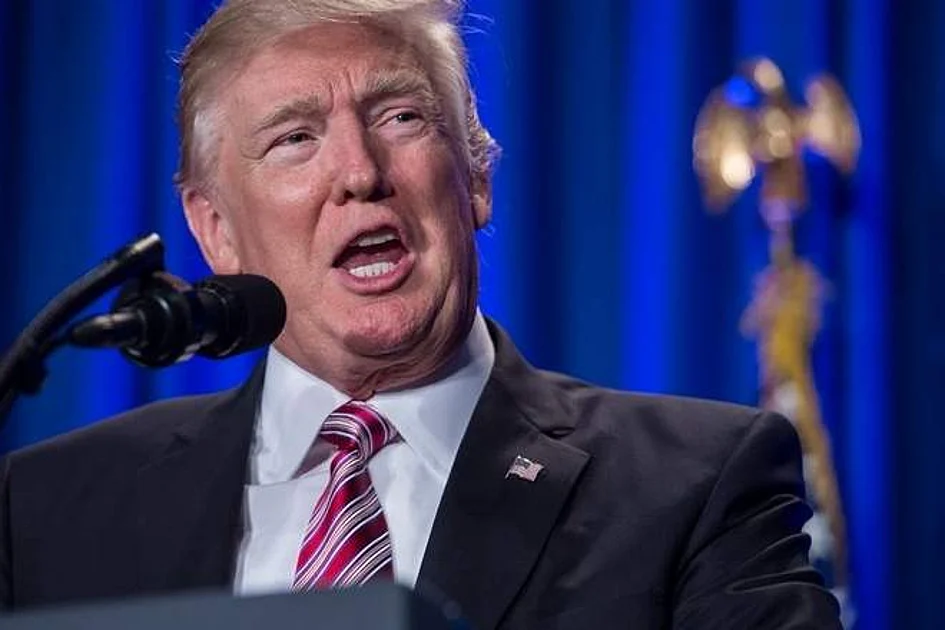
    In a significant diplomatic development, the Israeli government has formally expressed objections to the proposed membership structure of the Gaza Executive Board, a subsidiary body operating under President Donald Trump’s newly established ‘Board of Peace’ initiative. The controversy emerged following the White House’s Friday announcement revealing Turkish Foreign Minister Hakan Fidan and Qatari representation among the panel’s key members.

    The Board of Peace, conceptualized as an oversight mechanism for post-war governance in Palestinian territories, continues to take shape with invitations extended to numerous international leaders. Egyptian President Abdel Fattah al-Sisi, Turkish President Recep Tayyip Erdogan, Argentine President Javier Milei, and Canadian Prime Minister Mark Carney have all received formal requests to participate as founding members. While Carney and Milei have indicated acceptance, Cairo remains in deliberation regarding its involvement.

    Prime Minister Benjamin Netanyahu’s office released a statement clarifying that ‘the announcement regarding the composition of the Gaza Executive Board was not coordinated with Israel and runs contrary to its policy.’ Consequently, Israel’s Foreign Affairs Minister has been directed to initiate discussions with US Secretary of State Marco Rubio regarding these concerns.

    The Board’s executive leadership includes prominent figures such as former British Prime Minister Tony Blair, senior negotiators Jared Kushner and Steve Witkoff, alongside World Bank President Ajay Banga and billionaire financier Marc Rowan. Trump has assumed chairmanship of the overarching body, which aims to address governance capacity-building, reconstruction efforts, investment attraction, and large-scale funding mobilization in Gaza.

    Meanwhile, the Palestinian technocratic committee commenced its inaugural meeting in Cairo under Board of Peace supervision, attended by Kushner. The initiative faces criticism from Palestinian militant group Islamic Jihad, which asserts the board ‘serves Israel’s interests,’ while Washington confirms the Gaza plan has progressed to its second phase—transitioning from ceasefire implementation to Hamas disarmament.

    Complementing these developments, Trump has appointed US Major General Jasper Jeffers to lead the International Stabilization Force, tasked with providing security and training a new police force to succeed Hamas in Gaza.

  • Factory explosion in China’s Inner Mongolia region kills 2 and hospitalizes 66

    Factory explosion in China’s Inner Mongolia region kills 2 and hospitalizes 66

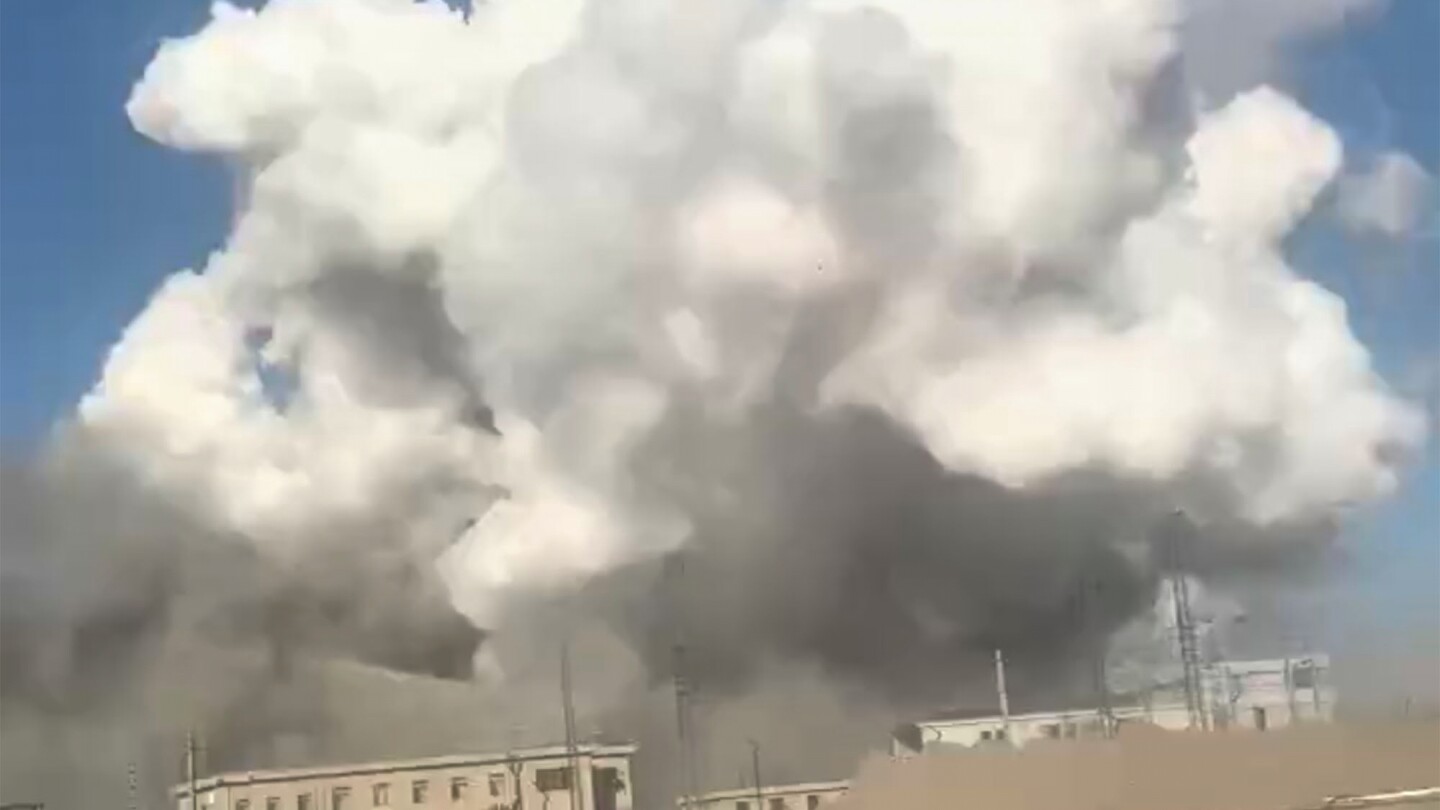
    A catastrophic explosion rocked a major steel production facility in northern China on Sunday afternoon, resulting in multiple casualties and significant injuries. The incident occurred at approximately 3:00 PM local time at the Baogang United Steel plant located in Baotou, Inner Mongolia Autonomous Region.

    According to official reports from China’s Xinhua News Agency, the powerful detonation produced massive smoke plumes visible across the city and generated seismic vibrations felt throughout adjacent communities. Emergency response teams immediately deployed to the industrial site following the explosion to conduct search and rescue operations.

    The human toll from the industrial accident continues to mount, with two confirmed fatalities and sixty-six individuals requiring medical treatment at area hospitals. Medical authorities reported three patients sustained critical injuries from the blast, while five personnel remain unaccounted for as rescue efforts persist.

    Local government officials and industrial safety regulators have initiated a comprehensive investigation to determine the precise circumstances that led to the catastrophic failure. The Baogang steel complex represents one of China’s primary metallurgical production centers, highlighting concerns about industrial safety protocols within the country’s massive manufacturing sector.

    The incident marks another significant industrial accident in China’s extensive heavy industry network, raising questions about safety enforcement measures in the world’s largest steel-producing nation. Authorities have pledged to provide regular updates as the situation develops and the investigation progresses.

  • Indonesian authorities find wreckage of surveillance plane; 11 still missing

    Indonesian authorities find wreckage of surveillance plane; 11 still missing

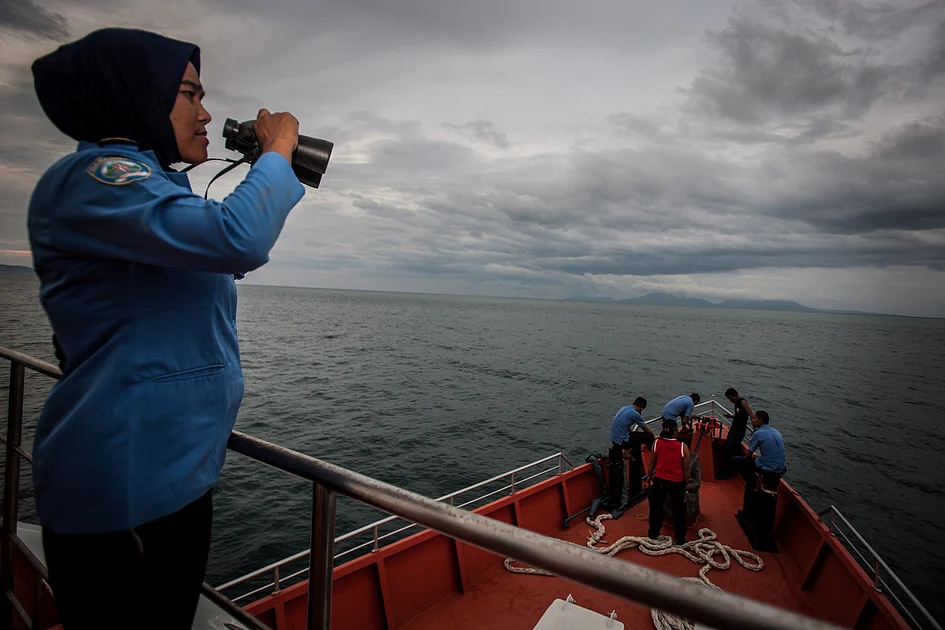
    Indonesian search and rescue teams confirmed on Sunday the discovery of wreckage from a fisheries surveillance aircraft that vanished during its operational mission in South Sulawesi province. The ATR 42-500 turboprop, chartered by Indonesia’s Marine Affairs and Fisheries Ministry, disappeared from radar contact on Saturday afternoon while conducting aerial monitoring of fisheries activities.

    The aircraft, operated by Indonesia Air Transport, carried eleven personnel comprising eight crew members and three ministry staff. Search teams located the debris scattered across multiple locations around Mount Bulusaraung in the Maros region, approximately 1,500 kilometers northeast of Jakarta. The challenging mountainous terrain and persistent fog conditions have complicated rescue operations.

    Muhammad Arif Anwar, head of South Sulawesi’s rescue agency, announced the deployment of 1,200 personnel to search for survivors. ‘Our priority is to search for the victims, and we hope that there are some that we can evacuate safely,’ he stated during a televised briefing.

    Officials reported that rescue helicopters first identified aircraft windows at 7:46 a.m. local time, followed by the discovery of larger fuselage sections and the tail assembly minutes later. The aircraft had been en route to Makassar, provincial capital of South Sulawesi, after departing from Yogyakarta province.

    Flight tracking data from Flightradar24 indicated the aircraft was flying at low altitude over ocean waters before its last signal transmission approximately 20 kilometers northeast of Makassar airport. Indonesia’s National Transportation Safety Committee has assumed leadership of the crash investigation, though preliminary findings suggest weather conditions and mountainous topography may have contributed to the incident.

    The ATR 42-500, manufactured by Franco-Italian aerospace consortium ATR, represents a workhorse regional turboprop designed for short to medium-haul operations with typical passenger capacities ranging from 42 to 50 seats.

  • Vonn in Olympic form with another World Cup podium in Tarvisio super-G

    Vonn in Olympic form with another World Cup podium in Tarvisio super-G

    American alpine skiing legend Lindsey Vonn continues to demonstrate formidable form ahead of the Winter Olympics, securing her seventh World Cup podium of the season with a second-place finish in Sunday’s super-G event in Tarvisio, Italy. The 41-year-old veteran finished just 0.27 seconds behind Germany’s Emma Aicher, who claimed her fourth career World Cup victory.

    This remarkable performance follows Vonn’s third-place finish in Saturday’s downhill event on the same course, reinforcing her status as a serious contender despite her recent return from retirement. The 2010 Olympic downhill champion attributes her successful comeback to a titanium knee replacement that has eliminated previous pain barriers.

    Tarvisio has proven to be particularly favorable terrain for Vonn, who has never failed to reach the podium at this venue. Her record now stands at two victories, five second-place finishes, and one third-place achievement at the Italian resort, which returned to the World Cup circuit after a 15-year absence.

    “It was a good race today,” Vonn told Italian broadcaster RAI. “Tough conditions with the visibility, but I’m really happy to be on the podium again. Of course I’m close to another win but it is what it is. I think I’ll save the hundredths for Cortina!”

    The competition saw significant shifts in the super-G standings, with Italy’s Sofia Goggia claiming the discipline lead despite a sixth-place finish. Goggia now holds a 10-point advantage over Vonn, who maintains a commanding lead in the downhill standings.

    New Zealand’s Alice Robinson, previously leading the super-G rankings, suffered a dramatic crash after the final jump that left her nearly three seconds behind the winner and visibly distressed. This setback drops Robinson 20 points behind Goggia in the standings.

    The event raises questions about Italy’s Olympic prospects, as overall World Cup title holder Federica Brignone continues to recover from a double leg fracture sustained in April. Brignone may arrive at the Olympic starting gate without having competed in any events this winter, potentially forgoing Tuesday’s giant slalom in Kronplatz.

  • Hosts Morocco face Mane’s Senegal for AFCON glory

    Hosts Morocco face Mane’s Senegal for AFCON glory

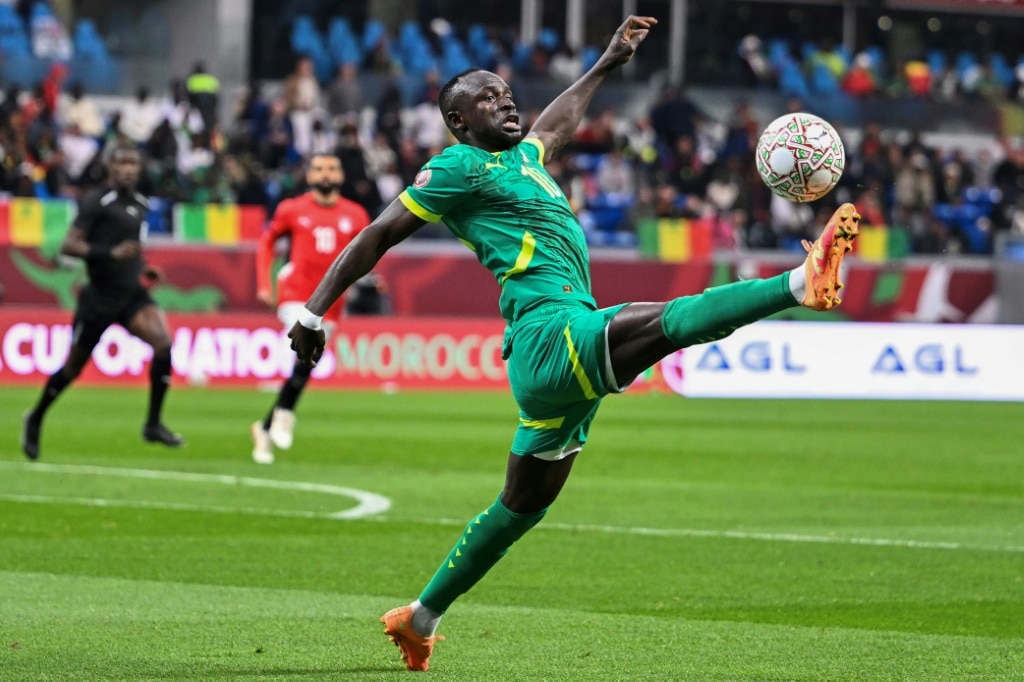
    The African football spectacle reaches its zenith as host nation Morocco prepares to battle Senegal in the Africa Cup of Nations final this Sunday. The Prince Moulay Abdellah Stadium in Rabat will witness an electrifying confrontation between two continental powerhouses, with nearly 69,000 spectators expected to create a formidable home advantage for the Atlas Lions.

    Morocco, captained by African Player of the Year Achraf Hakimi, seeks to end a 48-year title drought that has persisted since their sole championship victory in 1976. Under the strategic guidance of coach Walid Regragui, the team has transformed into Africa’s football powerhouse, achieving unprecedented success by becoming the continent’s first World Cup semi-finalist in 2022 and climbing to 11th in global rankings.

    Senegal enters the final as reigning champions, having secured their maiden title in 2022 through Sadio Mané’s decisive penalty against Egypt. The Lions of Teranga are competing in their third final within four tournaments, demonstrating remarkable consistency in African football. However, their preparation has been marred by logistical concerns, with team officials complaining about inadequate security during their arrival in Rabat and limited ticket allocation for supporters.

    Strategic elements will prove crucial in determining the outcome. Morocco’s campaign has been built upon defensive solidity, conceding merely one goal throughout the tournament, complemented by the offensive prowess of Real Madrid winger Brahim Díaz, the competition’s leading scorer with five goals. Senegal must overcome the suspension of captain Kalidou Koulibaly while managing the emotional narrative surrounding Mané’s potential final AFC appearance.

    The tournament organization has showcased Morocco’s capabilities as a future World Cup host, with state-of-the-art infrastructure, high-speed rail connections, and impeccable pitch conditions setting new standards for African football events. This final not only represents the culmination of Africa’s premier football competition but also serves as a demonstration of Morocco’s readiness to co-host the 2030 World Cup alongside Spain and Portugal.

  • Europe scrambles to respond to Trump tariff threat

    Europe scrambles to respond to Trump tariff threat

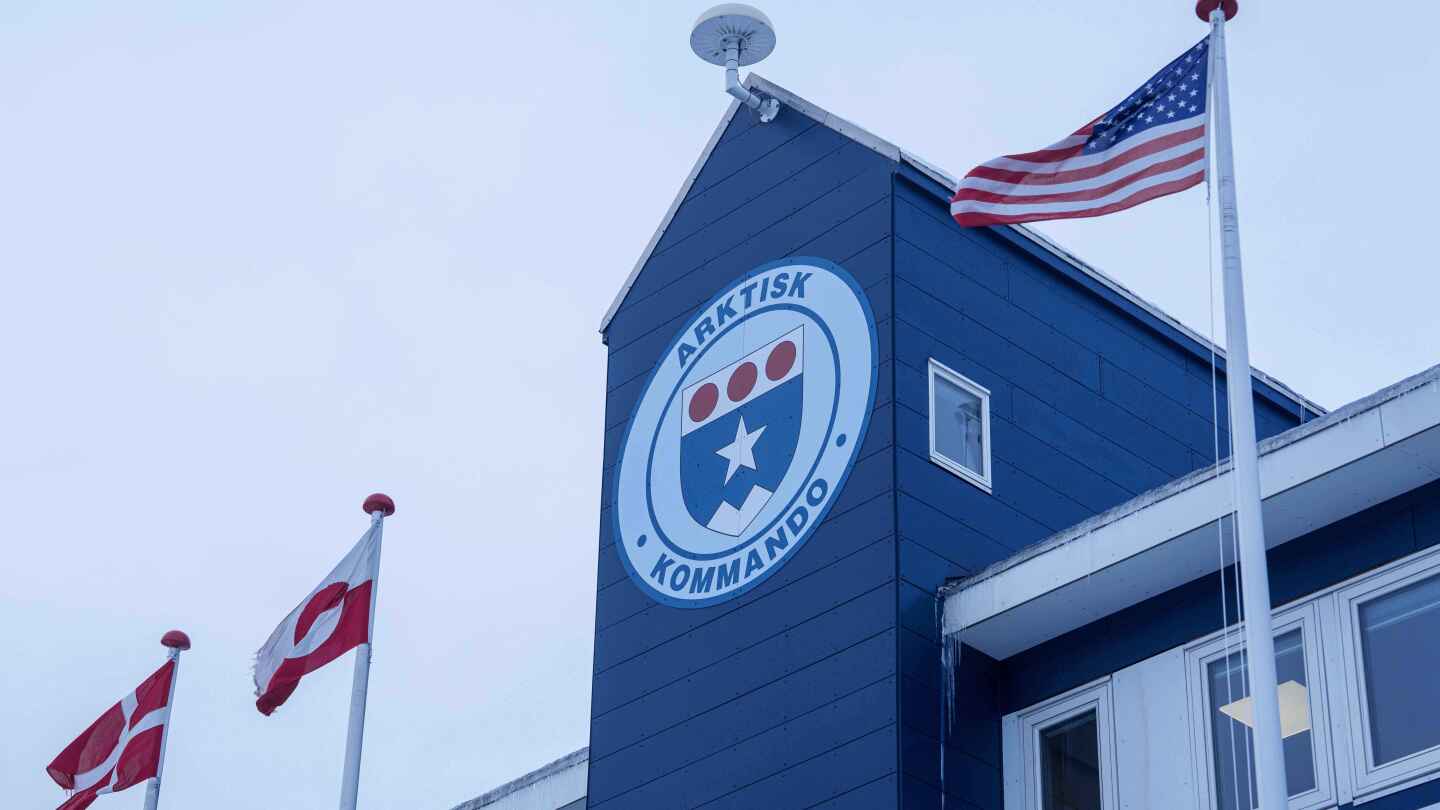
    European leaders are mounting a coordinated response to President Donald Trump’s unprecedented tariff threats, which come as direct retaliation for their opposition to his administration’s renewed interest in acquiring Greenland. The autonomous Danish territory has become the unlikely epicenter of a major diplomatic crisis straining NATO alliances.

    Italian Prime Minister Giorgia Meloni, despite maintaining generally positive relations with Trump, openly criticized the proposed economic measures during her visit to Seoul. ‘I believe that imposing new sanctions today would be a mistake,’ Meloni stated, revealing she had communicated this position directly to the American president hours earlier. While characterizing the situation as partly stemming from ‘understanding and communication’ failures, she emphasized NATO’s crucial role in resolving the escalating dispute.

    Across Europe, condemnation of Trump’s tariff announcement has been swift and unequivocal. British Culture Minister Lisa Nandy confirmed Prime Minister Keir Starmer’s intention to address the matter urgently with the White House, labeling the threatened tariffs as ‘wrong,’ ‘deeply unhelpful,’ and ‘counterproductive.’

    French President Emmanuel Macron advocated for a robust European response, urging deployment of the EU’s previously unused ‘anti-coercion instrument’—a powerful trade mechanism designed to counteract such economic pressure. This tool, often referred to as the EU’s trade ‘bazooka,’ enables restrictions on imports of goods and services.

    The Trump administration has outlined a graduated tariff schedule: implementing 10% tariffs on all imports from eight European nations—Denmark, Norway, Sweden, France, Germany, the United Kingdom, Netherlands, and Finland—beginning February 1, with escalation to 25% by June 1 if Greenland negotiations remain stalled.

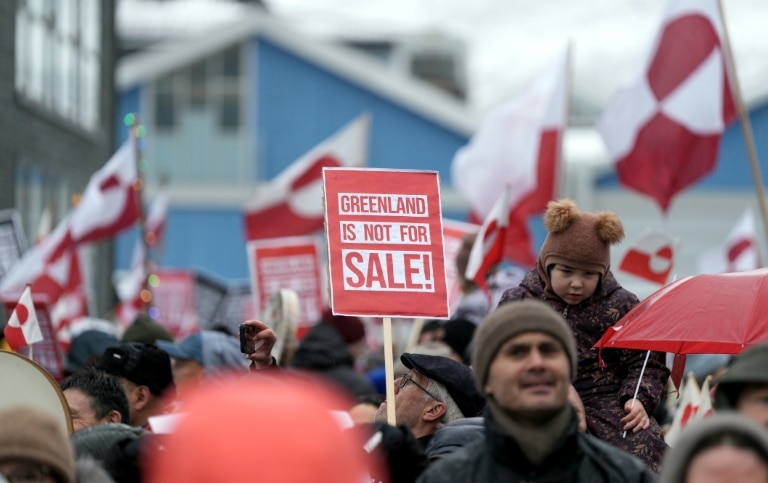
    Civil society has joined governmental opposition, with thousands protesting in Nuuk, Copenhagen, and other Danish cities against potential U.S. annexation. Diplomatic channels are actively engaged, as evidenced by Danish Foreign Minister Lars Lokke Rasmussen’s planned visits to Norway, the UK, and Sweden for Arctic security consultations.

    European officials emphasize the mutual damage of tariff escalation. French Agricultural Minister Annie Genevard noted that American farmers and industrialists would also suffer significant losses, while Dutch Foreign Minister David van Weel condemned Trump’s approach as ‘inexplicable blackmail.’

    The European Union has convened an emergency meeting of ambassadors in Brussels to formulate a unified strategy, with Commission President Ursula von der Leyen and European Council President Antonio Costa warning that these tariffs would ‘undermine transatlantic relations and risk a dangerous downward spiral.’

  • Iran schools to reopen Sunday after one-week closure, media says

    Iran schools to reopen Sunday after one-week closure, media says

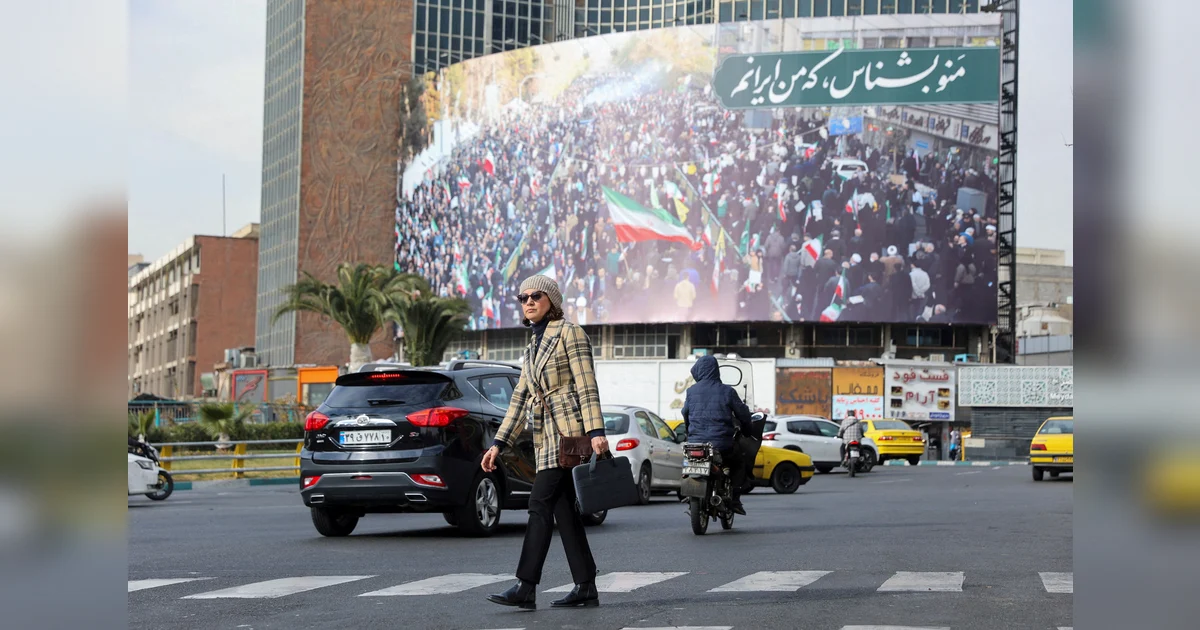
    Educational institutions across Iran are scheduled to resume operations on Sunday following an unprecedented week-long closure during widespread civil disturbances. The shutdown affected numerous cities including Tehran, where authorities implemented the measure in response to escalating anti-government demonstrations that have shaken the nation.

    According to reports from Iran’s semi-official ISNA news agency, academic activities will recommence nationwide after being suspended since January 10th. The agency further indicated that university examinations, previously postponed due to the unrest, have been rescheduled for January 24th.

    The school closures occurred against a backdrop of significant social turmoil, with international observers reporting intense clashes between security forces and protesters. While official Iranian sources have remained largely silent regarding casualty figures, external human rights organizations have circulated unverified reports suggesting potentially thousands of fatalities amid a government-imposed internet blackout that severely limited information flow from the country.

    The restoration of educational services signals authorities’ attempts to normalize operations following one of the most challenging periods of civil disobedience in recent years. The protests, which appear to have been triggered by various socioeconomic and political grievances, represent a significant challenge to the established governance structures.

    International attention remains focused on Iran as diplomatic entities continue to monitor the situation’s development, particularly concerning civil liberties and human rights considerations during periods of civil unrest.

  • At 45, Venus Williams sets record at Australian Open but falls in the 1st round

    At 45, Venus Williams sets record at Australian Open but falls in the 1st round

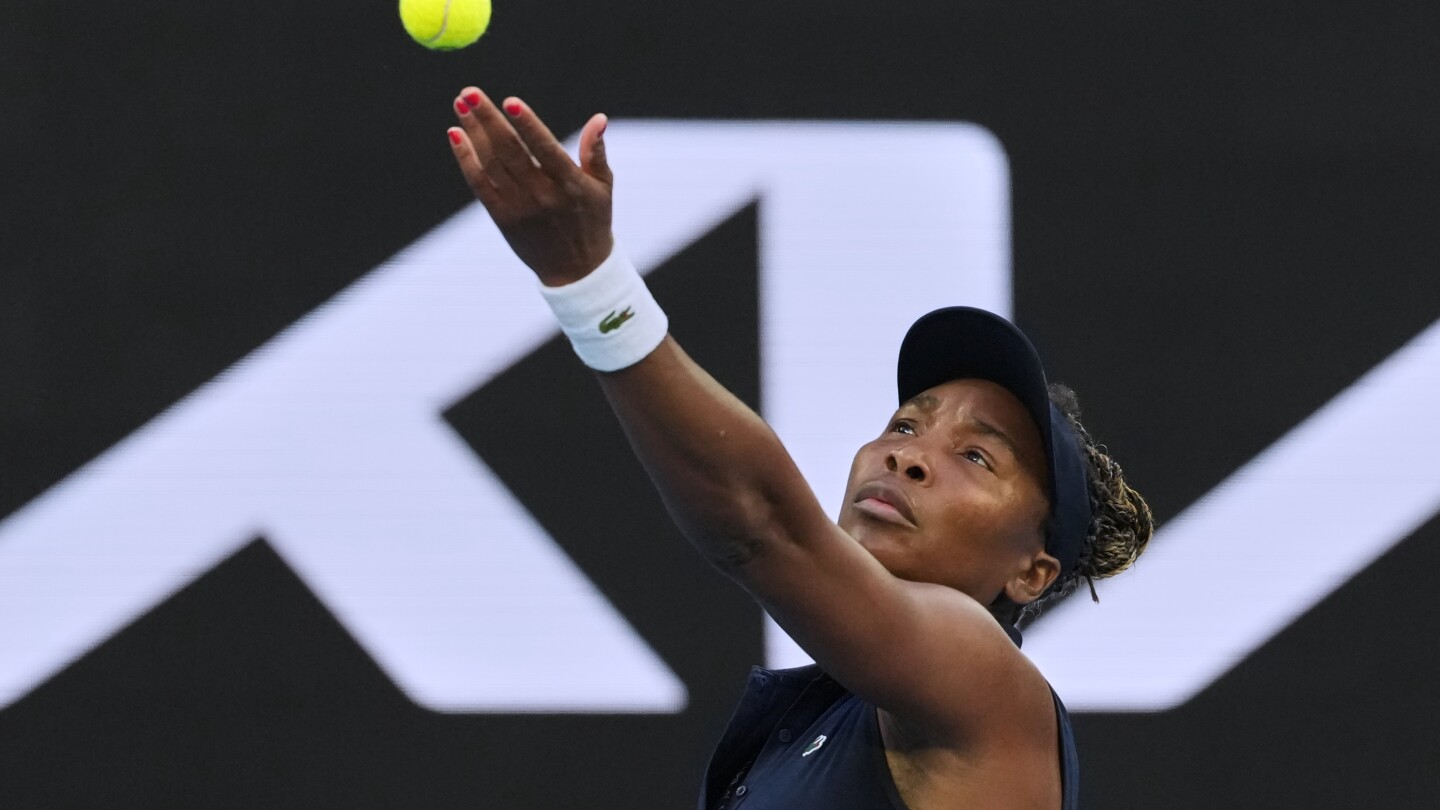
    MELBOURNE, Australia — In a historic moment that transcended the match outcome, Venus Williams became the oldest woman to compete in the Australian Open singles main draw at 45 years old, though her campaign ended in a dramatic first-round defeat against Serbia’s Olga Danilovic.

    The seven-time Grand Slam champion, competing on a wild-card entry while ranked No. 576 worldwide, showcased flashes of her legendary prowess during the 2-hour, 17-minute contest. After splitting the first two sets, Williams surged to a commanding 4-0 lead in the decider before the 68th-ranked Danilovic mounted an extraordinary comeback, winning six consecutive games to secure a 6-7(5), 6-3, 6-4 victory.

    The match reached its climax in a monumental 14-minute, 28-second service game at 4-4 in the third set, where Williams saved two break points and delivered clutch aces before ultimately succumbing to the relentless pressure from her 22-year-old opponent.

    Williams surpassed the previous age record held by Japan’s Kimiko Date, who was 44 during her 2015 Australian Open appearance. This marked Williams’ 22nd appearance at Melbourne Park, where she previously reached finals in 2003 and 2017.

    Despite the defeat, Williams remained characteristically gracious and optimistic. ‘I’m really proud of my effort today because I’m playing better with each match,’ she reflected. ‘It’s super exciting to have played that well and to get myself in that position.’

    Danilovic, visibly awed by the occasion, expressed reverence for her opponent: ‘Playing against Venus Williams is something I can’t take for granted. It was such a pleasure playing against such a legend.’

    Williams now turns her attention to the doubles competition before evaluating her schedule for the remainder of the season, continuing what she describes as a process of ‘relearning’ competitive tennis at the highest level.

  • In their words: European governments criticize Trump’s tariff threats over Greenland

    In their words: European governments criticize Trump’s tariff threats over Greenland

    COPENHAGEN, Denmark — A severe transatlantic rift has emerged following U.S. President Donald Trump’s announcement of impending 10% tariffs targeting eight European nations in retaliation for their stance on Greenland. The unprecedented economic measure, scheduled to commence next month, specifically targets Denmark, Norway, Sweden, France, Germany, the United Kingdom, the Netherlands, and Finland.

    The tariff threat represents a dramatic escalation in tensions over Arctic sovereignty and security arrangements. President Trump characterized the tariffs as retaliation against what he deemed European interference in American control of Greenland, specifically referencing the deployment of symbolic troop contingents to the region. European leaders uniformly rejected this characterization, maintaining their military movements were coordinated responses to Trump’s own calls for enhanced Arctic security through NATO frameworks.

    Diplomatic reactions from affected nations revealed remarkable unity in condemning the U.S. move. Danish Foreign Minister Lars Løkke Rasmussen emphasized transparent cooperation with American allies on Arctic security while implicitly rejecting the tariff justification. Norwegian Prime Minister Jonas Gahr Støre delivered a sharper rebuke, stating unequivocally that ‘threats have no place among allies’ and reaffirming Norway’s recognition of Danish sovereignty over Greenland.

    Swedish Prime Minister Ulf Kristersson denounced the action as ‘blackmail’ and framed it as a broader European Union concern. French President Emmanuel Macron declared that ‘no intimidation or threats will influence us,’ whether in Ukraine, Greenland, or elsewhere. German officials indicated coordinated European responses would be determined at the appropriate time.

    British Prime Minister Keir Starmer condemned the tariffs as ‘completely wrong’ when applied to allies pursuing collective NATO security. Dutch Foreign Minister David van Weel criticized the inappropriate use of trade measures for non-trade disputes, while Finnish President Alexander Stubb warned the tariffs would ‘undermine the transatlantic relationship and risk a dangerous downward spiral.’

    The collective European response underscores a fundamental disagreement over appropriate conduct among NATO allies and establishes a potentially dangerous precedent for using economic measures to settle geopolitical disagreements within the Western alliance.