
作者: admin

  • AI reshaping the battle over the narrative of Maduro’s US capture

    AI reshaping the battle over the narrative of Maduro’s US capture

    The digital information landscape has become a central battleground in the political conflict surrounding Venezuelan leader Nicolas Maduro’s January capture by US forces. Since his detention alongside wife Cilia Flores during operations in Caracas on January 3rd, artificial intelligence has emerged as a powerful weapon in shaping public perception of these events.

    Social media platforms are now inundated with AI-generated content that blurs the line between reality and fiction. These digital creations range from humorous memes to elaborate fictional scenarios, including one depicting an animated courtroom illustration of Maduro declaring himself ‘a prisoner of war’ and another showing an AI-generated version of the leader attempting a prison escape only to find himself dancing with former President Donald Trump and a judge to music by rapper Ice Spice.

    According to Leon Hernandez, researcher at Andres Bello Catholic University, this represents the development of sophisticated ‘disinformation labs’ that deliberately flood platforms with conflicting narratives. ‘The idea was to create confusion and generate skepticism at the base level by distorting certain elements of real things,’ Hernandez explained to AFP.

    The strategy extends beyond independent creators to include state media. Venezuela’s VTV television channel notably broadcast an AI-animated video narrated by a child recounting Maduro’s capture, demonstrating the institutional adoption of these techniques.

    Professor Elena Block of the University of Queensland notes that AI has become ‘the new instrument of power for autocrats to confuse, combat, and silence dissent.’ This digital propaganda builds upon existing media strategies employed by Maduro’s government, including the earlier ‘Super Bigote’ (Super Mustache) cartoon character that depicted the leader as a superhero fighting monsters representing political opponents.

    The phenomenon isn’t limited to Venezuelan leadership. Former President Trump has also utilized AI-generated content featuring ‘antagonistic, aggressive, and divisive language,’ according to Block, who warns that ‘AI today is the greatest threat to democracy’ through its capacity to trivialize political discourse.

  • China’s population falls for fourth year amid economic woes

    China’s population falls for fourth year amid economic woes

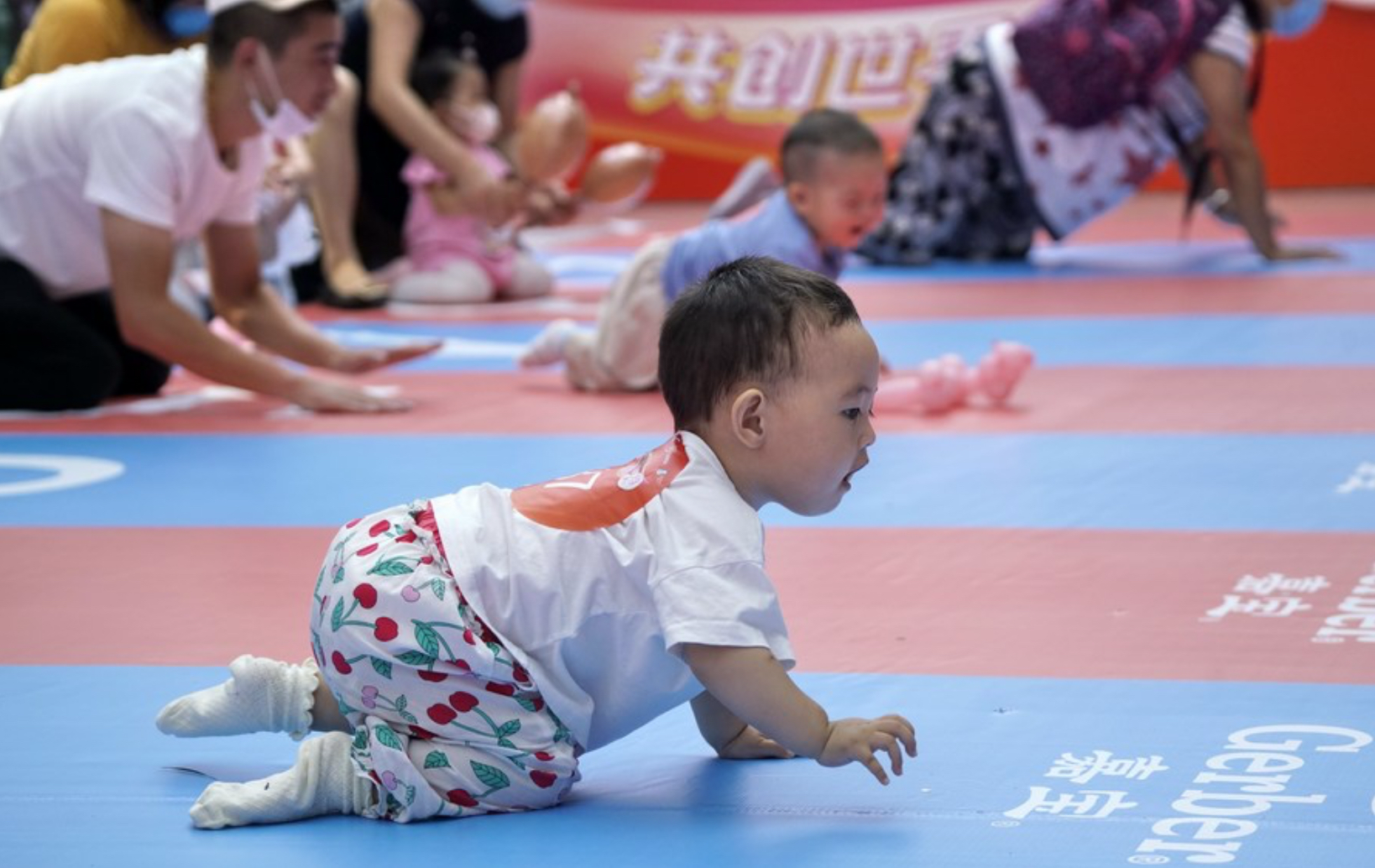
    China has documented its fourth successive annual population contraction in 2025, cementing a concerning demographic trajectory that poses substantial challenges to economic vitality and social welfare frameworks. Official statistics from the National Bureau of Statistics (NBS) reveal a stark imbalance: with 7.92 million births overshadowed by 11.31 million deaths, the nation experienced a net reduction of 3.39 million people, settling the year-end population at approximately 1.405 billion.

    This persistent downturn reflects deeper systemic issues, including widespread employment instability among youth and diminishing marriage rates, which collectively undermine China’s long-term growth potential. The contracting workforce signals impending strains on pension systems and escalating healthcare expenditures associated with an aging citizenry.

    Critical analysis of workforce demographics shows the core working-age population (16-59 years) now constitutes 60.6% of the total populace, down from 60.9% in the previous year. This segment witnessed an annual decrease of 6.62 million individuals, highlighting tightening labor conditions despite advancements in educational attainment and productivity metrics.

    NBS officials, including Wang Pingping, Director of Population and Employment Statistics, emphasize qualitative improvements within the demographic profile. With 851 million people in the 16-59 cohort and 323 million aged 60 or above, China benefits from significant human capital. Wang notes that many seniors maintain robust health and economic activity, while average educational duration reaches 11.3 years and life expectancy climbs to 79 years. The nation’s R&D personnel now exceed 10.8 million, indicating a strategic pivot from labor quantity to expertise quality.

    Regional disparities further illustrate demographic fragmentation. Northeastern provinces like Liaoning, Heilongjiang, and Jilin report severe natural population declines, exacerbated by outward migration and aging residents. Conversely, southern regions and less-developed western areas, including Guangdong, Tibet, and Xinjiang, demonstrate relative resilience through higher birth rates and younger demographic structures.

    Underpinning these trends are evolving social attitudes. Marriage registrations briefly rebounded by 8.5% in early 2025 following policy interventions, yet analysts consider this temporary amid enduring economic pressures. A shrinking marriage-age population—down by over 60 million in a decade—coupled with pronounced gender imbalances and financial barriers like betrothal gifts and housing costs, continue to discourage family formation. These dynamics fuel the proliferation of ‘tang ping’ (lying flat) and ‘bai lan’ (let it rot) lifestyles among disenchanted youth.

    Despite these challenges, China retains formidable demographic advantages, including an urban population of 954 million (67.9% urbanization rate) and a consumer market surpassing the combined populations of developed nations. Policy measures expanding childcare support and educational access aim to mitigate demographic headwinds, though structural economic transformations appear inevitable.

  • Innovative architecture gives rise to schools of the future

    Innovative architecture gives rise to schools of the future

    In the heart of Shenzhen, Guangdong province, an educational architecture revolution is unfolding as innovative design solutions address the critical shortage of student placements in one of China’s most densely populated urban centers. The Hongling Experimental Primary School, completed in 2018 at the foot of Antuo Hill, stands as a pioneering model of high-density educational infrastructure that has captured international attention.

    Architect He Jianxiang, the visionary behind this groundbreaking project, frequently returns to the school with both architectural experts and educational delegations to demonstrate how creative thinking transformed spatial limitations into educational opportunities. The school’s distinctive features include semi-underground indoor sports facilities, expansive rooftop gardens, unusually wide corridors, and sunken landscaped courtyards that collectively create an environment where children consistently choose to extend their stay beyond school hours.

    This architectural achievement emerged from Shenzhen’s urgent ‘new campus action plan’ initiated in response to a severe educational infrastructure crisis. In 2017, city authorities committed to an ambitious five-year development strategy allocating 400 billion yuan ($56.3 billion) to construct 247 new educational institutions capable of accommodating 740,000 additional students. The Hongling school represents the inaugural and most influential project within this comprehensive initiative, successfully solving the complex puzzle of creating functional educational spaces within extreme urban density constraints.

    The school’s open design philosophy has transformed it into a community hub that extends beyond traditional educational functions, while its innovative use of vertical and underground spaces has established new standards for urban school architecture. The project demonstrates how architectural innovation can directly address social challenges, particularly in cities experiencing rapid population growth and limited available land resources.

  • Australian lawmakers back stricter gun, hate crime laws

    Australian lawmakers back stricter gun, hate crime laws

    In a decisive response to the Bondi Beach mass shooting that shocked the nation, Australian lawmakers have approved comprehensive security legislation targeting both firearms regulation and hate crime enforcement. The House of Representatives passed the dual measures during a special parliamentary session, creating a unified front against violence and extremism.

    The legislative package addresses critical vulnerabilities exposed by the December 14 attack, where assailants targeted a Jewish Hanukkah celebration, resulting in 15 fatalities. Prime Minister Anthony Albanese emphasized the dual nature of the threat, stating, ‘The terrorists had hate in their hearts, but they also had high-powered rifles in our streets. We’re taking action on both fronts simultaneously.’

    The hate crime provisions establish aggravated offenses for religious leaders and adults who radicalize children, while significantly strengthening penalties for hate dissemination. Immigration protocols will be enhanced to deny or revoke visas for individuals suspected of terrorism or hate-based activism.

    Concurrently, firearm reforms introduce a national gun buyback program, stricter import controls, and expanded background checks incorporating intelligence agency input. The measures represent Australia’s most significant security overhaul since the 1996 Port Arthur reforms.

    The legislation now moves to the Senate, where approval is anticipated later today. The parliamentary action precedes Thursday’s national day of mourning for the Bondi victims, as authorities continue investigating potential intelligence failures regarding the perpetrators.

  • New Year art draws on town’s colorful tradition

    New Year art draws on town’s colorful tradition

    As China enters layue, the twelfth lunar month, the picturesque town of Tantou in Hunan province comes alive with the centuries-old tradition of creating vibrant nianhua (New Year paintings). These elaborate artworks transform ordinary doors into canvases depicting fortune gods, striped tigers, and whimsical scenes like mouse wedding processions, serving as both cultural expressions and talismans believed to ward off misfortune while inviting prosperity.

    Tantou nianhua boasts a remarkable history spanning over three centuries, earning the town the prestigious title “Hometown of Modern Folk New Year Paintings.” The tradition gained national recognition when renowned writer Lu Xun nostalgically described a Tantou “mouse wedding” painting that adorned his childhood bedroom in his essay collection Dawn Blossoms Plucked at Dusk.

    The creation process represents a completely self-contained local production cycle rare in Chinese folk art. Artisans begin by crafting specialized paper from locally sourced bamboo, providing the perfect textured base for printing. The heart of the technique lies in woodblock carving using the distinctive “steep knife upright line” method, which requires exceptional precision and artistic intuition to maintain consistent angles and pressure throughout intricate designs.

    National intangible cultural heritage inheritor Liu Guoli emphasizes the spiritual dimension of the craft: “Your personality and temperament shape the carving, making each block unique.” The vibrant coloration emerges through a multi-step printing process where each hue corresponds to a separate woodblock, culminating in hand-painted facial features that imbue characters with lifelike qualities.

    The artworks’ striking palette features tangerine reds, brilliant yellows, rose pinks contrasted with cool cyan and deep charcoal—a dynamic interplay that gives each piece its characteristic vitality. Professor Wu Yuqing of Hunan Normal University’s Fine Arts Academy notes: “The motifs represent a practical aesthetic shaped over centuries by countless families. The more deeply art is rooted in ordinary people’s lives, the more vibrantly its brilliance unfolds.

    Recent documentation in the series Ancient Crafts of Hunan employed macro lenses and slow-motion cinematography to showcase this intricate process, bringing renewed attention to Tantou’s cultural treasure that was among China’s first entries on the national intangible cultural heritage list in 2006.

  • MP family reunion flights to be capped, economy fares only after expenses scandal review

    MP family reunion flights to be capped, economy fares only after expenses scandal review

    Australia’s parliamentary travel entitlements system has undergone a substantial transformation following an expenses scandal that exposed questionable use of taxpayer funds by high-ranking officials. The Commonwealth Remuneration Tribunal has implemented stringent new regulations that dramatically restrict family reunion flight benefits for parliamentarians.

    Under the newly adopted recommendations, elected officials will now be limited to just one economy-class fare annually for family travel outside Canberra. The comprehensive reforms also mandate that all family travel—including for spouses—must be booked in economy class exclusively. Additionally, parliamentarians must now seek pre-approval from the Independent Parliamentary Expenses Authority before arranging any family reunion travel.

    The tribunal’s decision came after Prime Minister Anthony Albanese requested a review last year, prompted by revelations that several ministers—including Communications Minister Anika Wells, Trade Minister Don Farrell, and Attorney-General Michelle Rowland—had utilized taxpayer funds for family travel to high-profile events like the Australian Open tennis tournament.

    In justifying the reforms, the tribunal acknowledged the challenges parliamentary life presents for family dynamics, noting that “parliamentarians are required to live interstate for long periods” while emphasizing the importance of maintaining family connections. However, the body established strict criteria requiring that travel must be predominantly for parliamentary business purposes and directly facilitate family life.

    The scandal gained significant traction when it was revealed that Sports Minister Anika Wells had charged taxpayers tens of thousands of dollars for family attendance at prestigious sporting events including the Boxing Day Test cricket match, Melbourne Grand Prix, and a skiing trip to Thredbo during a Paralympics event.

    According to tribunal data, the majority of parliamentarians (194 out of 226) did not utilize any Australia-wide family reunion travel during the 2024-25 period, suggesting the reforms will primarily affect a minority of elected officials. The tribunal has urged implementation of these recommendations “as soon as practicable” to restore public trust in parliamentary spending practices.

  • Analysis: China’s birth-rate struggles underscore its millennia-long struggle to manage ‘the masses’

    Analysis: China’s birth-rate struggles underscore its millennia-long struggle to manage ‘the masses’

    China confronts an unprecedented demographic challenge as newly released data reveals its population has entered a period of historical decline, dropping by 3 million to 1.404 billion people. This development marks the lowest birth rate recorded since the establishment of the People’s Republic in 1949, signaling a critical juncture in the nation’s millennia-long struggle with population management.

    The current situation represents a dramatic reversal from decades of restrictive population control measures. The notorious one-child policy, implemented in 1980 to curb rapid population growth, has yielded unintended consequences that continue to reverberate through Chinese society. This policy not only created a disproportionate aging population but also triggered severe social distortions including gender imbalance, the emergence of single-child ‘little emperors’ in urban households, and widespread loneliness among elderly citizens separated from their geographically dispersed children.

    President Xi Jinping has revitalized ancient cultural precepts that equate population strength with national power, describing China’s people as a ‘great wall of steel.’ This philosophical shift accompanies practical policy changes including tax exemptions for condoms, daycare centers, and matchmaking services. The government’s current five-year development plan explicitly aims to cultivate positive attitudes toward marriage and childbearing while implementing financial incentives to reduce the costs associated with raising children.

    The demographic transition occurs against an increasingly competitive international backdrop, with India having surpassed China as the world’s most populous nation in 2023. This development carries significant implications for China’s geopolitical standing and its aspirations to lead the Global South. As contemporary China grapples with the complex legacy of its population policies, the nation faces fundamental questions about how traditional values can coexist with modern realities in shaping its demographic future.

  • ‘Rising tensions’: Australia’s sharemarket falls from eleven week high after ‘trade bazooka’ fears

    ‘Rising tensions’: Australia’s sharemarket falls from eleven week high after ‘trade bazooka’ fears

    The Australian equity market experienced a pronounced downturn during Tuesday’s trading session, primarily driven by escalating geopolitical friction between the United States and European nations. The benchmark S&P/ASX 200 index declined by 58.60 points, representing a 0.66 percent decrease to close at 8,815.90, while the broader All Ordinaries index fell 56.30 points (0.61 percent) to settle at 9,138.60.

    Market analysts attributed the bearish sentiment to renewed transatlantic trade tensions following former President Trump’s tariff threats against several European countries. The confrontation centers on the United States’ strategic interest in acquiring Greenland, with the administration threatening 10 percent tariffs against Denmark, Norway, Sweden, France, Germany, the Netherlands, Finland, and Great Britain. European authorities have responded with countermeasures potentially affecting €100 billion ($174 billion) in U.S. goods.

    Financial and materials sectors led the decline, with all four major banking institutions recording losses. Commonwealth Bank shares decreased by 1.81 percent to $150.48, Westpac dropped 0.98 percent to $38.59, NAB fell 0.85 percent to $41.86, and ANZ finished 1.15 percent lower at $36.94.

    The resources sector faced significant pressure despite BHP reporting substantial commodity price improvements, including a 32 percent annual increase in copper prices and a 4 percent rise in iron ore. BHP shares declined 1.99 percent to $47.78 following revelations that the first phase of its Jansen potash project would exceed initial estimates by over $1 billion, reaching $US8.4 billion. Rio Tinto decreased 2.04 percent to $146.34, while Fortescue slid 0.58 percent to $22.26.

    Market performance showed sector divergence, with seven of eleven industry sectors finishing lower. Utilities and technology stocks provided some offsetting gains, led by Origin Energy’s 2.62 percent surge to $11.34 after announcing an extension of operations at Australia’s largest coal-fired power plant until 2029.

    Individual company performances varied considerably. ARB Corporation shares plummeted 12.04 percent to $28.42 following unaudited sales revenue of $358 million for the first half-year, approximately 1 percent below previous corresponding periods. Conversely, Bellevue Gold rallied 5.01 percent to $1.78 after reporting strong sales metrics, and Hub24 shares advanced 3.1 percent to $101.21 following record net inflows of $5.6 billion.

    The Australian dollar demonstrated resilience amid market volatility, strengthening against the U.S. dollar to trade at 67.29 US cents.

  • US citizen says ICE removed him from his Minnesota home in his underwear after warrantless search

    US citizen says ICE removed him from his Minnesota home in his underwear after warrantless search

    ST. PAUL, Minn. — U.S. Immigration and Customs Enforcement (ICE) agents conducted a controversial operation in St. Paul, Minnesota, detaining a longtime American citizen at gunpoint without presenting a warrant before forcibly removing him into subfreezing temperatures wearing only underwear. The incident has ignited fierce criticism from local officials and community members amid a broader federal surge in the Twin Cities region.

    ChongLy “Scott” Thao, a decades-long U.S. citizen, was awoken from a nap on Sunday afternoon by family members alerting him to armed, masked agents pounding on his door. Despite instructions not to open it, ICE personnel forced entry into the residence, pointed firearms at the family, and detained Thao without allowing him to present identification. Video evidence and family testimony confirm he was escorted outside in handcuffs, clad only in sandals and underwear with a blanket hastily provided for minimal warmth.

    Neighbors and bystanders documented the scene, capturing audible distress from family members—including Thao’s four-year-old grandson—and loud protests against the heavily armed agents. Thao was later transported to an undisclosed location where he was subjected to fingerprinting and photographic identification in frigid conditions before eventually being released without apology or explanation.

    In response, the Department of Homeland Security characterized the operation as a “targeted” effort aimed at apprehending two convicted sex offenders believed to be residing at the address. DHS claimed Thao “matched the description” of the targets and refused identification—an account the family vehemently denies. Public records show no sex offenders residing at Thao’s address, with the nearest registered individual located over two blocks away.

    St. Paul Mayor Kaohly Her, herself Hmong American, condemned ICE’s actions as “unacceptable and un-American,” accusing the agency of overreach and failing to focus on genuine threats to public safety.

    The Thao family’s history adds further context to their outrage. ChongLy Thao’s adopted mother, Choua Thao, was a Hmong nurse who provided medical care to CIA-backed soldiers during the U.S. “Secret War” in Laos. Forced to flee to the U.S. after communist takeover, her service to American interests contrasts sharply with her son’s treatment decades later.

    Thao now plans to file a civil rights lawsuit against DHS, citing lasting trauma and an eroded sense of safety in his own home.

  • Marine Le Pen faces crucial Paris appeals trial over misuse of EU funds

    Marine Le Pen faces crucial Paris appeals trial over misuse of EU funds

    PARIS — The political trajectory of France’s far-right movement faces a critical juncture as National Rally leader Marine Le Pen appears before an appeals court this week, challenging a conviction that could permanently alter the country’s political landscape. The two-day judicial proceeding, commencing Tuesday, represents Le Pen’s final opportunity to overturn a March ruling that found her guilty of systematically misappropriating European Parliament funds between 2004 and 2016.

    The initial verdict delivered severe penalties including a five-year prohibition from elected office, two years of electronic monitoring house arrest, and an additional two-year suspended sentence. This appeal process reexamines the complex financial case alleging that Le Pen and her party orchestrated a ‘fraudulent system’ to divert €2.9 million in EU parliamentary funds intended for legitimate aides to instead finance party operations.

    Court documents reveal that European funds were channeled to various party functionaries including Le Pen’s personal bodyguard, her executive assistant, a graphic designer, and even her sister Yann who organized party events while receiving EU compensation. The case originated from a 2015 alert raised by then-European Parliament President Martin Schulz regarding potential financial irregularities.

    Le Pen’s defense strategy has evolved throughout the proceedings. During the initial trial, she maintained that all aide assignments were legitimate and adapted to lawmakers’ diverse responsibilities. However, her current appeal suggests the party may have committed unintentional administrative errors rather than deliberate fraud, claiming European officials never provided adequate guidance regarding hiring regulations.

    The judicial outcome carries profound implications for France’s 2027 presidential election. Current polling indicates Le Pen would likely emerge as a frontrunner if eligible to run, building upon her second-place finishes against Emmanuel Macron in both 2017 and 2022. Having spent fifteen years rehabilitating the far-right’s image and distancing it from historical associations with racism and antisemitism, Le Pen has transformed the National Rally into France’s largest single parliamentary bloc following 2024 legislative elections.

    Should the appeal fail, leadership would likely transfer to Le Pen’s designated successor, 30-year-old protégé Jordan Bardella. While Bardella has gained significant popularity among younger voters, questions remain regarding his relative inexperience, scripted public performances, and perceived limitations on economic and international policy expertise.

    The appeals court must weigh multiple considerations including ‘the seriousness of the acts committed’ and ‘the harm caused to citizens’ trust in public life’ noted in the original verdict. A final decision is expected by summer, with possible outcomes ranging from complete exoneration to modified sentencing that might still permit political participation.

    Le Pen and party officials have increasingly characterized the judicial process as politically motivated, comparing it to what they describe as ‘witch hunt’ tactics allegedly employed against former U.S. President Donald Trump. However, French judicial authorities maintain their complete independence, with magistrates enjoying protected status against political interference.