作者: admin

  • Asian shares sink, with Tokyo down nearly 5% as slumping AI stocks drag world markets lower

    Asian shares sink, with Tokyo down nearly 5% as slumping AI stocks drag world markets lower

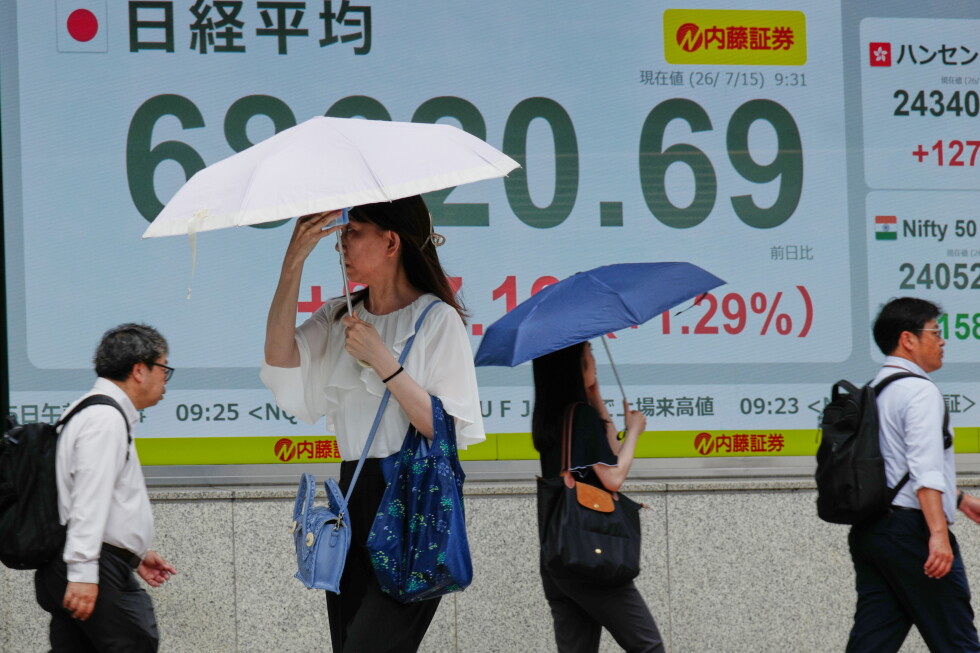
    BANGKOK – Global financial markets faced significant downward pressure on Friday, led by a sharp sell-off across Asian exchanges that was triggered by plummeting valuations in artificial intelligence-linked stocks and amplified by growing geopolitical tensions in the Middle East.

    Tokyo’s benchmark Nikkei 225 bore the brunt of the selling, closing down 5.8% at 62,945.97, a drop of more than 5 percentage points that saw AI and semiconductor stocks leading the decline. While South Korean markets were closed for trading Friday, Taiwan’s key index also fell by more than 5%, mirroring the downward trend across East Asian financial hubs. Other major Asian indexes also recorded notable losses: Hong Kong’s Hang Seng Index shed 2% to settle at 24,514.29, mainland China’s Shanghai Composite dropped 1.6% to 3,818.59, and Australia’s S&P/ASX 200 edged 0.7% lower to close at 8,775.70.

    The sell-off in AI-related equities is not an isolated one-day event. For weeks, the sector has faced growing downward pressure as investors increasingly question the stretched valuations that have propelled AI stocks to historic gains over the past year. Core concerns center on whether the explosive rally in chipmakers and AI infrastructure providers is justified, with market participants weighing the risk that projected demand for semiconductors, memory chips, and AI processing hardware may not hold up if the sector fails to deliver the outsized profits and productivity gains that have been widely promised to investors.

    The market downturn was compounded by a sharp spike in global crude oil prices, which climbed to near one-month highs Friday amid intensifying military conflict in the Middle East. Fears are growing that escalating tensions involving Iran could disrupt shipping through the Strait of Hormuz, a critical chokepoint through which a large share of global crude oil exports from the Persian Gulf pass. A closure or disruption to shipping through the strait would cut off global supply and push energy prices even higher. On Friday, international benchmark Brent crude rose 1.1% to settle at $85.13 per barrel, while U.S. benchmark West Texas Intermediate crude climbed 1.3% to $79.95 per barrel. U.S. stock futures also edged lower in pre-market trading following the Asian session.

    The downward momentum for AI stocks carried over from Wall Street’s previous trading session. On Thursday, the Nasdaq Composite, which is heavily weighted toward technology and AI stocks, dropped 1.5% even as a majority of S&P 500 components recorded gains. The S&P 500 overall fell 0.5%, while the Dow Jones Industrial Average dipped 0.2%, despite better-than-expected quarterly earnings from roughly three-quarters of the large U.S. companies that reported results this season.

    Industry giant Nvidia, the biggest single driver of the global AI stock rally over the past two years, fell 2.4% on Thursday, making it the largest single drag on the S&P 500 and erasing some of the stock’s stellar year-to-date gains. Other major semiconductor and memory chip firms also suffered steep losses: Micron Technology dropped 5.6%, pulling its 2024 gain below 199%; Western Digital sank 9.2% but remains up 171% for the year; and SanDisk plummeted 12.6%, even with its year-to-date gain still holding at 494%.
  • High-profile business figure in Melbourne facing rape trial after not guilty plea

    High-profile business figure in Melbourne facing rape trial after not guilty plea

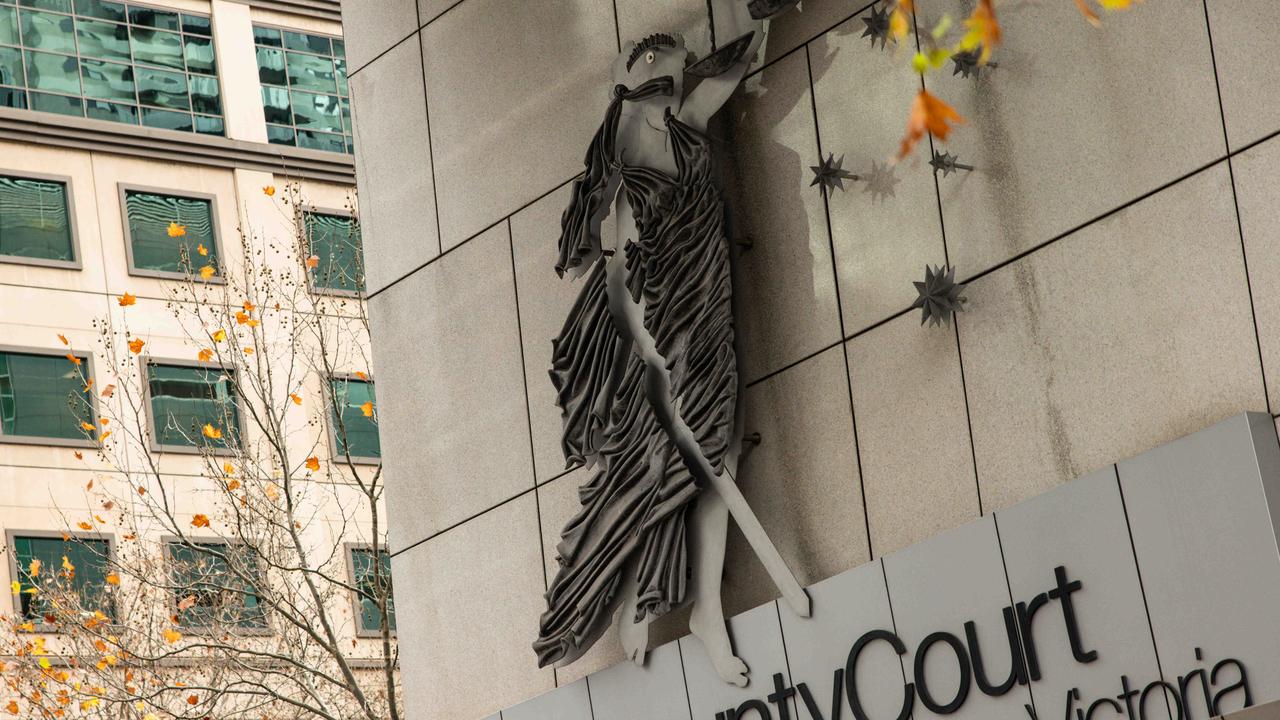
    A high-profile Australian businessman facing rape and sexual assault charges has had his alleged controversial response to his former personal assistant’s accusation aired publicly during his ongoing trial at the County Court. The defendant, whose identity remains protected by a court-ordered suppression order, has entered a plea of not guilty to two counts of rape and one count of sexual assault, stemming from an alleged incident in 2023.

    Prosecutors have laid out their case against the accused, arguing that the businessman, who is decades older than his accuser, assaulted the woman after the pair met to discuss her potential return to work for him. The meeting followed a prior period of employment during which prosecutors say the woman repeatedly rejected his romantic and sexual advances. Before the alleged assault, the two had spent an evening drinking, watching an Australian Football League match at a friend’s home, and using cocaine, according to prosecution claims.

    Following the alleged attack, the woman confronted the defendant, calling him a rapist and punching him in the face. In that confrontation, the businessman is claimed by prosecutors to have responded, “it’s not rape, I was using my fingers,” while also complaining that the punch had broken his nose.

    The trial resumed in open court on Friday after multiple days of closed hearings held to allow the alleged victim to give her evidence in private. Law enforcement officers took the stand to recount their response to the initial report of the incident, which came in the early hours of the morning when the woman’s mother contacted police after receiving distressing text messages from her daughter.

    Detective Senior Constable James Redman told the jury he first contacted the woman at 2:51 a.m., at which point she declined to share details of what had happened, only confirming she was hiding safely in a spare bedroom at the property. Roughly an hour later, the woman called back to change her mind, and Redman attended the home with two other officers. Redman told the court the accused did not appear to be impaired by alcohol or drugs at the time of their arrival, describing him as a “very charming, charismatic man.” The defendant also told investigators he had previously employed the woman, that she had occasionally stayed overnight at his home in the past, and that he had repeatedly offered to call her a ride home on the night of the incident. Redman added that the defendant did not show any visible signs of injury consistent with the reported punch to the face.

    Senior Constable Jordan Frizell, who spoke with the woman after officers arrived, testified that she appeared visibly intoxicated and impaired by substances when first interviewed.

    Multiple witnesses also took the stand on Friday to lay out context for the encounter between the defendant and his accuser. A close friend of the accused and his wife told the court the pair had visited their home earlier that same evening to watch the AFL match, leaving around 10:30 p.m. The friend recalled that at one point during the game, the woman rested her left hand on the defendant’s thigh, and he made no move to respond to the gesture. He added that the woman appeared happy and relaxed for the entirety of the visit, and that the defendant had fallen asleep toward the end of the match before being woken up for the pair to leave.

    A former friend of the alleged victim also gave evidence, telling the jury the two had a falling out while the woman was employed by the defendant. The former friend said the accuser had become extremely upset when she refused to facilitate an introduction between the defendant and her, sharing a text message from the woman that read, “F–k you, I’ve been so supportive and never asked for anything in return, this meant a lot to me.” Under cross-examination by the defense, the witness denied ever telling the accuser that she felt unsafe around the defendant, and also denied claims that she had regularly socialized and drunk alcohol with him.

    In opening remarks to the jury, prosecutor Matthew Fisher explained that the woman first began working for the defendant several years before the alleged incident, and repeatedly turned down his sexual advances before ultimately leaving her role. Fisher told the court the woman had explicitly stated to the defendant, “I don’t want that to be the role I play in your life, I’m not sexually attracted to you. I don’t want to have sex with you, the sooner you understand this the better.”

    According to Fisher, the defendant eventually extended a new work offer to the woman, telling her he “missed you not being around,” which prompted the meeting to discuss the role on the night of the incident. After returning from the friend’s home, Fisher said the defendant began kissing and touching the woman against her will, even after she pushed him away and told him she did not consent. Prosecutors claim the defendant continued his advances, telling the woman “you’re so sexy,” “I can’t stop,” and “I need your help to sleep, help me,” before raping her with his fingers and penis.

    Around 30 minutes after the alleged assault, the woman approached the defendant to discuss moving past the incident, but fled and slammed a door shut when he reportedly began masturbating in front of her, Fisher added.

    Defense barrister Dermot Dann KC, representing the accused, has refuted all prosecution claims, saying his client denies using cocaine and never made any unwanted sexual advances toward the woman. Dann told the jury the defendant was actually trying to convince the woman to return home on the night in question, and that she appeared determined to stay at his property. He also pointed to text messages the woman sent her mother that referenced “recompense” and “trying to resolve things,” and noted that the prosecution’s case relies entirely on accepting the accuser as a credible and truthful witness, a claim the defense disputes.

    The trial before the County Court is ongoing.

  • Trump alleges ‘shocking vulnerabilities’ in US election security ahead of midterms

    Trump alleges ‘shocking vulnerabilities’ in US election security ahead of midterms

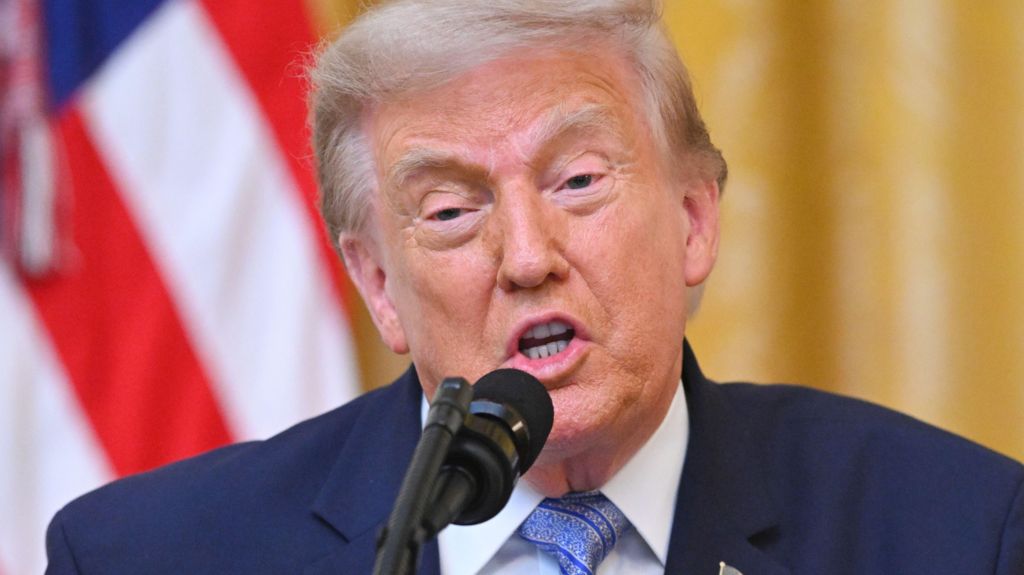
    In a primetime televised address from the White House Thursday, former President and 2024 presidential candidate Donald Trump reiterated a series of unproven allegations that China interfered in the 2020 U.S. presidential election and claimed there are “shocking vulnerabilities” in the nation’s voting infrastructure. The address came three months ahead of November’s midterm elections that will determine congressional control for the remainder of his current term.

    During the 30-minute speech, delivered to an audience of senior administration members with no opportunity for press questioning, Trump claimed he had declassified hundreds of intelligence documents to back up his assertion that Beijing sought to tilt the 2020 election outcome toward Joe Biden, who ultimately defeated Trump in the contest. Trump also claimed that China had illegally obtained 220 million voter records containing sensitive personal information, alleging that voter data across 18 U.S. states had been “bought, stolen or hacked by China.” He further accused officials who had uncovered this alleged activity of failing to alert executive branch leaders or members of Congress. At no point during the address did Trump present tangible evidence showing China used the purloined data to manipulate voting systems or alter election results.

    These claims directly contradict long-standing conclusions from the entire U.S. intelligence community. A 2021 declassified assessment from the U.S. National Intelligence Council stated with high confidence that China did not engage in any interference efforts targeting the 2020 presidential election, and only considered but ultimately rejected influence operations designed to change the vote outcome. The report noted the decision stemmed from China’s calculation that neither candidate’s victory offered enough strategic benefit to justify the risk of major diplomatic backlash if the interference was discovered.

    In a statement provided to Reuters following the speech, the Chinese Embassy in Washington D.C. rejected all allegations, confirming that Beijing “has never and will never interfere in the presidential elections” of the United States. The BBC has also reached out to China’s Ministry of Foreign Affairs for additional comment, and has not yet received a response.

    Domestically, the speech drew immediate sharp pushback from Democratic leaders, who argue Trump is deliberately spreading misinformation to erode public trust in the upcoming midterm elections ahead of voting. “Let’s be clear – in America, voters choose their leaders, not the other way around,” Senate Majority Leader Chuck Schumer wrote on social media immediately after the address. “Democrats will fight like hell to make sure every American voter can cast their ballot freely, without obstruction or interference from Donald Trump.”

    Former Vice President Kamala Harris echoed this criticism in a post on X ahead of the speech, arguing that Trump’s goal is to suppress turnout among opposition voters. “The president is scared of your power, and he wants you to believe your vote does not matter,” she wrote. “He wants you to lose confidence in our electoral system so you stay home this November. He knows how discontent the American people are, and he wants to make sure that you do not vote.”

    Beyond his China allegations, Trump expanded his claims of voting system vulnerability, asserting that widely used U.S. voting machines are “extremely exposed” to tampering by foreign adversaries including Russia, China, and Iran. While gaps and weaknesses in U.S. election infrastructure have been well documented by independent experts and government auditors, many vulnerabilities were addressed after the 2016 presidential election, when U.S. intelligence confirmed Russia carried out a large-scale meddling campaign including hacking, social media disinformation, and funding for grassroots political activity.

    Trump also repeated unproven claims of domestic voter fraud: he alleged that Michigan law enforcement uncovered a voter registration fraud scheme linked to a Democratic-aligned organization, but that the FBI blocked investigators from acting before the statute of limitations expired. Calling the activity “pay, play and cheat,” Trump again offered no evidence that any vote totals were altered or any voting machines were compromised. He also claimed the Department of Homeland Security has identified 278,000 non-citizens registered to vote, but did not provide data showing any of these individuals actually cast ballots or affected the result of any election.

    To address the purported flaws he outlined, Trump used his closing remarks to renew calls for Congress to pass the SAVE America Act, a bill that would ban most forms of mail-in voting, require documentary proof of citizenship to register to vote, and mandate photo identification to cast a ballot. The legislation has been stalled in the evenly divided Senate for months, and Trump’s push for passage is widely expected to fail unless Republican lawmakers agree to overhaul long-standing Senate procedural rules that currently require a 60-vote supermajority to advance most legislation, a step Republican leadership has so far rejected. The address comes as a new Washington Post-Ipsos poll shows Trump’s national approval rating has fallen to 37%, driven largely by widespread public pessimism over rising cost of living and the ongoing conflict with Iran.

    Political analysts note the speech does little to ease Democratic fears that Trump will continue to question election legitimacy ahead of 2028’s presidential contest, should he choose to run for reelection. The ongoing partisan fight over election security has already become one of the defining issues of the 2024 midterm campaign cycle.

  • Saudi Arabia mulls military escalation in response to Houthi threats

    Saudi Arabia mulls military escalation in response to Houthi threats

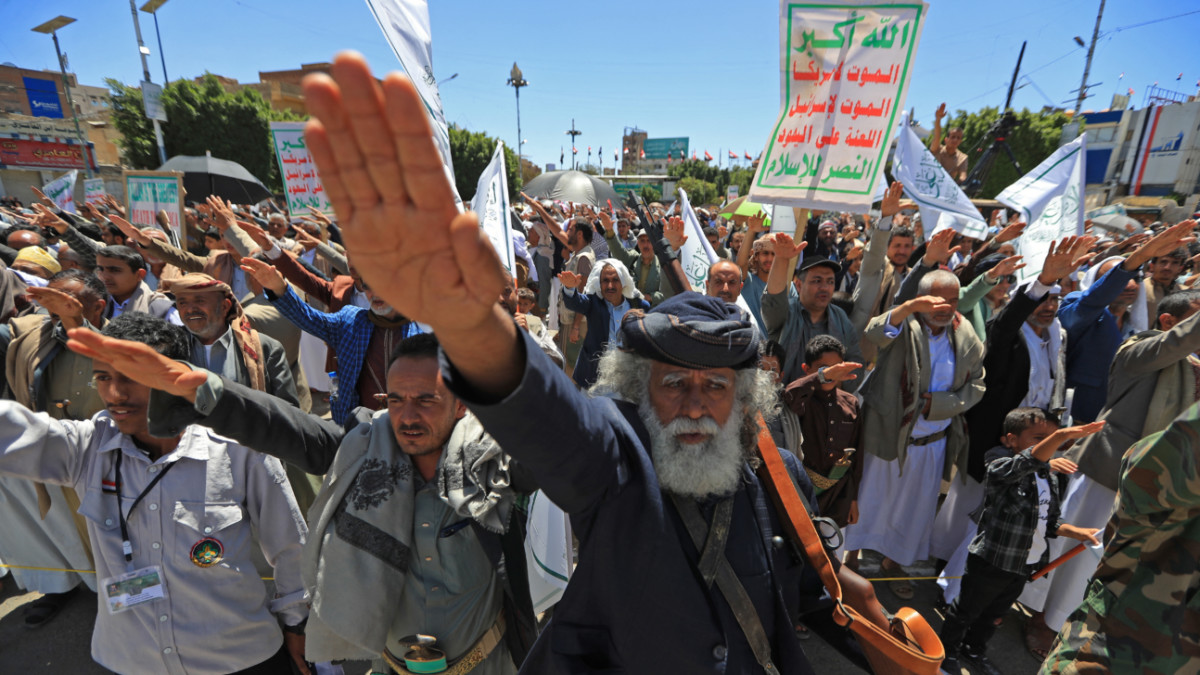
    Tensions are rapidly building across the Arabian Peninsula, as escalating threats from Yemen’s Houthi movement have pushed Saudi Arabia into internal deliberations over how to respond – a decision that carries the potential to reignite full-scale war in Yemen and send shockwaves through global energy markets. Multiple U.S. and regional sources familiar with internal discussions have confirmed to Middle East Eye that Saudi Defense Minister Khalid bin Salman has signaled that the U.S. has granted Riyadh flexibility to launch offensive strikes against Houthi positions, though the kingdom’s top leadership has yet to reach a final decision on the course of action.

    Diplomatic insiders note that these ongoing talks have also exposed visible rifts within the Saudi royal court over the appropriate response to rising Houthi aggression, at a time when broader military conflict between the U.S. and Iran has already pushed regional tensions to a 40-year high. The fragile four-year informal truce between Saudi Arabia and the Houthis, which grew out of an expired UN-brokered ceasefire, was first breached earlier this month amid a highly contentious dispute over an unscheduled flight landing at Sanaa International Airport.

    According to U.S. and regional intelligence sources cited by MEE, the inbound flight carried Lebanese, Iranian, Syrian, and Iraqi military specialists with expertise in drone and missile technology, while the outbound flight was set to transport senior Houthi political figures and militia members bound for military training in Iran. The Houthi movement quickly accused Saudi Arabia of launching an airstrike on Sanaa airport to block the flight’s departure, a claim that Riyadh has not formally addressed.

    This dispute shattered the unspoken rules that had kept the informal truce intact for years: for the duration of the expired UN ceasefire, all commercial and official flights to Yemen were restricted to routes originating in Amman, Jordan, and Cairo, Egypt. In retaliation for the alleged airport strike, the Houthis launched a coordinated barrage of missiles and drones targeting the southwestern Saudi city of Abha earlier this week, marking one of the largest direct attacks on Saudi territory since the 2025 truce went into effect.

    Houthi leader Abdul Malik al-Houthi doubled down on threats against the kingdom in a televised address Thursday, explicitly warning that all Saudi oil infrastructure and critical national installations would become legitimate military targets if Riyadh resumes offensive operations in Yemen. “Airports for airports, ports for ports, and a blockade for a blockade,” al-Houthi declared, drawing a clear line in the sand ahead of any Saudi military move.

    For Saudi Arabia, any decision to return to full-scale conflict carries massive, far-reaching risks. A resumption of major fighting would not only deepen what is already the world’s worst humanitarian catastrophe in Yemen – where more than 21 million people rely on aid to survive – but also threaten to disrupt critical energy shipping routes that are central to the Saudi and global economy. After Iran began asserting increased control over the Strait of Hormuz amid the ongoing U.S.-Iran war, the Red Sea has become the primary export artery for Saudi crude, with roughly 4.5 million barrels of oil per day moving through the waterway via the kingdom’s East-West Pipeline.

    Yemen experts warn that Riyadh faces a no-win dilemma regardless of the path it chooses. “I’d hate to be a Saudi today. There is no easy solution to Yemen,” said Mohammed al-Basha, a Washington-based Yemen analyst. “A peace deal [with the Houthis] would mean billions of dollars in reparations, while a return to war has 50-50 odds of a Saudi victory.”

    The current crisis grows out of a long-stalemated “no war, no peace” dynamic that has persisted since the 2025 truce halted large-scale Saudi-Houthi fighting at sea. The Houthis had paused major attacks on global commercial shipping in the Red Sea that they launched in October 2023 in solidarity with Palestinians in Gaza, a move that won the group widespread support across the Arab and Muslim world. After the U.S. launched a large-scale bombing campaign against the Houthis in early 2025, then-President Donald Trump halted the strikes ahead of a Gulf visit following extensive lobbying from Saudi Arabia, leading to the May 2025 maritime truce that has held until now.

    Though the Houthis have not formally joined the ongoing war between the U.S., Israel and Iran that erupted in February 2025, U.S. and Gulf officials tell MEE they believe the group has carried out multiple limited land strikes against Saudi targets in recent weeks. Independent Yemen analyst Ibrahim Jalal notes that the long-expired UN ceasefire framework has failed to create any path toward a permanent political settlement, leaving the door open for steady escalation. “The no war, no peace stalemate has not produced any outcome closer to a political settlement,” Jalal said. “The Houthis’ anti-Saudi rhetoric has also flared up.”

    As tensions rise, Saudi Arabia has moved quickly to shore up military and diplomatic support from Washington. On Wednesday, U.S. Central Command Deputy Commander Lieutenant General Patrick Frank met with Saudi Chief of the General Staff First Lieutenant General Fayyad al-Ruwaili in Riyadh to discuss regional security. The U.S. State Department also announced Wednesday that it had approved a major arms deal to sell 20,000 Advanced Precision Kill Weapon Systems to Saudi Arabia, a move widely seen as a show of support ahead of any potential military action.

    Internationally, key partners have already begun weighing in: Pakistan, which holds a mutual defense treaty with Saudi Arabia while maintaining cordial diplomatic ties with Iran, issued a public warning to the Houthis Thursday not to launch further attacks on the kingdom, according to Reuters reporting.

    Most analysts agree that the recent tit-for-tat strikes have been carefully calibrated by both sides, with few expecting an immediate closure of the strategically vital Bab el-Mandeb Strait, the narrow waterway connecting the Red Sea to the Gulf of Aden that carries roughly 10 percent of global trade. Basha argues that the Houthi movement has no incentive to close the strait, as that would draw direct U.S. military intervention into the conflict – an outcome the group wants to avoid. “Iran and Israel media leaks are emphasising the Bab el-Mandeb to try to bring the US into this fight, but the Houthis don’t want that,” Basha said. “Trump also has enough problems in the Strait of Hormuz,” he added.

  • More than 500 Rohingya vanished at sea – what happened?

    More than 500 Rohingya vanished at sea – what happened?

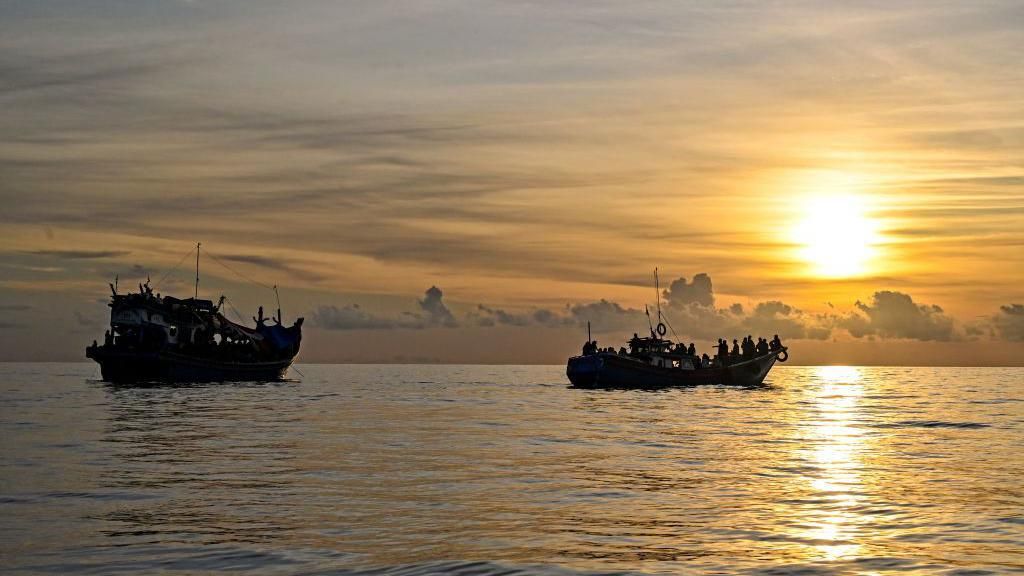
    It has been nearly three weeks since two overcrowded boats carrying 530 Rohingya asylum seekers departed from Myanmar’s Rakhine State on June 29, and no contact has been made with anyone on board. Advocates working on Rohingya rights warn the entire group is likely lost, with the dangerous monsoon season and the unseaworthy condition of the converted vessels making mass casualties almost inevitable.

    The two boats, modified old fishing trawlers packed far past their safe capacity to carry as many people as possible, set out amid already rough monsoon seas and carried unreliable engines. Roughly half of those on board are believed to be women and children, and Chris Lewa, director of the Arakan Project — a group that advocates for Rohingya rights — says it is highly probable both vessels capsized, with few to no survivors. Due to the ongoing conflict that has crippled communications across Rakhine State, a full accounting of what happened may never be possible.

    Rakhine State has been mired in active conflict for years, with the Arakan Army insurgent group pushing Myanmar’s military out of most of the territory and laying siege to the junta’s last major stronghold in the state capital Sittwe, which is only accessible by air and sea. Nearly all telecommunications networks across the region have been cut off, leaving advocates like Lewa without direct access to on-the-ground sources in Sittwe and Sin Tet Maw, the Arakan Army-controlled departure point for the missing boats.

    Through a network of secondary contacts and scattered information, Lewa has confirmed the two boats departed hours apart on June 29, bound for southern Myanmar, where passengers were to be transferred to smaller vessels before moving overland through forest transit camps, across Thailand, and to the Malaysian border. Under normal smuggling routes, families would expect to hear from their loved ones within 7 to 10 days; after nearly three weeks of total silence, fears for their safety have grown unavoidable. So far, authorities in Bangladesh have recovered one woman’s body washed ashore, and local fishermen found multiple additional bodies off the coast between Myanmar’s Irrawaddy Delta and Mon State nine days after the boats’ departure. These findings align with Lewa’s assessment that the first boat capsized just hours after leaving Sin Tet Maw, while the second sank several days into its southeast journey.

    The crisis of the missing boats is rooted in the decades of systemic persecution and escalating instability that have left millions of Rohingya with no viable path to safety. More than one million Rohingya currently live in overcrowded, underfunded camps in southern Bangladesh, where aid resources have dwindled, formal employment is almost non-existent, and transnational smuggling networks operate with impunity. An additional 600,000 Rohingya remain trapped in Rakhine State: one quarter are confined to squalid internal displacement camps, while the rest eke out a precarious existence in communities caught between warring factions. Myanmar’s military junta has increasingly forced Rohingya men into conscription, while the Arakan Army — which claims to represent ethnic Rakhine people — has been repeatedly accused of severe human rights violations against the Rohingya population it distrusts. With prospects for safety and dignity at home nonexistent, fleeing to neighboring countries is the only option many see for survival.

    Malaysia, which already hosts 200,000 Rohingya, has become the most popular destination for asylum seekers, creating a lucrative, brutal trade for transnational human smuggling rings with established networks across Bangladesh, Myanmar, Thailand, Malaysia, and Indonesia. Smugglers’ business model relies on packing as many people as possible into inadequate vessels, moving them undetected to Malaysia, and collecting fees ranging from $2,000 to $4,000 per person. Families that cannot pay face having their relatives detained, beaten, or even killed, with graphic videos of abuse sent to pressure relatives into raising the required funds.

    Smuggling routes have shifted repeatedly over the past decade in response to regional enforcement efforts. In 2015, after mass graves of trafficking victims were discovered in primitive jungle transit camps, the Thai government cracked down on overland smuggling routes, closing camps in mangrove swamps and rubber plantations where captives were held until ransoms were paid. This crackdown forced many smuggling operations to redirect boats toward Aceh, Indonesia, where local fishing communities initially welcomed the Rohingya as fellow persecuted Muslims. That welcome has since eroded, with anti-Rohingya social media campaigns spreading hostility across the country in recent years.

    Direct sea routes to Malaysia remain largely blocked: the Malaysian Navy regularly intercepts refugee boats and pushes them back into international waters, and local fishing communities refuse to assist smuggling operations. As a result, smuggling networks have reverted to using Thailand as their primary transit hub. Today, large mother vessels pick up Rohingya off the coasts of Rakhine or Bangladesh’s Teknaf, staying only long enough to unload passengers before moving on to avoid detection by authorities from both countries. Smugglers use satellite phones to coordinate with local networks, paying fishermen to transfer passengers to smaller craft that land on southern Thai or eastern Sumatran coasts. Once full payment is received, refugees are moved secretly overland to Malaysia. Other groups are dropped on southern Myanmar’s coast, then transported overland through border crossings to Thailand and on to the Malaysian border. For Rohingya fleeing Rakhine State, however, every escape route begins with a dangerous open sea crossing, since all land routes out of the conflict-torn region remain closed.

    The United Nations High Commissioner for Refugees estimates that as of mid-2026, at least 4,700 Rohingya have fled the region this year alone on 74 boats, and Lewa estimates the total number of departures since September 2025 may be as high as 10,000 — a sharp increase from previous years, directly driven by the worsening intolerable conditions facing the community in both Rakhine and Bangladesh. The UN has called for the creation of formal safe passage routes for Rohingya seeking asylum, but no country in the region has been willing to accept more refugees or facilitate safer passage, leaving thousands of desperate people to the mercy of brutal smuggling networks and dangerous monsoon seas.

  • China’s Xi says AI should not be dominated by one country

    China’s Xi says AI should not be dominated by one country

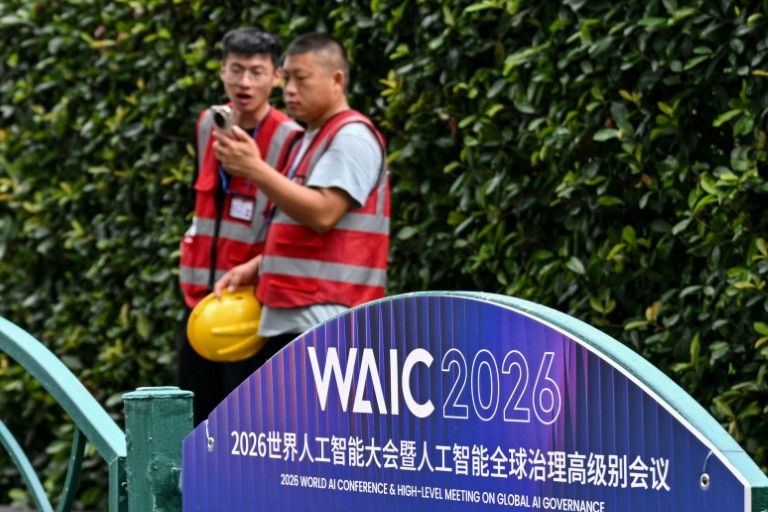
    Against a backdrop of growing geopolitical friction over cutting-edge artificial intelligence development, Chinese President Xi Jinping delivered a landmark call for inclusive global collaboration Friday, opening the annual World Artificial Intelligence Conference (WAIC) in Shanghai with a clear rejection of one-nation dominance in the fast-growing sector.

    In his opening address, Xi framed AI development as a global collective endeavor rather than a competition for unilateral supremacy. “AI development should not be a solo performance by a single country, but a symphony of international cooperation,” he stated. He also pushed back against growing unilateral restrictions on AI technology trade, noting: “We should jointly oppose overstretching the national security concept in the field of AI or placing one country’s security over that of others.”

    The remarks come amid rising tensions: the U.S. and European Union have introduced sweeping restrictions on Chinese technology imports rooted in national security claims, while internal debates within the U.S. over government access to cutting-edge AI models have sparked new uncertainty about global technology governance. Beyond geopolitical disputes, the rapid expansion of AI capabilities has triggered widespread global concern over unregulated use, including potential deployment in military combat and exploitation by malicious actors such as hackers and terrorists. To address these risks, Xi called for a globally coordinated governance framework centered on human oversight, outlining a plan to establish unified laws, regulatory standards, technological monitoring, early warning systems, and emergency response mechanisms to “ensure AI is always under human control” through a “people-centric” approach.

    One day ahead of the conference opening, Chinese Foreign Minister Wang Yi joined representatives from 29 countries including Russia, Pakistan, and Indonesia to sign an agreement launching a new intergovernmental AI cooperation body. Headquartered in Shanghai, the World Artificial Intelligence Cooperation Organization will facilitate cross-border consultation and collaboration to advance the “healthy and orderly” growth of global AI, according to Chinese state media. The four-day WAIC has drawn more than 1,000 Chinese technology firms alongside senior officials, leading researchers, and industry leaders from across the globe, with United Nations Secretary-General António Guterres among the high-profile international attendees. More than 3,000 AI-powered products are on display at the event, ranging from high-performance semiconductor systems designed for AI computing to consumer smartphones equipped with autonomous AI app operation capabilities.

    Industry analysts describe WAIC as the most authoritative annual event for tracking the trajectory of China’s rapidly expanding AI industry. While the U.S. still holds a clear lead in advanced chip manufacturing, frontier computing infrastructure, and capital-intensive cutting-edge model development, China has emerged as its closest and most comprehensive global competitor, noted Poe Zhao, an analyst with independent technology publication Hello China Tech.

    Chinese AI capabilities have advanced at a striking pace in recent years. On the opening day of WAIC, Beijing-based AI startup Moonshot AI unveiled its new flagship model Kimi K3, which industry reports indicate matches or nearly matches the performance of many top-tier U.S. AI models. Other major launches at this year’s conference include MiniMax’s new M3 generative model, the first mass-produced consumer smartphone integrated with a fully autonomous AI agent, and Huawei’s Atlas 950 “supernode,” a purpose-built AI architecture optimized for large-scale machine learning and complex reasoning.

    Zhao explained that this year’s conference reflects a key industry shift in China: moving beyond developing standalone large language models to building fully integrated AI systems that can be deployed at scale across everyday consumer and industrial use cases. AI agents—autonomous tools that can hold natural conversations, manage third-party software, and complete complex multi-step tasks for users—have emerged as a central focus of the 2025 event.

    AI has become a core strategic priority of Chinese industrial policy, backed by billions in state investment designed to build a fully self-sufficient domestic AI ecosystem spanning from raw chip production to end consumer applications. The scale of China’s AI growth is unprecedented: state media reports that daily domestic consumption of AI “tokens”—the standard industry unit for measuring AI compute usage—has increased 1,000-fold over the past two years. Official projections value China’s domestic AI market at 1.2 trillion yuan ($177 billion) in 2025, with forecast annual growth exceeding 30 percent. Data from the World Intellectual Property Organisation (WIPO) shows China now leads the world in generative AI patent filings, with more than 43,000 new filings recorded between 2024 and 2025, more than any other nation.

    A growing number of global corporations are also turning to Chinese AI models, drawn to their competitive performance, lower licensing costs, and flexible open-source customization options that stand in contrast to the closed, proprietary systems offered by leading U.S. AI developers such as OpenAI and Anthropic. Global industrial giant Siemens became one of the highest-profile international adopters of Chinese open-source AI in 2025, signaling growing global demand for alternative AI development pathways outside of U.S. control.

  • Australia ‘deeply frustrated’ over Laos methanol poisoning charges

    Australia ‘deeply frustrated’ over Laos methanol poisoning charges

    A cross-border diplomatic dispute has erupted between Australia and Laos over the planned legal outcome of a 2024 toxic alcohol tragedy that killed six foreign tourists, including two 19-year-old Australian travelers. The fatal incident unfolded in November 2024 at the Nana Backpacker Hostel in Vang Vieng, a popular Southeast Asian backpacking destination. Six guests — Australians Bianca Jones and Holly Morton-Bowles, alongside victims from the United Kingdom, the United States, and Denmark — died after drinking complimentary hostels shots laced with illegal methanol, a toxic industrial solvent commonly found in paint thinner that is often cut into illicit alcohol to reduce production costs.

    Months after the tragedy, new reports of expected extraordinarily lenient charges against those responsible have triggered sharp condemnation from the Australian government. Australian media first reported Thursday that Lao authorities had notified families of the Australian victims that the most severe charges pending against the accused carry a combined maximum penalty of just one year of imprisonment and a fine of roughly A$1,600, equal to approximately $1,100 USD or £829 GBP. This comes months after 10 people linked to the hostel already received suspended sentences and small fines of just $185 USD each on charges of destroying evidence — a outcome the brother of one victim previously labeled an “absolute joke”.

    In an official statement, the Australian government expressed it is “deeply frustrated and bitterly disappointed” by Laos’ failure to pursue more severe charges that match the scale of the tragedy. Foreign Minister Penny Wong has already summoned Laos’ ambassador to Canberra to relay Australia’s formal objection, and the government has appointed special envoy Pablo Kang to travel to Laos on Friday to explore all possible avenues for action and deliver Australia’s stance directly to local authorities. Wong also confirmed she will raise the issue directly with her Lao counterpart during an upcoming ASEAN foreign ministers meeting in Manila next week.

    “This devastating news will only add to the immense pain and grief suffered by the families and friends of Holly and Bianca,” the Australian Foreign Ministry statement said. “We have consistently made clear our expectations that charges should reflect the gravity of the tragedy. This includes the Prime Minister and I expressing these expectations directly to our respective counterparts.”

    Family members of the Australian victims have spoken out publicly to express their overwhelming anger at the planned sentence. “Feeling furious would be an understatement,” Bianca Jones’ father Mark Jones told Australian public broadcaster ABC. “To think that the lives of my daughter, and another five people, are worth less than a year in prison and less than $1,600. I’m calling on the Australian government to do all they can to intervene. For Prime Minister Albanese to reach out to his counterpart in Laos to insist that some form of genuine justice is served for the deaths of two Australian citizens.” Holly Morton-Bowles’ father Shaun Bowles added that the expected lenient charges were “very hard to comprehend”.

    As of Friday morning, Lao authorities have not officially confirmed the pending charges, though the BBC understands a public press conference is scheduled for later the same day to address the case. The Lao embassy in Canberra has also been contacted by media for comment, with no response issued as of yet.

  • China hits out at British Steel nationalisation

    China hits out at British Steel nationalisation

    A major diplomatic dispute between China and the United Kingdom has erupted after London moved to fully nationalise loss-making British Steel, a move Beijing has condemned as an unfair seizure of private property.

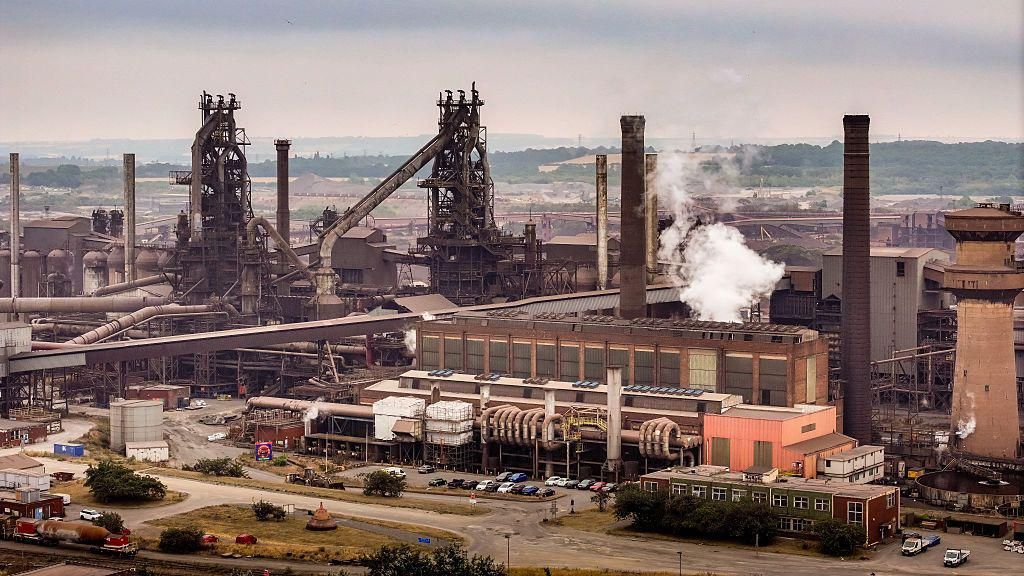
    Last year, the UK government already took over day-to-day operational control of British Steel’s primary facility in Scunthorpe, while formal ownership remained with China’s Jingye Group. That arrangement severely constrained Whitehall’s ability to make long-term strategic decisions about the plant’s future. This deadlock broke this week, when Parliament passed emergency legislation on Wednesday authorizing public takeover of steel assets that pass a public interest test. On Thursday, Downing Street formally executed the nationalisation, arguing that bringing the struggling steelmaker into public hands is the only way to protect thousands of domestic jobs and preserve what officials call a “vital national capability” for the UK’s industrial base.

    Beijing immediately pushed back against the decision. In a formal statement released Friday, China’s Ministry of Commerce said the country “firmly opposes and is strongly dissatisfied with the British government’s decision.” The ministry accused the UK of disregarding the tangible economic and social contributions Jingye has made to the UK since acquiring the steelmaker, adding that the forced nationalisation carried out under the banner of national security “seriously infringed upon Jingye’s legitimate rights and interests and severely undermined the confidence of Chinese companies investing in the UK.” Beijing has called on London to uphold its binding obligations under the China-UK Bilateral Investment Treaty, and noted that it will closely track developments while supporting Jingye in pursuing all legal avenues to defend its interests. No specific countermeasures were outlined in the statement.

    Jingye, which has confirmed the company was losing approximately £700,000 per day prior to the full takeover, has already stated it intends to pursue financial compensation for the nationalisation. The BBC has so far been unable to secure an on-the-record response from Jingye’s leadership regarding Thursday’s formal announcement.

    For the UK government, the nationalisation resolves the operational uncertainty that has hung over the Scunthorpe plant for months. With full public ownership, officials now have full authority to map out the facility’s future while keeping its critical blast furnaces operational. However, the long-term financial burden is substantial: the UK’s National Audit Office estimated in March that the Scunthorpe works already costs public coffers roughly £1.3 million per day, a figure Business Secretary Peter Kyle acknowledged the government would cover “for the immediate future.” Analysts broadly agree that Downing Street has no intention of retaining permanent ownership of the loss-making business.

    The timing of the dispute is particularly awkward for UK politics, as incoming Prime Minister Andy Burnham is set to take office on Monday. Burnham will now be forced to navigate a delicate balancing act: managing the fallout from the nationalisation while preserving the economic benefits that come from strong trade and investment ties with the world’s second-largest economy. The row threatens to create an early foreign policy strain on the new premiership, adding another layer of complexity to already fragile Sino-British relations.

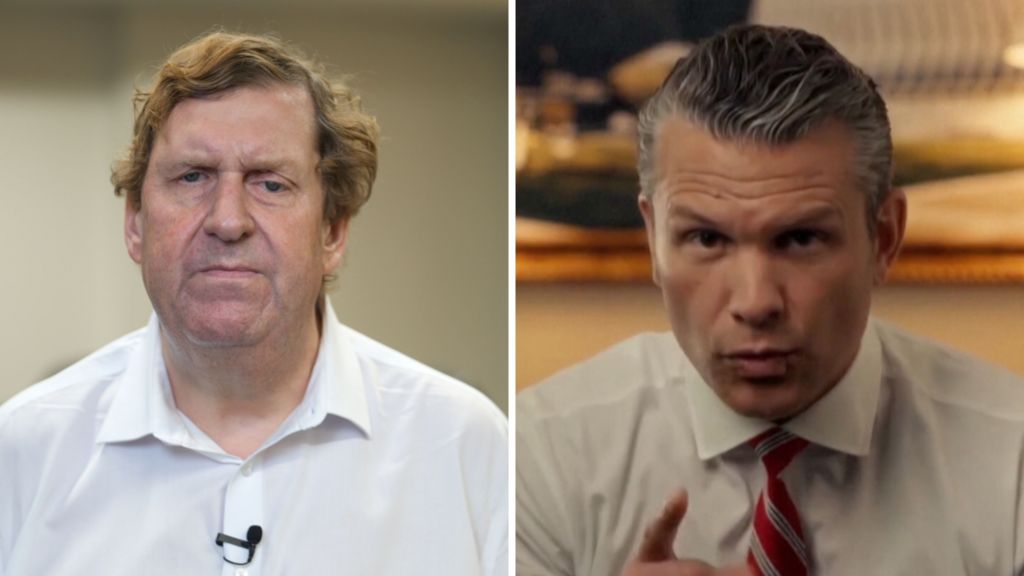
  • How testosterone testing will work in Hegseth’s ‘manly’ military

    How testosterone testing will work in Hegseth’s ‘manly’ military

    In a high-profile policy shift tied to his vision of a more “manly” fighting force, United States Defense Secretary Pete Hegseth has unveiled plans for mandatory testosterone screenings for all active-duty military personnel aged 30 and older. The new requirement marks a notable departure from previous military health protocols, framing physical fitness and hormonal balance as central to operational readiness aligned with Hegseth’s public emphasis on traditional masculine standards within the armed services. While details around implementation—including how results will be used, whether screening will be integrated into regular physical examinations, and what accommodations will be made for personnel with low testosterone readings—are still emerging, the announcement has already drawn widespread attention for its intersection of health policy and cultural ideology within the US Department of Defense. The policy is set to roll out across all branches of the military in the coming months, with officials expected to release additional guidance on logistics and privacy protections for service members in the near future.

  • Philippines condemns Chinese media depicting it as monkey in AI video

    Philippines condemns Chinese media depicting it as monkey in AI video

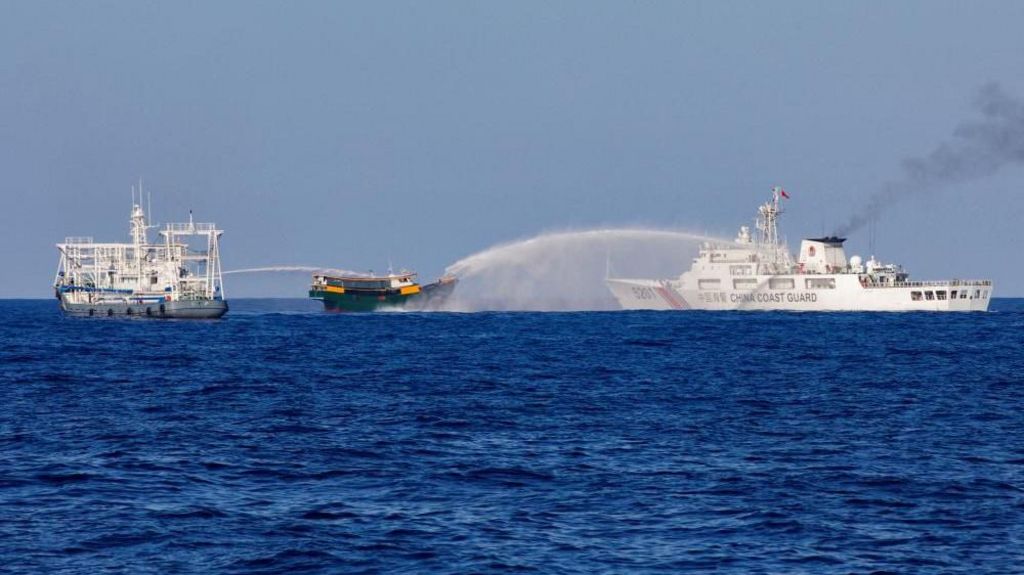
    A decade after a landmark international arbitration ruling on South China Sea territorial claims, tensions between the Philippines and China have erupted into a new diplomatic row, sparked by an offensive AI-generated cartoon published by China’s state-run outlet China Daily. The controversial animation, posted to the outlet’s public Facebook page on July 10, depicts the Philippines as a cowering monkey wearing a national flag shirt, shoved onto a rickety boat-based karaoke stage by large arms emblazoned with the flags of the United States and Japan. After being berated for singing an incorrect tune, the monkey pulls out a sign referencing the 2016 South China Sea arbitration award before being thrown into the sea and struck by a water cannon — a deliberate reference to repeated encounters between Chinese and Philippine vessels in the disputed waters.

    Manila’s leadership has roundly condemned the imagery, labeling it dehumanizing, racist, and unacceptable in civil diplomatic discourse. In an official statement, the Philippine Department of Foreign Affairs argued that political and legal disagreements between the two nations do not justify the use of derogatory, dehumanizing content that violates basic norms of state-to-state communication. The ministry demanded immediate removal of the video, warning that the offensive imagery and accompanying misinformation only deepen mutual distrust between the two neighbors. The Philippine defense ministry went further, describing the clip as contemptible propaganda that exposes what it called the moral and intellectual bankruptcy of China’s official propaganda apparatus. Defense Secretary Gilbert Teodoro, who was personally sanctioned with a travel ban by Beijing earlier this year, called the pattern of aggressive messaging impossible to ignore, referencing what he described as erratic behavior from Chinese authorities in recent months. As of press time, the video remains publicly accessible on China Daily’s Facebook page, and Chinese official bodies have not issued any response to Manila’s formal rebuke.

    This latest incident comes amid a steady escalation of maritime frictions between Beijing and Manila over the past decade, rooted in overlapping territorial claims to two key contested features: the Spratly Islands and Scarborough Shoal, which China refers to as Huangyan Island. Geographically, Scarborough Shoal sits just 160 kilometers off the coast of the Philippines, more than 800 kilometers closer to Manila than to mainland China. In recent years, Chinese Coast Guard vessels have regularly deployed high-pressure water cannons against Philippine civilian and military vessels operating near the shoal, resulting in vessel damage and crew injuries. Just last June, tensions flared twice in quick succession: Beijing installed a floating barrier across the entrance to Scarborough Shoal’s lagoon, which was removed only after Manila filed a formal diplomatic protest, and later announced a travel ban barring Teodoro and his immediate family from entering mainland China, Hong Kong, and Macau.

    The current row falls on the ten-year anniversary of the 2016 Permanent Court of Arbitration ruling at The Hague, which sided with Manila in a case brought by the Philippines, concluding that China’s sweeping nine-dash line claims across most of the South China Sea have no legal foundation under international law. Beijing has consistently rejected the ruling, refusing to recognize the tribunal’s jurisdiction over the territorial dispute. In the caption accompanying its controversial video, China Daily reiterated Beijing’s long-held position, framing the arbitration award as not a tool for peace but rather a deliberate pretext for confrontation framed as international law. The caption repeated Beijing’s narrative that the Philippine government is allowing itself to be used as a pawn in the geopolitical strategies of outside powers, specifically the US and Japan, by stirring up tensions in the disputed waterway.

    The monkey cartoon is not an isolated incident: it is the latest in a series of satirical, mocking posts published by China Daily on its Facebook page in recent weeks targeting Philippine actions in the South China Sea. Previous posts in the series have depicted the Philippines as a clown and a snake, among other unflattering animal and character portrayals. This escalation in rhetorical and symbolic aggression comes as the Philippines has deepened its security cooperation with the United States and other regional allies in recent years, stepping up its own patrols and resistance to Chinese territorial assertions in the contested areas.