作者: admin

  • US Minneapolis shooting continues to fuel debate

    US Minneapolis shooting continues to fuel debate

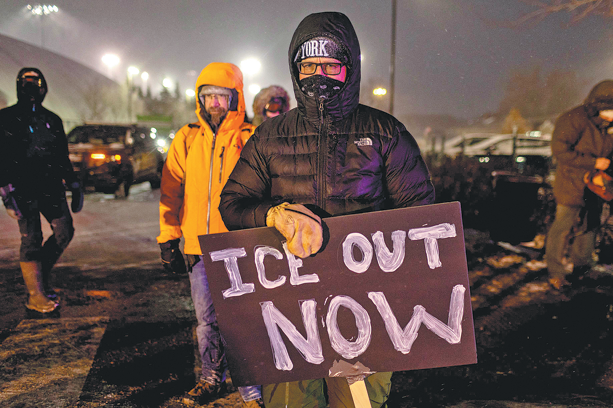
    MINNEAPOLIS — A fatal shooting involving a U.S. Immigration and Customs Enforcement (ICE) agent has ignited a severe constitutional crisis in Minneapolis, exposing deep fractures between federal authorities and local governance. The January 7th incident, which resulted in the death of 37-year-old American citizen Renee Good during an enforcement operation, has triggered widespread protests and escalated into a nationwide debate over immigration enforcement tactics and federal overreach.

    The situation deteriorated further when another ICE agent shot a Venezuelan immigrant in the leg exactly one week later in the same vicinity, amplifying public outrage and street demonstrations. Minneapolis Mayor Jacob Frey characterized the escalating tensions as “not sustainable,” demanding the immediate withdrawal of ICE personnel from the city and state.

    The Trump administration has deployed nearly 3,000 additional ICE and Border Patrol agents to the Minneapolis area following allegations of welfare fraud involving immigrants. This substantial federal presence has created a volatile standoff with Minnesota Governor Tim Walz joining Mayor Frey in condemning the deployment as unconstitutional and provocative.

    Adding to the extraordinary circumstances, the Pentagon has placed approximately 1,500 active-duty soldiers from Alaska on standby for potential deployment to Minnesota. Defense officials, speaking anonymously to The Associated Press, indicated these troops specializing in arctic operations could be mobilized if President Trump invokes the Insurrection Act—a rare 19th-century law permitting military intervention in domestic affairs.

    The shooting itself has become a subject of sharply conflicting narratives. Homeland Security Secretary Kristi Noem, alongside President Trump and Vice-President JD Vance, defended the ICE agent’s actions, characterizing Good’s alleged attempt to run over officers as “an act of domestic terrorism.” Conversely, Mayor Frey maintains that video evidence shows Good posed no legitimate threat and that the agent acted recklessly.

    Policy experts warn this confrontation represents broader national tensions. Darrell West, a senior fellow at the Brookings Institution, noted that graphic video footage of the shooting has galvanized protesters across America who perceive it as a gross injustice. “ICE agents seem less well-trained than police officers and don’t have the same ability to de-escalate personal confrontations,” West observed, adding that many fear similar incidents could occur elsewhere.

    Former Iowa House Representative Gregory Cusack attributed the crisis to “the predictable outcome of the militarization of police forces, the hiring of masked thugs armed to the teeth, and the ugly branding of anyone who disagrees with this administration as ‘the enemy’.”

    Christopher Galdieri, a political science professor at Saint Anselm College, expressed concern that federal authorities show no indications of reconsidering their approach: “ICE, DHS, and the White House probably see the chaos and protests as beneficial to them.”

    As protests continue and federal presence expands, Minneapolis has become the epicenter of a national confrontation that tests the boundaries between federal power and local autonomy, with implications that could reshape immigration enforcement and police practices across the United States.

  • Tokyo’s security push targeting Beijing undermines regional stability: Experts

    Tokyo’s security push targeting Beijing undermines regional stability: Experts

    Japan’s recent security agreements with the Philippines have drawn sharp criticism from international experts who warn these moves threaten to destabilize the Asia-Pacific region. The newly signed Acquisition and Cross-Servicing Agreement enables mutual logistical support between Japanese and Philippine armed forces, following the earlier implementation of the Reciprocal Access Agreement that permits troop deployments between the two nations.

    Defense analysts characterize these developments as part of Japan’s broader strategy to contain China through enhanced military partnerships. Japanese Defense Minister Shinjiro Koizumi recently emphasized strengthened defense cooperation with the United States, specifically citing China’s “increasingly assertive actions” as justification for expanded deterrence capabilities in southwestern regions including Okinawa.

    Chinese officials have condemned these developments as dangerous steps toward remilitarization. Foreign Ministry spokesman Guo Jiakun stated that Japan shows no intention of moderating its military expansion despite international criticism, instead manufacturing pretexts to advance weapons exports and military buildup. “All peace-loving countries must firmly reject a revival of militarism in Japan,” Guo asserted during a press conference.

    Regional experts express concern that these agreements risk triggering arms races and strategic miscalculations. Dr. Chen Hong of East China Normal University noted that while the Japan-Philippines logistics agreement carries symbolic significance, it institutionalizes military cooperation that could fuel bloc confrontation. The arrangements facilitate crisis coordination but may inadvertently increase the likelihood of unintended escalation.

    International observers suggest Japan is leveraging the “China threat” narrative to justify military spending increases and strategic repositioning. Shakeel Ahmad Ramay of the Asian Institute of Eco-civilization Research notes Japan is constructing a threat narrative while encouraging greater US involvement in regional affairs and courting regional partners like the Philippines to form quasi-alliance networks.

    Experts emphasize that regional stability historically derives from multilateral cooperation through organizations like ASEAN rather than military alliances. Maintaining strategic autonomy and promoting security through dialogue remain essential for preventing the Asia-Pacific from descending into cycles of instability and confrontation.

  • China makes headway in administration of justice in 2025

    China makes headway in administration of justice in 2025

    China’s judicial administration system achieved substantial advancements throughout 2025, marked by a remarkable 33% reduction in administrative inspections targeting businesses, according to the Ministry of Justice’s annual report released Monday.

  • Hong Kong tourist arrivals up 12% in 2025

    Hong Kong tourist arrivals up 12% in 2025

    Hong Kong’s tourism sector demonstrated robust recovery in 2025 with visitor arrivals reaching 49.9 million, marking a substantial 12% year-on-year increase according to official data released by the Hong Kong Tourism Board on January 20, 2026.

    The comprehensive statistics reveal particularly strong performance in December 2025, which saw 4.65 million tourist entries representing a 9% growth compared to the same period in the previous year. The data indicates a balanced recovery across source markets, with mainland Chinese visitors increasing by 11% to 37.8 million, while international arrivals from other global markets surged by 15% to 12.1 million.

    Notably, Japan and Australia emerged as the fastest-growing source markets, contributing significantly to the territory’s tourism rebound. The duration of stay metrics showed encouraging trends, with overnight visitors averaging 3.1 nights per stay. Tourist satisfaction levels reached impressive heights, scoring 8.9 out of 10 for overnight experiences.

    Looking ahead to 2026, Hong Kong tourism authorities are preparing for the Chinese New Year celebrations commencing February 17, featuring traditional attractions including fireworks displays, the International Chinese New Year Night Parade, and special horse racing events designed to attract global visitors.

  • ASEAN won’t endorse election in military-ruled Myanmar, Malaysia says

    ASEAN won’t endorse election in military-ruled Myanmar, Malaysia says

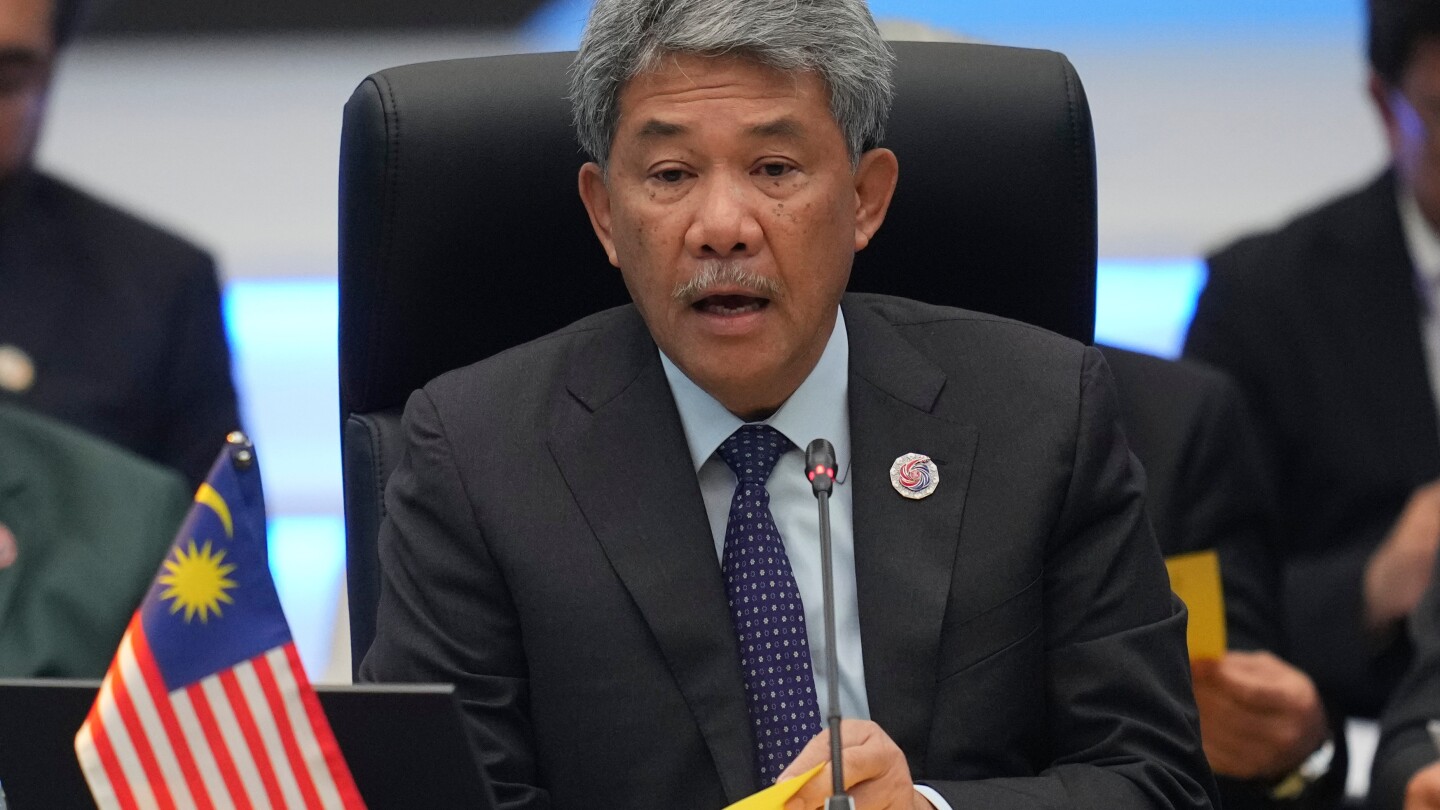
    KUALA LUMPUR, Malaysia — The Association of Southeast Asian Nations (ASEAN) has formally declined to validate recent elections in military-controlled Myanmar, marking a significant diplomatic stance against the ruling junta. Malaysian Foreign Minister Mohamad Hasan confirmed the bloc’s position during a parliamentary session on Tuesday, emphasizing concerns regarding the electoral process’s failure to meet standards of inclusivity and freedom.

    This development follows Myanmar’s two-phase general election—the first since the February 2021 military coup that ousted Aung San Suu Kyi’s civilian government. The takeover ignited widespread civil unrest that has since escalated into full-scale civil conflict. According to human rights organizations and opposition groups, the voting process was systematically engineered to legitimize military authority rather than reflect genuine democratic expression.

    Minister Hasan revealed that ASEAN leaders collectively determined during their October summit not to deploy official observers due to unmet prerequisites for credible elections. While certain member states—including Cambodia and Vietnam—opted to send independent monitors, the bloc itself maintained a unified position of non-participation. “Our decision to abstain from sending observers inherently means we cannot certify the election,” Hasan stated, delivering the first explicit regional declaration rejecting the electoral outcomes.

    The regional body has consistently urged Myanmar’s military leadership to implement an agreed-upon peace roadmap involving violence cessation, humanitarian access, and inclusive political dialogue. Although ASEAN suspended Myanmar’s generals from high-level meetings, internal divisions have hampered cohesive action, with some members advocating engagement while others support stronger pressure tactics.

    Final results for national and regional legislative seats are anticipated later this month, with the military-backed party projected to secure parliamentary dominance.

  • Macao to offer free bus tickets for intl visitors in Hong Kong

    Macao to offer free bus tickets for intl visitors in Hong Kong

    In a strategic move to boost international tourism, Macao’s Government Tourism Office (MGTO) has unveiled a complimentary coach service program for global visitors transiting through Hong Kong. The initiative, launched on January 20, 2026, will remain operational through December 31, 2026, representing a comprehensive year-long hospitality campaign.

    The program establishes a dedicated service counter at Hong Kong International Airport where eligible international passengers can obtain free one-way coach tickets. These coaches will transport visitors directly to Macao via the monumental Hong Kong-Zhuhai-Macao Bridge, creating a seamless travel experience between the two special administrative regions.

    MGTO officials stated this transportation incentive specifically targets the diversification of Macao’s visitor markets. By reducing transportation barriers, the program aims to stimulate international travelers’ interest in extending their stay to include Macao, traditionally overshadowed by Hong Kong’s transit hub status. The tourism office collaborated directly with cross-border bus service operators to ensure operational feasibility and passenger comfort.

    This initiative forms part of Macao’s broader strategy to position itself as more than a gaming destination, showcasing its cultural heritage and tourism attractions to a global audience. The program’s timing during a period of global travel recovery indicates Macao’s proactive approach to tourism market regeneration and competitive positioning in the Asian tourism landscape.

  • Window cleaners’ safety a concern in peak season

    Window cleaners’ safety a concern in peak season

    As China approaches the Spring Festival, traditionally associated with thorough house cleaning to welcome good fortune, the domestic services industry experiences a significant seasonal surge. This annual cleaning ritual has particularly intensified demand for window cleaning specialists, creating both economic opportunities and serious safety concerns for workers operating in high-rise environments.

    Beijing resident Wang Zhaoge, who annually employs cleaners for her 18th-floor apartment, expressed deep apprehension: ‘Watching domestic workers lean precariously from windows without protective equipment is genuinely terrifying. My husband consistently reminds them to prioritize safety, as the visual perspective from our elevation is frankly dizzying.’

    The financial dynamics of this seasonal market reveal interesting patterns. Early bookings typically command rates between 100-300 yuan ($14.30-$43) per hour, while last-minute reservations can nearly double these costs. Wang recalled paying 480 yuan for two hours of service when booking merely two weeks in advance last year, compared to 260 yuan for identical service with more advance planning this season.

    Industry data from platform 58 Daojia indicates a remarkable 200% increase in window cleaning orders during the 2024 pre-festival period, alongside a 40% overall rise in domestic service requests. The platform has not yet released comparable statistics for the current year.

    Legal expert Yao Junchang of Beijing’s W&H Law Firm highlights the complex employment landscape: ‘Labor relationships in this sector remain poorly defined. While some workers maintain formal contracts with service companies, many operate as independent platform registrants or private contractors—the latter group facing the highest risks with minimal protection.’

    Yao emphasized that employers bear responsibility for providing appropriate safety equipment, noting that workplace injuries could potentially involve shared liability among workers, companies, and clients given the elevated risks associated with high-altitude cleaning.

    Recognizing these challenges, seven central government agencies including the Ministry of Human Resources and Social Security jointly issued guidelines in June 2024 promoting industry development through enhanced worker protections. These measures encourage commercial insurance coverage for accidental injuries and employer liability, with local governments offering subsidies to companies investing in such safeguards for their employees.

  • Almost half of Kyiv without heat, power, after Russian attack: govt

    Almost half of Kyiv without heat, power, after Russian attack: govt

    A massive overnight Russian aerial assault has crippled Ukraine’s capital, leaving nearly half of Kyiv’s residential buildings without heating and running water amidst subzero temperatures of -14°C. This latest bombardment represents a severe escalation in Russia’s systematic campaign against Ukrainian energy infrastructure.

    Ukrainian authorities reported the attack involved an extensive barrage of 339 long-range combat drones and 34 missiles targeting energy facilities across multiple regions. Kyiv’s air defense systems engaged throughout the night, with explosions heard across the city as they responded to the incoming threats.

    The aftermath has been devastating. Mayor Vitali Klitschko confirmed approximately 5,635 apartment blocks—roughly half the capital’s residential buildings—were left without heating, primarily affecting structures still recovering from the January 9 attack that marked the most significant strike on Kyiv’s energy grid since the invasion began. Much of the city also lost running water access.

    Tragically, the assault claimed at least one life—a 50-year-old man killed near Kyiv. Additional damage was reported in multiple regions: Rivne faced critical infrastructure damage affecting 10,000 households, Odesa reported drone impacts on residential buildings and energy facilities, while Poltava experienced fires at industrial sites following attacks.

    Ukrainian leadership responded with vehement condemnation. Foreign Minister Andriy Sybiga characterized Putin’s actions as ‘genocidal war against women, children and elderly’ and urgently appealed for enhanced air defense support from allies. President Volodymyr Zelensky noted the timely arrival of ammunition shipments just one day prior to the attack, which he said ‘helped significantly’ in defense efforts.

    The International Criminal Court has previously issued arrest warrants for two top Russian military officials regarding strikes on Ukraine’s energy grid, classifying these attacks as war crimes due to their deliberate targeting of civilian welfare. Meanwhile, the Kremlin maintains it only targets military facilities and blames Ukraine for refusing its peace demands.

    Kyiv has implemented emergency measures including school closures until February and reduced street lighting to conserve dwindling energy resources as the city battles both winter temperatures and continued aggression.

  • Students’ response to AI vs humanity moves millions

    Students’ response to AI vs humanity moves millions

    A thought-provoking classroom exercise at Shenzhen Nanshan Foreign Language School has captivated millions across China, prompting deep national conversation about human identity in the age of artificial intelligence. Chinese language teacher Yu Yaxuan presented her 54 students with a seemingly simple yet profoundly challenging question: \”Prove you’re not an AI with one Chinese character.\”\n\nThe students’ responses, which have since gone viral with 6.7 million views on Bilibili video platform, revealed remarkable philosophical depth and emotional intelligence. One student selected \”mother,\” explaining that it represents \”the first word most humans learn and a symbol of protective magic. Parents are our final barrier against death—something robots cannot comprehend.\”\n\nThe exercise highlighted contrasting yet equally human perspectives. Two students chose opposing concepts: \”urgent\” and \”slow.\” One noted that \”robots don’t understand why humans constantly hurry,\” describing how emotional states shape our perception of time. Another student, surnamed Wu, argued that while AI pursues speed and efficiency, humans cherish slowing down with loved ones, willingly \”wasting time on things that make life beautiful.\”\n\nOther students selected characters representing fundamental human experiences: \”doubt\” questioned whether AI could question its creators; \”limit\” celebrated human finitude versus AI’s infiniteness; while \”hatred\” was described as a complex mix of contradictory emotions that ten students identified as profoundly human.\n\nTeacher Yu Yaxuan explained the exercise’s purpose: \”AI serves as a clear mirror, reflecting those distinctly human moments we often overlook—hesitation, clumsiness, and impulsiveness.\” She emphasized that the goal wasn’t to debate human superiority but to explore deeper layers of humanity. For herself, Yu chose \”you,\\” quoting Mao Zedong to highlight how the future belongs to the younger generation.\n\nThe timing of this viral discussion is particularly significant as China’s 2025 Phrase of the Year was awarded to \”DeepSeek,\” a domestic AI model, reflecting the technology’s pervasive influence. Yet as student Wang articulated, humans maintain their unique value: \”I shape purpose, while AI is shaped by purpose. AI is always answering, but humans are always questioning.\”

  • Allies stand against Trump’s tariff threats over Greenland

    Allies stand against Trump’s tariff threats over Greenland

    A severe diplomatic crisis has erupted between the United States and its European allies following President Donald Trump’s threats to impose punitive tariffs in response to opposition to his bid for U.S. control of Greenland. The unprecedented confrontation has triggered emergency meetings and threats of substantial retaliatory measures from European powers.

    In a Truth Social post on Saturday, Trump announced plans to implement a 10% tariff on all goods imported from eight European countries effective February 1, with a threat to increase tariffs to 25% by June 1 if his demands regarding Greenland remain unmet. The president has repeatedly asserted that U.S. control of the semi-autonomous Danish territory is essential for “national security” and that any alternative would be “unacceptable.”

    The European response has been swift and unified. German Finance Minister Lars Klingbeil and French Finance Minister Roland Lescure jointly declared that European powers “will not allow ourselves to be blackmailed,” characterizing the tariff threats as “obviously unacceptable” between longstanding allies. Eight NATO nations, including Denmark, issued a collective statement condemning the tariffs as “dangerous” to trans-Atlantic relations and expressing “full solidarity” with both Denmark and Greenland.

    Greenland’s Premier Jens-Frederik Nielsen reinforced the territory’s position, stating on Facebook that “we will not be pressured” by U.S. threats and welcoming international support “as a clear recognition that Greenland is a democratic society with the right to make its own decisions.”

    The European Union is considering significant countermeasures, including potentially imposing €93 billion ($107.68 billion) worth of tariffs on U.S. goods or restricting American companies’ access to the bloc’s market. EU leaders are scheduled to convene an emergency summit to discuss activating the previously unused Anti-Coercion Instrument, which could limit U.S. access to public tenders, investments, and banking activities within the EU.

    The escalating conflict has already disrupted diplomatic engagements, with Danish officials canceling their participation in the World Economic Forum in Davos. The European Parliament has also suspended work on the EU-US trade deal that was scheduled for ratification later this month.

    Meanwhile, European troops have begun arriving in Greenland in a show of support for Denmark, as talks with U.S. officials have revealed “fundamental disagreement” on the matter. For many Greenlanders, discussions about transferring their territory to U.S. control are viewed as a “complete insult,” according to local media reports.