作者: admin

  • Andy Burnham set to take over as new British PM

    Andy Burnham set to take over as new British PM

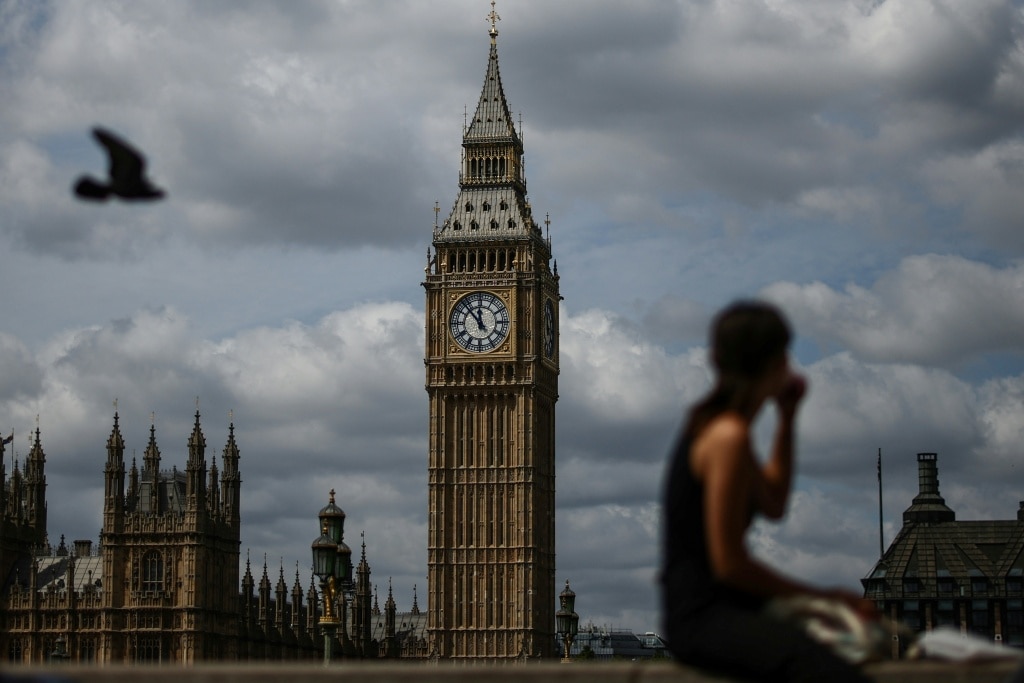
    Fifty-six-year-old Andy Burnham will formally step into the role of British Prime Minister on Monday, marking the seventh person to hold the office in just 10 years, taking the reins of a nation grappling with a stacked in-tray of deeply entrenched challenges that have already derailed multiple predecessors, with very limited time to leave a lasting impact on the country.

    His ascension comes just two years after outgoing Prime Minister Keir Starmer led the Labour Party to a landslide general election victory, ending 14 consecutive years of Conservative rule. Starmer, whose time in Downing Street ended when he announced his resignation as both prime minister and Labour Party leader in late June, brought down by a cascade of scandals, repeated missteps and unpopular policy reversals that eroded public trust and left his government deeply unpopular.

    The formal handover of power will follow longstanding British constitutional protocol. Starmer will first travel to Buckingham Palace to officially submit his resignation to King Charles III, before delivering a final farewell address outside 10 Downing Street. Immediately after that, Burnham will make his own trip to the palace, where the king will formally ask him to form a new government. Shortly after the audience, he will deliver his maiden speech as prime minister from the steps of 10 Downing Street.

    According to statements from Burnham’s inner circle, his first speech will lay out his core policy priorities: rebuilding public faith in national government, easing economic pressures amid the ongoing cost-of-living crisis, delivering sustained economic growth, and devolving more political power from London to regional communities across the country. The address will frame the moment as one of “reflection and resolution,” with Burnham expected to emphasize that the country must be honest about the scale of the challenges it faces. An announcement of senior cabinet appointments is also scheduled for Monday, with political observers and the public particularly focused on who will replace Rachel Reeves as finance minister.

    A former Member of Parliament between 2001 and 2017, who served as a junior minister in the Labour governments of Tony Blair and Gordon Brown, Burnham most recently served as the popular Mayor of Greater Manchester, earning him the nickname the “King of the North” for his strong regional profile and advocacy for northern England. He only returned to the House of Commons as an MP four weeks ago, and was fast-tracked into the Labour leadership by party MPs, who see him as the party’s best bet to counter rising support for Nigel Farage’s right-wing, anti-immigration Reform UK party.

    Deputy Labour Leader Lucy Powell defended Burnham’s qualifications in a Sunday interview with BBC Television, noting that his years of governing outside London’s central political bubble gave him unique insight into the “bigger, bolder” policy changes needed to deliver on the pledges Labour made in its 2024 election manifesto. Powell said Burnham’s core goal is to radically rewrite Britain’s over-centralized political system and overhaul an economic model that has prioritized the interests of powerful, well-connected groups over the needs of ordinary working people. “It’s about giving ordinary people security in work, security in their home, a home they can afford and live in a community that they can feel proud of and knowing that their children are going to have opportunity for the future,” Powell explained.

    Burnham faces an immediate stack of urgent policy challenges. A sluggish domestic economy, persistently high government borrowing costs, a rapidly growing national welfare bill, and the ongoing crisis of irregular migrants crossing the English Channel in small boats—all of which have helped fuel Reform UK’s rising popularity. Adding to these domestic pressures are unpredictable global energy prices driven by tensions between the United States and Iran, and potential policy volatility stemming from Donald Trump’s volatile leadership in the White House that could roil global markets and international relations during Burnham’s premiership.

    Compounding his challenges, the new prime minister operates with very limited room for policy maneuvering, bound by strict fiscal rules that require balancing government spending against tax revenue, in the context of slow growth and extremely high levels of national public debt. With the next general election scheduled for 2029, just three years away, current polling puts Reform UK on track to win a majority, leaving Burnham with a very narrow window to turn the party’s fortunes around. Burnham himself framed his takeover of the party and government as Labour’s “last chance” to get it right during remarks to supporters last Friday.

    Critics have long argued that Starmer’s Labour government was woefully underprepared to take power when it won office in July 2024, a weakness that contributed to its collapse in popularity just two years later. While Burnham has repeatedly insisted he has a clear “plan” to address Britain’s problems, his rapid ascension to the leadership has raised questions among political analysts about how he will deliver on his ambitious promises, given the constraints he faces.

    In his first policy announcement since becoming Labour leader, Burnham announced on Saturday that he would scrap Starmer’s flagship nationwide digital ID scheme, a program that was projected to cost £1.8 billion over three years. A spokesperson for the new prime minister said the funding and administrative resources allocated to the scheme would instead be redirected “to where it’s most needed, such as helping with the cost of living”, aligning with his core priority of easing pressure on hard-pressed British households.
  • Iran war, Myanmar crisis and South China Sea rifts under the spotlight in ASEAN ministerial talks

    Iran war, Myanmar crisis and South China Sea rifts under the spotlight in ASEAN ministerial talks

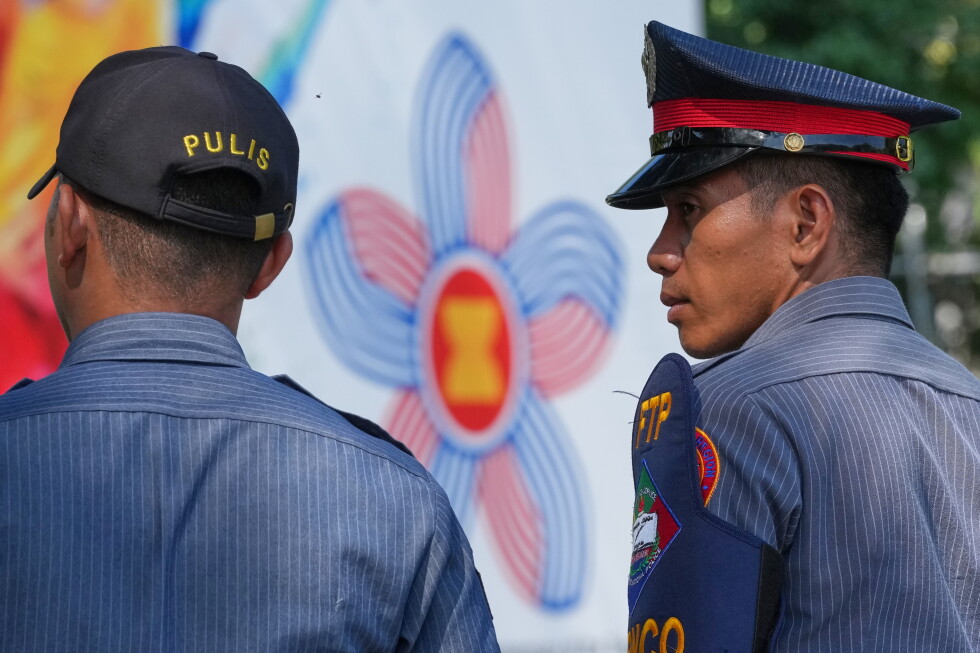
    MANILA, Philippines — Top foreign policy leaders from across Southeast Asia are gathering in the Philippine capital this week for annual Association of Southeast Asian Nations (ASEAN) talks, joined by senior diplomatic representatives from major global powers including the United States, China, Russia, and the European Union. With renewed large-scale hostilities roiling the Middle East emerging as one of the most urgent threats to global stability, the bloc’s diplomats are set to signal grave concern over escalating tensions in their first formal joint session Tuesday.

    This year, the Philippines holds the rotating chairmanship of the 11-member ASEAN bloc, and will host three full days of diplomatic negotiations and high-level meetings. Confirmed attendees include U.S. Secretary of State Marco Rubio, Chinese Foreign Minister Wang Yi, and Russian Foreign Minister Sergey Lavrov. Ukraine’s top diplomat Andrii Sybiha has received an invitation to a Friday ceremony marking the 1976 ASEAN Treaty of Amity and Cooperation, but will not take part in the core working meetings that Lavrov and Rubio will attend. As of the opening of the talks, no formal or informal meetings between Rubio, Lavrov, or Sybiha have been scheduled, according to official statements.

    Two anonymous Southeast Asian diplomatic sources confirmed to reporters that ASEAN foreign ministers will deliberate on the escalating cross-border hostilities between the United States and Iran, which have already spilled into neighboring Middle Eastern states and stoked widespread fears of a full-scale regional war. Following closed-door deliberations, the bloc will release a joint statement voicing alarm at the rapidly shifting security situation and calling on both Washington and Tehran to de-escalate and resume diplomatic negotiations, the sources added.

    The ongoing conflict has already disrupted critical commercial shipping through the Strait of Hormuz, the strategic maritime chokepoint through which approximately 20 percent of the world’s total oil supplies passed before the latest outbreak of fighting. For Southeast Asia — a dynamic, densely populated region home to more than 680 million people that depends heavily on imported Middle Eastern energy — the conflict has already delivered severe economic shocks. Disruptions to global energy supplies and sharp price volatility have hit the region hard, prompting Philippine President Ferdinand Marcos Jr. to declare a national energy emergency back in March. The declaration was aimed at securing consistent access to fuel, food, and other essential commodities, while cracking down on hoarding and price gouging.

    Beyond the immediate humanitarian and economic fallout from the Iran conflict, the crisis has sparked quiet unease across the Asia-Pacific: Washington’s deployment of additional military resources to the Middle East has diverted attention and capacity from long-standing U.S. priorities in the Indo-Pacific, including countering what regional powers describe as increasingly aggressive Chinese actions in the disputed South China Sea and around Taiwan. The Trump administration has previously made formal commitments to deter Chinese expansion in the region, leading to questions about whether those commitments will be weakened by the Middle East crisis. Rubio’s attendance at the Manila talks is designed specifically to reaffirm U.S. commitments to the region. “The secretary’s visit advances a clear U.S. priority: a free and open Indo-Pacific that delivers safety, security and prosperity for the region and for the American people,” State Department spokesperson Thomas Pigott told reporters from Washington.

    On the sidelines of the formal ASEAN meetings, Rubio is also scheduled to take part in a gathering of the Quadrilateral Security Dialogue, better known as the Quad. The bloc, established in 2007, counts the U.S., India, Japan, and Australia as members, and is widely viewed as a core pillar of American strategy to counter growing Chinese influence across the Indo-Pacific. Beijing has repeatedly criticized the bloc as an American-led initiative designed to contain China’s rise as a global power.

    Alongside the major international conflicts on the agenda, ASEAN foreign ministers are facing growing pressure to make tangible progress on long-simmering regional disputes, most notably the ongoing civil war in Myanmar and overlapping territorial claims in the South China Sea. Myanmar has been mired in conflict since the country’s military seized power from the democratically elected government of Aung San Suu Kyi in a 2021 coup. Data from the Assistance Association for Political Prisoners, an independent human rights monitoring organization, shows that more than 8,100 people have been killed in fighting across the country, while nearly 22,500 political detainees remain in custody.

    In 2021, ASEAN leaders agreed to a five-point peace plan designed to end the violence, but the framework has failed to deliver progress, largely due to non-compliance from Myanmar’s military junta. In response, ASEAN imposed a ban on junta leaders and the country’s top foreign policy official from attending the bloc’s top-level meetings, a ban that remains in place for this week’s Manila gathering. In an effort to break the years-long deadlocked, ASEAN diplomats led by Philippine Foreign Secretary Theresa Lazaro — who also serves as this year’s ASEAN special envoy for Myanmar — held a historic meeting with Myanmar’s top diplomat in Bangkok earlier this month, the first such engagement between the bloc and a junta representative in five years. During that meeting, ASEAN leaders reiterated calls for an immediate de-escalation of violence and renewed efforts to launch inclusive dialogue between all warring factions. A day after the Bangkok meeting, Lazaro and Thai Foreign Minister Sihasak Phuangketkeow held consultations with high-level representatives of Myanmar’s ethnic armed opposition groups in the Thai resort city of Pattaya.

    Human rights organizations have sharply criticized the decision to meet junta foreign minister Tin Maung Swe, arguing that the move effectively reverses ASEAN’s long-standing ban on engaging senior junta officials and rewards military leaders without securing any concrete concessions toward peace. Lazaro pushed back against those criticisms, stressing that the engagement did not represent a departure from the bloc’s 2021 five-point consensus. “The path to peace can only be obtained through resolute diplomacy with all parties to the conflict,” she said.

    On the South China Sea, ASEAN ministers will hold formal talks with Chinese Foreign Minister Wang Yi to advance negotiations on a long-planned code of conduct, a binding agreement designed to prevent the region’s overlapping territorial disputes from escalating into open conflict. Territorial claims in the strategically vital waters are split between China, Taiwan, and four ASEAN member states: Brunei, Malaysia, the Philippines, and Vietnam. In recent years, armed confrontations between Chinese and Philippine coast guard and naval forces have become increasingly frequent, raising tensions across the region.

  • Sean O’Sullivan eyes starting NRL role after stunning Bulldogs performance

    Sean O’Sullivan eyes starting NRL role after stunning Bulldogs performance

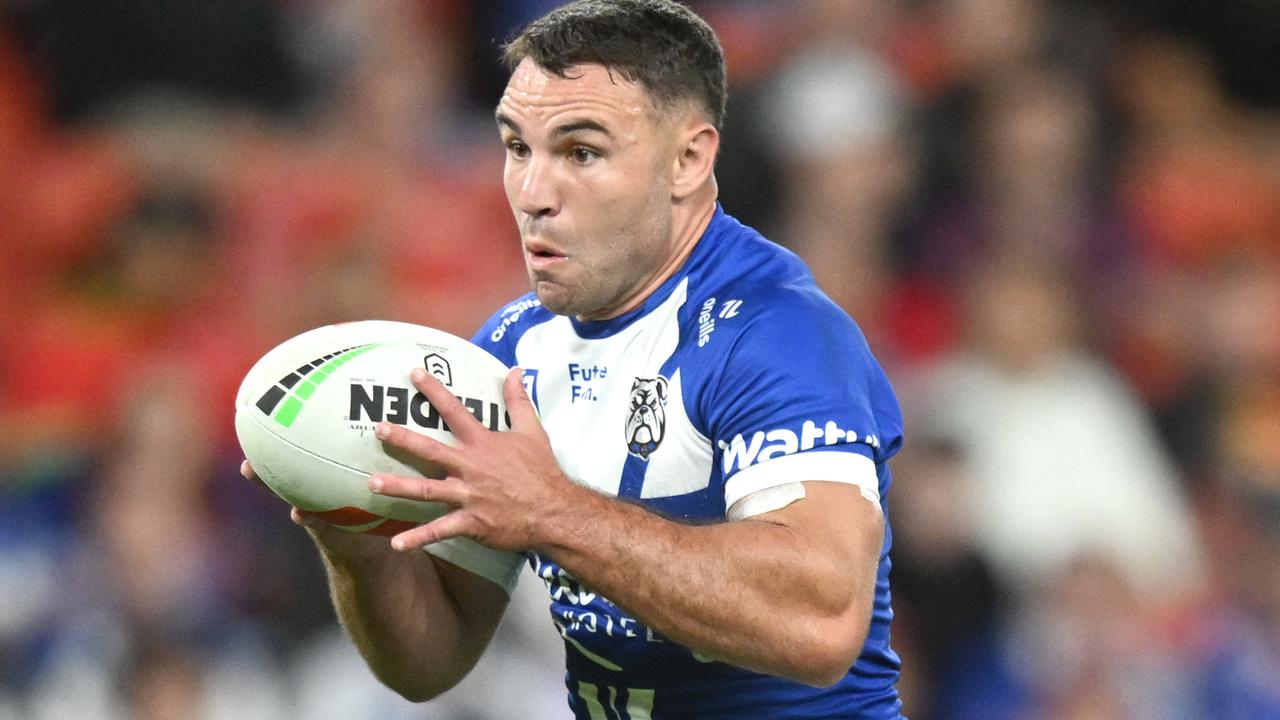
    For nearly a decade, Sean O’Sullivan has flown under the radar as one of the National Rugby League’s most underrated talents, but a standout two-40/20 performance against the Wests Tigers on Saturday night has catapulted the experienced halfback into the spotlight, drawing widespread attention from rival clubs across the competition.

    With star Canterbury Bulldogs back Stephen Crichton sidelined by injury, O’Sullivan got the call-up to step into the Bulldogs’ halves combination, and he did not waste his opportunity. Just 60 seconds into the contest, he nailed a crucial 40/20 kick to give his side early field position, and followed it up with a second game-changing 40/20 later in the match. The veteran playmaker’s controlled performance laid the foundation for the Bulldogs to dominate a struggling Tigers side, and he forged a dangerous on-field combination with young teammate Lachlan Galvin, allowing the rookie to play his natural attacking game while O’Sullivan steered the tempo of the match.

    Now 27 years old, O’Sullivan has built a nine-year NRL career as a reliable backup playmaker, stints with six different clubs including the Sydney Roosters, Brisbane Broncos, New Zealand Warriors, Penrith Panthers, Dolphins and his current side Canterbury. Across those nine seasons, he has notched 65 first-grade appearances, but has never cracked more than 14 games in a single season, filling in as a depth option rather than the starting halfback he aspires to be.

    O’Sullivan currently holds a mutual option with the Bulldogs through 2027, but rival clubs are already gearing up to make a play for his services as his standout performance proved he has the skill set to lead a side as a starting playmaker. When asked if he coveted an opportunity to become a starting halfback at an NRL club, O’Sullivan did not shy away from his ambition.

    “I’d be lying if I said that wasn’t the case. I would love it,” O’Sullivan said post-match. “I am really super confident in what I can bring to a team, and I would obviously love that opportunity. But right now, whatever position I’m in, I just have to keep doing my role. I’m not bigger than anyone else in this club, and I’m not bigger than anyone else in this team. I can’t put my wants or needs in front of anyone else’s.”

    The veteran added that every player in the league competes to earn a starting spot, and that ambition is only natural for his career. “But of course, we’re all competitors and it’s only natural for me to obviously want to be in that position too. I understand what my strengths are, and I’ll just have to bide my time and keep working hard. Whatever happens, happens, and I just keep putting my best foot forward and keep hoping that the boys get a win because, at the end of the day, we’re fighting for a top eight finish and we need as many wins as we can. Whatever ‘Ciro’ (Bulldogs coach Cameron Ciraldo) thinks is best, he’ll do.”

    Ciraldo was quick to praise O’Sullivan’s match-winning contribution against the Tigers, but confirmed that Crichton will return straight to the halves combination for the club’s upcoming clash against the New Zealand Warriors this Saturday. For O’Sullivan, that means returning to a depth role, something he says he is comfortable with as he navigates the next chapter of his career.

    O’Sullivan says he is happy to wait for his opportunity and prioritise what is best for the Bulldogs in the short term. “I think we’re sorting through a couple of things at the moment, but again, I’ll leave that up to my manager. He’s good at that, so I’ll just keep trying to put my best foot forward at whatever position I’m in and go from there,” he said. “I think for me it’s just really what’s best for myself and my career. Obviously, I’m super happy here, and I love being a part of the Bulldogs. Me and my missus are about to have our second kid, so for me it’s just not looking too far ahead. It sounds cliche, but really I’ll just keep working hard and keep looking for that opportunity.”

  • Ferry capsizes off Guyana, authorities still searching for 66

    Ferry capsizes off Guyana, authorities still searching for 66

    A disaster has struck the South American nation of Guyana, where an over 80-year-old passenger ferry carrying 133 people capsized in Atlantic waters off its coast over the weekend, leaving 66 people unaccounted for as rescue teams work around the clock to locate survivors.

    The vessel, identified as MV Barima, departed the country’s capital Georgetown on Saturday afternoon, bound for the inland jungle town of Port Kaituma. The route, a common one for the ferry, takes travelers along Guyana’s Atlantic coast before turning upriver into the Essequibo region, a vast 160,000-square-kilometer territory that has emerged as a major oil-rich area in recent years. According to initial official assessments, the accident occurred after the aging vessel was struck by an unusually large wave, which caused it to flip over.

    By Sunday, rescue teams had pulled 67 people from the water, Public Works Minister Juan Edghill confirmed in an official social media update. Prime Minister Mark Phillips later released a breakdown of the rescued: 41 men, 11 women, six boys, and nine girls, including 15 children in total. Among the survivors is 18-year-old Wayne Kitson, who recalled the tragedy unfolding late Saturday night while most passengers were asleep. Kitson, who suffered only minor injuries to his arm, leg, and neck after spending six hours adrift in open water before being pulled out, said he fears his wife and young daughter are among the missing.

    Crucially, both the captain and first mate of the ferry survived the incident, and have returned to the disaster zone to support search and rescue teams with on-the-ground context, Phillips noted. Authorities have notified all relatives of recorded passengers and crew, and have so far classified the 66 unaccounted-for people as missing rather than deceased, holding out hope that more survivors may be found.

    The MV Barima was constructed all the way back in 1939, according to global shipping vessel tracking database VesselFinder. Official records confirm the vessel was carrying 116 passengers and 17 crew members when it departed, and was outfitted with 250 life jackets, two full lifeboats, and six inflatable rafts. Edghill added that a distress call from the ferry was received roughly eight hours after it began its voyage. As of Sunday, search operations were ongoing, with private local vessels joining government-led rescue teams to comb the area for any sign of the missing passengers.

  • Collapses retailer Stax leaves staff, ATO and creditors reeling with $6.7m in losses

    Collapses retailer Stax leaves staff, ATO and creditors reeling with $6.7m in losses

    Once a rising competitor to global athletic wear leaders Lululemon, Nike, and Adidas, Australian activewear brand Stax has left behind more than $6.7 million in unpaid debts after its sudden collapse this year, new regulatory filings have confirmed. The brand’s rapid downward spiral began in June, when National Australia Bank pushed the retailer into receivership amid growing financial pressure. In a last-ditch effort to keep the business operating, founders Don Robertson and Matilda Murray sold off the company’s retail store network and their personal luxury vehicles, including a Lamborghini and a Porsche, the effort ultimately failed. By mid-July, Stax formally entered voluntary administration, bringing its decade-long growth story to an abrupt end.

    New documents lodged with the Australian Securities and Investments Commission (ASIC), the country’s corporate regulator, have laid bare the full scale of the company’s unpaid obligations ahead of its collapse. Of the total $6.7 million debt, more than $450,000 is owed directly to former Stax employees. One single staff member is owed nearly $78,600 in unpaid wages and entitlements, which break down into $89,209 in unused annual leave, $31,343 in long service leave, $63,556 in unpaid superannuation contributions, and $128,683 in promised redundancy payments across the entire workforce.

    Beyond unpaid staff wages, unsecured creditors hold almost $6.3 million in outstanding claims from the failed retailer. Major domestic and international entities are among those waiting for repayment. Shopping centre operator Scentre Group, which manages Australia’s Westfield shopping centre portfolio, is owed more than $500,000 in unpaid rent for Stax outlets across New South Wales, including locations in Miranda, Liverpool and central Sydney. Other major retail landlords Highpoint, Karrinyup and Pacific Fair also hold unpaid claims, alongside contractors Affective Building Services and Flow Logistics. Google Australia is owed roughly $500,000 for digital advertising and business services provided to the brand. Two Chinese manufacturers — Jiaxing Sky Air Sports and Ningbo Mingna Garments — hold the largest individual claims, owed more than $1 million and $1.9 million respectively in unpaid production fees. The Australian Taxation Office is also outstanding $123,858 in business activity statement payments.

    The current debt figures are drawn from director filings submitted to ASIC, and administrators note that final totals may shift once liquidators deliver their conclusive report in the coming weeks.

    Last week, the Stax founders broke their months-long silence on the collapse in a public statement posted to social media, acknowledging widespread customer anger over unfilled orders. “First and foremost, we’re truly sorry for this and for not communicating earlier,” the pair wrote. “Stax was built over more than a decade with an incredible community and knowing that so many of our customers have been impacted is something we carry every day.” They added that with the business now under the control of receivers, customers with outstanding orders will need to follow the formal insolvency process to seek resolutions. “I know that doesn’t change the frustration or disappointment so many of you are feeling,” the statement said. “If you placed an order and haven’t received it, we completely understand why you’re upset.”

    Founded in 2015 and formally registered in Western Australia in 2017, Stax grew from a small grassroots startup to become a major player in the highly competitive Australian activewear market. At its peak of operations, the brand recorded more than $30 million in annual turnover and employed a workforce of 160 people across its retail and head office operations.

  • Lamine Yamal ‘completes football’ at 19 as Argentina betray Messi

    Lamine Yamal ‘completes football’ at 19 as Argentina betray Messi

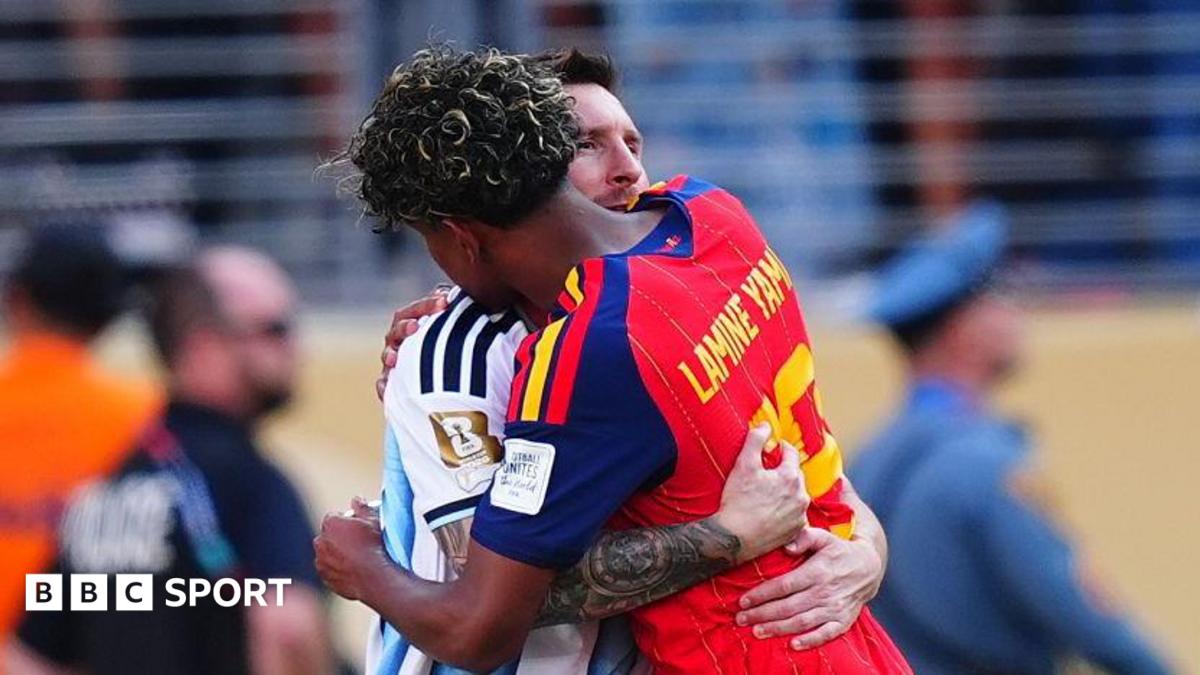
    The 2026 FIFA World Cup final at New York New Jersey Stadium delivered a historic result layered with symbolic meaning, as Spain defeated Argentina 1-0 after extra time to claim the sport’s biggest global prize. The defining image of the match came at full-time, when 19-year-old Spanish star Lamine Yamal pulled a tearful 39-year-old Lionel Messi into an embrace — a quiet moment widely interpreted as a passing of the torch between one era of elite football and the next.

    The interaction echoed a now-viral photo taken nearly 20 years prior, during a 2007 charity calendar event, when a 20-year-old Messi held and bathed six-month-old Yamal, who would later follow in Messi’s footsteps as a FC Barcelona number 10. Today, the baby once held by the Argentine icon is a World Cup champion, while Messi’s appearance on the game’s biggest stage may well be his last.

    Yamal’s historic win comes just two years after he helped Spain claim the European Championship title against England, making him the youngest player ever at 19 years and six days to hold both the Euros and World Cup trophies. Entering the 2026 tournament carrying a hamstring injury that cast doubt over his impact, the teenage prodigy leaves with two of the sport’s most coveted honors already in his career collection. He also joined fellow 19-year-old Spanish teammate Pau Cubarsi as just the fourth and fifth teenagers ever to start and win a World Cup final, an elite group that also includes Pelé (1958, Brazil), Giuseppe Bergomi (1982, Italy) and Kylian Mbappé (2018, France).

    Yamal’s unbeaten record for Spain only adds to his legend: he has never lost a senior competitive match for his country across 28 outings, and boasts a perfect 13-0 record in starts at major international tournaments — the longest 100% win streak for any European player in that category. Ferran Torres settled the final in the 106th minute of extra time, slotting home the decisive goal to seal Spain’s win.

    Spain head coach Luis de la Fuente praised Yamal’s performance and character after the match, highlighting the teenager’s commitment to the team. “He has played great football that will help him to mature and be even a greater footballer than he already is,” de la Fuente said. “He really sacrificed for the collective good. This is very important in my squad. In my opinion he played a great World Cup.”

    Observers also noted Yamal’s unflappable temperament, as Argentina defenders repeatedly targeted the young star with physical challenges in an attempt to rattle him. Former England goalkeeper and BBC Sport pundit Joe Hart commended his cool response to the pressure. “Not only did Lamine Yamal not react, he stood up to it,” Hart said. “He was not rattled and he did not back down. He had the entire team trying to smash him. He just stayed real cool. It was a real standout performance from him. Lamine Yamal is 19 years old. What a beautiful day for him. He’s 19 and has completed football.”

    With decades of football still ahead of him, and the guidance of experienced teammates like captain and tournament Player of the Tournament Rodri, few doubt Yamal will add more major titles to his collection in the coming years.

    The celebration of Spain’s historic win stood in stark contrast to the heartbreak surrounding Messi and Argentina, whose aggressive, physical game plan ultimately failed to deliver a second consecutive World Cup title. Messi, who walked the pitch after the final whistle staring out at thousands of singing Argentina fans, appeared to acknowledge that this could be his final appearance on the World Cup stage. Argentina head coach Lionel Scaloni, who was also seeking a second straight title and has a contract expiring in December, broke down in tears during his post-match press conference when asked about Messi’s future, leaving the conference without answering further questions.

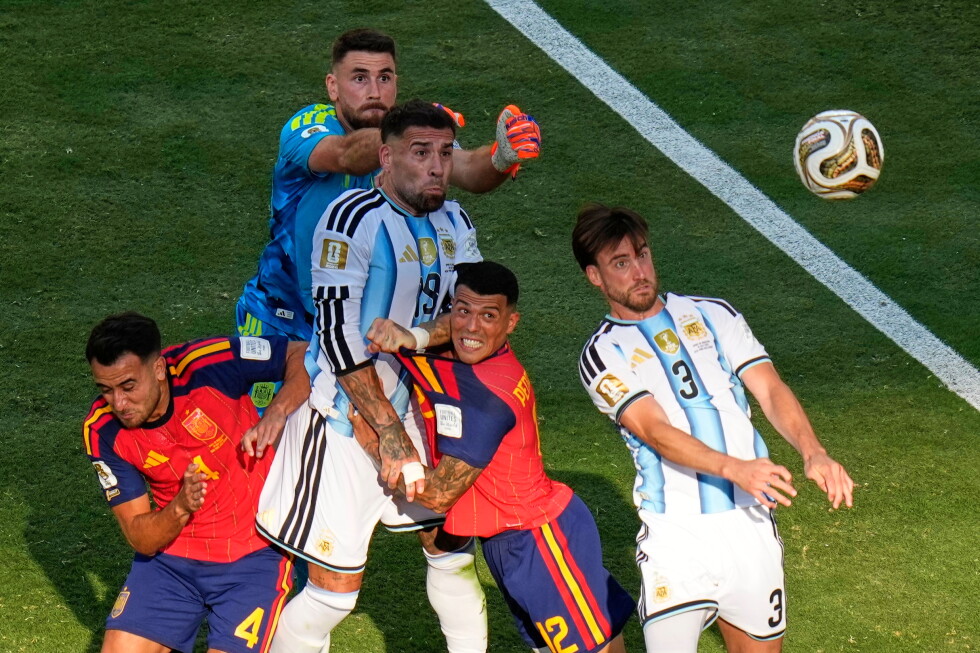
    Argentina’s approach to the final drew widespread criticism, with the side prioritizing physical fouling and spoiling tactics over attacking play from the opening whistle. Referee Slavko Vincic’s lenient enforcement of the rules frustrated Spain and their fans, with the first yellow card of the game not issued until the 40th minute, for a foul by Lisandro Martinez on Mikel Oyarzabal. Argentina’s aggressive approach hit a low point just before the end of normal time, when Enzo Fernandez made a reckless, off-the-ball charge on 19-year-old Cubarsi that many observers said deserved a second yellow card and ejection.

    Ultimately, Argentina made history for all the wrong reasons: they became the first team in World Cup final history to register zero shots on goal across the full 90 minutes of play, and finished the entire match with only one off-target shot from Messi in the 117th minute. By comparison, Spain registered 12 shots on target. In a telling statistic that summed up Argentina’s approach, the side committed more fouls (nine) than completed passes (eight) in the final third of the pitch during the first half. The match ended with an ugly scuffle between players from both sides, with Argentine substitute Leandro Paredes seen grabbing Spain’s Eric Garcia by the throat and involved in another altercation that saw Spain’s Gavi thrown to the ground.

    Spain’s path to the 2026 title was not an easy one: the side opened their campaign with a surprising draw against Cape Verde, but grew in strength with every round of the tournament to claim the ultimate prize. This World Cup will be remembered not for the unsavory moments of the final, but for crowning a deserving champion and introducing the world to football’s next global superstar. While Messi’s iconic World Cup era may be drawing to a close, the age of Lamine Yamal is only just beginning.

  • Sixteen titles in five years – why Spain are a dominant force

    Sixteen titles in five years – why Spain are a dominant force

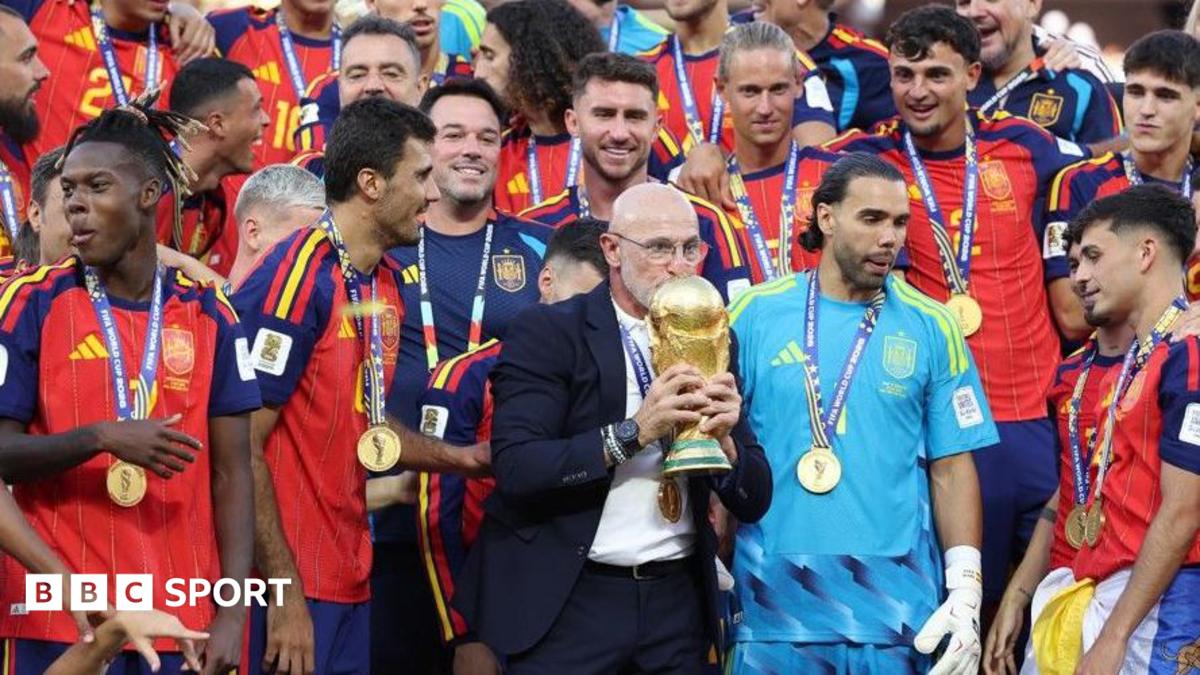
    In a historic display of sustained tactical and youth development excellence, Spain has etched its name forever into football folklore, claiming the 2026 Men’s World Cup title with a hard-fought 1-0 extra-time victory over Argentina in New Jersey on Sunday. This triumph mirrors the nation’s iconic 2010 World Cup win, which came two years after claiming the European Championship crown — a feat La Roja has now repeated for a second time, following their 2024 European title in Berlin. This latest success cements Spain’s status as the first nation in history to simultaneously hold both the men’s and women’s World Cup trophies, following the women’s senior World Cup victory in 2023, and caps off an unparalleled run of international success across every age and gender category.

    Over the past five years, Spanish football has amassed an extraordinary 16 combined World Cup and European titles, ranging from under-17 age-group competitions through to senior national teams. Breakdowns of this dominant run show 11 titles claimed by Spanish women’s sides between 2022 and 2026, including the 2023 senior World Cup, back-to-back Nations League crowns in 2024 and 2025, a 2022 under-20 World Cup, five consecutive under-19 European championships, and a 2022 under-17 World Cup alongside the 2024 under-17 European title. For the men, five major titles have been claimed in the same period: the 2026 senior World Cup, 2024 European Championship, 2023 Nations League, 2024 Olympic gold medal, and the 2026 under-19 European Championship.

    Leading this extraordinary senior men’s run is head coach Luis de la Fuente, whose appointment in December 2022 following Spain’s disappointing 2022 Qatar World Cup round-of-16 exit to Morocco was widely viewed as a high-risk gamble. Having never managed a top-tier European club, de la Fuente spent 15 years working in lower-league men’s football and Spanish youth national team setups after retiring as a player in 1994, giving him intimate familiarity with the talent coming through the country’s famed academy system. In just over three years, he has delivered three consecutive major trophies: the 2023 Nations League, 2024 European Championship, and now the 2026 World Cup. “It was a very risky decision – I don’t think anyone thought he would be so successful,” Spanish football expert Guillem Balague told BBC Sport, adding that de la Fuente’s deep understanding of Spain’s long-established playing philosophy has been key to unlocking sustained success.

    Former Spanish midfielder Juan Mata echoed that assessment, noting de la Fuente’s connection to the nation’s youth pipeline has created a squad built for both immediate and long-term success. “De la Fuente knew most of these players from the academies and they are growing as a team,” Mata said. “This is not only a team for the present, but also a team for the future.” Under de la Fuente’s leadership, the senior side has also cultivated a culture of consistent improvement, rejecting complacency even after claiming every possible major trophy. “Once we finished the game, there were footballers who said ‘coach, now what else is there to win as we have won everything in all the categories’,” de la Fuente told reporters ahead of the final. “We came to the conclusion that what remains is the next match in September because this team are relentless.”

    This sustained success at the international level has been decades in the making, with dramatic transformation in the women’s game over the past 10 years laying the groundwork for recent titles. When former player Maria Garrido was competing for FC Barcelona a decade ago, there was no dedicated girls’ academy at the club’s famed La Masia facility, players covered their own travel costs, and earned no salary. Today, the landscape is unrecognizable: targeted investment has expanded youth categories, upgraded training facilities and working conditions, and established dedicated girls’ academies across the country. “This transformation has not only revolutionised the sport but also elevated the respect for women’s football in Spain,” Garrido explained in a 2024 interview.

    The depth of Spain’s youth talent pipeline was on full display in the 2026 World Cup final, where 19-year-old stars Lamine Yamal and Pau Cubarsi became the first two teenagers to start a men’s World Cup final in history. Yamal entered the record books as the third-youngest player to ever feature in a men’s World Cup final, trailing only Pele (1958) and Giuseppe Bergomi (1982), and both players walked away with winner’s medals in their first World Cup appearance. The women’s side boasts similarly elite young talent: 19-year-old Vicky Lopez already has three Champions League titles with Barcelona to her name, while forward Salma Paralluelo earned more than 50 senior caps for Spain before turning 23.

    Former England goalkeeper Joe Hart lauded Spain’s defensive and tactical dominance throughout the 2026 tournament, noting the side conceded only 10 total shots on target across their entire World Cup run. “Spain have got a way of playing that no one in the world has proven they can get anywhere near,” Hart said. 1998 World Cup winner Thierry Henry echoed that praise, telling Fox Sports that Spain’s systemic investment across all levels puts them in position to dominate global football for years to come. “I want to give credit to the system and what they put in place,” Henry said. “Because Spain never used to win like that. And now they win at every level.”

    Heading into the next international cycle, Spain holds another historic record: an unbeaten streak of 38 consecutive matches across all competitions, the longest run ever recorded by any European or South American national team. This success has also spilled over into club football, with Spanish coaches holding at least a quarter of all head coaching roles in the 2026-27 Premier League season, even after Pep Guardiola’s departure from Manchester City after a decade of trophy-laden success. For fans and analysts alike, all signs point to this era of Spanish dominance only continuing to grow in the years ahead.

  • Norway opens new memorial for victims of 2011 Breivik massacre

    Norway opens new memorial for victims of 2011 Breivik massacre

    Fifteen years after Norway’s deadliest peacetime atrocity sent shockwaves across the Scandinavian nation, the country has inaugurated a permanent public memorial honoring the 77 lives lost to far-right extremist Anders Behring Breivik’s 2011 terror attacks.

    On July 22, 2011, Breivik first detonated a car bomb in central Oslo’s government district, killing eight people before traveling to nearby Utoeya island, where he gunned down 69 more attendees — most of them teenage members of the Norwegian Labour Party’s youth wing, the AUF — at the group’s annual summer camp. Hundreds of others were wounded in the two-pronged attack, which remains the worst act of domestic terrorism Norway has seen in modern history.

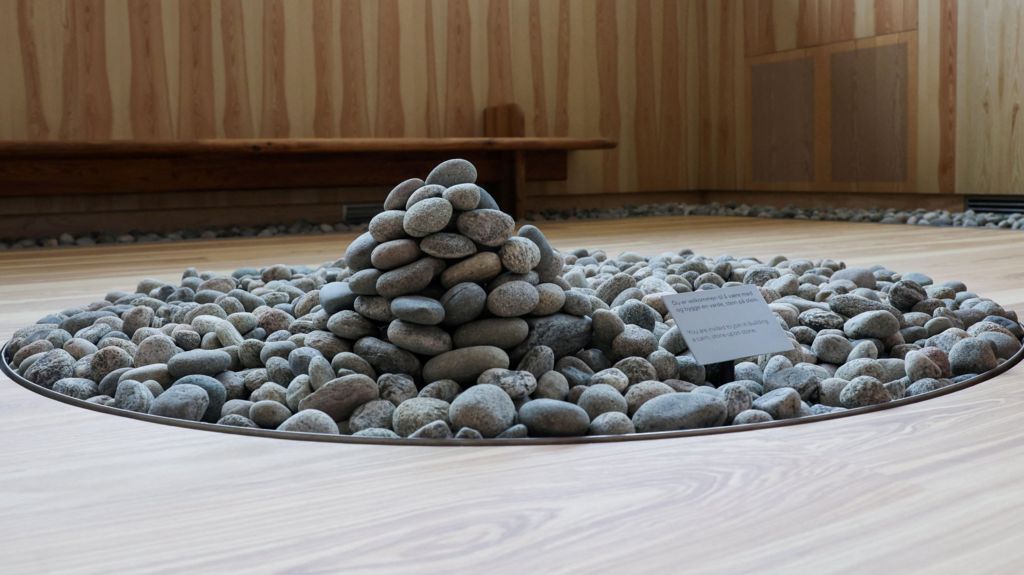
    Just days ahead of the 15th anniversary of the atrocity, survivors, victim family members, royal representatives, and senior government officials gathered in Oslo’s renovated government quarter on Sunday for the official unveiling of the new memorial, named Upholding. The large-scale contemporary artwork sits steps from the original site of Breivik’s opening bomb blast.

    Created by Norwegian artist Matias Faldbakken, who first spotted the small native wading bird that inspired the work during a visit to Utoeya, the memorial centers on a 12-meter-tall stone mosaic of the bird, framed by a massive blue steel structure. The piece also integrates straw, sticks, and mirrored elements reflecting the surrounding environment, and the full names of all 77 victims are engraved into its surface. Per Faldbakken, the work serves a dual purpose: it preserves memory of the lives cut short, and stands as a public act of democratic resilience against the violent far-right ideologies that motivated Breivik’s attack.

    Merete Stamneshagen, leader of a national support organization for victims and survivors, emphasized the attack’s broader target beyond individual victims, telling reporters from AFP, “July 22, 2011 was a brutal attack not only on individuals, but also on our democracy.” Norway’s Crown Prince Haakon was among the senior dignitaries in attendance at the inauguration, and he also toured the newly opened 22 July Centre, the country’s national memorial and educational hub dedicated to documenting the attacks and their legacy.

    The attack itself continues to cast a long shadow over Norwegian public life more than a decade on. Breivik was convicted in 2012 and handed a 21-year prison sentence — the maximum penalty available under Norwegian law — with provisions that allow for indefinite sentence extensions as long as he is deemed a threat to public safety. Breivik has repeatedly challenged the conditions of his incarceration in the years since his conviction: in 2016, he won a partial ruling in a human rights case against the Norwegian government, only for that decision to be overturned a year later. He was denied parole in 2022, with courts ruling he had not renounced his extremist views and remained a danger to society. Most recently, in 2024, he lost a lawsuit against the government over his separate incarceration, a security measure implemented to prevent him from radicalizing other incarcerated people.

  • Simón says it was Spain’s record defense that made the goalkeeper’s job so easy in the World Cup

    Simón says it was Spain’s record defense that made the goalkeeper’s job so easy in the World Cup

    EAST RUTHERFORD, N.J. — When the confetti settled on the 2024 World Cup final, the full extent of Spain’s historic defensive dominance stood unmatched in men’s international soccer. After a tournament run defined by stifling backline play that barely gave opponents scoring chances, La Roja capped their run with a masterclass 1-0 shutout victory over Argentina on Sunday, cementing their place as champions with a record seventh clean sheet of the competition.

    This defensive achievement is one for the record books: Spain conceded only one single goal across the entire tournament, and in the 90 minutes of regulation against Argentina, Lionel Messi’s side did not manage a single shot on target. By the end of extra time, Argentina had only put two total shots off target, capping a lopsided 20-2 shot advantage for the Spanish side.

    Spain’s goalkeeper Unai Simón, who took home the tournament’s Golden Glove award for top netminder, summed up the defensive effort in post-match comments: his gloves barely had to break a sweat. “(My hands) didn’t really have to work that hard as much as other keepers,” Simón said through an interpreter. He doubled down on the praise for his teammates later, noting, “If all of the gloves were able to speak that I have used throughout the entire tournament, what I think is that, at the end of the day, what they would be able to tell you, is that they didn’t have to really work as hard as other keepers. I think that this is due to all of my teammates, for us to have been able to have all of these wins.” Even with the Golden Glove honor, Simón only needed to make 14 total saves across the entire tournament, a testament to how effectively Spain’s backline blocked opportunities before they reached the goal.

    The previous record for fewest goals conceded in a single World Cup was two, shared by Spain’s 2010 championship squad and two other tournament-winning teams. That 2010 team was on hand to witness the new record being set, with legendary Spain goalkeeper Iker Casillas watching from the stands at MetLife Stadium alongside iconic 2010 teammates including Xavi Hernández, Andrés Iniesta, Carles Puyol and Sergio Ramos.

    Spain’s path to the final was equally impressive when it came to shutting down soccer’s biggest attacking talents. The only goal the side conceded all tournament came in a 2-1 quarterfinal win over Belgium, before Spain shut out two of the greatest goalscorers the World Cup has ever seen: Kylian Mbappé’s France in the semifinal, and Messi’s Argentina in the final.

    For Argentina, it was a rough end to what was billed as likely Messi’s final World Cup run. Argentine goalkeeper Emiliano Martinez had a historic day in net, making 11 saves on Sunday alone to keep the scoreline close — nearly matching Simón’s total save count across the entire tournament. Despite Martinez’s best efforts, Spain’s relentless pressure broke through for one goal, securing their place as World Cup champions and cementing their legacy as one of the most defensively dominant tournament winners in history.

  • New Zealanders wake to a new major champion, heap praise on Ryan Fox

    New Zealanders wake to a new major champion, heap praise on Ryan Fox

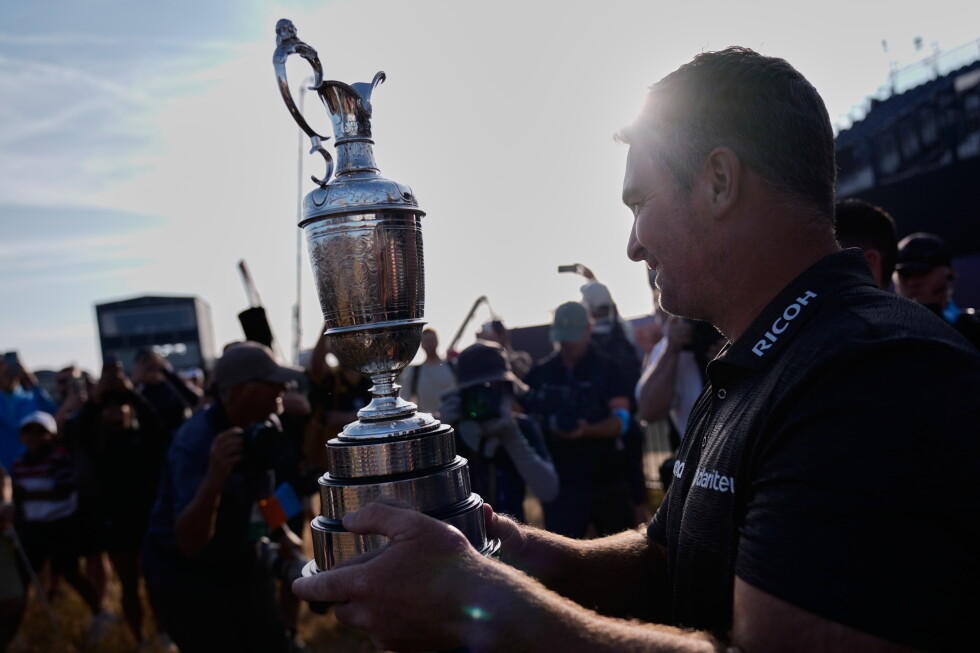
    WELLINGTON, New Zealand — While Ryan Fox sank a decisive 12-foot birdie putt on the 18th hole at England’s Royal Birkdale to claim the 152nd British Open by a single stroke, the clock had just ticked past 5:30 a.m. in his home nation of New Zealand, where the winter sun had not yet crested the horizon. Most Kiwis rolled out of bed to a cold Monday morning greeted by the historic news: their small country had just earned its fourth major championship title in men’s and women’s golf, cementing its outsized legacy on the global golfing stage.

    For the diehard fans who stayed up through the night to stream Fox’s final round, the bleary-eyed commute to work Monday came with the warm thrill of having watched their compatriot lift golf’s most iconic trophy, the Claret Jug. Even the nation’s golfing pioneer, 90-year-old Sir Bob Charles — New Zealand’s first ever major champion, and the first left-handed golfer in history to win a major, when he took the British Open title in 1963 — caught Fox’s career-making round, watching a recorded replay at a more comfortable waking hour.

    Reflecting on how far golf broadcasting has come since his own win, Charles told the *New Zealand Herald*, “I’m watching this in color. In my day, it was all black and white. I’m watching every hole that he’s playing. In my day, they only had about the last three or four holes.”

    Charles reserved high praise for the 39-year-old’s approach to the game, singling out his brisk pace of play as a welcome counter to the growing trend of slow, deliberate play that has drawn criticism across modern professional golf. Fox barely paused for 30 seconds over his game-winning final putt, a move that aligned with the traditional ethos Charles has long championed. With the win, Fox joined an exclusive club of New Zealand major champions: Charles himself, 2005 U.S. Open winner Michael Campbell, and two-time major winner Lydia Ko.

    “Ryan is a refreshing player,” Charles said. “He plays the way the game should be played, the way it used to be played and should be played. And that is: you get on with it, and you don’t spend half an hour lining up every putt. Let’s hope that Ryan can be a great example of how the game should be played now, even when you’re playing for, you know, $100 million!”

    With New Zealand’s Parliament in recess for the season, elected officials did not get the chance to publicly toast Fox’s win — a step many political observers believe would have been a popular move for lawmakers hoping to share a sliver of the champion’s national goodwill. Instead, ordinary New Zealanders flooded social media with congratulations, celebrating not just Fox’s win but his status as a third-generation elite sports star in a country obsessed with competitive athletics. His father, Grant Fox, was a star player for New Zealand’s legendary All Blacks rugby team and won the inaugural 1987 Rugby World Cup, while his grandfather Merv Wallace captained the New Zealand men’s national cricket team.

    In his post-victory remarks, Fox addressed the legacy of his sporting family, noting that he never felt pressured to live up to his relatives’ achievements. “We’ve got a great history in our family,” he said. “The other great thing is I had no pressure on me to follow in any of their footsteps. I don’t know if this tops their achievements, but it’s certainly right up there. I guess there’s no pressure on my kids going forward now!”

    In a fitting tribute to Fox’s triumph, New Zealand’s national cricket team sealed a match and series win over the West Indies in the Caribbean just hours after Fox lifted the Claret Jug. Back at Fox’s home course, the Royal Auckland and Grange Golf Club, club leadership said the entire membership is bursting with pride over their fellow member’s win.

    “You couldn’t find a nicer guy and more worthy champion golfer,” said club captain Ian Blair. “Our club has been privileged to watch Ryan develop from a fine young man with potential to a champion player and member.” Club chief executive Ian Chapman told New Zealand’s *Stuff* news outlet that members will be lining up to buy Fox a celebratory beer when he returns home.

    Michael Campbell, the 2005 U.S. Open champion who paved the way for Fox’s historic run for modern Kiwi golfers, called Fox’s victory an incredible milestone for the player. “To beat the world’s best players in a difficult situation is an incredible feat,” Campbell told the *New Zealand Herald*’s *Ryan Bridge Today* podcast. “I got to experience that 21 years ago. It’s mind-blowing. It really changes your world and he’s up there with the best players in the world now.”