作者: admin

  • Netanyahu and Lindsey Graham conspired to use sex claims against Khan to delay warrants

    Netanyahu and Lindsey Graham conspired to use sex claims against Khan to delay warrants

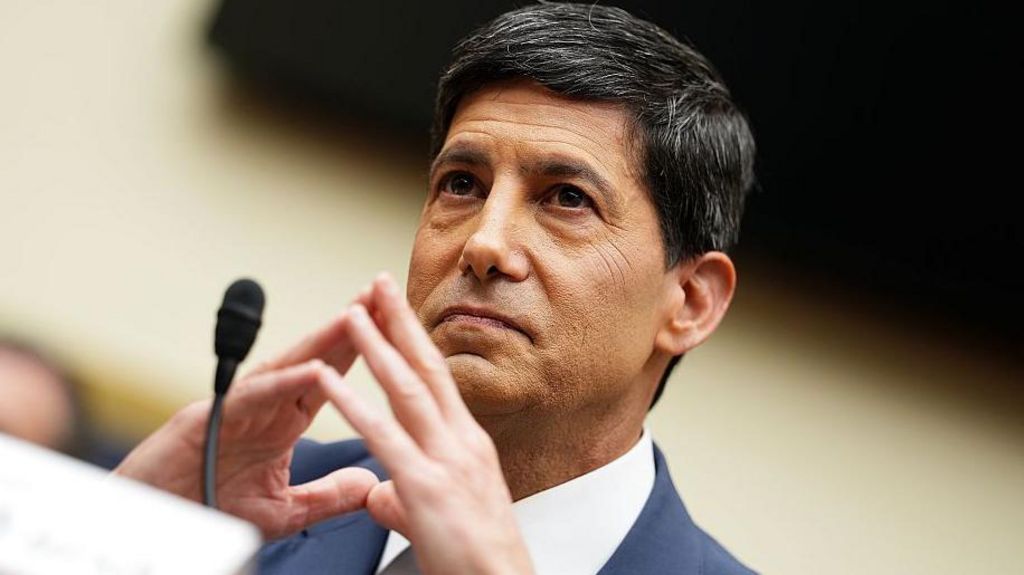
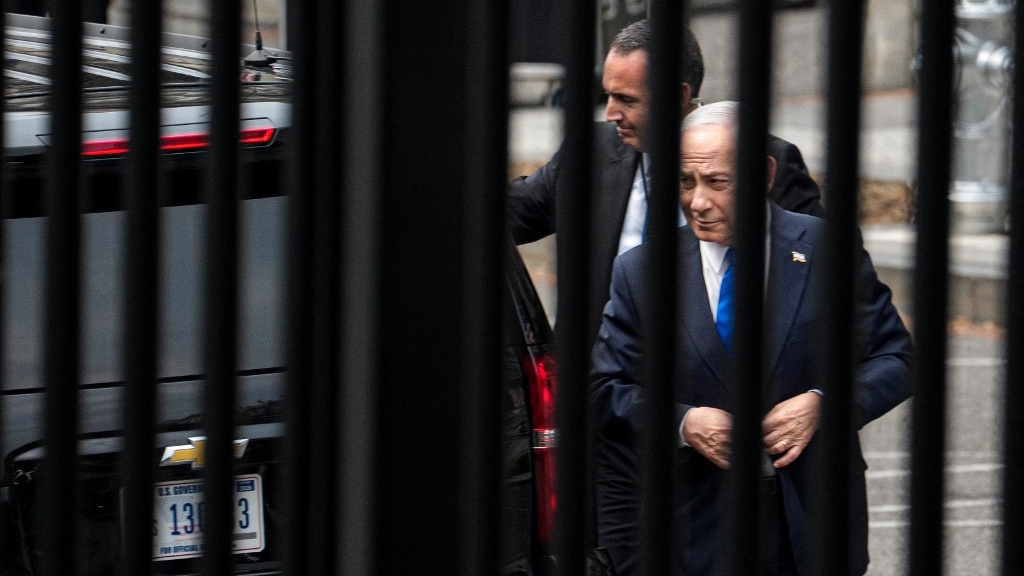
    Freshly revealed secret recordings have pulled back the curtain on a coordinated plot between late U.S. Senator Lindsey Graham and Israeli Prime Minister Benjamin Netanyahu to weaponize unproven sexual misconduct allegations against then-International Criminal Court Chief Prosecutor Karim Khan, in a bid to block the court from issuing long-awaited arrest warrants for Netanyahu and his senior cabinet over alleged Gaza war crimes.

    The explosive disclosure, first reported this week by The New York Times, draws from three years of audio recordings captured by British documentary filmmaker Alex Holder, who tracked Graham’s political ties to former U.S. President Donald Trump and Netanyahu. The exchanges offer the clearest evidence to date of a sustained, high-level intimidation campaign targeting the ICC over its Palestine investigation — a campaign that Middle East Eye first documented in depth last year.

    The plot came to light weeks after Graham’s passing earlier this month, and just days after ICC member states voted to remove Khan from his post as chief prosecutor last Friday at a secret ballot held at U.N. headquarters in New York. Eighty-two of the court’s 125 member states supported the dismissal, overriding a unanimous prior ruling from an independent judicial panel that cleared Khan of all wrongdoing in March. That panel, appointed by the ICC’s governing Assembly of State Parties (ASP) bureau, found the U.N. investigation’s findings failed to prove any misconduct or breach of professional duty on Khan’s part.

    The first recorded conversation between Graham and Netanyahu took place on October 29, 2024 — five months after Khan submitted applications for arrest warrants against Netanyahu, Israeli Defense Minister Yoav Gallant, and three Hamas officials, and just weeks before ICC judges were set to announce their decision on the warrants. During the call, Netanyahu flagged the pending sexual allegations against Khan, arguing that the “great cloud” of the claims could be leveraged to delay the court’s ruling on the arrest warrants.

    Netanyahu suggested that Graham lead a bipartisan group of U.S. senators in sending an official letter to the ICC, demanding a full review of the entire prosecution process before any warrants were issued, arguing the “stain” of the allegations had to be addressed first. Graham immediately agreed, saying he would work to secure signatures from Democratic senators as well to broaden the letter’s political weight.

    In a follow-up call the same day, Graham told Netanyahu the effort had secured backing from two high-profile Democratic senators: Richard Blumenthal and Ben Cardin. “We got them both,” Graham said, asking Netanyahu to share the text he wanted included in the letter. The senator even joked that Netanyahu should “pay me for all this. I should get tons of shekels,” adding that “it would take more than dinner” and asking the prime minister to personally call the two Democrats to thank them for their support, while also tying the cooperation to ongoing efforts to advance Saudi-Israeli normalization. The letter, signed by Graham, Blumenthal, Cardin and other senators, was sent on November 1, 2024. Neither Blumenthal nor Cardin has responded to requests for comment from The New York Times on their involvement.

    Despite the pressure campaign, ICC judges moved forward with issuing the arrest warrants on November 21, 2024. Netanyahu and other senior Israeli officials subsequently responded by claiming Khan had pushed for the warrants specifically to distract from the misconduct allegations against him — a claim contradicted by a 2023 Middle East Eye investigation that confirmed Khan notified U.S. officials of his plan to apply for the warrants weeks before he was even made aware of the sexual allegations.

    This was not the first time Graham leveraged his position to pressure Khan over the ICC’s Palestine investigation. In a May 2024 conference call with Khan, senior ICC officials, and a bipartisan group of senators, Graham openly threatened the prosecutor, saying “if you proceed with the warrants you may as well shoot the hostages yourself” and that the U.S. would impose sanctions on him. He also infamously argued the ICC was “made for Africa and thugs like [Russian President Vladimir] Putin, not democracies like Israel,” a remark that was later confirmed by British barrister Andrew Cayley, who led the ICC’s Palestine investigation, who told The Observer Graham was “screaming at us” during the exchange. Graham later defended the pressure campaign in a public statement, claiming the public misconduct allegations against Khan had cast a “moral cloud” over the warrant application, and argued the senators only urged Khan to respect the principle of complementarity and negotiate in good faith with Israeli officials before issuing any rulings against Israel.

    The vote to remove Khan last Friday capped an 18-month disciplinary process that Palestinian rights advocates, former ICC judges, and Khan’s own legal team have universally condemned as overtly politicized. After the independent judicial panel cleared Khan, a bloc of largely Western and European ASP bureau members pushed forward with dismissal, ignoring the panel’s findings and relying instead on the original U.N. investigation report. The bureau concluded Khan had engaged in an inappropriate sexual relationship with the complainant, arguing the power imbalance between his position as chief prosecutor and the complainant made any such relationship inherently improper. Khan has repeatedly denied all allegations, including that any sexual relationship occurred; the complainant’s original account centered on claims of non-consensual misconduct.

    Many independent observers have drawn a direct line between Khan’s removal and the long-running campaign to kill the Netanyahu arrest warrant. “Khan’s removal lines up neatly with the fight to neutralise Netanyahu’s arrest warrant. Coincidence is a luxury intl law can no longer afford,” Francesca Albanese, the United Nations Special Rapporteur on the Occupied Palestinian Territories, wrote on X shortly after the vote.

    Netanyahu himself openly celebrated the decision, revealing in a social media post that he had spoken with U.S. Secretary of State Marco Rubio about delivering “the coup de grace” to the ICC. He reaffirmed U.S. and Israeli commitment to confronting the court, claiming it “undermines justice, attacks democratic and sovereign nations, and seeks to subordinate their security to the decisions of unaccountable and corrupt officials in The Hague.”

    Israeli media, citing anonymous senior government officials, has also confirmed that Israeli Foreign Minister Gideon Saar established a dedicated interagency task force to lobby ICC member states directly to vote for Khan’s removal. This campaign fits into a broader pattern of pressure: last year, the U.S. imposed harsh sanctions on Khan, his two deputy prosecutors, and multiple ICC judges over the Palestine investigation. Rubio reiterated Washington’s hardline stance earlier this month, saying the U.S. would “dismantle the ICC – brick by brick, if necessary.”
  • Iraqi cleric Muqtada al-Sadr condemns attacks by pro-Iranian factions on Saudi Arabia

    Iraqi cleric Muqtada al-Sadr condemns attacks by pro-Iranian factions on Saudi Arabia

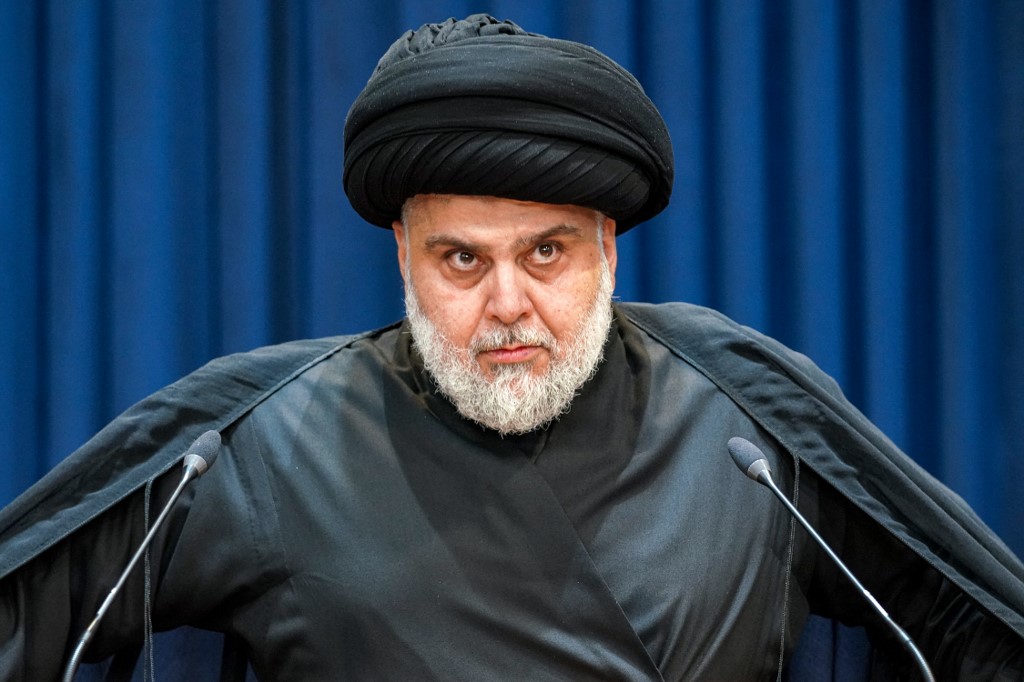
    Tensions across the Middle East have spiked once again, with influential Iraqi Shia cleric Muqtada al-Sadr stepping forward to issue a urgent public call for Iran’s Islamic Revolutionary Guard Corps (IRGC) and its affiliated armed factions to halt cross-border attacks launched from Iraqi territory.

    In a post shared on the social platform X, Sadr warned that these unauthorized operations risk dragging Iraq, a country already grappling with decades of unresolved instability, into a devastating new regional conflict. He stressed that rogue militias operating outside state control must not give neighboring Gulf nations any justification to launch military strikes on Iraqi soil, which he described as a sacred homeland for the Iraqi people.

    Sadr also urged all regional factions to avoid falling prey to what he framed as “the schemes of the Zionist-American enemy,” which he accused of inciting inter-Arab and inter-Muslim conflict to advance foreign interests. Echoing his long-standing nationalist stance, he emphasized that the Iraqi public has an overwhelming need for peace, and repeated his call for a region fully free of foreign military bases and external colonial domination.

    Sadr’s comments come in immediate response to a recent joint air strike operation carried out by the United States and Saudi Arabia targeting pro-Iranian armed groups inside Iraq. Two unnamed members of Iraq’s Popular Mobilisation Forces (PMF) told AFP that at least 10 PMF fighters were killed in the coordinated strikes that hit multiple locations across the country. Following the strikes, Iraqi Prime Minister Ali al-Zaydi called an emergency high-level security meeting to address the escalating security crisis.

    Separately, Iranian state media reported that an anonymous Iranian military source has denied all accusations that Iran was involved in recent projectile attacks launched from third countries against targets inside Saudi Arabia.

    A key contextual note for Sadr’s intervention is the cleric’s complex political standing: while he has collaborated closely with Iran in the past, he has long maintained a fiercely independent political streak, prioritizing Iraqi national interests over Iran’s broader regional geopolitical agenda.

    Today, Iraq finds itself once again caught in the middle of escalating tensions between the US, Israel and Iran, a standoff that has plunged the entire Gulf region into renewed chaos. Though Iraq shares a common Shia religious identity with Iran, the country has still not fully recovered from the 2003 US-led invasion that toppled Saddam Hussein, leaving behind a decades-long legacy of sectarian division and political fragility. Iraq is home to a wide network of Shia armed factions, most of which maintain close ties to Iran and work within the framework of the Iraqi central government — but not all factions align completely with Tehran’s foreign policy priorities, creating a tense internal political balancing act for Baghdad.

  • ‘The war caused this’: Miscarriages soar in Gaza amid Israeli bombing and siege

    ‘The war caused this’: Miscarriages soar in Gaza amid Israeli bombing and siege

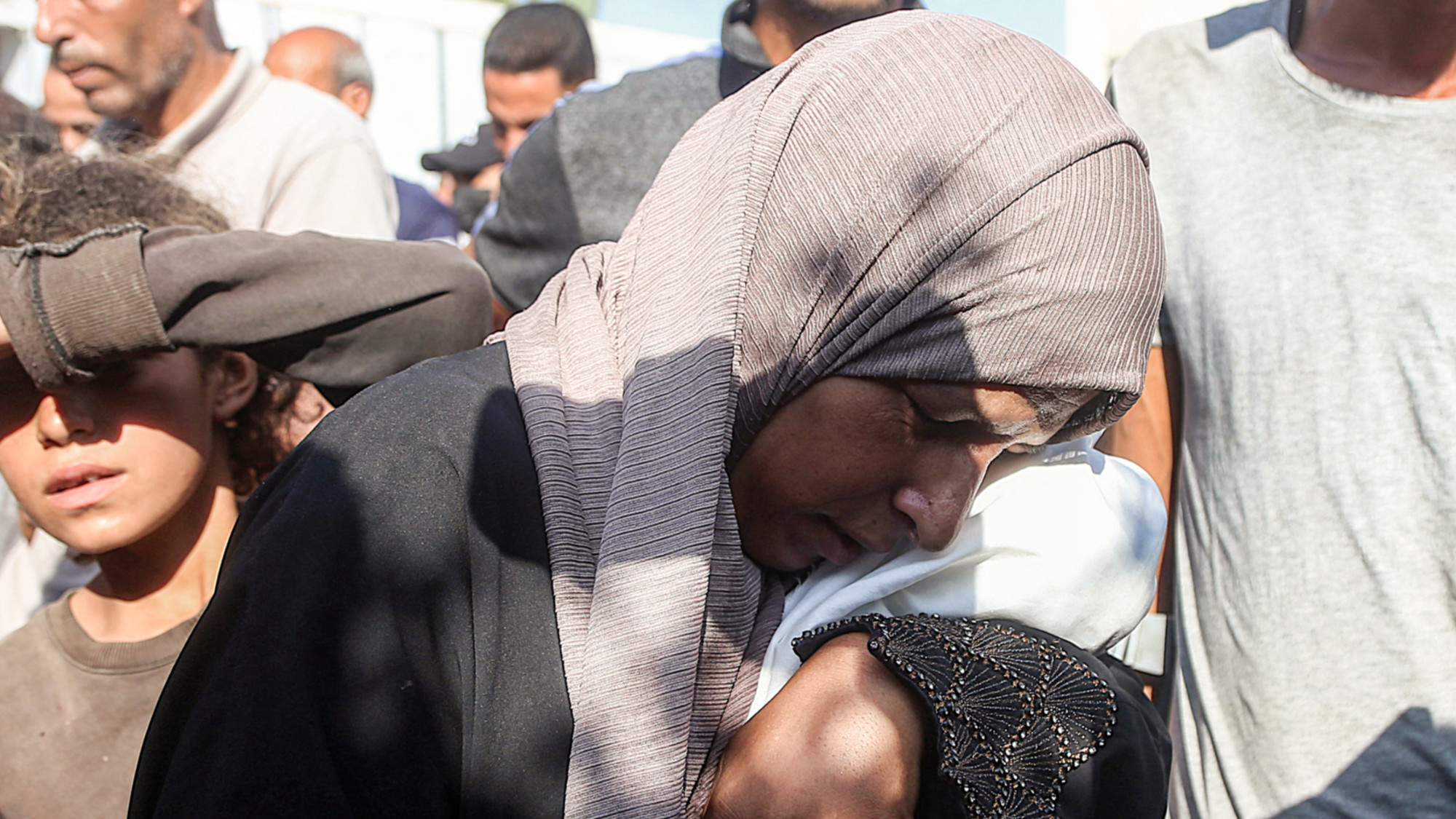
    Seven years of waiting for a child ended in heartbreak for 34-year-old displaced Palestinian Sahar al-Majdalawi, one of thousands of pregnant women in Gaza whose pregnancies have been lost amid the ongoing humanitarian catastrophe triggered by the Israeli military campaign launched in October 2023.

    Just one month after confirming her first pregnancy, al-Majdalawi was crippled by unrelenting abdominal cramps so severe they mirrored active labor pains. Fearing for the life of her unborn child, she and her husband set out on foot in the dark for the nearest functioning medical facility: Israeli bombardment had flattened key infrastructure, left all roads impassable and paralyzed public transport across the Gaza Strip, leaving no other option for evacuation. After walking for hours under the cover of night, the couple finally reached Al-Awda Hospital in the central Gaza Nuseirat refugee camp.

    “We had to walk so far because there was no transport despite my pain. The whole time, I was begging God to keep my baby safe,” al-Majdalawi recounted to Middle East Eye in an interview.

    An ultrasound delivered the devastating news she had dreaded. “They said: ‘The foetus is still in your womb, but there is no heartbeat,’” she said. “At that moment, it felt as though my own heart stopped beating. I realised I had lost the dream I had waited years to fulfil.”

    al-Majdalawi’s tragedy is far from an isolated case in Gaza, where ongoing conflict has gutted healthcare systems, erased food security and pushed public health to a breaking point. Official and international data confirms a catastrophic surge in pregnancy complications, led by a skyrocketing miscarriage rate that has overwhelmed already depleted medical services.

    According to the International Planned Parenthood Federation, at the peak of active hostilities, miscarriage rates jumped 300 percent above pre-October 2023 levels. Current data places the miscarriage rate at 460 per 1,000 births, a stark jump from just 140 per 1,000 births recorded across Gaza in 2022. Palestinian Ministry of Health figures document 3,958 confirmed miscarriages in the first six months of 2026 alone — a figure senior obstetrics and gynaecology consultant Dr. Adnan Radi, head of the ministry’s advisory committee, calls “shocking.”

    Dr. Radi emphasizes that even these staggering official numbers underestimate the full scale of the crisis. “Official statistics, whether from international organisations or the Ministry of Health, undercount the true scale, but there is an undeniable and sharp surge in miscarriages during the war years,” he explained. Hundreds of additional cases go unrecorded, he noted, because most women cannot travel through war-damaged territory to reach care, and systematic data collection across Gaza’s sprawling, overcrowded tent camps for displaced people has become effectively impossible. “Although an exact number is hard to pin down, there is a consensus that miscarriage rates have multiplied. The Ministry of Health indicated the rate could be as high as 70 percent of total births in certain areas, which is a tragedy.”

    While there is no single standalone cause for the surge, medical experts uniformly link the crisis directly to the cascading consequences of war. Dr. Radi points to severe anaemia as a primary driver: an estimated 70 percent of all pregnant women in Gaza currently live with the condition, worsened by widespread acute malnutrition across the enclave.

    Last week, the Integrated Food Security Phase Classification (IPC) issued a grim warning that 67 percent of Gaza’s population — roughly 1.14 million people — will face critical or catastrophic levels of acute food insecurity through the end of December. The body estimates that nearly 25,000 pregnant and breastfeeding women will require life-saving nutritional intervention in the next year.

    Beyond hunger, Dr. Radi cites widespread infectious disease, contaminated drinking water, catastrophic breakdowns in sanitation, and constant exposure to toxic dust from the thousands of tonnes of explosives dropped by Israeli military forces as key contributing factors. “Although comprehensive studies are lacking, there is a clear link between environmental toxicity, malnutrition, anaemia and the rise in miscarriages and premature births,” he said. He added that toxic residues from bombardment may alter the genetic makeup of Gaza’s population, leaving a generational public health crisis that will persist long after active fighting ends.

    For al-Majdalawi, no clear medical explanation for her miscarriage was available at the overstretched hospital, but she holds no uncertainty about its root cause. “Deep down, I know the war caused this. I was displaced countless times, my body was completely exhausted, and I suffered five injuries in separate air strikes,” she said. “I endured famine in northern Gaza, lost weight, and my health deteriorated. On top of that came the psychological torment of losing our home when our neighbourhood was bombed.”

    Today, al-Majdalawi and her husband live in a flimsy tent in the Nuseirat refugee camp, their original home in Jabalia destroyed in Israeli airstrikes and the area now off-limits, lying close to the Israeli military’s designated “Yellow Line” security boundary. She is one of nearly 2 million displaced Palestinians in Gaza, all struggling to survive in overcrowded, unsanitary tent settlements that offer none of the basic conditions needed for a healthy pregnancy.

    “My husband did everything he could to make life in the tent easier so my pregnancy would go smoothly, but there is only so much anyone can do,” al-Majdalawi said. “Imagine sleeping on a paper-thin mattress on uneven ground inside a flimsy tent baking in the summer heat. Sometimes I feel my heart will stop because of how hot it gets. My back aches constantly.”

    Even after the October ceasefire, constant fear remains a daily reality. Intermittent Israeli bombardment and repeated evacuation orders keep Gaza’s civilian population in a state of chronic stress. “Not a day passes without the thunder of bombardment or the buzz of the quadcopter drones overhead. Sometimes they even open fire. It keeps me in a constant state of psychological distress,” al-Majdalawi said.

    Access to nutrient-dense food was another insurmountable barrier during her pregnancy. World Bank data puts unemployment in Gaza above 80 percent, with poverty approaching 100 percent. Nearly all families rely exclusively on limited food aid, which mostly consists of shelf-stable staples such as rice, beans, lentils, pasta and canned meat. “My husband lost his job because of the war, so we depend on charity kitchens for free meals. Buying fruit, vegetables or fresh meat regularly is impossible without money,” al-Majdalawi added.

    Rising miscarriages are just one dimension of the full-blown crisis unfolding in Gaza’s remaining maternity wards. Physicians across the enclave are also reporting unprecedented spikes in premature births and severe congenital birth defects, with almost no resources to treat vulnerable newborns.

    “We have seen a sharp increase in premature births before 26 weeks of pregnancy,” Dr. Radi said. “In recent months, we have observed a drastic increase in severe foetal abnormalities. In previous years, seeing a baby born without limbs or feet was an extremely rare occurrence. Now, it has become a recurring phenomenon in delivery wards.”

    The surge in high-risk births comes as Gaza’s hospitals face a catastrophic shortage of neonatal intensive care unit (NICU) beds and equipment, drastically reducing the survival odds for premature and low-weight infants. In February, UNICEF reported that nearly one in five newborns in Gaza required intensive care or thermal incubation due to a combination of maternal malnutrition, chronic maternal stress and a near-total lack of accessible prenatal care.

    As frontline doctors fight to save as many mothers and infants as possible with depleted resources, al-Majdalawi remains in her tent, grappling with grief and a persistent, crippling fear that the conflict will rob her of the chance to have a healthy child. “I don’t know when the day will come when I can hold my baby in my arms without the terrifying fear of losing them or seeing them born with deformities,” she said.

  • US interest rates held for fifth time in a row

    US interest rates held for fifth time in a row

    After months of careful economic monitoring and deliberation, the United States Federal Reserve has announced it will maintain current interest rates for the fifth consecutive time, locking the benchmark borrowing cost between 3.5% and 3.75%. This outcome was widely predicted by financial analysts and market observers, aligning with widespread expectations that policymakers would hold rates steady to continue assessing ongoing economic trends.

    The Fed’s decision to keep rates unchanged this meeting builds on a policy stance that has remained consistent throughout all of 2026. The central bank’s choice to pause rate adjustments comes on the heels of a reported slowdown in inflation last month – the key metric measuring the pace of rising consumer prices that has been the central focus of the Fed’s monetary policy for nearly three years.

    Higher interest rates create a tangible ripple effect across household finances and the broader economy. For consumers seeking out personal loans, home mortgages, or carrying balances on credit cards, elevated rates mean steeper borrowing costs that can curb discretionary spending and large purchases. On the flip side, savers benefit from higher interest rates, as deposit institutions typically pass along increased rates to deliver stronger returns on savings accounts and certificates of deposit.

    While the recent cooling of inflation is widely viewed as a positive development for the economy, key risks still remain that have given policymakers reason to hold off on any rate cuts for the time being. Inflation still sits above the Federal Reserve’s long-term target of 2%, meaning the central bank has not yet hit its core policy goal. Adding to this uncertainty is the ongoing military conflict in the Middle East, which carries persistent risk of disruption to global oil supplies. Any spike in oil prices would likely push up broader consumer prices across sectors, erasing recent progress on cooling inflation and forcing a shift in monetary policy. The Fed has opted to keep rates steady to retain flexibility amid these ongoing global economic risks, waiting for clearer signals that inflation is on a sustained path toward its 2% target before adjusting policy.

  • Israeli defence minister boasts that US warplanes used Israeli bases to attack Iran

    Israeli defence minister boasts that US warplanes used Israeli bases to attack Iran

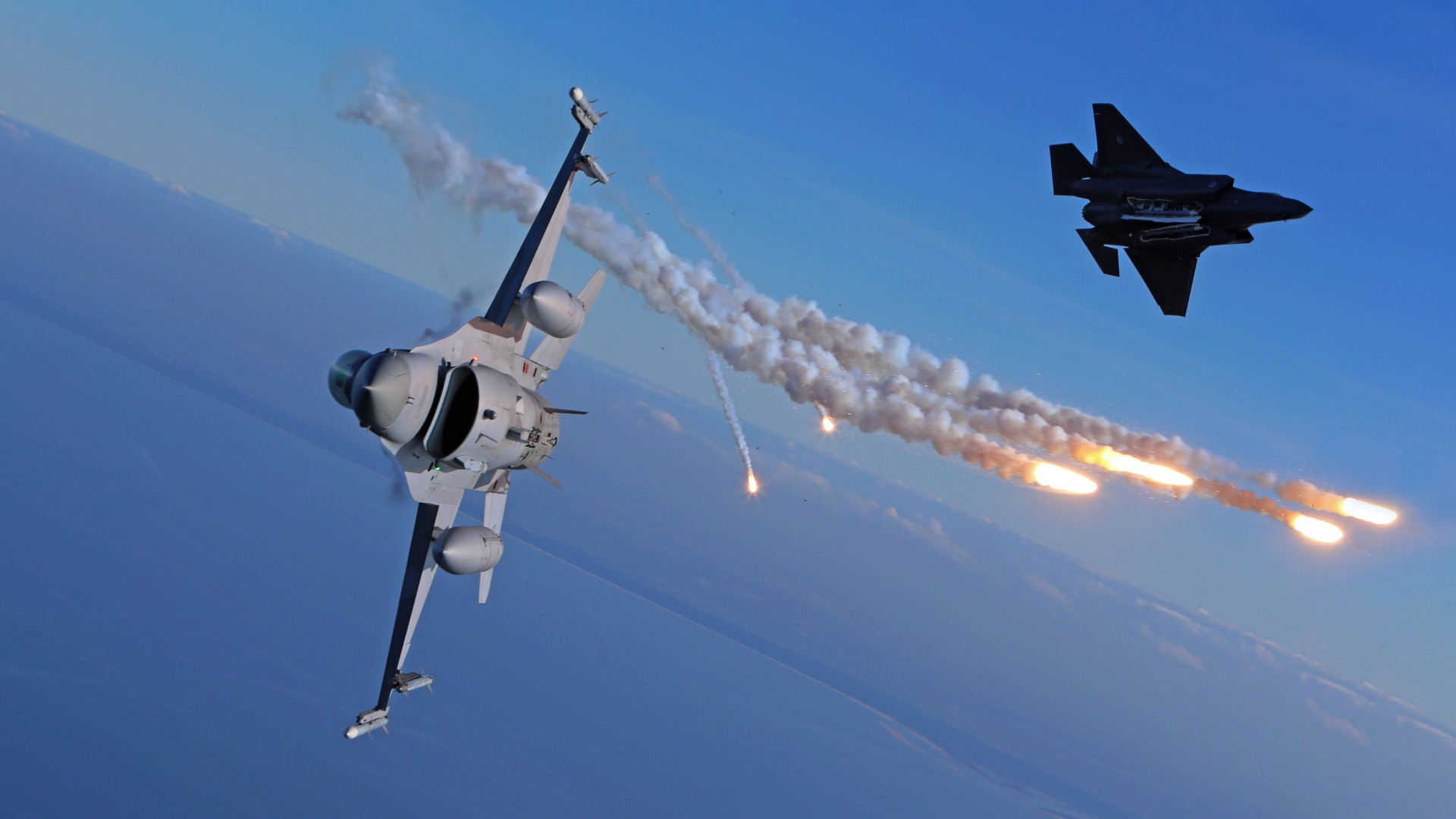
    In a surprising public confirmation that lays bare the deepening coordination between Washington and Jerusalem in escalating Middle East hostilities, Israeli Defense Minister Israel Katz has revealed that United States Air Force fighter jets and bombers launched attacks against Iran from Israeli military bases in recent weeks. The revelation publicly confirms what many regional analysts have long suspected: that Israel is serving as a critical launchpad for the Biden administration’s expanding military campaign across the region.

    Katz made the remarks during an interview Tuesday with right-wing Israeli broadcaster Channel 14, noting that “The Iranians know” the American aircraft departed from Israeli territory to carry out the strikes. In a combative address, Katz also declared that “The arrogant empire that threatened to destroy Israel has collapsed,” before issuing a stark new threat to the Iranian government.

    “We announced in the clearest terms that if Israel is fired upon, we will attack with all our might. We are prepared to strike Iran,” Katz said, adding that “We know how to manage things, and we are prepared” to handle any escalating retaliation from Tehran. His comments came just days after Israeli air defense systems intercepted at least three unmanned aerial vehicles near the country’s Jordanian border over Monday and Tuesday, a minor escalation that has stoked fears of broader conflict.

    What makes this confirmation particularly notable is the carefully calibrated role Israel has taken in the latest round of US-Iran hostilities. Unlike the initial phase of conflict that began back in February, Israeli forces have not taken an active part in the recent wave of US and Gulf ally strikes targeting Iranian assets across the region. For its part, Iran has also intentionally centered its retaliatory attacks on US interests in the Gulf, avoiding direct strikes on Israeli targets to this point.

    This dynamic has drawn attention from critics of the expanding conflict, who argue that Israeli leadership has intentionally pushed the United States to carry the brunt of military action against Iran. Prominent American commentator and journalist Tucker Carlson has been one of the most high-profile voices making this argument, and the sentiment is openly shared by senior members of the current Israeli government.

    Influence Israeli Finance Minister Bezalel Smotrich, a key figure in the country’s hardline ruling coalition, openly acknowledged the strategic calculation on Tuesday in comments reported by Israeli public broadcaster Kan news. Smotrich described the restarted US military campaign against Iran as the perfect outcome for Israel, so long as Israeli citizens do not have to join the fighting directly.

    “Israel has no interest in joining the campaign – the current situation is the best for us,” Smotrich stated.

  • Public inquiry into Creeslough explosion could be set up, say families

    Public inquiry into Creeslough explosion could be set up, say families

    Nearly four years after the devastating 2022 Creeslough service station explosion that claimed 10 lives, families of the victims have secured a key commitment from Ireland’s national government: if ongoing official investigations fail to deliver the transparent answers they demand, a full statutory public inquiry will be considered to unpack the disaster.

    The fatal blast tore through a village service station in County Donegal on 7 October 2022, leaving a tight-knit rural community shattered. The 10 victims ranged in age from 5 to adulthood, all hailing from Creeslough and its surrounding areas: Robert Garwe, his 5-year-old daughter Shauna Flanagan-Garwe, 14-year-old Leona Harper, Hugh Kelly, Jessica Gallagher, Martin McGill, James O’Flaherty, Martina Martin, and Catherine O’Donnell and her 13-year-old son James Monaghan. To date, no official cause has been confirmed, and no individuals have been formally charged in connection with the disaster, despite multiple arrests during the investigation.

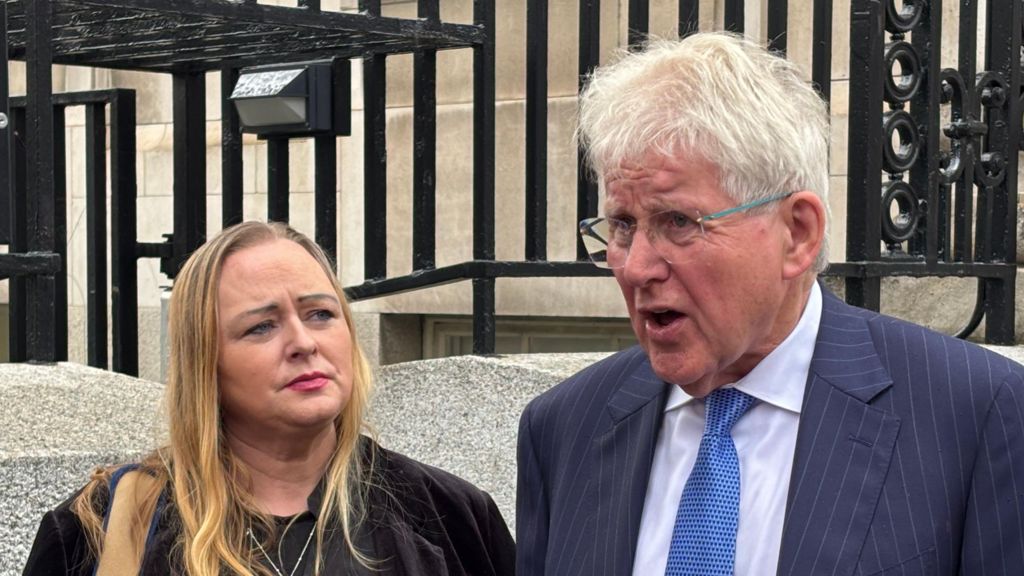
    A high-stakes meeting between Taoiseach Micheál Martin and victim families at Dublin’s Government Buildings has brought new momentum to calls for full accountability. Donna Harper, whose daughter Leona died in the blast, spoke publicly after the meeting about the government’s commitment. She explained that Martin has expressed caution about disrupting the ongoing active police probe, but confirmed the administration would be open to launching a statutory inquiry if existing investigations do not resolve the families’ outstanding questions. Harper called the outcome one she was “very happy” with.

    Anthony Gallagher, another victim’s father who lost his daughter in the explosion, echoed the families’ core demand: full transparency. “Everybody needs to know what happened and why it happened and to be sure it never, ever happens again,” he noted, adding that the taoiseach did not rule out a full public inquiry.

    A government spokesperson characterized the discussion as “open and constructive”, saying that Martin “listened to the personal testimonies of the families and articulated his deepest sympathies for their loss and the trauma that they have suffered. He understands their need for justice and for answers and reiterated the importance of allowing the investigation that is currently underway to come to a conclusion.” The spokesperson also confirmed that the official incident report from the Health and Safety Authority, one of the multiple agencies contributing to the probe, is expected to be finalized in the near term.

    The current investigation is led by local officers of An Garda Síochána (the Irish national police service) in the Donegal Division, with backing from the Garda National Bureau of Criminal Investigation and other regulatory bodies including the Health and Safety Authority and the Commission for the Regulation of Utilities. Just months ago, in April 2026, Garda investigators submitted a second evidential file containing formal investigative recommendations to the Director of Public Prosecutions, supplementing an initial file sent to prosecutors in September 2025. Police have confirmed that families have been kept updated on all procedural developments, and dedicated liaison officers continue to provide support to grieving relatives.

    This meeting marks the latest chapter in a years-long fight for clarity from Creeslough families. In 2024, Donegal County Council passed a formal motion calling on the national government to launch a public inquiry into the blast. A year later, relatives successfully blocked a planning application to build a new service station, shop and post office on the site of the 2022 explosion. Their legal team argued the development was deeply inappropriate while the criminal investigation remained active, and Ireland’s national planning body, An Coimisiún Pleanála, ultimately sided with the families and rejected the planning permission.

  • Spanish wildfire evacuees go home as France hit by new heat alert

    Spanish wildfire evacuees go home as France hit by new heat alert

    A devastating season of climate-fueled wildfires is unfolding across Western Europe, bringing a mixed wave of cautious relief and fresh anxiety this week as evacuees in Spain begin returning to their homes while France braces for a new dangerous heatwave that threatens to reignite raging blazes.

    Over the past seven days, neighboring Spain and France have faced some of the most destructive forest fire events in modern history. Vast swathes of woodland and populated areas have been reduced to ash, forcing more than 30,000 people to flee their properties to escape the advancing flames.

    On Wednesday, Spanish authorities lifted all remaining evacuation orders for Avila province, marking a full step toward recovery one day after lifting similar orders for multiple districts in the Madrid surrounding region. For some returning residents, the moment was a quiet celebration: 70-something Maria Jesus Perez Blanca, one of a dozen residents who gathered at local cafes in the Madrid-western town of Aldea del Fresno on Wednesday morning, called the return home a joyous occasion, saying she had been counting down the minutes to enjoy her morning coffee and breakfast in her own space.

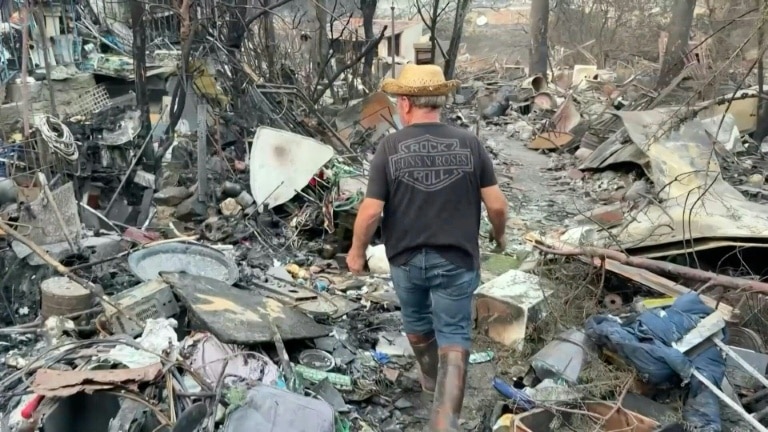
    But just 12 kilometers away, in Pelayos de la Presa, the story was one of total loss. David Rodriguez was bulldozing the blackened, collapsed remains of the family home his father built four decades ago, which had been completely consumed by the fire. “It’s a disaster. Just look at it,” he told reporters. “All my memories, everything I worked for and owned was here. Everything is gone.”

    Spanish officials credited cooler, wetter overnight conditions with allowing fire crews to fully stabilize the wildfire perimeter across most affected areas. Prime Minister Pedro Sanchez noted that the coming 24 hours would be “decisive” in the effort to fully extinguish all remaining hotspots and flare-ups.

    Across the border in France’s Gironde region, the massive wildfire burning west of Bordeaux—one of the country’s most famous winemaking hubs—has also been held in check after a second consecutive calm night, bringing tentative optimism to emergency teams. Still, that optimism is tempered by the impending arrival of the country’s fourth major heatwave of an already record-hot summer, which is forecast to send temperatures soaring and worsen fire conditions.

    Already, crews supported by volunteer civilians and water-bombing aircraft have been working around the clock to contain a new outbreak near the coastal resort town of Lanton, west of Bordeaux. For 67-year-old volunteer Jean-Claude Bonnet, the scale of destruction is unlike anything he has witnessed in his lifetime. “The worst part is seeing the animals that have been burnt to death by the side of the road,” he said.

    The volatile conditions have already forced crews to repeatedly re-attack contained areas: shortly after water-bombing planes departed the Lanton fire line, a gust of superheated wind carried stinging hot ash off burning pine trees, whipping the flames back to life and forcing emergency teams to resume their containment work.

    Forecasts predict temperatures will reach 41°C across parts of Gironde and the southern Landes region, and fire officials warn that strengthening winds could stir dormant embers and trigger new large-scale flare-ups of the main Bordeaux-area blaze. Even with these risks, authorities announced that 57,000 residents evacuated from three towns near Bordeaux would be allowed to return to their homes starting this week, five days after they were forced to leave.

    Regional fire services report they are nearing completion of a 127-kilometer firebreak to contain the Gironde blaze, a massive effort that has been supported by a surge of civilian volunteer support across the region. Firefighting Captain Wilfried Schneider highlighted the wave of public solidarity that has emerged amid the crisis, saying: “We’re seeing this outpouring of solidarity — you can see it at the water points, you can see it at our command posts, where we have more to eat and drink than we could possibly need.”

    This wildfire crisis is not limited to Spain and France: it is part of a continent-wide disaster driven by human-caused climate change, scientists confirm. A string of record-breaking heatwaves combined with a widespread, severe drought across Europe have turned normally green vegetation into dry tinder, after unusually wet spring weather that created extra vegetation growth that is now fully parched.

    Data from the European Forest Fire Information System shows that Spain has already seen 207,000 hectares of land burn between January and July 2023—one of the largest five-month totals recorded in the country’s modern history. For France, the toll is even more unprecedented: roughly 92,000 hectares have burned over the same period, the largest total recorded in 20 years of official record-keeping.

    While Western Europe is currently the epicenter of the crisis, the European Union warned this week that fire-friendly conditions are expected to spread toward Central Europe over the coming days. Emergency crews are already battling new blazes across southern Europe: a large fire is active on the Greek island of Paros, and three firefighters have already died battling blazes in Crete and near the Peloponnese port of Gytheio. In southern Turkey, wildfires near popular tourist beach destinations have forced hundreds of people to evacuate, with hundreds of firefighters working to contain the spread.

  • Fifa opens disciplinary proceedings against Argentina

    Fifa opens disciplinary proceedings against Argentina

    In the wake of Argentina’s tense 1-0 2026 FIFA World Cup final defeat to Spain at the New York New Jersey Stadium, global football’s governing body has launched full disciplinary proceedings targeting the Argentinian Football Association (AFA) and multiple high-profile Argentine players and coaching staff for a string of alleged rule breaches across the tournament. The post-final confrontation, which erupted immediately after the final whistle when Argentine players and backroom personnel clashed with Spanish champions, has been at the center of FIFA’s inquiry, with a disciplinary and ethics prosecutor appointed just one week after the July final to examine the violent altercations.

    Following the prosecutor’s formal recommendation, FIFA is moving forward with assault investigations against three Argentine individuals: Napoli defender Nahuel Molina, who faces two separate assault counts; Paris Saint-Germain midfielder Leandro Paredes, who is charged with three counts of assault; and Argentine assistant manager Roberto Ayala, who faces one assault allegation. All assault charges fall under Article 14 of FIFA’s official disciplinary code. Molina also faces an additional separate charge of unsporting behavior under the same article, a breach that Argentine attacking midfielder Thiago Almada and Spanish star midfielder Gavi are also accused of committing in the aftermath of the final.

    Under FIFA’s existing disciplinary rules, unsporting conduct carries a minimum penalty of a one-match suspension for those found guilty, while assault convictions result in a minimum three-match ban. This investigation into post-final chaos is just one part of a wider set of disciplinary actions against the AFA, which is facing scrutiny for alleged misconduct spanning multiple matches throughout the 2026 World Cup tournament.

    The broader charges against the Argentine FA include violations of four separate FIFA code articles: Article 13, which bans using sports events for non-sporting political demonstrations; Article 13, covering team misconduct; Article 15, which prohibits discrimination and racist abuse; and Article 17, which outlines requirements for maintaining match order and security. The Article 17 breaches specifically relate to alleged off-field incidents including discriminatory chants and gestures from fans and personnel, delayed kickoff times, inappropriate public messages displayed by both the team and spectators, and multiple cases of spectators throwing projectiles onto the pitch.

    One of the most high-profile non-sporting demonstrations cited in the charges came after Argentina’s semi-final victory over England, when the squad displayed a banner supporting Argentina’s long-standing territorial claim to the Falkland Islands. The banner read “Las Malvinas son Argentinas,” translating to “The Falklands are Argentine.” FIFA first confirmed it was assessing reports of this banner incident on July 16, before opening the full collective disciplinary investigation into post-final violence on July 20.

  • Roberto Mancini apologizes after being rehired to coach Italy 3 years after he left for Saudi Arabia

    Roberto Mancini apologizes after being rehired to coach Italy 3 years after he left for Saudi Arabia

    ROME — Less than three years after walking away from the Italy men’s national football team for a high-paying role with Saudi Arabia’s national side, legendary manager Roberto Mancini has issued a public apology as he steps back into the job he left, tasked with pulling the Azzurri out of one of the darkest streaks in their modern football history.

    Mancini’s return comes on the heels of a catastrophic qualifying run that has plunged Italian football into crisis. For the third consecutive World Cup cycle, Italy failed to secure a spot in the tournament’s main draw, a shocking slide for a nation with four World Cup titles to its name. The latest disappointment, a playoff defeat to Bosnia and Herzegovina earlier this year, triggered immediate resignations from both Italian Football Federation (FIGC) president Gabriele Gravina and incumbent head coach Gennaro Gattuso in April, opening up a sudden vacancy at the top of the national program.

    The 61-year-old manager is no stranger to success with the Azzurri. He led Italy to its second European Championship title in 2021, a historic triumph that lifted the nation after decades of underperformance on the continental stage. But just two years after that iconic win, Mancini sent shockwaves through Italian football when he abruptly resigned from his post in August 2023. Just 14 days later, he was unveiled as the head coach of Saudi Arabia’s national team, taking on a far more lucrative contract that left many Italian fans feeling betrayed.

    In his first public comments since announcing his return, Mancini owned his misstep, offering a heartfelt apology to fans and federation officials alike. “I’m very sorry,” he told reporters Wednesday. “It was like losing the woman of your life. And it means you did something that shouldn’t have been done. So I’m sorry, very sorry also for everything that happened over these last three years. … I’m going to try to bring the national team back where it belongs.”

    Mancini also acknowledged that poor communication with then-FIGC president Gravina was entirely his fault. Aware that many fans still hold resentment over his 2023 exit, he said he expects a mixed reception when he returns to the touchline for his first match back in charge, a Nations League matchup against Belgium scheduled for September 25 at Rome’s Stadio Olimpico.

    “I realize some people will be against me,” Mancini said. “I’m hoping the squad plays well enough that maybe people will forgive me.”

    Notably, Mancini was not the FIGC’s first choice to fill the vacant head coaching role. Both star club managers Carlo Ancelotti and Pep Guardiola turned down offers to take the job, and former Italian international Andrea Pirlo was removed from consideration amid political controversy tied to a proposed sponsorship deal with a Russian betting company. That string of rejections left the federation to turn to the only high-profile available candidate with a proven track record of winning with the Azzurri: the man who left just over a year prior.

  • Lebanese businessman Antoun Sehnaoui hosts Netanyahu in Washington

    Lebanese businessman Antoun Sehnaoui hosts Netanyahu in Washington

    A high-profile closed-door dinner in Washington D.C. has thrown regional tensions and cross-border legal norms into the spotlight, after a controversial Lebanese billionaire and banking executive hosted Israeli Prime Minister Benjamin Netanyahu at an event honoring U.S. Senator Lindsey Graham. The gathering, which took place Monday at the upscale Four Seasons Hotel, was co-hosted by Antoun Sehnaoui — chief executive of Lebanon’s Societe Generale de Banque au Liban (SGBL) and wealth management firm Fidus — and former U.S. State Department spokesperson Morgan Ortagus.

    According to independent Israeli journalist Barak Ravid, the guest list extended far beyond ceremonial attendees, drawing a cross-partisan mix of sitting U.S. senators, Graham’s immediate family, and prominent figures from U.S. political and business circles. Attendees included Stephen Miller, the far-right senior advisor to former U.S. President Donald Trump; current U.S. Homeland Security Secretary Markwayne Mullin; Dina Powell McCormick, a senior Meta (Facebook) executive and former White House advisor; Katie Miller, a former advisor to the U.S. Department of Government Efficiency; and Yechiel Leiter, Israel’s sitting ambassador to the United States.

    The event is far more than a routine Washington social gathering, however: Sehnaoui has long been a polarizing figure in his home country, and the decision to openly host the leader of a state that Lebanon has no formal diplomatic relations with violates existing Lebanese law, which prohibits any formal contact between Lebanese citizens and Israeli individuals or officials. The dinner also comes at a moment of extreme escalation between Israel and Lebanon: since March 2, Israel’s ongoing bombing campaign across southern Lebanon has killed more than 4,300 Lebanese people, and Israeli military forces continue to occupy swathes of territory in southern Lebanon amid a months-long escalation of cross-border conflict.

    Sehnaoui’s legal troubles in Lebanon stretch back to the 2019 national financial collapse, which plunged millions of Lebanese into poverty and collapsed the value of the national currency. Lebanese national prosecutors have filed formal charges against both Sehnaoui and SGBL, alleging the pair engaged in large-scale money laundering connected to illegal currency trading amid the 2019 crisis and its aftermath. SGBL has issued a formal statement denying all wrongdoing in the case.

    Beyond the corruption allegations, Sehnaoui has long faced public accusations of ties to extreme right-wing Christian organizations within Lebanon, and has been publicly described as an open advocate for Zionist causes. While Lebanon officially maintains no diplomatic or official ties to Israel, observers have long noted that a small subset of Lebanese political groups — primarily drawn from the country’s Maronite Christian community — have maintained covert, unofficial connections to Israel and publicly advocated for the establishment of formal bilateral relations between the two states.
    This report was sourced from independent coverage by Middle East Eye, a outlet that produces original, independent reporting and analysis on the Middle East, North Africa and global affairs connected to the region.