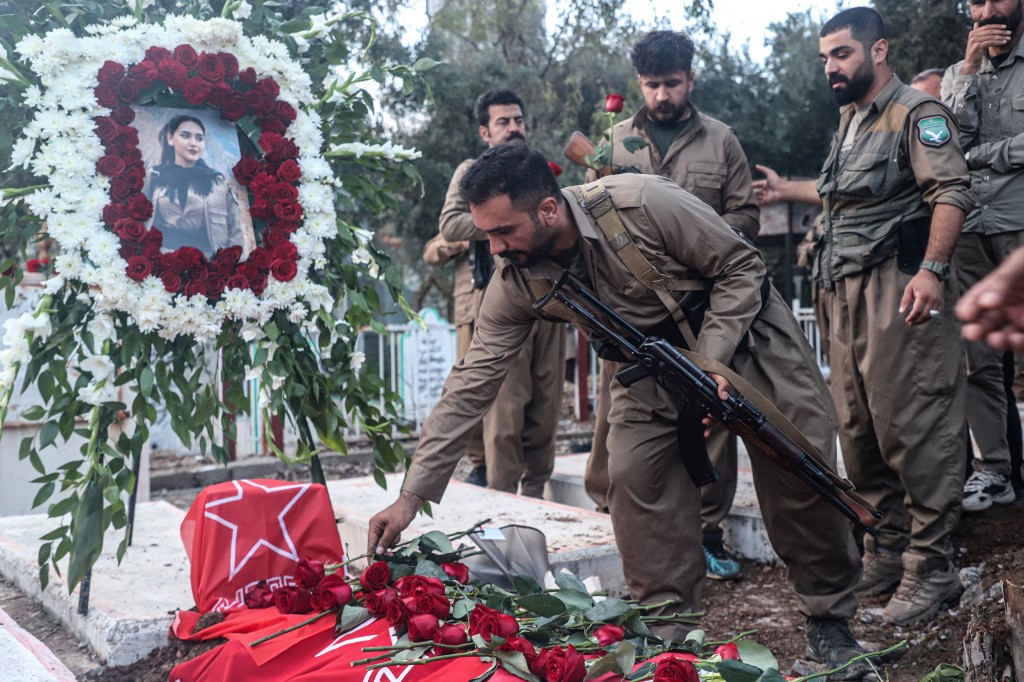
In early July, Turkish Vice President Cevdet Yilmaz traveled to Tehran to participate in the funeral of Iran’s late Supreme Leader Ali Khamenei, where he was greeted warmly by senior Iranian government officials and later hosted for formal talks by newly elected Iranian President Masoud Pezeshkian. Behind the public diplomatic courtesy, a critical behind-the-scenes security collaboration between the two regional powers was revealed to independent news outlet Middle East Eye by multiple anonymous sources familiar with the closed-door discussions. \n\nAccording to the sources, Pezeshkian expressed explicit gratitude to the Turkish delegation for its role in derailing a covert Israeli plan led by Prime Minister Benjamin Netanyahu to incite an armed uprising by Kurdish opposition groups in western Iran. Senior Turkish officials had launched intensive diplomatic outreach to their U.S. counterparts to argue that the Israeli proposal was not only unworkable but also posed a direct threat to Turkey’s core national security interests. Multiple sources familiar with the exchanges note that former U.S. President Donald Trump had previously hinted on multiple occasions that Ankara was even prepared to take military action to stop the creation of a new Kurdish separatist entity along its southern border, a response shaped by Turkey’s past security experiences stemming from the civil war in neighboring Syria. \n\nBeyond blocking the Israeli initiative, Turkey also delivered a clear diplomatic message to Iranian leadership during the talks: avoid sustained large-scale military operations against Kurdish groups positioned in the cross-border regions of Iran and northern Iraq. Turkish policymakers warn that if Iran continues its crackdown after the failure of the Israeli-backed insurgency plot, displaced and embattled Kurdish factions will have little choice but to deepen alliances with Israel and Western powers, a outcome that runs directly counter to Ankara’s current security priorities. \n\nCrucially, Turkey is currently navigating a fragile peace process with the Kurdistan Workers’ Party (PKK), a group designated as a terrorist organization by Ankara, the EU, and the United States. The Turkish government is set to introduce landmark draft legislation to parliament this coming Monday that would create a legal pathway for former PKK militants to return to Turkey within a six-month window. The proposed partial pardon would open a path to social reintegration for non-violent PKK cadres, making regional stability a non-negotiable requirement for the peace process to move forward. Any escalation of Iranian military action in northern Iraq, where the PKK maintains long-standing rear bases, risks unraveling the delicate negotiating track. \n\nTurkish diplomatic lobbying of Washington proved surprisingly effective, sources confirm, because senior Trump administration officials were already deeply skeptical of Netanyahu’s regime-change gambit, particularly the claim that Kurdish forces could successfully execute a ground incursion into central Iran. Multiple U.S. officials privately dismissed the plan as deeply flawed: the CIA director reportedly described Netanyahu’s regime-change scenarios as “farcical”, a characterization that Secretary of State Marco Rubio echoed in blunter terms to aides, calling it “bullshit”. \n\nEarlier this year, when U.S. officials working with Israeli intelligence agency Mossad and the CIA approached Iraqi Kurdish leaders to invite them to join the proposed anti-Tehran uprising, the proposal left Kurdish leadership caught between competing interests. The plan called for the Democratic Party of Iranian Kurdistan (PDKI), the Iranian affiliate of Iraq’s ruling Kurdistan Democratic Party (KDP), to lead the insurgency, and also demanded that Peshmerga forces from Iraq’s semi-autonomous Kurdistan Regional Government (KRG) join the campaign, as U.S. officials doubted the PDKI had the military capacity to pull off the operation on its own. But Erbil rejected the proposal. \n\nThe reluctance of Iraqi Kurdish leaders to sign on stemmed from lingering distrust of Washington, after the U.S. abandoned Kurdish militias in northern Syria earlier this year in a policy shift to accommodate the new Damascus government. With no guarantee of sustained U.S. support, Kurdish leaders had little incentive to take up arms against Iran. \n\nMehmet Alaca, a leading Turkish scholar focused on Iraqi politics and security, explained that escalating Iranian military pressure on Kurdish opposition groups would backfire for all regional actors. “Increased Iranian military pressure could inadvertently push Iranian Kurdish opposition groups, such as the PDKI, Komala and the Kurdistan Freedom Party (PAK), closer to the West, particularly Israel,” Alaca told Middle East Eye. “The Kurdistan Region of Iraq, which has hosted these groups for many years, would bear the greatest cost of such a development. Besides risking the transformation of the region into a new front in the Iran-Israel rivalry, this scenario could make the balance between the KDP and the Patriotic Union of Kurdistan (PUK) [in Iraq], the party led by the Talabani family, even more fragile. It could also provide Tehran with a justification for further expanding its influence in the region on security grounds.” \n\nIran has launched repeated airstrikes against PDKI bases in northern Iraq since escalating operations against Kurdish opposition groups in late February. To mitigate the risk of escalating instability, Alaca notes that Turkey has actively pursued diplomatic outreach to the PUK, a traditionally Iran-aligned Iraqi Kurdish party that normalized official relations with Ankara during a high-level visit to Turkey earlier this month. Currently, both the KDP and PUK – despite their long-standing internal rivalry – have agreed on a shared position that Iranian Kurdish opposition groups should not be drawn into the broader conflict between Iran and Israel. \n\nFor Turkey, Alaca emphasized, the entire dynamic revolves around its long-term domestic and regional security goals. “For Turkey, the most critical dimension is the peace process and the new security architecture it is seeking to build for the post-PKK era. The extension of the Iran-Israel rivalry into Iraqi Kurdistan and the re-emergence of the Kurdish card at the centre of the regional power struggle would directly undermine Turkey’s long-term security calculations.”’
作者: admin
-
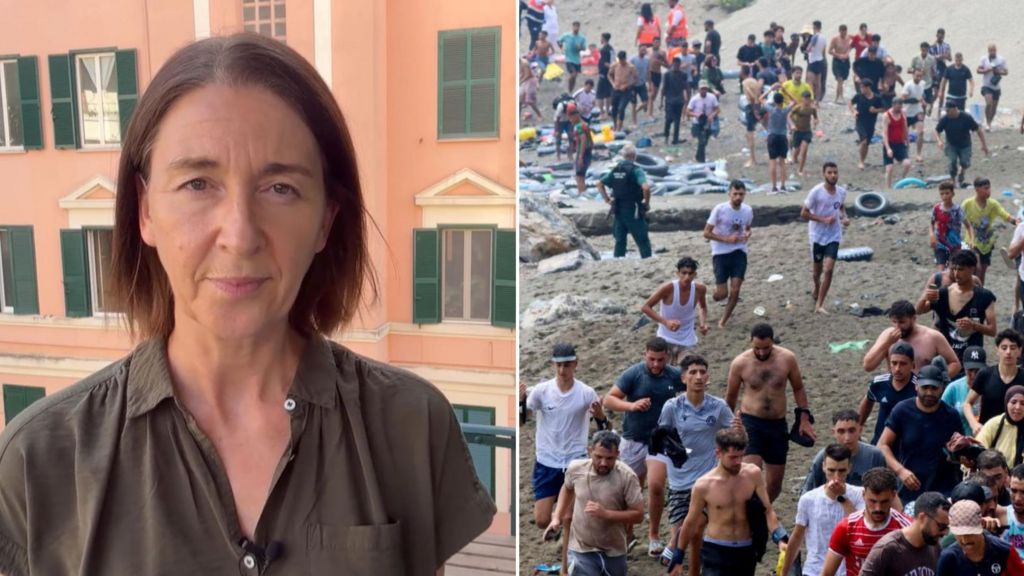
What triggered the mass migrant crossings into Ceuta?
In an unprecedented wave of migration that has drawn global attention, a staggering estimated 60,000 migrants from neighboring Morocco have crossed the border into Ceuta, a small Spanish territory located on the northern coast of Africa. This sudden massive influx of people has left humanitarian organizations and local authorities scrambling to respond to an emergency that many did not see coming, raising urgent questions about the underlying factors that pushed such a large number of people to make the dangerous journey across the border.
Many of these migrants faced extreme life-threatening conditions during their crossing, with limited access to food, water, and safety. The human cost of this mass movement has already been devastating: dozens of people have lost their lives while attempting to reach Ceuta, leaving behind grieving families and communities. The death toll has underscored the deadly risks that migrants continue to take in search of better opportunities, safety, or access to European territory.
Since the crossing began, questions have mounted about what triggered this extraordinary surge in migration. Analysts and policymakers have begun examining a range of potential contributing factors, including shifting political dynamics between Spain and Morocco, economic instability in the region, and changing border enforcement practices that may have opened a temporary window for large-scale movement. The situation remains fluid, with authorities continuing to work to manage the influx and address the humanitarian needs of the new arrivals while investigating the root causes of the crisis.
-
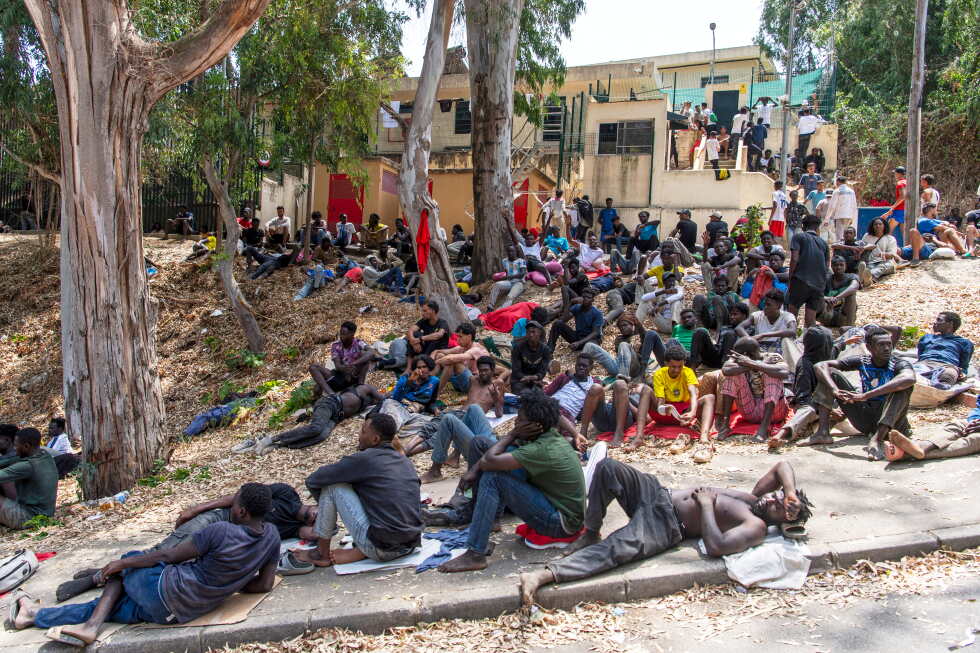
FACT FOCUS: Migrant crossing in Spain’s Ceuta breeds unsubstantiated claims
The mass arrival of around 60,000 migrants at the border of Ceuta, Spain’s small North African enclave, has ignited a flood of unproven claims and speculative narratives surrounding what triggered the unprecedented surge, along with the potential geopolitical and domestic fallout of the crisis. To put the scale of this incident in perspective, the number of migrants who crossed into Ceuta over just two days — Thursday and Friday — equals roughly 70% of the enclave’s permanent resident population. At least 41 people have been confirmed dead, killed either by drowning during the dangerous crossing attempt or in a chaotic stampede at the frontier. What follows is a fact-based breakdown of the most widespread claims circulating about this crisis.
### Claim: Spain’s recent immigrant amnesty policy directly caused the border rush
Critics including former U.S. President Donald Trump and his administration have argued that the Spanish government’s new amnesty program signaled to migrants that Spain has lax border policies, prompting the mass crossing. Trump explicitly blamed Spain’s “weak law, bad management” for the incident, while the U.S. State Department amplified this stance in a post on social platform X, claiming the crisis was “the direct result of the Spanish Government’s deliberate efforts to enable and facilitate mass illegal migration into Europe.”In response, the Spanish government has firmly rejected this narrative, pointing instead to transnational criminal smuggling networks as the primary drivers of the crisis. Madrid notes that it has maintained strict enforcement against unauthorized border crossings while creating legal pathways for migrant workers that the country’s growing economy depends on.
Under the amnesty policy, migrants without residency permits can legalize their status if they can prove continuous residence in Spain for at least five years and entered the country before January 1, 2026. More than 1 million people submitted applications before the application window closed at the end of last month. Broader structural factors also push migration from Morocco: widespread poverty and extremely high youth unemployment, particularly outside of Morocco’s developed coastal tourist hubs, fueled widespread Gen Z-led pro-reform protests last year, pushing many young Moroccans to seek better economic prospects in Europe. Even with these context factors, the exact trigger for the sudden, massive surge remains unconfirmed.
### Claim: A misinterpreted Spanish Supreme Court ruling sparked the crossings
Spanish Prime Minister Pedro Sánchez has argued that a recent Supreme Court ruling was deliberately misrepresented by human smugglers to convince thousands of migrants to cross the border by swimming around the fixed border fence. The ruling in question established that migrants arriving by sea cannot be immediately deported without due process, a different standard from that applied to migrants who cross over land or climb the physical border barrier.Human rights and migration activists corroborate that misinformation spread on social media played a major role in encouraging the mass departure. Achraf Maimouni, a Moroccan human rights activist, explained: “The departures were promoted in a certain way. At first, people were hearing that the border was open, and then everyone started referring to the Spanish court decision. That contributed to the crossings.”
### Claim: Morocco intentionally opened the border to enable the surge
The context of this incident traces back to a 2021 border crisis, when more than 8,000 migrants crossed into Ceuta after Moroccan border officials relaxed security checks, a move widely seen as diplomatic retaliation for Spain allowing a Western Saharan pro-independence leader to receive medical treatment in a Spanish hospital. That crisis was defused after Spain shifted its decades-long policy on the disputed Western Sahara region, and Sánchez met with Moroccan King Mohammed VI the following year.In this far larger 2025 crisis, initial statements from Spanish officials confirmed that Moroccan authorities were collaborating to halt the surge. However, those initial efforts failed to stop thousands of migrants from crossing over the two-day period. An Associated Press freelance photographer based in Ceuta witnessed Moroccan gendarmes standing by without intervening as thousands of migrants passed near their posts to enter Ceuta on Thursday. It was only on Friday that Moroccan security forces escalated their response, deploying tear gas, batons and water cannons to disperse large crowds of migrants gathering at the border.
Morocco’s ambassador to Spain stated that the crisis unfolded against Rabat’s wishes and expressed hope that most migrants would return to Morocco. Notably, Morocco has never formally recognized Spanish sovereignty over Ceuta and its sister enclave Melilla, despite the territories having been under Spanish control for centuries.
### Claim: The surge is retaliation for Spain’s positions on Gaza and Iran
Unsubstantiated conspiracy theories have circulated online claiming that the U.S. under the Trump administration and Israel encouraged Morocco to allow the mass crossing, in retaliation for Spain’s criticism of Israel’s military campaign in Gaza and the joint U.S.-Israeli attack on Iran. While Trump has publicly attacked Spain for months and threatened to end trade with the country, and Israeli Prime Minister Benjamin Netanyahu has accused Spain of waging a diplomatic war against Israel, there is no verifiable evidence linking either country to the Ceuta border crisis.### Claim: Most crossing migrants will eventually reach mainland Europe
Political leaders in neighboring Italy and France have already taken restrictive measures in response to the crisis, framing the moves as preparations to block migrants from entering their countries. Italian Prime Minister Giorgia Meloni even threatened to suspend Italy’s participation in the Schengen Area’s open border agreement with Spain, despite the fact that Italy shares no land border with Spain and is itself a major entry point for tens of thousands of Mediterranean migrants each year. French Interior Minister Laurent Nunez also announced that France would strengthen border controls with Spain.In reality, the impact of the surge will remain largely contained to Ceuta, with minimal spillover into mainland Spain or the rest of Europe. The Spanish government has confirmed it reached an agreement with Morocco to repatriate all migrants who entered Ceuta illegally. By Friday afternoon, more than half of the migrants who crossed had already returned to Morocco voluntarily. Those who remain in Ceuta will either be repatriated in the coming days or face extended periods of legal uncertainty, often in government-run detention centers.
Associated Press journalist Akram Oubachir contributed reporting from Casablanca, Morocco.
-
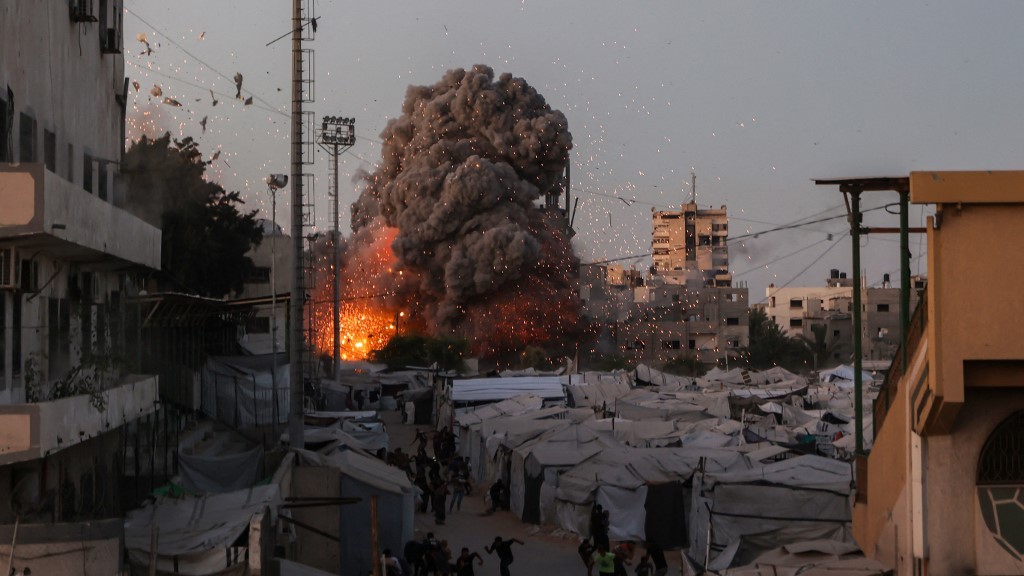
Israel uses sand walls to further encroach in Palestinian territory on Gaza as siege tightens
More than 10 months into Israel’s military campaign in Gaza, the country continues to expand its control beyond agreed-upon boundaries, pushing its so-called ‘yellow line’ security boundary deeper into the besieged enclave, forcing hundreds of thousands of displaced Palestinian civilians into an ever-shrinking, overcrowded territory and tightening a crippling months-long siege.
According to on-the-ground reporting from the BBC, residents of the al-Tuffah neighborhood in northern Gaza woke on Monday to find Israeli forces had moved concrete boundary markers westward, deep into Salah al-Din Road — Gaza’s primary north-south transportation artery. Near the repositioned markers, an Israeli flag was raised over a three-meter-high earthen and sand barrier constructed inside the agreed-upon line.
High-resolution satellite imagery has captured the full scale of the new walled enclosures Israel has built across large swathes of the Palestinian territory, confirming months of consistent reports from Gaza residents that Israeli forces are expelling them from their lands and blocking any return with towering earthen barriers.
The creeping expansion of Israeli control has already forced repeated displacement for Palestinian families who already lost their homes to earlier military operations. On Sunday, just one day before the al-Tuffah marker displacement, multiple families whose original homes were destroyed in earlier Israeli strikes were forced to flee again after the Israeli military issued a new attack warning for the area where they had set up makeshift tent shelters. A subsequent Israeli strike destroyed the tent that had become their only source of shelter.
This unilateral expansion of Israeli control directly violates the terms of the October 2024 ceasefire agreement brokered by the United States between Israel and Hamas. Under that deal, Israel was required to withdraw its forces to the original yellow line, while retaining temporary control over 53 percent of Gaza’s total territory.
However, Israeli Prime Minister Benjamin Netanyahu — who currently faces an International Criminal Court arrest warrant for alleged war crimes and crimes against humanity committed in Gaza — has confirmed that Israeli military forces now control more than 60 percent of the enclave. Back in May, Netanyahu stated that his official directive was to expand Israeli control to 70 percent of Gaza by pushing the yellow line further inward.
Official data from Palestinian medical sources puts the total death toll from Israel’s military campaign in Gaza at 73,335 as of recent counts, with at least 174,052 Palestinians wounded since the campaign began on October 7, 2023. Even after the current ceasefire took effect on October 11, 2024, Israeli attacks have killed 1,209 more Palestinians and wounded another 3,943, while rescue teams have recovered 803 additional bodies from destroyed areas.
Since the ceasefire agreement was signed, Israel has constructed more than 42 kilometers of new barriers stretching across roughly 85 percent of the original agreed yellow line. The new fortifications, military outposts and extended earthen embankments signal a long-term Israeli occupation of newly seized territory, while effectively redrawing Gaza’s internal boundaries to shrink the area open to Palestinian civilian residence.
Near al-Mawasi, one barrier extends more than 1.5 kilometers past the boundary line mapped out in the ceasefire agreement. A second barrier in Khan Younis extends more than 500 meters past the agreed line.
This steady advance of the boundary has repeatedly forced Palestinian civilians to abandon new makeshift shelters. On July 18, dozens of families fled the Zeitoun neighborhood after Israel issued a mandatory evacuation order. Witnesses on the ground reported direct gunfire from Israeli military vehicles and drones, as well as heavy artillery strikes on the area. The United Nations’ humanitarian office confirmed that roughly 30 families lost their makeshift tent shelters in the incursion.
Satellite imagery also confirms that Israel has cleared and leveled large swathes of farmland east of Deir el-Balah after giving local Palestinian families just 48 hours to evacuate the area. Israeli forces destroyed all existing civilian structures and uprooted a mature olive grove located more than 500 meters past the original agreed yellow line before installing new, shifted concrete boundary markers in the area.
In Rafah and Khan Younis, Israeli crews have demolished existing residential homes and commercial greenhouses to clear paths for new barrier construction. Satellite data shows that dozens of additional civilian structures were destroyed across Gaza during the month of July alone, including in the densely populated areas of Jabalia, Beit Lahiya, Zeitoun and Deir el-Balah.
Israel has also established 14 entirely new military positions along the expanded yellow line since October 2024, and has expanded the footprint of several older existing military outposts in newly seized areas.
Analysts note that this incremental annexation of Gaza territory has re-purposed the yellow line into a tool of siege, allowing Israel to seize increasing amounts of Palestinian land while forcing the enclave’s population of more than two million into a drastically reduced overcrowded area where access to basic necessities including shelter, food, clean water and medical care remains critically scarce.
-
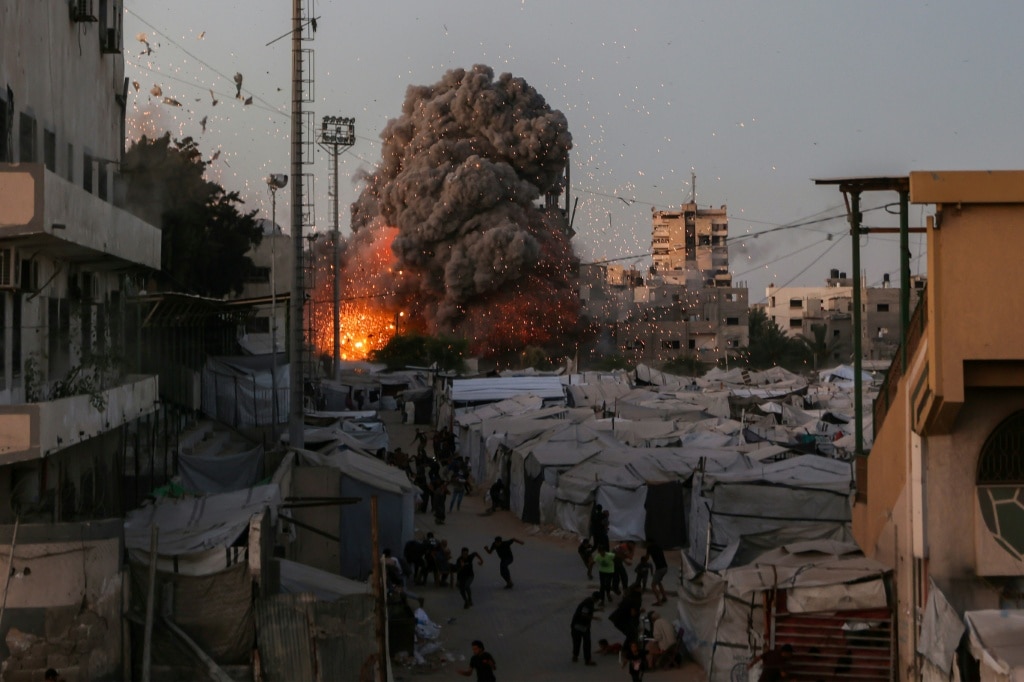
Hamas agrees to disarm under Trump plan
One of the most intractable obstacles to advancing the Gaza ceasefire that has been in place since October has been Hamas’s disarmament — a requirement that has stymied progress for months. On Friday, the Palestinian militant group announced a breakthrough agreement that would see it hand over all its weapons to a newly established Palestinian governing body, paired with a phased withdrawal of Israeli military forces from the Gaza Strip.
The deal forms the framework to advance the long-stalled second phase of the ceasefire brokered by former U.S. President Donald Trump, who celebrated the development on Thursday. In his remarks, Trump called Hamas’s commitment to complete disarmament a transformative and major milestone for Middle East peace. On Friday, during a press gathering at Camp David, Trump maintained that Israel fully supported the arrangement, telling reporters “We do have an understanding with Israel. Israel’s very happy about it.”
That claim, however, has been met with immediate pushback from Israeli officials, who have yet to release an official public statement on the announcement. An anonymous Israeli political source told Agence France-Presse that Israeli forces would not pull back from their current front lines under any circumstances unless Hamas carries out a full, verifiable disarmament — a condition the source emphasized remains non-negotiable. The disagreement deepened with opposition from far-right National Security Minister Itamar Ben Gvir, who denounced the deal as completely unacceptable, arguing it amounted to permitting Hamas to regroup and prepare for future deadly attacks against Israel. The source also added that the Gaza agreement was not raised at all during this week’s White House meeting between Trump and Israeli Prime Minister Benjamin Netanyahu, contradicting Trump’s assertion of Israeli backing.
For their part, Hamas leaders frame the agreement as a compromise made in service of the civilian population of Gaza, which has faced widespread humanitarian catastrophe after months of conflict. Ghazi Hamad, a senior member of Hamas’s negotiating delegation, clarified that Israel would have no role in overseeing the disarmament process. That responsibility, he said, falls exclusively to the National Committee for Administration of Gaza (NCAG), the governing body created under Trump’s peace plan to manage daily civilian and security affairs in the territory.
Hamas also noted that it expects international mediators and Trump’s specially convened Board of Peace to hold Israel accountable for complying with the deal’s terms, including its commitment to a phased military withdrawal. Israel has for months insisted that full disarmament of Hamas is an non-negotiable precondition for any military pullback, a position Israeli officials reaffirmed ahead of Friday’s announcement.
Even with the October ceasefire formally in place, sporadic violence has continued to claim lives in Gaza. On Thursday alone, Israeli airstrikes killed at least four Palestinians, two of them children, according to local Gaza health officials. The new deal requires an immediate full halt to all military operations across the territory, and mandates the deployment of an international stabilization force to create a buffer between remaining Israeli troops and areas under NCAG control.
The Board of Peace formally confirmed the agreement in a post on social media platform X, noting that Hamas had approved a detailed roadmap for advancing the next phases of the ceasefire process. “Our focus now turns to implementation,” the organization stated, adding that the NCAG will soon begin a phased transition to full governing authority over Gaza, with responsibility for internal security falling to the new body.
Nickolay Mladenov, the Board of Peace’s high representative for Gaza, noted that the agreement came after months of grueling, high-stakes negotiations. “What happens next matters even more. Implementation and verification have to be real,” Mladenov wrote on X, adding that “Withdrawal must move in lockstep with decommissioning.”
International reactions to the deal have been largely cautiously optimistic. European Union foreign policy chief Kaja Kallas welcomed the breakthrough, but warned that “a lot needs to fall in place for this to work.” United Nations Secretary-General António Guterres called the agreement a rare positive development amid ongoing regional tensions and spillover from the Gaza conflict, noting “The only good news in recent days is the announcement by the US president of an agreement for Hamas to relinquish their weapons and for Israel to withdraw its forces from Gaza.”
Egypt, one of the key mediators alongside the U.S., Qatar and Turkey, will host an upcoming meeting of negotiating parties to work out implementation details, Egyptian state-aligned Al-Qahera News reported Friday. An anonymous diplomatic source briefed on the roadmap described it as “a balanced and pragmatic path forward, with all weapons decommissioned and a phased transition of responsibilities” to the new governing authorities. The source emphasized that there would be “no exceptions for certain weapons or certain people,” laying out clear terms for the NCAG to take control of and secure all of Hamas’s heavy weaponry, weapons production facilities, storage depots and cross-border attack tunnels, with a new independent compliance verification mechanism put in place to monitor progress.
-
Why Africa might back controversial Fifa plan
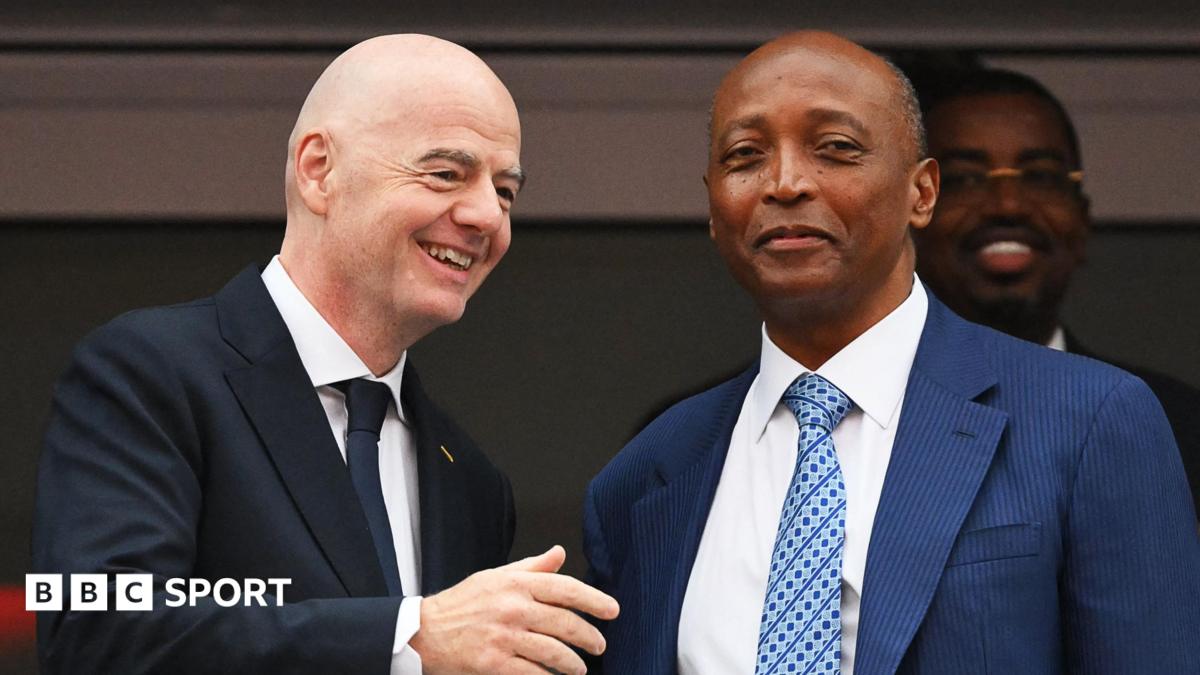
Global football is currently in the grip of a major governance and commercial storm, centered on FIFA President Gianni Infantino and his controversial proposal to sell minority stakes in FIFA’s flagship competitions to private external investors. As three of FIFA’s six continental confederations have already lined up in open opposition, all eyes are turning to Africa: will the Confederation of African Football (CAF) emerge as the unexpected key bloc of support for the embattled FIFA leader, and what forces are shaping its position?
Infantino’s plan would establish a new commercial subsidiary, FIFA Forward Enterprise, designed to attract outside investment. FIFA projects the initiative could raise up to $4.2 billion by the end of 2024, with all net proceeds pledged to be reinvested into development programs for football across the globe. So far, UEFA (Europe), the Asian Football Confederation, and CONCACAF (North America, Central America and the Caribbean) have all formally rejected the proposal, with UEFA even threatening to boycott FIFA competitions including the World Cup if the plan moves forward. CAF, however, has maintained notable public silence to date, with its executive committee only set to convene next week to formally assess the proposal and discuss a unified position.
The roots of CAF’s cautious stance stretch far beyond the current proposal, anchored in a deeply intertwined personal and institutional relationship between CAF President Patrice Motsepe and Infantino that has yielded tangible financial benefits for African football. Since both leaders took their respective posts in 2021, the two confederations have aligned closely. Motsepe has repeatedly praised Infantino as a loyal friend to African football, highlighting the Swiss executive’s key contributions to the continent: most notably, the expansion of the FIFA World Cup from 32 to 48 teams, which secured Africa a guaranteed nine qualification spots, up from the long-controversial previous allocation of just five. That shift alone has been framed as a transformative win for the continent, ending decades of perceived marginalization.
Ties between the two organizations run even deeper through personal connections. Veron Mosengo-Omba, who served as Motsepe’s deputy at CAF from 2021 until March 2024, previously held a senior leadership role as FIFA’s chief member associations officer. He is a long-time friend of Infantino, having studied law alongside him in Switzerland, and was recently elected president of the Democratic Republic of Congo’s national football federation in May. Under Motsepe and Mosengo-Omba, CAF has already improved its overall financial position, particularly by boosting revenue from its flagship tournament, the Africa Cup of Nations (AFCON), progress that many in African football credit to the close partnership with FIFA.
For cash-strapped African national federations, the financial incentive to back the proposal is clear. Most African federations receive minimal government funding, with many struggling to cover core operating costs, let alone invest in infrastructure, grassroots development and women’s football. Under the new proposal, each of CAF’s 54 member associations would receive an upfront payment of $20 million as early as 1 January 2025 if the plan is approved by the 19 September deadline, with a further $20 million to follow. That level of funding is life-changing for many programs across the continent.
“Football is a very expensive venture, especially on the African continent where resources are not easy to come by,” explained Rogers Byamukama, a representative of Uganda’s national football federation. “What is wrong with making more money and sharing that money with those that need it most?”
Fleetwood Haiya, president of Malawi’s football federation, echoed that sentiment, noting his government cannot even afford to allocate $1 million annually to football amid broader public resource constraints. “Malawi needs money. Malawi needs stadiums,” Haiya said. “I’m 100% in support (of the FIFA proposal). There is no dispute. I don’t understand why FIFA took so long to do this.”
Leaders across the continent point to already tangible results from past FIFA funding. Cape Verde’s impressive run to the knockout stage on their World Cup debut in 2026 came after the federation used FIFA grants to upgrade logistical and training support during qualification. Malawi’s women’s national team also pulled off a major upset at the 2024 Women’s Africa Cup of Nations, beating defending champions Nigeria in their finals debut, a result Haiya attributes directly to FIFA development funding. “Gianni Infantino believed in our project for women’s football,” he added. For many African administrators, the promise of additional funding will only strengthen their existing loyalty to Infantino.
However, the close alignment between CAF and FIFA has not been without controversy, and the proposal has already sparked internal division across African football. Critics note that Motsepe has largely avoided public pushback on controversial FIFA decisions that have harmed African interests: when U.S. authorities blocked Somali referee Omar Artan from entering the country ahead of the 2026 World Cup, and when FIFA controversially overturned a one-match suspension for U.S. striker Folarin Balogun, CAF declined to issue any public criticism, unlike many other global governing bodies. The 2025 AFCON was also forced to reschedule to a disruptive December-January window to accommodate FIFA’s expanded Club World Cup last year, and the recent decision to shift AFCON from a biennial to quadrennial tournament starting in 2028 has been widely criticized as a move that prioritizes FIFA’s global calendar over African interests.
Beyond past disputes, some prominent African football leaders warn that opening major competitions to private investment threatens the long-term integrity of the game, even if the short-term funding is attractive. “It does not sit well,” said Isha Johansen, former president of the Sierra Leone Football Association, former CAF executive committee member and former FIFA Council member. “As a businessman or woman you want something out of it. You’re not just doing it out of generosity. What price does one have to pay in order to get to this elevated development for football in Africa? I do hope that they (CAF) go along with all the other confederations.”
Johansen acknowledged that the funding on offer would be transformative for African football, but argued that leaders must draw a line to protect the sport’s core mission. “It is an offer that is hard to refuse,” she said. “We (in Africa) need the money. I think we now come to a point where you really need to know where to draw the line and not sacrifice the beautiful game.”
The final vote on the proposal requires a simple majority of FIFA’s 211 member associations to pass, meaning 106 votes in favor. If all member associations from UEFA, the AFC and CONCACAF follow their confederation’s leadership in opposing the plan, 136 votes will already be against the proposal. Even if all 54 of CAF’s member associations unite behind Infantino, opposition from the rest of the world is likely to block the plan, leaving African football caught between short-term financial opportunity and a global movement against increased privatization of the world’s biggest sport.
-
‘Suspicious deal’: US efforts to reunify Libya’s institutions face growing resistance
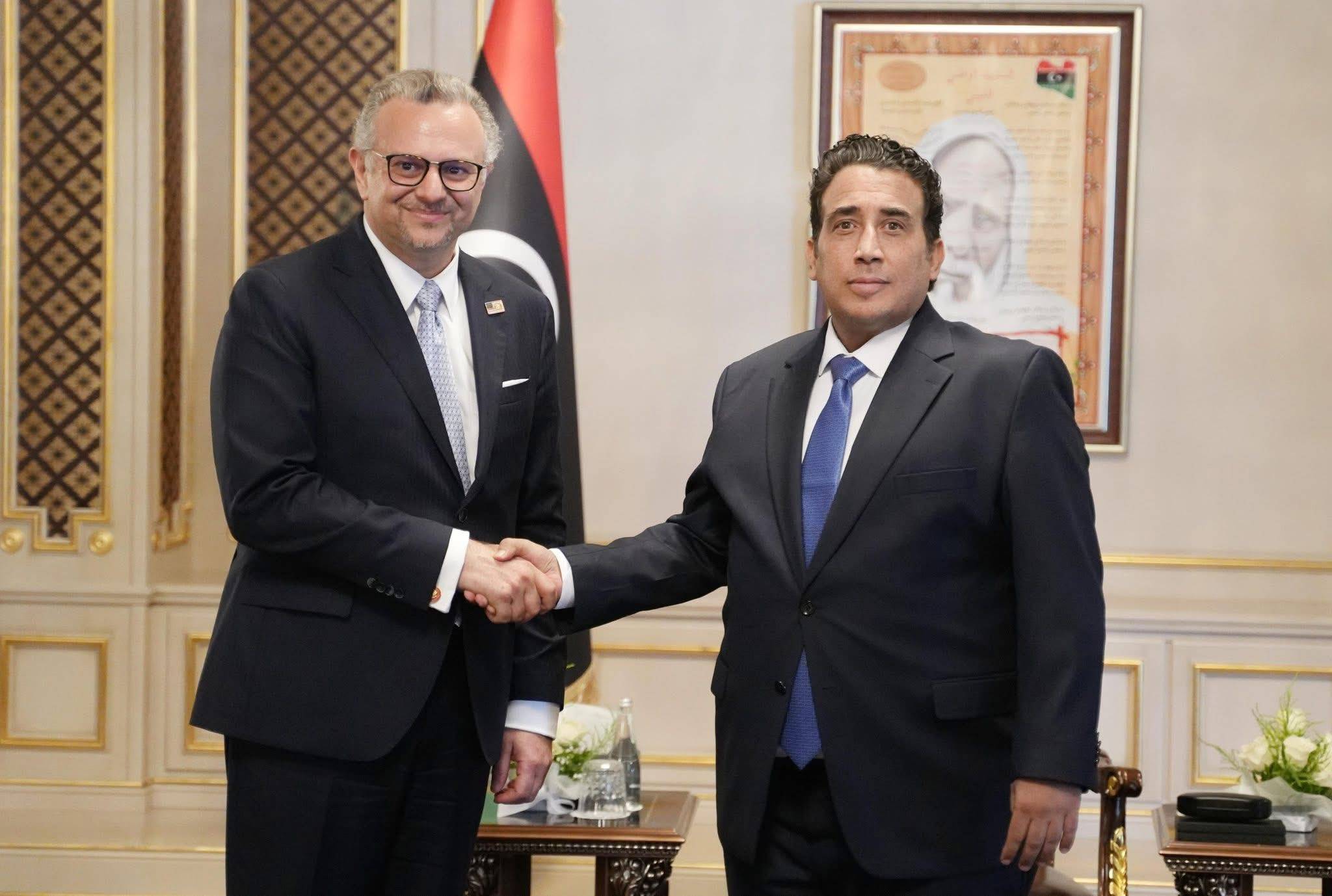
A month after completing what stands as the highest-profile diplomatic tour of Libya by the US’s top regional envoy since he assumed his role, Massad Boulos’ push for Libyan institutional unification remains mired in ambiguity, leaving regional observers and local factions questioning Washington’s core goals in the fractured North African nation.
Boulos, who serves as senior advisor to former President Donald Trump on Arab and Middle Eastern affairs, kicked off his multi-stop tour in early July with widespread expectations that he would unveil a concrete framework to resolve Libya’s decade-long political split. The itinerary kicked off with preliminary closed-door talks with factional representatives in Malta on July 6, followed by back-to-back face-to-face negotiations the next two days: first with Tripoli-based Prime Minister Abdul Hamid Dbeibah, who leads the UN-backed western Libyan government, on July 7, and then with eastern Libyan strongman Field Marshal Khalifa Haftar in Benghazi a day later.
In a notable break from standard diplomatic itineraries, Boulos also carved out time to meet with a range of influential independent players unaffiliated with either of the country’s rival ruling blocs. These included Naji Issa, governor of Libya’s Central Bank, and leading representatives from the Council of Elders of Misrata, the economically powerful western Libyan city that played a key role in defeating Haftar’s 2019–2020 offensive on western Libya.
Despite weeks of follow-up talks after the tour, no clear public roadmap has materialized for what Boulos framed during his visit as national unification efforts, a framework that has become widely known as the “Boulos initiative.”
This diplomatic push is not a new endeavor. As far back as September 2024, Boulos publicly committed that Washington would actively facilitate the reunification of Libya’s governing institutions, which have split along eastern-western lines since the outbreak of the country’s second civil war in 2014. That division came three years after a NATO-backed intervention toppled longtime Libyan ruler Muammar Gaddafi, leaving a power vacuum that has stoked ongoing instability.
Today, the country’s political landscape remains split: Haftar and his allied factions control eastern Libya, while Dbeibah’s UN-supported administration governs the west from Tripoli. The UN Support Mission in Libya has led formal peace negotiations since large-scale fighting ended in 2020, but the country has yet to achieve full institutional unification, with no national elections held to resolve competing claims to power.
After nearly 12 months of regular negotiations and meetings with Libyan officials from all sides, Boulos’ only confirmed major breakthrough has been the brokering of a unified national budget for both rival governments, agreed in April 2025. No additional concrete progress has been recorded in the months since. As of July 19, Aguilah Saleh, speaker of the Tobruk-based House of Representatives aligned with Haftar, confirmed that the legislative body had not received any official draft proposal for the Boulos initiative as of yet.
Slow progress on the initiative has been fueled in large part by mounting criticism from multiple major Libyan factions, whose opposition coalesced after a June 2025 Financial Times report cited anonymous sources familiar with the matter claiming that Washington was pushing a power-sharing deal that would install Saddam Haftar, Khalifa Haftar’s son and widely anticipated successor to the 82-year-old field marshal, as head of Libya’s highest executive body, the Presidential Council. The role is currently held by Mohamed Menfi, a relatively neutral political figure.
When Boulos arrived in Misrata on July 7 to begin his tour of western Libya, dozens of protesters gathered at the city’s airport to demonstrate against his visit and denounce what they called a “suspicious deal” to advance the Haftar family’s political power. Misrata, Libya’s commercial heartland, and its business and military leadership have a long history of fierce opposition to the Haftars; the city’s militias led the resistance that repelled Haftar’s 2019–2020 offensive to seize control of western Libya.
“The criminal Haftar is responsible for everything happening today, this is reason enough to reject a solution [involving his family],” Younes al-Salabi, spokesman for the Misrata Military Council, one of Libya’s largest armed factions, told Middle East Eye in an interview.
Misrata is not the only bloc opposing the initiative. In southern Libya’s desert region, rebel leader Mohamed Wardago, whose armed movement has waged an insurgency against Haftar’s forces since January 2025, echoed the opposition. “Nobody can accept that Haftar and his sons should hold key sovereign positions within the Libyan state,” Wardago said, confirming that his group had also seen reports of the US plan to install Saddam Haftar as Presidential Council head.
Jalel Harchaoui, a leading North Africa-based political analyst, confirmed that placing Saddam Haftar in the top executive role is the core component of the proposed deal. While the constitutional framework that defines the Presidential Council head’s powers remains vague, Harchaoui noted that Saddam Haftar already commands his own military units, so his appointment would expand the office’s influence and fundamentally reshape its role in Libyan politics.
The proposed deal does not only elevate the Haftar family: multiple reports, including the June Financial Times investigation, indicate the framework would allow Dbeibah to remain in his post as prime minister in Tripoli. Though Washington has long-standing ties to Khalifa Haftar, who holds US citizenship, the State Department has also maintained regular direct diplomatic contacts with Dbeibah; Boulos described a July 26 phone call between the two sides as “productive.”
Dbeibah, who was appointed to his post by the UN-backed Libyan Political Dialogue Forum in 2021 rather than elected through a popular vote, has faced growing public backlash in recent months. Since May 2025, repeated street protests have called for his resignation. Tensions flared again at the end of July, when protests sparked by widespread power cuts in western Libya shifted focus to Dbeibah, with demonstrators attempting to storm his Tripoli office. In recent days, protesters have closed five ministry offices and the national anti-corruption authority to protest collapsing public services, the ongoing electricity crisis, and plummeting living standards across the country.
Against this backdrop, a US-brokered deal that allows Dbeibah to retain power is deeply controversial among the Libyan public, even as it offers the embattled prime minister a critical political lifeline. “Dbeibah would gain recognition across the country and would, for the first time, be able to travel to Benghazi,” Harchaoui explained. “Both Saddam and Dbeibah would acquire national legitimacy, with the possibility of remaining in power without elections for at least a year, probably longer.”
While holding national elections remains an official priority for the United Nations, with the UN Security Council reaffirming its call for polls last month, elections have barely been mentioned as a core goal of Boulos’ initiative and do not appear to be part of his proposed framework. Misrata’s leadership says it supports a resolution centered on “the organisation of a constitutional referendum and elections,” while July protesters in Tripoli repeatedly called for “the fall of all political institutions, without exception,” to be replaced through a free electoral process.
In recent weeks, Boulos, a fluent Arabic speaker, has given a series of interviews to Arab regional media to defend and promote Washington’s efforts in Libya. In a July 27 interview with Saudi outlet Asharq Al-Awsat, Boulos argued that “unity is the basis for legitimacy and democratic elections,” meaning his framework prioritizes reaching a unification deal first before holding any national polls.
Analysts say this sequencing aligns with the White House’s core priorities in Libya: securing stable, pro-US partners rather than advancing rapid democratic transition. Since January 2025, when Libya announced its first oil licensing round in nearly 20 years, the US has actively encouraged American energy firms to invest in Libya’s oil sector, which holds the largest proven oil reserves on the African continent. A second core US priority is expanding security cooperation with Libya’s fragmented military, particularly Haftar’s Libyan National Army (LNA), to counter Russian influence in the region.
Russia has provided direct military support to the LNA since the second Libyan civil war, with Russian paramilitary groups deploying thousands of fighters to back Haftar’s forces. In exchange, Moscow has gained access to key airfields and ports in eastern and southern Libya, which the LNA controls, allowing Russia to expand its military operations across the African continent.
Harchaoui noted that “The Pentagon believes that unifying the military commands would make it harder for Russia to maintain its presence” in Libya. So far, one of the only tangible US successes in this area has been the Flintlock 2026 joint military exercise held in April 2025, which marked the first time LNA units and Tripoli-based armed forces trained together on Libyan soil.
During his July tour, Boulos also prioritized meetings with top Libyan security officials, meeting not just the Haftar family in Benghazi but also Interior Minister Emad Trabelsi and Deputy Defence Minister Abdul Salam al-Zoubi in Tripoli, both of whom command powerful western Libyan armed groups. Still, even after months of high-level diplomacy, Boulos has failed to outline clear specifics for his initiative, including how military reunification would be implemented.
A recent UN Panel of Experts on Libya report has also added to skepticism, reiterating longstanding allegations of widespread human rights abuses and systemic corruption involving armed groups and factions aligned with both the Haftar and Dbeibah families. Khalifa Haftar in particular has been accused of war crimes by global watchdog groups including Human Rights Watch, and a US court has previously ruled that he is legally liable for torture and extrajudicial executions carried out by his forces.
Ultimately, the lack of clarity surrounding Boulos’ plan has fueled growing skepticism across Libya, even as a broad majority of Libyans from all factions support the ultimate goal of unifying the country’s fractured institutions.
-

Strengthening El Nino ‘adding fuel to a planet already on fire’: UN chief
United Nations Secretary-General António Guterres issued a stark new warning Friday, saying a rapidly strengthening El Niño weather event, supercharged by human-caused climate change, is “adding fuel to a planet already on fire” and pushing the global climate system into unprecedented, dangerous uncharted territory.
Two months prior, Guterres had cautioned the world that El Niño was approaching. Now, he told the UN body, the phenomenon has fully arrived—and is rapidly cranking up global temperatures beyond what communities have ever prepared for.
El Niño, a naturally occurring climate pattern marked by elevated sea surface temperatures across the central and eastern equatorial Pacific, triggers cascading shifts in global wind patterns, atmospheric pressure, and rainfall distributions that push overall global average temperatures higher. But decades of human greenhouse gas emissions have amplified these impacts dramatically: a warmer ocean and atmosphere already hold far more excess energy and moisture, creating ideal conditions for more frequent and more intense extreme weather events ranging from deadly heatwaves to catastrophic heavy rainfall.
“This summer has already put us through a trial by fire: record-shattering heat domes trapping communities in lethal temperatures, apocalyptic wildfires raging across Spain, France and countless other regions, and thousands of lives lost to scorching conditions,” Guterres said. “But the latest science tells us this is only the opening act—worse is still to come.”
Data from the World Meteorological Organization (WMO) confirms the severity of the current event: Pacific sea surface temperatures driving this El Niño have never hit this level of warmth so early in the event’s cycle, with current average temperatures sitting 3 degrees Celsius (5.4 degrees Fahrenheit) above long-term normal levels. The WMO’s seasonal forecast projects that nearly every landmass on Earth will see above-average temperatures through the end of October.
“When you combine record-warm Pacific waters with a planet already heated by fossil fuel emissions, we face a very real risk that this event will shatter every existing global temperature record and bring even more devastating impacts to communities across every continent,” Guterres warned. “We are in uncharted territory.”
The risks stretch far beyond extreme heat alone. Guterres noted that India’s critical monsoon season has seen well below average rainfall so far, while prolonged hotter, drier conditions are forecast across a swathe of regions including Central America, the Caribbean, parts of South America, South Asia, the Southwest Pacific, Europe and Africa. Other regions face heightened risk of catastrophic flooding driven by the extra moisture in a warmed atmosphere.
Guterres concluded that the evidence is unambiguous: “the climate crisis is in overdrive.” To address the immediate threat and root causes, he laid out four urgent priorities for global action.
First, governments must implement national and city-wide heat action plans paired with expanded early warning systems, and guarantee widespread access to sustainable cooling solutions to protect vulnerable populations from lethal heat.
Second, nations must update labor regulations to enforce heat safety standards, ensuring that vulnerable outdoor and frontline workers—including those in the global garment industry, one of the most at-risk sectors—do not have to risk their lives to earn a living.
Third, extreme heat resilience must be integrated into the core design of critical public infrastructure, including cities, residential homes, schools, and hospitals, with dedicated funding and planning allocated to heat adaptation.
Fourth and most fundamentally, Guterres emphasized, the world must end its reliance on the fossil fuels that are driving planetary warming. Rather than treating each climate disaster as an isolated tragedy to be responded to after the fact, global leaders must address the root cause of the amplified El Niño and extreme weather crisis: ongoing fossil fuel extraction and use.
-
Hamas says it will not disarm in Gaza before Israel withdrawal
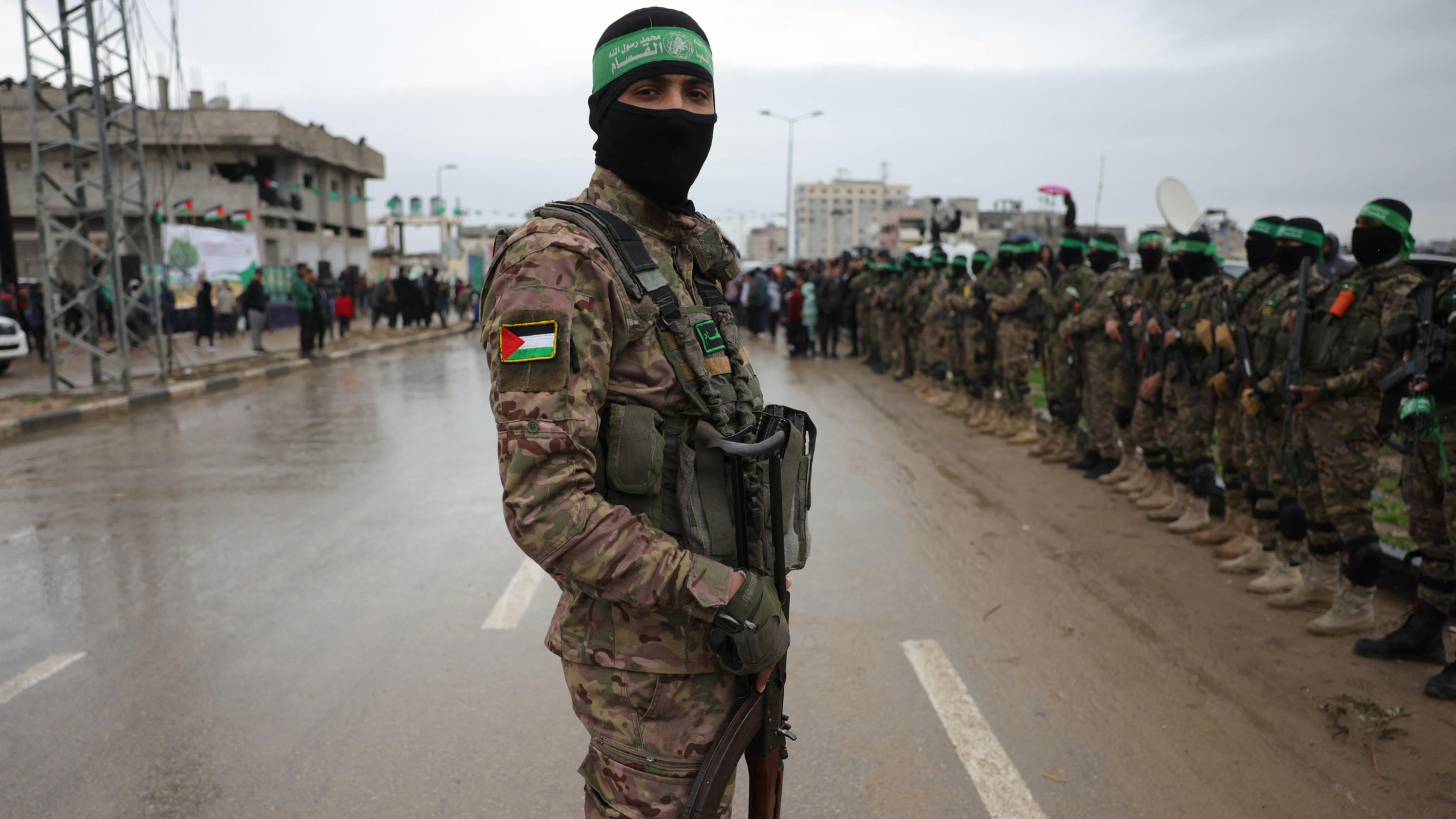
A major rift has emerged over a touted Gaza ceasefire breakthrough after a senior Hamas official confirmed the Palestinian armed movement will refuse any disarmament steps until Israeli military forces fully withdraw from the besieged enclave. Speaking to Al Jazeera, senior Hamas representative Ghazi Hamad emphasized that Israel will have no part whatsoever in any process to surrender the group’s weapons. Instead, Hamad noted, any disarmament initiative will be led exclusively by an independent Palestinian national committee.
The announcement comes amid a deeply broken ceasefire that took effect in October 2025: while Hamas has largely honored the truce terms, Israel has launched an unrelenting bombing campaign across Gaza that has already killed over 1,000 Palestinians and wounded hundreds more, in direct violation of the agreement.
Per reporting from Agence France-Presse, unnamed Hamas sources confirmed that a technocratic Palestinian committee established by the Board of Peace to govern Gaza would act as the sole authority responsible for managing and storing the group’s arms. The framework aligns with a broader ceasefire implementation deal that the Board of Peace announced Friday, confirming Hamas had formally approved the detailed plan for the next phases of the truce.
In a public statement posted to X, the Board of Peace framed the deal as the product of months of intensive, good-faith negotiations advancing a peace plan put forward by former U.S. President Donald Trump. The plan lays out new governance structures, expanded security arrangements, increased humanitarian aid access, large-scale reconstruction and economic recovery for Gaza, as outlined in the Trump proposal and U.N. Security Council Resolution 2803. The Board of Peace called the decision a “historic breakthrough,” claiming it would see Hamas disarm prior to an eventual Israeli military withdrawal from Gaza.
The White House echoed that celebratory framing in a July 30, 2026 post on X, writing “Today, the Board of Peace reached a HISTORIC agreement for the COMPLETE DISARMAMENT of Hamas and all other armed groups in Gaza. A monumental step toward lasting PEACE and SECURITY.”
Israeli officials have yet to issue any formal comment on the new agreement, but Prime Minister Benjamin Netanyahu and his cabinet have repeatedly stated Israeli forces will not withdraw from Gaza, where the Israeli military has waged what the report terms a genocidal war and ethnic cleansing campaign against Palestinian civilians. Back in May 2026, Netanyahu publicly stated his goal for Israel to seize full control of 70 percent of Gaza’s territory, noting “We currently control 60 percent of the Gaza Strip, and my directives are to move toward controlling 70 percent.”
As of July 2026, the Israeli military campaign has killed more than 73,000 people in Gaza, with thousands more still unaccounted for and presumed dead under the rubble of destroyed buildings. The small enclave, home to nearly 2 million Palestinians, has been left almost entirely in ruins, with 90 percent of the local population displaced from their homes. Most displaced Palestinians now live in overcrowded tent camps with no access to basic sanitation infrastructure. This report was originally published by Middle East Eye, an outlet that provides independent coverage and analysis of the Middle East and North Africa region.
-
How Israeli presence in Forest City exposes the Zionist-aligned underbelly of Malaysia
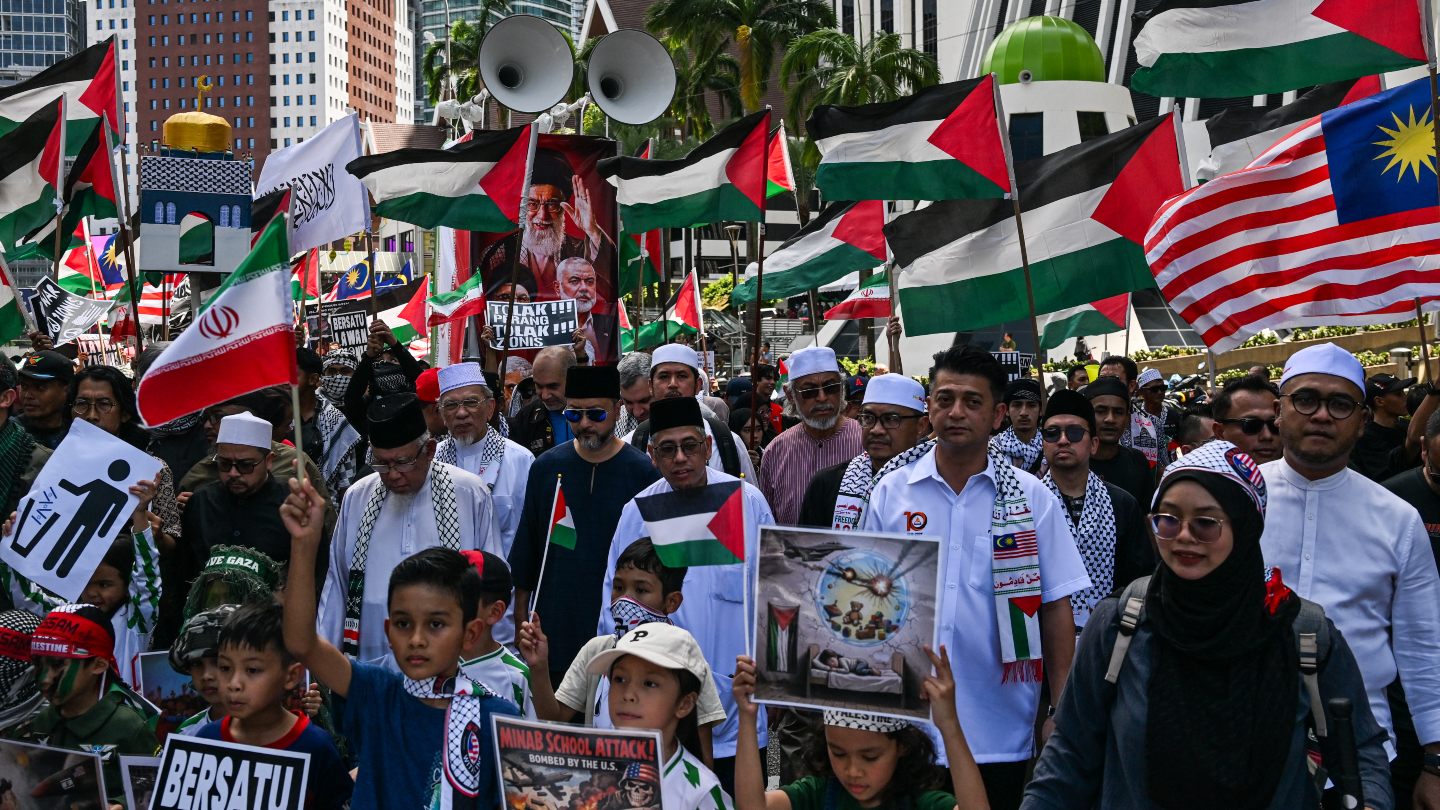
In mid-July 2025, a controversy sparked by unsubstantiated allegations of Israeli nationals working at a controversial tech-backed project in southern Malaysia has thrown a harsh spotlight on the deep contradictions between Kuala Lumpur’s longstanding pro-Palestine foreign policy and its aggressive push to attract global foreign investment.
On July 15, Malaysian Prime Minister Anwar Ibrahim made a forceful public declaration: any Israeli national found on Malaysian soil would be immediately deported, and the country would not compromise on its immigration stance, a position rooted in Malaysia’s official non-recognition of the state of Israel. The prime minister’s comments followed the emergence of online claims that Israelis were embedded in the Network School, a little-known initiative tied to the so-called ‘Network State’ concept launched by former Silicon Valley venture capitalist and Stanford professor Balaji Srinivasan, located in Johor state’s Forest City development.
Within hours of the allegations surfacing, Johor Chief Minister Dato Onn Hafiz Ghazi ordered state agencies including the Iskandar Puteri City Council to launch a full review of the Network School’s business compliance, and called for federal agencies including the Home Ministry, Immigration Department, police and customs to lead a formal probe into the claims of Israeli presence. Malaysia’s federal Home Ministry quickly greenlit the investigation.
After two rounds of inspections covering 379 foreign nationals registered at the site, Malaysia’s Immigration Department confirmed no regulatory violations were found among the vast majority of those checked, but noted that 19 individuals could not be traced. Director-General Dato Zakaria Shaaban told reporters the untraced people may have entered or exited the country through irregular channels, and authorities have launched a nationwide lookout for the group. On July 17, Ghazi’s administration issued formal notices to the Network School after uncovering that one of its linked properties was operating without a valid business license.
The crisis escalated on July 23, when the United States government summoned Malaysia’s ambassador to Washington, Tan Sri Muhammad Shahrul Ikram Yaakob, to demand clarification of Anwar’s deportation announcement. In a firm response, the Malaysian government reaffirmed it would not revise its longstanding immigration policy toward Israel. Srinivasan, for his part, took to social media platform X to request an audience with Anwar, seeking to reassure international investors and restore confidence in Malaysia as a viable destination for tech investment.
To understand the roots of this controversy, it is necessary to examine the unconventional nature of Srinivasan’s Network State project. First conceptualized publicly in 2022, the initiative frames itself as a “startup society” focused on peace, with the ultimate goal of crowdfunding physical territory to build a new sovereign state that would eventually earn diplomatic recognition from existing global governments. The project’s website describes it as a community built around an “ethnic diaspora” connected digitally, with physical outposts that act as “cloud embassies” where recruits can test the project before committing to stay. The Network State counts heavyweight backers including Silicon Valley titans Peter Thiel, Marc Andreessen, Joe Lonsdale and Patri Friedman, as well as major crypto firms such as Coinbase and Praxis.
Critics have long flagged the project’s troubling parallels to historical settler colonial ventures, noting that it centers on a digitally organized movement seeking to purchase and control physical territory in foreign nations. Many academic observers have also pointed out that Srinivasan frequently cites Israel as a model for successful nation-building, and draws direct ideological inspiration from Israel’s state-building experience. Compounding these red flags for Malaysia, multiple backers of the Network State have well-documented ties to Israel’s military and surveillance apparatus: Thiel’s data firm Palantir has invested heavily in Israeli military startups accused of providing surveillance technology that enables Israel’s military campaign in Gaza.
Srinivasan launched the Network School in 2024, choosing Forest City in Johor for its close proximity to Singapore, a global tech hub. But the location itself is mired in decades of controversy. Forest City is a multi-billion dollar joint venture between China’s Country Garden Group and Malaysian firm Iskandar Esplanade Danga 88 Sdn Bhd, whose shareholders include Johor’s ruling Sultan Ibrahim and business interests linked to the United Malays National Organisation, Malaysia’s largest Malay nationalist political party. Built largely on reclaimed coastal land, the development has long faced condemnation from environmental activists and local communities: an investigative report by Mongabay confirmed that construction began without a required environmental impact assessment, leading to the destruction of critical seagrass habitats and massive sand dumping that erased hundreds of hectares of traditional fishing grounds relied on by local communities. Rights groups have also previously criticized the project for relying heavily on low-wage migrant workers from South Asia, particularly Bangladesh, with limited labor protections.
The Network School scandal is not an isolated incident, but the most visible exposure of longstanding tensions at the heart of Malaysia’s foreign and economic policy. Malaysia has positioned itself as a vocal supporter of the Palestinian cause and a critic of Israeli military actions in Gaza, but it has also actively courted billions in foreign investment from Western and U.S.-linked firms, many of which have documented ties to Israel.
Earlier this year, for example, a BlackRock subsidiary was allowed to join a consortium taking a ownership stake in Malaysia Airports Holdings Berhad, a move that drew widespread criticism from Malaysian civil society groups, who called on Anwar to reject the deal over BlackRock’s links to what they described as “Zionist entity conducting a settler-colonial and racist genocide in Gaza.” Local media reports later revealed that the Anwar administration launched an aggressive media campaign to discredit critics of the BlackRock deal. In April, multiple major international defense firms with longstanding business ties to the Israeli military – including U.S. contractor Lockheed Martin, European missile maker MBDA, and U.S. firearms producer Colt’s Manufacturing – were allowed to participate in the 2026 Defence Services Asia and National Security Asia exhibition in Kuala Lumpur.
Civil society campaigners have also documented other ongoing links: Malaysian conglomerate Sime Darby maintains investment ties with Caterpillar, whose bulldozers have been used by the Israeli military for home demolitions in the occupied Palestinian territories; Australian rare earth producer Lynas continues its operations in Malaysia, with its minerals entering global defense supply chains that serve Israel; and activists have alleged that Malaysian ports have been used to facilitate shipments bound for Israel’s military supply chain. In 2025, Anwar welcomed former U.S. President Donald Trump to the ASEAN Summit held in Malaysia, despite widespread mass protests from pro-Palestine activists. Rights groups accused Malaysian police of detaining and intimidating peaceful protesters during the visit, while authorities maintained tight security to accommodate Trump.
Malaysia’s complicated balancing act is also shaped by its unique domestic political structure: a constitutional monarchy where power is divided between the federal government, state authorities and royal institutions, a system that has historically allowed large-scale foreign-backed development projects to move forward with limited public accountability or resistance. For Johor, the current site of the controversy, the stakes are particularly high: between July 2024 and June 2025, Malaysia attracted roughly $759 million in data center investments, with Johor emerging as a key tech hub as part of the newly launched Johor-Singapore Special Economic Zone.
Government officials have repeatedly stressed that all enforcement actions against the Network School have been rooted in regulatory compliance, not political considerations, but the controversy has ignited a fierce national and international debate over whether Malaysia can maintain its principled pro-Palestine stance while continuing to court investment from firms and countries with deep ties to Israel. As of late July, the investigation remains ongoing, and the future of the Network School project in Johor remains uncertain.