作者: admin

  • Chinese asylum seeker who exposed rights abuses fights to stay in the US

    Chinese asylum seeker who exposed rights abuses fights to stay in the US

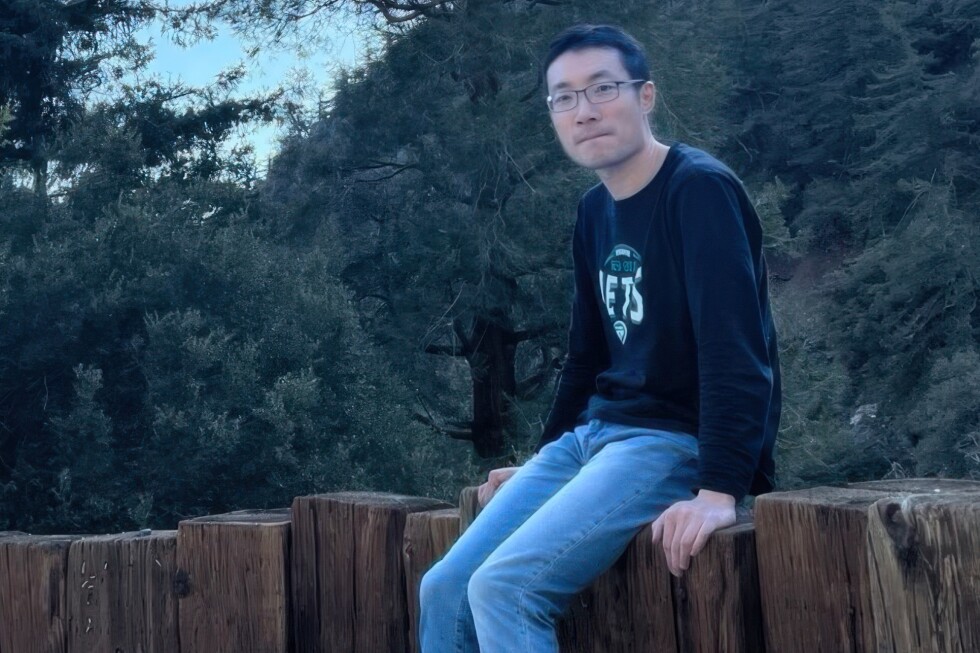
    A Chinese whistleblower who documented human rights violations in Xinjiang faces an uncertain future as he fights against deportation from United States custody. Guan Heng, 38, remains detained at the Broome County Correctional Facility in New York while awaiting a critical court decision on his asylum appeal scheduled for Monday.

    Guan fled China over four years ago after covertly filming detention facilities in Xinjiang, capturing evidence supporting allegations of widespread rights abuses against ethnic minorities. The Chinese government maintains these facilities are vocational training centers aimed at combating extremism.

    His legal troubles began in August when U.S. Immigration and Customs Enforcement (ICE) apprehended him during an operation targeting his housemates outside Albany. Although the Department of Homeland Security initially pursued deportation to Uganda, the plan was abandoned in December following congressional attention and public outcry.

    Guan represents one of tens of thousands of asylum seekers caught in intensified deportation efforts under the Trump administration. According to data from California-based nonprofit Mobile Pathways, approximately 170,626 asylum seekers received deportation orders in 2025, with asylum application abandonment rates skyrocketing from 11% to 31%.

    Immigration advocates express deep concern over what they describe as the systematic erosion of asylum protections. ‘We are very worried about the number of asylum seekers that will be sent back to extremely dangerous conditions,’ said Vanessa Dojaquez-Torres of the American Immigration Lawyers Association.

    Despite his predicament, Guan maintains faith in American democracy and institutions. He acknowledges understanding the rationale behind stricter immigration policies while appreciating the support from local communities and lawmakers. Representative Raja Krishnamoorthi, a member of the House Select Committee on the Chinese Communist Party, has urged Homeland Security to release Guan and approve his asylum request, emphasizing America’s commitment to protecting human rights whistleblowers.

    Should he prevail in his legal battle, Guan aspires to contribute meaningfully to American society, hoping to establish connections that would enable him to help others while cherishing the freedom from fear he found in the United States.

  • How Jared Kushner’s Gaza plan would erase Palestinian culture

    How Jared Kushner’s Gaza plan would erase Palestinian culture

    A dystopian cartoon titled “Gaza Beach 2030” by award-winning Dutch artist Peter de Wit portrays parents sunbathing on a Gazan beach while their toddler unearths human skulls from the sand. This haunting imagery now intersects with real-world geopolitical plans as Jared Kushner, former U.S. President Trump’s son-in-law and special envoy, unveiled a controversial vision for Gaza’s future at the World Economic Forum in Davos.

    Kushner’s proposal envisions a transformed Gaza Strip featuring gleaming skyscrapers, coastal tourist attractions, and commercial districts operating under “free market economy principles” modeled after Trump’s America. The presentation included AI-generated renderings depicting a cityscape resembling Gulf Arab states rather than traditional Palestinian architecture, complete with cultural inaccuracies such as Arabic text written in the wrong direction.

    Analysts universally condemned the proposal as colonial capitalism exploiting tragedy. Daniel Levy, a British-Israeli analyst and former peace negotiator, characterized it as continuation of profit-seeking from genocide, noting that over 71,500 Palestinians have been killed in the conflict recognized as genocide by UN experts and human rights organizations.

    Palestinian political analyst Abed Abou Shhadeh invoked Naomi Klein’s “The Shock Doctrine” to explain the phenomenon, stating: “They see the death of people as an opportunity to take their land, to take their apartments, and to take the rights over their land.” He predicted profiteers would include not only American and Israeli interests but also Arab businesspeople and wealthy Palestinians, while excluding the Palestinian people collectively.

    Renowned British-Israeli academic Avi Shlaim called the plan “preposterous and obscene,” noting its “total denial of any Palestinian agency.” Critics highlighted the irony of Kushner promoting this vision while his private equity firm had received substantial investments from Gulf states including UAE, Qatar, and Saudi Arabia after leaving the White House.

    Practical implementation appears unlikely according to most analysts. Annelle Sheline, a former State Department official who resigned over the Gaza war, noted the prerequisite of Hamas’s complete disarmament would be improbable given Israel’s military failure to achieve this despite extensive operations. She warned Trump should remember American failures in Iraq and Afghanistan when considering forced transformations of foreign territories.

  • India and EU set for ‘mother of all deals’ as Trump’s tariff uncertainty looms

    India and EU set for ‘mother of all deals’ as Trump’s tariff uncertainty looms

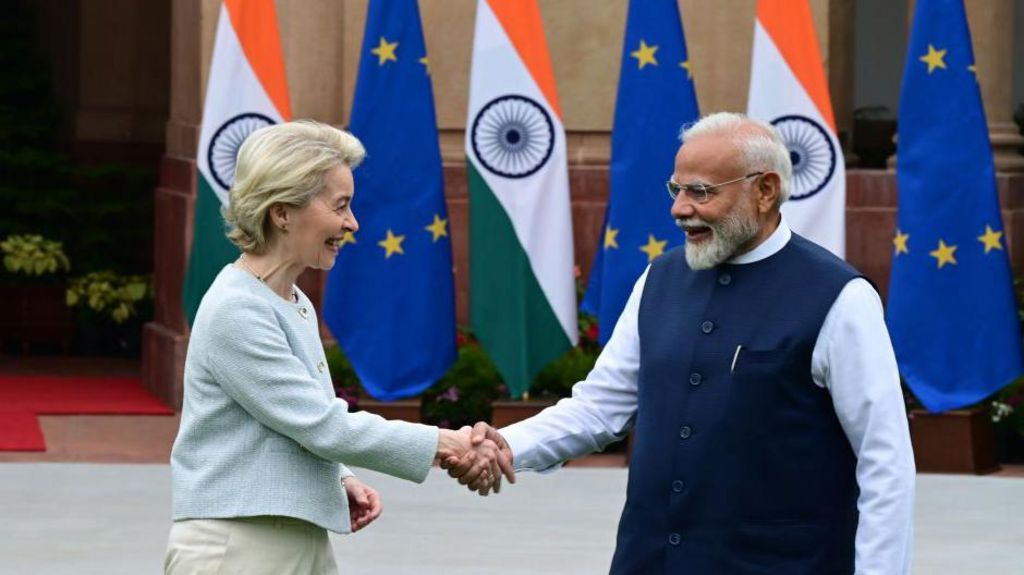
    In a significant diplomatic development, European Council President Antonio Luis Santos da Costa and European Commission President Ursula von der Leyen will attend India’s Republic Day celebrations as chief guests on January 26th. Beyond the ceremonial honors, their visit marks a crucial juncture in nearly two decades of free trade negotiations between the European Union and Asia’s third-largest economy.

    The potential agreement, which some reports suggest could be announced as early as January 27th during a high-level summit, represents a strategic pivot for both parties. For India, this constitutes its ninth free trade pact in four years, following recent deals with the UK, Oman, and New Zealand. The EU, meanwhile, continues expanding its trade network after concluding agreements with Mercosur nations, Japan, South Korea, and Vietnam.

    This accelerated negotiation timeline occurs against a backdrop of global trade uncertainty. Recent geopolitical tensions, including former President Donald Trump’s threatened tariffs against European allies and ongoing US-India trade disputes, have created renewed urgency for both parties to secure reliable trading partnerships. As Chietigj Bajpaee of Chatham House notes, “It sends a signal that India maintains a diversified foreign policy and that it is not beholden to the whims of the Trump administration.”

    The economic stakes are substantial. The EU is already India’s largest trading bloc, with bilateral trade currently favoring India—$76 billion in exports versus $61 billion in imports. The agreement would restore Generalized System of Preferences (GSP) benefits withdrawn in 2023, potentially boosting Indian exports in garments, pharmaceuticals, steel, petroleum products, and machinery.

    For Europe, partnering with the world’s fourth-largest and fastest-growing major economy—projected to surpass Japan’s GDP this year—offers access to a massive consumer market. Von der Leyen previously emphasized that an EU-India partnership would create a free market of two billion people accounting for a quarter of global GDP.

    Nevertheless, significant challenges remain. Europe seeks stronger intellectual property protections, including enhanced data security and patent regulations. India faces concerns regarding the EU’s new Carbon Border Adjustment Mechanism (CBAM), which effectively imposes border charges on Indian exports regardless of FTA provisions—particularly burdensome for small and medium-sized enterprises.

    India is expected to protect sensitive sectors like agriculture and dairy, while gradually reducing tariffs on automobiles, wine, and spirits—a approach consistent with previous trade agreements. As analyst Sumedha Dasgupta observes, the deal represents “a continuing and significant effort to shed India’s notoriously protectionist carapace.”

    Despite these hurdles, analysts ultimately view the agreement as mutually beneficial. Alex Capri of the National University of Singapore notes that the pact could “expedite trade decoupling from unreliable partners,” reducing vulnerabilities to arbitrary tariffs and weaponized supply chains. The agreement may also benefit from improved EU-India relations following India’s reduction of Russian crude oil purchases since November 2025.

    As Dasgupta concludes, recent political friction with the US means “EU leaders will now be more welcoming towards this trade deal than they would have otherwise been,” suggesting favorable conditions for finalizing this long-anticipated agreement.

  • Australian Open: Alcaraz dazzles in 100th Slam match as Sabalenka, Gauff grind through

    Australian Open: Alcaraz dazzles in 100th Slam match as Sabalenka, Gauff grind through

    The Australian Open witnessed a spectacular display of generational talent on Friday as established stars and emerging phenoms battled through contrasting challenges to secure their spots in the fourth round.

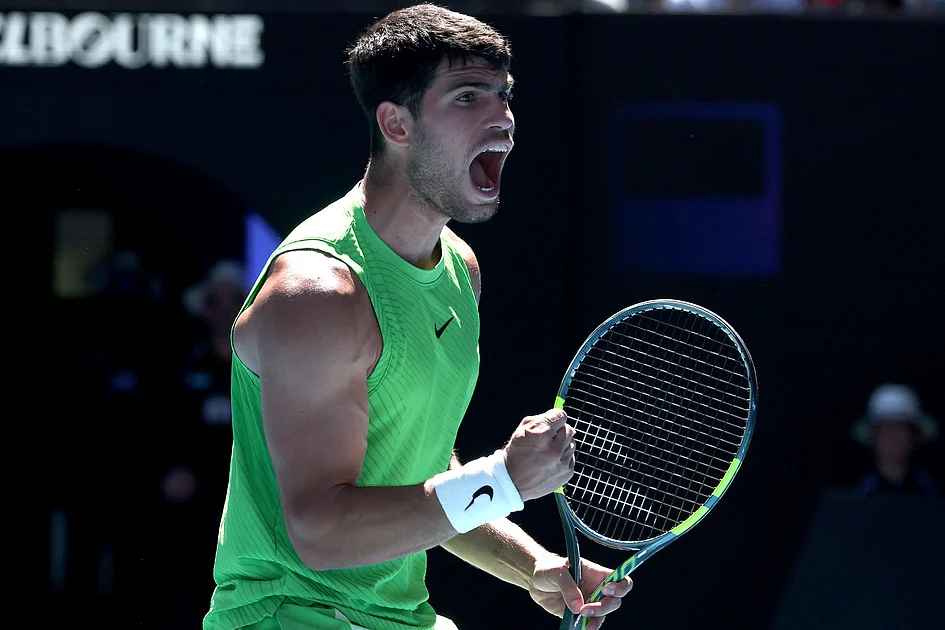
    Carlos Alcaraz delivered a masterclass performance in his milestone 100th Grand Slam match, dismantling French drop-shot specialist Corentin Moutet 6-2, 6-4, 6-1. The Spanish sensation showcased his extraordinary athleticism with what many are calling the rally of the tournament, chasing down a lob with a between-the-legs ‘tweener’ before threading a precision shot down the line. The victory extended Alcaraz’s unbeaten record against left-handers to 14 matches as he continues his quest to become the youngest man to complete the career Grand Slam.

    Home favorite Alex de Minaur created history by reaching the last 16 for the fifth consecutive year, joining John Newcombe as only the second Australian to achieve this feat in the professional era. His efficient 6-3, 6-4, 7-5 victory over American Frances Tiafoe has ignited local hopes for a first men’s champion since Mark Edmondson in 1976. “I’m looking for more and I’m in a position where I want more,” declared an ambitious de Minaur.

    The women’s draw saw top contenders tested severely. Defending champion Aryna Sabalenka survived a monumental scare against Russia-born Austrian Anastasia Potapova, prevailing 7-6(4), 7-6(7) while extending her incredible tiebreak winning streak to 21 consecutive sets. “You have to be there 100% in tiebreaks,” Sabalenka emphasized. “I just take it one point at a time.”

    American teenager Coco Gauff demonstrated resilience after dropping her first set of the tournament, rallying to defeat compatriot Hailey Baptiste 3-6, 6-0, 6-3. Meanwhile, the youth movement continued spectacularly as 18-year-old Iva Jovic toppled seventh seed Jasmine Paolini, and 19-year-old Canadian Victoria Mboko defeated 14th seed Clara Tauson to set up a showdown with Sabalenka.

    In other notable results, third seed Alexander Zverev continued his dominance over Briton Cameron Norrie with their seventh consecutive meeting victory, while Daniil Medvedev staged a remarkable comeback from two sets down against Hungary’s Fabian Marozsan. The tournament also saw emotional moments as wily Kazakh Yulia Putintseva ended Turkish qualifier Zeynep Sonmez’s dream run amid intense crowd support from Melbourne’s Turkish community.

  • Patrick Reed seizes halfway lead at Dubai Desert Classic

    Patrick Reed seizes halfway lead at Dubai Desert Classic

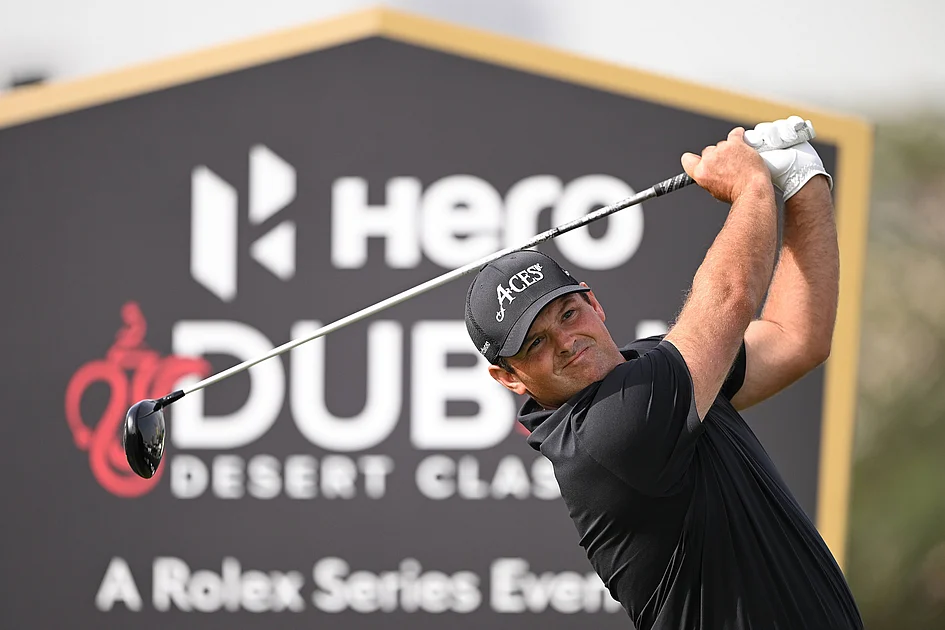
    American golfer Patrick Reed has surged to the top of the leaderboard at the halfway mark of the Dubai Desert Classic, delivering a masterclass in precision golf at the Emirates Golf Club. The 2026 tournament witnessed Reed card a spectacular bogey-free 66 during Friday’s second round, establishing a one-stroke advantage over his closest competitor.

    Reed, who began the day four shots behind overnight leader Francesco Molinari, demonstrated remarkable consistency throughout his round. He quickly leveled with the Italian star through two birdies and an eagle on the front nine, then added two more birdies at the first and third holes after the turn to reach nine under par. The former Masters champion maintained his composure through the remaining holes, finishing without a single blemish on his scorecard.

    Englishman Andy Sullivan mounted a formidable challenge, posting the week’s joint-lowest round with a brilliant seven-under 65 that included a spectacular eagle on the final hole. Sullivan’s remarkable recovery after a mid-round stumble saw him finish just one shot behind Reed at eight under par.

    The leaderboard remains tightly contested with Italian duo Molinari and Andrea Pavan sitting one shot further back at seven under. Denmark’s Nicolai Højgaard delivered a bogey-free 67 to claim solo fifth position at six under par.

    Reed expressed satisfaction with his performance, stating: ‘The game felt good today. I gave myself plenty of quality opportunities and only missed one green, which is crucial on this course. When you see a few putts drop early, it builds momentum throughout the round.’

    World number two Rory McIlroy remains in contention at two under par, seven strokes off the pace. The Northern Irishman improved significantly from his opening round with a 68, keeping his hopes alive for a record fifth Dubai Desert Classic title. McIlroy remained optimistic about his chances, noting: ‘If I can post a low score in tomorrow’s morning conditions, I’ll be right in the mix come Sunday.’

    The tournament continues through the weekend with Reed seeking to convert his narrow lead into victory at a venue where he has previously finished runner-up (2023) and recorded multiple top-ten finishes.

  • Watch: ‘It’s just plain incorrect’ – Afghanistan veterans react to Trump Nato remarks

    Watch: ‘It’s just plain incorrect’ – Afghanistan veterans react to Trump Nato remarks

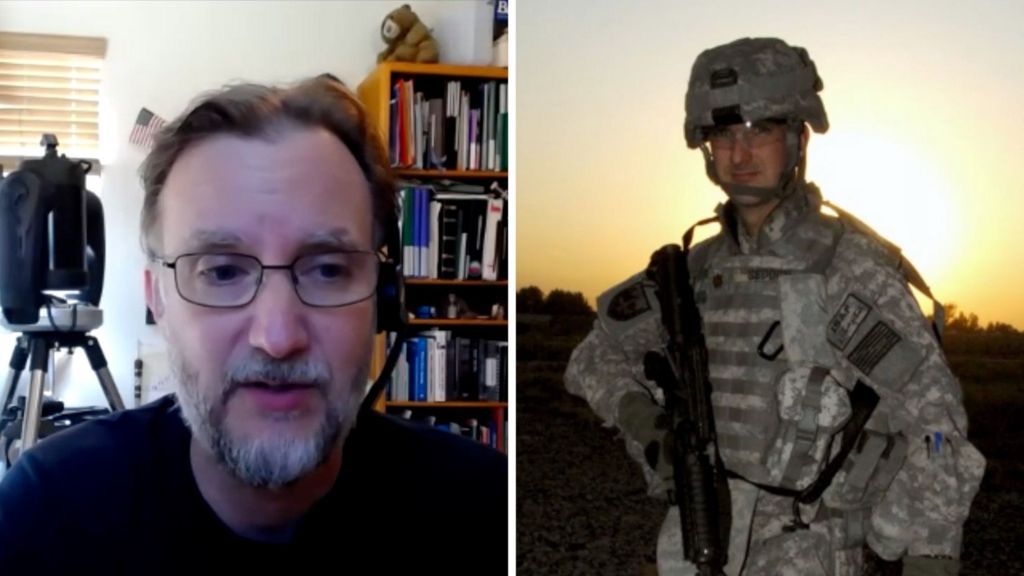
    Military veterans with extensive combat experience in Afghanistan have issued strong rebuttals against recent statements by former President Donald Trump regarding NATO allies’ participation in frontline operations. The veterans’ responses came after Trump suggested that NATO member nations systematically avoided combat engagements during the Afghanistan conflict.

    Multiple decorated veterans have come forward with firsthand accounts contradicting these assertions, providing detailed testimony about international coalition forces’ active combat roles. Their evidence includes documentation of joint operations where NATO partners sustained significant casualties while fighting alongside American troops.

    Military analysts corroborate the veterans’ positions, pointing to official Pentagon records showing that numerous NATO countries suffered combat fatalities throughout the twenty-year campaign. Defense experts emphasize that international forces operated under unified command structures and shared combat responsibilities across various regions of Afghanistan.

    The controversy has sparked broader discussions about international military cooperation and the importance of accurate historical accounting of multinational combat operations. Several veterans organizations have called for greater recognition of allied contributions to counterterrorism efforts in South Asia.

  • King Charles III believes ‘harmony’ can help save the planet. His documentary explains how

    King Charles III believes ‘harmony’ can help save the planet. His documentary explains how

    LONDON — King Charles III is leveraging royal influence and modern media to advance his lifelong environmental advocacy through a new Amazon Prime documentary, “Finding Harmony: A King’s Vision.” The film, available from February 6th with narration by Kate Winslet, expands upon the monarch’s philosophical framework first detailed in his 2010 book “Harmony: A New Way of Looking at Our World.

    The documentary presents Charles’ comprehensive worldview that connects climate action, sustainable agriculture, urban planning, and interfaith dialogue as interrelated solutions to global challenges. It directly addresses critics who have dismissed his eclectic interests as dilettantism, positioning them instead as components of a coherent philosophy centered on restoring balance between humanity and nature.

    Scientific authorities including Cambridge climate expert Emily Shuckburgh and environmentalist Tony Juniper appear alongside the king to validate his concepts. Juniper emphasizes that human societies remain governed by natural systems despite technological advancements, arguing that reconnecting with these systems is essential for addressing environmental crises.

    “All of that is reversible, all of that fixable,” Juniper stated. “But it’s going to require more of us to understand that we are not outside nature, we are in it.”

    The film’s release marks a strategic effort to refocus attention on the king’s core passions after two years dominated by health concerns and family tensions. Royal historian Ed Owens notes this represents “a very deliberate attempt to rebrand monarchy after a couple of very difficult years” involving Charles’ cancer treatment and ongoing friction with Prince Harry.

    The documentary highlights practical applications of Charles’ philosophy through initiatives like Dumfries House in Scotland, a 2,000-acre estate functioning as a laboratory for sustainable living. The facility offers training programs blending traditional crafts with environmental principles, exemplified by students like former university administrator Jennie Regan, who is retraining as a stonemason to create lasting, sustainable artwork.

    Shuckburgh emphasizes the film’s timely message of hope: “Having something that provides that sense of hope and optimism is really, really important” during challenging times. The project reinforces Charles’ five-decade environmental advocacy, dating to his first speech on conservation in 1970 at age 21.

  • UAE President meets heads of delegation at US-Russia-Ukraine trilateral talks

    UAE President meets heads of delegation at US-Russia-Ukraine trilateral talks

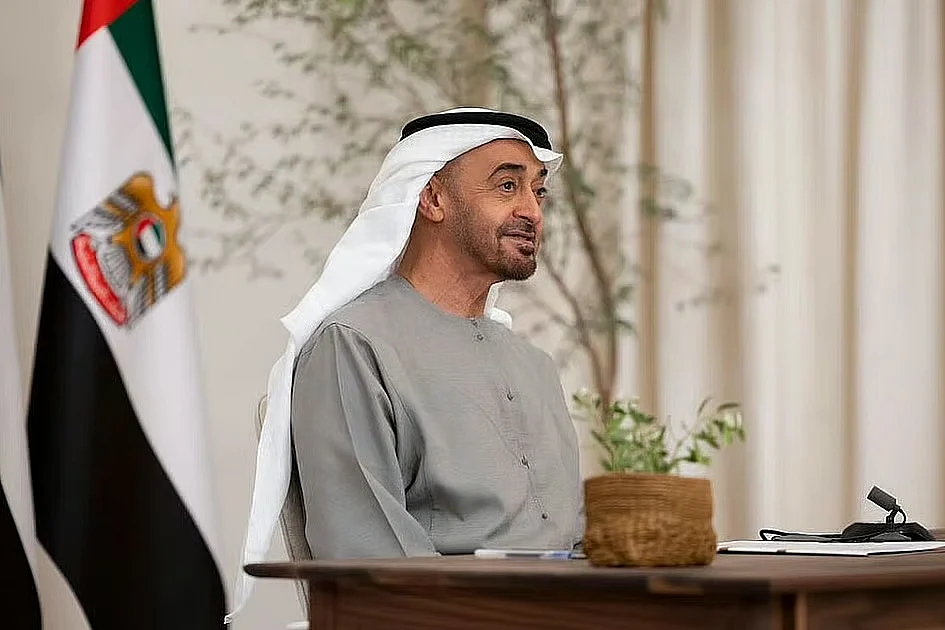
    In a significant diplomatic development, Abu Dhabi has become the stage for high-level trilateral negotiations aimed at addressing the prolonged Ukraine conflict. UAE President Sheikh Mohamed bin Zayed Al Nahyan personally met with delegation leaders from the United States, Russia, and Ukraine on Friday, January 23, 2026, demonstrating the Emirates’ commitment to facilitating peaceful conflict resolution.

    The high-stakes discussions brought together prominent figures including US presidential envoys Steve Witkoff and Jared Kushner, alongside Russian military representative Igor Kostyukov and Ukrainian officials Kyrylo Budanov and Rustem Umerov. This gathering represents one of the most direct diplomatic engagements between the conflicting parties in recent years.

    President Sheikh Mohamed articulated his earnest hope that the negotiations would yield successful outcomes capable of contributing to the termination of the years-long hostilities. He emphasized the UAE’s consistent foreign policy approach that prioritizes constructive dialogue and supports all initiatives aimed at advancing diplomatic solutions to international crises.

    The UAE leader further reinforced his nation’s stance by affirming support for all peaceful endeavors seeking to resolve the Ukraine crisis in a manner that respects the interests of all involved parties while promoting global stability. The meeting was attended by senior UAE officials including Abu Dhabi Crown Prince Sheikh Khaled bin Mohamed bin Zayed Al Nahyan and other prominent members of the royal family and government, underscoring the importance the Emirates places on these negotiations.

    This diplomatic initiative positions the UAE as an increasingly influential neutral mediator in complex international disputes, building on its growing reputation as a hub for diplomatic engagement and conflict resolution efforts.

  • Stuck between the US and Russia, Canada must prove it can defend its Arctic territory

    Stuck between the US and Russia, Canada must prove it can defend its Arctic territory

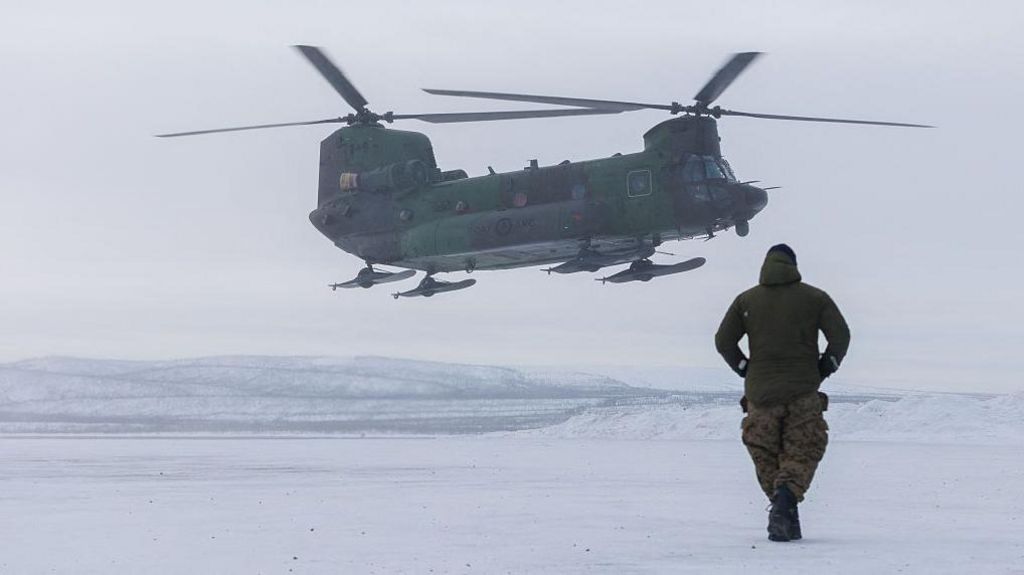
    In a significant strategic shift, Canadian Prime Minister Mark Carney has committed to deploying substantial military resources—including personnel, advanced radar systems, submarines, and aircraft—to secure Canada’s vast Arctic territories. This massive region spans nearly 4 million square kilometers, an area larger than continental Europe, yet is sparsely populated and notoriously treacherous.

    The Arctic has become a focal point of intense geopolitical competition, with Russia and the United States bordering the North Pole, and China aggressively expanding its naval and icebreaker fleets while declaring itself a ‘near Arctic state.’ The security landscape has been further complicated by the Trump administration’s expressed interest in Greenland and its criticism of Canada’s defense capabilities.

    Former Canadian Forces Northern Area Commander Pierre Leblanc emphasized the environmental and strategic challenges, noting that existing infrastructure—aging early warning radars, eight military bases, and approximately 100 Coast Guard personnel monitoring 162,000 km of coastline—is inadequate for modern threats. This assessment is supported by experts who point to the emergence of hypersonic missiles, which travel at least five times the speed of sound and render traditional defense systems obsolete.

    Russia’s operational use of hypersonic weapons in Ukraine, including the nuclear-capable ‘Oreshnik’ missile, has accelerated the need for advanced defense technologies. The Trump administration’s proposed Golden Dome missile defense system, incorporating over-the-horizon radar and space-based sensors, has sparked complex negotiations with Canada. Despite public tensions and provocative statements from Trump—including suggestions that Canada could become the ’51st state’—on-the-ground cooperation between U.S. and Canadian military practitioners remains strong.

    Canada’s defense spending is set to increase from 2% to 5% of GDP by 2035, funding what Col. Leblanc describes as ‘real action’ in Arctic security. However, logistical challenges persist, including limited port facilities and the difficulty of resupplying remote bases. While political rhetoric escalates, experts like Troy Bouffard of the Center for Arctic Security and Resilience affirm that bilateral operational coordination continues effectively, for now.

  • Tragic chapter on the trains sends rail superpower Spain into crisis

    Tragic chapter on the trains sends rail superpower Spain into crisis

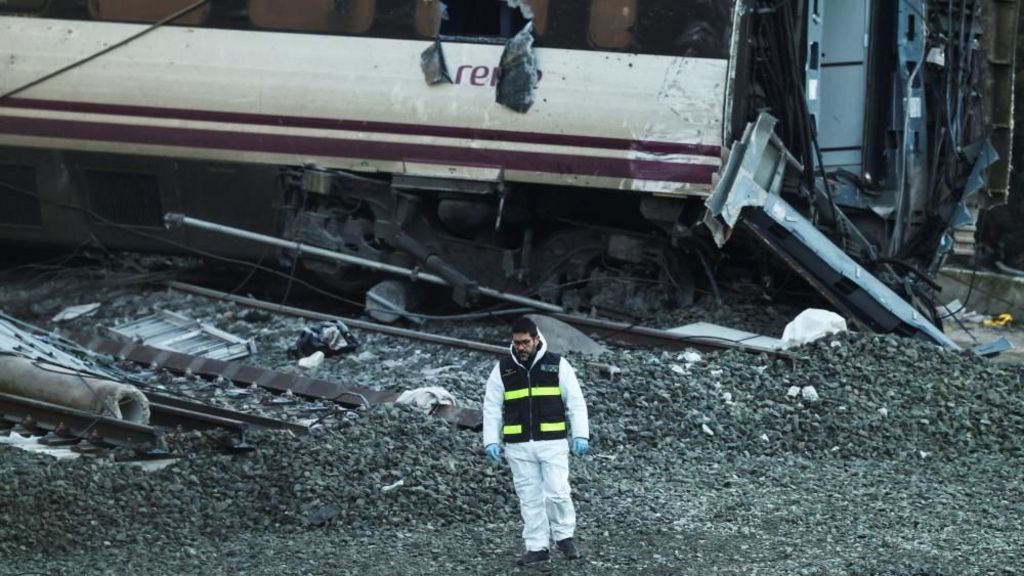
    Spain’s renowned high-speed rail system, once celebrated as a global benchmark for efficiency and safety, now faces an unprecedented crisis following a series of devastating accidents that have claimed 46 lives and shaken public confidence. The nation observed three days of mourning this week as investigators continue probing the catastrophic collision between two high-speed trains in Andalusia, which represents the deadliest rail disaster in Spain’s modern history.

    For three decades, Spain’s AVE network stood as a transport marvel—second only to China in total coverage with 3,900 kilometers of dedicated high-speed tracks. The system earned international acclaim, notably from former U.S. President Barack Obama who in 2009 praised the Madrid-Seville line as so successful that it outperformed air and road travel combined. Spanish engineering expertise even expanded globally, with consortiums building desert railways in Saudi Arabia.

    This impeccable reputation shattered within days. The initial tragedy occurred when the rear carriages of an Italian-operated Iryo train derailed at high speed along a straight section near Córdoba, veering into the path of an oncoming Renfe service. The investigation’s preliminary findings reveal grooves on multiple train wheels suggesting track fracture preceded the derailment. Subsequently, a trainee driver died near Barcelona when heavy rainfall collapsed a wall onto his cab, while separate incidents involved rock collisions and crane impacts causing minor injuries.

    The cascade of accidents has exposed systemic vulnerabilities. Catalonia’s train drivers initiated strike action demanding safety guarantees, paralyzing regional services. Nationwide, the Semaf union has called February strikes citing ‘constant deterioration of rail infrastructure.’ Even high-speed lines now operate under temporary speed restrictions amid safety reviews.

    Public trust has evaporated rapidly. Córdoba shopkeeper Alberto Montavez Montes, whose business faces city hall where flags fly at half-mast, expressed the prevailing sentiment: ‘It’s not psychosis, but undoubtedly you feel reluctant to board trains now.’ Local resident Olga Márquez reported her husband frequently noted concerning vibrations and noises on the very line where the collision occurred.

    The political response has intensified scrutiny on maintenance investment. Transport Minister Óscar Puente defended government spending, noting €700 million recently allocated to modernize the Madrid-Andalusia line including the accident site. ‘We’re not looking at problems of maintenance, obsolescence, or investment,’ he asserted, while acknowledging potential ‘unprecedented network issues.’

    However, European comparative data reveals Spain ranks last among 14 nations in per capita rail infrastructure investment. Engineering expert Salvador García-Ayllón warns liberalization policies that doubled annual high-speed passengers to 22 million have left Spanish rail ‘bursting at the seams.’ He analogized: ‘The challenge isn’t just buying a Ferrari—you must maintain it properly.’

    Performance metrics confirm declining reliability: Renfe’s high-speed trains averaged 19-minute delays in July 2025, while technical incidents on Madrid’s commuter network tripled since 2019. The tragedies have ignited political warfare, with opposition parties accusing the government of withholding information and declaring train travel unsafe.

    Prime Minister Pedro Sánchez acknowledged the ‘irreparable damage’ while maintaining that high-speed rail remains ‘Spain’s pride.’ Yet for citizens confronting broken confidence and unanswered safety questions, such assertions ring hollow amid the deepest crisis in Spanish rail history.