作者: admin

  • Premier League: Man City snatch chaotic 2-1 win at Liverpool

    Premier League: Man City snatch chaotic 2-1 win at Liverpool

    In a Premier League spectacle that delivered high drama at Anfield, Manchester City secured a monumental 2-1 victory against Liverpool on Sunday, reigniting their championship aspirations with a last-gasp penalty from Erling Haaland in stoppage time.

    The match reached its climax when referee Anthony Taylor awarded City a penalty after Matheus Nunes was brought down by Liverpool goalkeeper Alisson Becker during added time. Haaland, demonstrating remarkable composure under intense pressure, converted the spot-kick to secure three crucial points that narrow the gap with league leaders Arsenal to six points.

    The encounter began with City dominating possession and creating early opportunities, nearly scoring within the second minute when Haaland found himself through on goal only to be denied by Alisson’s alert intervention. The first half saw Liverpool struggling to register a single shot on target despite increased pressure toward the break.

    Liverpool’s transformation after halftime was immediate and dramatic. The home side emerged with renewed energy, creating multiple scoring opportunities before Hungarian international Dominik Szoboszlai broke the deadlock in the 74th minute with an extraordinary free-kick that left City goalkeeper Gianluigi Donnarumma completely stranded.

    The momentum shifted again when Bernardo Silva equalized for City ten minutes later, connecting with a precise header from Haaland’s cross to set up a frantic finale. The match reached peak controversy when City’s Rayan Cherki appeared to score from the halfway line after Alisson had ventured upfield, but VAR intervention disallowed the goal and instead awarded City a free-kick while showing Szoboszlai a red card for shirt-pulling.

    City manager Pep Guardiola praised the spectacle as “a brilliant advert for the Premier League” while acknowledging Anfield’s intimidating atmosphere. The victory lifts City to within realistic striking distance of Arsenal while Liverpool’s disappointing season continues, leaving them in sixth position, eleven points behind the champions.


  • Bad Bunny piles on Puerto Rican patriotism at Super Bowl half-time show

    Bad Bunny piles on Puerto Rican patriotism at Super Bowl half-time show

    In a groundbreaking cultural moment, global music sensation Bad Bunny revolutionized Super Bowl tradition by delivering the first entirely Spanish-language halftime performance in the event’s history. The Puerto Rican artist, born Benito Antonio Martínez Ocasio, transformed football’s grandest stage into a vibrant celebration of Latin heritage during his 14-minute spectacle at Levi’s Stadium in Santa Clara.

    The performance served as an immersive journey through Puerto Rican culture, beginning with the artist’s emergence from a sugarcane field and progressing through meticulously designed set pieces representing traditional island life. The stage featured a replica casita (small house) that became a gathering point for celebrity guests including Pedro Pascal, Cardi B, Karol G, and Jessica Alba, who danced enthusiastically on the porch.

    Despite expectations of political commentary following his recent Grammy Awards speeches criticizing U.S. immigration policies, Bad Bunny opted for a message of unity. He displayed prominent visual statements including a billboard reading ‘The only thing more powerful than hate is love’ and a football inscribed with ‘Together, We Are America.’ His sartorial choice—a beige sweater emblazoned with the number 64—subtly referenced the official death toll from Hurricane Maria, which devastated Puerto Rico in 2017.

    The artistic direction incorporated powerful symbolism, including the performer climbing an electricity pylon while rapping—a poignant nod to the infrastructure destroyed during the catastrophic storm. Family themes permeated the performance, from a wedding ceremony between young Latin dancers to the symbolic moment when Bad Bunny handed his Grammy award to a child while his acceptance speech played on television.

    Musically, the setlist blended career-spanning hits including ‘Tití Me Preguntó,’ ‘MONACO,’ and ‘BAILE INOLVIDABLE,’ alongside selections from his Grammy-winning album ‘Debí Tirar Más Fotos.’ Special guest Lady Gaga delivered a Latin-inspired rendition of her collaboration ‘Die With A Smile,’ while fellow Puerto Rican superstar Ricky Martin performed ‘Lo Que Le Pasó A Hawaii’—a cultural preservation anthem.

    The performance concluded with Bad Bunny shouting ‘God Bless America’ in Spanish while naming numerous North and South American countries, as dancers raised corresponding flags. This finale highlighted the artist’s conscious decision to bypass the U.S. mainland on his current world tour, despite his stated affection for American fans.

    President Donald Trump criticized the performance on Truth Social as ‘absolutely terrible’ and ‘an affront to the Greatness of America,’ contrasting with the overwhelmingly positive reception from cultural commentators and fans worldwide. The historic show demonstrated how Latin music has achieved unprecedented mainstream recognition while maintaining its cultural authenticity.

  • Spanish train drivers to begin nationwide strike after fatal crashes

    Spanish train drivers to begin nationwide strike after fatal crashes

    Spain’s railway system confronts unprecedented disruption as train drivers launch a nationwide three-day strike starting Monday, demanding immediate safety improvements following two catastrophic accidents that claimed 47 lives and injured dozens in January.

    The labor action, organized by Semaf train drivers’ union, represents a watershed moment for Spain’s previously celebrated rail infrastructure. Union officials cite ‘constant deterioration of the rail network’ and insufficient safety guarantees as primary motivations for the work stoppage. Their demands include expanded staffing, increased investment, and comprehensive maintenance upgrades.

    This safety crisis emerged from twin tragedies that occurred within 48 hours. On January 18, a high-speed train derailment and subsequent collision in Adamuz resulted in 46 fatalities—Spain’s deadliest rail disaster in over a decade. Preliminary investigations by the rail accident commission (CIAF) identified track fractures preceding the derailment, with similar groove patterns found on multiple trains.

    Just two days later, a collapsed wall struck a passing train in Catalonia, killing a trainee driver and injuring 37 passengers. Rail authorities confirmed the infrastructure failure directly impacted the driver’s cabin before damaging the lead carriage where most casualties occurred.

    Post-accident safety inspections have revealed multiple faults and maintenance deficiencies across various routes, amplifying concerns about systemic infrastructure problems. The discoveries have triggered severe travel disruptions and intensified scrutiny of Spain’s rail investment priorities.

    Transport Minister Óscar Puente has defended the government’s record, citing €700 million invested in modernizing the Madrid-Andalusia line—which includes the accident site—while denying allegations of inadequate maintenance or obsolete infrastructure.

    Prime Minister Pedro Sánchez is scheduled to face parliamentary questioning regarding the rail system failures later this week, as the nation grapples with balancing transportation safety against infrastructure investment accountability.

  • Israeli president lays wreath at Bondi at start of controversial visit

    Israeli president lays wreath at Bondi at start of controversial visit

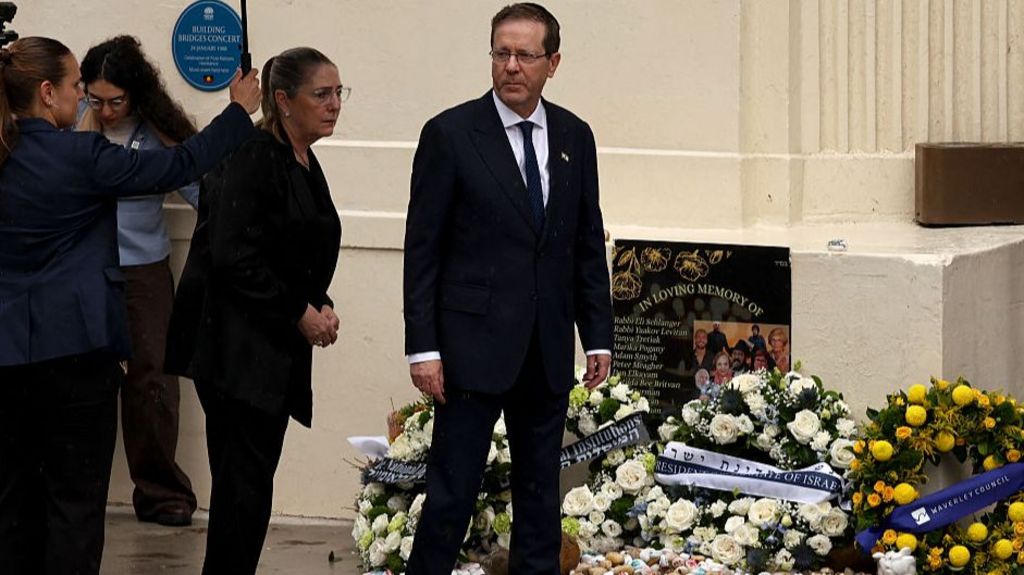
    Israeli President Isaac Herzog’s official visit to Australia has generated both solidarity and significant controversy, beginning with a solemn ceremony at Bondi Beach where a deadly shooting targeted a Jewish festival in December. Herzog laid a wreath and placed two stones from Jerusalem at the memorial site, stating, “When one Jew is hurt, all Jews feel their pain” as he sought to comfort bereaved families.

    The four-day visit, conducted under tight security arrangements, includes scheduled meetings with Prime Minister Anthony Albanese in Canberra and Melbourne. The Australian government maintains the visit will foster social cohesion and unity following the Bondi attack that killed 15 people, including a 10-year-old girl, during Hanukkah celebrations.

    However, the presidential visit faces substantial opposition from various groups citing Herzog’s alleged involvement in inciting genocide in Gaza. The Palestine Action Group is challenging the New South Wales government’s invocation of rare “major event” powers that grant police expanded authorities, including location closures, personal searches, and substantial fines for non-compliance.

    Australian Jewish leadership, including Alex Ryvchin of the Executive Council of Australian Jewry, has warmly welcomed Herzog’s presence, describing it as spiritually uplifting for a grieving community and potentially beneficial for bilateral relations. This perspective contrasts sharply with criticism from the Jewish Council of Australia and the Australian National Imams Council, who argue the invitation dangerously conflates Jewish identity with the actions of the Israeli state.

    The controversy stems from a UN commission report that concluded Herzog was among Israeli leaders who had “incited the commission of genocide” through public statements. The president has denied these allegations, claiming his words were taken out of context, while Australian Human Rights Lawyer Chris Sidoti has called for Herzog’s arrest, arguing immunity should not apply to “atrocity crimes.”

    Foreign Minister Penny Wong acknowledged the depth of feeling surrounding the visit while emphasizing its importance to the Australian Jewish community affected by terrorism. She reiterated that Israel must be judged by the International Court of Justice regarding genocide convention compliance and accept responsibility for Gaza’s humanitarian situation.

  • Tokyo benchmark Nikkei 225 jumps after PM Takaichi’s ruling party wins a super majority in election

    Tokyo benchmark Nikkei 225 jumps after PM Takaichi’s ruling party wins a super majority in election

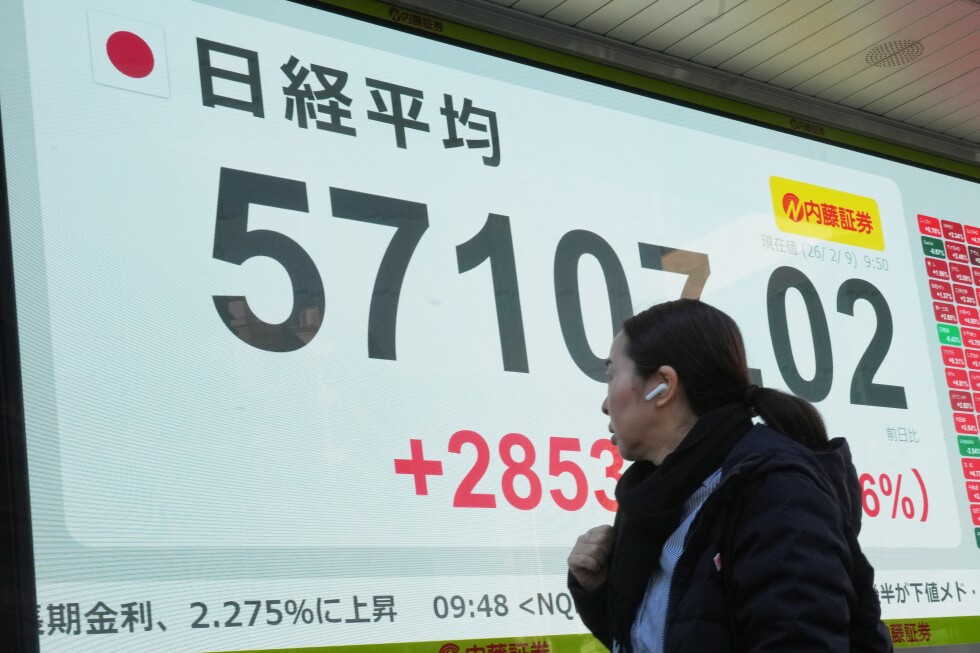
    Asian financial markets experienced a significant surge on Monday, propelled by a powerful combination of political stability in Japan and a robust rebound on Wall Street. The catalyst for the regional rally was Tokyo’s Nikkei 225 index, which skyrocketed 4.7% to close at 56,788.85 after briefly surpassing the 57,000 mark during the session—setting a new historical record.

    The dramatic market response followed Japanese Prime Minister Sanae Takaichi’s governing party achieving an extraordinary political victory. According to NHK public broadcaster, Takaichi’s Liberal Democratic Party (LDP) secured 316 seats in the 465-member lower house of parliament, comfortably exceeding the 261-seat absolute majority requirement. This remarkable achievement represents the party’s strongest performance since its establishment in 1955, surpassing the previous record of 300 seats set in 1986 under late Prime Minister Yasuhiro Nakasone.

    Prime Minister Takaichi reinforced market confidence by announcing her commitment to pursuing policies that would “make Japan strong and prosperous” through NHK. Her market-friendly approach and the supermajority victory provide unprecedented political stability for implementing economic reforms.

    The bullish sentiment spread across Asian exchanges, with South Korea’s Kospi surging 4.3% to 5,308.84. Hong Kong’s Hang Seng index advanced 1.5% to 26,963.25, while China’s Shanghai Composite rose 1% to 4,106.54. Taiwan’s Taiex gained 2.4%, and Australia’s S&P/ASX 200 jumped 1.9% to 8,876.50.

    This regional rally built upon Friday’s dramatic recovery on Wall Street, where technology stocks rebounded strongly from earlier weekly losses. The S&P 500 posted its best performance since May with a 2% rally, while the Dow Jones Industrial Average soared 1,206 points (2.5%) to close above the 50,000 level for the first time. The Nasdaq composite leaped 2.2%, driven by semiconductor companies like Nvidia (up 7.8%) and Broadcom (up 7.1%), both recovering significantly from weekly declines.

    Additional positive factors included Bitcoin’s stabilization above $70,000 after recent volatility and calmer conditions in metals markets, with gold settling at $4,979.80 per ounce after a 1.8% increase.

    Looking ahead, Prime Minister Takaichi’s immediate challenge involves addressing delayed budget legislation when parliament reconvenes in mid-February, focusing on economic measures to counter rising costs and stagnant wages—a task now facilitated by her party’s commanding parliamentary position.

  • Israel approves steps making it easier for West Bank settlers to buy land, media says

    Israel approves steps making it easier for West Bank settlers to buy land, media says

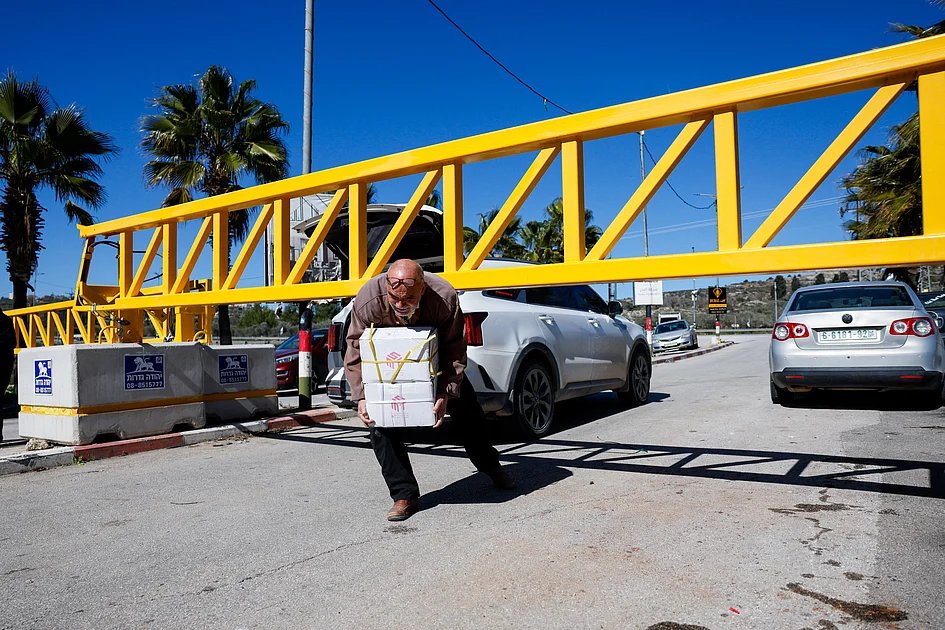
    In a significant policy shift with profound geopolitical implications, Israel’s security cabinet has approved measures facilitating land acquisition for settlers in the occupied West Bank while expanding Israeli enforcement powers in Palestinian-administered areas. The decision, confirmed by multiple Israeli media outlets on Sunday, represents a substantial departure from decades-old regulations that previously restricted private Jewish land purchases in the contested territory.

    The approved measures reportedly include provisions allowing Israeli authorities to administer religious sites and extend supervisory jurisdiction into areas under Palestinian Authority control, particularly concerning environmental hazards, water violations, and archaeological site protection. The policy changes were announced by Finance Minister Bezalel Smotrich and Defense Minister Israel Katz, both prominent figures in Israel’s pro-settlement political movement.

    Palestinian President Mahmoud Abbas immediately condemned the measures as ‘dangerous, illegal, and tantamount to de-facto annexation,’ urging intervention from both the United Nations Security Council and the Trump administration. The timing of this decision is particularly significant, occurring just three days before Prime Minister Benjamin Netanyahu’s scheduled meeting with U.S. President Donald Trump in Washington.

    This development occurs against the backdrop of accelerated settlement expansion that Palestinians argue systematically undermines the territorial integrity of any potential future state. Netanyahu’s government, which includes numerous pro-annexation coalition members, maintains that Palestinian statehood poses an unacceptable security threat. The Prime Minister’s position reflects the political realities of his coalition as he faces elections later this year.

    Israel’s historical claims to the West Bank, citing biblical and historical connections to land captured during the 1967 Middle East war, contrast sharply with the 2024 non-binding advisory opinion from the United Nations’ highest court, which declared Israel’s occupation and settlement activities illegal under international law. The Trump administration has thus far declined to curb Israeli settlement expansion while simultaneously ruling out formal annexation of the West Bank.

  • UAE clarifies flights to Algeria not impacted despite end of agreement

    UAE clarifies flights to Algeria not impacted despite end of agreement

    The United Arab Emirates has moved swiftly to reassure travelers and airlines that flight operations to Algeria will continue without disruption, despite receiving formal notification from Algerian authorities regarding the termination of their bilateral air services agreement.

    In an official statement released on Sunday, February 8, 2026, the General Civil Aviation Authority (GCAA) emphasized that the existing agreement remains fully operational during the legally mandated notice period. The authority clarified that Algeria’s decision falls within established international aviation protocols, characterizing the development as a procedural matter rather than an immediate operational concern.

    ‘Flight operations between the two countries will continue as normal,’ the GCAA affirmed, adding that it is coordinating with all relevant entities through official diplomatic channels to address the situation with professional responsibility.

    The air services agreement in question was originally signed in Abu Dhabi in 2013, establishing the framework for commercial air transportation between the two nations. While Algeria initiated the cancellation process on Saturday, no specific rationale was provided for this diplomatic move.

    Aviation experts note that such agreements typically include termination clauses requiring advance notice, often ranging from several months to a year, during which all provisions remain enforceable. The UAE’s response indicates confidence in maintaining air connectivity while navigating the diplomatic process through appropriate legal and international frameworks.

  • Israel ‘imposes de facto annexation’ with sweeping West Bank policy change

    Israel ‘imposes de facto annexation’ with sweeping West Bank policy change

    In a landmark decision with profound regional implications, the Israeli government has ratified a comprehensive overhaul of land registration protocols and civil administration mechanisms within the occupied West Bank. The controversial policy shift, championed by Finance Minister Bezalel Smotrich and Defence Minister Israel Katz, is framed by its proponents as a measure to standardize legal and civil rights for Israeli settlers. They assert it will remove existing bureaucratic impediments, thereby accelerating settlement development and normalizing daily life.

    However, the move has been met with vehement condemnation from Palestinian leadership and factions, who decry it as a severe breach of international law and a deliberate step toward de facto annexation. Palestinian President Mahmoud Abbas, via the Wafa news agency, declared the policy a direct violation of the foundational Oslo Accords. Echoing this sentiment, Rawhi Fattouh, chairman of the Palestinian National Council, labeled the decisions as “racist and dangerous,” accusing Prime Minister Benjamin Netanyahu’s government of imposing new colonial realities.

    The policy’s practical implications are extensive. It empowers the military to enforce regulations on structures deemed unlicensed, even within Areas A and B—zones previously under Palestinian civil control—citing heritage and archaeological preservation, a provision critics warn will facilitate land confiscation and demolitions. A critical component lifts the secrecy on West Bank land registries, publicly exposing Palestinian ownership records. This transparency, celebrated by settler groups like the Yesha Council as entrenching Israeli sovereignty, is feared to enable widespread land seizures by making it easier for settlers to identify and pressure landowners or forge claims.

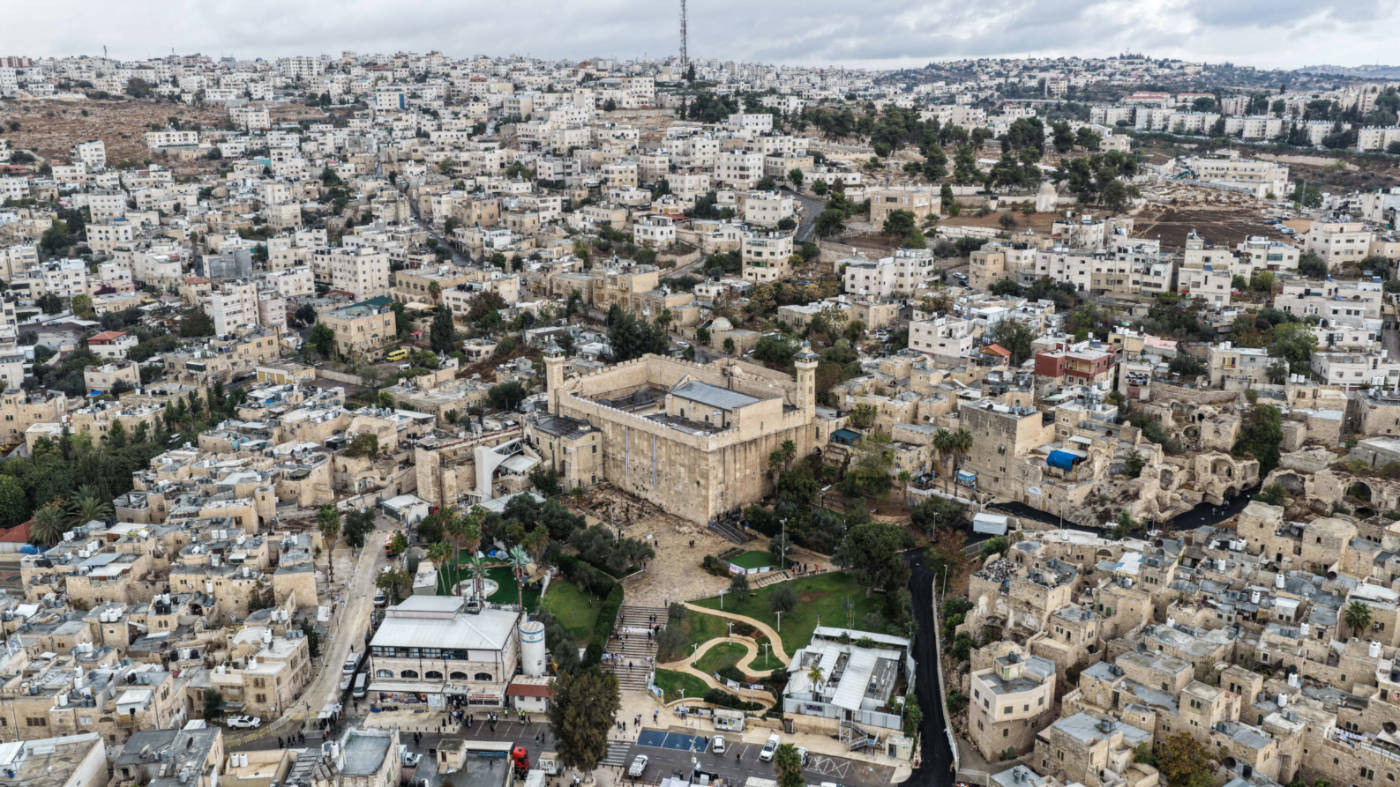
    Furthermore, the measures simplify the sale of Palestinian land to Israelis by overturning a Jordanian-era law that prohibited such transfers to non-Palestinians. In a significant jurisdictional change, planning and construction authority in the volatile city of Hebron will be transferred from the Palestinian municipality to the Israeli military, with an independent local body established for the Israeli settlement there—a move the Hebron municipality condemned as “illegitimate and dangerous.” The policy also extends to holy sites, including the Ibrahimi Mosque, following earlier Israeli actions to seize planning rights over parts of the complex. This occurs amidst a documented rise in settler violence and access restrictions to Palestinian holy sites since October 2023.

    Peace Now, an Israeli NGO monitoring settlements, warned that the government has effectively chosen to “topple the Palestinian Authority” and impose a reality of annexation, breaking barriers to massive land appropriation across the entire West Bank, far beyond the Area C framework established by the Oslo Accords.

  • New Zealand mosque shooter seeks to discard his guilty pleas, saying prison made him irrational

    New Zealand mosque shooter seeks to discard his guilty pleas, saying prison made him irrational

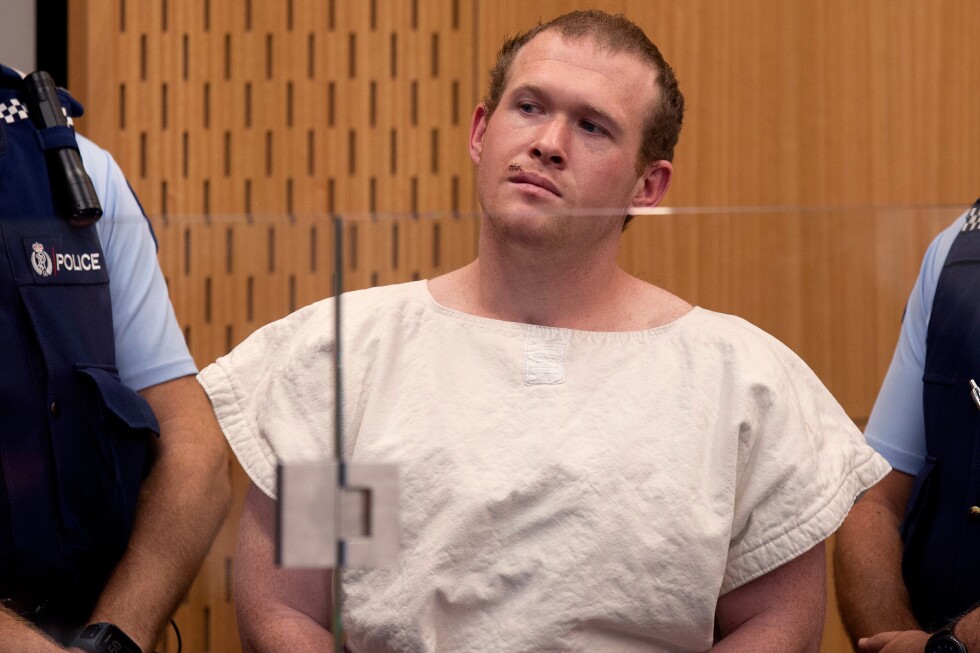
    WELLINGTON, New Zealand — The perpetrator of New Zealand’s deadliest mass shooting appeared before the Court of Appeal on Monday seeking to overturn his guilty pleas and life sentence, claiming severe prison conditions rendered him mentally unfit during his 2020 admission of guilt.

    Brenton Tarrant, the Australian white supremacist who murdered 51 Muslim worshippers in Christchurch’s 2019 mosque attacks, testified via video link from prison that solitary confinement and harsh detention circumstances created what he described as ‘nervous exhaustion’ and identity confusion. The 35-year-old argued this mental state invalidated his reasoned decision to plead guilty to terrorism, murder, and attempted murder charges.

    A three-judge panel will hear five days of evidence regarding Tarrant’s competency at the time of his plea. If successful, the case would return to trial—a scenario avoided when Tarrant unexpectedly admitted guilt weeks before his scheduled court date. The hearing also addresses his unprecedented life imprisonment without parole, New Zealand’s most severe sentencing outcome.

    The prosecution challenged Tarrant’s assertions, with Crown lawyer Barnaby Hawes noting the shooter had alternative legal options including trial postponement requests or mounting a defense. Medical and prison records showed no documented evidence of serious mental illness, though Tarrant claimed he deliberately concealed symptoms to maintain a ‘confident, assured’ facade consistent with his extremist ideology.

    Security protocols severely restricted attendance, permitting only affected families, survivors, and limited media. Tarrant, appearing with shaved head and glasses in a white prison room, testified about his deteriorated mental state—marking his first substantive public statements since livestreaming the horrific attack.

    The appeal filing arrived two years past New Zealand’s standard 20-day deadline, which Tarrant attributed to restricted information access. The court’s decision will be delivered subsequently, with potential separate proceedings regarding his sentence appeal if the plea challenge fails.

  • UAE announces Zakat Al Fitr, fines, Ramadan 2026 fasting compensation

    UAE announces Zakat Al Fitr, fines, Ramadan 2026 fasting compensation

    The United Arab Emirates has formally established comprehensive guidelines for religious charitable contributions during Ramadan 2026 (1447 Hijri), bringing clarity and standardization to Islamic financial obligations. The UAE Council for Islamic Affairs unveiled the framework on February 8, 2026, following extensive market research conducted in collaboration with the Ministry of Economy and Tourism.

    Under the newly announced provisions, Zakat Al Fitr—the obligatory charity marking the end of Ramadan—has been set at 2.5 kilograms of rice or its monetary equivalent of 25 dirhams per person. For those unable to fast due to valid reasons, the compensatory Fidyah payment has been established at 3.25 kilograms of barley or 20 dirhams per beneficiary daily.

    The Council specified distinct rates for various religious circumstances: Fidyah for prohibited acts during Hajj or Umrah pilgrimages is fixed at 120 dirhams, distributed among six beneficiaries. Meanwhile, Kaffarah (atonement) for invalidated fasting or broken vows requires 1,200 dirhams per day, allocated to 60 beneficiaries at 20 dirhams each. For violated oaths, the Kaffarah amounts to 200 dirhams distributed to ten recipients.

    The comprehensive market study involved thorough price surveys of staple foods across all emirates, consultations with suppliers, and field visits to ensure equitable calculations for both donors and beneficiaries. This standardization initiative aims to enhance operational efficiency, transparency, and fairness in charitable distribution mechanisms.

    Regarding temporal guidelines, the Council recommends distributing Zakat Al Fitr after the Fajr prayer on Eid day to maximize benefit for needy communities during celebrations. While early payments are permissible to avoid organizational congestion, contributions made after sunset are considered make-up payments rather than standard obligations.

    The Council explicitly endorsed monetary contributions as religiously valid, citing historical precedents where Prophet Muhammad (Peace Be Upon Him) approved cash substitutes for staple foods. This recognition accommodates modern practicalities while maintaining religious integrity.

    Authorized collection channels include the Zakat Fund under the General Authority of Islamic Affairs & Endowments, the Emirates Red Crescent, and certified charitable organizations. The Council concluded with prayers for a blessed Ramadan and continued prosperity for the UAE nation.