作者: admin

  • Self-powering pacemaker could last a lifetime

    Self-powering pacemaker could last a lifetime

    A groundbreaking medical innovation emerging from China promises to transform cardiac care through the development of a self-sustaining pacemaker that harnesses the heart’s kinetic energy. Researchers from the University of Chinese Academy of Sciences have created a revolutionary device that generates electricity from natural heartbeats, potentially eliminating the need for battery replacement surgeries that currently burden millions of cardiac patients worldwide.

    The research team, led by Associate Professor Ouyang Han, introduced the concept of ‘symbiotic bioelectronics’ inspired by natural symbiotic relationships. This approach represents a paradigm shift in medical device engineering, focusing on creating implantable technology that coexists harmoniously with the human body while drawing power from biological processes.

    Through seven years of dedicated research, the team developed an electromagnetic induction system that converts the mechanical energy of heart contractions into electrical power. The device achieves an impressive average output of 120 microwatts—significantly exceeding the 10 microwatts required for stable pacemaker operation. This surplus energy ensures reliable performance even during periods of reduced cardiac activity.

    The technology incorporates an innovative magnetic levitation design that minimizes energy loss and internal friction. Laboratory testing demonstrated exceptional durability, with only 4% wear observed after simulating 300 million heartbeats—equivalent to a decade of continuous operation. This remarkable longevity suggests the device could potentially function throughout a patient’s lifetime without requiring replacement.

    Notably, the capsule-sized device is constructed from biocompatible materials that reduce rejection risks and prevent blood clotting complications. Its leadless design and minimally invasive implantation procedure via femoral vein catheterization represent significant advancements over conventional pacemakers, reducing surgical trauma and recovery time.

    In a critical validation study, the device successfully maintained normal heart rhythm in a pig suffering from severe bradycardia for one month, operating exclusively on power generated by the animal’s own heartbeats. This demonstration confirms both the technological feasibility and clinical potential of the self-powering system.

    Professor Ouyang emphasized the economic implications of this breakthrough, noting that current imported leadless pacemakers cost approximately $23,000. The research team aims to produce devices with two to three times the lifespan of existing models at just one-third to half the price, potentially making advanced cardiac care more accessible globally.

    The technology, recently detailed in Nature Biomedical Engineering, is scheduled for clinical trials before 2030. Researchers believe this symbiotic approach could revolutionize not only cardiac care but also other implantable medical devices for bone repair and neural regulation applications.


  • Young leaders stress need to strengthen Sino-US ties

    Young leaders stress need to strengthen Sino-US ties

    A new generation of leadership advocates for reinvigorated Sino-American relations through sustained engagement and collaborative action. During a recent symposium at Beijing’s Tsinghua University, emerging leaders from both nations emphasized the critical importance of face-to-face diplomacy in an era of increasing technological mediation.

    The dialogue brought together students from Harvard University, New York University, Peking University, and Tsinghua University to address pressing global challenges. Discussion panels focused on science and technology innovation, social governance frameworks, and sustainable development strategies, creating a platform for cross-cultural problem-solving.

    This event forms part of President Xi Jinping’s ambitious “50,000 in Five Years” initiative, designed to facilitate educational exchange by bringing 50,000 young Americans to China. The program represents a significant investment in track-two diplomacy, recognizing youth engagement as fundamental to navigating complex bilateral challenges.

    Zhao Xiuye, a Tsinghua PhD candidate with extensive experience in both countries, highlighted the transformative power of personal connection. “Our happiness and sorrows do connect,” he noted, recalling shared experiences during the Beijing 2008 Olympics and US presidential campaigns. “There’s far more that we share than that differentiates us.”

    Harvard Business School student Lily Bailey emphasized the potential of “subnational collaboration” between US states, cities, and universities with their Chinese counterparts. “We are a federal society,” she stated. “There are many people and companies excited and interested in continuing cooperation.”

    University and government officials expressed strong support for these efforts. Tsinghua Vice-President Bai Benfeng invoked both Chinese philosophical tradition and Western poetry to express optimism about future relations, while Education Vice-Minister Ren Youqun reported that 45,000 young Americans have already visited over 200 Chinese cities, fostering substantial people-to-people connections.

  • A US warship is making a friendship visit to a Cambodian naval base upgraded with China’s help

    A US warship is making a friendship visit to a Cambodian naval base upgraded with China’s help

    In a significant diplomatic development, the USS Cincinnati has become the first U.S. Navy vessel to dock at Cambodia’s Ream Naval Base since its Chinese-funded renovation was completed in early 2024. The Independence-class littoral combat ship arrived Saturday for a five-day visit through January 28th, marking a potential warming in U.S.-Cambodia military relations after years of tension.

    The base’s modernization, financed primarily by China, had raised substantial concerns in Washington about potential exclusive Chinese military access. Controversy has surrounded the facility since 2019 amid reports of a proposed 30-year agreement granting China special privileges at the strategic Gulf of Thailand location. Cambodian officials have consistently denied any such exclusive arrangement exists.

    Prime Minister Hun Manet, who presided over the base’s reopening ceremony in April 2025, has maintained that Ream remains open to all friendly nations for joint exercises, provided visiting vessels conform to the facility’s size limitations. The newly constructed pier and dry dock facilities can accommodate ships similar in scale to the Cincinnati, which is specifically designed for operations in shallow coastal waters.

    During the port call, the ship’s crew of approximately 100 personnel will participate in sporting events and cultural activities in nearby Sihanoukville. The visit coincides with scheduled meetings between U.S. Indo-Pacific Command leader Admiral Samuel Paparo and Cambodian Defense Minister Tea Seiha, signaling continued diplomatic engagement.

    This development represents the latest step in rebuilding military ties that had cooled considerably. Relations began improving with Defense Secretary Lloyd Austin’s 2024 visit, followed by the USS Savannah’s port call at Sihanoukville’s civilian facility in December 2024—the first U.S. military ship visit in eight years. According to Cambodian Navy records, 37 U.S. warships have visited Cambodian ports between 2003 and 2026.

    Deputy Base Commander In Sokhemra emphasized the inclusive nature of the facility, stating: ‘Our government has worked diligently to construct this port to welcome all foreign vessels wishing to dock in Cambodia. We have succeeded in this effort, and we are open from this moment forward for American, Australian, Japanese, or any other ships that wish to visit.’

  • Russian attacks on Ukraine kill 1 and wound 23 ahead of second day of peace talks

    Russian attacks on Ukraine kill 1 and wound 23 ahead of second day of peace talks

    As international diplomats convened for critical peace negotiations in Abu Dhabi, Russian forces launched renewed aerial assaults across Ukraine overnight Friday into Saturday. The attacks resulted in significant civilian casualties, with at least one fatality and 23 individuals wounded across multiple cities.

    In the capital Kyiv, drone strikes killed one person and left four injured, according to official statements from Kyiv City Military Administration head Tymur Tkachenko. The northeastern city of Kharkiv suffered even greater damage, with Mayor Ihor Terekhov reporting 19 civilians wounded in similar attacks.

    These developments occurred simultaneously with the second day of trilateral talks involving senior officials from Ukraine, Russia, and the United States in the United Arab Emirates. This meeting represents the first known instance of Trump administration envoys engaging directly with both warring parties as part of Washington’s intensified diplomatic initiative to resolve the nearly four-year conflict.

    The UAE Foreign Ministry characterized the discussions as part of ongoing efforts “to facilitate dialogue and explore political resolutions to the crisis.” White House officials described initial sessions as productive, despite the challenging context of continued violence.

    The diplomatic engagement occurs amid conflicting signals from leadership on both sides. Ukrainian President Volodymyr Zelenskyy suggested during the World Economic Forum in Davos that a potential peace agreement was “nearly ready,” while the Kremlin maintains that any settlement must include Ukrainian withdrawal from territories Russia has illegally annexed—a condition Kyiv has consistently rejected.

    The negotiations gain additional significance following revelations that Russian President Vladimir Putin engaged in marathon overnight discussions with Trump envoys Steve Witkoff and Jared Kushner just hours before the Abu Dhabi talks commenced.

  • Passengers of diverted flight transferred to hotels in China’s Lanzhou

    Passengers of diverted flight transferred to hotels in China’s Lanzhou

    A transnational flight operated by Azur Air was compelled to execute an emergency landing at Lanzhou Zhongchuan International Airport on Friday afternoon, January 23, 2026, following a technical failure. The aircraft, a Boeing 757-200 identified as flight ZF2998, was en route from the popular resort destination of Phuket, Thailand, to its final destination of Barnaul, Russia.

    Airport authorities confirmed the incident was triggered by a malfunction in the aircraft’s right engine, prompting the flight crew to declare an in-flight emergency. Despite the critical situation, the pilots successfully navigated the aircraft to a safe landing at 4:51 PM local time. All 246 individuals on board, comprising 239 passengers and 7 crew members, were reported to be safe and unharmed.

    Following standard safety protocols and assessment procedures, all passengers and crew have been temporarily relocated to local hotels in Lanzhou, the capital of Gansu province. Airport officials have arranged for their accommodation and necessities while maintenance crews inspect the aircraft and arrange for onward travel. The incident underscores the critical importance of rigorous safety protocols and pilot training in managing unforeseen technical failures during flight operations.

  • Residents in Victoria’s Otways urged to take shelter as bushfire jumps containment lines

    Residents in Victoria’s Otways urged to take shelter as bushfire jumps containment lines

    Residents across Victoria’s Otways region are confronting a severe bushfire crisis as a major blaze that ignited on January 10th has breached containment lines near Gellibrand. Emergency services escalated warnings to critical levels on Saturday afternoon as the fire advanced toward populated areas.

    The Carlisle River fire, which has already consumed over 5,000 hectares of land, prompted immediate shelter-in-place orders for communities south of the fire front including Beech Forest, Ferguson, Gellibrand and Wyelangta. Official emergency alerts stated unequivocally: ‘This fire is threatening homes and lives. You are in danger and need to act immediately to survive.’

    Emergency coordinators warned of an impending wind shift expected around 5:30 PM that would drive the fire northeast toward Barongarook, creating potentially lethal and unpredictable conditions. Residents in northern and eastern sectors received urgent evacuation directives while those in the direct path were advised that evacuation was no longer safe.

    The crisis unfolds amid an intense heatwave gripping Victoria from January 24-30, prompting total fire bans across the state. More than 30 emergency vehicles are actively combating the blaze, with an Emergency Relief Center established at Colac Showgrounds for displaced residents.

    This emergency represents one of the most significant fire events of the season, testing Victoria’s emergency response systems during extreme weather conditions that continue to challenge containment efforts.

  • Beijing West Railway Station marks 30th anniversary

    Beijing West Railway Station marks 30th anniversary

    Beijing West Railway Station commemorated its 30th anniversary on Wednesday, standing as a testament to China’s remarkable infrastructure development and railway modernization. Since its inauguration in 1996, this monumental transportation hub has facilitated an extraordinary 1.96 billion passenger journeys, establishing itself as one of the nation’s most critical rail terminals.

    The station’s three-decade operation mirrors China’s rapid economic growth and urban transformation, serving as both a functional transport facility and a symbolic landmark of national progress. Throughout its operational history, Beijing West has consistently adapted to evolving travel demands, incorporating technological advancements and expanding services to accommodate increasing passenger volumes.

    As a pivotal junction in China’s extensive railway network, the station has witnessed the country’s transition from conventional rail systems to high-speed bullet trains, reflecting broader technological achievements in transportation infrastructure. The facility has played an essential role in connecting China’s capital with numerous domestic destinations while maintaining operational efficiency during peak travel periods, particularly during annual migration events like the Spring Festival travel rush.

    The station’s architectural significance and operational scale have made it an iconic representation of China’s modernization ambitions, blending functional design with cultural elements that showcase national heritage. Its continuous operation and upgrades demonstrate China’s commitment to developing world-class transportation systems that serve both economic needs and public convenience.

    Looking forward, Beijing West Railway Station remains positioned to maintain its critical role in China’s transportation ecosystem, with planned improvements aimed at enhancing passenger experience and integrating with emerging transportation technologies.

  • New Zealand calls off rescue efforts for six missing after landslide

    New Zealand calls off rescue efforts for six missing after landslide

    New Zealand authorities have officially terminated search and rescue operations for six individuals buried beneath a devastating landslide that struck a popular campground in Mount Maunganui on Thursday. Police Superintendent Tim Anderson confirmed the transition to recovery efforts, stating that locating survivors is no longer feasible.

    Human remains were discovered Friday evening beneath layers of dirt and debris at the sacred Māori site, which ranks among the nation’s most frequented camping destinations. The victims include two 15-year-olds from Auckland—Sharon Maccanico and Max Furse-Kee—alongside four adults: Lisa Anne Maclennan (50, Morrinsville), Måns Loke Bernhardsson (20, Sweden), Jacqualine Suzanne Wheeler (71, Rotorua), and Susan Doreen Knowles (71, Ngongotaha).

    In a separate but related incident, Radio New Zealand reported a grandmother and her grandchild perished in another landslide at nearby Welcome Bay. The region has endured days of torrential rainfall on North Island, with meteorological services forecasting additional precipitation through the weekend.

    Emergency crews labored through treacherous conditions described as “incredibly challenging” before formally transferring operations to police on Saturday. Chief Coroner Judge Anna Tutton acknowledged the identification process would be “complex” and “painstaking” while pledging to expedite familial reunification.

    Prime Minister Christopher Luxon visited the disaster zone Friday, noting the “inspiring” community response as locals assisted with debris clearance in flood-affected areas. The tragedy highlights growing concerns about repeated landslides at Mount Maunganui, which has experienced similar geotechnical events in recent years.

  • Taiwan businessman: Taiwan compatriots will see more opportunities in next five-year plan

    Taiwan businessman: Taiwan compatriots will see more opportunities in next five-year plan

    Taiwanese entrepreneurs operating on the Chinese mainland are anticipating substantial growth opportunities emerging from the nation’s forthcoming 15th Five-Year Plan (2026-2030). Wu Chia-ying, Vice-President of the Association of Taiwan Investment Enterprises on the Mainland and a deputy of the Xiamen People’s Congress, has become a pivotal voice in representing Taiwanese interests.

    In his unique role as a legislative representative, Wu has prioritized direct community engagement, emphasizing the importance of understanding and addressing the specific needs of Taiwanese compatriots residing on the mainland. “We can really go into the community to hear and understand the needs of Taiwan compatriots,” Wu stated, describing his grassroots approach to representation.

    The upcoming five-year development blueprint, set to guide China’s economic strategy through 2030, is expected to create expansive pathways for Taiwanese enterprises and individuals alike. Wu specifically highlighted cutting-edge technological sectors including 5G infrastructure and artificial intelligence as areas with particularly promising potential for Taiwanese participation and growth.

    This institutional framework represents more than economic planning—it signifies deepening cross-strait integration through shared development objectives. Taiwanese businesses are positioned to benefit from mainland market access and policy support during this next phase of national development, creating what industry observers characterize as a win-win scenario for cross-strait economic cooperation.

    The five-year plan mechanism, a cornerstone of China’s governance model, continues to evolve in its sophistication, now explicitly incorporating considerations for Taiwanese participants in the mainland’s economic ecosystem. This approach demonstrates the practical implementation of policies designed to foster mutual prosperity across the Taiwan Strait.

  • Indonesia landslide kills 7, dozens more missing

    Indonesia landslide kills 7, dozens more missing

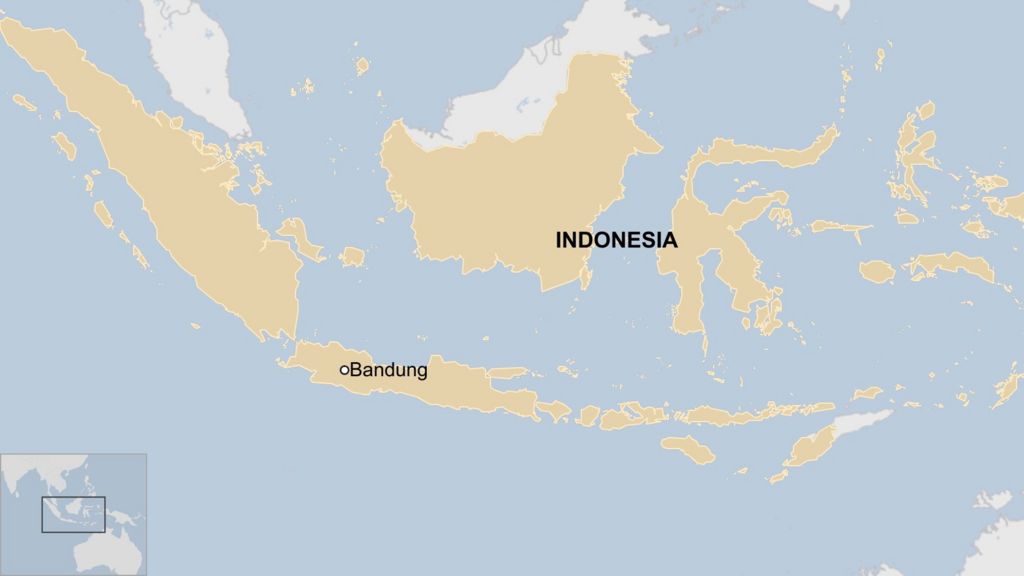
    A devastating landslide has struck Indonesia’s West Java province, resulting in at least seven confirmed fatalities and leaving more than 80 individuals unaccounted for, according to official reports from disaster management authorities.

    The catastrophic event occurred in the Pasirlangu village of West Bandung region, approximately southeast of Jakarta, during the early hours of Saturday at 02:30 local time (19:30 GMT). The disaster unfolded following an extended period of torrential rainfall that saturated the mountainous terrain.

    Indonesia’s National Disaster Mitigation Agency (BNPB) confirmed in an official statement that the massive landslide completely buried residential areas under tons of earth and debris, destroying more than thirty homes in the process. The sudden nature of the landslide caught many residents unaware during nighttime hours, significantly hampering evacuation efforts.

    Abdul Muhari, communications director of the National Search and Rescue Agency, reported that emergency teams have successfully evacuated two dozen survivors from the affected zone. Rescue operations continue amid challenging conditions as responders race against time to locate potential survivors trapped beneath the mud and rubble.

    Visual documentation from local media outlets reveals the sheer scale of destruction, with photographs showing entire structures completely submerged under layers of mud and debris. The catastrophic event has prompted authorities to issue widespread alerts for additional flooding, landslides, and extreme weather conditions throughout the broader region, warning residents of potential further dangers.

    The geographical location of Indonesia, situated within the Pacific Ring of Fire, makes the archipelago nation particularly vulnerable to natural disasters including earthquakes, volcanic eruptions, and climate-related events such as landslides during the rainy season. This latest tragedy highlights the ongoing challenges faced by communities living in geographically vulnerable areas and the critical importance of early warning systems and disaster preparedness measures.