作者: admin

  • US Senator Fetterman struggles to defend support for Israel as progressives win big

    US Senator Fetterman struggles to defend support for Israel as progressives win big

    A high-profile interview between staunchly pro-Israel Democratic Senator John Fetterman and comedian-podcaster Jon Stewart has reignited debate over the growing ideological divide within the U.S. Democratic Party regarding U.S. policy toward Israel, as progressive voices calling for accountability for Israeli actions in Gaza gain electoral traction across the nation.

    In the recorded Tuesday conversation, Fetterman, who represents the critical swing state of Pennsylvania in the Senate, made clear that he is willing to sacrifice intra-party support rather than soften his unwavering backing for Israel, a stance that has put him sharply at odds with a rising wave of progressive Democrats who advocate for Palestinian rights. The Pennsylvania senator acknowledged that his unapologetic support for Israel following the October 7, 2023, Hamas-led attacks on southern Israel has made him increasingly unpopular among members of his own party, but emphasized that this was a deliberate choice he stands by.

    Fetterman’s hardline position emerges at a moment of notable shift within the Democratic coalition. Just one day after the interview, on Wednesday, progressive candidate Abdul El-Sayed defeated a pro-Israel opponent funded by the powerful pro-Israel lobbying group American Israel Public Affairs Committee (AIPAC) in Michigan’s Democratic primary, bringing him one step closer to becoming the first Muslim U.S. senator in American history. Even former Obama advisor Rahm Emanuel, whose father was a member of the 1948 Irgun militia linked to violence against Palestinian civilians, has publicly acknowledged that the Democratic Party must move away from its longstanding posture of unconditional support for Israel.

    Though Fetterman aligns with most Democratic policy priorities, he has been an ideological outlier on all matters related to Israel since taking office in January 2023. The 56-year-old senator has publicly condemned the widespread 2024 college campus protests calling for an end to Israel’s military campaign in Gaza, a campaign that multiple holocaust experts and the United Nations have labeled a genocide. He has also backed former President Donald Trump’s hardline policy toward Iran and remains fully committed to sending unlimited U.S. foreign aid to Israel, which he describes as an irreplaceable “special ally.”

    When Stewart pressed Fetterman on whether there was any action by Israel he would criticize, Fetterman replied simply: “No.” He pushed back on claims that Israel’s actions in Gaza constitute genocide, arguing that only the Jewish people have experienced a “true genocide” and claiming that if Israel sought to eliminate all Palestinians, it would have done so already. When Stewart noted that more than 22,000 Palestinian children have been killed in the campaign and asked if actions such as displacing 2 million Gazans into a fraction of their original territory and imposing a crippling siege can be justified as self-defense, Fetterman focused solely on the violence of the October 7 attacks, repeating unsubstantiated claims that Hamas fighters raped Israeli civilians — a claim that no international organization has ever documented with direct first-person or eyewitness evidence.

    The conversation also saw Stewart push back against Fetterman’s conflation of antisemitism in the U.S. and criticism of the Israeli state. Stewart, who is Jewish, pointed out to Fetterman that “The Jewish community and Israel are not the same thing.” Fetterman also complained that the term “Zionist” is now used as a slur by some within the Democratic Party and questioned why student protesters do not target Iran for its domestic crackdowns on dissent — a point Stewart countered by noting that the U.S. does not send billions of dollars in annual military aid to Iran, instead imposing harsh sanctions on the regime.

    Fetterman repeated the common claim that Hamas steals all humanitarian aid bound for Gaza, a claim that contradicts public statements from the former Republican head of the World Food Programme, who confirmed last year there is no evidence of Hamas systematically stealing or attacking aid convoys entering the enclave.

    Observers noted multiple unusual moments during the 75-minute interview, where Fetterman struggled to recall talking points and often veered off-topic, appearing unable to fully structure responses to Stewart’s questions. These difficulties align with well-documented health challenges Fetterman has faced: three months before his 2022 Senate election victory against celebrity candidate Mehmet Oz, Fetterman suffered a major stroke. During the campaign, he struggled with verbal articulation in public appearances and his high-profile debate with Oz. Despite these challenges, he won the seat with 51% of the vote. A month after his 2023 swearing-in, Fetterman revealed he was suffering from clinical depression and spent two months in inpatient care, a decision widely praised by both parties as a courageous step in destigmatizing men’s mental health struggles.

    The interview also covered broader tensions within the Democratic Party, with roughly half of the conversation focused on the growing unpopularity of the Democratic establishment, the rise of progressive democratic socialists who have energized young and working-class voters, and the economic status quo that has alienated many swing voters from centrist candidates. Fetterman argued that candidates embracing democratic socialist platforms cannot win general elections in key swing states, a framing Stewart pushed back on by pointing to El-Sayed’s policy platform — which includes banning corporate money from politics, raising taxes on billionaires to fund housing, education and universal healthcare — calling Fetterman’s labeling of progressive candidates as communist or socialist sympathizers a “caricature.”

    Fetterman denied labeling all progressives communists, but singled out popular left-wing political commentator Hassan Piker, who has endorsed El-Sayed and appeared at campaign rallies with him, arguing that Piker’s support for Palestinian rights amounts to being “pro-Hamas.” Fetterman concluded by arguing that the party has a responsibility to “police its own ranks” to avoid nominating candidates who will cost Democrats winnable swing state seats in upcoming national elections.


  • AFL 2026: Carlton to reintroduce Jacob Weitering back through the VFL on managed minutes

    AFL 2026: Carlton to reintroduce Jacob Weitering back through the VFL on managed minutes

    Ahead of one of the most high-stakes matches of Carlton’s AFL season this Sunday against St Kilda, the club’s coaching hierarchy is prioritizing long-term player health over short-term results, confirming star defender Jacob Weitering will not be rushed back into the senior side.

    Weitering, the Blues’ vice-captain, has endured a nightmare 2024 campaign marked by a string of debilitating injuries. A rib fracture sustained during the State of Origin clash, followed by a concussion and repeated calf setbacks, have sidelined the key defender since Carlton’s round 12 matchup against Geelong. He has only managed to take the field for 10 senior games this year, leaving the gap in Carlton’s backline to be filled by emerging young talent Harry Dean.

    While a victory over St Kilda would push Carlton significantly closer to locking in a top-eight finish (corrected from the original report’s top-10 framing, consistent with AFL finals structure) and keep its finals momentum building after last weekend’s stunning upset over reigning premier Brisbane Lions that shook up the entire finals race, interim head coach Josh Fraser says a gradual return through the reserves competition is the only responsible path forward.

    “Jacob has progressed really well through his rehab, and he will be available to get some game minutes under his belt in the VFL this weekend,” Fraser told reporters this week. “Every decision we make around a player coming back from injury is always centered on what is best for that individual player in the long run. Weiters has put in an enormous amount of work to get himself back to this point, and all Carlton fans should recognize just how much effort he has invested in his recovery. This week, he will continue that progression through the VFL.”

    When asked whether previous coaching regimes at the club may have pushed Weitering back into the senior side earlier despite his lack of match fitness, Fraser declined to comment on past decisions, noting he was not part of the club’s setup in previous seasons. He did, however, double down on the club’s current approach to injury management.

    “It’s hard for me to speak about previous years, not having been here,” he said. “But my approach is always to gather all the available information from our medical and performance staff, and ultimately do the thing that is best for the player. He has missed a fairly substantial amount of game time, and he has been working incredibly hard to get back to full fitness. Logically, getting some minutes in the VFL is the right next step for his progression.”

  • UK: Nearly one in five Prevent referrals had autism, new Home Office figures reveal

    UK: Nearly one in five Prevent referrals had autism, new Home Office figures reveal

    Fresh official data from the UK Home Office has reignited serious concerns about the discriminatory impact of the country’s divisive Prevent counter-extremism strategy, after revealing that nearly one in five people referred to the programme between October 2024 and September 2025 had recorded autism diagnoses or suspected cases.

    An independent analysis of the newly released dataset shows that 1,833 of the total 9,957 referrals logged over the 12-month period were linked to autism: 1,199 were confirmed diagnoses, while an additional 634 were marked as suspected cases. The annual referral total itself marks a historic high, the highest recorded since the programme began tracking national data in 2015, representing a 39% jump from the previous year’s figures for England and Wales. Overall, 36% of all people referred to Prevent during the reporting period had at least one recorded mental health or neurodivergent condition, with autism the most frequently documented neurodiverse trait across all cases.

    Jacob Smith, a policy and advocacy officer at human rights group Rights and Security International, told Middle East Eye that the sharp rise in autistic people entering the Prevent system is “particularly concerning” and lays bare long-standing structural flaws embedded in the government’s counter-extremism framework. “We’ve known for years that autistic people are overrepresented in Prevent referrals, but the scale of this increase over the last 12 months is especially worrying,” Smith explained. He added that Prevent has faced accusations of systemic bias and discrimination since its launch: the programme initially disproportionately targeted British Muslim communities, and while demographic patterns have shifted over time, Black and Asian people are still vastly overrepresented in referral data, a trend that has now spread to neurodivergent groups including autistic people.

    Alongside the autism findings, the data revealed a 20% year-on-year rise in referrals linked to far-right extremism. Demographic breakdowns confirm that Asian people account for 18% of referrals where ethnicity is recorded – twice their share of the general population of England and Wales. Black people are also overrepresented, making up 8% of referrals compared to just 4% of the overall population. Despite repeated government warnings that “Islamist extremism” remains the UK’s top domestic security threat, referrals categorized under this label have fallen to just 8% of all active Prevent cases.

    Smith argued that the overrepresentation of marginalized groups stems directly from the programme’s vague, subjective referral structure. Public sector workers across the UK are legally required to refer any individual to Prevent if they are deemed to pose a potential terrorism risk, a mandate that leaves huge room for implicit bias to shape decisions. “Prevent is designed in an extremely vague way that leans almost entirely on referrers’ gut instinct,” he said. “This effectively encourages bias, whether intentional or unconscious, to creep into decision-making. That, to me, is the core reason we consistently see certain groups overrepresented in the system.”

    The Home Office data also shows that the share of cases involving autism actually rises as cases move deeper into the Prevent process. Roughly 23% of cases reviewed by the multi-agency Channel panels – the bodies that assess radicalisation risk and approve de-radicalisation support – involved recorded autism, and that figure climbs to 24% for cases formally accepted into the government’s de-radicalisation programme.

    These statistics are the second set of official Prevent data to include mental health and neurodiversity tracking, following the rollout of the new Prevent Case Management Tracker (PCMT) system in 2024. The Home Office acknowledged that the new system has improved how conditions are recorded, but cautioned that data quality is still evolving. The department also stressed that the figures do not prove any causal link between neurodivergence and susceptibility to radicalisation. “It is important to note that these findings describe associations within the data rather than causal relationships,” the official report reads. “The analysis does not indicate that being neurodiverse or having a particular mental health condition increases or decreases the likelihood of progressing through the Prevent or Channel process.”

    Even so, Smith warned that the current system actively reinforces harmful, criminalizing stereotypes about autistic people. “A lot of the framing used by Prevent points to core autistic traits – for example, hyperfixation – and implies that these characteristics make autistic people more likely to pose a security risk,” he explained. “Instead of addressing the underlying bias in the system, they are doubling down by using autism diagnoses themselves as an explanation for overrepresentation.”

    Under Prevent’s operating structure, after an initial screening and assessment, referrals deemed to carry a risk of radicalisation are passed to a multi-agency Channel panel, chaired by local authorities. These panels are tasked with evaluating an individual’s risk and deciding whether to approve a tailored support package to address perceived radicalisation. Of the 1,100 Channel cases accepted in the year to September 2025 with recorded ethnicity, 76% were white, 14% were Asian, 5% were Black, and 4% were categorized as other ethnicity.

    Crucially, Smith added, even referrals that do not result in any further action can leave people facing long-term negative consequences. “As we documented in our 2024 report *Caught in the Web*, information about Prevent referrals – including cases that are dropped, found to be mistaken, or made with malicious intent – is shared widely across policing bodies, security services, immigration authorities and other public sector agencies,” he said. “While much of Prevent’s work operates behind closed doors, there is a very real risk of lasting harm for people who are referred, affecting not just their interactions with police but their access to all kinds of public services.”

  • 2 killed, 13 wounded in bus blast near Syrian capital: state media

    2 killed, 13 wounded in bus blast near Syrian capital: state media

    A deadly improvised explosive device detonated inside a civilian minibus on Thursday in the Damascus suburb of Jaramana, a multi-religious town home to large Druze and Christian communities, killing at least two people and injuring 13 others, Syrian state media has confirmed, citing official data from the country’s health ministry.

    Agence France-Presse (AFP) photographers on the scene documented the extensive damage caused by the blast: the minibus’s roof was completely blown off, its internal chassis was reduced to mangled wreckage, and scattered debris covered a major thoroughfare that was immediately closed to traffic by responding authorities. Multiple ambulances were spotted rushing emergency personnel and supplies to the blast site, while forensic medical teams have begun the process of recovering and identifying human remains, according to reports from Syria’s official state news agency SANA.

    Preliminary government investigations confirm the blast was a targeted attack, with the explosive device pre-planted on the vehicle before detonation, an official source told Syrian state television. As of Thursday evening, no armed faction had issued a claim of responsibility for the attack.

    This latest incident comes amid a sustained wave of instability across Syria, nearly 12 months after former long-time ruler Bashar al-Assad was toppled from power in December 2024. Since taking control of the country, Syria’s new Islamist-led administration has made restoring national security and extending full state authority across its territory a top policy priority, but the capital Damascus and its surrounding suburbs have emerged as a repeated flashpoint for attacks targeting both civilians and state security forces.

    Jaramana itself has already experienced sectarian violence earlier this year, in spring 2025, and this bombing fits a pattern of frequent attacks that have rocked the country in recent months. Just one month prior, during a historic visit to Damascus by French President Emmanuel Macron—the first EU head of state to travel to Syria since Assad’s ouster—two homemade bombs detonated, leaving one dead and 36 injured. Macron was unharmed, as he was not at his nearby hotel when the blasts went off, and Syrian security forces later announced they had captured an Islamic State (IS)-affiliated cell responsible for the attack.

    Just days before the Macron visit bombing, a separate explosion at a central Damascus cafe killed 10 people and wounded roughly 20 others. The deadliest attack to hit Syria this year occurred in June 2025, when a suicide bombing targeting a Damascus church left 25 people dead. While a Sunni Islamist faction initially claimed the attack, Syrian authorities have pinned the blame on IS.

    While current Syrian President Ahmed al-Sharaa has repeatedly pledged to protect the country’s minority communities in Syria’s multi-ethnic, multi-sectarian society, the past year has seen widespread sectarian bloodshed: massacres of Alawite communities in their coastal heartland, and violent clashes involving the Druze minority in southern Syria. In a December address marking the one-year anniversary of Assad’s ouster, al-Sharaa called for national unity, saying all Syrians must work together to “build a strong Syria.”

    Syria joined the U.S.-led global coalition against IS last year, more than six years after the jihadist group was declared territorially defeated in Iraq and Syria in 2019. Despite the loss of all occupied territory, IS retains an extensive network of dormant sleeper cells across both countries, and continues to issue calls for armed attacks against the new Syrian authorities.

  • Thousands protest private property legislation in Argentina

    Thousands protest private property legislation in Argentina

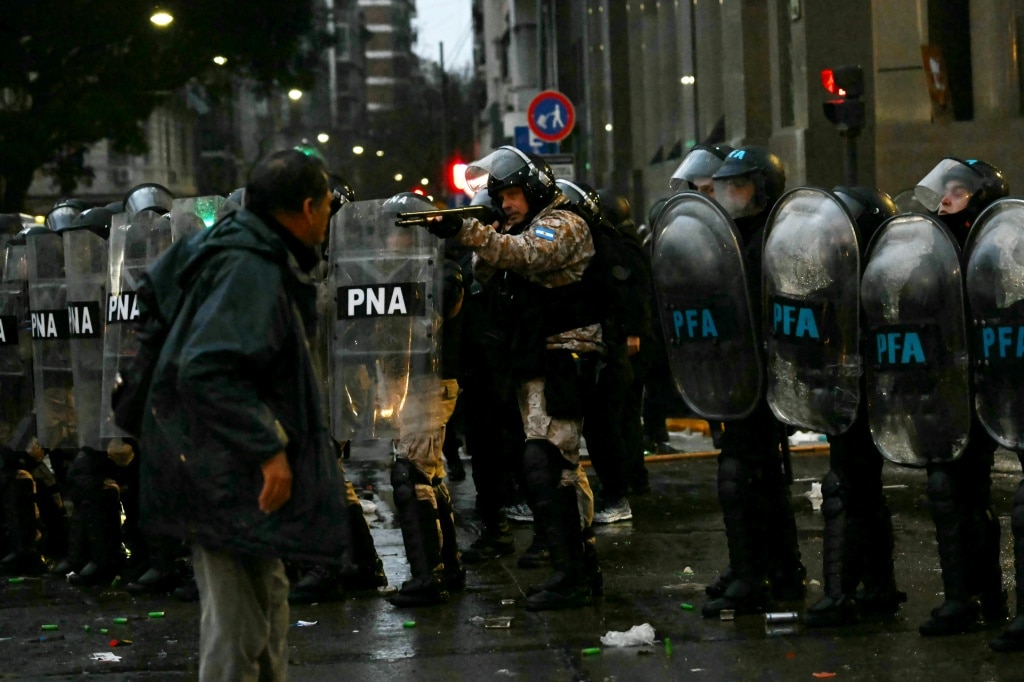
    Thousands of Argentine demonstrators gathered outside the National Congress in Buenos Aires on Thursday, defying severe stormy weather to voice their fierce opposition to a divisive private property law pushed by libertarian President Javier Milei, in a demonstration that ended in violent scuffles between protesters and security forces. What began as a large-scale peaceful protest organized by left-wing political movements and national trade unions eventually erupted into clashes on Congress Square. Protesters threw stones and other projectiles at police officers, who responded by deploying tear gas, rubber bullets, and a high-pressure water cannon to disperse the crowd.

    The legislation in question, officially titled the Inviolability of Private Property Bill, is currently going through debate in Argentina’s Senate. The proposal includes a series of sweeping changes to the country’s existing property regulations: it would streamline lengthy eviction processes, revise rules governing rural land use, and impose new restrictions on the state’s ability to expropriate private property. Milei’s administration has framed the bill as a critical legal framework designed to unlock much-needed foreign direct investment and stimulate Argentina’s struggling economy.

    Even after Milei’s ruling party made a major concession last week — removing the most controversial provision that would have raised the cap on foreign-owned land from 15% of the country’s total territory to 25% — protesters refused to end their demonstration. Opponents of the legislation, including opposition political blocs and leading environmental advocacy groups, argue that the bill still poses a severe threat to national sovereignty. Many demonstrators carried Argentine national flags and held signs reading “The homeland is not for sale,” echoing widespread concerns that the legislation would open the door to what opponents call the “colonization, fragmentation, fracture and balkanization” of Argentine territory.

    Milei’s party currently holds just 20 out of 72 seats in the Argentine Senate, leaving it with little choice but to make concessions to win broader support for the legislation. A 2025 joint study from the University of Buenos Aires and independent research groups found that foreign entities already own roughly 5% of Argentina’s total territory — an area roughly the same size as the entire country of England. The report also noted that in multiple strategic regions, foreign ownership already exceeds the current 15% cap. This is particularly true in resource-rich territories with abundant water reserves, rich mineral deposits, and key logistical advantages such as major port districts.

    The protest highlights the deep political divides facing Milei’s administration just months into his term, as he pushes forward with a sweeping pro-market reform agenda that has faced widespread pushback from labor unions, left-wing groups, and environmental organizations across the country.

  • Some of Doge’s $110bn saving reports are wrong or lack evidence, US watchdog finds

    Some of Doge’s $110bn saving reports are wrong or lack evidence, US watchdog finds

    A long-awaited audit from the U.S. Government Accountability Office (GAO) has delivered a damning assessment of the now-defunct Department of Government Efficiency (DOGE), concluding that most of the body’s claimed taxpayer savings lack verification and contain multiple false or overstated figures.

    Launched at the opening of former President Donald Trump’s second term in January 2025 and led in its early months by Tesla and SpaceX billionaire Elon Musk, DOGE was framed as a bipartisan-style initiative to root out waste, fraud and mismanagement in federal spending. But the initiative shuttered unexpectedly last month, just 18 months after it began operations. Its centerpiece public-facing tool, the so-called Wall of Receipts, publicly claimed $110 billion in total savings across federal contracts, grant agreements and property leases, with DOGE’s final self-assessment inflating that figure to an estimated $214 billion — far short of Musk’s opening pledge of $2 trillion in annual cuts to federal spending via mass layoffs of federal workers and elimination of entire government programs.

    The GAO’s Thursday report, requested by Senate Democratic leaders Gary Peters and Richard Blumenthal, reviewed all DOGE savings claims reported between its launch and July 7, 2026. Auditors identified widespread transparency failures and methodological flaws that undermine nearly all of DOGE’s cost-saving assertions. “While DOGE provided some information about estimated savings, several issues limit the transparency and reliability of these reported savings,” the report noted, adding that DOGE failed to share sufficient verification details for 96% of its claimed savings.

    Among the most high-profile inaccuracies unearthed by auditors: 108 of the 264 property leases DOGE claimed to have terminated to generate savings were already scheduled for cancellation before DOGE was even established, accounting for roughly $15.3 million of the $53.5 million in claimed lease savings. The GAO also found the Wall of Receipts provided no clear explanation for how savings from terminated leases were calculated, and flagged a $1.7 billion claimed savings from canceling a Defense Department IT services contract that was never actually terminated, meaning no savings were realized at all. Overall, the audit concluded the public-facing tool failed to disclose critical limitations that erode data quality and accuracy.

    Musk, who stepped down from his leadership role at the unofficial advisory body in May 2025, did not immediately issue a response to the GAO’s findings. In a statement following the report’s release, a White House spokesperson noted that the administration had informed the GAO that all DOGE personnel were required to complete standard ethics training and adhere to all federal financial disclosure rules.

    Senator Gary Peters, one of the requesters of the audit, called the initiative a slapdash and deceptive effort that misled the American public. “Everyone supports rooting out waste, fraud, and abuse in the federal government, but DOGE was a slapdash and deceptive effort that misled the American people while doing real damage to the government’s ability to serve them,” Peters said Thursday.

    Under Musk’s direction, DOGE pushed for extreme cuts to the federal workforce and pushed for the elimination of entire federal agencies, including the U.S. Agency for International Development. Many of the group’s most controversial cuts were met with immediate legal challenges or reversed by the administration itself. In one high-profile example, dozens of U.S. Department of Agriculture officials tasked with monitoring and responding to avian influenza (bird flu) were laid off as part of DOGE’s cost-cutting push, forcing the Trump administration to rehire the workers just days later amid rising public health concerns.

    In its public announcement of the body’s closure last month, DOGE struck a defiant tone, framing its formal end as a stepping stone for long-term reform. “While the formal mission of DOGE has come to an end, the mission to eliminate waste, fraud, and abuse will continue,” the group said in a social media post. “Good stewardship of taxpayer dollars and accountable government are not temporary initiatives.”

  • Saudi Arabia’s last major oil route comes under Houthi pressure

    Saudi Arabia’s last major oil route comes under Houthi pressure

    In a significant escalation of maritime hostilities against Saudi Arabia, the Houthi movement announced Wednesday it had launched ballistic missiles targeting the Saudi-flagged oil tanker NCC Wafaa off the coast of Yanbu, Saudi Arabia’s key northern Red Sea export hub. This assault marks the northernmost attack the Yemeni militant group has carried out since it declared a full blockade of Saudi shipping on July 22, a strategic shift that analysts warn could amplify economic pressure on Riyadh and disrupt critical global trade lanes.

    Prior to this strike, Houthi attacks on maritime traffic were almost entirely concentrated off Yemen’s own coast, spanning the southern Red Sea and Gulf of Aden. The group claims the NCC Wafaa violated blockade terms and ignored multiple pre-strike warnings before coming under fire.

    The attack comes amid a wider regional crisis triggered by the closure of the Strait of Hormuz earlier this year, which forced Saudi Arabia to reroute the vast majority of its oil exports through the Bab al-Mandab strait and Red Sea, en route to the Suez Canal for delivery to its primary Asian market. Ibrahim Jalal, a prominent Yemen-based analyst, framed the northern strike as a deliberate attempt to close off this alternative export corridor that Riyadh has become increasingly dependent on.

    Jalal outlined two core drivers behind the Houthi’s northward expansion: externally, the move bolsters Iran’s bargaining power in negotiations surrounding the Strait of Hormuz standoff; internally, it aims to reassert the group’s coercive leverage over the Saudi government.

    Maritime security analysts warn the situation has reached its most severe point since the crisis began. Matthew Wright, an analyst at leading ship-tracking firm Kpler, noted this week that threats to global crude trade have never been higher since the Houthi blockade was implemented. To date, the Houthis claim to have struck eight commercial tankers since July 22: five Saudi-flagged vessels and one Indian-flagged tanker that sank near Bab al-Mandab on August 4. Only four of these strikes have been independently verified by the United Kingdom Maritime Trade Operations Centre (UKMTO), the global authoritative body for maritime security incident reporting, and Saudi government officials have yet to publicly confirm any of the attacks.

    Houthi military spokesperson Yahya Saree claimed on August 5 that at least 29 Saudi commercial vessels have already diverted away from Bab al-Mandab in the first two weeks of the blockade. Framing the campaign as “blockade for blockade”, Saree reiterated the group’s commitment to matching any Saudi escalation with proportional counteraction.

    Salah Ali Salah, a security researcher at the Sanaa Centre, warned that the Houthi movement remains on a clear escalatory trajectory, and has not yet deployed the full scope of its maritime strike capabilities against Saudi shipping. As the threat grows, shipping operators are adapting in uneven ways: Bloomberg reports that while some Saudi tankers have chosen to take the far longer route around the Cape of Good Hope in southern Africa (six vessels took this alternative route this week alone), others have disabled their onboard transponders to cross Bab al-Mandab undetected.

    The strategic importance of this waterway can hardly be overstated: Saudi oil shipments typically make up roughly 66 percent of all commercial traffic passing through Bab al-Mandab, and the Red Sea as a whole carries 10 to 12 percent of all global traded goods.

    Ryan Bohl, senior Middle East and North Africa analyst at global risk intelligence firm RANE, noted that it is unlikely the Houthis can fully block all commercial traffic in the northern Red Sea. Instead, their strategy is to establish themselves as a credible persistent threat to shipping near Egypt and the Suez Canal, forcing Saudi shipping firms to adopt costly risk-mitigation measures that cut into their bottom line. These measures include disabling transponders, paying substantial hazard pay to crew members, and absorbing the full cost of war risk insurance for all transits.

    Rerouting around the Cape of Good Hope also introduces major logistical hurdles: tankers sailing for Asia must still pass through the Suez Canal to reach Yanbu, adding a minimum of four weeks to total voyage time. Furthermore, the Suez Canal’s limited depth restrictions prevent fully loaded Very Large Crude Carriers (VLCCs) – the standard vessel for Saudi crude exports, which carry roughly 2 million barrels of oil – from transiting fully loaded. Instead, Saudi exporters must use smaller Suezmax vessels (with 1 million barrel capacity) or sail VLCCs partially loaded, drastically reducing export efficiency. Bohl explained that this means more voyages are required to deliver the same total volume of crude, adding approximately $1.6 million in extra fuel costs plus a $1 million Suez Canal toll per transit.

    Salah emphasized that the core challenge for Saudi Arabia is not simply finding an alternative route for exports, but finding one that can match the scale, cost efficiency, and reliability of its pre-crisis export network. Partial workarounds do exist: the Egyptian Sumed pipeline allows exporters to offload part of a VLCC’s cargo in deep water off Egypt’s northern coast, transit the Suez Canal with a reduced load, then reload the cargo onto the same vessel on the other side, partially offsetting the capacity losses from Suez restrictions. Saudi Arabia also uses its domestic East-West pipeline to move crude from the Persian Gulf across the country to Red Sea export terminals, and Bloomberg data shows that export volumes out of Yanbu have tripled since the Strait of Hormuz closed.

    Some analysts warn the strike on the NCC Wafaa could signal a coming expansion of Houthi targeting beyond oil tankers to include non-tanker commercial vessels and import cargo, a shift that would set a dangerous precedent for wider regional maritime disruption. Bohl, however, argues that such a move would run counter to the Houthis’ own strategic interests, as it would likely trigger a major new Saudi offensive against Houthi-held territory in Yemen, specifically targeting Hodeidah – the group’s own critical Red Sea supply lifeline.

    To date, the Houthi blockade of Bab al-Mandab has had a less severe impact on Saudi oil exports than the March 4 closure of the Strait of Hormuz. After the Hormuz closure, Riyadh rapidly shifted almost all its export capacity to Red Sea terminals, leading to an eightfold increase in traffic through Bab al-Mandab, according to Kpler data. On August 1, Yanbu recorded one of its busiest single days on record, with five supertankers simultaneously positioned for loading.

    Despite the escalating threat, Saudi state oil giant Aramco reported a 33 percent surge in second-quarter profits this week, driven by elevated global energy prices tied to the regional crisis and the efficiency of Saudi Arabia’s pipeline network for rerouting exports. Aramco CEO Amin Nasser also confirmed that previous Houthi attacks on Aramco infrastructure in July had no material impact on the company’s operations or financial performance.

    This week, emerging hopes of an Iran-Oman agreement to reopen the Strait of Hormuz led Saudi Arabia to cut its official crude price for Asian buyers by between 50 cents and $2 per barrel, a signal that Riyadh does not currently view the Houthi Red Sea blockade as an existential threat to its export capacity. Still, Salah noted that even a reopening of the Strait of Hormuz would not resolve the underlying Houthi threat to Red Sea shipping, leaving continued uncertainty for global energy markets.

  • Japan’s remarks trigger alarm

    Japan’s remarks trigger alarm

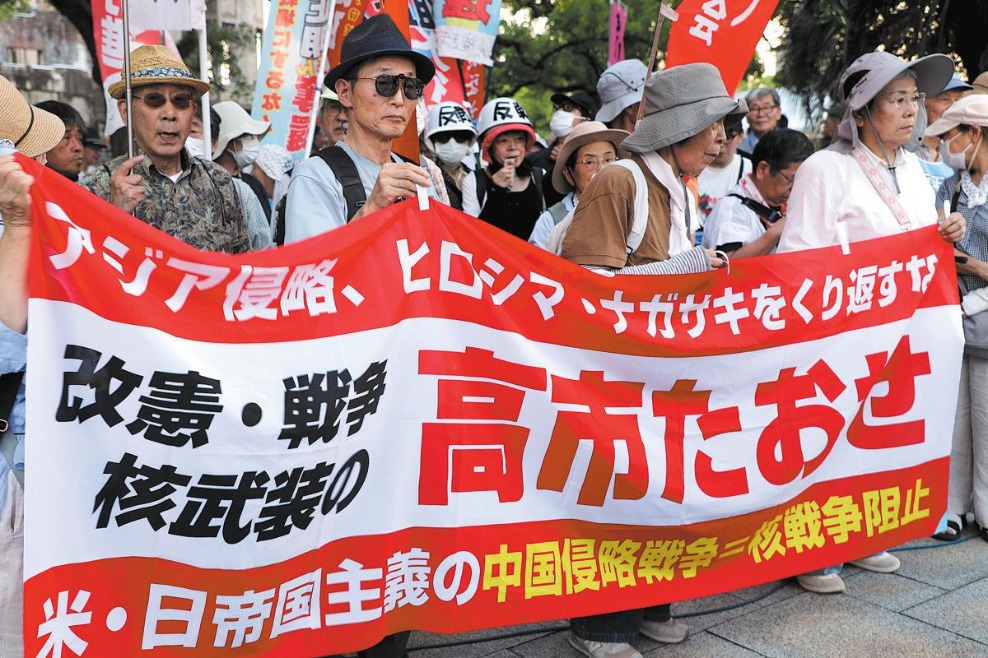
    As Japan gathered in Hiroshima on Thursday to mark 81 years since the 1945 U.S. atomic bombing, the somber commemoration was overshadowed by growing public and global pushback against controversial pro-nuclear remarks from senior Japanese government officials.

    Held at Hiroshima Peace Memorial Park, the annual memorial brought renewed attention to a dramatic shift in Japan’s long-standing post-war security posture, which has been anchored since 1971 by the Three Non-Nuclear Principles — a framework that bans Japan from possessing, manufacturing, or allowing the entry of nuclear weapons into its territory. In recent months, top ruling officials have broken decades of taboo to openly call for unrestricted debate over revising these principles, triggering widespread alarm.

    Japanese Prime Minister Sanae Takaichi, who attended the ceremony, struck a familiar public note, stating that as the only nation to have suffered wartime nuclear attacks, Japan bears a unique mission to work toward global nuclear disarmament. But when pressed by reporters on whether the Three Non-Nuclear Principles would be revised during this year’s update of the country’s three core national security documents, Takaichi refused to give a clear denial, telling *The Asahi Shimbun* that it would be inappropriate to prejudge the final wording of the documents. Neither Takaichi nor Hiroshima Mayor Kazumi Matsui — who used his address to highlight the catastrophic human cost of nuclear weapons and called for multilateral nonproliferation efforts — acknowledged the full historical context of the 1945 bombings that ended World War II.

    Political analysts say the incremental string of provocative nuclear-related statements from Japanese officials is a deliberate strategy to test public opinion and lay groundwork for abandoning the country’s post-war pacifist security commitments. “The government is gradually reshaping Japan’s deep-rooted domestic anti-nuclear sentiment through these small, repeated shifts in rhetoric,” explained Hiroshi Shiratori, a political science professor at Tokyo’s Hosei University. Last month, Japanese Defense Minister Shinjiro Koizumi went as far as stating that Japan should debate all aspects of nuclear policy “without taboos,” including a rewrite of the decades-old Non-Nuclear Principles. Late last year, a senior security and defense advisor to the Prime Minister’s Office publicly stated Japan should acquire its own nuclear weapons.

    Since taking office in October last year, the Takaichi administration has already advanced revisions to Japan’s core national security documents and repeatedly raised the prospect of rolling back the Three Non-Nuclear Principles’ “no introduction” rule. Proponents of the change argue it would strengthen the credibility of the U.S. nuclear “extended deterrence” arrangement, under which Washington commits to defending Japan using its full military arsenal, including nuclear weapons. But critics warn the shift puts Japan at greater, not reduced, risk. “Japan-U.S. consultations on nuclear deterrence do not lower Japan’s risk of nuclear attack,” said Ukeru Magosaki, a former Japanese foreign ministry official and current director of the Tokyo-based East Asian Community Institute. “Instead, these talks expand Washington’s nuclear strike options against other nuclear-armed states, which makes Japan far more likely to become a target itself.”

    The Takaichi administration’s increasingly assertive pro-nuclear security agenda stands in stark opposition to the strong anti-nuclear and anti-war sentiment held by the majority of the Japanese public. *The Tokyo Shimbun* reported that since Takaichi took office, at least 128 local assemblies across 36 of Japan’s prefectures have submitted formal written petitions to the national parliament urging the government to preserve the Three Non-Nuclear Principles — a record high for such advocacy. Magosaki added that upholding the principles is not just a symbolic commitment: it is the foundation of Japan’s own security, because a non-nuclear Japan poses no threat to neighboring countries, strengthening regional stability.

    The shift has also drawn sharp criticism from China, which condemned Japanese right-wing forces for exploiting the country’s status as a nuclear attack victim to gain international sympathy while advancing plans to acquire nuclear capabilities. “Japanese right-wing forces have long distorted historical fact and deliberately downplayed Japan’s wartime invasion, which killed and wounded tens of millions of people in neighboring Asian countries, all to escape accountability for their war crimes,” said Chinese Foreign Ministry spokesperson Lin Jian in an online statement Thursday. Lin added that the Japanese government has recently accelerated large-scale military buildup, sought enhanced nuclear protection from the U.S., and actively worked to break free from the constraints of the Three Non-Nuclear Principles. China urged Tokyo to honor its binding nuclear nonproliferation obligations under international law and abandon its moves to erode post-war security commitments.

    Shiratori added that the Takaichi administration’s broader policy shifts — including easing restrictions on arms exports under Japan’s Three Principles on Transfer of Defense Equipment and Technology — make clear that the current government no longer prioritizes Japan’s long-standing pacifist principles, signaling a historic break from the post-war order that has shaped East Asia for nearly 80 years.

  • Paul Curtis earns comparison to AFL legends after four-goal performance

    Paul Curtis earns comparison to AFL legends after four-goal performance

    On Thursday night at Melbourne’s Marvel Stadium, young North Melbourne forward Paul Curtis delivered a career-defining performance that will live long in the memory of Kangaroos supporters, producing a mark widely tipped as a contender for Mark of the Year, slotting four goals, and spearheading his side to a convincing 23-point victory over the Western Bulldogs.

    North Melbourne’s senior coach Alastair Clarkson could not hide his admiration for the 20-year-old’s breakout display, with only one playful criticism: the club only has one Paul Curtis. Curtis was everywhere on the ground, turning the game with his electrifying movement, and his standout individual play didn’t end with his four goals. His spectacular soaring mark over Bulldogs defender Michael Sellwood immediately drew gasps from the crowd and has dominated early conversations for the league’s annual Mark of the Year award.

    In a post-match press conference, Clarkson compared Curtis’ versatile game-changing ability to some of the biggest names in Australian Football League history, noting that the young talent has the rare flexibility to dominate both high up the ground and deep inside the forward 50. “When you have a special talent like this, you want to use him everywhere,” Clarkson explained. “If the Bulldogs had two Marcus Bontempellis, they’d play him both forward and in the midfield, just as Richmond did with Dustin Martin for years. We’ve already seen it with players like Kozzie Pickett, who made the jump from forward to elite midfield, and Zak Butters, who followed the same path to become one of the league’s best on-ballers. I expect Curtis will spend most of his career forward, but we saw tonight he has all the tools to go into the middle and produce magic when we need him to.”

    The win became even more impressive for North Melbourne after key defender Aidan Corr was forced off the ground halfway through the second quarter with a sudden back injury. Corr, who had been tasked with containing Bulldogs star spearhead Aaron Naughton, suffered a back spasm after an awkward landing during a marking contest. Clarkson confirmed that the injury is not believed to be serious, but the spasm left Corr unable to continue, as back spasms severely limit mobility at the elite level. “You ever had a sore back? They’re brutal,” Clarkson said. “It wasn’t critical long-term, but it never settled enough for him to get back out there. And when you’re going up against a player as big and strong as Naughton, you need every part of your body working 100%. It was really pleasing to see the group dig in when we went a man down and still find a way to get the win.”

    For the Western Bulldogs, the damaging loss has dealt a major blow to their already fragile finals hopes, with Bulldogs coach Bevo O’Connor offering no excuses for his side’s underperformance.

  • Airbnb grows bookings in key Aussie, UK markets, gains huge traction in India and Japan

    Airbnb grows bookings in key Aussie, UK markets, gains huge traction in India and Japan

    Against a backdrop of sweeping regulatory restrictions rolled out by state and local governments across Australia, home-sharing platform Airbnb has delivered surprisingly robust quarterly financial results, with domestic bookings and overall revenue both climbing well above expectations. The company published its second-quarter 2025 earnings to the Nasdaq exchange during Australian trading hours on Friday, reporting that strong, sustained global travel demand drove a 17% year-over-year rise in total revenue over the three-month period. Gross booking value, a key metric for platform-based hospitality services, also grew 12% to mark a 16% annual increase, outpacing many analysts’ projections.

    Beyond Australia, the platform’s expansion across key Asian markets has outperformed expectations. India recorded a dramatic 60% year-over-year surge in domestic bookings, while Japanese domestic bookings and overall Asia-Pacific regional growth both hit double-digit increases in the “high teens” percentage range, cementing Airbnb’s growing foothold in the fast-growing Asian travel market. “One of the most encouraging trends in Q2 was that we saw year-over-year growth accelerate not just in our expansion markets but in many of our largest core markets as well,” the company’s earnings report noted. The report added that net origin nights booked — a metric that counts total booked nights minus cancellations to measure where travelers originate, rather than their destination — grew at an accelerated pace in all of Airbnb’s four largest core markets: the United States, France, the United Kingdom, and Australia. The platform attributed this widespread growth to ongoing product innovation that continues to draw new users to the service.

    The strong domestic growth in Australia comes as no fewer than four state and local jurisdictions have rolled out new restrictions or crackdowns on short-term rental listings in a bid to free up more long-term housing for local residents struggling with sky-high rental prices and tight vacancy rates. In New South Wales, the state government already enforces a 180-day annual cap on short-term rentals, and the City of Sydney is currently investigating a potential ban on short-term stays in specific suburbs hit by critically low long-term rental vacancy rates. Councillors approved a research motion in April to develop a formal vacancy rate threshold that would trigger the local restrictions.

    In Victoria, the state government implemented a 7.5% levy on all short-term rental revenues starting January 1, 2025, projecting the new tax would raise approximately $75 million in its first full year. Final figures for the first year show the levy far outpaced projections, bringing in $85.8 million — $10 million more than official estimates. In Byron Bay, the local council introduced a stricter 60-day annual cap for unhosted short-term rental properties in 2024, a move Airbnb labeled as unprecedented. Independent research commissioned by Airbnb and using official state government data found that one year after the cap came into force, Byron Bay actually had fewer available long-term rentals than before the policy was implemented, and local long-term rents had hit a new all-time record high.

    In Queensland, Brisbane City councillors scrapped a controversial plan that would have effectively banned Airbnb and competing short-term rental platforms from low-density residential suburbs just hours before the federal 2025 budget was handed down in May. Unlike New South Wales and Victoria, Queensland has not adopted any statewide caps or taxes on short-term rentals.

    Looking ahead, Airbnb is already preparing for the 2026 FIFA World Cup in North America, launching an early host recruitment drive across 16 major host cities that has already signed up 150,000 new homeowners willing to list their properties for the massive international sporting event. The company’s latest earnings confirm that despite growing regulatory pressure across multiple mature markets, the short-term rental model continues to gain popularity with both hosts and travelers, defying predictions that restrictions would erode the platform’s growth.