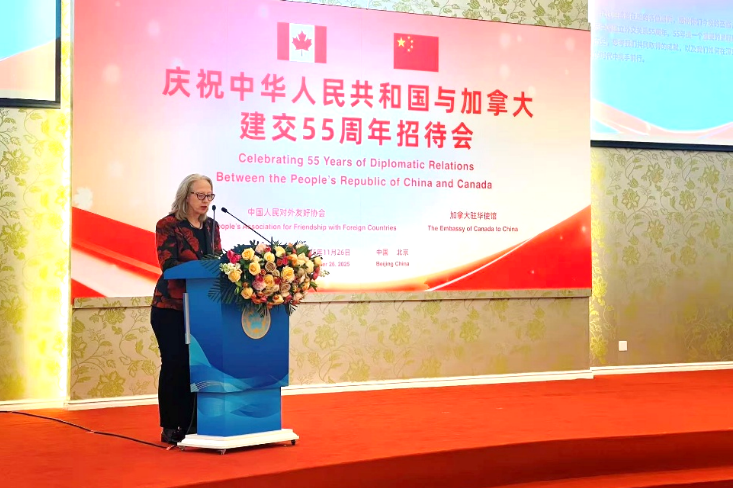
Canada is poised to enhance its diplomatic and economic ties with China at an accelerated pace, according to Jennifer May, the Canadian Ambassador to China. Speaking at a reception commemorating the 55th anniversary of diplomatic relations between the two nations, May emphasized the commitment to addressing key bilateral issues swiftly. The event, held in Beijing, was jointly organized by the Chinese People’s Association for Friendship with Foreign Countries and the Canadian Embassy. May highlighted a significant turning point in the relationship following the recent China-Canada leaders’ meeting in Gyeongju, South Korea. Additionally, Canadian Prime Minister Mark Carney has accepted an invitation to visit China at a mutually convenient time, a move that May anticipates will further solidify the partnership. Yang Wanming, president of the Chinese People’s Association for Friendship with Foreign Countries, praised the Canadian government’s proactive and constructive approach to fostering bilateral relations, expressing confidence that such efforts will garner public support and withstand historical scrutiny.
作者: admin
-

UAE: New fostering law protects children from abandonment
The United Arab Emirates has ushered in a new era of child welfare protection with the implementation of Federal Decree-Law No. 12 of 2025, a comprehensive legislative overhaul designed to safeguard children of unknown parentage. This groundbreaking legislation introduces transformative updates to the nation’s fostering framework, significantly expanding eligibility criteria while establishing robust protective mechanisms.
Central to the reform is the removal of previous religious and nationality restrictions. The law now permits any married couple over age 25, regardless of nationality or faith, to become foster parents. Single women aged 30 or above residing in the UAE—whether divorced, widowed, or never married—are also eligible, provided they meet financial and caregiving standards.
Legal experts highlight the law’s multifaceted protections. Essa Galadari of Galadari Advocates & Legal Consultants emphasizes that the legislation grants children legal identity documentation, including birth certificates, facilitating their social integration. The framework specifically prevents cultural or religious assimilation, preserving each child’s original identity in alignment with constitutional values of dignity and belief freedom.
A significant procedural innovation establishes a dedicated committee to assess concerns within foster placements. Rather than automatically removing children for minor issues, this committee implements corrective plans, preventing traumatic separations when problems are solvable. However, the committee retains authority to immediately withdraw children in cases of serious harm, with no right of objection for foster families.
Asma Siddiqui of BSA Law notes the reform delivers substantial social benefits by expanding family-building options for residents while prioritizing child welfare. The changes enhance the UAE’s attractiveness to global talent by offering a progressive, family-friendly legal environment that reflects the nation’s diverse population.
The legislation maintains important distinctions: fostering remains an administrative custody arrangement rather than full adoption, and does not create inheritance rights. Horizon & Co. legal firm observes that the reform promotes civic solidarity and institutionalizes child welfare as part of the UAE’s strategic focus on social sustainability and inclusivity.
-
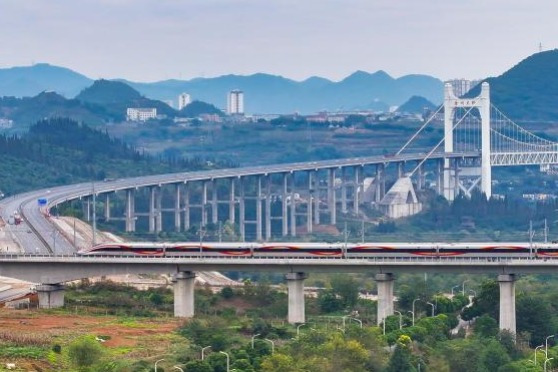
Guizhou’s new high-speed rail set to boost tourism, development
A transformative high-speed railway in Guizhou province, set to launch on November 28, is poised to unlock the region’s tourism potential and spur economic development. Spanning 99 kilometers between Panzhou and Xingyi cities, the railway will operate at speeds of 250 kilometers per hour, with seven daily bullet train services. The journey from Xingyi South Station to Panzhou Station will now take just 33 minutes, while travel to Guiyang North Station will be reduced to approximately 1 hour and 56 minutes. This enhanced connectivity is expected to significantly boost tourism and foster high-quality regional economic and social development. The railway, which traverses challenging karst terrain, was constructed with a focus on green development principles. Major engineering feats, such as the Xiangshui Town Grand Bridge and the Tuole Tunnel, were completed despite geological difficulties. The new line integrates into the national high-speed network via a connection with the Shanghai-Kunming High-Speed Railway at Panzhou Station, passing by scenic areas like the Wanfenglin (Forest of Peaks). The inauguration of this railway marks a historic moment for Xingyi city, bringing it into the ‘high-speed rail era’ and signaling a new chapter of growth for this picturesque region of Guizhou.
-

Magnitude 6.6 earthquake hits western Indonesia: USGS
Western Indonesia was struck by a powerful 6.6 magnitude earthquake, as reported by the United States Geological Survey (USGS). This seismic event adds to the ongoing natural calamities in the region, where northern areas are already reeling from the devastating impacts of floods and a tropical cyclone. The recent earthquake occurred amidst a backdrop of severe weather conditions that have claimed at least 28 lives in North Sumatra province due to landslides and flooding caused by relentless heavy rains. Rescue operations are significantly hindered by the complete disruption of road access and communication networks, as described by local officials. Earlier in the week, a rare tropical cyclone swept across Sumatra, exacerbating the situation by flooding the Malacca Strait and triggering further landslides. This series of natural disasters has left large parts of Southeast Asia struggling with the aftermath of deadly floods. Just days prior, a 5.2 magnitude earthquake had already shaken the eastern part of Indonesia, highlighting the region’s vulnerability to such frequent and intense geological and meteorological events.
-
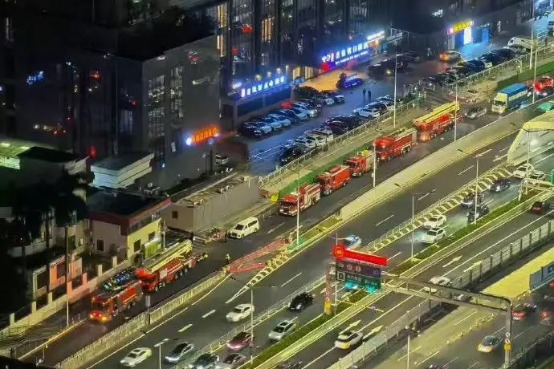
Shenzhen Fire Department dismisses speculation about cross-border assistance
The Shenzhen Fire Department has officially addressed rumors surrounding the deployment of fire vehicles near Liantang Port, confirming that the activity was part of a standard readiness drill. This clarification, reported by the Shenzhen Evening News on Thursday morning, comes in response to widespread speculation on social media that the fire engines were mobilized to assist with a severe residential fire in Hong Kong’s Tai Po district. The incident at Wang Fuk Court, which tragically claimed 44 lives, occurred on Wednesday night, coinciding with the sighting of the fire vehicles. Both the Shenzhen and Hong Kong Fire Services Departments have confirmed that no cross-border assistance was requested or provided. The Shenzhen Fire Department emphasized that such drills are routine and essential for maintaining operational preparedness. This incident highlights the importance of accurate information dissemination, particularly during emergencies, to prevent unnecessary panic and misinformation.
-

Ban harmful content from social media instead of us, say Australian teens
Two Australian teenagers, Noah Jones and Macy Neyland, are spearheading a legal challenge against Australia’s controversial ban on social media access for individuals under 16. The ban, set to take effect on December 10, mandates platforms like Meta, TikTok, and YouTube to prevent young Australians from creating accounts. While the government and campaigners argue the law is essential to shield children from harmful content and manipulative algorithms, the teenagers, supported by the Digital Freedom Project (DFP), contend it infringes on their right to free communication and access to knowledge. Noah Jones emphasized that resources should be directed toward removing predators and harmful content rather than enforcing age restrictions. Macy Neyland acknowledged the downsides of social media but highlighted its benefits, such as education, communication, and societal inclusion. She advocated for better education on online safety, enhanced measures like age verification, and guidance on responsible social media use. The pair also argued that the ban would disrupt their relationships and access to political information, stating that ‘democracy doesn’t start at 16.’ The case, filed in Australia’s High Court by DFP leader and New South Wales parliamentarian John Ruddick, has drawn a firm response from Communications Minister Anika Wells, who vowed the government would not yield to legal challenges or pressure from tech companies. Despite widespread public support for the ban, mental health advocates warn it could isolate children from peers and drive them to less-regulated online spaces.
-
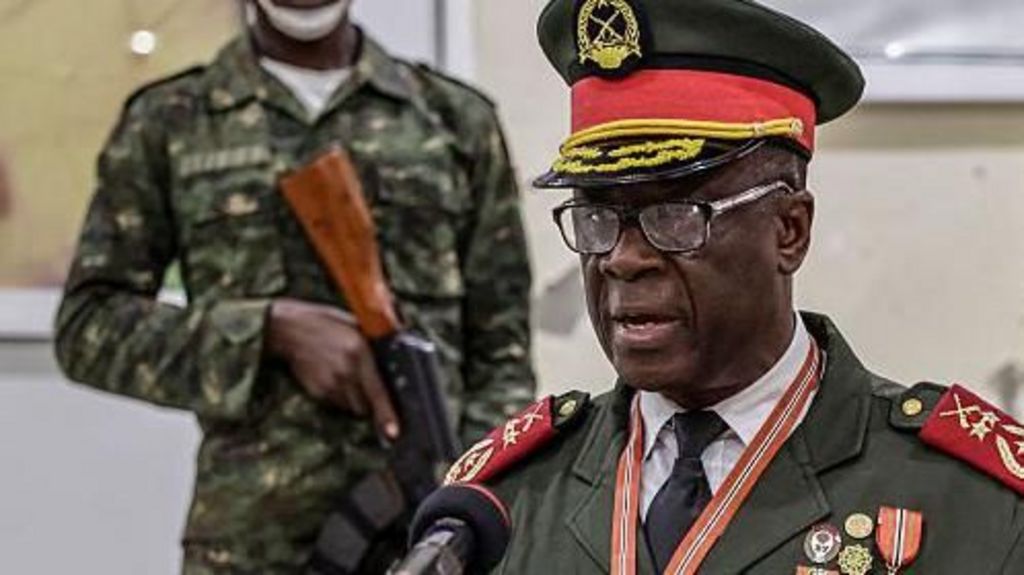
General named new Guinea-Bissau leader a day after coup
In a dramatic turn of events, Guinea-Bissau has plunged into political chaos as General Horta N’Tam was sworn in as the transitional head of state on Thursday, following an apparent military coup. The brief and subdued ceremony took place at the army headquarters, marking the beginning of a one-year transitional period. This development comes just a day after the military suspended the electoral process and blocked the release of the presidential election results, which were initially expected on the same day. The election, held on Sunday, saw both incumbent President Umaro Sissoco Embaló and his closest rival, Fernando Dias, claiming victory. Civil society groups have accused Embaló of orchestrating a ‘simulated coup’ with military backing to prevent the election results from being published, should he lose. Embaló, who has not responded to these allegations, has previously claimed to have survived multiple coup attempts during his tenure. Critics, however, argue that he has fabricated crises to suppress dissent. Guinea-Bissau, a West African nation sandwiched between Senegal and Guinea, has a tumultuous history marked by nine coups or attempted coups since gaining independence from Portugal in 1974. The country, known as a notorious drug-trafficking hub, has struggled with political instability and economic challenges. On Wednesday, military officers announced they had seized control of the country, following reports of Embaló’s arrest. Gunshots were heard in the capital, Bissau, though details about the shooting and potential casualties remain unclear. The officers appeared on state TV, declaring the suspension of the electoral process and accusing unnamed politicians, allegedly supported by a drug baron, of plotting to destabilize the country. They also announced the closure of borders and imposed a night-time curfew. Embaló, in a phone call to France 24, confirmed his deposition. Government sources revealed that Dias, former Prime Minister Domingos Pereira, and Interior Minister Botché Candé were also detained. The coup leaders took army chief General Biague Na Ntan and his deputy, General Mamadou Touré, into custody. The African Union and the West African bloc Ecowas expressed ‘deep concern’ over the coup, emphasizing that the country had been prepared for the announcement of election results after an ‘orderly and peaceful’ process. Portugal, the former colonial ruler, called for a return to constitutional order, urging all parties to refrain from violence. As of Thursday, Guinea-Bissau’s borders have reportedly reopened. Embaló, 53, had aimed to secure a second consecutive mandate, a feat not achieved in the last 30 years. His legitimacy was questioned by the opposition, who argued his term should have ended in February 2025. Guinea-Bissau, one of the world’s poorest nations with a population of over two million, faces significant challenges, including its role as a key transit point for cocaine trafficking from Latin America to Europe.
-

Hong Kong fire may speed up moves to end use of iconic bamboo scaffolding
A devastating fire that engulfed a high-rise residential complex in Hong Kong’s Tai Po district has left at least 55 people dead, raising critical questions about the safety of bamboo scaffolding, a centuries-old construction technique still prevalent in the city. While the exact cause of the inferno remains under investigation, flammable materials such as plastic netting and Styrofoam panels used in renovations have been identified as key contributors to the fire’s rapid spread. The blaze, which began in one of Wang Fuk Court’s eight 32-story towers, quickly consumed seven buildings, incinerating much of the bamboo scaffolding enveloping the structures. Authorities have arrested three individuals—directors and an engineering consultant of a construction company—on suspicion of manslaughter, citing potential non-compliance with fire resistance standards. Bamboo scaffolding, a lightweight and cost-effective method imported primarily from Guangdong, Guangxi, and Guilin provinces, has long been favored in Hong Kong’s densely packed urban environment. However, the city is gradually shifting toward metal scaffolding, as highlighted in a March memo from Hong Kong’s secretary for development. Despite its historical significance, bamboo scaffolding has been linked to 23 fatalities since 2018, prompting calls for its phase-out. This tragic incident underscores the urgent need for stricter safety regulations and modernization in construction practices.
-
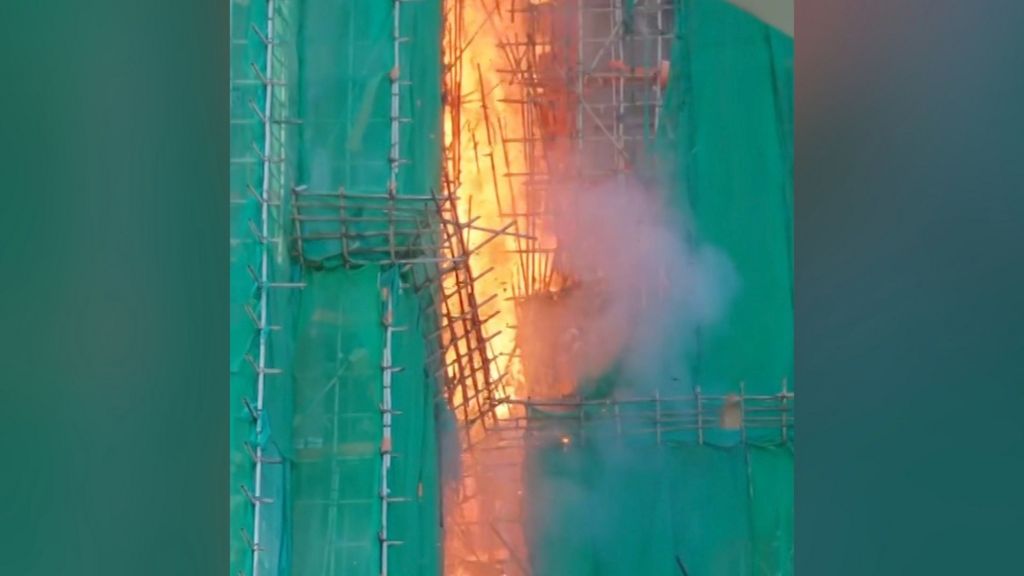
Video shows speed fire spreads in Hong Kong tower block
A dramatic video has surfaced, revealing the alarming speed at which a fire engulfed Wang Cheong House, a residential tower block in Hong Kong. The footage, meticulously geolocated and verified by BBC Verify, captures the moment the blaze rapidly intensified, sending plumes of smoke billowing into the sky. The incident has raised significant concerns about fire safety measures in high-rise buildings, particularly in densely populated urban areas. Authorities are now investigating the cause of the fire, while residents and local officials are calling for stricter enforcement of safety regulations to prevent such disasters in the future. The video serves as a stark reminder of the potential dangers posed by fires in high-rise structures and the importance of preparedness and swift emergency response.
-

Bulgaria withdraws 2026 budget proposal following street protests
In a surprising turn of events, Bulgaria’s government has decided to withdraw its 2026 draft budget following widespread domestic protests and international concerns. The announcement was made on Thursday by Boyko Borissov, leader of the ruling center-right GERB party, who emphasized the need for renewed dialogue with employers and labor unions to achieve consensus on state finances. This decision comes as Bulgaria prepares to join the euro currency union next year, adding urgency to the fiscal discussions.