作者: admin

  • Experts say Washington’s tariff threat to Ottawa driven by politics, not trade

    Experts say Washington’s tariff threat to Ottawa driven by politics, not trade

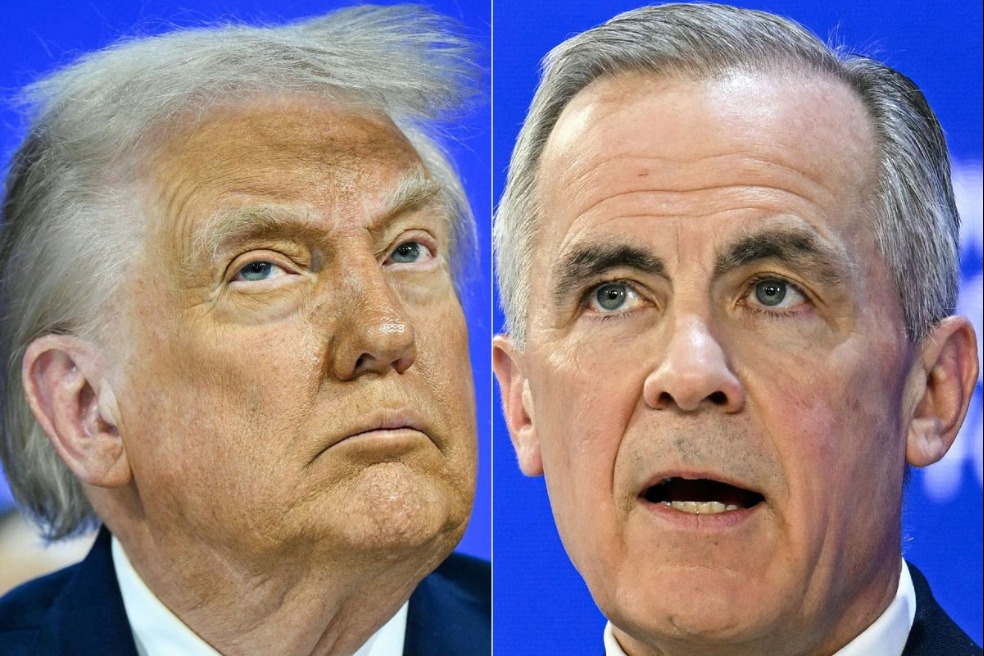
    A sudden reversal in US diplomatic posture toward Canada—from applauding trade engagements to threatening comprehensive tariffs—reveals deeper political motivations rather than substantive trade concerns, according to policy analysts. This shift occurred mere days after the US administration commended Canadian Prime Minister Mark Carney’s negotiations with China, only to abruptly warn of imposing 100% punitive tariffs on all Canadian imports should the agreement proceed.

    Professor Jiang Wenran, founding director of the China Institute at the University of Alberta, attributed the contradictory stance to personal pique and strategic coercion. He identified Carney’s address at the World Economic Forum in Davos as the immediate catalyst. There, Carney criticized international “coercion” and cautioned against middle powers falling prey to “American hegemony”—a speech met with a standing ovation that reportedly overshadowed US President Donald Trump’s poorly received appearance.

    Jiang elaborated that beyond personal dynamics, the tariff threat constitutes a strategic instrument to reinforce US dominance in North America. From Washington’s perspective, Sino-Canadian trade talks represent a direct challenge to US economic strategy. The threat aims not only to realign Canadian policy but also to deter other US allies from pursuing independent trade agreements.

    In response, Carney clarified that Canada does not intend to pursue a full free-trade agreement with China, ensuring ongoing negotiations comply with existing US-Mexico-Canada Agreement (USMCA) provisions. This approach seeks to avoid activating the pact’s “poison pill” clause while advancing pragmatic trade objectives.

    Domestically, the US threat has intensified debate within Canada. One faction emphasizes the catastrophic economic repercussions of losing access to the US market, which absorbs 75% of Canadian exports, and advocates accommodation. Another interprets US pressure as validation of the need to accelerate trade diversification and reduce dependency.

    Ottawa’s response has combined restraint with quiet resistance, emphasizing domestic resilience through initiatives like the “Buy Canadian” campaign while broadening international trade ties. This reflects a cautious balancing act—pursuing economic benefits from diversification while mitigating legal and political risks from the US.

    Ron Stagg, a history professor at Toronto Metropolitan University, noted that the tariff threat appears driven more by political signaling than clear trade mechanics. The US administration framed its warning around preventing Canada from becoming a “back-door for Chinese imports,” yet Stagg highlighted that Chinese electric vehicles entering Canada would remain subject to US duties if re-exported, minimizing any tangible threat.

    The situation underscores the complex interplay of personal diplomacy, strategic posturing, and economic policy shaping North American relations.
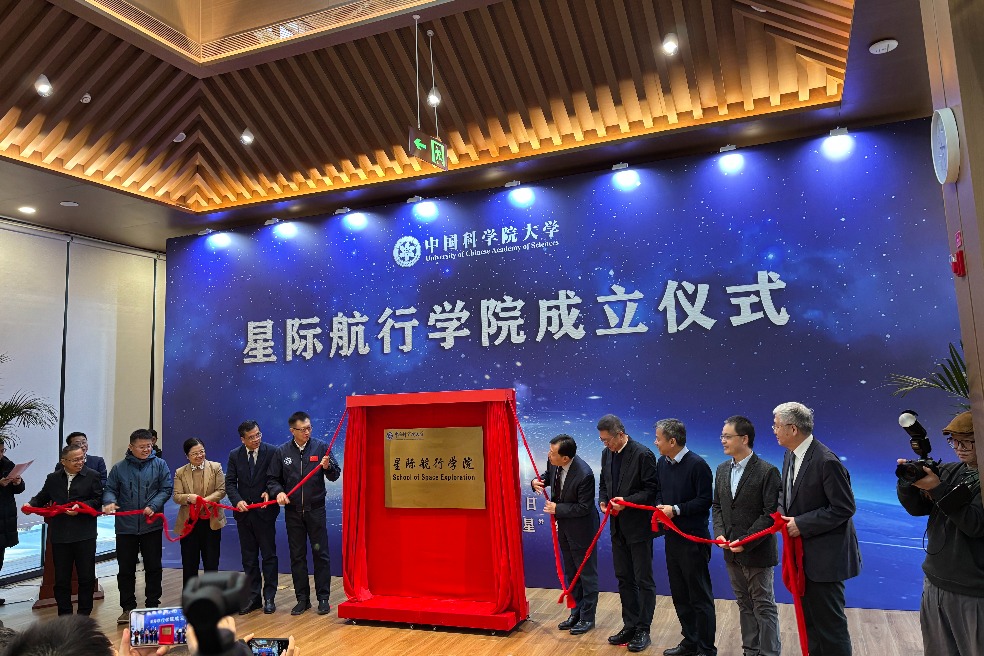
  • University of Chinese Academy of Sciences unveils the School of Space Exploration

    University of Chinese Academy of Sciences unveils the School of Space Exploration

    In a significant advancement for China’s space education infrastructure, the University of Chinese Academy of Sciences officially inaugurated its groundbreaking School of Space Exploration in Beijing on Tuesday. This specialized institution represents a strategic initiative to develop elite talent for the nation’s rapidly expanding space program.

    The newly established school will function as an interdisciplinary hub integrating aerospace engineering, astrophysics, planetary science, and space technology development. Its curriculum is designed to address the complex challenges of contemporary space exploration, including satellite technology, deep space missions, and sustainable space infrastructure.

    This educational initiative aligns with China’s ambitious space agenda, which has recently achieved remarkable milestones including lunar sample return missions, the construction of the Tiangong space station, and planned crewed missions to the Moon. The school will leverage the extensive research capabilities of the Chinese Academy of Sciences, providing students with access to cutting-edge facilities and mentorship from leading space scientists.

    The establishment of this specialized institution responds to growing demand for highly skilled professionals in the global space sector, which has expanded beyond government programs to include commercial space ventures and international collaborative projects. Educational analysts note that this represents China’s commitment to developing domestic expertise rather than relying on foreign-trained specialists.

    The school’s inaugural class will include graduate and doctoral students selected through competitive admission processes, with programs emphasizing both theoretical knowledge and practical application through research partnerships with China’s space industry leaders.

  • Senior CPC official urges high-quality development of social work

    Senior CPC official urges high-quality development of social work

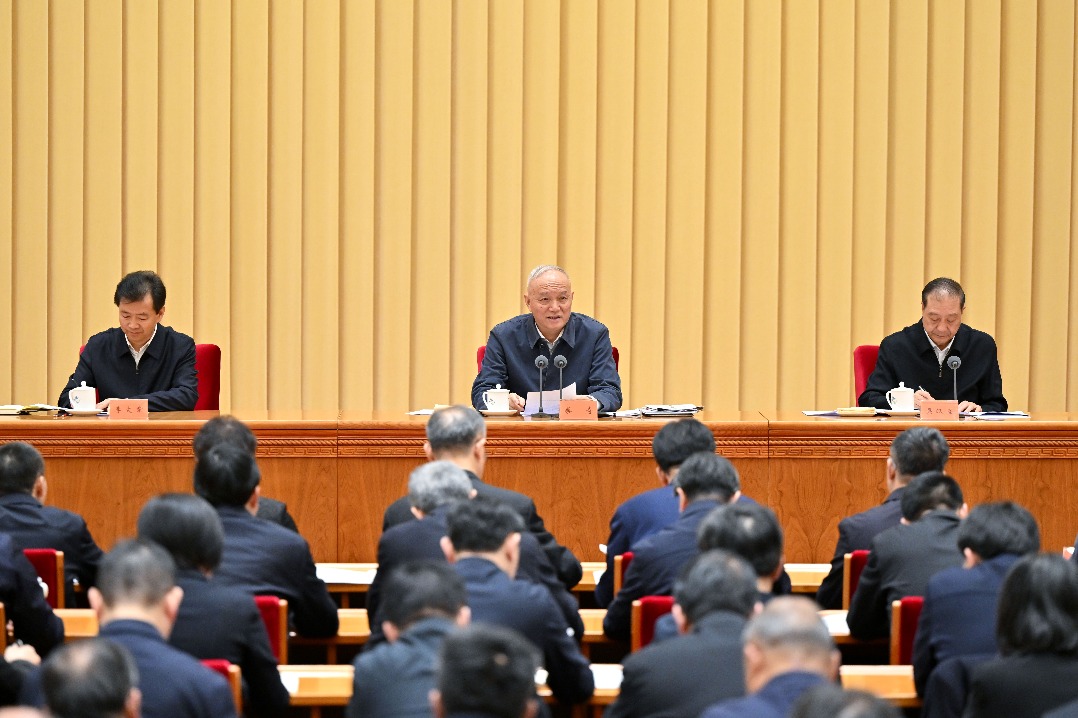
    In a significant national address, senior Communist Party of China official Cai Qi has articulated a comprehensive vision for advancing social work development through strengthened Party mechanisms. The high-level meeting convened in Beijing on January 26, 2026, brought together social work department leadership from across the nation to coordinate governance strategies.

    Cai Qi, who holds dual positions on the Standing Committee of the Political Bureau and the Secretariat of the CPC Central Committee, emphasized the critical importance of pursuing a distinctly Chinese approach to social governance. The address outlined several key priorities for development, including the substantial improvement of social governance frameworks and the refinement of institutional mechanisms governing social work practices.

    A central theme emerged around expanding Party influence within emerging economic sectors and new forms of employment. The official stressed the necessity of enhancing organizational coverage and Party work within these dynamic areas, particularly focusing on new economic and social organizations. This expansion aims to bolster the Party’s inspirational capacity and strengthen its cohesive influence among rapidly evolving workforce demographics.

    Additionally, the address highlighted the imperative of constructing efficient governance systems that foster vitality at primary operational levels. This grassroots emphasis signals a recognition that effective social work implementation requires robust foundational structures capable of responding to local needs while maintaining alignment with national strategic objectives.

    The meeting represents part of ongoing efforts to modernize China’s social governance capabilities while maintaining the Party’s guiding role across all sectors of society.

  • Senior Chinese official urges steady, sustained sci-tech progress

    Senior Chinese official urges steady, sustained sci-tech progress

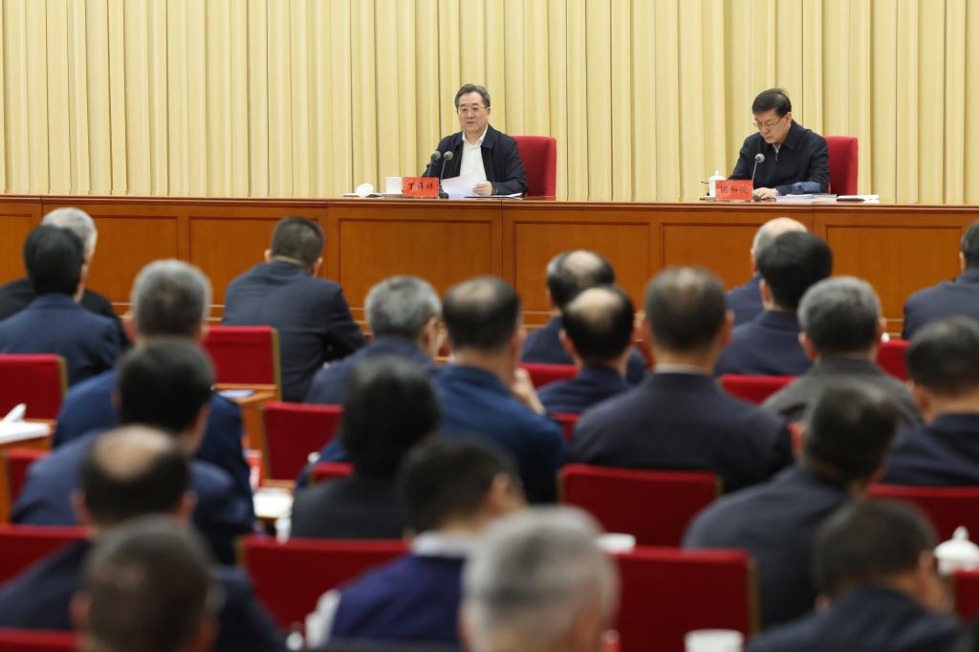
    In a significant national address, China’s top science official Ding Xuexiang has outlined an ambitious roadmap for the country’s technological future, emphasizing the critical need for sustained progress and self-reliance in scientific capabilities. Speaking at Monday’s National Conference on Science and Technology in Beijing, the senior official who directs China’s Central Science and Technology Commission called for comprehensive strengthening of the nation’s innovation ecosystem.

    Ding, who also serves on the Standing Committee of the Political Bureau of the Communist Party Central Committee, highlighted the remarkable achievements during China’s 14th Five-Year Plan period (2021-2025), noting that scientific innovation has become a strategic pillar supporting the country’s modernization drive while comprehensively enabling high-quality development.

    The official emphasized several key priorities including bolstering fundamental research capabilities, enhancing China’s autonomous innovation capacity, and improving basic conditions for scientific research. Ding specifically called for leveraging strategic scientific and technological strengths while simultaneously deepening international collaboration in science and technology.

    A central focus of the address was the integration of technological innovation with industrial advancement. Ding urged strengthening the leading role of enterprises in innovation, accelerating the establishment of a science and technology financial system, and improving guidance for developing new quality productive forces.

    The human capital dimension featured prominently in the speech, with Ding stressing the importance of expanding China’s science and engineering talent pool and advancing the construction of international sci-tech innovation centers. This comprehensive approach signals China’s commitment to building a robust, self-reliant scientific ecosystem that can compete globally while maintaining international cooperation.

  • Another death, deeper divisions

    Another death, deeper divisions

    A fatal encounter between a Border Patrol agent and a Minneapolis healthcare professional has ignited nationwide protests and created a severe rift between state and federal authorities. The shooting death of Alex Pretti, a 37-year-old ICU nurse, during an altercation on icy roads Saturday has prompted Minnesota Governor Tim Walz to demand the immediate withdrawal of federal immigration officers from his state.

    The incident represents the second controversial shooting death in Minneapolis within weeks, following the earlier killing of citizen Renee Good. Governor Walz confronted President Trump directly during a Sunday briefing, questioning what measures would be necessary to remove federal agents from Minnesota. The state’s chief executive emphatically declared that Minnesota’s justice system would have final authority in the investigation, stating unequivocally that the federal government “cannot be trusted to lead this investigation.”

    The confrontation has escalated into an institutional standoff, with Minnesota’s Bureau of Criminal Apprehension reporting that federal Homeland Security officials denied state investigators access to the crime scene despite possessing a signed warrant. This obstruction highlights the deepening tension between cooperative federal-state investigations and the current administration’s approach to immigration enforcement.

    Contradictory narratives have emerged regarding the circumstances of Pretti’s death. While Trump administration officials claim the nurse intended to harm federal agents and was carrying a firearm, bystander video evidence appears to show Pretti holding only a cellphone before being wrestled to the ground and shot at close range.

    The incident has drawn condemnation from former Presidents Barack Obama and Bill Clinton, who both issued statements characterizing the shooting as an assault on core American values. Obama described the event as a “wakeup call,” while Clinton delivered a fierce indictment of administration practices that have resulted in protesters being “arrested, beaten, teargassed, and most searingly… shot and killed.”

    Law enforcement experts note the unusual nature of such public criticism between agencies. Seth Stoughton, a former police officer and use-of-force expert, acknowledged that while public criticism between law enforcement agencies is uncommon, behind the scenes there is “nothing but professional scorn” for how Homeland Security is handling these incidents.

    The shooting occurs against the backdrop of Minneapolis’ history with police brutality cases, notably the murder of George Floyd in 2020, which sparked global protests against police violence and systemic racism. Legal experts warn that the current situation represents an “incredibly dangerous place” where immigration agents appear to operate without meaningful accountability.

  • Guangdong aims to accelerate innovation

    Guangdong aims to accelerate innovation

    Guangdong Province, China’s economic powerhouse, has unveiled an ambitious strategy to establish itself as a globally influential hub for industrial and technological innovation. Governor Meng Fanli announced the plan during the provincial legislative meeting in Guangzhou, outlining a comprehensive approach to strengthening the region’s innovation ecosystem throughout 2026.

    The strategy centers on accelerating development of the Guangdong-Hong Kong-Macao Greater Bay Area as an international science and technology innovation center, complemented by the establishment of a comprehensive national science center. The provincial government plans to attract additional national key laboratories while simultaneously expanding innovation platforms that provide public and semi-public services through collaborative efforts between universities, research institutions, and private enterprises.

    A fundamental component of Guangdong’s innovation push involves reinforcing enterprises as primary drivers of technological advancement. The province will align innovation resources—including platforms, projects, talent, and funding—with business needs, empowering companies to lead decision-making processes, research investments, and result transformation initiatives.

    Strategic focus will target breakthrough technologies across entire industrial chains, with particular emphasis on quantum technology, brain science and brain-computer interfaces, artificial intelligence, intelligent robotics, integrated circuits, advanced materials, and biomanufacturing.

    The innovation drive builds upon impressive economic foundations. Guangdong’s regional GDP grew by 3.9% in 2025, maintaining its position as China’s top-performing province for the 37th consecutive year. Recent developments include the establishment of cutting-edge research facilities: a new materials science institute in Dongguan, a neutrino experiment station in Jiangmen, and a high-intensity heavy ion accelerator in Huizhou.

    Notably, the Shenzhen-Hong Kong-Guangzhou innovation cluster has ascended to global leadership status. Eleven Guangdong-based companies now rank among the world’s top 100 publicly listed humanoid robot firms, while the province’s low-altitude economy has achieved substantial scale with 20.61 million recorded flights.

    During the 14th Five-Year Plan period (2021-2025), Guangdong established six national manufacturing innovation centers and three national industrial innovation centers. The province dominates numerous industrial sectors, accounting for over 10% of national output in 44 of 104 published industrial product categories.

    The innovation platform model has demonstrated remarkable success in regional transformation. The Chemistry and Chemical Engineering Guangdong Laboratory in Shantou has cultivated nine scientist-entrepreneurs and incubated ten high-tech enterprises. Researcher Dong Zhengya, who launched his own venture in 2022, exemplifies this transformation. His company developed pioneering microfluidics and ultrasonic microfluidic technology platforms, delivering comprehensive solutions for cosmetics, pharmaceuticals, semiconductors, and fine chemicals industries. The enterprise has achieved exceptional growth exceeding 120% annually over three years and anticipates public listing within five years.

    Furthermore, the laboratory has collaborated with Shantou’s textile and apparel association to establish an innovation center addressing technological challenges in traditional industries. Breakthroughs in nano-antibacterial materials for nylon melt spinning have significantly enhanced the competitiveness of local textile products. Similar partnerships with the toy industry provide technical support for material research, product modification, and intelligent production—critical advancements for sectors where Shantou produces nearly half of China’s underwear/loungewear and 70% of plastic toys.

  • Moon offers unique view of Earth’s radiation signature: study

    Moon offers unique view of Earth’s radiation signature: study

    A groundbreaking study published in the Journal of Geophysical Research: Atmospheres has demonstrated that lunar-based observation platforms offer a revolutionary perspective on Earth’s radiation dynamics, effectively capturing the planet’s complete energy signature without atmospheric interference.

    The research, conducted by scientists from the Chinese Academy of Sciences, reveals that the moon’s unique vantage point provides a permanent, full-disk view of Earth that surpasses the limitations of conventional satellite monitoring systems. Unlike low-Earth orbit satellites that capture fragmented regional data or geostationary satellites limited to hemispheric observation, the lunar perspective enables continuous monitoring of the entire planet’s radiation budget.

    Dr. Ye Hanlin, lead researcher from the Institute of Atmospheric Physics at CAS, explained the significance of this discovery: “The lunar observation platform allows us to distinguish planetary-scale climate patterns from localized weather noise. Approximately 90% of Earth’s radiation variations can be mapped using spherical harmonics—mathematical patterns that essentially form Earth’s unique radiation fingerprint.”

    The study further identified distinct rhythmic cycles in radiation data corresponding to lunar phases, orbital mechanics, and Earth’s rotation. These patterns provide scientists with unprecedented clarity in analyzing climate-relevant radiation features that were previously obscured by atmospheric interference.

    Academician Guo Huadong, corresponding author of the study, emphasized the transformative potential of this approach: “This holistic perspective from the moon represents a paradigm shift in climate monitoring. It provides the consistent, comprehensive data required to advance our understanding of global climate change mechanisms and improve the accuracy of climate models.”

    The findings establish lunar-based Earth observation as a critical tool for future climate research, offering a stable platform for long-term monitoring of planetary energy balance and contributing to more precise climate change predictions.

  • Goma in eastern Congo is hanging by a thread a year after the city fell to Rwanda-backed rebels

    Goma in eastern Congo is hanging by a thread a year after the city fell to Rwanda-backed rebels

    GOMA, Congo — Marking one year since M23 militants seized control of Goma, the strategic eastern Congolese city remains firmly under rebel authority with deteriorating economic conditions. The Rwanda-backed insurgent group, considered the most dominant among over 100 armed factions operating in mineral-rich eastern Congo, has established an unyielding grip on the region despite ongoing humanitarian concerns.

    The visual scars from January 2025’s intense combat between Congolese military forces and M23 fighters remain evident throughout the city. While surface-level normalcy has returned with functioning markets and adapted daily routines, the economic infrastructure has suffered catastrophic collapse. Banking institutions have shuttered completely, followed by the closure of Goma’s international airport, creating a financial vacuum that has plunged countless households into severe poverty.

    In the central banking district, once vibrant financial buildings stand abandoned with disabled ATMs and deactivated signage. This financial paralysis has forced residents to rely exclusively on mobile money transfer services, albeit at exorbitant costs. “Current withdrawal fees reach 3.5% per transaction—devastating sums for families with virtually no remaining income,” explained Grâce Omari, a resident of the Chaumage neighborhood.

    At Kituku Market, the city’s primary trading hub, Monday’s traditional market day maintains visible crowds and activity. Local boats continue docking at piers, unloading agricultural products from surrounding rural areas for market stalls. Women vendors still offer vegetables, flour, secondhand clothing, and basic necessities, yet their movements appear mechanical and their expressions weary. Market activity persists but has lost its economic substance.

    Espérance Mushashire, a 44-year-old mother of twelve who has sold vegetables for years, describes a dramatic decline in living standards. “We purchase inventory at high prices but sell almost nothing. Customers merely inquire about prices without purchasing power. Our children no longer attend school,” she recounted.

    In Goma’s Mugunga outskirts, daily life continues with resigned quietness. Local resident Agathe Hanghi detailed her evaporated savings: “The situation deteriorated completely. Previously I earned money through sales that covered food and medical needs. Now all savings are gone—rebels took what little remained.” Like most families, Hanghi’s children have abandoned education as priorities shrink to absolute essentials: food, shelter, and basic survival.

    University economics professor Deo Bengeya attempts to analyze the unprecedented situation with students, describing an economy paralyzed by absent financial institutions. “Goma’s economy post-capture exists in critical condition,” Bengeya told AP. “Population purchasing power has collapsed, residents have fled, wages have plummeted, and unemployment has skyrocketed.

    Without functional banking systems, economic recovery remains impossible—no credit availability, investment mechanisms, or savings security exists. Households consume minimal resources when available, devoid of future prospects. One year after M23’s takeover, Goma’s inhabitants advance incrementally, sustained only by the certainty of continued survival amid profound uncertainty.

  • Xinjiang launches China’s first express cotton freight train service

    Xinjiang launches China’s first express cotton freight train service

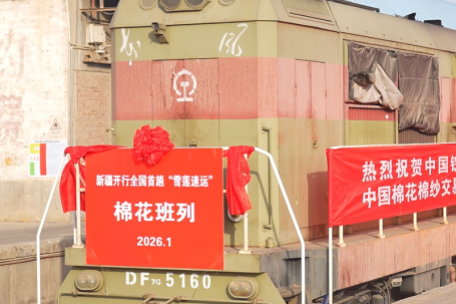
    China’s transportation sector has achieved a significant milestone with the inaugural launch of a dedicated express cotton freight train service from Xinjiang Uygur Autonomous Region. The pioneering service departed from Aksu railway station on January 26, 2026, transporting 1,395 metric tons of cotton destined for Binzhou in Shandong Province, eastern China.

    Operated by China Railway Urumqi Group Co., Ltd., this specialized freight service represents a transformative development in textile industry logistics. The express trains maintain operational speeds of 120 kilometers per hour utilizing premium, well-maintained carriages specifically configured for cotton transportation. Customized loading protocols have been implemented at each warehouse facility to preserve cargo integrity throughout the journey.

    The strategic initiative provides substantial benefits to both cotton producers and manufacturing enterprises. Agricultural suppliers gain enhanced shipping convenience while downstream textile manufacturers can optimize production scheduling with improved supply chain predictability.

    Yang Baofu, General Manager of China National Cotton Exchange, revealed expansion plans for the service, indicating future routes will extend to Zhengzhou in Henan Province and Shanghai metropolitan area. These developments are projected to significantly reduce overall logistics expenses across the cotton industry value chain, strengthening China’s position in global textile markets while supporting economic development in Xinjiang region.

  • Chinese premier chairs symposium on draft govt work report, five-year plan

    Chinese premier chairs symposium on draft govt work report, five-year plan

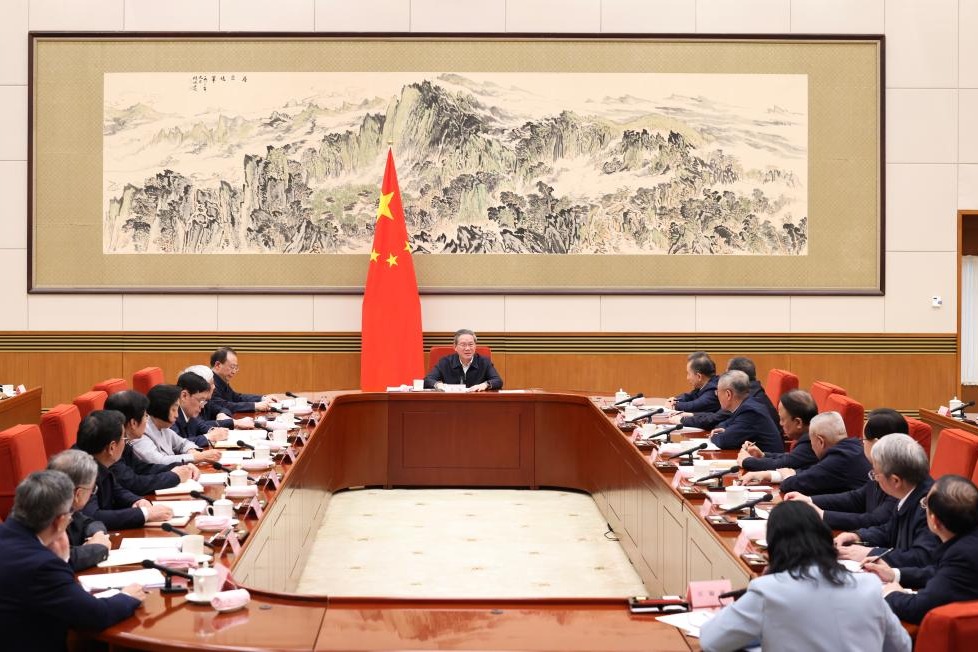
    In a significant demonstration of China’s consultative governance approach, Premier Li Qiang convened a high-level symposium in Beijing on January 26, 2026, to gather expert input on two crucial policy documents: the draft government work report and the preliminary framework for China’s 15th Five-Year Plan (2026-2030). The meeting brought together leadership from non-Communist political parties, the All-China Federation of Industry and Commerce, and prominent non-affiliated intellectuals, creating a diverse forum for policy refinement.

    During the comprehensive dialogue, participants presented substantial recommendations across multiple development domains. Key discussion points included strategies for enhancing macroeconomic regulation mechanisms, fortifying domestic market structures, cultivating innovative productive capabilities, advancing reform and opening-up initiatives, and improving social welfare systems. The exchange highlighted China’s multidimensional approach to policy formulation during a critical juncture in its development trajectory.

    Premier Li acknowledged the substantive value of these contributions, emphasizing the symbiotic relationship between governmental planning and expert consultation. He contextualized the current economic landscape, noting increasing external uncertainties and persistent domestic challenges that require sophisticated policy responses. The Premier advocated for implementing more proactive macroeconomic measures with enhanced coordination between reform initiatives and broader economic policies, aiming for qualitative economic improvement alongside appropriate quantitative growth targets.

    Looking forward, Li expressed expectations for continued collaborative engagement from all participating organizations, particularly in addressing prominent development obstacles and contributing collective wisdom toward China’s high-quality economic and social advancement. This consultative process exemplifies China’s distinctive governance model that integrates specialized expertise into national strategic planning.