作者: admin

  • Etihad Rail launch: High-speed UAE passenger network to begin operations in 2026

    Etihad Rail launch: High-speed UAE passenger network to begin operations in 2026

    The United Arab Emirates is poised to revolutionize its transportation infrastructure with the scheduled 2026 launch of the Etihad Rail passenger network. This ambitious high-speed rail system will seamlessly connect 11 key urban centers and regions across the emirates, fundamentally reshaping domestic travel patterns and economic connectivity.

    Spanning 900 kilometers from Ghuweifat in Abu Dhabi to Fujairah on the eastern coast, the network promises to dramatically reduce inter-emirate travel times. Projections indicate a mere 57-minute journey between Abu Dhabi and Dubai, while the Abu Dhabi-Fujairah route will take approximately 100 minutes—less than half the current road travel duration. The Ruwais-Abu Dhabi connection will be completed in just 70 minutes.

    Beyond transportation benefits, Etihad Rail represents a strategic national investment expected to serve as the country’s economic backbone. Urban planning experts anticipate the network will stimulate suburban development as residents gain convenient access to urban centers via rail. The project aligns strongly with the UAE’s sustainability objectives and Net Zero 2050 initiative by potentially removing hundreds of cars from roadways daily.

    International partnerships have been established to ensure operational excellence. Etihad Rail recently formed a joint venture with global transport leader Keolis, creating Etihad Rail Mobility. This entity will oversee comprehensive operations including train services, multimodal connections (buses, taxis, parking), and staff training programs.

    Station infrastructure will feature three distinct categories: operational maintenance depots, freight terminals, and passenger stations. Key locations already announced include Sakamkam in Fujairah and University City in Sharjah, with potential connectivity to Al Maktoum International Airport at Dubai World Central.

    The rail service will utilize modern trains capable of reaching speeds up to 200 km/h, each accommodating 400 passengers across economy, family, and business class configurations. Stations will incorporate automated barrier systems similar to Dubai Metro, along with advanced ticketing machines for seamless journey planning.

    With an anticipated capacity of 36 million annual passengers by 2030, Etihad Rail represents one of the most significant infrastructure developments in recent UAE history, promising to enhance economic integration, reduce environmental impact, and transform how residents navigate the federation.

  • Colours of pride: The deeper meaning behind the UAE flag

    Colours of pride: The deeper meaning behind the UAE flag

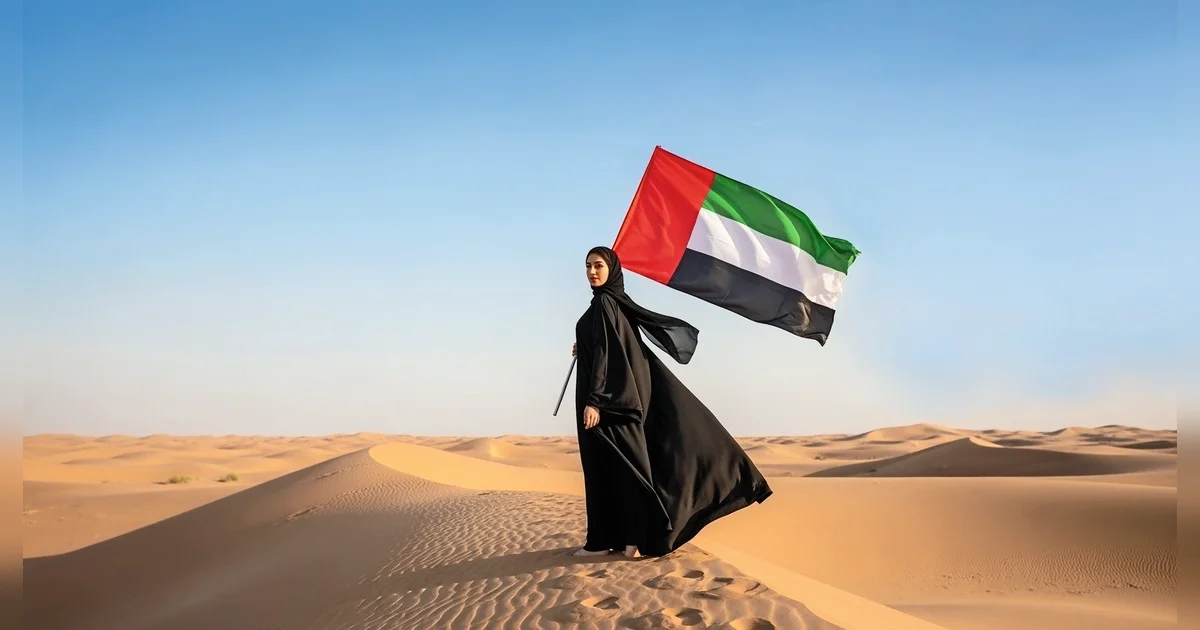
    Across the United Arab Emirates, from towering skyscrapers to local mosques, the national flag stands as a powerful symbol of identity and unity. Adopted on December 2, 1971, during the nation’s formation, this iconic banner carries profound meaning through its four distinctive colors that embody the country’s historical legacy and future aspirations.

    The vertical red band at the hoist represents the immense sacrifices made by earlier generations who protected the land long before modern statehood. This crimson hue symbolizes both the physical courage displayed by ancestors and the unifying force that brought together seven distinct emirates into a single, powerful nation. The red stripe visually connects all other colors, emphasizing how unity remains fundamental to the UAE’s continued strength and resilience.

    Green embodies the nation’s remarkable transformation from desert landscapes to a thriving modern society. This color signifies growth, prosperity, and hope—reflected in the UAE’s commitment to sustainable development and environmental innovation. Beyond representing agricultural achievements, green captures the spirit of renewal that drives the country’s ambitious vision for the future, including extensive renewable energy projects and urban green spaces.

    White stands as a testament to the UAE’s dedication to peace, honesty, and moral integrity. This color reflects the nation’s ongoing humanitarian efforts, charitable initiatives, and role as a global advocate for tolerance and dialogue. The white band serves as a constant reminder of the country’s commitment to maintaining harmonious relations both domestically and internationally through ethical leadership and generous spirit.

    Contrary to common associations with darkness, the black stripe symbolizes formidable strength, determination, and resilience. This color represents the mental fortitude and unwavering willpower that enabled the Emirati people to overcome historical challenges and build a nation that commands global respect. Black signifies the courage to defend national values and confront obstacles with united confidence.

    Together, these four colors create more than a national emblem—they form a visual narrative of a country that honors its past while steadily progressing toward an innovative future. The flag’s symbolism continues to inspire citizens and residents alike, serving as a daily reminder of the shared values and collective journey that define the UAE’s unique identity on the world stage.

  • UAE lunar exploration: Rashid Rover 2 to pioneer historic far side moon mission in 2026

    UAE lunar exploration: Rashid Rover 2 to pioneer historic far side moon mission in 2026

    The United Arab Emirates is preparing to make space exploration history with its Rashid Rover 2 mission, scheduled for launch in 2026. This ambitious endeavor will position the UAE as only the second nation to attempt a landing on the Moon’s mysterious far side, following China’s successful Yutu-2 deployment in 2019.

    Developed entirely within the UAE by the Mohammed Bin Rashid Space Centre (MBRSC), the rover represents a significant leap in the country’s space capabilities. The mission forms a crucial component of the Emirates Lunar Mission program, which aims to deploy multiple rovers to various lunar locations, each with distinct scientific objectives. The program honors the legacy of the late Sheikh Rashid Bin Saeed Al Maktoum, the visionary builder of modern Dubai.

    Rashid Rover 2 will face extraordinary challenges operating on the Moon’s far side, where rugged terrain, complex communication barriers, and extreme environmental conditions present formidable obstacles. The rover has undergone rigorous testing, including thermal vacuum simulations conducted in France, to ensure its systems can withstand the lunar environment’s harsh realities.

    International collaboration plays a pivotal role in this mission. The UAE has partnered with Texas-based Firefly Aerospace, whose Blue Ghost Mission 2 will transport the rover to the Moon using the Elytra Dark orbital vehicle. Additionally, a memorandum of understanding with the French space agency CNES will provide advanced imaging technology, including two high-resolution cameras and a CASPEX imaging module proven effective in previous planetary missions.

    The scientific objectives are both ambitious and practical. Researchers will study geological and thermal aspects of the lunar surface, analyze dust properties, map electrical charge processes, and conduct experiments on materials and mobility systems. Particularly valuable will be testing various materials fitted to the rover’s wheels, with results informing future designs for spacesuits, habitats, and vehicles destined for lunar or Martian operations.

    This mission follows the loss of Rashid Rover 1 in 2023 when its lander failed during descent. Rather than deterring the space program, this experience strengthened the UAE’s resolve, leading to enhanced technological refinement and mission precision.

    Sheikh Hamdan bin Mohammed bin Rashid Al Maktoum, Crown Prince of Dubai and President of MBRSC, emphasized that the mission represents the UAE’s commitment to “generate meaningful knowledge that contributes to humanity’s understanding of the universe.” The project aligns with the nation’s broader vision for economic diversification, scientific advancement, and inspiring future generations to pursue STEM fields.

    As the rover proceeds to the United States for prelaunch preparations, the UAE stands at the threshold of a new era in space exploration—one driven not by prestige but by purpose, collaboration, and a genuine contribution to global scientific knowledge.

  • Oxford Union’s new president says pro-Palestine voices face ‘disproportionate scrutiny’

    Oxford Union’s new president says pro-Palestine voices face ‘disproportionate scrutiny’

    In a groundbreaking electoral victory, Arwa Hanin Elrayess has become the first Palestinian, first Arab woman, and first Algerian to assume the presidency of the prestigious Oxford Union. However, her triumph is shadowed by revelations of systematic targeting of pro-Palestinian candidates within the influential debating society.

    Elrayess, a second-year Philosophy, Politics, and Economics student from Gaza, disclosed to Middle East Eye that her campaign faced unprecedented opposition characterized by smear tactics and institutional pushback. She reported being labeled an extremist, accused of supporting terrorist organizations, and subjected to baseless counter-terrorism investigations that discouraged potential allies from joining her campaign.

    This pattern of discrimination mirrors the experience of her predecessor, Ebrahim Osman-Mowafy, the Union’s first Arab president, who was temporarily removed from office after organizing a debate on Israeli apartheid and genocide allegations. Osman-Mowafy was only reinstated following significant student mobilization and intervention from former presidents who acknowledged the disproportionate targeting of individuals from ‘non-traditional’ backgrounds.

    Elrayess’s election occurs against a backdrop of escalating suppression of pro-Palestinian activism across UK universities. Since October 2023, student groups have faced increased surveillance, disciplinary actions, and police intervention for expressing solidarity with Gaza. Muslim and Arab students report being disproportionately targeted through Prevent strategy referrals and accusations of extremism.

    Despite these challenges, Elrayess views her presidency as a watershed moment for representation within an institution that has produced numerous members of Britain’s ruling class. She emphasizes the critical importance of ensuring Palestinian voices are included in conversations about self-determination and autonomy, particularly when these discussions have historically occurred without their participation.

    Elrayess remains committed to transforming the institution from within, arguing that withdrawal would concede vital spaces needed for meaningful change. Her leadership represents not just a victory for Palestinian representation but for all marginalized causes within influential institutions.

    The Oxford Union did not respond to requests for comment regarding these allegations.

  • Keeping teens safe in the digital world: A shared responsibility

    Keeping teens safe in the digital world: A shared responsibility

    In an era where adolescent development is increasingly intertwined with digital interactions, the United Arab Emirates has emerged as a global leader in promoting responsible online ecosystems. The nation’s pioneering initiatives, particularly the Digital Wellbeing Pact established in collaboration with the Digital Wellbeing Council, demonstrate a proactive approach to creating age-appropriate digital experiences for younger users.

    The convergence of physical and virtual worlds has created unprecedented challenges for modern parenting, with concerns ranging from cyberbullying and harmful content exposure to data privacy violations. Recent international studies indicate these apprehensions remain consistently high among caregivers worldwide, highlighting the critical need for embedded safety mechanisms within digital platforms rather than treating protection as an optional feature.

    Technology companies are responding with innovative solutions that balance parental oversight with adolescent autonomy. Snapchat’s recently introduced Home Alerts feature exemplifies this approach, enabling guardians to receive notifications when teens reach designated safe locations while requiring explicit consent from the young users. This dual emphasis on protection and independence aligns with the UAE’s vision of creating environments where families feel both empowered and secure.

    Beyond technical features, Snap’s enhanced Family Center provides comprehensive resources including step-by-step guides, frequently updated instructional videos, and region-specific materials adapted for cultural relevance. The platform’s quarterly refreshed materials and downloadable conversation starters facilitate meaningful family dialogues about digital citizenship.

    The complexity of online safety demands collaborative engagement across multiple sectors. The UAE’s multi-stakeholder approach brings together policymakers, technology platforms, and educational institutions through frameworks like the Digital Wellbeing Council and the Abu Dhabi Early Childhood Authority. This cooperative model recognizes that effective digital protection requires ongoing commitment rather than seasonal attention.

    While technological solutions provide critical safeguards, experts emphasize that open family communication remains fundamental to digital wellbeing. Continuous conversations about online risks—including misinformation, social pressure, and mental health impacts—build trust and resilience among young users. Educational resources such as Digital Wellness Toolkits and Family Safety Hubs equip both generations with necessary navigation skills.

    As digital landscapes continue evolving, the collective responsibility shared by families, technology companies, and governments will determine whether online spaces become environments where teenagers can genuinely thrive rather than merely exist. The UAE’s leadership in this arena offers a replicable model for global digital safety initiatives.

  • Why Gen-Z is rethinking failure and how to navigate it

    Why Gen-Z is rethinking failure and how to navigate it

    Generation Z finds itself at a critical crossroads, compelled to fundamentally redefine societal notions of failure and accountability in an era of unprecedented digital connectivity. Unlike previous generations, today’s youth navigate a world where global awareness amplifies personal anxieties about career aspirations and financial stability.

    The digital revolution has created what psychologists term ‘the comparison paradox’ – constant exposure to curated success stories worldwide has generated unprecedented pressure while simultaneously revealing systemic inequalities. This generation grapples with existential questions about meritocracy’s validity when confronting repeated setbacks in achieving promised lifestyles.

    Contemporary analysis reveals Gen Z’s distinctive approach to failure attribution. Where previous generations typically internalized setbacks, digital natives demonstrate heightened awareness of institutional and systemic barriers. This perspective shift represents both adaptive resilience and potential avoidance of personal accountability, creating complex psychological dynamics.

    Mental health experts identify this generational characteristic as ‘contextualized failure assessment’ – the ability to recognize how external factors contribute to personal outcomes without completely absolving individual responsibility. This balanced approach allows for constructive criticism of systems while maintaining personal agency.

    The article draws from personal narrative illustrating this evolution: from dishwashing positions to editorial mastheads, demonstrating how perceived failures transformed into foundational experiences. This journey exemplifies Gen Z’s emerging paradigm where setbacks become data points rather than destiny determinants.

    Professional psychologists note this generation’s development of ‘productive resilience’ – building support networks and self-empathy practices that acknowledge systemic challenges while cultivating personal growth. This represents a significant departure from traditional ‘pull yourself up by bootstraps’ mentality, incorporating both structural awareness and personal accountability.

    Ultimately, Generation Z’s redefinition of failure may represent the most significant psychological adaptation to digital transformation, creating new frameworks for success measurement that acknowledge both personal effort and systemic realities in our interconnected world.

  • What legal experts say about second US strike on Venezuela boat

    What legal experts say about second US strike on Venezuela boat

    International law experts have concluded that a controversial second missile strike by the U.S. military on a suspected Venezuelan narcotics vessel likely constituted an illegal extrajudicial killing under international law. The operation, which occurred on September 2nd and resulted in eleven total fatalities, has drawn sharp criticism from legal scholars across the political spectrum.

    According to verified reports, the initial strike killed nine individuals aboard the vessel, leaving two survivors clinging to the burning wreckage. The subsequent follow-up attack—ordered by US Navy Admiral Frank Bradley under authorization from War Secretary Pete Hegseth—eliminated both survivors. The Washington Post first revealed that Hegseth had directed military personnel to ‘kill everybody’ on board during the operation, though officials later denied this characterization.

    The Trump administration has defended the strikes as legally justified under the ‘law of armed conflict,’ with White House Press Secretary Karoline Leavitt stating the operation was necessary to ‘ensure the boat was destroyed and the threat of narco terrorists to the United States was completely eliminated.’

    Legal experts from multiple institutions have challenged this interpretation. Jessica Peake, Director of the International and Comparative Law Program at UCLA, stated unequivocally that ‘the US is not in an international armed conflict with Venezuela, nor is the US in a non-international armed conflict with any criminal gang or drug cartels.’ She emphasized that even if the first strike were legal, the second attack violated customary international law prohibitions against ‘denial of quarter.’

    Professor Luke Moffett of Queen’s University Belfast added that while the strikes don’t qualify as war crimes due to the absence of recognized armed conflict, ordering ‘no quarter’ would constitute a war crime if such conflict existed.

    Notably, conservative legal scholar John Yoo—a former Bush administration official—also condemned the operation, citing explicit prohibitions in the US Law of War Manual against conducting hostilities ‘on the basis that there shall be no survivors.’

    The administration’s characterization of Caribbean anti-drug operations as a ‘non-international armed conflict’ represents a significant legal framing that experts challenge. Historical precedents from the Obama administration’s drone program, which similarly employed double-tap strikes, were also deemed illegal by legal analysts despite previous presidential assertions of their legality and effectiveness.

  • German president compares UK ties post-Brexit to Oasis

    German president compares UK ties post-Brexit to Oasis

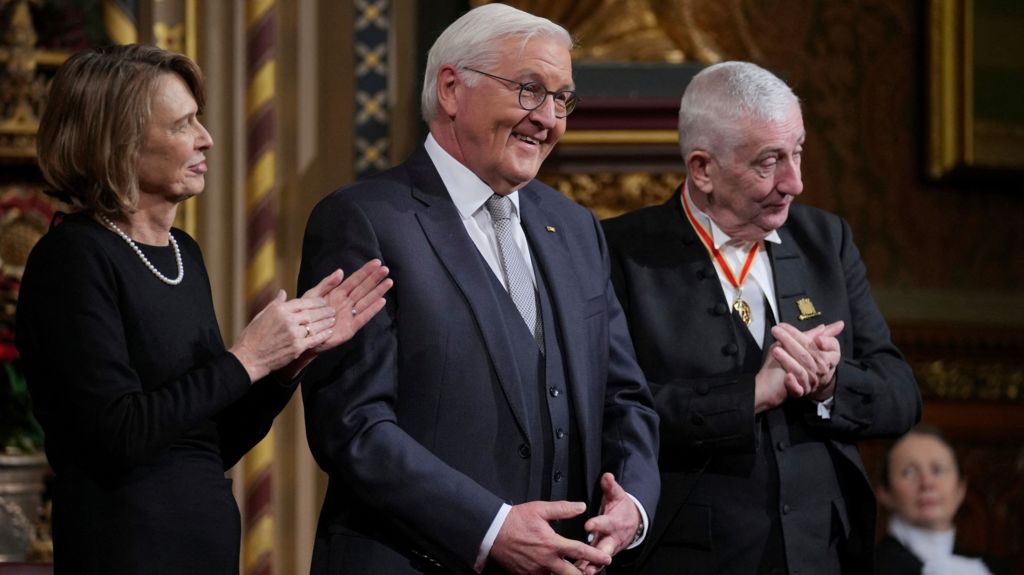
    In a landmark address to Parliament during the first German head of state visit in 27 years, President Frank-Walter Steinmeier masterfully blended diplomatic messaging with British pop culture references. Drawing parallels to Oasis’s recent reconciliation after years of fraternal discord, Steinmeier declared that Germany and the UK have moved beyond the initial “disappointment and uncertainty” of Brexit.

    Addressing MPs and peers in the Royal Gallery on Thursday, the German leader quoted the Manchester band’s anthem ‘Don’t Look Back in Anger’ to underscore his message of forward-looking cooperation. “I think that is typically British, keep calm and carry on – look ahead pragmatically, move on,” Steinmeier remarked, praising Britain’s pragmatic approach to post-EU relations.

    The presidential visit, which began with a ceremonial welcome by King Charles III and Queen Camilla at Windsor Castle, has been carefully choreographed to highlight evolving bilateral ties. Historical symbolism permeated the itinerary, from viewing Queen Victoria’s sleigh (designed by her German-born husband Prince Albert) to laying a wreath at Westminster Abbey’s Grave of the Unknown Warrior.

    Cultural diplomacy featured prominently as Steinmeier and his wife Elke Budenbender toured the V&A Museum’s archives, including David Bowie’s costumes—a nod to the musician’s deep connections with Berlin. The President’s schedule also included meetings with German footballers in the Premier League and plans to receive an honorary degree from Oxford University.

    The visit culminates symbolically on Friday with a trip to Coventry Cathedral, bombed by the Luftwaffe during World War II, mirroring King Charles’s earlier wreath-laying in Hamburg for civilian bombing victims. This reciprocal acknowledgment of historical wounds underscores both nations’ commitment to what Steinmeier called enduring affection: “Our relations may have changed, but, my dear Britons, our love remains.”

  • Alonso hails magical Mbappe as Real Madrid beat Athletic Bilbao

    Alonso hails magical Mbappe as Real Madrid beat Athletic Bilbao

    Real Madrid emphatically ended their three-match winless streak in La Liga with a resounding 3-0 victory against Athletic Bilbao on Wednesday, propelled by a breathtaking performance from French superstar Kylian Mbappé. The Spanish giants delivered what manager Xabi Alonso described as their “most complete performance” of the season at San Mamés Stadium, a notoriously challenging venue for visiting teams.

    Mbappé opened the scoring in the seventh minute with a spectacular finish, expertly controlling Trent Alexander-Arnold’s precision long pass before clinically beating goalkeeper Unai Simón. The French international later sealed the victory with a powerful long-range strike that found the net at the near post, marking his 25th goal across all competitions this season.

    The match featured exceptional coordination between Madrid’s attacking talents, with Mbappé and Vinícius Júnior demonstrating particularly effective partnership. The Brazilian winger twice came close to scoring, first hitting the post from an acute angle and later being denied by an outstanding one-on-one save from Simón.

    Madrid’s second goal emerged from a beautifully constructed team move just before halftime, with Mbappé heading Alexander-Arnold’s cross back across goal for Eduardo Camavinga to nod home from close range.

    The victory maintains Real Madrid’s position in second place with 36 points from 15 matches, trailing leaders Barcelona by a single point in the tightly contested title race.

    Despite the comprehensive performance, concerns emerged regarding potential injuries to both Alexander-Arnold and Camavinga, who were substituted in the second half with apparent muscular problems. Manager Alonso acknowledged the demanding schedule ahead, emphasizing the need to maintain focus for Sunday’s encounter against Celta Vigo.

    The match also featured a positive moment between Alonso and Vinícius, with the Brazilian embracing his manager when substituted, suggesting resolution to recent reported tensions between the pair.

  • Messi’s plans for 2026 World Cup? ‘One day at a time’

    Messi’s plans for 2026 World Cup? ‘One day at a time’

    Soccer icon Lionel Messi remains noncommittal about his potential participation in the 2026 FIFA World Cup, maintaining a cautious approach despite recently leading Argentina to the summit of South American World Cup qualifiers. The 38-year-old Inter Miami superstar addressed his future intentions in an exclusive interview with ESPN Argentina ahead of Friday’s highly anticipated World Cup draw.

    Messi emphasized taking a realistic, day-by-day approach to his career decisions, stating: “I’m going to take it one day at a time; being honest and trying to be realistic and feel good. This year I felt very good.” The eight-time Ballon d’Or winner acknowledged that playing professionally in the United States creates favorable conditions for considering a sixth World Cup appearance, given the tournament’s North American hosting by the U.S., Mexico, and Canada.

    The soccer legend highlighted the distinct seasonal advantages of MLS competition compared to European leagues, noting: “It catches us at a different point in the season than in Europe. We’re going to start a tough preseason in January and we’re going to have a lot of games in a row with the league and the CONCACAF Champions League.” Messi maintains regular communication with Argentine national team coach Lionel Scaloni regarding his potential role, describing their relationship as “very trusting” and open to discussing all possibilities.

    Should Messi compete in the 2026 tournament, he would join Cristiano Ronaldo in surpassing Germany’s Lothar Matthäus record of five World Cup appearances. The Inter Miami squad currently prepares for their MLS Cup final matchup against Vancouver this Saturday.