In the heart of Tacheng prefecture, Xinjiang, Wang Guangsheng stands as a beacon of cultural preservation, dedicating her life to safeguarding the rich heritage of the Russian ethnic community. As an inheritor of intangible cultural heritage, Wang employs a multifaceted approach to keep the traditions alive. Through the meticulous curation of ancient artifacts, the revival of traditional melodies, and the facilitation of intergenerational dialogues, she ensures that the essence of this ancient culture is not lost to time. Wang’s journey is a testament to the resilience and dedication required to preserve cultural identity in a rapidly modernizing world. Her efforts not only honor the past but also provide a bridge for future generations to connect with their roots. This story highlights the importance of cultural preservation in maintaining the diverse tapestry of China’s ethnic communities.
作者: admin
-

Envoy: China remains an opportunity for global development
In a recent address at the ‘Innovation, Openness, Shared Development’ Global Dialogue US Session, Chinese Ambassador to the United States, Xie Feng, emphasized China’s unwavering role as a pivotal opportunity for global development. Speaking on Friday, Ambassador Xie highlighted the outcomes of the Fourth Plenary Session of the 20th Central Committee of the Communist Party of China, which outlined the 15th Five-Year Plan (2026-2030), a strategic blueprint for China’s economic and social advancement. Xie underscored China’s commitment to openness, cooperation, and mutual prosperity, stating that the nation’s vast consumer market, robust industrial system, and innovation ecosystem present unparalleled opportunities for global partners. He also pointed to China’s ongoing urbanization, industrial upgrading, and green transition as drivers of future growth, creating avenues for international collaboration in sectors like education, healthcare, and elder care. Amid rising protectionism and economic globalization challenges, Xie reaffirmed China’s dedication to multilateralism, institutional opening-up, and fostering a stable global trading system. He called for strengthened U.S.-China relations based on mutual respect and win-win cooperation, emphasizing that such a partnership would benefit both nations and the world at large. Robert Lawrence Kuhn, Chairman of The Kuhn Foundation, echoed these sentiments, noting that China’s development is integral to global progress. Denis Simon, Chairman of the Global Talent Alliance, stressed the necessity of U.S.-China collaboration in addressing pressing global issues such as climate change, AI governance, and food security. Both speakers advocated for a shift from zero-sum competition to shared solutions, transforming current tensions into trust and mutual benefits.
-

Malaysia’s Anwar calls for dialogue over coercion at East Asia summit
At the East Asia Summit in Kuala Lumpur, Malaysian Prime Minister Anwar Ibrahim emphasized the importance of dialogue and cooperation over coercion and confrontation. Addressing leaders from the Asia-Pacific region, Anwar highlighted the need for multilateralism and adherence to international law, particularly in the context of ongoing conflicts in Gaza, Ukraine, and North Korea, as well as the intensifying U.S.-China rivalry. The summit, a forum involving ASEAN and its key partners including Australia, China, India, Japan, New Zealand, South Korea, Russia, and the United States, focused on political, security, and economic challenges. Anwar also called for the resolution of the South China Sea territorial disputes through a negotiated Code of Conduct, warning against external pressures that could escalate tensions. Philippine President Ferdinand Marcos Jr. supported this stance, vowing to accelerate the Code of Conduct’s conclusion when the Philippines assumes the ASEAN chairmanship next year. Meanwhile, Chinese officials blamed Philippine actions for the maritime tensions. On other issues, Anwar commended U.S. efforts to resolve the Gaza conflict but stressed the need for a just and lasting solution for Palestinians. He also expressed concern over North Korea’s missile launches and reiterated ASEAN’s commitment to the Five-Point Consensus for peace in Myanmar. The summit also saw discussions on economic resilience, with leaders from the Regional Comprehensive Economic Partnership (RCEP) vowing to enhance regional economic integration and counter U.S. tariff impacts. Canadian Prime Minister Mark Carney announced plans to accelerate free trade talks with ASEAN, aiming to double non-U.S. exports in the next decade. The event concluded with a celebration of Brazilian President Luiz Inácio Lula da Silva’s 80th birthday, marking a lighter moment in the otherwise intense diplomatic gathering.
-

US trade policies upending global order, economists say
The United States’ aggressive tariff policies and a foreign aid strategy rooted in a ‘grievance narrative’ are fundamentally altering the global economic landscape, with profound implications for both the US and the international community. This was the consensus among experts at recent events hosted by the Peterson Institute for International Economics in Washington. They emphasized the urgent need for multilateral cooperation to counteract the rising tide of isolationism and the disruptions caused by tariffs. Hector Torres, a senior fellow at the Centre for International Governance Innovation and former International Monetary Fund executive director, described the shift as a ‘seismic disruption’ in global trade. He highlighted the transition from a rules-based to a deals-based trading system, driven more by geopolitical motives than economic rationale. The fragility of global trade was a recurring theme during the discussions on October 14 and 15. Experts warned of the risks posed by US isolationism and stressed the importance of preserving a rules-based system. The latest IMF World Economic Outlook, released on October 14, projected subdued global growth for this year and next, with renewed trade disputes posing significant risks. Maurice Obstfeld, a senior fellow at the Peterson Institute and former IMF chief economist, criticized the US reliance on tariffs, calling them inefficient and regressive. He noted that the tariffs, estimated to generate about $200 billion annually, disproportionately affect low-income individuals and distort production and consumption in the US. Obstfeld also challenged the US administration’s ‘grievance narrative,’ which portrays other nations as exploiting the US through trade deficits, financial inflows, or security ‘freeloading.’ He argued that this mindset is driving isolationist policies that harm both the US and global economies. Mari Elka Pangestu, vice-chairwoman of Indonesia’s National Economic Council and former World Bank managing director, described the current era as a ‘watershed moment’ for global trade. She emphasized the importance of diversifying trade partnerships, pointing to Indonesia’s newly concluded trade agreement with the European Union as a counterbalance to US tariffs. Torres also highlighted China’s historic role in global trade and the critical role of the WTO, despite its challenges. He called for reforms to address the lack of rules in digital trade, warning of the potential for conflicting regulations or ‘digital firewalls’ in every country. Looking ahead, geopolitical developments are expected to shape the future of trade, with the Middle East and Ukraine identified as critical areas. Obstfeld expressed hope for EU reforms to enhance stability, while Pangestu pointed to the current Association of Southeast Asian Nations summit as an opportunity to reaffirm multilateralism.
-

Staff members harvest apples in Xinjiang
In the heart of Xinjiang Uygur Autonomous Region, the apple harvest season is in full swing. On October 23, 2025, an aerial drone captured the bustling activity at an orchard in Alaer city, where workers diligently transported freshly picked apples. Known for its unique climate, Xinjiang boasts abundant sunshine and dramatic temperature fluctuations between day and night, creating the perfect environment for cultivating fruits with naturally high sugar content. Among these, the apple stands out as a regional specialty, celebrated for its thin skin, dense texture, and juicy flesh. This year’s harvest not only highlights the agricultural prowess of the region but also underscores the economic and cultural significance of this beloved fruit. As the apples make their way to markets across the country, they carry with them the essence of Xinjiang’s rich agricultural heritage.
-

Argentina eyes expansion of beef exports to China
Argentina is strategically positioning China as the cornerstone of its beef export expansion, driven by evolving Chinese consumption patterns and increasing demand for diverse meat products. According to the Argentine-Chinese Chamber of Commerce, China accounts for 78 to 80 percent of Argentina’s annual beef exports, solidifying its role as the primary market for Argentine meat producers. This trend was highlighted at the recent Expo Ganadera del Centro, a major livestock fair in Buenos Aires, where Alejandra Conconi, the chamber’s executive director, emphasized China’s pivotal role in Argentina’s international meat trade. Trade data from Argentina’s Ministry of Agriculture, Livestock and Fisheries reveals that in 2024, the country exported over 900,000 metric tons of beef, with China purchasing approximately 595,000 tons. Sebastian Schulz, a researcher at the National University of La Plata, attributes this growing demand to China’s socio-economic transformation, including its focus on balanced development and the goal of achieving ‘common prosperity.’ As China’s middle class expands and dietary preferences diversify, Argentine producers are finding new opportunities in previously undervalued products such as cull cows and offal, which now command higher prices in the Chinese market. Additionally, Argentina’s participation in the Belt and Road Initiative is fostering deeper agricultural collaboration and technology transfers, which Schulz describes as ‘strategically important’ for balancing trade deficits and promoting mutual benefits. Looking ahead, Argentina is also exploring exports of bovine genetics and embryos, a high-value segment where the country holds global recognition. The diversification of beef, pork, and by-products is seen as crucial for ensuring the long-term sustainability of Argentina’s meat sector. Amadeo Derito, vice-president of the Argentine Angus Association, noted that exports of certified Angus beef to China have continued to grow, with 1,700 tons certified in the first three quarters of 2024, primarily catering to premium markets.
-

Macao’s 3 exhibitions drive industrial development with over 140 deals
The Macao Special Administrative Region (SAR) recently hosted three major exhibitions that concluded with remarkable success, fostering industrial development and international cooperation. The 2nd China-Portuguese-Speaking Countries Economic and Trade Expo (Macao), the 30th Macao International Trade and Investment Fair, and the Macao Franchise Expo 2025, organized by the SAR’s Commerce and Investment Promotion Institute (IPIM), wrapped up on Saturday, October 25, 2025. These events collectively generated over 140 signed agreements and 68 business expansion projects. Among the participating companies, 24 have already initiated or completed procedures to establish new businesses. The exhibitions attracted more than 85,000 visitors, including 15,000 trade visitors and professional buyers, significantly supporting Macao’s ‘1+4’ economic diversification strategy. Nearly 80% of the agreements were linked to key industries targeted by this strategy. Additionally, approximately 15% of the deals involved Portuguese-speaking Countries (PSCs), underscoring the event’s role as a crucial platform for China-PSC collaboration. The success of these exhibitions highlights Macao’s growing influence as a hub for international trade and investment, further driving economic diversification and regional cooperation.
-

Prospects for talks between Trump, Putin played down
The likelihood of a summit between U.S. President Donald Trump and Russian President Vladimir Putin appears increasingly uncertain, as Trump expressed skepticism about the potential for productive talks. Speaking to reporters aboard Air Force One en route to Asia, Trump emphasized that any meeting with Putin would need to yield tangible results. ‘I’m going to have to know that we’re going to make a deal. I’m not going to be wasting my time,’ he stated, following the collapse of plans for a summit in Budapest. Despite his past rapport with Putin, Trump described the current situation as ‘very disappointing.’
Meanwhile, Kremlin negotiator Kirill Dmitriev engaged in discussions with U.S. officials over the weekend, focusing on resolving the ongoing conflict in Ukraine. Dmitriev, who met with Trump’s special envoy Steve Witkoff in Florida, expressed optimism about a diplomatic breakthrough. ‘I believe Russia, the U.S., and Ukraine are actually quite close to a diplomatic solution,’ he told CNN, highlighting Ukrainian President Volodymyr Zelensky’s willingness to use the current front line as a basis for negotiations.
The Kremlin, however, downplayed the notion of a canceled meeting between the two leaders, stressing the need for thorough preparation. ‘Presidents cannot meet for the sake of meeting,’ Kremlin spokesman Dmitry Peskov remarked, noting the complexity of the process. Russian Foreign Minister Sergey Lavrov and U.S. Secretary of State Marco Rubio have been tasked with laying the groundwork for a potential summit.
Amid these diplomatic efforts, tensions on the ground remain high. Russian missile and drone strikes in Ukraine resulted in multiple casualties, while Russia reported intercepting over 120 Ukrainian drones. Additionally, Putin announced the successful final test of the Burevestnik, a nuclear-powered cruise missile with an ‘invincible’ design and a range of up to 14,000 kilometers. The weapon’s unpredictable flight path and near-unlimited range pose a significant challenge to existing missile defense systems.
-

Global warming reshapes extreme rainfall, snowfall across Northern Hemisphere: study
A groundbreaking study conducted by researchers from the Xinjiang Institute of Ecology and Geography, part of the Chinese Academy of Sciences, has revealed profound changes in extreme rainfall and snowfall patterns across the Northern Hemisphere over the past seven decades. Published in the journal *Advances in Climate Change Research*, the study highlights how global warming has altered the distribution of both liquid and solid precipitation, significantly impacting their intensity and frequency. Using ERA5-Land reanalysis data from 1950 to 2022, the team analyzed long-term trends, temperature sensitivity, and underlying mechanisms driving these extreme weather events. The findings indicate that extreme rainfall has intensified at a rate of 0.269 mm per year, nearly nine times faster than the increase in extreme snowfall, which stands at 0.029 mm per year. The study underscores that rising temperatures are primarily responsible for the surge in extreme rainfall, while their impact on snowfall remains relatively modest. Li Yupeng, the study’s lead author, emphasized the critical role of extreme precipitation in risk management, urging mid-latitude regions to focus on flood mitigation and high-latitude and alpine areas to address snow-related hazards. The research provides valuable insights for understanding global precipitation patterns and supports the development of region-specific climate adaptation and disaster prevention strategies.
-

Sudan’s paramilitary forces announces full control of El Fasher city
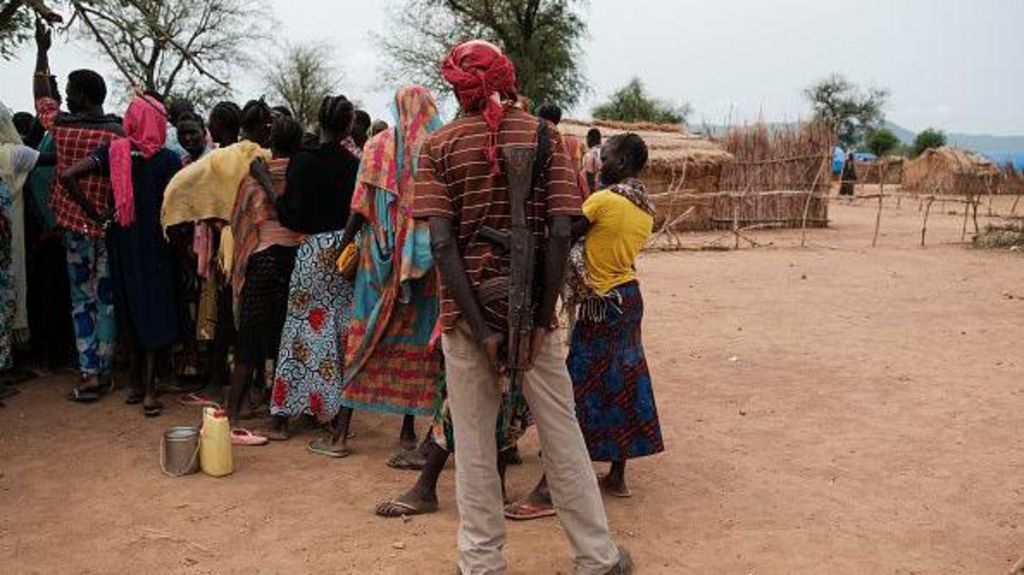
In a significant development in Sudan’s ongoing civil war, the paramilitary Rapid Support Forces (RSF) declared on Sunday that they have secured full control of El Fasher, the capital of North Darfur State. The RSF described the capture as a ‘pivotal moment,’ emphasizing the city’s symbolic, strategic, and military importance. The announcement was made via a statement on Telegram, accompanied by videos on social media platform X showing RSF fighters celebrating outside the Sudanese army’s Sixth Infantry Division headquarters, their last stronghold in the Darfur region. However, the Sudanese Armed Forces (SAF) have yet to issue an official response, and local reports suggest that battles in El Fasher may still be ongoing. The El Fasher Resistance Committees, a volunteer group, confirmed that fighters remain steadfast despite the RSF’s claims. El Fasher, the last major administrative center in Darfur under SAF control, has been under siege since May 2024, exacerbating a humanitarian crisis marked by heavy casualties and widespread displacement. The conflict between the SAF and RSF, which began in April 2023, has claimed tens of thousands of lives and displaced millions, deepening Sudan’s humanitarian catastrophe.