In a significant diplomatic meeting held in Riyadh on Monday, Pakistan’s Prime Minister Muhammad Shehbaz Sharif and Saudi Arabia’s Crown Prince Mohammed bin Salman bin Abdulaziz Al Saud unveiled a comprehensive economic cooperation framework aimed at bolstering bilateral relations. The framework, rooted in shared economic interests, seeks to enhance trade, investment, and development ties between the two nations. Key sectors identified for collaboration include energy, industry, mining, information technology, tourism, agriculture, and food security. A joint statement highlighted the mutual commitment to fostering private sector involvement and increasing trade exchange in these priority areas. Among the initiatives under discussion is an electrical interconnection project, which is expected to be formalized through a memorandum of understanding (MoU). Additionally, the two countries are exploring further cooperation in the energy sector. This framework builds on longstanding fraternal relations and aligns with the leaders’ shared vision of establishing a sustainable partnership. The meeting also set the stage for an upcoming session of the Saudi-Pakistani Supreme Coordination Council, underscoring the depth of their strategic alliance.
作者: admin
-

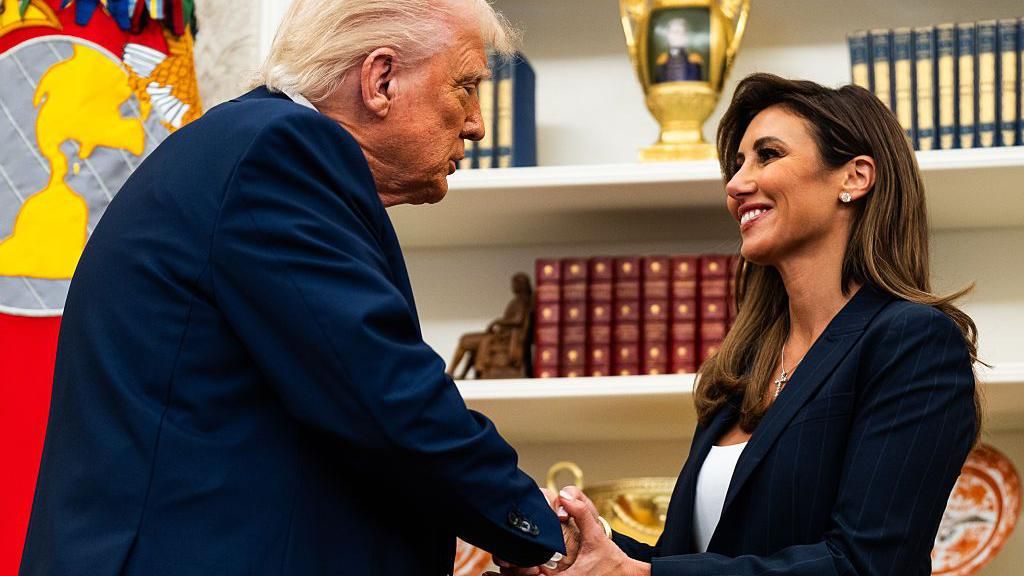
Trump appeals against conviction in hush-money case
Former US President Donald Trump has launched an appeal to overturn his May 2024 criminal conviction in the high-profile hush-money case, asserting that presidential immunity shields him from prosecution. Trump was unanimously found guilty by a New York jury on 34 felony counts of falsifying business records. Despite the conviction, a New York judge granted him an unconditional discharge in December, citing his imminent return to the White House, meaning he faced no jail time or fines. Trump’s legal team has labeled the case as “the most politically charged prosecution in our nation’s history” and argued that it should never have reached the courtroom. The Manhattan District Attorney’s office, which prosecuted Trump, has yet to comment on the appeal. The case stems from allegations that Trump directed his former lawyer, Michael Cohen, to pay $130,000 to adult film star Stormy Daniels to silence her claims of a past sexual encounter before the 2016 election. While the payment itself was not illegal, prosecutors claimed Trump fraudulently recorded reimbursements to Cohen as legal expenses to conceal the transaction’s true purpose. The trial coincided with Trump’s re-election campaign, with prosecutors arguing that the cover-up constituted election interference by withholding critical information from voters. Trump has consistently denied all charges. Following the conviction, the US Supreme Court ruled in June 2024 that presidents enjoy broad immunity from criminal prosecution for “official acts” during their tenure. Trump’s lawyers have since argued that this immunity should apply to the hush-money case and that certain evidence should have been excluded as it pertained to his first presidency. Justice Juan Merchan, who presided over the case, rejected this argument, but Trump’s team has long signaled their intent to appeal. The case will now proceed to the New York Appellate Division, First Department, which previously dismissed a $500 million civil fraud penalty against Trump in a separate case brought by New York Attorney General Letitia James. While the appellate judges upheld the fraud finding, they deemed the financial penalties unjustified.
-

Pacific island delegation explores grassroots governance in Qingdao
A delegation of 20 representatives from Pacific island nations, including Tonga, Fiji, Micronesia, and Nauru, recently embarked on a study tour to Jimo district in Qingdao, Shandong province. The visit was part of a specialized training program focused on national governance and development planning. During their stay, the group engaged in field visits to local communities, observing innovative practices in grassroots governance and strategies for enhancing public services. The delegation also took the opportunity to experience traditional Chinese culture, further enriching their understanding of China’s societal and governance frameworks. Participants expressed that the visit provided valuable insights into China’s development approaches and opened new avenues for collaboration in governance capacity building and cultural exchanges.
-

Israeli state-owned defence firm opens regional arm in UAE
In a landmark development following the normalization of relations between Israel and the United Arab Emirates (UAE) in 2020, an Israeli state-owned defense company has established a subsidiary in the UAE. Controp Precision Technologies, a leading developer of electro-optical systems, will register its new entity in the Abu Dhabi Global Market (ADGM), a prominent economic zone in the Emirati capital. The Israeli Ministry of Defense officially approved the move on Sunday, as reported by The Times of Israel. The Abu Dhabi-based subsidiary will serve as Controp’s regional hub in the Gulf, managing marketing, sales, and maintenance of its advanced surveillance and reconnaissance systems used across air, land, and sea operations. In the future, Controp aims to compete directly for defense tenders in the UAE and neighboring countries. This strategic expansion underscores the deepening economic and political ties between the two nations, which have seen bilateral trade reach $3.2 billion in 2024. However, relations have faced challenges following the Gaza war, with the UAE occasionally criticizing Israeli actions. Despite these tensions, the establishment of Controp’s subsidiary signals continued collaboration in the defense sector. The investment is estimated at $30 million, with the subsidiary managed by an Israeli citizen while retaining full control under the parent company.
-

Delhi turns to cloud seeding to spur rain, curb pollution
In a groundbreaking move to tackle the escalating air pollution crisis, authorities in Delhi initiated cloud seeding operations on Tuesday. This innovative technique aims to induce artificial rainfall, which could potentially reduce pollution levels by up to 50%. Environment Minister Manjinder Singh Sirsa announced the initiative, emphasizing its urgency as the city grapples with hazardous air quality. Cloud seeding involves dispersing chemical particles into clouds to stimulate the formation of raindrops, a method previously used in other countries to address drought and improve air quality. However, this marks its first application in Delhi. The Indian Institute of Technology (IIT) in Kanpur is leading the project, with scientists predicting rainfall within 15 minutes to four hours post-seeding. If successful, the initiative could pave the way for a long-term strategy extending through February. Despite its potential, the effectiveness of cloud seeding remains debated, with studies yielding mixed results. Delhi’s air quality index (AQI) stood at 304 on Tuesday, classified as ‘very poor’ by the Central Pollution Control Board. The city’s pollution woes are exacerbated during winter by factors such as construction dust, vehicle emissions, and crop residue burning. Scientist Manindra Agrawal of IIT-Kanpur cautioned that while artificial rain can temporarily alleviate pollution, repeated efforts are necessary to sustain improvements.
-

Tanzanians head to polls amid human rights concerns and weakened opposition
Tanzanians are set to cast their votes on Wednesday in a pivotal election that sees incumbent President Samia Suluhu Hassan facing off against candidates from smaller opposition parties. The absence of her primary rivals, barred from participating, has cast a shadow over the electoral process. A victory for Hassan would prolong the dominance of her party, Chama cha Mapinduzi (CCM), which has governed Tanzania since 1961. However, the election is marred by allegations of repression, with Amnesty International highlighting enforced disappearances, arbitrary arrests, and extrajudicial killings as key concerns. These actions, allegedly perpetrated by security forces, have raised questions about the election’s legitimacy. Hassan’s main opponent, Tundu Lissu of the Chadema party, is currently detained on treason charges, while the ACT-Wazalendo party’s presidential candidate was also disqualified. Hassan, seeking her first full term after completing her predecessor’s tenure, has campaigned on a platform of economic expansion in agriculture and livestock, encapsulated in her ‘Four Rs’ vision: reconciliation, reforms, rebuilding, and resilience. Despite a record 37 million registered voters, analysts predict low turnout due to widespread apathy and the perception of a foregone conclusion. The U.S. Senate Foreign Relations Committee has criticized the pre-election environment, warning that it undermines Tanzania’s democratic principles. Amnesty International analyst Roland Ebole noted that while Hassan initially showed promise with progressive measures, her administration has since reverted to repressive tactics. Simon Mkina, a Tanzanian newspaper founder, warned that the election could threaten the nation’s democratic foundations, potentially leading to international condemnation and domestic unrest. Chadema has called for protests on election day, signaling potential upheaval in the aftermath of the vote.
-

Huge Brazilian raid on Rio gang leaves at least 64 people dead and 81 under arrest
In a sweeping operation targeting the notorious Red Command drug-trafficking gang, approximately 2,500 Brazilian police and military personnel descended upon the impoverished favelas of Complexo de Alemao and Penha in Rio de Janeiro on Tuesday. The raid, described as one of the most violent in Brazil’s recent history, resulted in the deaths of at least 60 suspects and four police officers, with 81 arrests made. Authorities seized 93 rifles and over half a ton of drugs during the operation, which involved helicopters and armored vehicles. Rio’s state Governor Claudio Castro hailed the raid as the largest of its kind in the city’s history, asserting that those killed had resisted police action. However, the operation drew sharp criticism from human rights organizations, with the United Nations expressing horror and calling for thorough investigations into the deaths. César Muñoz of Human Rights Watch labeled the events a “huge tragedy” and urged the public prosecutor’s office to investigate each death. Social media footage depicted scenes of chaos, with fire and smoke rising from the favelas as gunfire echoed. The raid disrupted daily life, forcing the closure of 46 schools and prompting the Federal University of Rio de Janeiro to cancel night classes. In response, suspected gang members blocked roads and commandeered at least 70 buses, causing significant damage. The operation followed a year-long investigation into the Red Command, which has expanded its control over Rio’s favelas in recent years. While Governor Castro criticized the federal government for insufficient support in combating crime, Gleisi Hoffmann, a representative of President Luiz Inácio Lula da Silva’s administration, highlighted recent federal efforts against organized crime, including a crackdown on money laundering. Sociologist Luis Flavio Sapori criticized the operation’s lack of strategic depth, arguing that such raids fail to target the masterminds of criminal organizations and instead result in the deaths of replaceable underlings. The Marielle Franco Institute, a nonprofit advocating for favela residents’ rights, condemned the operation as a “policy of extermination” that endangers the lives of Black and poor communities.
-

Sudan militia implicated in war crimes used UK military equipment, UN told
Recent revelations have exposed the use of British-manufactured military equipment by Sudan’s paramilitary Rapid Support Forces (RSF), raising serious questions about the UK’s arms export policies. Documents reviewed by the UN Security Council, as reported by The Guardian, confirm that small-arms target systems and armoured personnel carrier engines, recovered from Sudanese combat zones, were produced in the UK. This discovery has intensified scrutiny of British arms exports to the United Arab Emirates (UAE), a key supporter of the RSF. The UAE has been accused of supplying weapons, funds, and political backing to the RSF, which has been implicated in war crimes and genocide allegations. Two dossiers, dated June 2024 and March 2025 and compiled by the Sudanese Armed Forces (SAF), provide evidence of UAE support for the RSF. These documents include images of British-made equipment, such as small-arms target devices and engines, recovered from RSF sites in Khartoum and Omdurman. A UK Foreign Office spokesperson defended the country’s export control regime, stating it is one of the most robust globally, with strict assessments to prevent diversion to undesirable end users. However, critics argue that the UK government has failed to prevent the UAE from diverting arms to embargoed countries and groups violating international humanitarian law. The situation worsened as the RSF stormed the North Darfur city of el-Fasher, capturing an army base and causing widespread fear of atrocities. This attack followed the collapse of US-sponsored ceasefire talks in Washington, where the UAE reportedly refused to address the crisis in el-Fasher. The RSF’s actions have further destabilized the region, highlighting the urgent need for international intervention to address the ongoing conflict in Sudan.
-

Brigitte Macron’s life ‘deteriorated’ after alleged cyber-bullying, daughter says
Tiphaine Auzière, the 41-year-old daughter of Brigitte Macron, has testified in a Paris court about the severe impact of sexist cyber-bullying and conspiracy theories on her mother’s health and daily life. As the step-daughter of French President Emmanuel Macron, Auzière took the stand during the trial of 10 individuals accused of spreading baseless claims about Brigitte Macron’s gender and sexuality. These allegations, which suggest she is a transgender woman, have plagued the 72-year-old first lady for years. Auzière emphasized the emotional and physical toll these attacks have taken on her mother, stating that Brigitte has had to meticulously manage her public image to avoid fueling the rumors. She also highlighted the broader impact on their family, particularly the harassment faced by her grandchildren at school. The defendants, ranging from 41 to 65 years old, include an elected official, a gallery owner, and a teacher. Among them is Aurélien Poirson-Atlan, who accused Brigitte Macron of being transgender and described the couple’s 24-year age gap as ‘state-sanctioned paedophilia.’ Poirson-Atlan defended his actions as satire, while others claimed they were exercising their ‘freedom of expression.’ Prosecutors are seeking suspended prison sentences of three to 12 months and fines up to €8,000 ($9,300) for the accused. The Macrons have vowed to present photographic and scientific evidence to disprove the allegations, including in a separate case against US influencer Candace Owens. Brigitte Macron, who first met her husband when she was his teacher, has faced relentless scrutiny since their marriage in 2007.
-

Takaichi, Trump swap praise for ‘new golden age’ of ties
In a landmark visit to Tokyo, US President Donald Trump and Japan’s newly appointed Prime Minister Sanae Takaichi exchanged mutual admiration and solidified bilateral agreements, marking a significant moment in Japan-US relations. Takaichi, Japan’s first female premier, hailed Trump’s efforts in global diplomacy, including his role in brokering a ceasefire between Thailand and Cambodia and the historic Gaza deal. She even announced her intention to nominate Trump for the Nobel Peace Prize, a gesture reciprocated by Trump’s praise for her leadership potential.
During their meeting at the Akasaka Palace state guest house, Trump emphasized the strength of the US-Japan alliance, calling it the ‘strongest level’ of partnership. The two leaders also signed a critical minerals agreement aimed at securing supply chains for rare earths, a strategic move in response to China’s recent restrictions on the industry. Trump further pledged to revive the US shipbuilding sector through a memorandum of understanding signed with Japan, countering China’s dominance in the global shipbuilding market.
On the security front, Takaichi reaffirmed Japan’s commitment to bolstering its defense capabilities, aiming to spend 2% of its GDP on defense—a target achieved two years ahead of schedule. Trump announced the delivery of advanced missiles for Japan’s F-35 fighter jets, underscoring the deepening military cooperation between the two nations. The visit also included a poignant meeting with families of Japanese citizens abducted by North Korea, where Trump assured them of US support.
Trump’s Asia tour, which includes a highly anticipated meeting with Chinese President Xi Jinping, is seen as a pivotal moment in global trade and security dynamics. The potential for a US-China trade deal remains a key focus, with global markets eagerly awaiting the outcome of their discussions in South Korea.