
作者: admin

  • Ukraine prepares new peace plan as Zelensky rules out giving up land

    Ukraine prepares new peace plan as Zelensky rules out giving up land

    As diplomatic efforts intensify, Ukraine is formulating an alternative peace proposal for White House consideration while maintaining its firm stance against territorial concessions to Russia. President Volodymyr Zelensky, during his European diplomatic tour, emphasized that surrendering land would violate both Ukrainian constitutional law and international legal frameworks.

    The development follows intensive weekend negotiations between U.S. and Ukrainian officials that failed to yield an agreement acceptable to Kyiv. Zelensky’s chief aide Rustem Umerov is expected to provide critical insights from direct communications between American and Russian leadership as Ukraine prepares to submit its revised peace framework as early as Tuesday.

    Meanwhile, military confrontations persist along eastern frontlines. The northwestern city of Sumy experienced complete power disruption overnight following coordinated Russian drone strikes targeting energy infrastructure. Regional authorities confirmed over a dozen aerial assaults damaged critical facilities, though no casualties were reported.

    The original U.S.-mediated 28-point proposal, which suggested Ukraine relinquish complete control of Donbas and share operational authority over the Zaporizhzhia nuclear facility, has been condensed to 20 points. Ukrainian officials maintain that no pro-Ukrainian elements were eliminated during this revision process, while territorial compromises remain unequivocally off the table.

    European leadership demonstrated unified support during Zelensky’s hastily arranged London summit with British Prime Minister Keir Starmer, French President Emmanuel Macron, and German Chancellor Friedrich Merz. The gathering reinforced transatlantic commitment to achieving “a just and lasting peace” with robust security guarantees, though specific mechanisms for international military support post-settlement remain undefined.

    While Moscow characterizes discussions with Washington as constructive, the Kremlin shows no indication of modifying its fundamental objectives outlined at the invasion’s inception. The Trump administration identifies Zelensky as the primary obstacle to resolution, claiming Russian acceptance of proposed terms contrasts with Ukrainian resistance. This diplomatic stalemate persists as nightly attacks continue devastating Ukrainian infrastructure and communities.

  • Zohran Mamdani will live in historic Gracie Mansion as New York mayor

    Zohran Mamdani will live in historic Gracie Mansion as New York mayor

    In a significant departure from his campaign-era housing narrative, New York City Mayor-Elect Zohran Mamdani has confirmed he will reside in the official mayoral residence at Gracie Mansion following his January 1 inauguration. The decision concludes weeks of speculation about whether the affordable housing advocate would maintain his rent-stabilized apartment in Queens’ Astoria neighborhood.

    Mamdani framed the choice as necessary for family security and governmental focus. ‘This decision came down to our family’s safety and the importance of dedicating all of my focus on enacting the affordability agenda New Yorkers voted for,’ Mamdani stated Monday. The 1799-built Federal-style mansion overlooking the East River features enhanced security protocols, five bedrooms, and historically preserved interiors—a stark contrast to his current modest apartment.

    The move represents a notable evolution for the politician whose campaign heavily emphasized his $2,300 monthly rent-stabilized unit—approximately $1,200 below market rate for comparable one-bedroom apartments. During the election cycle, opponents including former Governor Andrew Cuomo criticized Mamdani’s occupancy of the protected housing given his privileged background as the son of filmmaker Mira Nair and Columbia University professor Mahmood Mamdani.

    Gracie Mansion carries both historical significance and supernatural lore. While billionaire Michael Bloomberg opted to reside in his private townhouse during his mayoral tenure, recent occupants have reported paranormal activity. Former First Lady Chirlane McCray described self-operating doors and eerie floorboard noises, with outgoing Mayor Eric Adams unequivocally declaring in 2022: ‘There are ghosts in there, man.’

    Mamdani’s transition to the mansion coincides with his commitment to preserve connections to his diverse Astoria community. ‘While I may no longer live in Astoria, Astoria will always live inside me and the work I do,’ he affirmed, acknowledging the neighborhood’s immigrant communities and global cuisine that shaped his political perspective.

  • US deports second group of Iranian nationals, officials say

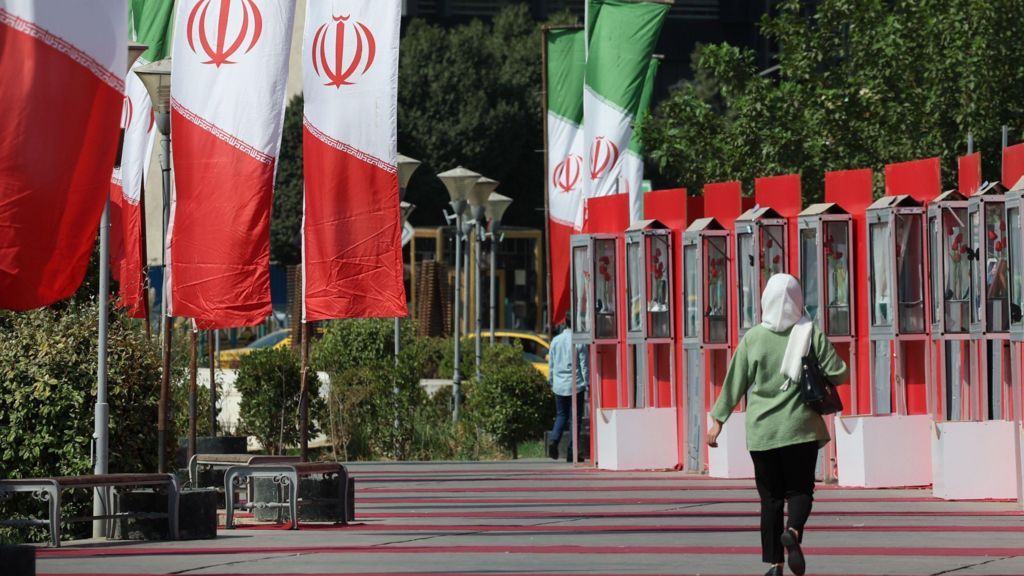
    US deports second group of Iranian nationals, officials say

    In a continued demonstration of stringent immigration enforcement, the United States has repatriated a second contingent of Iranian nationals, according to confirmations from Tehran officials. A charter flight transporting over 50 individuals departed from Mesa, Arizona, on Sunday, completing its journey through intermediate stops in Cairo and Kuwait before ultimately arriving in Iran.

    Tehran’s Foreign Ministry formally acknowledged the return of its citizens, while U.S. immigration authorities maintained their standard protocol of neither confirming nor denying such operations due to security considerations. This deportation follows an initial flight in late September, marking a rare instance of operational coordination between the two diplomatically estranged nations.

    Reports from advocacy groups reveal concerning details about the deportees. Father Joseph Bach of Borderland Companions of Hope, a Franciscan migrant support organization, received information from contacts within Arizona detention facilities indicating the removal included Christian converts and individuals identifying as LGBT—groups facing severe legal and social persecution in Iran. Father Bach condemned the action as ‘the most unchristian thing to do,’ characterizing it as a ‘death flight’ for vulnerable returnees.

    Iranian state media presented an alternative narrative, quoting consular officials who claimed the deportees had ‘announced their willingness for return’ following perceived anti-immigration discrimination by the U.S. However, this contradicts firsthand accounts from detainees who expressed fear for their lives if returned, with one individual telling the BBC he and his partner had entered the U.S. on foot from Mexico earlier this year seeking refuge.

    These developments occur against a backdrop of significantly deteriorated U.S.-Iran relations, which escalated further after U.S. airstrikes on Iranian nuclear facilities in June. The deportation flights exemplify the Trump administration’s consistent implementation of hardline immigration policies that prioritize border security and reduce unauthorized migration, central tenets of the president’s political agenda.

  • Another Trump Jr.-backed company receives massive Pentagon deal

    Another Trump Jr.-backed company receives massive Pentagon deal

    A second defense contract awarded to a company with ties to Donald Trump Jr. has sparked ethical concerns regarding defense procurement processes during the Trump administration. Vulcan Elements, a small startup specializing in rare-earth magnets for military equipment, has secured a $620 million Pentagon loan as part of a $1.4 billion initiative to boost magnet production for defense applications.

    The Financial Times reports that Vulcan Elements, employing just 30 staff, received funding through 1789 Capital—a venture firm established by pro-Trump donors in 2023 that brought Trump Jr. aboard as partner last year. This development follows a previous contract awarded to Unusual Machines, a drone manufacturer in which Trump Jr. holds a $4 million stake, that secured a U.S. Army contract to produce 3,500 drone motors with plans for an additional 20,000 components next year.

    According to analysis, at least four companies within 1789 Capital’s portfolio have obtained contracts totaling over $735 million from the Trump administration this year. Both Vulcan CEO John Maslin and Unusual Machines CEO Allan Evans have stated that Trump Jr. played no direct role in securing these government contracts.

    However, ethical questions have emerged following Trump Jr.’s September podcast comments about screening Pentagon candidates based on their willingness to increase drone expenditures. Kedric Payne, general counsel at the Campaign Legal Center, noted that these transactions create apparent conflicts of interest, stating that presidents should avoid even the appearance of using office to benefit family members financially.

    The pattern of contracts awarded to companies connected to the president’s son has raised concerns about procurement transparency and the potential blurring of lines between political connections and defense contracting decisions.

  • Watch: Nasa astronaut and cosmonauts begin voyage back to Earth

    Watch: Nasa astronaut and cosmonauts begin voyage back to Earth

    A multinational crew comprising NASA astronaut Jonny Kim and Russian cosmonauts Sergey Ryzhikov and Alexey Zubritsky has successfully departed the International Space Station, commencing their carefully orchestrated return journey to Earth. The team concluded their extended 245-day orbital mission, which contributed significantly to ongoing scientific research and space station operations.

    The departure sequence involved precise undocking procedures from the ISS followed by a series of calculated maneuvers to position their Soyuz spacecraft for atmospheric reentry. The crew’s homeward journey represents one of the most critical phases of spaceflight, requiring exact navigation through Earth’s atmosphere before their scheduled parachute-assisted landing on the Kazakh steppe.

    This mission highlights continued international cooperation in space exploration despite geopolitical tensions on Earth. The crew’s extended stay aboard the orbiting laboratory enabled numerous scientific experiments across disciplines including biology, physics, and human physiology in microgravity conditions. Their safe return will provide researchers with valuable data on long-duration spaceflight effects, contributing essential knowledge for future lunar and Martian exploration initiatives.

    The landing operations involve extensive recovery teams stationed across the predetermined landing zone, ready to provide immediate medical checkups and logistical support to the returning spacefarers. This successful conclusion of another extended ISS expedition demonstrates the ongoing viability of international partnerships in maintaining continuous human presence in low Earth orbit.

  • Israel conducting surveillance of US and allies at southern command centre: Report

    Israel conducting surveillance of US and allies at southern command centre: Report

    A significant diplomatic friction has emerged between the United States and Israel following revelations of extensive Israeli surveillance operations at a US-led coordination center in southern Israel. According to a report by The Guardian, both American forces and international allies have raised serious concerns about Israel’s intelligence-gathering activities at the Civil-Military Coordination Centre (CMCC) in Kiryat Gat, located merely 12 miles from the Gaza frontier.

    The situation escalated to the point where US Army Lieutenant General Patrick Frank, commander of the CMCC, formally summoned his Israeli counterpart to demand an immediate cessation of all recording activities within the facility. The Israeli military has been conducting both overt and covert surveillance of meetings and discussions at the center, which was established on October 17 as the primary coordination hub for Gaza aid efforts.

    While the Israeli military dismissed allegations of intelligence gathering on partners as ‘absurd’ and claimed documentation occurred through ‘transparent and agreed-upon manner,’ multiple sources confirmed that staff and visitors from various countries have been advised to avoid sharing sensitive information due to recording and potential leakage concerns.

    The CMCC, operating from the former site of the controversial Gaza Humanitarian Fund, serves as an operations room for monitoring ceasefire implementation and assessing real-time developments in Gaza. Despite deploying natural disaster logistics experts to enhance aid flow, their efforts have been significantly hampered by Israeli restrictions on humanitarian access to the war-torn territory.

    Diplomatic sources note that discussions at the CMCC have nevertheless produced some positive outcomes, including Israel’s relaxation of restrictions on previously barred items such as tent poles, water purification chemicals, and educational materials. The center hosts military planners from the UK and UAE alongside diplomats and humanitarian workers posted to Israel and occupied territories.

    However, the exclusion of Palestinians from CMCC deliberations has raised additional concerns among diplomats and aid workers. Palestinian representatives from civilian organizations and the Palestinian Authority have been systematically excluded from planning discussions, with attempts at video participation reportedly terminated by Israeli officials. Critics argue this exclusionary approach, combined with the blending of military and humanitarian operations, may violate international law and lacks proper international mandate.

  • The UK-funded dog sniffing out migrant boats

    The UK-funded dog sniffing out migrant boats

    At the Kapitan Andreevo border checkpoint in Bulgaria—Europe’s frontline against people smuggling—a specialized counter-smuggling operation is underway to intercept inflatable boats destined for Channel crossings. The UK-funded initiative, formalized in February 2023, has equipped Bulgarian authorities with advanced resources including thermal imaging technology, drones, and specialized training.

    The operation’s star operative is Adele, an English pointer trained to detect rubber materials from actual boats recovered from British shores. Under the guidance of senior customs inspector Sonia Daneva, Adele systematically searches lorries, coaches, and vehicles at one of the world’s busiest land borders. Smugglers frequently disguise the deflated vessels as inflatable pools, tarpaulins, or other rubber goods to evade detection.

    According to National Crime Agency senior manager Simone Alleyne, the smuggling pipeline originates in China, with equipment transiting through Bulgaria before reaching storage points in Germany and France. Despite a 25% reduction in Eastern Mediterranean irregular crossings in 2025, the Channel migration crisis has intensified. Over 39,000 people have reached UK shores via small boats this year—approaching the 2022 peak of 45,774—with increasing numbers per vessel.

    Philip Nikolov, head of Kapitan Andreevo Border Customs Police, reported significant successes: 72 boats intercepted this year alone, and 200 seized over the three-year cooperation period. Recent intensified checks in November involved searching over 350 vehicles and detecting multiple illegal border crossing attempts.

    The political dimension remains contentious. Shadow Home Secretary Chris Philp acknowledged interception successes while criticizing the current government’s record on illegal immigration. In response, Minister for Border Security and Alex Norris highlighted a 33% increase in disruption activities and plans to remove migration “pull factors.”

  • Iran confirms it is receiving second deportation flight from US

    Iran confirms it is receiving second deportation flight from US

    Iran has confirmed the arrival of a second US deportation flight carrying approximately 50-55 Iranian nationals, continuing a controversial immigration enforcement pattern initiated under the Trump administration. Foreign Ministry spokesperson Esmaeil Baghaei stated that these individuals were being returned for alleged violations of U.S. immigration laws, though he simultaneously criticized what he characterized as racially motivated actions against Middle Eastern nationals in America.

    The National Iranian American Council (NIAC) has vigorously opposed these deportations, citing grave concerns about the treatment of detainees and potential retaliation by Iranian authorities against returnees. The advocacy group reported disturbing accounts from Immigration and Customs Enforcement (ICE) custody, including allegations of physical assault against one detainee and threats of forced sedation to ensure compliance with removal procedures.

    ICE maintains strict operational secrecy regarding deportation flights, refusing to confirm or deny specific operations. However, the agency acknowledged that removal flights occur daily under the current administration’s policies. This lack of transparency has drawn sharp criticism from immigrant rights organizations and lawmakers alike.

    The situation reveals broader patterns in U.S. immigration enforcement. While some detainees can secure release through bond or accept voluntary deportation, others face prolonged detention—sometimes lasting years—before being deported to third countries they have never visited. Notably, enforcement actions have extended beyond undocumented immigrants to include legal residents with minor infractions, such as bounced checks or marijuana possession in states where it is decriminalized.

    Arizona Congresswoman Yassamin Ansari, the state’s first Iranian American elected official, has condemned what she describes as arbitrary quota-driven arrests targeting Iranian communities. She rejected as absurd any implication that Iranian Americans pose particular security risks.

    The context of U.S.-Iran relations appears to influence enforcement patterns. Following the June conflict between Israel and Iran and subsequent U.S. strikes on Iranian nuclear facilities, ICE detained approximately 130 Iranian nationals. While the intensity of targeting may have fluctuated, concerns persist about potential political motivations behind certain arrests, including speculation about possible prisoner exchange preparations.

    The case of Professor Vahid Abedini exemplifies the arbitrariness of the system. Despite holding a valid work visa, Abedini was detained at Oklahoma City airport for three days before being released without explanation. His experience suggests that outcomes often depend on external factors like media attention and political connections rather than consistent legal procedures.

    In response to these developments, NIAC has initiated legal action against ICE under the Freedom of Information Act, seeking transparency regarding the number of Iranians in custody, detention conditions, deportation procedures, and communications between ICE leadership and political authorities regarding removal decisions.

  • A symphony of woofs: This is what happens when 2,397 golden retrievers gather in an Argentina park

    A symphony of woofs: This is what happens when 2,397 golden retrievers gather in an Argentina park

    BUENOS AIRES, Argentina — The vibrant Bosques de Palermo park in Argentina’s capital transformed into a spectacular sea of golden fur as 2,397 golden retrievers converged on Monday, December 8, 2025, setting an unprecedented world record for the largest gathering of the breed.

    The monumental event, organized by Argentine actor and social media influencer Fausto Duperre, shattered the previous informal record of 1,685 golden retrievers established in Vancouver last year. The distinctive cacophony of enthusiastic barking could be heard from miles away, signaling the historic canine congregation taking place.

    Owners from across Argentina journeyed to participate in this extraordinary celebration of their beloved breed. Families settled on picnic blankets amidst the sprawling grassy expanse, their clothing adorned with characteristic golden fur and happy slobber stains. Children reveled in the experience, squealing with delight as they interacted with the remarkably similar-looking dogs that pranced joyfully throughout the venue.

    Under the intense Southern Hemisphere summer sun, attendees shared Argentina’s traditional yerba mate drinks while exchanging stories about their golden companions. Conversations highlighted the breed’s renowned abilities, including their capacity to detect low blood sugar and cancer, alongside heartfelt accounts of emotional support during life’s various challenges.

    Nicolás Oremama, a 26-year-old participant wearing a golden retriever-themed T-shirt, expressed the special connection these dogs foster: “Since we were children, she’s been a constant presence in our family. We’ve had vacations with her. We’ve done everything together.” His family traveled ninety minutes from their Buenos Aires province hometown to participate with their 13-year-old golden, Luna.

    The scene featured golden retrievers adorned in diverse costumes ranging from Argentine soccer jerseys and national flags to tutus and Star Wars bandanas. Ten dedicated volunteers wearing yellow vests meticulously documented each attendee with clipboards, ensuring accurate counting throughout the event.

    While organizers initially envisioned an impressive group photo of the dogs alone, practical considerations prevailed as owners demonstrated understandable reluctance to separate from their pets amidst concerns about potential losses in the massive crowd. Instead, the event maintained a surprisingly orderly atmosphere despite the enormous scale.

    Elena Deleo, a 64-year-old participant, shared her initial concerns: “I was afraid I would lose her, I was afraid she would fight, I was afraid another dog would attack her. But no, they’re all affectionate, all gentle… It’s just a very lovely experience.”

    Duperre, who regularly shares content about his 10-year-old golden retriever Oli on social media, expressed overwhelming emotions about the achievement: “This is a historic event. I’m truly grateful and happy, proud, excited and overjoyed all at once.” The successful gathering not only set a new world record but also celebrated the unique bond between humans and their golden retriever companions.

  • A wage for housework? India’s sweeping experiment in paying women

    A wage for housework? India’s sweeping experiment in paying women

    Across India’s diverse states, a transformative social experiment is quietly unfolding as millions of women receive direct cash transfers without conditions—marking one of the world’s most extensive yet understudied welfare initiatives. From Maharashtra to Tamil Nadu, approximately 118 million women now receive monthly payments ranging from 1,000 to 2,500 rupees ($12-$30), representing a fundamental shift in India’s approach to social welfare.

    Unlike traditional conditional programs in countries like Mexico or Brazil, India’s approach imposes no requirements regarding school attendance or poverty status. The money arrives simply because women sustain households, bear the burden of unpaid care work, and constitute an electoral bloc too significant to overlook. Eligibility criteria vary by state, typically incorporating age thresholds, income caps, and exclusions for families with government employees or certain assets.

    The political dimension has become unmistakable. In Bihar, the government transferred 10,000 rupees to 7.5 million female accounts ahead of recent elections, resulting in heightened female voter turnout that secured a landslide victory for the ruling coalition. While critics decry the practice as blatant vote-buying, the strategy has proven effective across multiple states including Jharkhand, Odisha, and Andhra Pradesh.

    Financial implications are substantial: twelve states will allocate approximately $18 billion to these programs this fiscal year, with half facing revenue deficits according to PRS Legislative Research. Despite fiscal pressures, the programs continue expanding, with Maharashtra alone promising benefits for 25 million women.

    Research reveals nuanced outcomes. A 2023 West Bengal survey found 90% of recipients operated their own accounts and 86% controlled spending decisions, primarily allocating funds to food, education, and medical expenses. In Tamil Nadu, women reported reduced marital conflict and increased confidence, while Karnataka beneficiaries noted improved nutrition and greater household decision-making power.

    Notably, studies by Professor Prabha Kotiswaran of King’s College London found no evidence that transfers discourage women from seeking paid work or reinforce gender stereotypes—two primary concerns among feminist critics. However, the payments haven’t reduced women’s unpaid workload either, which remains disproportionately high at nearly five hours daily compared to men’s 1.5 hours.

    The emerging consensus suggests these transfers provide financial autonomy and dignity without being transformative. As Professor Kotiswaran notes: ‘They are neither panacea nor poison—they are useful but limited tools operating in a patriarchal society where cash alone cannot undo structural inequities.’

    The future trajectory hinges on improved program design: simplifying eligibility rules, maintaining unconditional status, enhancing financial literacy, and coupling transfers with messaging about recognizing unpaid work’s value. Ultimately, India must decide whether these payments will become genuine empowerment tools or merely a new form of political patronage.