作者: admin

  • China sees continued improvement in women’s health in 2024: statistical report

    China sees continued improvement in women’s health in 2024: statistical report

    China has demonstrated substantial progress in women’s healthcare during 2024, according to the latest statistical monitoring report released by the National Bureau of Statistics. The comprehensive data reveals notable improvements across multiple health indicators, particularly in maternal care and preventive health services.

    The maternal mortality rate has reached a record low of 14.3 per 100,000, representing a significant 5.3 percent reduction compared to 2023 figures. This achievement forms part of the ongoing implementation progress of the China National Program for Women’s Development (2021-2030), which establishes comprehensive targets for women’s welfare enhancement.

    Preventive healthcare measures have similarly shown positive trends, with the premarital health checkup rate climbing to 77.1 percent—an increase of 0.5 percentage points year-on-year. This upward trajectory indicates growing public engagement with proactive health management practices.

    A pivotal development in 2024 has been the introduction of a nationwide evaluation framework designed to optimize medical institutions’ capabilities in managing high-risk pregnancies. This initiative has facilitated the establishment of a tiered, efficiently coordinated emergency response system specifically tailored for pregnant women requiring critical care. The enhanced medical infrastructure ensures rapid intervention capabilities and comprehensive treatment protocols for obstetric emergencies, substantially strengthening safety measures for expectant mothers throughout the country.

    The systematic improvements reflect China’s continued commitment to advancing women’s healthcare standards through policy implementation, infrastructure development, and preventive health initiatives aligned with national development goals.


  • US stock market ends 2025 on a high note after volatile year

    US stock market ends 2025 on a high note after volatile year

    Financial markets navigated a year of remarkable volatility in 2025, concluding with substantial gains despite significant policy-driven disruptions. The initial shockwaves from President Donald Trump’s sweeping global trade tariffs in spring sent major indices teetering on the brink of bear market territory. The S&P 500 nearly entered a 20% decline from its peak during this period, while both the Nasdaq Composite and Russell 2000 briefly plunged into bear markets.

    The market landscape transformed dramatically by summer as investor confidence surged. A powerful rally emerged, fueled by robust corporate earnings and escalating enthusiasm for artificial intelligence investments. The S&P 500 is poised to finish the year with an impressive 17% gain, marking its third consecutive year of double-digit increases. The technology-heavy Nasdaq Composite led the charge with a 21% annual advance, while the Russell 2000 index of smaller companies registered a solid 12% year-to-date increase.

    According to Deutsche Bank equity strategist Parag Thatte, ‘Strong earnings growth in corporate America has been a key driver of the stock market rally since the tariff-driven whiplash in the spring.’ This recovery occurred despite persistent economic anxieties, with investors continually ‘climbing the wall of worry’ according to Robert Edwards, chief investment officer at Edwards Asset Management.

    The AI investment phenomenon produced both spectacular gains and growing concerns. Technology behemoths including Nvidia, Apple, Microsoft, Amazon, and Alphabet—collectively representing nearly 30% of the S&P 500—significantly outperformed the broader market. However, mounting fears of an AI bubble have emerged throughout Silicon Valley as valuations soared and companies continued massive spending on artificial intelligence infrastructure.

    Geopolitical tensions, tariff uncertainties, and expectations of interest rate cuts drove substantial safe-haven demand throughout 2025. Gold prices skyrocketed approximately 70% annually, while Bitcoin failed to maintain momentum despite early administration support for digital assets, ending the year slightly negative after sharp declines from October peaks.

    Economic indicators presented a mixed picture: the US economy accelerated to a 4.3% annual growth rate in the third quarter—the strongest performance in two years—while unemployment simultaneously rose to a four-year high of 4.6% in November.

    Looking toward 2026, analysts anticipate continued market strength alongside significant uncertainties. Leadership transitions at the Federal Reserve, ongoing tariff negotiations, and concerns about overvalued equities across multiple sectors create potential headwinds. Vanguard analysts project relatively subdued annualized returns of 3.5%-5.5% for US stocks over the coming decade, suggesting investors should temper expectations compared to recent exceptional performance.

  • New Zealand’s Auckland kicks off 2026 celebrations with fireworks

    New Zealand’s Auckland kicks off 2026 celebrations with fireworks

    AUCKLAND, New Zealand — While Auckland became the world’s first major city to welcome 2026 with its traditional Sky Tower fireworks display, New Year’s Eve celebrations across the Asia-Pacific region unfolded under markedly subdued circumstances, with several nations scaling back festivities in response to recent tragedies.

    New Zealand’s largest city proceeded with its five-minute pyrotechnic spectacle despite rainy conditions, launching 3,500 fireworks from the 240-meter (787-foot) Sky Tower—the country’s tallest structure. The celebration positioned Auckland 18 hours ahead of New York’s Times Square ball drop. However, numerous smaller community events across New Zealand’s North Island were canceled due to forecasts predicting rain and potential thunderstorms.

    The most profound shift in celebration tone occurred in Sydney, Australia, where authorities implemented unprecedented security measures following the nation’s deadliest mass shooting in three decades. The December 14 attack at a Hanukkah celebration in Bondi Beach, which left 15 dead and 40 wounded, cast a pall over festivities. Thousands gathered at Sydney Harbor under the watch of heavily armed police—a first for the annual event—while officials projected menorah images onto bridge pylons and observed a minute of silence for victims. New South Wales Premier Chris Minns characterized the continued celebration as an act of defiance against terrorism.

    Elsewhere in the region, Indonesia significantly scaled back celebrations in solidarity with communities devastated by catastrophic floods and landslides that claimed over 1,100 lives on Sumatra island one month prior. Jakarta replaced its typical fanfare with prayer ceremonies, while Makassar officials urged residents to embrace reflection over revelry. Bali canceled concerts and fireworks in favor of traditional cultural performances.

    Hong Kong likewise abandoned its iconic Victoria Harbor fireworks display following a November factory fire that killed 161 people, opting instead for a musical performance and light projection countdown. Meanwhile, Japan and South Korea maintained their traditional bell-tolling ceremonies, providing continuity amid regional changes to New Year’s observances.

  • China puts two technology demonstration satellites into orbit

    China puts two technology demonstration satellites into orbit

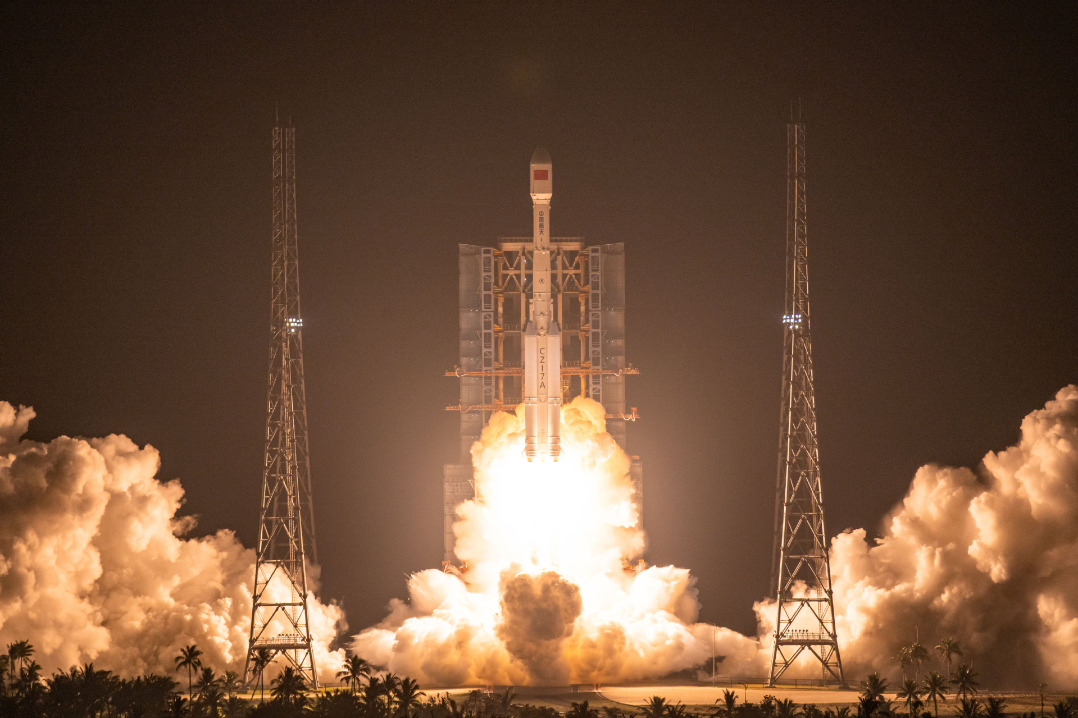
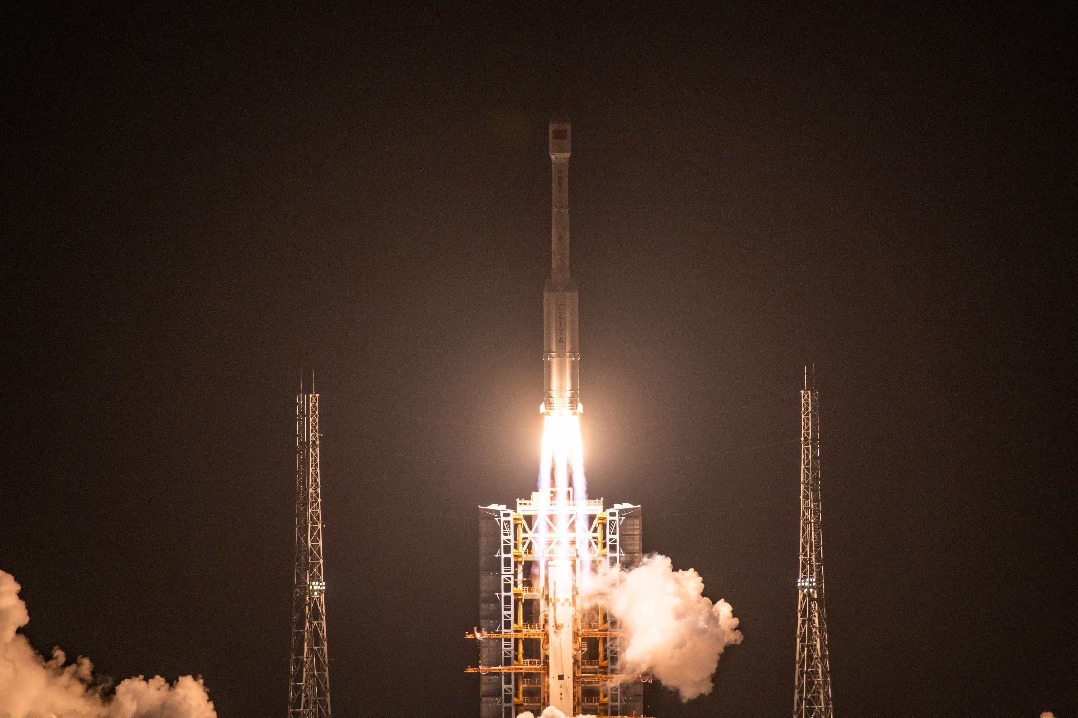
    China has marked a significant milestone in its space technology program with the successful deployment of two advanced demonstration satellites. The launch occurred at 6:40 AM on December 31, 2025, utilizing a Long March 7A carrier rocket that ascended from the Wenchang Space Launch Center in Hainan province.

    The mission, orchestrated by China Aerospace Science and Technology Corp (CASC), delivered the Shijian 29A and Shijian 29B satellites into their predetermined orbits. These sophisticated spacecraft represent cutting-edge advancements in space-based technology, with both satellites specifically designed to demonstrate innovative methodologies for space-based target detection systems.

    The Shijian 29A satellite was developed by the Shanghai Academy of Spaceflight Technology, a subsidiary of CASC, while its counterpart, Shijian 29B, was engineered by the Innovation Academy for Microsatellites, operating under the Chinese Academy of Sciences. This collaborative effort highlights China’s integrated approach to space technology development.

    The Long March 7A rocket, manufactured by the China Academy of Launch Vehicle Technology, boasts impressive technical specifications with a liftoff weight of 573 metric tons and a core-stage diameter of 3.35 meters. This launch vehicle demonstrates substantial payload capacity, capable of delivering spacecraft weighing up to 7 tons to geosynchronous transfer orbit.

    This mission represents China’s 93rd space endeavor of the year and the 623rd overall flight of the Long March rocket series, underscoring the nation’s consistent and growing presence in space technology development and orbital operations.

  • More Chinese cities add artificial hearts to medical insurance coverage

    More Chinese cities add artificial hearts to medical insurance coverage

    Tianjin has joined a growing number of Chinese cities implementing groundbreaking healthcare coverage for artificial heart implantation procedures, marking a significant advancement in cardiovascular treatment accessibility. The policy shift follows national guidelines issued by China’s National Healthcare Security Administration (NHSA) in March that established standardized pricing and coverage for ventricular assist devices.

    The transformative impact of this policy is exemplified by 69-year-old Sun Jucai, who became Tianjin’s first beneficiary after receiving an artificial heart implant in November. Diagnosed with dilated cardiomyopathy, Sun had endured severe heart failure symptoms that left him breathless during simple conversation. Following successful surgery at TEDA International Cardiovascular Hospital using a domestically developed device, Sun has experienced remarkable recovery and now describes the procedure as ‘a second chance at life.’

    Financially, the coverage represents a dramatic reduction in patient burden. Previously costing over 1 million yuan ($142,150), artificial heart implantation now costs approximately 700,000 yuan after insurance reimbursement. ‘The medical insurance covered most of the consumables and surgical expenses, greatly easing my financial burden,’ Sun confirmed after his recent discharge.

    This expansion addresses a critical healthcare challenge: China’s estimated 16 million chronic heart failure patients, with numbers continuing to rise. For advanced-stage patients, conventional treatments offer limited relief, and heart transplantation remains constrained by donor shortages. Artificial hearts have emerged as a viable alternative, though cost previously placed them beyond reach for most citizens.

    Notably, Tianjin’s policy eliminates regional barriers, allowing patients from across China to seek treatment and receive reimbursement within the city. This development follows similar implementations in other major regions including Beijing and Guangdong Province.

    Healthcare experts anticipate broader implications from this policy shift. Dr. Liu Xiaocheng, President of TEDA International Cardiovascular Hospital, notes that ‘approving reimbursement for this life-saving but costly technology will help speed up the development and wider use of artificial hearts in China.’

    The expansion reflects China’s ongoing commitment to healthcare system development, maintaining approximately 95% enrollment in basic medical insurance with some 20 billion reimbursements processed between 2021 and 2024 according to NHSA statistics.

  • China records continued improvement in child health in 2024

    China records continued improvement in child health in 2024

    China demonstrated marked progress across multiple child welfare indicators throughout 2024, according to an official statistical monitoring report released by the National Bureau of Statistics. The comprehensive assessment reveals substantial improvements in pediatric healthcare infrastructure, food safety standards, and early childhood education accessibility.

    Critical mortality metrics showed consistent decline, with the neonatal mortality rate dropping to 2.5 per thousand—a reduction of 0.3 points from 2023 figures. Similarly, infant mortality decreased to 4.0 per thousand (down 0.5 points), while the under-five mortality rate fell to 5.6 per thousand, representing a 0.6-point improvement over the previous year.

    The nation’s healthcare infrastructure expanded significantly, with 3,073 maternal and child health institutions and 162 specialized children’s hospitals operational by year’s end. Food safety achieved exceptional standards with infant formula milk powder passing safety inspections at a remarkable 99.88% rate.

    Educational access widened as preschool enrollment reached 92.0%, a 0.9 percentage point increase from 2023. Concurrently, digital protection efforts intensified with the removal of over 5.485 million instances of illegal and harmful online content that endangered young users.

    These developments reflect China’s ongoing implementation of the National Program for Child Development (2021-2030), demonstrating coordinated progress across healthcare, nutrition, education, and digital safety sectors.

  • Russian drones blast Ukraine’s Odesa and injure 6, including children

    Russian drones blast Ukraine’s Odesa and injure 6, including children

    ODESA, Ukraine — A relentless overnight drone offensive conducted by Russian forces struck residential complexes and critical energy infrastructure in the southern Ukrainian port city of Odesa, resulting in significant damage and civilian casualties. Regional authorities confirmed Wednesday that six individuals, including three young children, sustained injuries during the bombardment that damaged multiple apartment buildings.

    Oleh Kiper, head of Odesa’s regional military administration, characterized the assault as part of Russia’s systematic terror campaign targeting civilian infrastructure. Energy provider DTEK reported substantial damage to two key energy facilities, compounding earlier damage to ten regional substations throughout December alone.

    This escalation occurs against a backdrop of intensified long-range attacks on Ukrainian urban centers as Russia’s invasion approaches its fourth anniversary. Moscow has significantly increased targeting of energy infrastructure during winter months, deliberately seeking to deprive civilians of heating and running water during extreme cold conditions.

    United Nations data reveals alarming casualty figures, with over 2,300 Ukrainian civilians killed and 11,000 injured between January and November this year—representing a 26% increase from the same period in 2024 and a 70% surge compared to 2023.

    The sustained attacks coincide with renewed diplomatic efforts to broker peace. Following Ukrainian President Volodymyr Zelenskyy’s meeting with U.S. President Donald Trump in Florida, where officials suggested a settlement might be “closer than ever,” Zelenskyy is scheduled to engage European leaders next week regarding security guarantees and negotiation terms.

    Meanwhile, Moscow alleges Ukraine attempted a 91-drone attack on President Vladimir Putin’s residence, claims Ukrainian officials dismiss as fabricated propaganda intended to undermine peace negotiations. Russian Major General Alexander Romanenkov presented unverified flight path maps during a restricted briefing, though independent verification remains impossible.

    Ukraine’s air force reported intercepting 101 of 127 Russian drones overnight, while Russia’s Defense Ministry claimed shooting down 86 Ukrainian drones over Russian territories, the Black Sea, and occupied Crimea. A resulting fire at a Krasnodar oil refinery was quickly extinguished according to local authorities.

  • Heated Rivalry author says TV success led to help with her Parkinson’s

    Heated Rivalry author says TV success led to help with her Parkinson’s

    Canadian author Rachel Reid has experienced an extraordinary medical breakthrough stemming directly from the television success of her acclaimed romance novel series. The 45-year-old writer, diagnosed with Parkinson’s disease in summer 2023, revealed that the publicity surrounding the TV adaptation of her ‘Game Changers’ book series has connected her with world-class neurological care that was previously inaccessible.

    The phenomenon began when ‘Heated Rivalry,’ Reid’s story about a clandestine relationship between two professional hockey players, became an international television sensation following its November premiere. During promotional interviews for the series, director Jacob Tierney unexpectedly discussed Reid’s Parkinson’s diagnosis on CNN. This disclosure prompted one of the world’s leading Parkinson’s specialists to reach out directly to the author offering assistance.

    Reid described the development as transformative, explaining she had been on a five-year waiting list for specialist care in her small Canadian community. The expert not only secured her an appointment with a top neurologist within weeks but also provided immediate medication adjustments that dramatically improved her sleep quality and writing capacity.

    The author candidly discussed how Parkinson’s has impacted her creative process, noting difficulties with mouse control, typing endurance, and prolonged sitting. These challenges have forced her to reconsider her writing methodology, potentially adopting voice-to-text technology despite its unnatural feel.

    ‘Heated Rivalry,’ the first installment in Reid’s six-book series published since 2018, features actors Hudson Williams and Connor Storrie as the hockey players navigating secret romance amid professional rivalry. The series, adapted and directed by Jacob Tierney, premiered in North America in late November and is scheduled for UK release on January 10th via Sky and streaming service Now.

    Parkinson’s disease, a progressive neurological condition characterized by reduced dopamine production, causes symptoms including tremors, slowed movement, and muscle rigidity. Reid’s experience demonstrates how public visibility through entertainment success can unexpectedly create life-changing healthcare opportunities.

  • Mali and Burkina Faso impose travel ban on US citizens in tit-for-tat move

    Mali and Burkina Faso impose travel ban on US citizens in tit-for-tat move

    In a significant diplomatic escalation, the military governments of Mali and Burkina Faso have formally announced reciprocal entry prohibitions targeting United States citizens. This decisive action comes as a direct response to the Trump administration’s recent expansion of travel restrictions against both West African nations.

    The reciprocal measures were confirmed through separate official statements issued by both governments. Burkina Faso’s Foreign Affairs Minister Karamoko Jean-Marie Traoré explicitly cited the “principle of reciprocity” as the foundation for their decision, while Mali’s foreign ministry emphasized the necessity of “mutual respect and sovereign equality” in international relations. Malian officials additionally expressed disappointment that Washington’s original travel ban decision was implemented without prior diplomatic consultation.

    This development follows neighboring Niger’s implementation of similar restrictions against US travelers earlier this week. All three nations currently operate under military junta leadership following recent coups, and have subsequently formed their own regional alliance while strengthening political and military ties with Russia amid deteriorating relations with traditional Western partners.

    The White House’s original policy expansion, announced earlier this month, imposed comprehensive entry restrictions on nationals from Mali, Burkina Faso, and Niger, alongside South Sudan, Syria, and Palestinian Authority passport holders. Scheduled to take effect January 1st, these measures were justified as necessary for enhancing US national security. The administration simultaneously elevated Laos and Sierra Leone from partial to full restrictions, while implementing limited travel constraints on fifteen additional countries including Nigeria, Tanzania, and Zimbabwe.

    This exchange of travel restrictions marks a notable deterioration in US-West African relations and reflects the growing geopolitical realignment occurring within the Sahel region.

  • China launches two new satellites into space

    China launches two new satellites into space

    China’s aerospace program has marked another significant achievement with the successful deployment of two advanced technology demonstration satellites. On Wednesday, December 31, 2025, at precisely 6:40 AM Beijing Time, a Long March 7A carrier rocket roared to life from the Wenchang Space Launch Site in Hainan province, carrying the Shijian-29A and Shijian-29B satellites into predetermined orbits.

    The newly launched satellites represent China’s continued advancement in space-based monitoring systems, specifically designed for experimental verification of cutting-edge space target detection technologies. This mission underscores China’s growing capabilities in space domain awareness and orbital monitoring applications.

    This launch constitutes the 623rd flight mission within the Long March rocket family, demonstrating the reliability and frequent launch cadence of China’s space transportation system. The coastal Wenchang facility continues to serve as a strategic launch site for China’s ambitious space program, leveraging its geographical advantages for orbital deployments.

    The successful mission adds to China’s expanding constellation of specialized satellites, enhancing the nation’s technological footprint in space while contributing to the development of next-generation space surveillance infrastructure. The experimental nature of these satellites suggests they will serve as testbeds for future operational systems in China’s comprehensive space strategy.