作者: admin

  • Venezuelan opposition leader makes first public appearance after months in hiding

    Venezuelan opposition leader makes first public appearance after months in hiding

    In a dramatic appearance marking her first public outing since January, Venezuelan opposition leader María Corina Machado defied travel restrictions to personally accept the Nobel Peace Prize in Oslo. The political dissident, who had maintained a low profile following Venezuela’s contentious 2024 presidential election, emerged on the balcony of Oslo’s Grand Hotel to ecstatic cheers from supporters gathered below.

    Machado’s journey to Norway culminated in an emotional balcony moment where she placed her hand over her heart and joined supporters in song before personally greeting the crowd. The Nobel Institute recognized her tireless campaign for “achieving a just and peaceful transition from dictatorship to democracy” in Venezuela, making her the latest symbol of democratic resistance in authoritarian regimes.

    The ceremony took place against a backdrop of escalating tensions between Venezuela and the United States. On the same day as Machado’s appearance, President Donald Trump announced the U.S. military seizure of an oil tanker near Venezuelan waters, alleging connections to “illicit oil shipping networks supporting foreign terrorist organizations.” The Venezuelan government promptly condemned the action as outright piracy.

    Machado’s daughter, Ana Corina Sosa, initially accepted the award on her mother’s behalf during the formal ceremony, as speculation mounted about whether the opposition leader would risk international travel despite government prohibitions. The Nobel committee earlier released audio confirmation of Machado’s determination to attend, featuring her declaring: “I will be in Oslo, I am on my way.”

    In previous statements following her Peace Prize recognition, Machado notably praised President Trump, who has openly expressed his own aspirations for the prestigious award while maintaining military pressure on Venezuela’s government. The coincidence of these events highlights the complex geopolitical dynamics surrounding Venezuela’s political future.

  • US seizes oil tanker off the coast of Venezuela, Trump says

    US seizes oil tanker off the coast of Venezuela, Trump says

    In a dramatic escalation of geopolitical tensions, United States military forces have intercepted and seized a massive oil tanker off the Venezuelan coastline. President Donald Trump confirmed the operation during a White House briefing, characterizing the vessel as “very large, the largest one ever seized actually.”

    The seized tanker, identified by maritime risk firm Vanguard Tech as the ‘Skipper,’ was allegedly transporting sanctioned petroleum from Venezuela and Iran. US Attorney General Pam Bondi released operational footage showing military helicopters hovering above the vessel while armed troops descended onto the deck via ropes. According to official statements, the interception involved coordinated efforts between the FBI, Department of Defense, Homeland Security, and Coast Guard, utilizing two helicopters, ten Coast Guard members, ten Marines, and special forces personnel.

    Venezuela’s government immediately condemned the action as “international piracy” and a “grave international crime” in an official statement. Interior Minister Diosdado Cabello drew comparisons to pirate films, asserting that while fictional pirates might be heroes, “these guys are high seas criminals, buccaneers.” President Nicolás Maduro, speaking at a rally before the seizure was publicly announced, performed an adapted version of ‘Don’t Worry, Be Happy’ with modified lyrics advocating peace: “Not war, be happy. Not, not crazy war, not, be happy.”

    The operation occurs amid significant US military buildup in the Caribbean region, including the deployment of the aircraft carrier USS Gerald Ford and thousands of troops within striking distance of Venezuela. The Trump administration maintains that such actions target narcotics smuggling networks, having conducted at least 22 strikes on boats in the region since September resulting in approximately 80 fatalities.

    Financial markets responded to the seizure with increased oil prices due to short-term supply concerns. Analysts warn that the escalation could further disrupt Venezuela’s oil exports and create risks for international shippers. When questioned about the disposition of the confiscated oil, President Trump indicated “We keep it, I guess… I assume we’re going to keep the oil.” Defense Secretary Pete Hegseth was aware of the operation, and administration sources suggest similar actions may be considered in the future.

  • Indigenous deaths in custody in Australia hit highest level since 1980

    Indigenous deaths in custody in Australia hit highest level since 1980

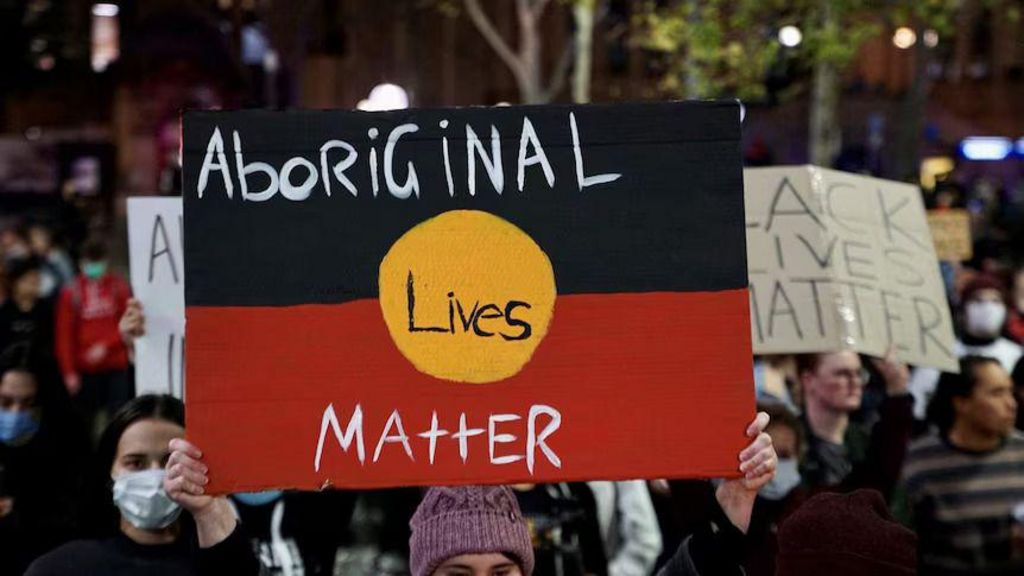
    Australia is confronting a severe national crisis as Indigenous custodial deaths have surged to unprecedented levels, reaching the highest recorded figure since official tracking began in 1980. According to newly released data from the Australian Institute of Criminology, 113 individuals died in custody during the twelve-month period ending June this year. Among these tragic fatalities, 33 were identified as Indigenous Australians—a significant increase from the 24 documented in the preceding year.

    This alarming trend underscores a profound overrepresentation of Aboriginal and Torres Strait Islander peoples within the criminal justice system. Although they constitute less than 4% of the national population, Indigenous individuals account for more than one-third of the country’s total prison population.

    The latest statistics arrive more than three decades after the landmark Royal Commission into Aboriginal Deaths in Custody, which issued hundreds of recommendations aimed at reforming the system. Despite this, the situation has deteriorated. Of the 33 Indigenous deaths reported, 26 occurred in prison custody—up from 18 the previous year—while one took place in youth detention. The remaining six fatalities happened in police custody. All but one of the deceased were male.

    Hanging was the most frequent cause of death, accounting for eight cases, while the majority of fatalities were classified as either self-inflicted or due to natural causes. Geographically, New South Wales recorded the highest number of deaths with nine, followed by Western Australia with six. Queensland, South Australia, and the Australian Capital Territory each reported three Indigenous deaths in custody.

    Magistrate Teresa O’Sullivan, the NSW state coroner, recently described the escalating numbers as a ‘profoundly distressing milestone,’ emphasizing that these are not ‘mere statistics’ but represent lives that demand ‘independent scrutiny, respect, and accountability.’

    The average age of those who died was 45 years, and 11 were awaiting sentencing at the time of their death. Associate Professor Amanda Porter, an expert in criminal law at the University of Melbourne, condemned the figures as evidence of a systemic failure requiring urgent political action. Having attended numerous inquests and funerals, Professor Porter expressed frustration that little has changed since the Royal Commission. In total, more than 600 Indigenous people have died in custody since the inquiry, including six children in youth detention.

  • Trump launches $1m ‘gold card’ immigration visas

    Trump launches $1m ‘gold card’ immigration visas

    The Trump administration has officially implemented its controversial premium immigration initiative, the Trump Gold Card program, creating a expedited pathway to U.S. residency for affluent foreign nationals. The program mandates a minimum investment of $1 million from individual applicants, while corporate sponsors must contribute $2 million plus additional fees.

    According to the program’s official website, the Gold Card provides qualified applicants with U.S. residency in “record time” and serves as “evidence that the individual will substantially benefit the United States.” President Trump promoted the initiative on social media, characterizing it as a “direct path to Citizenship for all qualified and vetted people” that will enable American companies to “keep their invaluable Talent.”

    The tiered program structure includes a forthcoming platinum version priced at $5 million that offers special tax advantages. All applicants must additionally pay a non-refundable $15,000 processing fee before their application undergoes review, with potential additional government fees depending on individual circumstances.

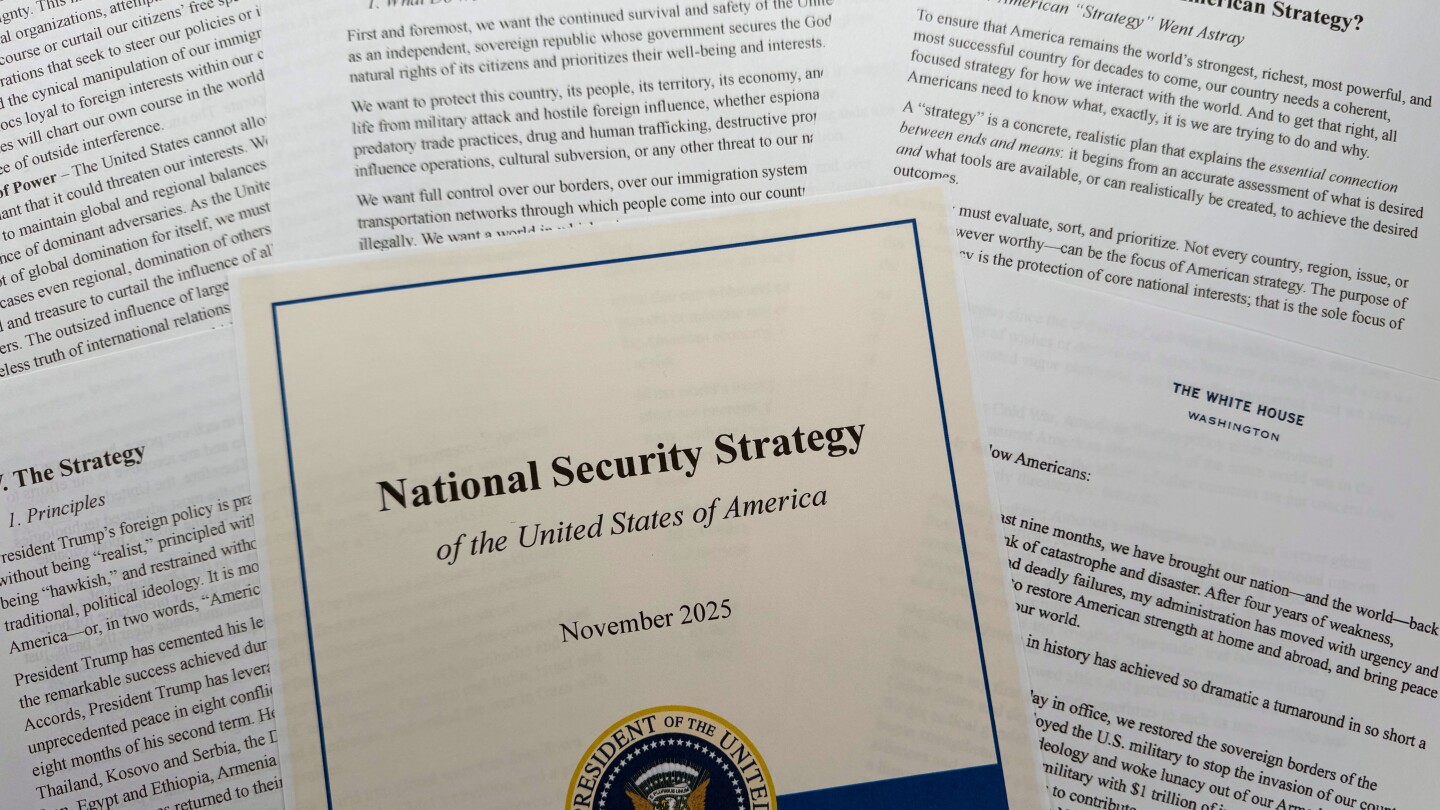
    This premium immigration pathway emerges alongside significant immigration policy restrictions implemented by the administration, including increased work visa fees, suspension of immigration applications from 19 countries predominantly in Africa and the Middle East, halted asylum application processing, and a $100,000 fee proposal for certain H-1B visa applicants currently abroad.

    The program has drawn substantial criticism since its initial announcement in February, particularly from Democratic opponents who argue it creates an inequitable immigration system favoring wealthy individuals. The administration maintains that the program specifically targets “high-level” professionals who will contribute to job creation and economic productivity.

  • Congress would target China with new restrictions in massive defense bill

    Congress would target China with new restrictions in massive defense bill

    While the Trump administration demonstrates diplomatic softening toward China to preserve trade war détente, the U.S. Congress is advancing assertive measures through the National Defense Authorization Act (NDAA) that signal a hardened long-term competition strategy. The House-approved $900 billion defense bill, now advancing to the Senate, incorporates multiple China-focused provisions that contrast sharply with the White House’s recent conciliatory gestures.

    The legislation mandates heightened scrutiny of American investments in Chinese technological sectors that could enhance military capabilities, including quantum computing, artificial intelligence, and semiconductors. It further prohibits federal funds from being allocated to blacklisted Chinese biotechnology companies, addressing concerns about genetic data security and pharmaceutical supply chain vulnerabilities. The bill significantly amplifies support for Taiwan, authorizing increased security cooperation funding and endorsing the island’s bid for International Monetary Fund membership.

    Representative Raja Krishnamoorthi, leading Democrat on the House Select Committee on the Chinese Communist Party, characterized these measures as reflecting “a serious, strategic approach to countering the Chinese Communist Party” that diverges markedly from recent White House positioning. The administration recently permitted Nvidia to export advanced computer chips to China and eliminated Biden-era language identifying China as a strategic threat in its national security strategy.

    Chinese officials vehemently condemned the legislation, with embassy spokesperson Liu Pengyu denouncing its “China threat narrative” and warning of damaged bilateral relations. Meanwhile, policy analysts note the provisions would establish foundational competitiveness policies that future administrations would find difficult to reverse, creating structural barriers to economic decoupling regardless of diplomatic rhetoric.

    The NDAA’s biotechnology provisions replace earlier failed legislation that specifically named Chinese companies, instead tasking the Office of Management and Budget with compiling a dynamic list of “biotechnology companies of concern” while expanding Pentagon investments in domestic biotech capabilities.

  • Moment skydiver crash lands onto traffic light

    Moment skydiver crash lands onto traffic light

    In a breathtaking incident that defied both gravity and expectation, a skydiver experienced an emergency landing atop a traffic signal in the bustling streets of Mexico City on December 9th. The astonishing event, captured by multiple eyewitnesses, shows the individual descending rapidly before making unexpected contact with the urban infrastructure.

    According to official statements from Mexico City’s law enforcement authorities, the individual involved emerged from the precarious situation entirely unscathed. Police confirmed that despite the violent nature of the impact with the traffic apparatus, the skydiver sustained no physical injuries and required no immediate medical attention following the incident.

    The extraordinary circumstances surrounding this aerial mishap have raised questions about safety protocols and airspace regulations for recreational skydiving activities in metropolitan areas. Aviation experts suggest that unexpected wind patterns or equipment malfunction may have contributed to the diver’s deviation from the intended landing zone, though official investigations remain ongoing.

    This remarkable survival story highlights both the inherent risks of extreme sports and the astonishing resilience of the human body when confronted with potentially catastrophic scenarios. The incident continues to circulate across social media platforms, sparking conversations about urban safety preparedness for unconventional emergency situations.

  • ‘Outright denial’: Genocide prevention group slams Hillary Clinton’s Gaza remarks

    ‘Outright denial’: Genocide prevention group slams Hillary Clinton’s Gaza remarks

    The Lemkin Institute for Genocide Prevention has issued a forceful condemnation of former U.S. Secretary of State Hillary Clinton’s recent comments regarding Israel’s military operations in Gaza, characterizing her statements as “outright genocide denial.” The rebuke came in response to Clinton’s appearance at the Israel Hayom Summit on December 2nd, where she attributed growing American criticism of Israel to poor public relations and social media manipulation rather than substantive concerns about Israel’s conduct.

    During her summit address, Clinton asserted that Israel possesses “the worst PR of any group,” specifically singling out TikTok for disseminating what she termed “pure propaganda” regarding Israeli military actions in Gaza. She further characterized young Americans’ positions as a “serious problem for democracy,” claiming they lacked historical context and were being influenced by one-sided narratives.

    The genocide prevention organization fundamentally rejected this analysis, countering that Americans are responding to overwhelming evidence emerging from Gaza rather than falling prey to misinformation. The institute emphasized that years of documentation from Palestinian journalists, ordinary Gazans, and even IDF soldiers themselves have created an incontrovertible record that cannot be dismissed as mere propaganda.

    According to the institute’s statement, “There has been no convincing refutation of the sheer amount of raw evidence of genocide coming out of Palestine. Young people in the US are not stupid or gullible. They simply reject genocide.”

    The organization noted with particular concern that Clinton’s remarks focused exclusively on narrative management while completely avoiding engagement with the substantive allegations of genocidal violence. They observed that her primary concern appeared to be the increased visibility of Israel’s actions through real-time documentation rather than the actions themselves.

    The statement also highlighted the irony of Clinton’s criticism of TikTok, given the platform’s documented history of censoring pro-Palestinian content and its July appointment of a former IDF instructor as its new manager of hate speech policy.

    The Lemkin Institute, founded in 2017 by renowned genocide scholars Elisa von Joeden-Forgey and Irene Victoria Massimino, takes its name from Raphael Lemkin, the Polish lawyer who coined the term “genocide.” The organization has joined numerous international bodies, United Nations experts, and human rights organizations in characterizing Israel’s campaign in Gaza as genocidal, with Palestinian casualties now exceeding 71,000 according to the report.

  • Portugal braced for mass disruption in first general strike for 12 years

    Portugal braced for mass disruption in first general strike for 12 years

    Portugal experienced widespread disruption across its transportation networks, healthcare facilities, educational institutions, and public services on Thursday as the nation’s two primary labor federations launched a coordinated general strike. This unprecedented joint action between the traditionally more militant CGTP and the typically moderate UGT represents the first such collaboration since the eurozone debt crisis of 2013.

    The strike protests the center-right government’s proposed labor reforms that would significantly alter worker protections. Among the most contentious measures are provisions allowing employers to repeatedly renew temporary contracts indefinitely, eliminating bans on immediately rehiring dismissed workers through outsourcing arrangements, and removing requirements to reinstate unfairly terminated employees.

    Prime Minister Luís Montenegro’s administration argues these changes are necessary to address labor market “rigidities” and ultimately boost both corporate profitability and worker wages. “I will not give up on having a country with the ambition to be at the forefront, to be at the vanguard of Europe,” Montenegro stated ahead of the strike.

    However, the government appears to have underestimated the strength of opposition, with even a Social Democrat MP serving on the UGT executive voting in favor of the strike. Despite last-minute modifications to the proposals, the concessions failed to appease union leaders.

    The reforms particularly impact Portuguese workers in their twenties, creating divided opinions among younger citizens. While some support the modernization efforts, others express concern about already precarious employment conditions.

    The political landscape complicates the situation, with Montenegro’s minority government seeking support from both the free-market Liberal Initiative and the hard-right Chega party—a move that has drawn criticism given his pre-election pledge to avoid deals with Chega.

    The controversy has spilled into January’s presidential campaign, with several candidates arguing the reforms violate Portugal’s 1976 constitution. Under Portugal’s semi-presidential system, the president could potentially delay or block the legislation through constitutional challenges.

    Unlike typical public sector strikes, this action garnered support across industries, including near-unanimous backing from nearly 1,000 employees at Volkswagen’s Autoeuropa plant, Portugal’s largest factory.

  • The Swiss city that lets you pay for most things with bitcoin

    The Swiss city that lets you pay for most things with bitcoin

    Nestled amidst mountain-fringed lakes, the Swiss city of Lugano has transformed into a living laboratory for cryptocurrency adoption. At a local McDonald’s, customers now casually order coffee using bitcoin—a scene that would be extraordinary elsewhere but has become routine in this innovative financial ecosystem.

    The municipal government has spearheaded this digital transformation by distributing free cryptocurrency payment terminals to retail establishments. Approximately 350 shops and restaurants currently accept bitcoin alongside Swiss francs, with even municipal services like preschool childcare now payable in digital currency. The payment process involves simple contactless transactions from mobile bitcoin wallets, with one coffee purchase amounting to approximately 0.00008629 bitcoin ($8.80).

    French visitor Nicolas exemplifies the bitcoin evangelists drawn to Lugano. ‘The remarkable aspect of bitcoin payments is the profound sense of financial liberation,’ he explains. ‘You eliminate dependency on traditional banking systems with their intermediaries and associated costs.’ Nicolas utilizes bitcoin prepaid cards available in Switzerland—physical cards loaded with Swiss francs that convert to bitcoin in digital wallets.

    Luxury retailers along Lugano’s upscale shopping districts have embraced this financial innovation. Cherubino Fry, proprietor of Vintage Nassa luxury bags and watches, cites practical advantages: ‘Transaction fees for bitcoin typically remain below 1%, significantly lower than the 1.7-3.4% charged by credit card companies.’ Though current bitcoin transactions remain sporadic, Fry anticipates substantial growth: ‘Bitcoin adoption will resemble a growing tree—within five to ten years, this tree will become enormous.’

    The city’s ambitious Plan B initiative (B representing bitcoin), launched in 2022 through partnership with cryptocurrency platform Tether, aims to establish Lugano as Europe’s premier bitcoin hub. Director Mir Liponi conducted an eleven-day personal experiment using exclusively bitcoin after encountering traditional banking issues. ‘I successfully managed daily necessities including grocery deliveries and medical services,’ she reports, though noting limitations with public transportation, fuel, dental services, and energy bills.

    Liponi envisions future ‘circular economies where individuals earn, retain, spend, and pay for services entirely in bitcoin.’ This vision contrasts sharply with El Salvador’s troubled bitcoin adoption, where citizens reportedly converted government-distributed bitcoin to dollars and abandoned the cryptocurrency.

    Despite enthusiasm, significant skepticism persists. University of Lugano student Lucia expresses concerns about cryptocurrency associations with ‘criminal activities, dark web transactions, and speculative risks.’ This skepticism turned destructive when vandals demolished a Satoshi Nakamoto statue along Lugano’s lakefront in August—an unusual act of protest in this typically reserved community.

    Professor Sergio Rossi of the University of Fribourg highlights economic risks: ‘Bitcoin’s extreme volatility presents substantial merchant risks. Immediate conversion to stable fiat currencies becomes essential.’ He further warns about platform risks: ‘If digital wallet providers fail, cryptocurrencies disappear permanently—unlike Swiss bank deposits guaranteed up to 100,000 francs.’

    Mayor Michele Foletti dismisses concerns about attracting criminal elements: ‘Both fiat currency and bitcoin can facilitate legal or illegal activities. Criminal organizations actually prefer physical cash for money laundering due to greater anonymity.’ The mayor highlights tangible benefits: 110 cryptocurrency companies have either relocated or launched operations in Lugano, signaling successful economic diversification through digital currency innovation.

  • Israel used Palantir technology in its 2024 Lebanon pager attack, book claims

    Israel used Palantir technology in its 2024 Lebanon pager attack, book claims

    A newly published biography has revealed that Israel deployed sophisticated software from the American technology firm Palantir during its controversial 2024 pager bombings in Lebanon. The operation, which targeted communications devices belonging to Hezbollah members, resulted in significant casualties and has drawn condemnation from international human rights experts.

    According to author Michael Steinberger’s ‘The Philosopher in the Valley: Alex Karp, Palantir, and the Rise of the Surveillance State,’ Israel significantly expanded its utilization of Palantir’s technology following the outbreak of conflict in Gaza in October 2023. The book details how this partnership culminated in ‘Operation Grim Beeper,’ where hundreds of Hezbollah fighters were injured by exploding pagers and walkie-talkies that had been covertly rigged with explosives.

    The September 17 attacks saw thousands of pagers detonate simultaneously across Lebanon. Many devices displayed ‘error’ messages and emitted intense vibrations before explosion, effectively drawing victims—including both combatants and civilians—into proximity at the moment of detonation. Subsequent explosions occurred the following day during public funerals for those killed in the initial attacks.

    The aftermath left 42 people dead and thousands wounded, with many survivors sustaining life-altering injuries to their eyes, faces, and hands. While Israeli officials celebrated the operation’s success, United Nations experts condemned the tactics as ‘terrifying’ violations of international law.

    Steinberger’s account notes that Israel’s demand for Palantir’s assistance became so substantial that the company dispatched a team of engineers from London to support Israeli users. This revelation comes amid growing scrutiny of technology companies’ involvement in military operations against Palestinians and neighboring states.

    A July report by UN Special Rapporteur Francesca Albanese accused several tech firms, including Palantir, of profiting from ‘crimes including illegal occupation, apartheid and genocide in occupied Palestine.’ The report specifically cited Palantir’s provision of ‘automatic predictive policing technology’ and its ‘Artificial Intelligence Platform,’ which enables real-time battlefield data integration for automated decision-making.

    Albanese called on UN member states to suspend trade agreements with entities endangering Palestinians and urged international courts to pursue investigations against corporate executives for potential complicity in international crimes. Middle East Eye has reached out to Palantir for comment regarding these allegations.