
作者: admin

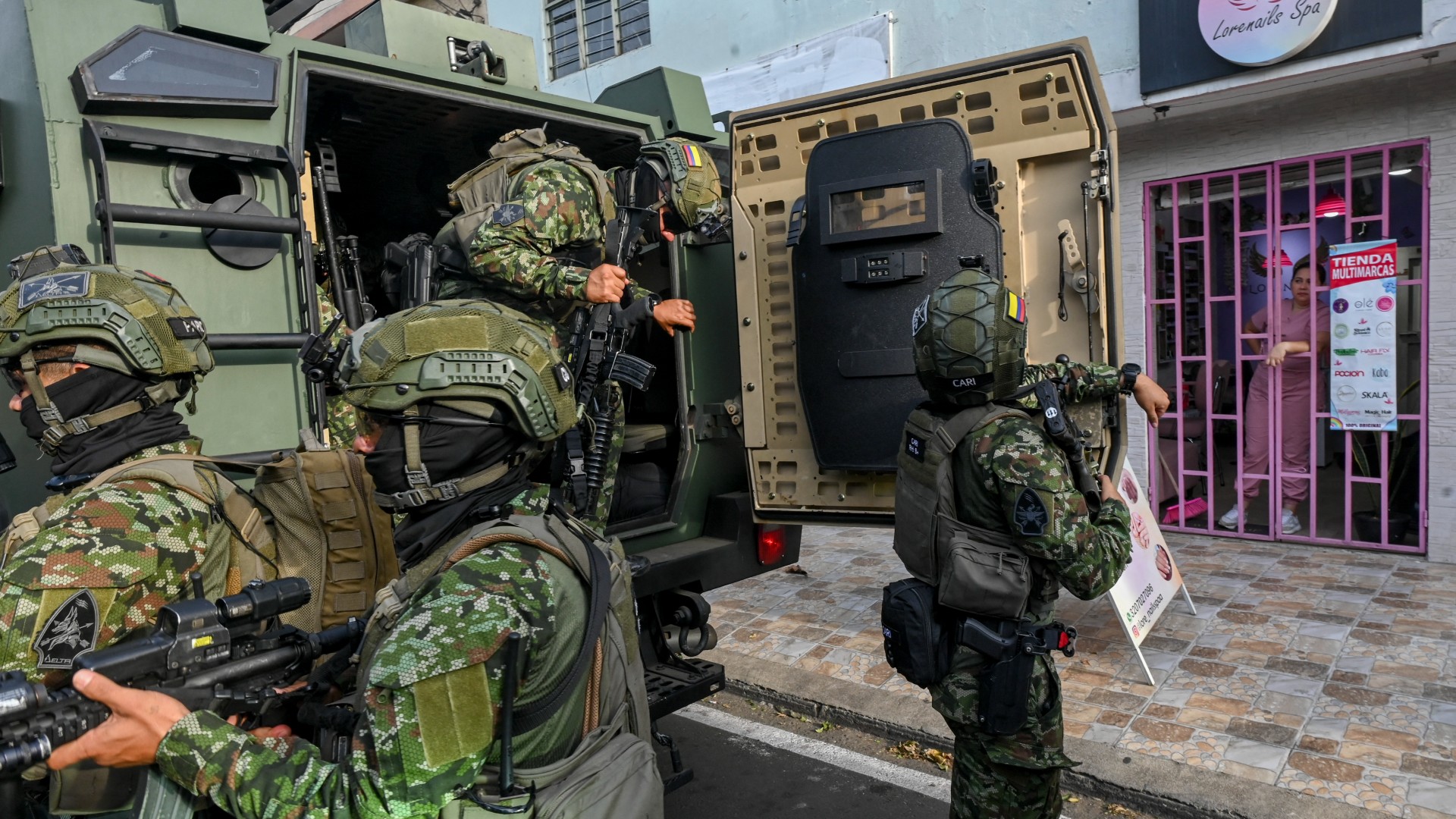
  • Why were two US fighter jets near Venezuela?

    Why were two US fighter jets near Venezuela?

    Two U.S. Navy F/A-18 Super Hornet fighter jets executed a prolonged surveillance mission in close proximity to Venezuelan territory, according to flight tracking data. The advanced aircraft appeared on public flight monitoring systems near Maracaibo, Venezuela’s second-largest city and crucial economic hub, before initiating an extensive 40-minute circular pattern over the Gulf of Venezuela.

    The operation, which occurred in international airspace, represents the latest development in ongoing tensions between the United States and the administration of Venezuelan President Nicolás Maduro. Aviation experts confirmed the aircraft were operating at standard surveillance altitudes and patterns consistent with intelligence-gathering missions.

    This aerial activity follows previous U.S. military deployments in the region, including recent naval exercises and increased surveillance operations aimed at monitoring Venezuelan military movements and alleged illicit activities. The Gulf of Venezuela represents a strategically significant maritime corridor for both commercial shipping and regional security operations.

    The U.S. Southern Command has maintained an increased presence in the Caribbean region, citing concerns about drug trafficking, regional stability, and the humanitarian situation in Venezuela. Venezuelan officials have repeatedly condemned such operations as violations of their sovereignty and examples of U.S. aggression.

    Military analysts note that such flights typically serve multiple purposes: demonstrating regional commitment to allies, gathering intelligence on potential security threats, and maintaining operational readiness in strategically important regions. The extended duration of this particular mission suggests comprehensive surveillance objectives rather than mere presence demonstration.
  • International experts share innovative poverty solutions

    International experts share innovative poverty solutions

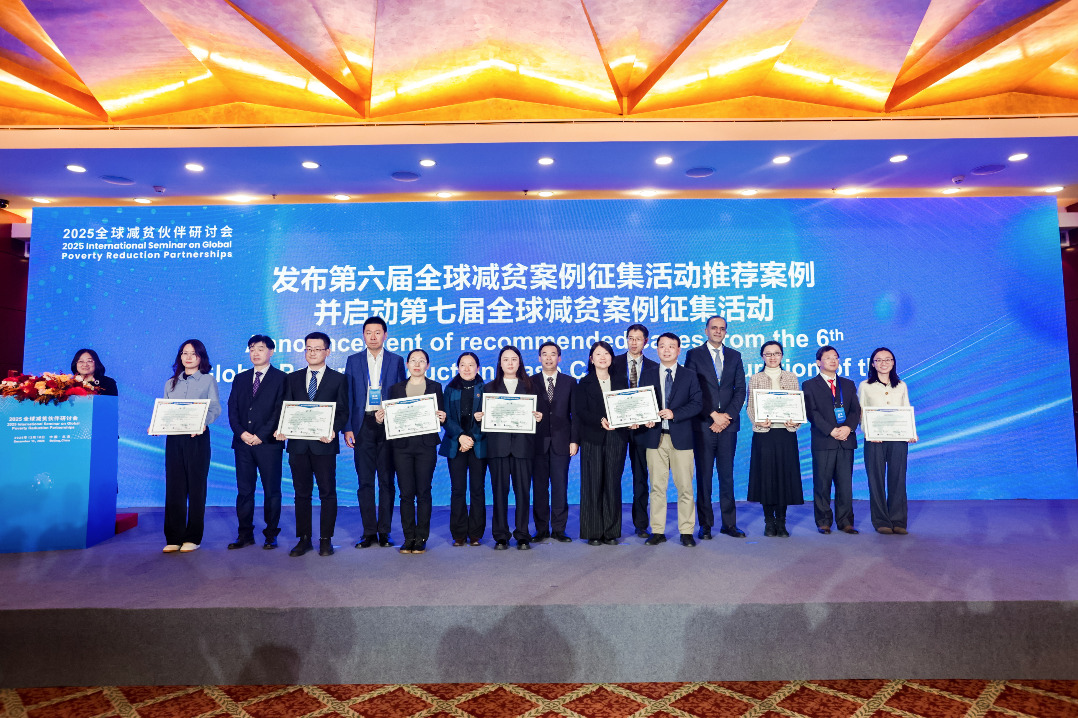
    The 2025 International Seminar on Global Poverty Reduction Partnerships witnessed a significant milestone with the launch of the latest Global Poverty Reduction Case Series, featuring 108 exemplary models selected from 840 submissions across 40 countries and regions. This comprehensive collection showcases sustainable and replicable poverty alleviation strategies, operational technologies, and inclusive approaches designed for vulnerable populations worldwide.

    The curated cases span diverse geographical contexts including Ghana, Kenya, Laos, and Brazil, offering multifaceted insights into effective poverty reduction methodologies. Notable initiatives include an agricultural technical assistance program in Fiji’s Northern Division, rural vitalization projects in China’s Hunan province, and China-Africa collaborative efforts to strengthen rice value chains in West Africa.

    During the seminar, Gao Anming, Editor-in-Chief of China International Communications Group, emphasized the transformative role of technology in poverty governance. He revealed the development of an AI-powered poverty governance intelligent agent that will utilize a global database to automatically identify relevant case studies and propose tailored solutions for specific countries, thereby enhancing the precision of international experience sharing.

    Carlos Aldeco, FAO Representative for China and DPRK, described the case series as an essential global public good that captures “real solutions from real communities for real challenges.” The collection promotes innovations such as digital extension services and climate-smart villages while fostering global solidarity.

    Nii Quaye-Kumah, IFAD Representative to China, underscored the power of partnership and knowledge sharing, noting that “no single country has all the answers.” The China-IFAD South-South and Triangular Cooperation Facility enables real-time strategy enhancement through mutual learning and experience exchange.

    The event convened nearly 200 representatives from 17 countries and 7 international organizations, who shared innovative practices including international organizations’ empowerment of small-holder farmers in poverty reduction efforts. The seminar also marked the official launch of the seventh global poverty reduction case collection.

  • US sanctions Colombians involved in Sudan war but fails to mention UAE link

    US sanctions Colombians involved in Sudan war but fails to mention UAE link

    The United States has imposed targeted sanctions on a sophisticated transnational network responsible for recruiting Colombian combat veterans to serve as mercenaries alongside Sudan’s Rapid Support Forces (RSF). The Treasury Department’s action specifically identifies four individuals and four entities central to this operation, yet notably omits any direct reference to the United Arab Emirates, despite mounting evidence of its alleged involvement.

    According to official statements, this sanctioned network systematically recruited former Colombian military personnel who provided the RSF with critical tactical expertise in infantry operations, artillery, drone piloting, and vehicle operations. Disturbingly, some were implicated in training child soldiers. These mercenaries have reportedly participated in major battles across Sudan, including engagements in Khartoum, Omdurman, Kordofan, and el-Fasher—where the RSF stands accused of documented mass killings and human rights abuses.

    The sanctioned entities include Bogota-based International Services Agency (A4SI), its co-founder Alvaro Andres Quijano Becerra (a retired Colombian officer residing in the UAE), and his wife Claudia Viviana Oliveros Forero. Additional designations extend to Panama-based Global Staffing S.A., along with Colombian firms Maine Global Corp S.A.S. and Comercializadora San Bendito. Individuals Monica Munoz Ucros and Mateo Andres Duque Botero were also sanctioned.

    Leaked documents obtained by Colombian media outlet La Silla Vacia reveal that a UAE-registered company, Global Security Services Group—which identifies as “the only armed private security services provider for the UAE government”—contracted A4SI to supply hundreds of former troops to Sudan. This company remains conspicuously absent from the US sanctions list.

    The complex recruitment pipeline funnels Colombian fighters through multiple routes: one via Benghazi, Libya, where passports are reportedly confiscated, and another through Spain, Ethiopia, Somalia’s Bosaso port, and Chad before reaching RSF-controlled territories in Darfur. Exclusive footage obtained by Middle East Eye captures dozens of Colombians disembarking at Bosaso airport, with senior port sources confirming undisclosed heavy logistical materials funneled through UAE networks ultimately destined for Sudan’s RSF.

    This development occurs against the backdrop of Sudan’s formal complaint to the UN Security Council accusing the UAE of sponsoring Colombian mercenaries, and the August downing of a UAE aircraft carrying 40 Colombian fighters and arms allegedly destined for the RSF. The UAE consistently denies these allegations, dismissing evidence as fabricated.

    The strategic value of Colombian mercenaries in modern warfare cannot be overstated. Decades of internal conflict against guerrillas and drug cartels have produced combat-hardened veterans offering exceptional value—costing approximately a quarter of American counterparts while demonstrating superior discipline and chain-of-command adherence. Their services have been previously utilized in Ukraine, Libya, Afghanistan, and Iraq.

    Sudan’s devastating conflict erupted in April 2023 from tensions between the regular army under General Abdel Fattah al-Burhan and the RSF commanded by Mohamed Hamdan Dagalo. Disagreements over RSF integration into the national army spiraled into nationwide warfare that has killed tens of thousands and displaced over 13 million people, with both sides facing accusations of severe human rights violations.

  • Italian cooking awarded Unesco cultural heritage status

    Italian cooking awarded Unesco cultural heritage status

    In a historic declaration during its annual assembly in New Delhi, UNESCO has formally inscribed Italian culinary traditions onto its prestigious List of Intangible Cultural Heritage. The designation extends beyond specific dishes to encompass the comprehensive ecosystem of Italy’s food culture—including its transmission methods, social practices, and communal significance.

    Italian Prime Minister Giorgia Meloni, who championed this recognition since her election, celebrated the decision as validation of Italy’s gastronomic philosophy. ‘For Italians, cuisine transcends mere sustenance or recipes—it embodies our culture, traditions, labor, and prosperity,’ she affirmed.

    The UNESCO evaluation committee characterized Italian foodways as ‘a vital connective tissue strengthening familial and community bonds, manifested through home cooking, educational environments, and diverse social celebrations.’ This designation places Italian culinary culture alongside other globally recognized food traditions including Japan’s Washoku, France’s Gastronomic Meal, and Malaysia’s Breakfast Culture.

    Celebrated chef Michelangelo Mammoliti of Piedmont’s three-Michelin-starred La Rei Natura expressed profound national and professional pride in the announcement. ‘Regional cuisine profoundly influences Italy’s cultural identity and traditions,’ noted Mammoliti, whose establishment recently earned top honors in the 2026 Michelin Guide.

    Industry leaders anticipate significant economic benefits from the UNESCO designation. Luigi Scordamaglia, CEO of Filiera Italia, described the recognition as a triumph for the entire ‘Made in Italy’ production chain. He emphasized the health-promoting aspects of the Mediterranean diet, noting that ‘Italian cuisine exemplifies dietary balance and variety.’

    The assembly simultaneously recognized several other cultural traditions, including Egypt’s street food staple Koshary (a spicy combination of lentils, rice, and pasta), Iceland’s swimming pool culture, Cuban Son music and dance, and Albania’s lahuta instrument craftsmanship.

    With Italy already welcoming 80 million international visitors annually, tourism authorities expect this cultural endorsement to further enhance the country’s appeal as a premier gastronomic destination.

  • Hamas demands end to Israeli violations before second ceasefire phase

    Hamas demands end to Israeli violations before second ceasefire phase

    Hamas declared on Tuesday that it would suspend advancement to the second phase of the ceasefire agreement until Israel ceases its alleged violations and military operations in Gaza. Senior Hamas official Husam Badran urged mediating nations—Qatar, the United States, and Egypt—to pressure Israel into adhering to the initial terms of the truce.

    Badran emphasized that the next phase of the agreement cannot proceed while Israel continues to breach the ceasefire terms and evade its commitments. Reports indicate that since the ceasefire began on October 10, Israel has violated the agreement at least 738 times.

    The first phase stipulated a cessation of hostilities, the exchange of Israeli captives for Palestinian prisoners, and increased humanitarian aid into Gaza. Badran highlighted that the agreement mandated the daily entry of 400 to 600 aid trucks and the reopening of the Rafah crossing for both goods and individuals. However, Israel has kept the crossing closed, leaving 6,000 aid trucks stranded, according to Gaza’s government media office director.

    Under international pressure, Israel reopened the Allenby Bridge Crossing for commercial traffic, though humanitarian shipments remained heavily restricted. The crossing had been closed since September following a security incident.

    A contentious aspect of the ceasefire involved the division of Gaza into Green and Red zones, separated by a Yellow Line. Israeli military chief Eyal Zamir stated that Israel would retain control over the Green zone, which encompasses most of Gaza’s agricultural land, the Rafah crossing, and over half of its territory. The UN condemned this move, with spokesperson Stephane Dujarric asserting that it contradicts the spirit of the Trump peace plan and called for the restoration of Gaza’s original borders.

    Further exacerbating tensions, Israeli forces reportedly killed two Palestinian children near the Yellow Line on November 29, claiming they posed a threat. Additionally, Israel continued demolishing homes in the Green zone, violating terms meant to halt such operations.

    The second phase of the agreement envisions a full Israeli withdrawal from Gaza, Hamas’s disarmament, and the deployment of an international stabilization force. Hamas expressed willingness to surrender its weapons to a future Palestinian government, contingent on an end to Israeli occupation. However, the proposed peace council, initially including figures like Tony Blair, faced setbacks following objections from Arab and Muslim leaders.

    Since the October ceasefire, the Palestinian Ministry of Health in Gaza reports that Israeli actions have resulted in over 380 fatalities and 987 injuries.

  • Xinjiang’s Tumxuk harvests rice from desert saline-alkali fields

    Xinjiang’s Tumxuk harvests rice from desert saline-alkali fields

    In a remarkable agricultural achievement, the arid desert landscapes of Tumxuk city in China’s Xinjiang Uygur autonomous region have yielded an unexpected bounty—a successful rice harvest from previously barren saline-alkali soil. Approximately 267 hectares of transformed desert terrain in Qianhai town have produced their first crop following an innovative ecological restoration project.

    Situated along the harsh western periphery of the Taklimakan Desert, China’s largest desert expanse, this land rehabilitation initiative commenced earlier this year. By June, agricultural specialists had implemented comprehensive soil improvements and planted specially developed rice varieties engineered for exceptional drought resistance and salt tolerance.

    The cultivation breakthrough employed sophisticated water management techniques, including an intermittent irrigation method applied once the late-planted rice plants reached 1-3 centimeters in height. This approach created optimal aeration conditions for root development while significantly reducing water evaporation from the desert soil.

    According to technician Zhang Yuanqiang, this innovative water-conservation and salt-leaching strategy resulted in substantial resource savings, reducing water requirements by 20-30 percent compared to conventional methods. The agricultural team maintained strict organic protocols, completely avoiding pesticides to prevent chemical contamination of the newly rehabilitated soil.

    Instead of chemical interventions, farmers leveraged the region’s abundant sunlight for natural pest control while implementing in-situ salt leaching techniques. The comprehensive approach created a sustainable ecological cycle: nurturing rice with carefully managed water resources, improving soil quality through rice cultivation, and enhancing water conservation through improved soil conditions.

    The desert rice fields achieved yields exceeding 100 kilograms per mu (approximately 667 square meters), a result that agricultural specialists consider highly satisfactory given the challenging growing conditions. Following the successful harvest, local growers including farmer Zhang Fei have established partnerships with rice processing companies to manage subsequent sales and distribution.

  • Boost for Asian content at Red Sea Film Festival

    Boost for Asian content at Red Sea Film Festival

    JEDDAH, SAUDI ARABIA – The 2025 Red Sea International Film Festival became the stage for a significant expansion of Asian creative partnerships with the inaugural Asia Content Business Summit held in Jeddah on December 7. The event marked two major milestones: Saudi Arabia’s official accession to the summit and the debut appearance of an official China Pavilion at the festival, which runs from December 4-13.

    The conference, themed ‘Asian Collaboration in Content Production and Distribution,’ assembled industry pioneers and experts from across the continent including China, Malaysia, Indonesia, and the Philippines. This gathering represented a strategic advancement in cross-regional dialogue within Asia’s rapidly evolving content industry.

    In a move signaling deeper regional integration, Abdullah Al-Muhaisen, Saudi Arabia’s inaugural film director and former royal court advisor, was appointed as senior advisor to the summit. His appointment is designed to catalyze strategic cooperation between Saudi Arabia and other Asian nations in content development and exchange.

    Al-Muhaisen, serving as keynote speaker, articulated the transformative power of content in cultural preservation and exchange. He emphasized that collaborative content production and distribution serves not merely as an industrial development strategy but as a crucial bridge for fostering mutual understanding between civilizations.

    Fred Wang, summit chairman and secretary-general of both the Asian Film Awards Academy and Hong Kong International Film Festival Society, outlined the academy’s initiatives to strengthen Asian content collaboration. He highlighted the ‘Film Camp’ program specifically designed to nurture emerging Asian filmmakers and establish a sustainable talent pipeline for the industry.

    Adding an educational dimension to the dialogue, Haifa Reda Jamal Al Layl, president of Jeddah’s Effat University – which established Saudi Arabia’s first film school – detailed the institution’s commitment to developing local creative talent while emphasizing the necessity of international educational partnerships.

    The Asia Content Business Summit functions as an annual high-level platform focused on content creation, distribution, investment, and technological integration across the Asia-Pacific region, aiming to drive synergistic progress throughout the Asian content ecosystem.

  • Fed Reserve cuts interest rates despite growing divisions

    Fed Reserve cuts interest rates despite growing divisions

    The U.S. Federal Reserve has implemented its third interest rate reduction of the year, lowering the benchmark rate by 25 basis points to a range of 3.50%-3.75%, marking the lowest level in three years. The decision reveals significant fractures within the central bank’s leadership as policymakers grapple with conflicting economic signals: a deteriorating labor market versus persistent inflationary pressures.

    The rate cut approval was not unanimous, with three Federal Reserve officials dissenting from the majority decision. Stephen Miran, currently on leave from leading Trump’s Council of Economic Advisers, advocated for a more aggressive 50 basis point reduction. Conversely, Austan Goolsbee of the Chicago Fed and Jeffrey Schmid of the Kansas City Fed preferred maintaining the existing rate structure.

    This policy divergence occurs against a backdrop of economic uncertainty exacerbated by the recent prolonged government shutdown, which created data gaps that have left policymakers operating with incomplete information. Recent labor market statistics show unemployment rising to 4.4% in September, while inflation remains elevated at 3%, exceeding the Fed’s 2% target.

    The central bank’s updated economic projections indicate expectations for one additional rate cut in 2026, unchanged from previous forecasts. However, analysts note that incoming data, particularly next week’s November labor market and inflation reports, could significantly alter this outlook.

    Compounding the policy uncertainty, the Fed faces impending leadership changes with Chair Jerome Powell’s term concluding in May 2026. President Trump is expected to announce his nomination for Powell’s successor within weeks, with Kevin Hassett emerging as the leading candidate. Hassett, a longtime Trump economic adviser and former Council of Economic Advisers chair, has consistently defended the president’s economic policies and questioned official economic statistics.

    Market observers express concerns about potential political influence on Fed independence, noting that other candidates including Kevin Warsh, Christopher Waller, and Scott Bessent remain under consideration. The appointment decision could significantly impact market stability depending on the perceived independence of the selected candidate.

  • Race across the world has shown us we can get through anything together

    Race across the world has shown us we can get through anything together

    Four celebrity pairs have completed an extraordinary 6,000-kilometer journey across challenging terrain in the BBC’s Celebrity Race Across the World, transforming their relationships and personal perspectives along the way. The competition, which launched from Mexico’s easternmost point, culminates Thursday as teams race toward Colombia’s windswept Península de La Guajira under strict budget constraints of £950 per person—equivalent to airfare for the same route.

    Presenter Tyler West and singer Molly Rainford confronted initial apprehensions about their ability to complete even the first leg. Their relationship, previously characterized as “passing ships in the night” due to demanding careers, found renewal through the shared challenge. Forced to abandon comforts including Tyler’s beloved Biscoff biscuits, they discovered unexpected travel competence and deepened their bond. “It proved to us we can get through anything together,” Molly reflected, noting how the experience boosted her confidence in interacting with strangers.

    Actor Dylan Llewellyn and his mother Jackie approached the race as an opportunity to exit their comfort zones. For Jackie, who had never been apart from her husband for more than a weekend in three decades of marriage, the journey represented a monumental step. The pair implemented strategic lessons from previous contestants regarding financial conservation and document security. Through the most demanding segments, they discovered profound human kindness and familial connectivity that transcended cultural barriers.

    Broadcaster Anita Rani and her father Bal, the competition’s oldest duo, valued their five uninterrupted weeks together—their first extended travel since Anita’s childhood visit to India. Despite concerns about keeping pace with younger teams, they demonstrated unwavering determination through logistical setbacks including border closures and missed transportation. The experience revealed vulnerable dimensions of their relationship that everyday life typically concealed.

    Siblings Roman Kemp and Harleymoon, who acknowledged their previously distant relationship limited to practical exchanges, discovered transformative perspectives during their stay with indigenous families on Panama’s San Blas Islands. Roman, naturally cautious and work-oriented, found profound insight observing communities thriving with minimal possessions. Harleymoon described the spiritual clarity arising from simplicity—sleeping in hammocks with only bananas for sustenance—which prompted reevaluation of Western consumerism and gratitude for essential human connections.

  • Chinese doctor carries out eye surgery in C909 aircraft

    Chinese doctor carries out eye surgery in C909 aircraft

    In a groundbreaking medical achievement, Chinese ophthalmologists have successfully performed the world’s first eye surgery aboard a domestically developed C909 aircraft, marking the operational launch of China’s inaugural self-developed “flying eye hospital.

    The historic procedure took place on Wednesday at Zhengzhou Xinzheng Airport, where Dr. Liang Lingyi, Deputy Director of Zhongshan Ophthalmic Center, demonstrated remarkable surgical precision while operating inside the aircraft cabin. Using specialized microsurgical equipment, Dr. Liang completed an ocular surface surgery on a patient from rural Henan province in mere minutes.

    The patient, identified as Ms. Zhang, had previously faced significant barriers to specialized eye care due to her remote location. “I never imagined I could receive such advanced medical treatment so close to home,” Zhang expressed after regaining clear vision. “The doctors’ expertise is extraordinary, and I’m profoundly grateful to see the world clearly again.”

    This innovative airborne medical facility represents a major advancement in China’s healthcare accessibility initiatives. The converted C909 aircraft features state-of-the-art medical equipment and sterile environments meeting clinical standards, enabling specialists to deliver high-quality ophthalmological services to underserved regions.

    The flying hospital initiative addresses critical healthcare disparities by bringing sophisticated medical resources directly to remote communities. This approach eliminates the need for patients in isolated areas to undertake arduous journeys to urban medical centers, potentially revolutionizing how specialized care reaches China’s rural population.

    Medical authorities highlight that this achievement demonstrates China’s growing capabilities in both aviation technology and medical innovation. The successful surgery aboard a moving aircraft required overcoming unique challenges including vibration dampening, sterile maintenance, and precision instrument stabilization.

    The Zhongshan Ophthalmic Center confirmed that this milestone inaugurates regular clinical services through the flying hospital program, with plans to expand surgical specialties and reach additional remote communities across China.