作者: admin

  • Turkish riot police use water cannons ahead of deposed opposition leader’s speech to rally

    Turkish riot police use water cannons ahead of deposed opposition leader’s speech to rally

    A deepening political crisis gripped Turkey this week as riot police deployed water cannons and pepper spray to block thousands of opposition supporters from gathering for a planned address by ousted main opposition leader Ozgur Ozel in the western stronghold of Izmir, escalating a conflict that has already seen a police raid on party headquarters and growing accusations of judicial politicization.

    The turmoil traces back to last Thursday, when an Ankara appeals court overturned the results of the 2023 Republican People’s Party (CHP) congress that elected Ozel as the party’s new leader. The court ruling forcibly removed Ozel and his entire core leadership team from their posts, reinstating his 77-year-old predecessor Kemal Kilicdaroglu, who led the opposition for 13 years against long-serving President Recep Tayyip Erdogan with limited electoral success. Critics across Turkey’s political opposition widely view the court order as a politically motivated attack designed to weaken the CHP ahead of potential early national elections.

    Ozel, who had planned to address his supporters at Izmir’s Cumhuriyet Square on Tuesday, found his path blocked by heavy security deployments: steel barricades sealed off access to the public space, and lines of riot police turned back crowds heading to the event. Footage broadcast by pro-opposition outlet Halk TV showed dozens of mostly middle-aged attendees being soaked by high-powered water cannons as they attempted to push past the security cordon, with local media confirming that police also used pepper spray to disperse the gathering. Despite the blockade, Ozel eventually reached the square before relocating to a nearby public space, where he delivered his speech to thousands of cheering, gathered supporters.

    The confrontation in Izmir comes just days after a violent standoff at CHP’s national headquarters in Ankara. Following the court ruling, Ozel and his supporters barricaded themselves inside the building to protest the decision. On Sunday, riot police stormed the headquarters, firing plastic pellets and pepper spray to end the occupation, in a move that further inflamed tensions across the opposition bloc.

    Speaking from Izmir, Ozel called on Kilicdaroglu to honor the will of the party’s 2 million registered members and immediately schedule a new leadership congress to resolve the dispute. “Don’t divide the party, don’t stop our march to power,” Ozel stated, adding that the party should let the full membership choose their leader directly. Kilicdaroglu has not yet issued a public response to the call for a new vote.

    The escalation comes against a shifting electoral backdrop in Turkey. Polling consistently shows the CHP running neck-and-neck with Erdogan’s ruling Justice and Development Party (AKP), and while the next national election is not formally scheduled until 2028, political analysts widely expect Erdogan to call early elections to capitalize on current economic momentum. Ozel led the CHP to major gains in the 2024 municipal elections, solidifying the opposition’s control of key major cities including Istanbul and Ankara, gains that first demonstrated the CHP’s growing electoral competitiveness after years of underperformance.

    Critics of Erdogan’s government frame the court ruling against Ozel as the latest in a years-long series of legal actions targeting CHP leadership and elected officials. The most high-profile of these actions is the ongoing criminal case against Istanbul’s popular CHP mayor Ekrem Imamoglu, who has emerged as the leading potential opposition challenger to Erdogan in the next presidential election. Imamoglu has been imprisoned since March 2023, and the charges against him could result in decades of prison time and a permanent ban from political office. Independent observers widely argue that these legal cases, most centered on unproven corruption allegations, are intended to neutralize the CHP’s most popular figures ahead of the next election.

    The Erdogan government has repeatedly rejected accusations of political interference in the judiciary, insisting that Turkish courts operate independently and free from executive pressure. The confrontation in Izmir unfolded one day ahead of the major Islamic holiday of Eid al-Adha, a point highlighted in Erdogan’s televised holiday message, where the president called for national unity and reconciliation. “I hope this vacation will be an occasion for hearts to soften, for those who are estranged to reconcile, for grievances to be resolved,” Erdogan said, with no direct mention of the ongoing opposition crisis.

  • Ebola needs swift response to prevent catastrophe – DR Congo governor

    Ebola needs swift response to prevent catastrophe – DR Congo governor

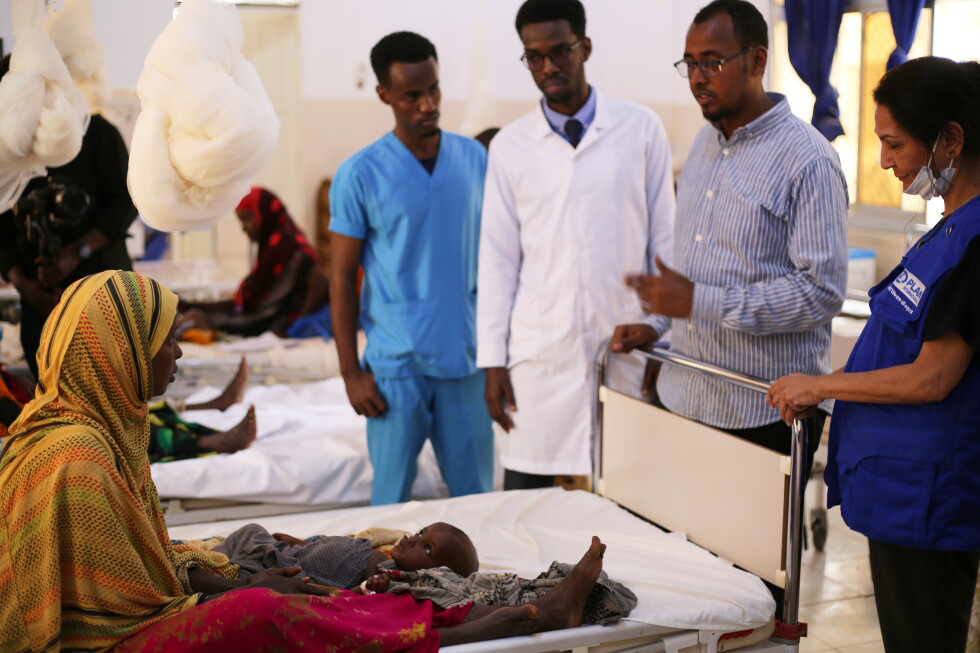
    A rare and rapidly spreading Ebola outbreak in the Democratic Republic of Congo (DRC) has escalated into a public health crisis of international concern, with regional authorities warning that a catastrophic collapse of response efforts is imminent without urgent global support. The outbreak, centered in DRC’s Ituri province, has stretched already strained local resources to breaking point, as the region continues to grapple with long-running armed conflict.

    In an interview with French broadcaster RFI, Ituri’s military governor Johnny Luboya Nkashama framed the fight against the virus as an unexpected “second war” the province is ill-equipped to win. “Our existing resources were already dedicated to the war against armed groups, and this second war that is now upon us demands even more,” he explained. As of current reporting, more than 900 suspected Ebola cases and 223 suspected deaths have been recorded since the outbreak was first declared on May 15, with transmission expanding faster than initial projections.

    Local communities in affected zones have already adopted individual preventive measures, including widespread face mask use and social distancing to slow transmission. But Nkashama outlined multiple cascading challenges undermining response efforts: affected residents face acute food shortages, overcrowded living conditions accelerate spread, and co-occurring other diseases place additional strain on already depleted health systems. To avoid total catastrophe, Nkashama called for an immediate scaled-up response, including urgent deployment of qualified medical personnel, construction of secure, properly resourced treatment centers, and rapid mobilization of critical funding. “The more time we lose, the closer we come to disaster,” he warned.

    Security threats have further complicated response work. Two treatment centers have already been targeted by angry family members of Ebola victims, who have attempted to retrieve the bodies of deceased loved ones in violation of infection control protocols. The outbreak has also spread beyond Ituri, with cases confirmed in DRC’s North and South Kivu provinces, and seven confirmed cases recorded in neighboring Uganda. Eleven other African countries, including Angola, Burundi, the Central African Republic, Ethiopia, Kenya, Rwanda, South Sudan, Tanzania and Zambia, have been identified as at high risk of cross-border transmission.

    The World Health Organization (WHO) formally declared the outbreak a Public Health Emergency of International Concern (PHEIC) after confirming that transmission is outpacing efforts to scale up response operations. WHO Director-General Tedros Adhanom Ghebreyesus, who is scheduled to travel to the affected region to assess the situation, acknowledged that responders are currently “playing catch-up” to contain the spread.

    This outbreak is the 17th Ebola event recorded in DRC since the virus was first identified in 1976, and only the third global occurrence of the rare Bundibugyo Ebola species — a strain not documented in any outbreak for more than a decade. Critically, there are currently no licensed vaccines or specific antiviral treatments approved to target Bundibugyo Ebola. While candidate vaccines are in active development, the WHO has warned it could take up to nine months before a safe, deployable vaccine is ready for use.

    Regional health bodies have moved to coordinate a cross-border response. Over the weekend, Africa Centres for Disease Control and Prevention (Africa CDC) director-general Dr Jean Kaseya convened emergency talks with health ministers from DRC, Uganda and South Sudan to align response strategies and finalize a coordinated cross-border action plan. The group agreed on a $319 million budget to scale up operations and stop the outbreak from expanding across the continent. So far, 10% of the total budget has been secured from the affected countries themselves. On the day following the meeting, South African President Cyril African President Cyril Ramaphosa pledged an initial $5 million contribution to the response fund. Kaseya announced that African business leaders will gather later this week to mobilize additional domestic funding, while international partners have also committed to contributing financial support.

  • Senegal’s sacked PM Sonko elected parliamentary Speaker in challenge to president

    Senegal’s sacked PM Sonko elected parliamentary Speaker in challenge to president

    Just days after being abruptly dismissed from his post as Senegal’s prime minister, Ousmane Sonko has secured one of the most powerful positions in the West African nation: Speaker of the National Assembly. The unexpected political shakeup has amplified long-simmering tensions between Sonko and his former ally-turned-president Bassirou Diomaye Faye, setting the stage for potential gridlock at the highest levels of Senegalese government.

    The path to Sonko’s new role cleared quickly over the weekend, when the outgoing parliamentary speaker stepped aside voluntarily to make way for the popular opposition-turned-government figure. Sonko’s Pastef party holds an absolute majority in the National Assembly, a controlling bloc that gave him unobstructed path to the speaker’s office. Within 24 hours of Monday’s vote confirming his new position, Faye moved to fill the vacant prime minister role, appointing respected economist Ahmadou Al Aminou Lo to the post.

    The rupture between Faye and Sonko is the culmination of months of steadily deteriorating relations. Sonko, a fiery populist who has built his political brand on unflinching criticism of establishment leadership, has openly pushed back against Faye’s approach to managing Senegal’s mounting debt crisis, breaking ranks publicly with the president he helped put in office. The 51-year-old politician has remained a towering figure in Senegalese politics, particularly among the nation’s large youth demographic, where his anti-establishment rhetoric resonates deeply.

    Political analysts warn that Sonko’s new role as the country’s second-highest ranking official will create significant headwinds for Faye’s policy agenda. Without Sonko and his parliamentary majority on his side, Faye could face major obstacles passing and implementing key legislation. Complicating any potential move to break the deadlock is Senegal’s constitutional framework: the president is barred from dissolving parliament until at least two years after the most recent legislative election, meaning any attempt to dissolve the body before November 2026 would be legally invalid.

    This current political standoff has a clear backstory that stretches back to the 2024 presidential election. Sonko was widely expected to run for the nation’s top office that year, but a defamation conviction barred him from appearing on the ballot. In his place, Sonko endorsed Faye, who went on to win the presidency and appointed Sonko as his prime minister. What began as a united political partnership quickly fractured, however, as disagreements over economic policy and leadership style widened into an open rift.

    For Senegal, a country that has a history of recurring leadership tussles amid ongoing economic strain from its growing debt burden, the latest split between the president and the newly installed parliamentary speaker adds another layer of uncertainty to the nation’s political future.

  • Four dead after train hits school bus in Belgium

    Four dead after train hits school bus in Belgium

    A devastating traffic accident has shaken Belgium, after a commuter train collided with a school minibus at a railway crossing in the small Flemish town of Buggenhout on Tuesday morning, leaving four people dead and multiple others injured, senior national officials have confirmed. Among the fatalities are two children, whose deaths have sparked an outpouring of grief across the country and from European leadership.

    Belgium’s Deputy Prime Minister Maxime Prevot was among the first senior officials to confirm the details of the tragedy, sharing the news on social media platform X early Tuesday. “A tragic collision between a train and a school bus took place in Buggenhout this morning. Four people have been killed, including two children,” Prevot wrote.

    Prime Minister Bart De Wever quickly responded to the incident, saying he was deeply shaken by the horrific crash. “I am deeply moved by the horrific accident… My thoughts go out to the affected families,” De Wever posted on social media.

    Pictures from the accident site, located in northern Belgium’s Flanders region, paint a grim picture of the collision’s force: the minibus lies overturned on its side beside the railway track, its structure heavily crumpled, while emergency response teams have erected isolation tents around the crash zone. The passenger commuter train involved in the collision remained stationary on the tracks in the hours after the incident as investigators began their work.

    Local police spokesperson An Berger clarified the full passenger count of the minibus for Belgian media outlets: seven children, one adult supervisor, and the minibus driver were on board at the time of the crash. Crucially, Berger added that no passengers or crew on the commuter train suffered any injuries.

    Frederic Sacre, spokesperson for Infrabel, Belgium’s national rail infrastructure manager, described the extreme force of the impact to reporters from Agence France-Presse. At the time of the collision, the train was traveling at 120 kilometers per hour, roughly 75 miles per hour. “The minibus was thrown about 15 metres (50 feet) into a metal pylon,” Sacre said. To date, that is the most detailed description of the collision’s mechanics released by an official.

    Sacre also shared a key early update on the investigation’s findings, confirming that preliminary review of site footage shows active crossing safety measures were active at the time of the incident. “The barriers at the crossing had been closed and a red light was showing,” Sacre said. Early reports from multiple Belgian media outlets have added that the seven children on board the minibus attended a local school for children with learning disabilities, adding another layer of gravity to the tragedy.

    Senior leaders across the political spectrum, both national and European, have united to offer condolences and support. Belgian Interior Minister Bernard Quintin expressed his profound sorrow over what he called an unthinkable tragedy, writing on X that his thoughts were with the victims and their families. “I wish the injured much strength,” Quintin added, also offering public thanks to first responders and emergency service workers for their rapid response to the crash.

    Ursula von der Leyen, President of the European Commission, added her voice to the chorus of condolence, saying she was heartbroken by the news of the collision. “My deepest condolences go out to the victims’ families and their loved ones,” von der Leyen posted on social media. “Today, Europe grieves with Belgium.”

  • Trump approves emergency declaration over California chemical leak

    Trump approves emergency declaration over California chemical leak

    On May 23, 2026, a dangerous chemical incident at a GKN Aerospace facility in Garden Grove, Southern California, triggered widespread disruption that displaced nearly 50,000 Orange County residents just days before U.S. President Donald Trump greenlit a federal emergency declaration to boost response efforts. The unfolding crisis, which began when a 34,000-gallon storage tank holding highly flammable methyl methacrylate — an industrial chemical key to acrylic plastic manufacturing — began overheating and releasing toxic vapor, prompted immediate mandatory evacuation orders across six local communities: Garden Grove, Anaheim, Buena Park, Cypress, Stanton and Westminster.

  • Woman allegedly caught on CCTV stealing tip jars from multiple Gold Coast cafes

    Woman allegedly caught on CCTV stealing tip jars from multiple Gold Coast cafes

    A string of brazen tip jar thefts targeting local hospitality businesses on Queensland’s Gold Coast has prompted collective alarm among owners, who are urging community members and fellow operators to stay vigilant after the alleged thief was captured on closed-circuit security footage.

    Over a two-week period, the suspected thief has struck at multiple cafes and food outlets across popular coastal precincts including Broadbeach, Miami, Coolangatta and Kirra, according to accounts from affected business owners. Security camera recordings from the locations paint a clear picture of the alleged offender’s method: she waits until front-of-house staff are distracted by other tasks, then snatches the tip jar in mere seconds before concealing it in her handbag and exiting the premises undetected.

    Chana Murakawa, owner of Goya Cafe, told reporters the theft of her jar that held six months of accumulated customer tips left her team reeling. “Five seconds and she’s gone,” Murakawa said, describing the brazen speed of the alleged crime.

    Roughly an hour after Murakawa’s cafe was targeted, a second nearby business fell victim to the same modus operandi. Days later, another incident was recorded on camera at BSKT Cafe, where owner Sonia Griggins said she and her staff were stunned when they reviewed the footage. “We quickly looked back on camera and couldn’t believe it,” Griggins said. “She’s doing the rounds.”

    Other affected businesses include Beefy’s Pies and Cafe All Sorts, with one theft hitting far closer to home for a local operator. Jennifer Roch, owner of the impacted outlet that was robbed, said the stolen jar was specifically earmarked for 4Paws, a local animal rescue charity. Customer tips and donations had been collected in the jar for months, and Roch confirmed a substantial sum was taken in the theft.

    With multiple businesses left out of pocket after months of accumulated gratuities were stolen in single incidents, affected owners have banded together to issue public warnings. “So we are warning everyone,” Murakawa said. “This lady is dangerous.”

    Queensland Police have been notified of the string of thefts, and authorities are asking any member of the public who recognizes the woman from security footage or has information related to the incidents to come forward to assist with the investigation.

  • Tea, opera and friendship brew cultural connections in Los Angeles

    Tea, opera and friendship brew cultural connections in Los Angeles

    On the occasion of International Tea Day, the Chinese Consulate General in Los Angeles opened its doors to a diverse cross-section of attendees—from government officials and cultural creators to academics and local residents—for an immersive celebration that wove together traditional Chinese tea art, performing arts and grassroots dialogue, with the goal of strengthening mutual understanding between the Chinese and American peoples.

    One of the event’s standout guests was Ghaffar Pourazar, a performer widely known by his affectionate nickname the “Western Monkey King”. Born to Azerbaijani-Iranian parents and raised in the United Kingdom, Pourazar once built a career as a computer animator in London. That all changed in 1993, when the then 32-year-old saw a Peking Opera performance for the first time, and made the life-altering decision to pivot entirely to the study and performance of the traditional Chinese art form.

    “I put away my other life. I said goodbye to my friends and my family. I said I want to do this,” Pourazar shared during the celebration, after performing a stirring excerpt from *Uproar in Heaven*, the classic Peking Opera retelling of *Journey to the West*. For Pourazar, the iconic Monkey King character is far more than a stage role: it mirrors his own decades-long journey of chasing a cross-cultural passion. “The monkey follows the dream, and that’s why I love this character, but also that is why Chinese people love this character,” he explained.

    Over decades of dedicated practice, Pourazar has become a leading cross-cultural ambassador for Peking Opera, drawn to the art form’s one-of-a-kind fusion of martial arts philosophy, acrobatics, vocal performance and dramatic storytelling. “For hundreds of years, Chinese culture has brought the philosophy of martial arts like tai chi together with opera action,” he noted. “The actors are not only able to sing and dance, but they’re also martial acrobats.” Today, his deep bond with Chinese culture is a core part of his personal identity: “I am Azerbaijani, Iranian, British, I was raised in England, but I feel more Chinese than others,” he said.

    Beyond performances, the event centered tea—an iconic Chinese cultural export that organizers framed as both a symbol of shared history and a practical platform for people-to-people dialogue. In his opening remarks, Guo Shaochun, Chinese Consul General in Los Angeles, emphasized tea’s unique role as a bridge between cultures, and expressed hope that the event would help more Americans gain nuanced insight into Chinese culture and the Chinese people’s shared aspirations for a better life.

    Attendees had the chance to sample a range of Chinese teas, including aged Pu’er from Yunnan province, a region celebrated for its centuries-old tea cultivation traditions and diverse ethnic cultural heritage. Guo highlighted that just as Chinese people have long cherished tea and American people favor coffee, the two nations each hold distinct cultural traditions, lifestyles and values. Rather than creating division, he argued, these differences should be celebrated as a source of mutual enrichment.

    “The people of China and the United States are both great peoples,” Guo said. “It is these differences that make our world rich and colorful, and inspire us to better understand and appreciate one another.” He also referenced the recent high-level meeting between Chinese President Xi Jinping and US President Donald Trump during Trump’s state visit to China, noting that both leaders had reaffirmed their commitment to building a constructive China-US relationship rooted in strategic stability.

    Leticia Perez, a member of California’s Kern County Board of Supervisors, reaffirmed her support for continued people-to-people and economic collaboration between the two nations. “I’m a big fan of Chinese culture,” Perez said. “I want to reaffirm my own commitment to be part of the ongoing conversation of peace building and mutually beneficial economic cooperation between the United States and China.” She also praised China’s consistent call for peace and cooperation amid rising global geopolitical tensions.

    The full day of cultural programming included additional performances of traditional Chinese folk songs and instrumental pieces played on the pipa and bamboo flute, alongside hands-on demonstrations of Chinese calligraphy and traditional dough figurine folk art. Senior tea master and Chinese tea culture ambassador Luo Ping guided attendees through a formal traditional tea ceremony, walking guests through the classification of Chinese teas and explaining their deep cultural roots and documented health benefits.

    For many American attendees, the event offered a rare, intimate opportunity to engage with Chinese culture beyond mainstream media narratives. Joshua Goldhaber, vice-dean of graduate research education at Cedars-Sinai Health Sciences University, said he left with a new appreciation for tea’s cultural meaning and the shared values of friendship and cooperation between the two countries. “It was a very warm feeling,” Goldhaber said. “I look forward to more opportunities to immerse in Chinese culture and educational exchange.”

    Douglas Smith, a visual effects supervisor with experience working on both Hollywood and Chinese film productions, echoed that optimism for future cross-cultural and creative collaboration. “Communication between countries is always the best thing that can happen,” Smith said. “Misunderstandings happen with the lack of communication, so whenever that can happen, it’s a very positive thing.”

  • Exceptionally early heat wave shatters records and brings deaths in Europe

    Exceptionally early heat wave shatters records and brings deaths in Europe

    An extraordinary early-season heatwave is sweeping across large swathes of Western Europe, breaking long-standing temperature benchmarks, forcing emergency responders into action, and leaving multiple people dead amid widespread government warnings of life-threatening risks. The extreme heat, which has arrived far earlier than typical seasonal peaks, has put both communities and infrastructure under unaccustomed strain, as climate experts link the off-season extreme weather to accelerating global warming.

    In the United Kingdom, the unprecedented heat delivered the hottest May day in the nation’s recorded history on Monday, with thermometers reaching 34.8°C (94.6°F) at London’s Kew Gardens. This reading obliterated the previous 91-year-old record of 32.8°C (91.4°F), which had stood shared since 1922 and 1944. The extreme conditions extended overnight, with London logging a rare “tropical night” where temperatures never dropped below 20°C (68°F), offering no reprieve from the swelter. Forecasters with the UK Met Office projected temperatures in southern England could climb as high as 35°C (95°F) on Tuesday.

    The brutal heat has already resulted in fatalities across the UK. Police confirmed a 13-year-old boy died Monday after getting into distress while swimming in a reservoir near Halifax, in northern England. In the Scottish capital of Edinburgh, firefighters worked around the clock to contain a large out-of-control grass fire that broke out on Arthur’s Seat, the iconic rocky hill that overlooks the city, sending large plumes of dark smoke billowing over the urban area.

    For London commuters returning to work after a three-day holiday weekend that drew crowds to beaches, parks and public pools, Tuesday brought fresh misery. Many underground carriages lack air conditioning, leaving rush-hour passengers sweltering in the stagnant heat. Train service to and from the busy Waterloo Station was further disrupted by a smoke incident on the tracks.

    UK health officials have activated an amber health alert covering most of the country through Wednesday morning, warning of elevated health risks, particularly for vulnerable groups including elderly people who are more susceptible to heat stroke and dehydration. Unlike warmer-climate nations, the UK’s historically mild temperatures mean most residential homes, schools and commercial buildings are not equipped with air conditioning, leaving millions without a reliable way to cool down. The early arrival of the extreme heat has also heightened water safety risks: the annual summer lifeguard patrol schedule at popular coastal swimming spots has not yet begun, leaving unguarded waters more dangerous for thrill-seekers looking to cool off.

    Across the English Channel, France is also facing record-breaking heat for the month of May, with temperatures soaring well above 30°C (86°F) across most of the nation. French government spokeswoman Maud Bregeon confirmed at least seven deaths have been linked to the extreme heat so far: five people drowned while trying to cool off, and two others died during organized sports competitions. On the country’s Atlantic coast, where popular beaches face persistent risks from powerful riptides, emergency responders handled a surge of water rescues over the weekend, including two fatal drownings on Sunday at resorts in the Gironde region. Regional prefect Sophie Brocas issued an urgent call for beachgoers to practice “the utmost caution” in the dangerous conditions.

    Climate scientists have long warned that human-caused global warming is increasing the frequency and severity of extreme weather events across the globe. Today, these unprecedented, deadly weather events are striking at uncharacteristic times of year and in regions unaccustomed to such extremes, expanding the population exposed to preventable heat-related harm.

  • Yomiuri Giants baseball manager Abe resigns after arrest over allegedly assaulting his daughter

    Yomiuri Giants baseball manager Abe resigns after arrest over allegedly assaulting his daughter

    In a sudden development that has sent shockwaves through Japan’s professional baseball community, 47-year-old Shinnosuke Abe has stepped down from his post as manager of the iconic Yomiuri Giants, one of the nation’s most storied sports franchises, following his arrest on allegations of assaulting his teenage daughter. The incident unfolded on Monday at Abe’s Tokyo residence, where he intervened to break up a physical altercation between his two daughters. According to the Yomiuri newspaper — the parent company that owns the Giants — Abe grabbed his 18-year-old elder daughter by the collar and threw her to the ground during the intervention. He later admitted to losing his temper during the confrontation, confirming the core of the allegation against him.

  • Four killed as school minibus collides with train in Belgium

    Four killed as school minibus collides with train in Belgium

    A devastating early-morning collision between a passenger train and a school minibus in the small Belgian town of Buggenhout has left four people dead, including two schoolchildren and two adult staff members, authorities have confirmed. The crash unfolded just after 8 a.m. local time (6 a.m. GMT) at a manned level crossing in the town, which sits northwest of Brussels near the city of Aalst, according to federal police spokesperson An Berger.

    At the time of impact, the minibus was transporting seven children, one driver, and one adult chaperone en route to a local special education secondary school. Berger confirmed that no physical injuries were reported among passengers and crew on the train, though one individual on board received medical care for acute shock following the incident.

    Photographs captured at the accident scene show the mangled minibus resting on its side off the tracks, a stark visual of the tragedy that has shaken the local community. Belgian Mobility Minister Jean-Luc Crucke, who first confirmed that the crossing’s safety barriers were already lowered at the time of the collision, offered his immediate condolences to all those affected. “My first thoughts are with the victims,” Crucke said in a statement shortly after the crash.

    Flemish Education Minister Zuhal Demir also echoed the sorrow of national and regional leaders, sharing her reaction on public social media. “What heartbreaking news,” Demir wrote. “My thoughts are with all the victims, their families and everyone closely involved.” Local emergency services rushed to the scene immediately after the collision to extract casualties and secure the area, with investigations into the exact cause of the crash now underway.