作者: admin

  • Latvia PM confirms damage to Baltic Sea optical cable connecting Lithuania

    Latvia PM confirms damage to Baltic Sea optical cable connecting Lithuania

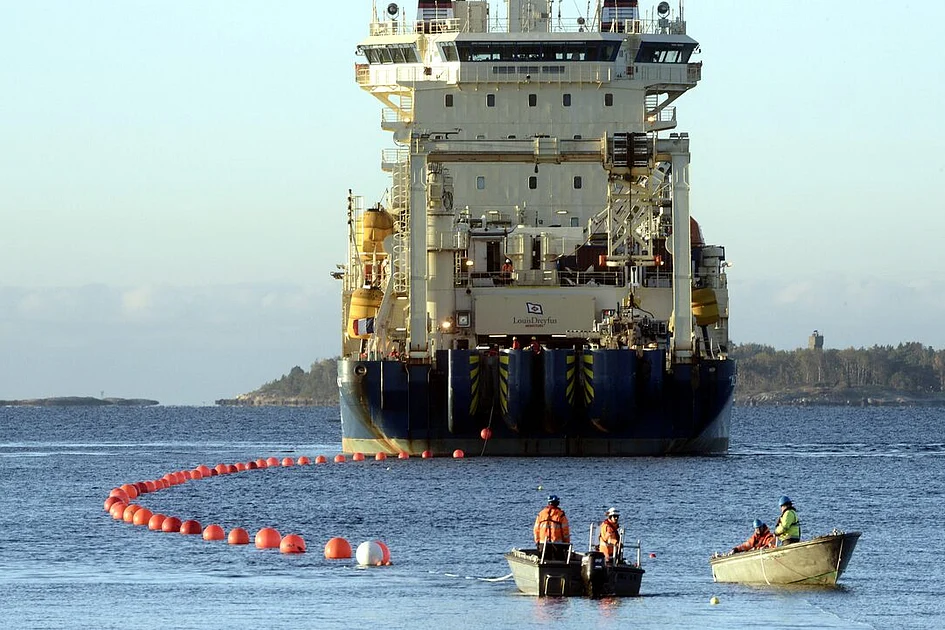
    Latvian Prime Minister Evika Silina has officially confirmed damage to a privately-owned optical submarine cable connecting Lithuania and Latvia in the Baltic Sea. The announcement, made on Sunday, January 4, 2026, has triggered immediate investigations into the circumstances surrounding this critical infrastructure failure.

    The incident occurs against a backdrop of heightened regional security concerns following multiple disruptions to energy and communication systems since Russia’s invasion of Ukraine in 2022. Lithuania’s National Crisis Management Centre has separately acknowledged the damage while emphasizing that the exact cause remains undetermined pending thorough investigation.

    This development follows closely on the heels of a significant maritime security operation five days prior, when Finnish authorities intercepted a cargo vessel traveling from Russia to Israel. The vessel was seized on suspicion of involvement in sabotaging an underwater telecommunications cable connecting Helsinki to Estonia through the Gulf of Finland.

    The Baltic Sea region has experienced a concerning pattern of infrastructure vulnerabilities, with previous incidents affecting power transmission cables, telecommunications links, and natural gas pipelines. In response to these escalating threats, NATO has substantially reinforced its maritime presence in the area, deploying additional frigates, surveillance aircraft, and naval drone capabilities to monitor and protect critical undersea infrastructure.

    The damaged optical cable represents part of the vital digital connectivity network that facilitates data transmission and communications between Baltic nations. While the immediate impact on telecommunications services remains under assessment, the incident underscores the growing vulnerability of subsea infrastructure to potential sabotage or accidental damage in increasingly tense geopolitical conditions.

  • Bluefin tuna sells for record $3.2 million at year-opening auction at Tokyo fish market

    Bluefin tuna sells for record $3.2 million at year-opening auction at Tokyo fish market

    TOKYO — The first tuna auction of 2026 at Tokyo’s Toyosu fish market witnessed an extraordinary transaction as a 535-pound bluefin tuna fetched an unprecedented 510 million yen ($3.2 million), establishing a new historical record. The predawn auction on Monday saw Kiyomura Corp., led by renowned sushi chain operator Kiyoshi Kimura, emerge as the victorious bidder for the premium specimen.

    The colossal bluefin, originating from the waters off Oma in northern Japan—renowned for producing superior quality tuna—commanded approximately $13,360 per kilogram ($6,060 per pound). This staggering price substantially surpassed the previous record of 334 million yen ($2.1 million), also set by Kimura in 2019.

    While hundreds of tuna change hands daily during these early morning auctions, the New Year’s event traditionally features significantly elevated prices, particularly for premium varieties like Oma tuna. The auction represents both a commercial transaction and a cultural tradition, drawing widespread attention from wholesalers and international observers alike.

    Notably, this record-breaking sale occurs against a backdrop of conservation progress. Pacific bluefin tuna, once considered a threatened species due to overwhelming demand for sushi and sashimi, has shown stock recovery following concerted international conservation measures. The extraordinary price point reflects both the exceptional quality of the specimen and the enduring cultural significance of tuna in Japanese culinary traditions.

  • Cuba says 32 Cuban officers were killed in US action in Venezuela

    Cuba says 32 Cuban officers were killed in US action in Venezuela

    HAVANA — The Cuban government has officially confirmed the deaths of 32 military and police officers during what it described as a U.S. military operation in Venezuela over the weekend. The announcement, delivered through state television on Sunday evening, marks the first official acknowledgment of significant casualties in an ongoing regional conflict.

    According to the Cuban statement, the officers were deployed on an official mission at the explicit request of Venezuela’s government, a long-standing ally of Cuba. The Caribbean nation has consistently provided military and police support to Caracas for years, though the specific nature of this recent operation remains undisclosed.

    The statement praised the fallen personnel, stating they ‘fulfilled their duty with dignity and heroism’ during what was characterized as ‘fierce resistance in direct combat against the attackers or as a result of the bombings of the facilities.’

    In response to the incident, U.S. President Donald Trump acknowledged the casualties during remarks to reporters aboard Air Force One on Sunday evening. ‘You know, a lot of Cubans were killed yesterday,’ President Trump stated. ‘There was a lot of death on the other side. No death on our side.’

    The Cuban government has declared two days of national mourning to honor the deceased officers, highlighting the significant impact of the losses on the island nation.

  • Happy life: Roosters secure the services of rugby league’s power couple

    Happy life: Roosters secure the services of rugby league’s power couple

    In a significant development within rugby league circles, the Sydney Roosters have secured the services of outside back Tommy Talau on a one-year contract for the 2026 season. This move not only strengthens the club’s roster but also creates a unique sporting partnership as Talau joins his partner, NRLW superstar Jessica Sergis, who remains under contract with the Roosters until the end of 2027.

    Talau’s transition follows two productive seasons with the Manly Sea Eagles where he demonstrated impressive form by scoring a career-high 18 tries during the 2024 campaign. Despite this achievement, the versatile player found himself out of favor last season, participating in only 13 matches. His arrival at the Roosters continues a notable pattern of Manly players making the switch to the eastern suburbs club, following similar moves by Daly Cherry-Evans and the anticipated transfer of Reuben Garrick in 2027.

    While Talau faces considerable competition within one of the NRL’s most formidable backlines, his value becomes particularly strategic during the State of Origin period. His presence provides crucial coverage when key players like Robert Toia and potentially Mark Nawaqanitawase represent their states. Roosters head of recruitment Joel Carbone emphasized Talau’s significance, stating: “Tommy’s signature adds valuable depth and experience to our backline. He’s a strong competitor who has shown he can perform consistently at NRL level.”

    The personal dimension of this professional move cannot be overlooked. The couple previously navigated the complexity of competing loyalties when their teams met during the 2024 finals series. Talau’s relocation to the Roosters effectively eliminates any future domestic tension while solidifying their status as one of rugby league’s most prominent power couples.

  • Root’s century defies Australia on Day 2 of the 5th Ashes cricket test

    Root’s century defies Australia on Day 2 of the 5th Ashes cricket test

    SYDNEY — On the second day of the decisive fifth Ashes test, English batsman Joe Root delivered a commanding performance with an unbeaten 138 runs, marking his second century of the series and providing stability for England amidst Australia’s aggressive bowling attack. At lunch, England stood at 336-6, with Root’s masterclass dominating the morning session at Sydney Cricket Ground.

    The Australian bowlers, led by Scott Boland and Mitchell Starc, managed crucial breakthroughs to disrupt England’s middle order. Boland terminated Harry Brook’s impressive innings at 84 runs, ending a formidable 169-run partnership between Brook and Root that had threatened to shift momentum decisively in England’s favor. Shortly after, Starc claimed his fifth dismissal of English captain Ben Stokes this series with a nearly unplayable delivery that resulted in a faint edge detected by TV umpire review.

    Root’s achievement carried historic significance, representing his 41st test century and placing him equal with former Australian captain Ricky Ponting on the all-time list of test centurymakers. Only cricket legends Sachin Tendulkar (51) and Jacques Kallis (45) have recorded more test centuries. This milestone marked just Root’s second Ashes century on Australian soil across four tours, replicating his unbeaten 138 in the Brisbane test earlier this series.

    The pitch conditions showed signs of variable bounce as Root approached his century, creating tense moments in the nineties before he secured the milestone with a straight drive off Michael Neser. Jamie Smith contributed a valuable 46 runs before falling to Marnus Labuschagne’s part-time medium pace just before the break, following earlier reprieves including a dismissal off a Cameron Green no-ball.

    England began Day 2 at 211-3 after weather interruptions curtailed play on Day 1. Despite already losing the series with Australia holding an insurmountable 3-1 lead, England seeks to build on their Boxing Day test victory—their first Ashes win in Australia since 2011—as they battle for pride in this final encounter.

  • ‘Happy, excited, confused’: UAE-based Venezuelans react to Maduro’s capture

    ‘Happy, excited, confused’: UAE-based Venezuelans react to Maduro’s capture

    Venezuelan nationals residing in the United Arab Emirates have exhibited profoundly mixed reactions to the reported capture of President Nicolás Maduro by US military forces. The development has exposed deep fractures within the diaspora community, reflecting the polarized political landscape of their homeland.

    Alonso Morales, a 50-year-old former military officer now based in the UAE, described witnessing the news with overwhelming emotion. “We have been waiting for this moment for 25 years,” Morales stated, his voice trembling with intensity. Having departed Venezuela due to systematic political persecution, Morales recounted how his family members faced imprisonment and constant surveillance under successive administrations. He detailed how his educational background and intellectual capacity marked him as a subversive threat within the military hierarchy, ultimately compelling his exile.

    Conversely, music educator Glenangel Carrera articulated feelings of euphoric disbelief upon learning of Maduro’s apprehension. “This represents the initial stride toward justice and dismantling the regime,” Carrera expressed, though simultaneously acknowledging her conflicting emotions. Having emigrated in 2017 due to deteriorating economic and social conditions, she emphasized the severe consequences activists faced under Maduro’s governance, including arbitrary detention and lethal retaliation.

    Not all responses have been celebratory. Significant segments of the Venezuelan community, particularly government loyalists, have condemned the operation as an unlawful foreign intervention. These individuals have voiced apprehensions that Maduro’s capture could precipitate heightened instability, potentially triggering violent reprisals or creating a dangerous power vacuum.

    Regional analysts have characterized this unprecedented action against a sitting head of state as a dramatic shift in US foreign policy doctrine. Experts caution that this intervention may establish concerning precedents in international law while potentially exacerbating regional tensions and internal Venezuelan conflicts, rather than facilitating peaceful resolution.

  • Markets show mixed reaction after US capture of Venezuelan leader

    Markets show mixed reaction after US capture of Venezuelan leader

    Financial markets exhibited a divergent response early Monday following the U.S. military operation that resulted in the capture of Venezuelan President Nicolas Maduro. While Asian equity benchmarks soared to unprecedented heights, precious metals witnessed substantial gains as investors sought safe-haven assets amid geopolitical uncertainty.

    Commodity markets displayed particular sensitivity to the developments. Brent crude oil advanced by 14 cents to reach $60.89 per barrel, while U.S. benchmark crude increased 12 cents to $57.44. The petroleum sector’s attention remains focused on Venezuela’s crippled oil industry, which despite years of neglect and international sanctions, could potentially double or triple its current output of approximately 1.1 million barrels daily with sufficient investment and political stabilization.

    Precious metals demonstrated the most dramatic movement, with silver and platinum both surging 6% while gold climbed 2%. This robust performance underscores investor tendency toward traditional safe-haven assets during periods of geopolitical turmoil.

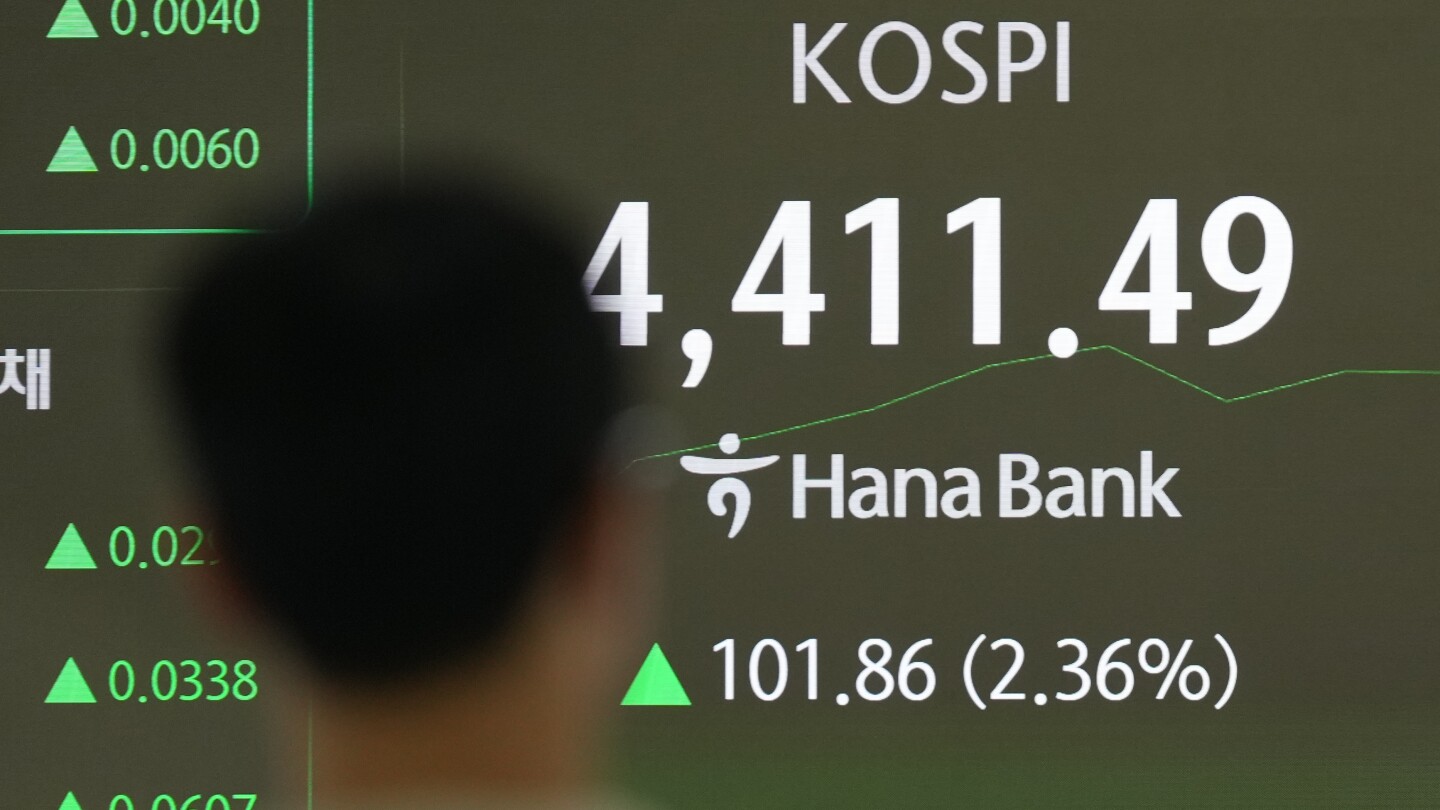
    Asian equity markets registered impressive gains, with Japan’s Nikkei 225 jumping 2.9% to 51,777.99—achieving a year-end high for 2025. South Korea’s Kospi surged 2.3% to 4,406.55, establishing another record close. More modest advances were seen in Australia’s S&P/ASX 200, which gained 0.1%, and Taiwan’s benchmark, which climbed 2.1%.

    Currency markets showed limited movement, with the dollar rising 0.2% against the yen to 157.15, while the euro slipped 0.2% to $1.1702.

    The trading week follows a mixed session on Wall Street, where U.S. stocks posted modest gains on Friday. The S&P 500 advanced 0.2% to 6,858.47, building on its 16%+ gain throughout 2025. The Dow Jones Industrial Average rose 0.7%, while the Nasdaq composite experienced a slight decline of less than 0.1%, pressured by significant losses in Microsoft (2.2%) and Tesla (2.6%) following reports of continued sales declines.

    Several furniture companies recorded substantial gains after President Trump’s decision to delay increased tariffs on upholstered furniture, with RH advancing 8% and Wayfair rising 6.1%.

    Market participants now turn their attention to the first full week of the new year, which promises critical economic updates including private reports on the services sector, consumer sentiment data, and government employment reports. These indicators are expected to provide crucial insight into the U.S. economy’s performance at the close of 2025 and its trajectory for 2026, potentially influencing Federal Reserve policy decisions at its late January meeting.

  • UAE-backed separatists withdraw from key Yemeni city after Saudi strikes

    UAE-backed separatists withdraw from key Yemeni city after Saudi strikes

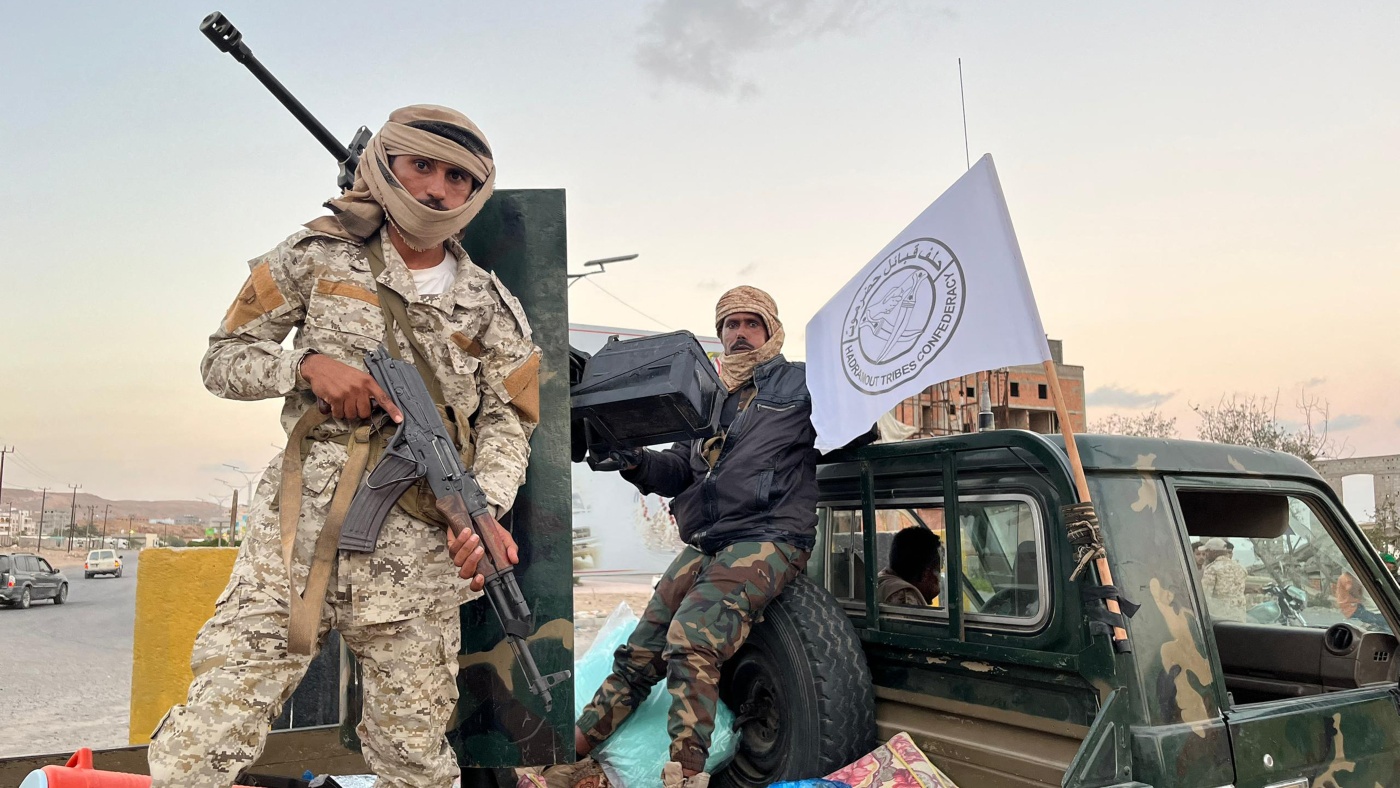
    In a significant reversal of territorial control, Yemeni government forces have fully reclaimed the strategic eastern province of Hadhramaut from UAE-backed Southern Transitional Council (STC) separatists. The development follows coordinated military operations by Saudi-supported Nation’s Shield Forces (NSF), which included targeted airstrikes on STC positions throughout the region.

    Hadhramaut Governor Salem al-Khanbashi confirmed complete government control, stating: “We have regained full control of all Hadhramaut territory, expelled STC forces, and begun administering duties and normalizing life.” The NSF provided safe passage for withdrawing STC fighters toward Aden, permitting them to carry only personal weapons.

    The territorial shift represents a dramatic turnaround from December, when STC forces capitalized on Saudi troop withdrawals to seize control of Hadhramaut and al-Mahra provinces—territories comprising nearly half of Yemen’s landmass and sharing critical borders with Saudi Arabia.

    This conflict exposes deepening fractures within the anti-Houthi coalition, pitting Saudi-backed government forces against UAE-supported separatists. The STC, which advocates for reestablishing an independent South Yemen, has received substantial military and financial backing from the United Arab Emirates.

    Tensions escalated further when Saudi Arabia bombed Emirati shipments in the port of Mukalla and publicly criticized UAE involvement in pressuring STC forces to operate along Saudi Arabia’s southern border. The Saudi foreign ministry expressed disappointment with Emirati actions that threatened regional stability.

    The geopolitical implications extend beyond the Arabian Peninsula, with both the UAE and Israel establishing military presence on the strategic Socotra archipelago under STC control. Israeli monitoring systems deployed there help counter Houthi threats, while the STC has signaled willingness to normalize relations with Israel—a position contrasting with broader Arab consensus.

    The STC’s recent announcement of planning an independence referendum followed Israel’s unilateral recognition of Somaliland’s independence, another UAE-aligned territory, highlighting emerging alliances reshaping regional power dynamics.

  • Trump warns new Venezuelan leader as Maduro set to appear in court

    Trump warns new Venezuelan leader as Maduro set to appear in court

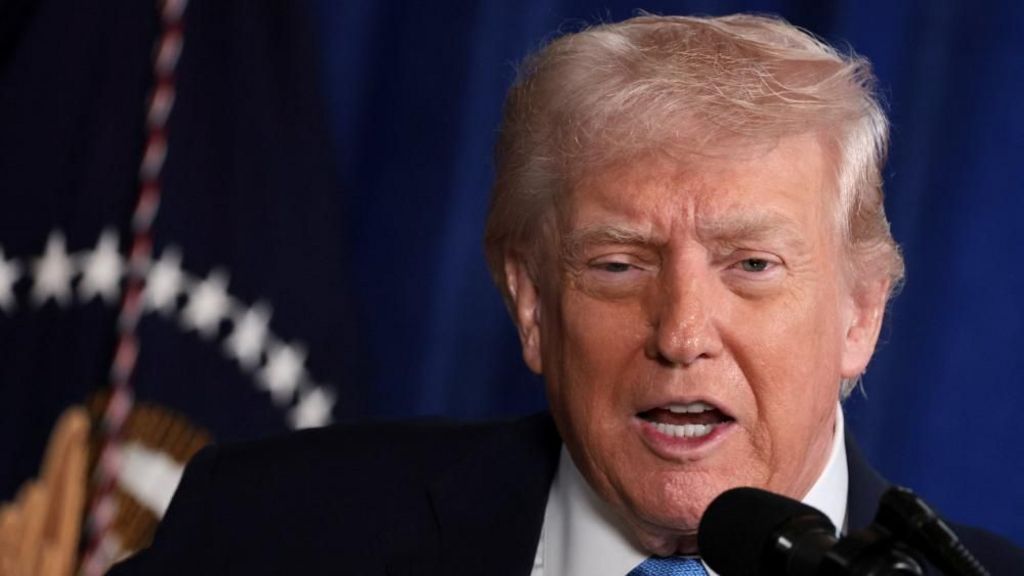
    Former US President Donald Trump has issued a stark warning to Venezuela’s newly appointed interim leader Delcy Rodríguez, cautioning that she could face consequences “probably bigger than Maduro” if she fails to align with US expectations. The threat came as ousted president Nicolás Maduro, captured in a dramatic US military operation, prepared to face New York court proceedings on drug trafficking and weapons charges.

    The extraordinary capture operation unfolded early Saturday when US special forces stormed Maduro’s compound in Caracas, resulting in the detention and transportation of both Maduro and his wife, Cilia Flores, to American soil. The operation involved strikes on military installations including Fuerte Tiuna, one of Venezuela’s largest military bases, and resulted in significant casualties according to Venezuelan officials.

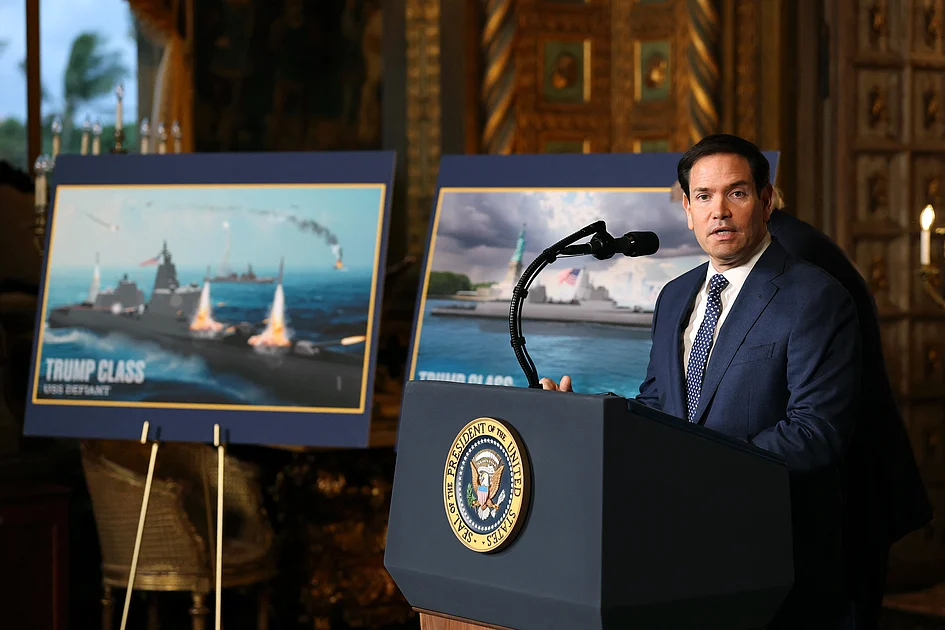
    US Secretary of State Marco Rubio vigorously defended the operation, characterizing it as a “law enforcement action” rather than an act of war. “We are at war against drug trafficking organizations. That’s not a war against Venezuela,” Rubio emphasized during multiple Sunday news program appearances. He asserted that congressional authorization was unnecessary since the operation involved FBI agents making arrests rather than military invasion.

    The political transition in Venezuela saw Rodríguez sworn in as interim president by the nation’s Supreme Court, with full backing from the military establishment. She is scheduled to be formally inaugurated Monday in Caracas. However, the US maintains it does not recognize the legitimacy of the current regime structure.

    International reaction has been sharply critical, with several nations including Brazil, Chile, Colombia, Mexico, Uruguay and Spain condemning the US military action as “an extremely dangerous precedent for peace and regional security.” They expressed particular concern about external control that threatens regional stability and violates international law.

    Domestically, Democratic lawmakers have denounced the operation as an unauthorized act of war. House Minority Leader Hakeem Jeffries and Senate Minority Leader Chuck Schumer have vowed to support legislation prohibiting further presidential action in Venezuela without congressional approval, arguing that such regime change operations historically cost American lives and treasure.

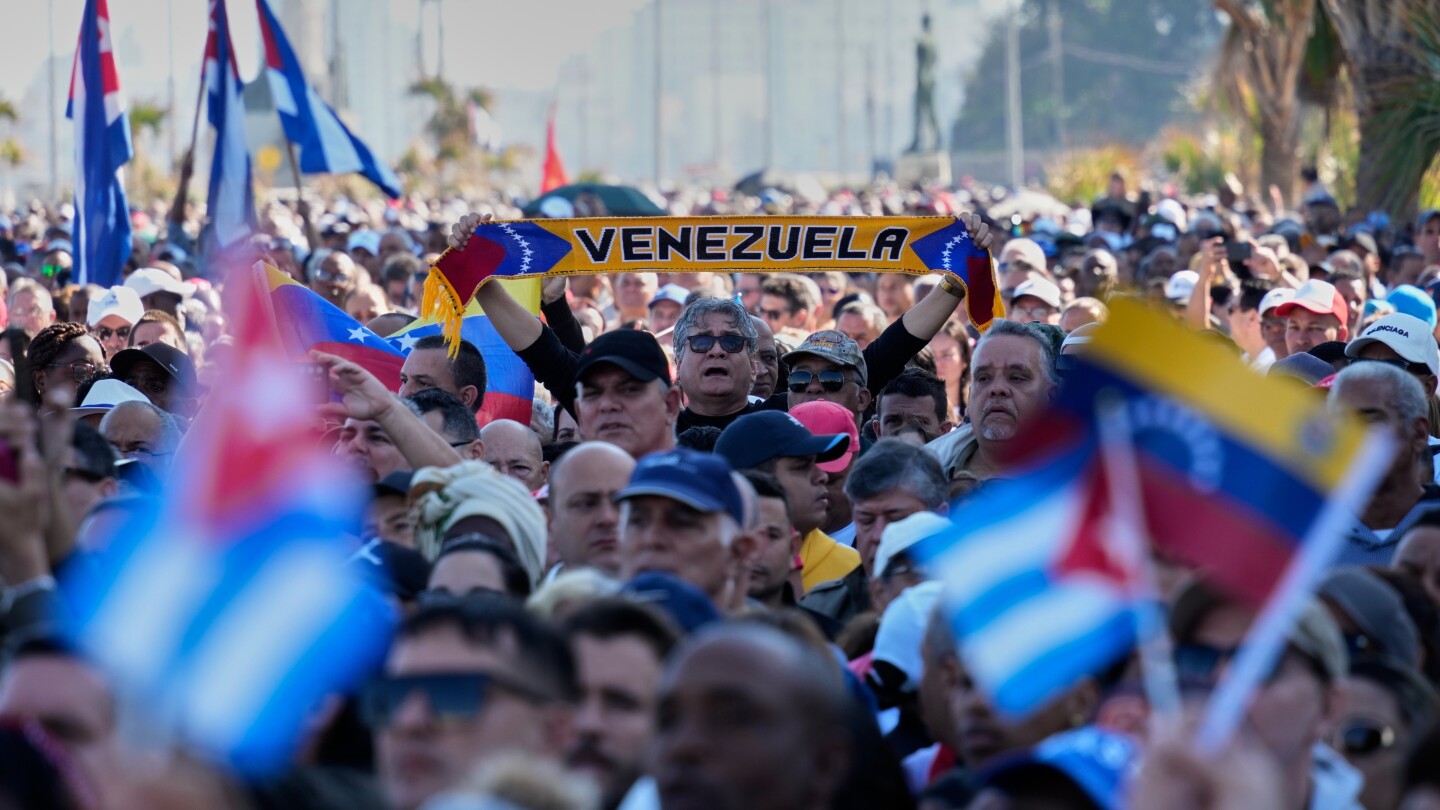
    The Cuban government, a longstanding socialist ally of Maduro, announced two days of national mourning for 32 “brave Cuban combatants” killed during the operation, further escalating regional tensions surrounding this unprecedented intervention.

  • US not seeking to govern Venezuela, aims to work with new authorities, Marco Rubio says

    US not seeking to govern Venezuela, aims to work with new authorities, Marco Rubio says

    In the aftermath of a dramatic military operation that resulted in the capture of Venezuelan President Nicolás Maduro, top U.S. officials have moved to clarify Washington’s position regarding the South American nation’s future governance. Secretary of State Marco Rubio appeared on multiple Sunday news programs to emphasize that the United States does not seek to directly govern Venezuela, but rather intends to collaborate with existing authorities under specific conditions.

    The operation, which unfolded on Saturday, involved U.S. commandos conducting a helicopter assault on Caracas with support from attack aircraft and naval assets. The successful extraction of Maduro and his wife culminated in the deposed leader’s transport to New York, where he now awaits arraignment on narcotrafficking charges. Video evidence released by the White House shows Maduro in custody at a Manhattan DEA facility, handcuffed and offering a subdued ‘Good night, happy new year’ in English.

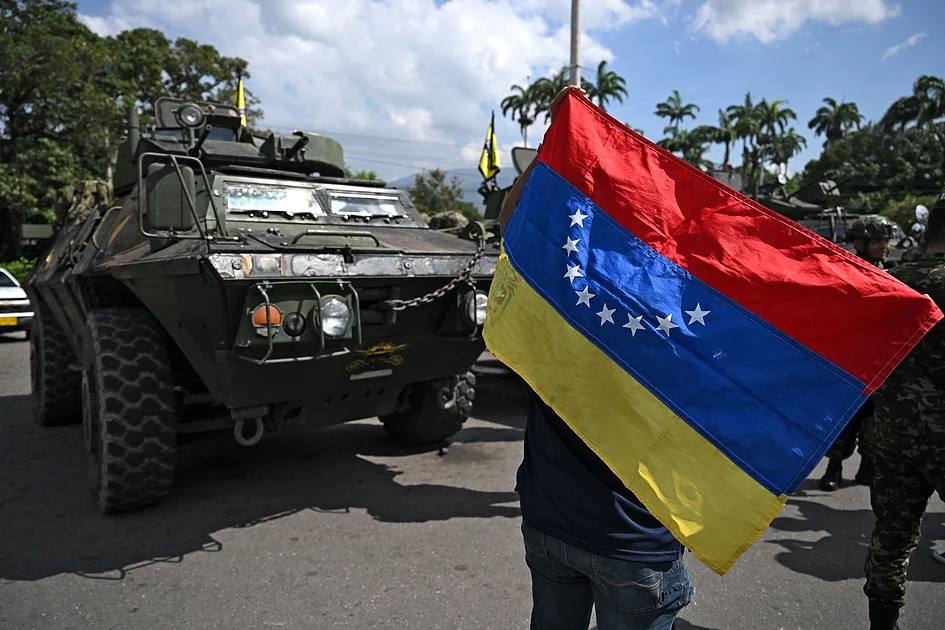
    Despite the vacuum created by Maduro’s capture, relative calm prevailed in Venezuela’s capital. Citizens formed queues at grocery stores, while the previously visible heavily armed police presence diminished significantly. The Venezuelan military has officially recognized Vice President Delcy Rodríguez as acting president and encouraged citizens to resume normal activities.

    Secretary Rubio’s comments served to contextualize President Trump’s earlier statement about the U.S. intending to ‘run the country’ until a transition could be effected. Rubio specified that Washington would assess the existing Venezuelan leadership based on actions rather than rhetoric, indicating readiness to work with Rodríguez and other cabinet members contingent upon their adherence to U.S. demands.

    The administration faces mounting questions regarding its long-term strategy, particularly concerning Venezuela’s massive oil reserves—the world’s largest. Rubio indicated that Western companies would likely show ‘dramatic interest’ in revitalizing Venezuela’s crippled oil industry, provided appropriate guarantees and conditions were established. Simultaneously, the U.S. maintains significant leverage through an oil export embargo enforced by Navy vessels in the Caribbean.

    Political opposition emerged from Democratic leaders, with Senate leader Chuck Schumer expressing that Americans were left ‘scratching their heads in wonderment and in fear,’ while House leader Hakeem Jeffries characterized the raid as an unauthorized act of war. The operation represents the culmination of an escalating pressure campaign that began with interdictions of suspected drug trafficking vessels near Venezuelan waters.