作者: admin

  • Gulf nations push to the front of global sustainability race as ESG becomes economic engine

    Gulf nations push to the front of global sustainability race as ESG becomes economic engine

    The Gulf Cooperation Council (GCC) nations, particularly the United Arab Emirates, are undergoing a remarkable transformation from hydrocarbon-dependent economies to global sustainability pioneers. This strategic pivot positions Environmental, Social, and Governance (ESG) principles as central drivers of economic diversification and long-term growth rather than mere corporate social responsibility initiatives.

    This paradigm shift finds its most concrete expression in the UAE’s groundbreaking Federal Decree-Law No. 11 of 2024, which became effective in May 2025. This legislation establishes the world’s first legally enforceable ESG compliance framework, mandating that all entities across sectors and free zones measure, report, and reduce greenhouse gas emissions by May 30, 2026. Non-compliant organizations face substantial penalties ranging from Dh50,000 to Dh2 million, signaling a decisive transition from voluntary commitments to mandatory accountability.

    The regulatory framework requires businesses to maintain comprehensive annual emissions inventories, preserve GHG data for five years, and develop detailed decarbonization plans aligned with the national Net Zero 2050 strategy. This approach transcends environmental regulation, representing a comprehensive economic vision projected to generate 200,000 new jobs in clean energy sectors and contribute 3% to national GDP.

    According to the PROI Worldwide’s Global ESG Report 2025, this transformation extends across the Gulf region, with national development frameworks such as Saudi Vision 2030 and Qatar National Vision 2030 integrating sustainability objectives into their core economic planning. Unlike the politically charged ESG debates occurring in Western nations, GCC policymakers approach sustainability as a practical economic transformation tool rather than an ideological battleground.

    The regulatory evolution is fundamentally altering corporate communication strategies, with companies increasingly emphasizing tangible outcomes through terminology such as ‘sustainability,’ ‘resilience,’ and ‘nationalization’ rather than acronyms like ESG or DEI. Organizations including Spinneys, Ecolab, and EQUATE Petrochemicals are embedding sustainability KPIs into executive performance metrics and aligning local initiatives with global climate frameworks.

    As mandatory reporting requirements take effect, businesses must advance beyond narrative-driven sustainability reporting to provide verified, evidence-based progress updates, third-party validated data, and demonstrable emission reduction achievements. Media outlets across the region are expected to intensify scrutiny of corporate compliance as the 2026 deadline approaches.

    Marianna Wisden, Associate Partner at Mojo Communications Consultancy, notes: ‘Sustainability in the region is driven by outcomes that genuinely matter to people. It shapes how companies create jobs, build skills and support a future that relies on a broader base than oil alone. The frameworks are in place and businesses are getting on with the work.’

    The Gulf’s sustainability transformation establishes not merely regional standards but provides an implementable model for emerging economies worldwide, demonstrating how environmental responsibility and economic growth can be strategically aligned for long-term prosperity.

  • ‘Maybe she’s an angel now’ says aunt of 10-year-old Bondi victim

    ‘Maybe she’s an angel now’ says aunt of 10-year-old Bondi victim

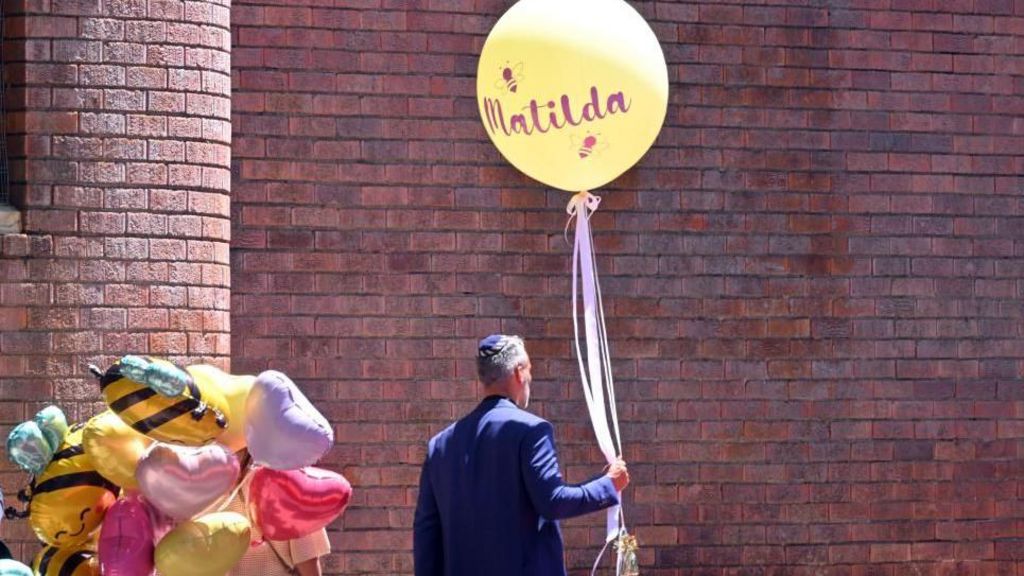
    The family of Matilda, the youngest victim of the Bondi Beach shooting, has made a heartfelt plea for compassion and unity during her emotional funeral service on Thursday. The 10-year-old was among 15 individuals fatally shot when two assailants opened fire at a Hanukkah celebration in Sydney on Sunday.

    Lina Chernykh, Matilda’s aunt, shared with the BBC that her niece embodied joy and consistently spread love wherever she went. While acknowledging the Jewish community’s legitimate demands for stronger action against antisemitism, Chernykh emphasized that the most appropriate tribute to Matilda would be to channel grief into positive energy rather than anger.

    “Transform your anger into spreading happiness, love, and preserving the memory of my dear niece,” Chernykh urged mourners. “Perhaps she has become an angel who might transmit positive energy to our world.”

    The tragedy has sparked intense scrutiny regarding Australia’s approach to addressing rising antisemitism, with community leaders suggesting the incident resulted from inadequate measures against hate crimes. This attack represents Australia’s deadliest mass shooting since the 1996 Port Arthur massacre that claimed 35 lives.

    Chernykh described the profound devastation experienced by Matilda’s immediate family, noting that her parents’ faces show little hope of future happiness. The victim’s younger sister, who was inseparable from Matilda, remains shattered and confused by the loss, having “no more tears to cry.”

    At a floral memorial service earlier this week, Matilda’s mother Valentyna revealed the family had immigrated from Ukraine over a decade ago seeking safety. “I never imagined I would lose my daughter here… This is truly a nightmare,” she told attendees.

    Chernykh recounted receiving the tragic news while gardening at her Gold Coast home, initially assuming the call concerned her elderly father’s health. The concept of a child being shot in Australia seemed so incomprehensible that she questioned whether she had misheard due to poor reception.

    Australian authorities have classified the incident as terrorism, with Prime Minister Anthony Albanese indicating connections to Islamic State ideology. The alleged perpetrators—50-year-old Sajid Akram, who was killed at the scene, and his 24-year-old son Naveed—face 59 combined charges including 15 counts of murder and terrorist acts.

    In response to the tragedy, the Australian government announced on Thursday enhanced legislative measures to combat hate crimes, including provisions to deny or revoke visas based on antisemitic behavior.

  • ‘A little fairytale’ – Lyon overtakes McGrath in Test wicket-taker list

    ‘A little fairytale’ – Lyon overtakes McGrath in Test wicket-taker list

    In a historic moment during the third Ashes Test in Adelaide, Australian off-spinner Nathan Lyon has eclipsed bowling legend Glenn McGrath to claim sixth position on the all-time Test wicket-taking list. The 38-year-old cricketer needed just two dismissals at the commencement of the match to surpass McGrath’s monumental tally of 563 wickets.

    Lyon achieved this extraordinary milestone with remarkable efficiency during his opening over. With his third delivery, he trapped England’s Ollie Pope with a catch at mid-wicket, drawing level with McGrath’s record. Mere moments later, Lyon delivered what commentators described as a ‘gem of a ball’ that clean-bowled Ben Duckett, securing his 564th Test scalp and cementing his place in cricketing history.

    This achievement positions Lyon as Australia’s second-most prolific Test bowler behind the late Shane Warne (708 wickets) and establishes him as the highest active wicket-taker in international Test cricket. Among spin bowlers globally, Lyon now ranks fourth, trailing only Muttiah Muralitharan (800), Warne, and Anil Kumble (619). Notably, only two pace bowlers—England’s James Anderson (704) and Stuart Broad (604)—remain ahead of Lyon in the overall standings.

    The moment carried particular significance as Lyon returned to Australia’s lineup after being omitted from the day-night Test in Brisbane, an exclusion he described as making him feel ‘absolutely filthy.’ The Adelaide Oval holds special meaning for Lyon, who previously worked as a groundsman at the venue. He characterized the achievement as a ‘fairytale’ moment, recalling his Test debut at the same ground against England in 2010.

    Glenn McGrath himself praised Lyon’s accomplishment during BBC Test Match Special commentary, stating: ‘What a bowler. Nathan Lyon deserves to get that. He has been brilliant for Australia. He will go down as one of the greatest Australia spin bowlers behind Shane Warne.’ McGrath specifically highlighted Lyon’s mastery of off-spin bowling, noting his deep understanding of the craft.

    In recognition of his contributions, the South Australia Cricket Association unveiled a commemorative plaque honoring Lyon on their ‘Avenue of Honour’ preceding the match. Lyon has taken 65 wickets at the Adelaide Oval—more than any other bowler in the venue’s history.

    The milestone sparked conversation about the value of spin bowling in Test cricket, particularly as England has opted not to field a specialist spinner throughout the current Ashes series. Lyon emphasized the crucial role of spin variation, noting: ‘I think the variation in Test cricket, understanding that Test cricket goes for five days, and there’s a lot of opportunity for pitches to wear and spinners to be able to produce their craft.’ He added that spinning deliveries attract significant viewer engagement, particularly during matches in spin-friendly conditions like those in India.

  • Silver soars past $66 an ounce, will it hit $70 soon?

    Silver soars past $66 an ounce, will it hit $70 soon?

    Silver prices shattered historical records on Wednesday, catapulting beyond $66 per ounce as a convergence of monetary, structural, and physical market forces created unprecedented momentum in precious metals trading. The white metal’s remarkable ascent—more than doubling in value throughout 2025—represents one of the most dramatic revaluations in modern commodity history.

    The rally accelerated following weaker-than-anticipated U.S. employment data, which signaled a cooling labor market and strengthened expectations for additional interest rate cuts in 2026. Spot silver reached $66.52 per ounce during the session before settling at $66.30 by 9:25 PM UAE time, marking a 4% single-day increase according to Reuters data.

    Market analysts identify three primary drivers behind silver’s extraordinary performance: critically constrained physical supplies, price-inelastic industrial demand, and policy-driven market dislocations. Ole Hansen, Head of Commodity Strategy at Saxo Bank, observed that silver has fundamentally resolved its long-standing identity crisis by simultaneously functioning as both a monetary metal and industrial commodity while facing severe supply limitations.

    The rally originated from gold’s momentum earlier in the year, with the gold-silver ratio reaching above 105 in April—an extreme valuation gap that attracted both speculative and long-term investors. Once technical resistance levels collapsed beginning in August, momentum buying accelerated dramatically, transforming relative value opportunities into outright price discovery.

    Beyond technical factors, broader macroeconomic conditions have strongly favored hard assets amid eroding confidence in fiat currencies. Persistent inflation pressures, expanding fiscal deficits, and debt sustainability concerns have driven robust central bank gold purchasing, with silver benefiting as a higher-beta, more accessible alternative.

    India has emerged as a crucial source of incremental demand, driven primarily by retail investment and jewelry consumption rather than seasonal factors alone. Simultaneously, silver-backed ETFs have absorbed approximately 130 million ounces this year, increasing total holdings by 18% to roughly 844 million ounces—overwhelmingly led by retail participation while institutions predominantly favored gold.

    Vijay Valecha, CIO at Century Financial, noted that physical markets remain extremely tight, with London lease rates elevated near 6%, Shanghai inventories at decade lows, and backwardation signaling immediate scarcity. Industrial demand linked to solar energy, electrification initiatives, data centers, and AI infrastructure continues to accelerate, reinforcing silver’s dual role in both financial and industrial applications.

    Despite the powerful bullish momentum, analysts caution that the rally shows signs of overheating. Momentum indicators reside firmly in overbought territory, and historical patterns suggest such aggressive moves typically precede sharp, short-term corrections. Nevertheless, near-term extensions toward $70-75 per ounce remain plausible given persistent physical tightness and gold’s underlying strength. While volatility will likely continue, the fundamental case for silver’s structural bull market remains intact for now.

  • Dubai’s commercial property market heading for major reset

    Dubai’s commercial property market heading for major reset

    Dubai’s commercial property landscape is undergoing a fundamental structural transformation that will culminate in a distinct two-tier market system by 2028, according to real estate experts. This market reset will see premium next-generation Grade A office spaces commanding substantial price premiums while older commercial buildings face increasing competitive pressures.

    The transformation comes despite impressive short-term performance metrics. Commercial real estate transactions have demonstrated remarkable growth throughout the current year, with sales value surging by 77.9 percent to reach AED 15.5 billion during the first eleven months, while transaction volume increased by 35.1 percent to 5,364 deals compared to the same period last year.

    According to Firs Al Msaddi, CEO of fäm Properties, the commercial sector has lagged significantly behind Dubai’s residential market in architectural innovation and quality standards for over fifteen years. “Since 2008, Dubai has not witnessed a genuine new generation of office developments,” Al Msaddi noted. “The residential segment underwent comprehensive transformation with new design languages, architectural standards, and construction codes, while the commercial sector awaited its reset moment.”

    The market shift will accelerate as the first wave of next-generation Grade A office buildings begins delivery in 2028. This influx of modern, efficient, and architecturally relevant office spaces will provide tenants with superior alternatives, fundamentally reshaping market dynamics and pricing structures across Dubai’s commercial landscape.

    Al Msaddi cited Vision Tower in Business Bay as a precursor to this trend, noting its consistent market outperformance due to its appeal to established corporate tenants. The building’s minimum half-floor requirement naturally filters for serious companies, demonstrating the substantial latent demand for genuine Grade A office space in Dubai.

    The emerging two-tier system will see commercial properties repricing according to quality benchmarks, creating distinct market segments with varying valuation models and tenant profiles.

  • EU leaders face crunch decision on loaning Russia’s frozen cash to Ukraine

    EU leaders face crunch decision on loaning Russia’s frozen cash to Ukraine

    European Union leaders convened in Brussels for a pivotal two-day summit facing one of their most consequential financial decisions since Russia’s invasion of Ukraine: whether to loan approximately €90 billion from frozen Russian assets to support Ukraine’s military and economic survival.

    The proposed package, representing nearly two-thirds of Ukraine’s estimated €137 billion requirement for 2026-2027, would mark a dramatic escalation in EU support. Currently, Belgium-based financial institution Euroclear holds the majority of Russia’s €210 billion in frozen EU assets, generating interest that has already been directed to Kyiv.

    European Commission President Ursula von der Leyen emphasized the proposal’s dual purpose: providing immediate financial stability for Ukraine while significantly increasing Moscow’s cost of continued aggression. “We know the urgency. It is acute. We all feel it. We all see it,” von der Leyen told the European Parliament ahead of the summit.

    Despite mounting pressure, Belgian Prime Minister Bart De Wever remains unconvinced, with his Defense Minister Theo Francken warning that loaning the Euroclear funds would constitute a “big mistake.” Their concerns echo broader legal and financial apprehensions, particularly regarding potential court orders requiring Belgium to return the assets to Russia.

    Hungary’s Viktor Orbán represents the most staunch opposition, having previously blocked EU financial aid packages for Ukraine. Slovakia’s Robert Fico has also expressed reservations, particularly if funds would prioritize military procurement over reconstruction efforts.

    German Chancellor Friedrich Merz emerged as a leading advocate, telling the Bundestag that utilizing frozen assets would send a “clear signal” to Moscow about the futility of prolonged conflict. Supporters argue the move would strengthen Ukraine’s negotiating position amid emerging peace talks that U.S. President Donald Trump described as “closer now than we have been ever.”

    The proposal requires approval from approximately two-thirds of member states. European Council President António Costa pledged not to override Belgian concerns, committing to “work very intensively with the Belgian government” to address risk mitigation. Several nations have offered financial guarantees against potential legal losses, though specific figures remain undisclosed.

    Commission officials maintain confidence in their legal standing, suggesting Russia could only reclaim assets by paying Ukrainian reparations—which would then be used to repay the EU loan. This complex financial arrangement represents the EU’s most ambitious attempt to balance immediate Ukrainian needs against long-term legal and economic considerations.

  • Ecuadorian police say soccer player Mario Pineida has been shot dead in an apparent attack

    Ecuadorian police say soccer player Mario Pineida has been shot dead in an apparent attack

    Ecuador faces a deepening security crisis as professional footballer Mario Pineida, a 33-year-old defender for Barcelona de Guayaquil, was fatally shot in a violent attack in Guayaquil. The incident, confirmed by Ecuadorian police on Wednesday, resulted in two fatalities and one additional injury, marking another tragic episode in the nation’s escalating violence crisis.

    According to official reports from the Interior Ministry, the attack occurred in the Samanes region of northern Guayaquil, approximately 265 kilometers southwest of the capital Quito. While authorities have not released details about the second victim or the circumstances surrounding the shooting, local media indicates the violence reflects the deteriorating security situation affecting all levels of Ecuadorian society.

    The football community has been profoundly impacted by Pineida’s death. Barcelona de Guayaquil released an official statement expressing profound sadness among players, staff, and supporters. Pineida, who began his professional career with Independiente del Valle from 2010-2015, joined Barcelona de Guayaquil in 2016 where he achieved significant success, including two league championships. His career also included a brief tenure with Brazil’s Fluminense in 2022.

    This tragedy occurs against the backdrop of Ecuador’s most violent period in recent history. The Ecuadorian Observatory of Organized Crime projects the nation will exceed 9,000 homicides this year, surpassing previous records of 7,063 violent deaths in 2022 and 8,248 in 2023. President Daniel Noboa has committed to combating criminal organizations that have expanded operations within Ecuador, often linked to international drug cartels.

    Pineida’s death follows other football-related tragedies, including the November killing of a 16-year-old Independiente del Valle player by a stray bullet in Guayaquil, and the September deaths of three players from different clubs—Maicol Valencia, Leandro Yépez, and Jonathan González—all victims of gun violence.

  • BP names new boss as current CEO leaves after less than two years

    BP names new boss as current CEO leaves after less than two years

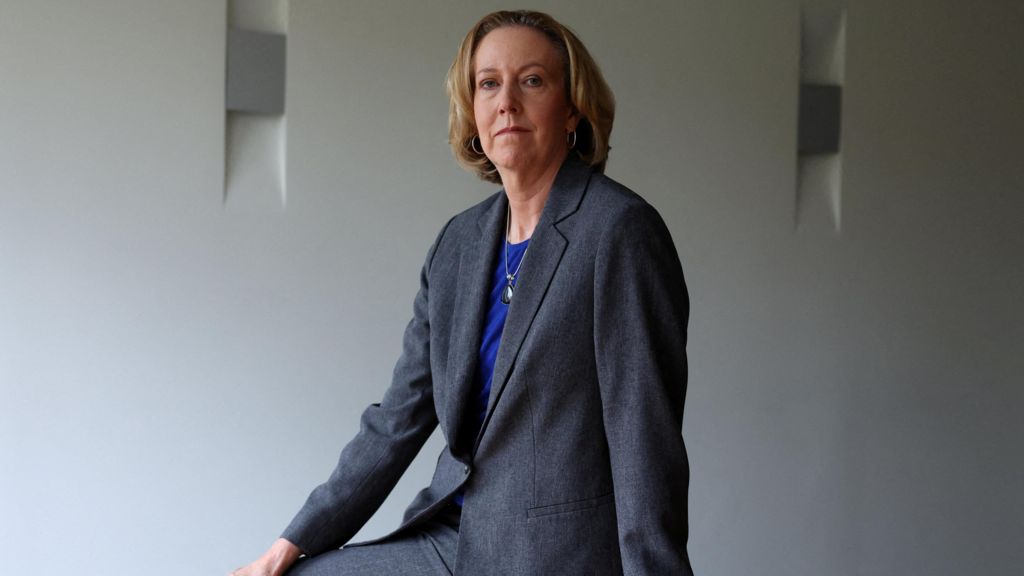
    In a historic move for the energy sector, BP has named Meg O’Neill as its new chief executive, marking the first time a woman will lead a major global oil corporation. The appointment comes amid significant leadership turbulence at the London-based energy giant.

    O’Neill, who currently serves as CEO of Australian energy firm Woodside Energy, will assume her new role on April 1st. She succeeds Murray Auchincloss, who is stepping down after less than two years at the helm. Auchincloss had replaced Bernard Looney in September 2024 following Looney’s dismissal for serious misconduct related to undisclosed relationships with colleagues.

    BP executive vice president Carol Howle will serve as interim chief executive during the transition period. Auchincloss will remain in an advisory capacity until December 2026, ensuring continuity during the leadership change.

    O’Neill brings extensive industry experience to BP, having spent 23 years in various technical, operational and leadership roles at ExxonMobil before leading Woodside Energy since 2021. Under her leadership, Woodside completed its significant acquisition of BHP Petroleum International in 2022 and grew into the largest energy company listed on the Australian Securities Exchange.

    In her first comments as CEO-designate, O’Neill emphasized her commitment to helping BP ‘meet the world’s energy needs’ while prioritizing market leadership, safety innovation, and sustainability initiatives.

    The leadership transition occurs as BP undergoes strategic shifts, including reducing renewable energy investments in favor of increased oil and gas production. This pivot follows pressure from investors concerned about profitability and share performance relative to competitors.

    The appointment reflects broader industry trends, with rivals Shell and Equinor similarly scaling back green energy investments amid favorable market conditions for fossil fuels and supportive political environments, including former President Trump’s pro-drilling stance.

  • Watch: Mother polar bear seen interacting with adopted cub

    Watch: Mother polar bear seen interacting with adopted cub

    In an extraordinary display of maternal behavior within the Arctic’s apex predator, wildlife researchers have documented a female polar bear caring for an adopted cub alongside her own biological offspring. This unprecedented observation provides groundbreaking insights into the complex social structures of Ursus maritimus.

    The rare case was captured through remote monitoring in the Svalbard archipelago, where scientists tracked the female bear’s movements over several weeks. The adopted cub, estimated to be approximately the same age as her biological cub, appears to have been fully accepted into the family unit. Researchers observed the mother providing equal access to food resources and protection from potential threats.

    Dr. Alison Lane, lead researcher on the project, noted: ‘This represents one of the few scientifically verified cases of alloparenting in polar bears. The mother’s complete acceptance of an unrelated cub challenges our previous understanding of their maternal instincts and social flexibility.’

    The phenomenon raises significant questions about the adaptive behaviors polar bears might employ in response to changing environmental conditions. As sea ice habitats diminish and polar bear populations face increasing pressure, such flexible social behaviors could become more critical for species survival.

    While infanticide among male polar bears is well-documented, this contrasting behavior shows a previously undocumented capacity for nurturing beyond genetic relationships. The research team continues to monitor the family unit to study the long-term development of both cubs under the mother’s care.

  • In this secret missile factory, Ukraine is ramping up its domestic arms industry

    In this secret missile factory, Ukraine is ramping up its domestic arms industry

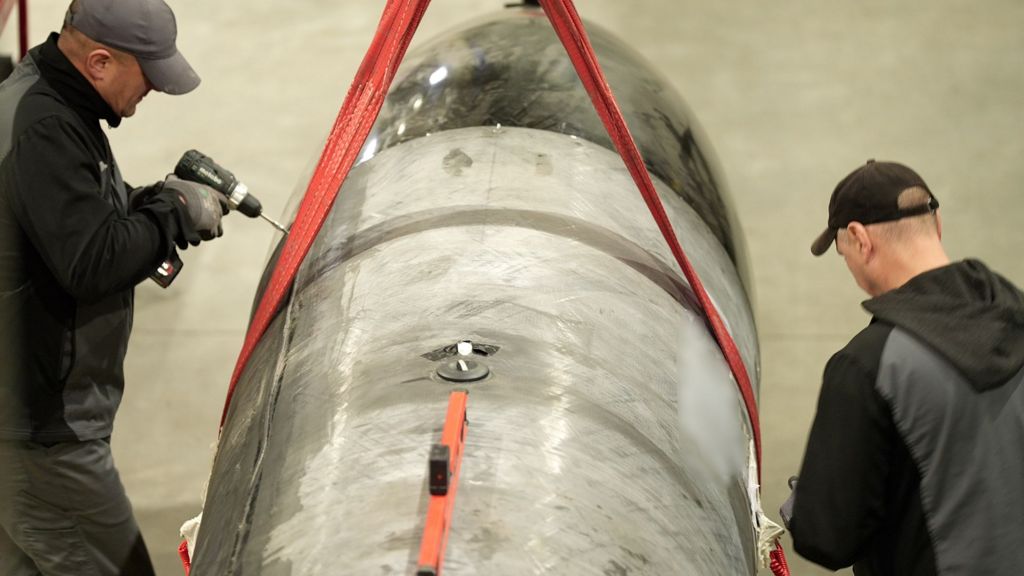
    In a clandestine facility somewhere in Ukraine, a military transformation is underway under extraordinary secrecy. BBC correspondents, blindfolded during transport to protect the location, witnessed the production of Ukraine’s formidable Flamingo cruise missile – a domestically developed weapon system with an estimated 3,000km range capability.

    The extreme security measures reflect Ukraine’s adaptation to wartime realities: production facilities for these critical weapons must remain hidden from Russian targeting. Two factories belonging to manufacturer Fire Point have already been struck, forcing the company to disperse and conceal its operations. Within the assembly area, workers’ identities are protected and architectural features cannot be filmed, all part of maintaining operational security while continuing production.

    This represents a remarkable evolution in Ukraine’s defense capabilities. President Volodymyr Zelensky reveals that over 50% of weapons deployed on front lines are now domestically produced, with nearly all long-range systems originating from Ukrainian industry. This marks a dramatic shift from early dependence on Soviet-era stockpiles and Western military aid.

    At the heart of this effort is Iryna Terekh, Fire Point’s 33-year-old chief technical officer. The former architecture student now oversees production of the black-painted Flamingo missile which she describes as designed to ‘eat Russian oil.’ The massive weapon, resembling a World War Two V1 rocket with a jet engine mounted on a tube the length of a London bus, provides Ukraine with deep-strike capabilities that Western nations have been reluctant to supply.

    The strategic significance is substantial. With front lines stretching over 1,000 kilometers, Ukraine is increasingly targeting Russia’s war economy to slow advances. General Oleksandr Syrskyi, head of Ukraine’s Armed Forces, estimates long-range strikes have cost the Russian economy over $21.5 billion this year alone.

    Ruslan, an officer in Ukraine’s Special Operations Forces, explains the strategy: ‘To reduce the enemy’s military capabilities and their economic potential.’ His forces have conducted hundreds of strikes deep inside Russian territory targeting oil refineries, weapons factories, and ammunition depots.

    Despite impressive progress, disparities remain. Russia launches approximately 200 Shahed drones daily, while Ukraine’s response reaches about half that number. Fire Point, which didn’t exist before the full-scale invasion, now produces 200 drones daily at approximately $50,000 each – significantly cheaper than Russian equivalents.

    The company deliberately avoids components from China and the United States, with Terekh explaining the emotional ‘roller coaster’ with American support. This self-sufficiency strategy emerges amid uncertain Western backing, particularly after the Trump administration halted nearly $70 billion in military support previously provided under President Biden.

    Denys Shtilerman, Fire Point’s chief designer, acknowledges there is no ‘wonder weapon’ but emphasizes that ‘the game changer is our will to win.’ Terekh views domestic weapons production as Ukraine’s true security guarantee, dismissing current peace negotiations as ‘capitulation talks.’

    She hopes Ukraine’s example will shock Europe into preparedness: ‘We are a bloody example in terms of being prepared for war,’ noting that most other nations would have ‘already been conquered’ facing similar onslaught.