作者: admin

  • Venezuelan acting president appoints new commander of presidential honor guard

    Venezuelan acting president appoints new commander of presidential honor guard

    In a significant military command restructuring, Venezuela’s Acting President Delcy Rodríguez has appointed General Gustavo González López to dual critical security roles. The leadership change, announced on Tuesday, positions González López as both Commander of the Presidential Honor Guard and Director of the General Directorate of Military Counterintelligence.

    The appointment marks a strategic shift in Venezuela’s security apparatus, with González López replacing Javier Marcano Tabata in both capacities. The Presidential Honor Guard maintains primary responsibility for the physical security of Venezuela’s head of state and executive leadership, while military counterintelligence focuses on identifying potential threats within armed forces institutions.

    This reorganization occurs amidst ongoing political transitions within the South American nation. Rodríguez, who previously served as Venezuela’s vice president, assumed acting presidential responsibilities following recent governmental changes. The swearing-in ceremony, documented in official photographs from the National Assembly in Caracas on January 5, 2026, signals continuity in administrative operations during this period.

    Military analysts note that such appointments typically reflect both operational requirements and considerations of political allegiance within Venezuela’s complex security landscape. The consolidation of these two sensitive positions under a single commander suggests potential operational streamlining within Bolivarian Armed Forces security structures.

    The leadership transition follows established constitutional protocols and demonstrates the ongoing functionality of Venezuela’s governmental institutions amid international scrutiny and domestic challenges.
  • Fear and uncertainty: Venezuelans face up to future without Maduro

    Fear and uncertainty: Venezuelans face up to future without Maduro

    Venezuela remains gripped by profound uncertainty following the dramatic seizure of President Nicolás Maduro by United States forces. The operation, which resulted in dozens of casualties including 32 members of Cuban security forces according to Cuban officials, has created a complex and divided national response.

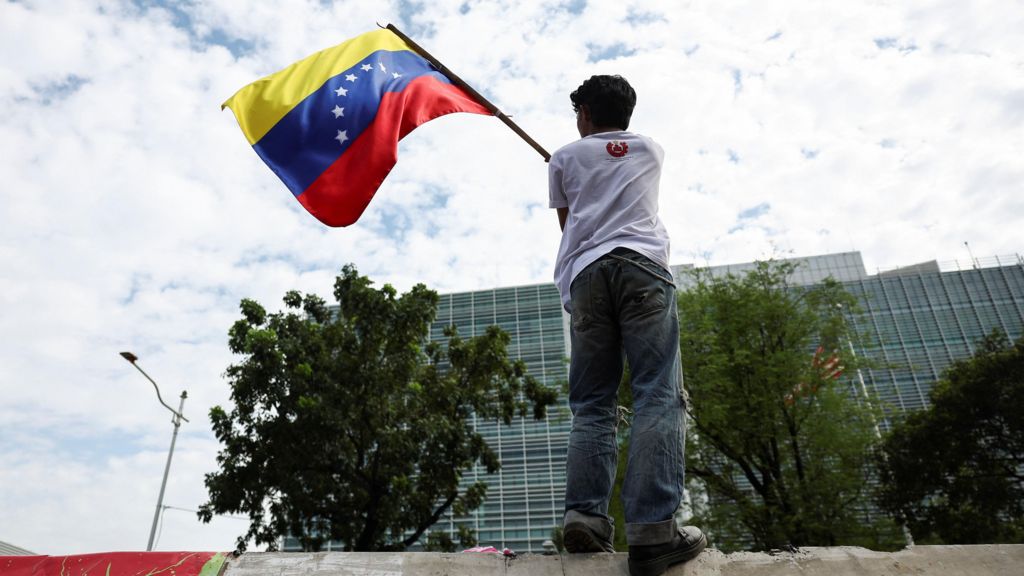
    In Caracas, student Marcelo represents many Venezuelans who cautiously welcome Maduro’s capture but refrain from public celebration due to safety concerns. ‘The majority of Venezuelans are very happy for what happened,’ Marcelo told BBC, noting that Maduro’s allies remain in power despite his capture. This sentiment is echoed by an opposition activist from Maracaibo who acknowledged the tragic loss of life but expressed relief that ‘the man they took away has done a lot of harm.’

    However, substantial support for Maduro persists among segments of the population. Rosa Contreras, 57, described feeling ‘humiliated’ by the ease with which US forces captured Venezuela’s leader. She found inspiration in images of Maduro waving upon arrival in the US, interpreting it as a message to ‘stand tall and keep going.’

    The political transition has seen Vice President Delcy Rodríguez, Maduro’s closest lieutenant, assume interim power. Under her leadership, security forces have intensified street patrols and detained journalists, creating an atmosphere of apprehension. A 34-year-old entrepreneur reported military presence on every corner and armed civilian groups supporting the government, generating widespread fear among citizens.

    Economic concerns continue to plague ordinary Venezuelans, with reports of staple food prices skyrocketing—cornflour tripling in cost and bread increasing by approximately 30%. Many supermarkets now feature military guards as owners fear theft and robbery amid the instability.

    The future remains particularly uncertain as President Trump has not ruled out additional military action. Gelén Correa, a government social program worker, defiantly stated that Venezuelans would be ‘armed to the teeth’ against any further US incursions.

    Despite the dramatic change in leadership, some Venezuelans like 60-year-old José doubt meaningful change will occur, noting that ‘they took the leader out but the regime is the same.’ Millions who fled Venezuela during Maduro’s rule await signs of genuine political transformation before considering return, hoping for an end to Chavismo—the socialist movement established by Hugo Chávez.

  • Tianmen grand bridge under construction in China’s Guizhou

    Tianmen grand bridge under construction in China’s Guizhou

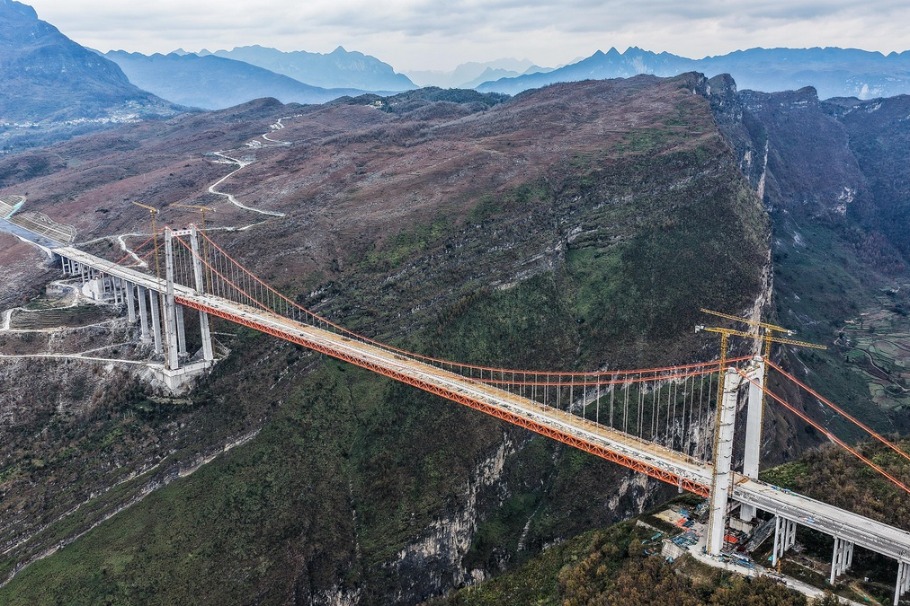
    Southwest China’s mountainous Guizhou province has reached a significant infrastructure achievement with the recent completion of the main structural framework for the Tianmen Grand Bridge. This engineering marvel, captured in aerial photography on January 6, 2026, stretches an impressive 1,553 meters in length while soaring approximately 560 meters above the terrain below.

    The bridge represents a critical component of the developing Anshun-Panzhou highway system, designed to enhance transportation connectivity through Guizhou’s challenging landscape. The region’s complex topography has historically presented substantial obstacles to infrastructure development, making this construction achievement particularly noteworthy.

    Engineering teams have employed advanced construction methodologies and cutting-edge materials to overcome the geographical challenges posed by the mountainous territory. The bridge’s design incorporates state-of-the-art seismic resistance features and wind stability technology, essential for the region’s environmental conditions.

    This transportation project forms part of China’s broader initiative to improve interregional connectivity and stimulate economic development in previously isolated areas. The enhanced infrastructure is expected to facilitate more efficient movement of goods and people, potentially boosting local economies and reducing travel times significantly.

    The completion of the main structure marks a pivotal phase in the overall project timeline, with subsequent work now focusing on deck finishing, safety installations, and connecting roadways. Transportation authorities anticipate the bridge will serve as a vital link in western China’s expanding highway network upon its scheduled opening.

  • Warner Bros urges shareholders to reject ‘inferior’ Paramount offer

    Warner Bros urges shareholders to reject ‘inferior’ Paramount offer

    Warner Bros Discovery has formally recommended its shareholders reject a revised acquisition proposal from Paramount Skydance, dismissing the offer as financially inferior and laden with excessive risk. This marks the second rejection within a month, following the board’s December 5th announcement of a $72 billion agreement with Netflix for the company’s film and streaming divisions.

    The board’s unanimous decision, communicated through an official shareholder letter, emphasized that Paramount’s amended proposal fails to qualify as a ‘superior offer’ under merger agreement criteria. Chairman Samuel Di Piazza Jr. characterized the bid as containing ‘an extraordinary amount of debt financing that create risks to close and lack of protections for our shareholders.’

    Paramount’s latest proposition, valued at over $108 billion, seeks to acquire Warner Bros Discovery in its entirety—including cable networks CNN and TNT, European free-to-air channels, and Discovery properties. This contrasts sharply with Netflix’s targeted acquisition of only the film and streaming segments, following Warner’s planned operational separation later this year.

    The board highlighted several critical concerns regarding Paramount’s offer, including a required $2.8 billion termination fee payable to Netflix if the existing merger agreement is abandoned. Additionally, analysts note the peculiar financial dynamics of Paramount—with a market valuation of approximately $14 billion—attempting to orchestrate a acquisition requiring over $94 billion in combined debt and equity financing.

    Warner’s leadership maintains that the Netflix agreement provides ‘superior value at greater levels of certainty’ while avoiding the significant risks associated with Paramount’s highly leveraged proposal. The board’s assessment concludes that Paramount has ‘repeatedly failed to submit the best proposal’ despite being provided clear guidance on addressing deficiencies.

    Netflix co-CEO Ted Sarandos previously affirmed that their transaction serves the ‘best interest of stockholders,’ creating a streamlined content powerhouse while avoiding the financial complexities of Paramount’s approach. Paramount Skydance has not yet issued public commentary regarding the latest rejection.

  • International mayors attend ice and snow expo in Harbin

    International mayors attend ice and snow expo in Harbin

    Harbin transformed into a diplomatic winter wonderland as mayors from across the globe convened at the 2026 International Ice and Snow Economy Expo this Tuesday. The event, occurring alongside the Global Mayors Dialogue conference, showcased China’s northeastern city as an emerging hub for cold-weather economic development.

    Edmonton Mayor Andrew Knack emerged as one of the most impressed delegates after experiencing Harbin’s extensive winter tourism infrastructure. The Canadian leader acknowledged his city’s substantial winter programming while emphasizing the learning opportunity presented by Harbin’s approach. “There is a lot of experience we can take back to further grow our new winter tourism and winter economy,” Knack stated, highlighting the potential for international knowledge exchange.

    The exposition demonstrated Harbin’s sophisticated integration of traditional winter culture with modern economic development strategies. Delegates participated in hands-on experiences including ice hockey practices, symbolizing the city’s commitment to blending recreational activities with economic opportunity.

    This gathering of municipal leaders from diverse climate regions signifies a growing recognition of specialized seasonal economies as drivers of urban development. The Expo serves not merely as a display of winter attractions but as a platform for cross-border collaboration in cold-weather technology, tourism infrastructure, and sustainable winter city planning.

    The event underscores China’s strategic positioning within the global winter economy network, with Harbin emerging as a model for other cities seeking to leverage their climatic conditions for economic growth. The knowledge sharing between international delegates suggests a new era of cooperation in developing cold-weather industries worldwide.

  • Philippines evacuates 3,000 villagers after volcano activity raises alert level

    Philippines evacuates 3,000 villagers after volcano activity raises alert level

    MANILA, Philippines — Philippine authorities have initiated large-scale evacuations surrounding Mayon Volcano, the nation’s most active volcano, following a series of mild eruptions and increased seismic activity. Nearly 3,000 residents residing within the designated permanent danger zone have been relocated as scientists monitor concerning developments.

    The Philippine Institute of Volcanology and Seismology elevated the alert status to Level 3 on Tuesday after detecting intermittent rockfalls from the summit crater, some involving debris the size of automobiles, alongside dangerous pyroclastic flows—rapid avalanches of superheated rock fragments, ash, and volcanic gases.

    According to Teresito Bacolcol, the country’s chief volcanologist, the current activity constitutes a quiet eruption characterized by lava accumulation at the peak, causing the dome to swell and fracture. While these developments signal volcanic unrest, Bacolcol noted that key indicators of an imminent major eruption—such as significant volcanic earthquakes and elevated sulfur dioxide emissions—remain absent, making predictions about escalation uncertain.

    Military personnel, police, and disaster-response teams coordinated the evacuation of 2,800 villagers from 729 households within the 6-kilometer (3.7-mile) radius permanent danger zone. An additional 600 residents living beyond the official danger boundary have voluntarily relocated to government-operated emergency shelters as a precautionary measure.

    The evacuation highlights ongoing challenges with enforcement in high-risk areas. Despite long-standing prohibitions marked by concrete warning signs, thousands continue to inhabit the volcano’s foothills, maintaining generational farms and businesses including sand quarrying and tourism operations. Mayon has erupted 54 times since records began in 1616.

    The 2,462-meter (8,007-foot) volcano represents both a premier tourist attraction, renowned for its perfect conical shape, and a persistent threat. The buried belfry of a 16th-century Franciscan church—all that remains of Cagsawa town after the catastrophic 1814 eruption that killed approximately 1,200 people—stands as a somber monument to Mayon’s destructive potential.

    This situation underscores the broader challenge facing impoverished communities across the Philippine archipelago, where economic necessity often forces populations to inhabit geologically hazardous zones, including volcanic slopes, landslide-prone mountainsides, earthquake fault lines, and typhoon-vulnerable coastlines.

  • Irish PM calls for ‘common sense’ on Greenland

    Irish PM calls for ‘common sense’ on Greenland

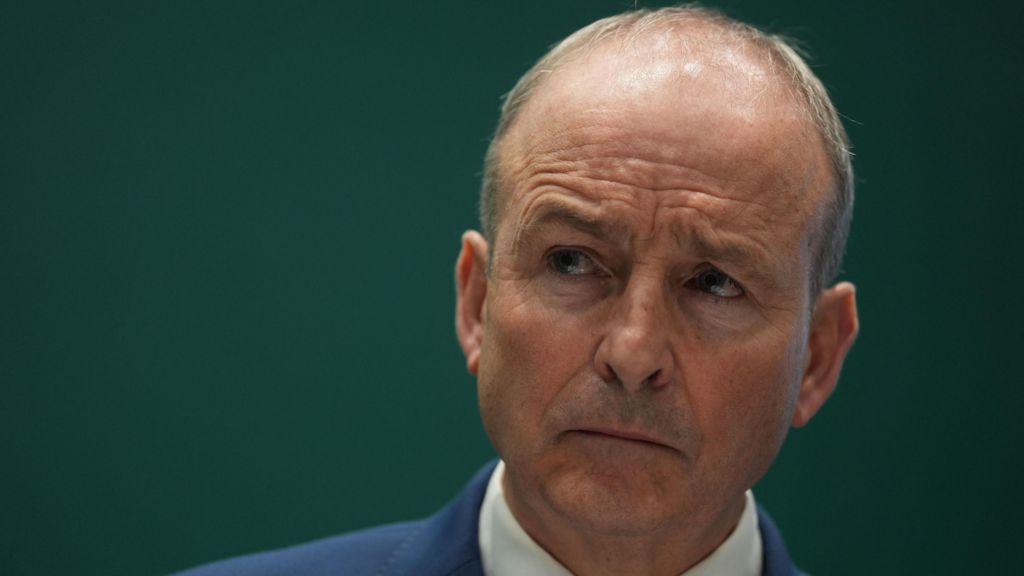
    Irish Taoiseach Micheál Martin has called for diplomatic rationality amid escalating tensions over US ambitions regarding Greenland. Speaking from Shanghai during an official four-day visit to China, Martin emphasized that “common sense needs to prevail” when addressing the controversial proposition.

    The White House recently declared that military options remain available to achieve President Donald Trump’s objective of acquiring the semi-autonomous territory, prompting immediate backlash from European allies. This statement followed Trump’s weekend remarks that the US “needed” Greenland for security purposes, which Danish Prime Minister Mette Frederiksen warned could jeopardize NATO’s foundation.

    Martin clarified Greenland’s political status, noting it remains “part of Denmark” with the European Union standing “rock solid behind Denmark in that regard.” He acknowledged the existing US military presence in Greenland through the Thule Air Base but stressed that sovereignty matters exclusively concern the Kingdom of Denmark and Greenland’s population.

    In a significant show of solidarity, six European nations—the UK, France, Germany, Italy, Poland, and Spain—joined Denmark in issuing a joint statement affirming that “Greenland belongs to its people” and only Denmark and Greenland can determine their bilateral relations. The leaders emphasized achieving Arctic security through NATO collaboration while upholding UN Charter principles of sovereignty and territorial integrity.

    Meanwhile, US Secretary of State Marco Rubio reportedly informed lawmakers the administration isn’t planning invasion but rather considering purchase options, though Martin dismissed such prospects as unrealistic.

    Beyond the Greenland controversy, Martin used his China visit to advocate for strengthened multilateralism, warning that “the world is in a very difficult situation right now” due to eroded UN authority. He called for comprehensive UN reforms to enhance its representativeness and authority in global governance.

  • Trumpet trees blanket district in Xiamen with purple blossoms

    Trumpet trees blanket district in Xiamen with purple blossoms

    The coastal city of Xiamen in Fujian province has been transformed into a breathtaking floral spectacle as thousands of purple trumpet trees (Tabebuia impetiginosa) reached full bloom in early January. This extraordinary natural display has turned Jimei district’s Xixi village into a major attraction for both local residents and tourists seeking respite in nature’s vibrant colors.

    The remarkable transformation occurred in Xiazhuangli, where approximately 7,000 trumpet trees have converted a previously dormant orchard into a magnificent floral landscape. The trees, known for their vibrant purple blossoms, create an astonishing visual effect when viewed from elevated perspectives—appearing as an expansive purple carpet covering the terrain.

    This annual flowering period typically extends from January through March, offering an extended window for visitors to experience the phenomenon. The timing provides a unique winter bloom spectacle that contrasts with the traditional spring flowering seasons common in other regions.

    Botanical experts note that the trumpet tree, native to South America but successfully cultivated in Xiamen’s subtropical climate, has adapted remarkably well to the local environment. The successful cultivation of such a substantial collection represents a significant achievement in horticultural planning and urban beautification efforts.

    The spectacle has generated substantial attention on social media platforms, with aerial photographs and videos circulating widely, showcasing the stunning transformation of the landscape. Local authorities have implemented additional visitor services to accommodate the increased tourism while ensuring the preservation of the natural display.

    This floral phenomenon not only enhances Xiamen’s reputation as an ecologically conscious city but also demonstrates successful urban planning that integrates natural beauty with community spaces. The event has become an important seasonal attraction, contributing to both local tourism and environmental appreciation.

  • Indian rupee slips past 90 US dollar mark, central bank intervenes

    Indian rupee slips past 90 US dollar mark, central bank intervenes

    The Reserve Bank of India executed significant market intervention on Wednesday to stabilize the national currency after the rupee weakened beyond the psychologically significant 90-per-US dollar barrier. According to six market traders, the central bank deployed aggressive measures reminiscent of its 2025 strategy to counteract one-way currency movements.

    The rupee opened trading at 90.2250 against the US dollar (24.5844 versus UAE dirham) before the RBI’s intervention propelled it to 89.9325 (24.5047 against UAE dirham), representing a 0.26 percent daily gain. During the session, the currency reached an intraday peak of 89.7550 (24.4564 against UAE dirham) on the interbank order-matching platform.

    Market analysts identified two primary pressures driving the rupee’s depreciation: sustained foreign capital outflows from Indian equity markets that have continued from 2025 into the new year, and ongoing uncertainties regarding US-India trade negotiations. These factors have created consistent downward pressure on the currency.

    Traders noted that the rapid reversal following the market open left little doubt about central bank involvement, contrasting with Tuesday’s session where market participants were divided on whether the RBI had intervened. “The velocity of today’s recovery unmistakably signals official action,” commented a private sector bank trader. “The movement was too abrupt to attribute to ordinary market dynamics.”

    Banking sector experts monitoring foreign exchange markets observed that the RBI typically intervenes when speculative long dollar positions accumulate and market expectations lean heavily toward consistent rupee depreciation. Prior to Wednesday’s engineered recovery, the rupee had declined approximately 1 percent over the preceding fortnight.

  • Snow and ice ground flights, choke highways in parts of Europe

    Snow and ice ground flights, choke highways in parts of Europe

    A severe winter storm system has unleashed widespread disruption across Northern Europe, creating transport chaos from Amsterdam to Berlin. At Schiphol Airport, one of Europe’s busiest aviation hubs, more than 1,000 stranded passengers were provided emergency accommodation as authorities scrambled to clear snow-clogged runways and de-ice aircraft following the cancellation of at least 800 flights.

    The Netherlands’ transport infrastructure faced critical challenges during Wednesday’s morning rush hour, with rail operator NS urging passengers to postpone travel amid significantly reduced service. Road networks fared no better, with traffic jams extending over 700 kilometers (435 miles) as trucks skidded across icy highways and snow plows struggled to maintain clear passage.

    Paris experienced similar disruptions as snow blanketed iconic landmarks including the Eiffel Tower and Louvre Museum. French authorities implemented emergency measures including work-from-home advisories and vehicle restrictions after Meteo France issued alerts for snow and black ice. Parisian airports canceled approximately 140 flights collectively, while SNCF railways reported widespread delays and cancellations due to track conditions.

    Even typically winter-resilient Nordic nations reported significant disruptions. Gothenburg, Sweden suspended all tram services due to hazardous snow accumulation, while Helsinki, Finland experienced bus cancellations attributed to diesel vehicles failing to start in subzero temperatures and challenging road conditions.

    In a positive development for Berlin residents, power restoration commenced for thousands of households left without electricity for four days following a suspected far-left attack on high-voltage lines, providing relief during the prolonged freeze.

    Travelers like Sonja Wurmlingel, attempting to return to Argentina, faced repeated disappointments with canceled flights and uncertain alternative arrangements, highlighting the human impact of the transport crisis. KLM Airlines reported decreasing airport queues as proactive cancellation notices prevented additional passengers from arriving at already overwhelmed terminals.