作者: admin

  • Saudi Arabia asks wealthy families to invest domestically as mega-projects stall: Report

    Saudi Arabia asks wealthy families to invest domestically as mega-projects stall: Report

    Saudi Arabia is undergoing a significant strategic recalibration of its ambitious Vision 2030 economic diversification plan. According to a Bloomberg report, the kingdom’s Public Investment Fund (PIF) has convened with the nation’s wealthiest families, urging them to increase domestic investments. This move coincides with the government’s decision to reassess, downscale, or outright cancel several high-profile ‘giga-projects’ initially central to Crown Prince Mohammed bin Salman’s transformative agenda.

    Recent developments illustrate this strategic shift. Construction of the monumental Mukaab cube-shaped structure in Riyadh has been suspended. Concurrently, the planned Trojena ski resort within the NEOM development is being scaled back and will no longer host the 2029 Asian Winter Games. Furthermore, The Financial Times reports that the linear city component of NEOM, a 170-kilometer futuristic metropolis, is undergoing significant redesign and downsizing.

    Analysts interpret these actions as ‘right-sizing’—a pragmatic move to focus on sectors where Saudi Arabia holds a distinct competitive advantage. The kingdom is aggressively investing in data centers and AI infrastructure, capitalizing on commercial electricity prices that are 30-50% cheaper than the global average due to its abundant fossil fuel reserves. Additional pillars of the revised strategy include bolstering the mining and tourism sectors, evidenced by recent legal changes allowing foreigners to purchase property.

    The non-oil economy now constitutes over 55% of real GDP and is outperforming overall growth. The International Monetary Fund has subsequently raised its 2026 GDP growth forecast for Saudi Arabia to 4.5%. However, the kingdom faces considerable headwinds. A primary challenge has been the lack of substantial foreign investment for grandiose projects like NEOM, leaving the $1 trillion PIF to shoulder most of the financial burden.

    With oil revenue still accounting for approximately 61% of the national budget and prices hovering around $60 per barrel—well below the $100 needed to balance the budget—Saudi Arabia has turned to international debt markets. In 2024, it became the most active issuer of international debt in emerging markets, selling over $20 billion in bonds in January alone.

    This new appeal to private domestic wealth suggests an effort to bridge an emerging liquidity gap. State-owned banks, under pressure to lend to private businesses and homebuyers while facing higher capital requirements, have themselves sought debt financing. The investment offices of ultra-wealthy families, which control billions, are now being viewed as a potential source of capital to fill this void. This outreach evokes memories of the Crown Prince’s 2017 Ritz-Carlton crackdown, where numerous tycoons and royals were detained and pressured to transfer assets to the state in an anti-corruption purge reportedly marred by mistreatment.
  • Caroline Louca appointed director of the Elie Khouri Art Foundation

    Caroline Louca appointed director of the Elie Khouri Art Foundation

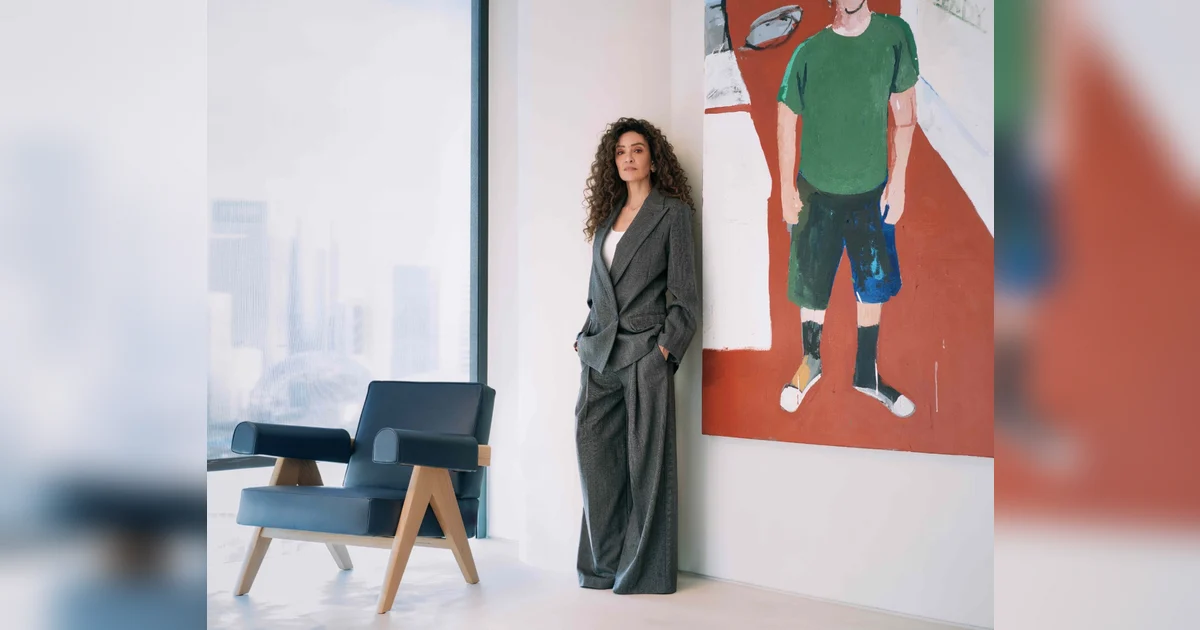
    In a significant development for the Middle Eastern art world, prominent art collector and patron Elie Khouri has announced the appointment of Caroline Louca as the inaugural Director of the Elie Khouri Art Foundation (EKAF). This strategic move marks a pivotal phase in the institutional development of the foundation, which oversees a globally significant collection spanning more than 300 artists.

    Louca assumes leadership with a comprehensive mandate to shape EKAF’s cultural vision and strategic direction. Her primary responsibilities include developing the foundation’s institutional architecture, appointing key curatorial and operational personnel, and establishing its permanent physical presence within the United Arab Emirates. This future venue is envisioned as a dynamic platform for public engagement, educational initiatives, and transforming artistic legacy into sustained cultural impact.

    The appointment reflects Khouri’s methodical approach to foundation building. ‘My ambition for EKAF is that it becomes a vital platform for cultural exchange and engagement,’ Khouri stated. ‘Caroline brings the strategic vision and institutional expertise to help us realize that ambition thoughtfully and sustainably.’

    Louca brings nearly two decades of exceptional experience across cultural institutions, government-led museum development, and international art markets. Her distinguished career includes senior strategic roles at the Abu Dhabi Department of Culture & Tourism, where she contributed significantly to the development of acquisition frameworks and governance models for landmark institutions including Louvre Abu Dhabi, Guggenheim Abu Dhabi, and the Zayed National Museum.

    Subsequently, as Managing Director of Christie’s Middle East, Louca played an instrumental role in expanding the auction house’s market presence throughout the GCC region through curated auctions and institutional collaborations. Most recently, she founded Inicio Culture, advising regional collectors on cultural strategy and institutional transition.

    ‘This is a unique opportunity to build something meaningful from the ground up,’ Louca commented regarding her appointment. ‘It’s about establishing the right frameworks and vision now so the Foundation can make a real contribution to the regional and global art community over the long term.’

    This leadership appointment signifies EKAF’s evolution into a contemporary cultural institution dedicated to collection stewardship, accessibility, and meaningful community engagement throughout the region and beyond.

  • Rubio set to warn of future military action if Venezuela’s new leaders stray from US goals

    Rubio set to warn of future military action if Venezuela’s new leaders stray from US goals

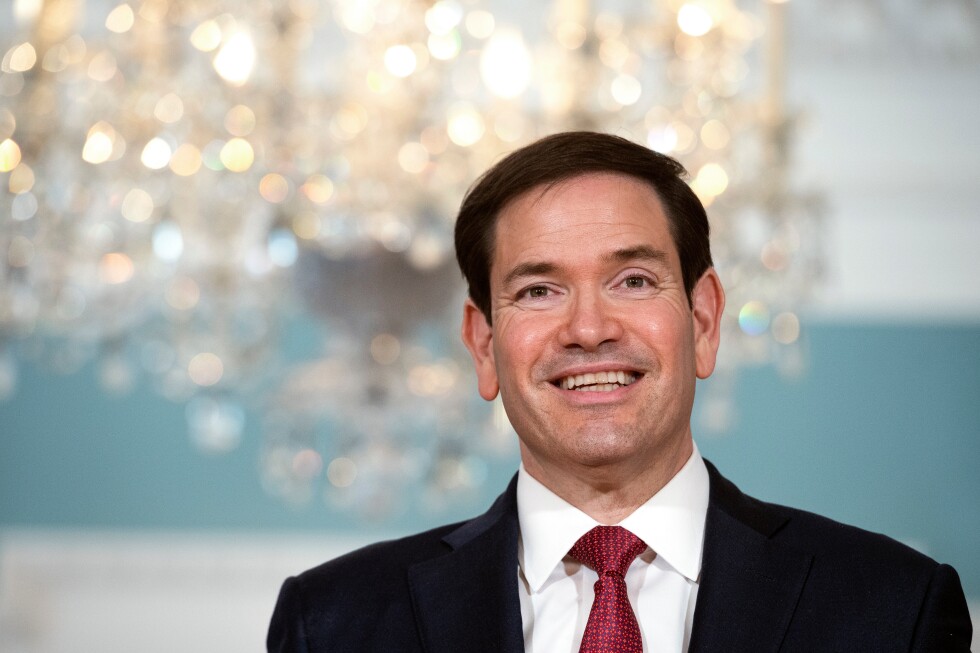
    WASHINGTON — Secretary of State Marco Rubio is poised to deliver a stark warning to Venezuela’s interim leadership during Wednesday’s Senate Foreign Relations Committee hearing: continued U.S. military intervention remains on the table if cooperation wavers. While emphasizing that America is “not at war with Venezuela,” Rubio’s prepared testimony clarifies that the Trump administration would not hesitate to deploy additional force should diplomatic efforts fail, following the recent raid that captured former President Nicolás Maduro.

    According to advance remarks released by the State Department, Rubio will state: “We are prepared to use force to ensure maximum cooperation if other methods fail. It is our hope that this will not prove necessary, but we will never shy away from our duty to the American people and our mission in this hemisphere.”

    The hearing occurs amid growing congressional tension over executive authority, with Democrats condemning Trump’s Venezuela actions as constitutional overreach while most Republicans defend them as legitimate presidential power. Although the House recently defeated a war powers resolution seeking to withdraw U.S. forces, the administration maintains no troops are stationed in Venezuela despite significant regional military buildup.

    Simultaneously, the administration is pursuing normalized relations with Acting President Delcy Rodríguez, though Rubio’s testimony makes clear her compliance with U.S. demands is expected. These demands include opening Venezuela’s energy sector to U.S. companies, redirecting oil revenue toward American goods, and ending subsidized oil exports to Cuba.

    Rodríguez acknowledged “respectful and courteous channels of communication” with the Trump administration and reported collaboration on a “working agenda.” Her government has already released 266 political prisoners—a move Trump praised as a “powerful humanitarian gesture.”

    In a significant diplomatic step, the State Department notified Congress of plans to deploy additional personnel to Caracas, preparing for potential embassy reopening. Full normalization, however, would require rescinding U.S. recognition of Venezuela’s 2015 parliament as the legitimate government.

    Rubio’s appearance also serves to address broader foreign policy concerns within his party, including Trump’s controversial Greenland annexation proposal, as the administration’s attention shifts between hemispheric, European, and Middle Eastern priorities.

  • US ouster of Maduro nightmare scenario for Kim: N. Korean ex-diplomat

    US ouster of Maduro nightmare scenario for Kim: N. Korean ex-diplomat

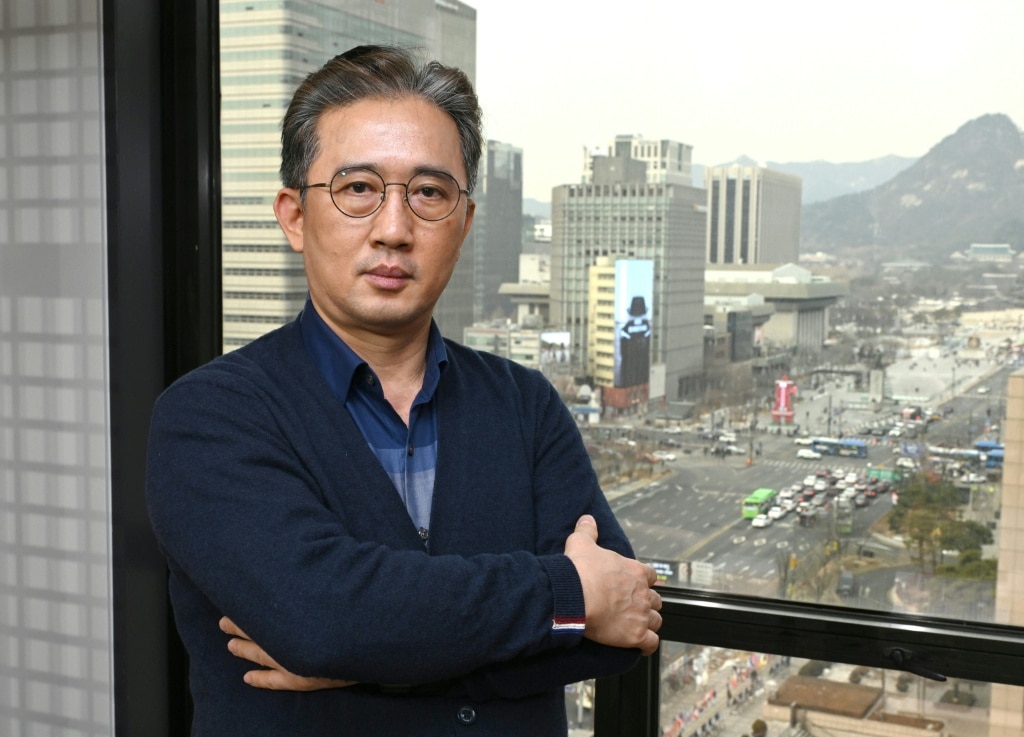
    The recent US-led operation that unseated Venezuelan leader Nicolas Maduro has created profound security anxieties within North Korea’s highest echelons, according to Lee Il-kyu, a former senior Pyongyang diplomat who defected to South Korea. In an exclusive interview with AFP, Lee revealed that Kim Jong Un likely perceives himself as vulnerable to similar ‘decapitation’ tactics following the dramatic events in Caracas.

    Lee, who served as North Korea’s political counselor in Cuba from 2019 until his defection in November 2023, described the Venezuelan operation as Kim’s ‘worst-case scenario’ becoming reality. ‘Kim must have felt that a so-called decapitation operation is actually possible,’ stated Lee, who now works for a Seoul-based think tank. This development is expected to trigger comprehensive security overhauls within North Korea’s paranoid leadership structure.

    The former diplomat possesses unique insights into Pyongyang’s international operations, having played instrumental roles in high-stakes negotiations including the release of a North Korean vessel detained in Panama in 2013—an achievement that earned him personal commendation from Kim Jong Un. His final assignment involved attempting to prevent Cuba from establishing diplomatic relations with South Korea, a mission that ultimately failed.

    Lee’s defection story reads like a geopolitical thriller. His breaking point came after being denied professional opportunities for refusing to bribe a superior. ‘I was fed up,’ he confessed to AFP. The actual escape nearly ended in tragedy when Lee and his family found themselves trapped at a Central American airport, facing forced repatriation to Venezuela—a certain death sentence. Their salvation came only through the dramatic intervention of South Korean diplomats who secured their protection.

    Now settled in South Korea, the 53-year-old defector has become an outspoken commentator on North Korean affairs, publishing a memoir titled ‘The Kim Jong Un I Witnessed’ with an English version forthcoming. He has also emerged as a vocal advocate for two North Korean prisoners of war currently held in Ukraine, part of Pyongyang’s contingent supporting Russian forces. Lee urgently appeals for their transfer to South Korea, warning that repatriation would mean certain torture and execution.

    Lee’s perspective on South Korea’s recent political turbulence—including President Yoon Suk Yeol’s impeachment and the subsequent election of progressive leader Lee Jae Myung—has deepened his appreciation for democratic resilience. ‘South Korea went months without a president following impeachment, yet the system worked very well,’ he observed, contrasting this with North Korea’s deified leadership structure where such popular accountability remains unimaginable.

  • Will the EU ban social media for children in 2026?

    Will the EU ban social media for children in 2026?

    The European Union is actively contemplating the implementation of a bloc-wide prohibition on social media access for minors, inspired by recent regulatory movements in Australia and individual member states. This consideration gains momentum as France advances legislation to ban social media for children under 15, following approval from its lower parliamentary house. The bill now awaits Senate ratification to become national law.

    European Commission President Ursula von der Leyen has championed the establishment of a minimum age requirement for social media platforms. However, the Commission intends to await recommendations from a specialized consultative panel, scheduled for formation early this year, before determining the Union’s collective approach. The panel’s mandate is to provide expert guidance on enhancing online protection for children, with all policy options remaining under evaluation.

    Several EU nations have demonstrated impatience with the bloc’s deliberative pace. Denmark has already instituted its own ban on social media access for minors under 15, joining France in pioneering national-level restrictions. These countries are concurrently participating in a pilot program for an age-verification application, designed to shield young users from harmful digital content. This technological solution is anticipated to facilitate enforcement of forthcoming regulations across member states.

    Existing EU framework, particularly the Digital Services Act (DSA), already empowers regulators to mandate platform modifications for improved child safety, including prohibitions on targeted advertising to minors. Current investigations into TikTok and Meta’s Instagram and Facebook are examining potential failures to mitigate adverse impacts on youth, with preliminary findings expected in the first half of the year. These probes specifically address concerns regarding algorithmic amplification of extreme content through the ‘rabbit hole’ effect.

    The international landscape shows growing consensus on age restrictions, with Malaysia, Norway, and New Zealand developing similar prohibitions. The European Parliament has previously advocated for banning social media for users under 16, indicating legislative support for stringent measures. As the EU monitors legal challenges to Australia’s under-16 ban, the bloc prepares to potentially enact the most comprehensive youth protection standards in the digital realm.

  • Neil Young offers Greenlanders free access to his archives

    Neil Young offers Greenlanders free access to his archives

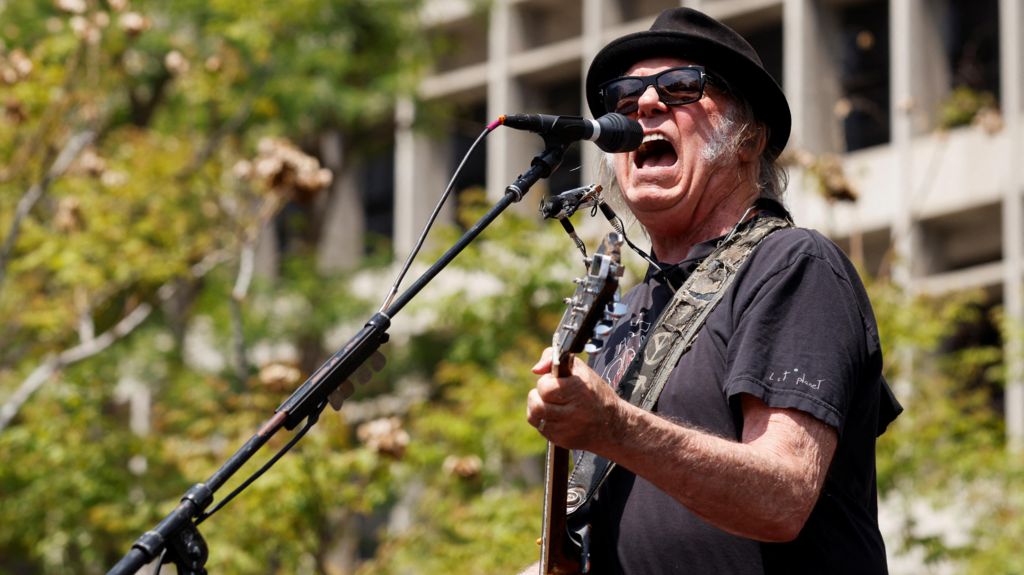
    In an unconventional political protest, legendary rock musician Neil Young has extended a year of complimentary access to his extensive digital music archives to all Greenland residents. This artistic peace offering comes as a direct response to recent geopolitical tensions surrounding the autonomous Danish territory.

    The initiative follows controversial statements from former U.S. President Donald Trump regarding potential annexation of Greenland, which he initially justified through national security concerns before moderating his position to propose diplomatic negotiations. Young characterized these developments as creating ‘unwarranted stress and threats’ for Greenland’s population.

    On his official website, the Canadian-American artist announced this gesture ‘of peace and love,’ simultaneously encouraging other organizations to emulate his compassionate approach. In a characteristically bold move, Young referred to the Trump administration as ‘our unpopular and hopefully temporary government’ in his signed statement.

    Typically requiring a subscription fee starting at approximately $25, Young’s comprehensive digital archive will utilize Greenland-registered mobile numbers for verification purposes to ensure legitimate access for residents.

    This latest action continues Young’s established pattern of political activism through his artistic platform. The musician previously initiated legal proceedings in 2020 to prevent Trump from using his music during campaign events. More recently, he published scathing criticisms of the former president’s governance, describing contemporary America as ‘a disaster’ being systematically dismantled.

    Young’s protest history extends beyond political figures to corporate entities. He previously organized a boycott against Amazon due to founder Jeff Bezos’s financial support for Trump’s campaign, and notably removed his music catalog from Spotify for two years in protest against the platform’s distribution of Joe Rogan’s podcast, which he accused of spreading vaccine misinformation. His eventual return to Spotify coincided with Rogan’s multi-platform distribution deal worth $250 million, which Young interpreted as reducing Spotify’s exclusive control over the controversial content.

    Several prominent artists including Joni Mitchell and India Arie previously joined Young’s Spotify boycott in solidarity, demonstrating the musician’s influential position within the artistic community’s social advocacy movements.

  • Amid Ukraine war fallout, fearful Chechen women seek escape route

    Amid Ukraine war fallout, fearful Chechen women seek escape route

    In the shadow of Russia’s invasion of Ukraine, Chechen women are facing intensified repression and violence, creating a desperate exodus from the conservative North Caucasus region. Rights organizations report that wartime conditions have exacerbated systemic gender-based oppression under strongman leader Ramzan Kadyrov’s authoritarian rule.

    Chechnya, a Muslim-majority territory of 1.5 million people, operates as a virtual ‘state within a state’ with its own strict codes that often override Russian federal law. Women face severe restrictions regarding dress, education, employment, and movement, with traditional clan structures frequently enforcing these norms through violence.

    The situation has deteriorated significantly since Russia launched its offensive against Ukraine. Kadyrov, a staunch Putin ally who has ruled Chechnya since 2007, has dispatched thousands of Chechen men to fight in Ukraine. According to human rights groups, many were essentially coerced into combat through financial incentives or threats of retaliation.

    This mobilization has created a dangerous feedback loop: returning combatants often suffer from PTSD and perpetuate violence against women, while the climate of fear has intensified throughout the region. Independent monitoring has become nearly impossible, and even mild criticism of the Ukraine invasion can result in abduction and torture.

    The tragic case of Aishat Baimuradova illustrates the extreme risks faced by women who challenge the status quo. The 23-year-old fled Chechnya after enduring years of abuse, only to be found dead in her Yerevan apartment in October. Before her death, she had openly criticized Kadyrov’s policies and adopted a more Western appearance—actions that drew threats from pro-regime Chechens accusing her of ‘Russifying.’

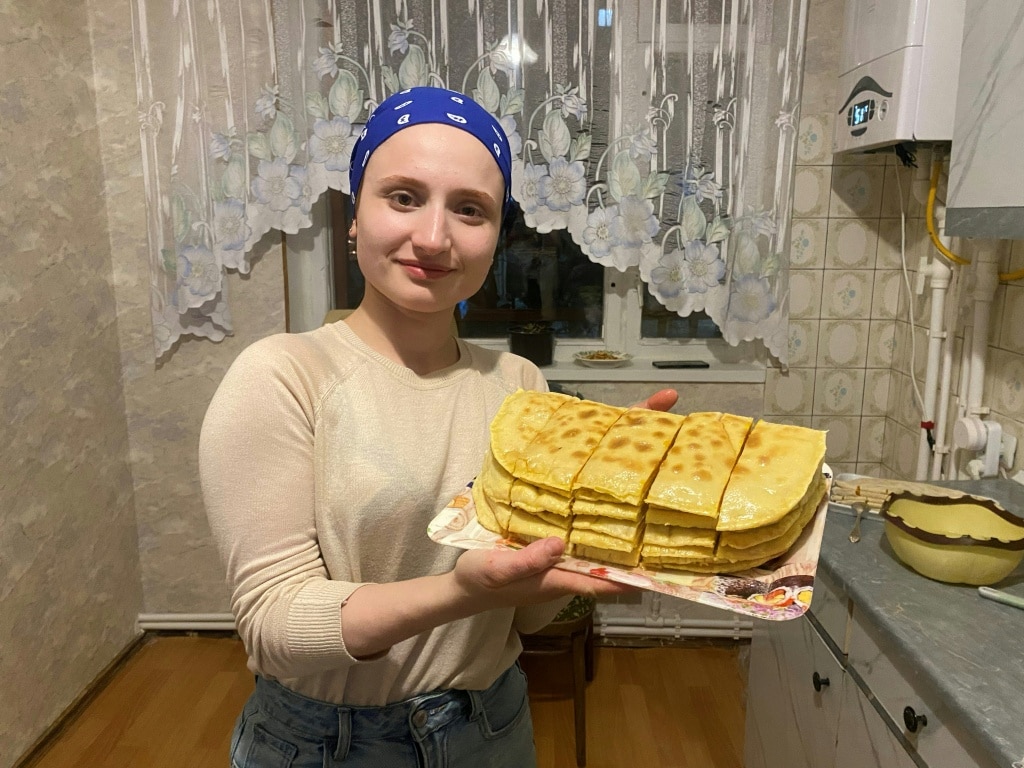
    Another survivor, identified only as Asil for security reasons, escaped her violent family and now lives in hiding in Europe. She describes an environment where women are blamed for ‘bringing shame’ to their families and where resistance is often attributed to demonic possession. ‘The reasons for everything are the sheitan,’ Asil told reporters, using the Arabic word for devil.

    Despite the dangers, resistance continues. Asil now embraces small acts of defiance—cutting her hair short, learning music, and claiming ownership of her time and space. While she acknowledges that not all Chechen families are abusive, she hopes for a future where women can enjoy basic rights and security after the war and Kadyrov’s rule.

    Human rights organizations report a dramatic increase in requests for assistance from Chechen women seeking escape. However, Western sanctions against Russia have complicated evacuation efforts, leaving many trapped in increasingly dangerous circumstances. With independent reporting virtually impossible from within Chechnya, the full scale of the crisis remains difficult to document.

  • Minnesota congresswoman Ilhan Omar attacked with ‘unknown liquid’ during town hall

    Minnesota congresswoman Ilhan Omar attacked with ‘unknown liquid’ during town hall

    U.S. Representative Ilhan Omar (D-Minnesota) demonstrated remarkable resilience Tuesday when an assailant targeted her with an unknown chemical substance during a public town hall event in north Minneapolis. The incident occurred shortly after the congresswoman delivered forceful remarks calling for structural immigration reform.

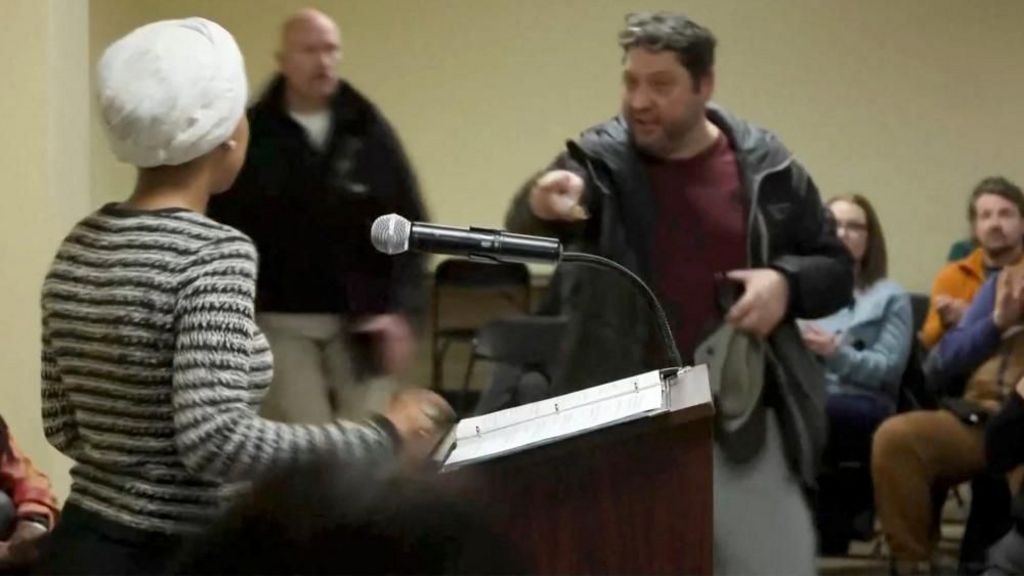
    According to Minneapolis Police Department reports, an audience member deployed a syringe to spray liquid toward Representative Omar during the gathering attended by approximately 100 constituents. Security personnel immediately subdued the individual while shouting ‘make a hole’ to clear a path during the apprehension. Forensic teams subsequently conducted analysis at the scene to identify the composition of the deployed substance, which witnesses described as emitting a pungent, chemical-like odor.

    Despite the alarming interruption, Representative Omar refused to conclude the event prematurely. ‘I’m ok. I’m a survivor so this small agitator isn’t going to intimidate me from doing my work,’ she stated in a social media post following the incident. From the podium, she reassured attendees: ‘We will continue… we are Minnesota strong,’ earning praise from constituents for her composure under duress.

    The context of the town hall discussion notably focused on recent immigration enforcement actions, including two fatal shootings of American citizens by immigration officials within the month. Representative Omar had just called for the abolition of Immigration and Customs Enforcement (ICE) and demanded the resignation or impeachment of Homeland Security Secretary Kristi Noem when the attack occurred.

    Minneapolis Mayor Jacob Frey condemned the act unequivocally, stating: ‘Violence and intimidation have no place in Minneapolis. We can disagree without putting people at risk… This kind of behavior will not be tolerated in our city.’

    The incident occurs against a backdrop of heightened political tensions, with many local residents interpreting increased immigration enforcement as retaliation for President Trump’s characterization of Representative Omar as a ‘radical left lunatic.’ Earlier Tuesday, the administration had signaled potential de-escalation in Minnesota following the recent shootings.

    Representative Omar, who made history in 2019 as the first Somali-American, first African-born American, and among the first Muslim American women elected to Congress, has previously faced numerous threats related to her political positions and public profile.

  • 2029 Asian Winter Games in Saudi Arabia postponed

    2029 Asian Winter Games in Saudi Arabia postponed

    In a significant development for winter sports in Asia, the Olympic Council of Asia (OCA) and Saudi Arabian Olympic Committee have jointly announced the postponement of the 2029 Asian Winter Games. The decision was formalized through a mutual agreement that establishes an updated framework for future hosting of the winter sports spectacle.

    According to the official statement released on Saturday, both sporting bodies have committed to rescheduling the event to a later date, which will be confirmed through appropriate channels in due course. This strategic shift comes as part of a broader recalibration of Saudi Arabia’s winter sports ambitions.

    The revised approach will see Saudi Arabia hosting a series of standalone winter sports competitions in the coming years. These events are designed to foster winter sports development across the region while allowing additional preparation time to ensure broader regional participation in future Asian winter competitions.

    The postponement follows months of speculation regarding Saudi Arabia’s readiness to host the games at NEOM, the $500 billion megacity project that was slated to feature a year-round winter sports complex in the Trojena mountains. This development represents a notable adjustment in Saudi Arabia’s extensive sports investment strategy, which includes hosting the 2034 FIFA World Cup.

    Earlier in August, the OCA had maintained that preparations were proceeding according to schedule, despite emerging reports that South Korea and China were being considered as potential replacement hosts. Both nations had previously demonstrated winter sports hosting capabilities through the 2018 and 2022 Winter Olympics respectively, with China recently hosting the Asian Winter Games in Harbin.

    Media reports had indicated that Riyadh was contemplating approaching both South Korea and China to potentially host the 2029 edition instead. Yonhap news agency specifically reported that the OCA had inquired with Korean Sport & Olympic Committee president Ryu Seung-min regarding South Korea’s willingness to assume hosting duties.

  • What to know about South Sudan’s major offensive against opposition forces

    What to know about South Sudan’s major offensive against opposition forces

    NAIROBI, Kenya — South Sudan’s military has initiated a comprehensive combat operation dubbed ‘Operation Enduring Peace’ following significant territorial setbacks to opposition forces in Jonglei state. Army spokesman Lul Ruai Koang confirmed the offensive would target recapturing recently lost towns and reestablishing governmental authority.

    The announcement comes amid international alarm after a senior military commander, General Johnson Olony, was filmed instructing troops to ‘spare no lives’ during operations in Duk county. The video, circulated on social media, shows Olony explicitly ordering the destruction of property and killing of civilians, including the elderly. Government spokesman Ateny Wek Ateny subsequently characterized these remarks as ‘uncalled for’ and potentially a morale-boosting tactic rather than official policy.

    This military escalation follows months of intensified conflict between government forces and a coalition of opposition groups, including factions loyal to suspended Vice President Riek Machar and the ethnic Nuer militia known as the White Army. The opposition alliance has captured multiple government outposts since December, most notably seizing Pajut on January 16 and threatening advancement toward the capital Juba.

    The resurgent violence threatens to unravel the fragile 2018 peace agreement that ended a devastating five-year civil war which claimed approximately 400,000 lives. Machar, currently under house arrest facing treason charges, has seen his political faction declare the peace agreement void while intensifying military pressure through armory seizures and hit-and-run attacks.

    International observers have expressed profound concern over the deteriorating situation. Alan Boswell of the International Crisis Group stated unequivocally that ‘South Sudan has returned to war,’ describing the development as ‘incredibly tragic for a country that only grows weaker and poorer.’ The UN Commission on Human Rights in South Sudan warned of ‘grave alarm’ regarding the significantly heightened ‘risk of mass violence against civilians.’

    Civil society leader Edmund Yakani characterized Olony’s comments as evidence that government troops were being ’empowered to commit atrocities, to commit crimes against humanity, and, potentially, even to commit a genocide.’ The deployment of Olony—a Shilluk commander with a history of conflict with Nuer communities—to predominantly Nuer areas of Jonglei has been described by analysts as ‘incendiary’ and a ‘propaganda gift to the opposition.’

    The army has ordered civilian evacuations from three Jonglei counties and given aid organizations 48 hours to depart, raising concerns about humanitarian access and civilian protection in the conflict zone.