作者: admin

  • New West Bank settlements get nod from Israel despite global opposition

    New West Bank settlements get nod from Israel despite global opposition

    In a move that has drawn widespread international criticism, Israel’s Security Cabinet has formally approved the establishment of 19 new settlements in the occupied West Bank. The decision, finalized on December 12th and announced Sunday, represents a significant expansion of Israeli presence in territories claimed by Palestinians for their future state.

    The resolution, championed by Defense Minister Israel Katz and Finance Minister Bezalel Smotrich, includes 11 entirely new settlements alongside the legalization of eight previously unauthorized outposts. This development brings the total number of settlements approved over the past three years to 69, according to official statements from Smotrich’s office.

    United Nations Secretary-General Antonio Guterres condemned what he characterized as Israel’s “relentless” settlement expansion, warning that such actions “continue to fuel tensions, impede access by Palestinians to their land and threaten the viability of a fully independent, democratic, contiguous and sovereign Palestinian State.”

    The timing of this announcement is particularly significant as it contradicts key conditions of a US-brokered truce and comes amid growing international support for Palestinian statehood. Several European nations, Canada, and Australia have recently moved toward formal recognition of a Palestinian state, drawing strong objections from Israeli officials.

    UK Middle East Minister Hamish Falconer denounced the settlement approvals as “illegal under international law” in a social media statement, warning they “risk undermining the 20-Point Plan and prospects for the long-term peace and security that only a two-state solution can deliver.”

    The expansion has also raised questions about US-Israel relations, particularly following President Donald Trump’s public statement rejecting West Bank annexation and warning that Israel could lose American support. Regional experts note that while Trump’s position may create tension, it unlikely will cause a serious rift unless actively enforced.

    Meanwhile, diplomatic efforts continue with US special envoy Steve Witkoff reporting progress on discussions regarding Gaza’s governance structure and regional integration measures essential to recovery and stability.

  • Revised natl development planning bill submitted

    Revised natl development planning bill submitted

    China’s legislative body has taken a significant step toward formalizing the nation’s development planning processes with the submission of a revised draft law for its third review. The Standing Committee of the National People’s Congress (NPC) received the proposed legislation during its ongoing 19th session, which commenced on December 23, 2025, for a six-day deliberation period.

    The comprehensive draft legislation, structured across six chapters containing 37 distinct articles, establishes formal procedures for the creation, evaluation, approval, and oversight of national development plans. This legislative initiative seeks to codify China’s established planning practices into statutory law, enhancing the framework for macroeconomic governance while strengthening the strategic function of national planning mechanisms.

    Notable revisions in the current draft include an expanded definition of national development planning that incorporates both five-year economic and social development outlines and potential long-term vision statements. The legislation emphasizes the necessity of harmonizing planning systems across different government levels and improving coordination among various planning instruments.

    A significant addition to the draft law incorporates principles of whole-process people’s democracy into planning formulation, requiring integration of top-level design with public consultation while utilizing the expertise of industry associations. The revised text also introduces provisions for coordinating consumption, investment, and trade policies during plan implementation.

    The draft clarifies institutional responsibilities, designating the State Council as the organizer of annual national economic and social development plans, with the national development planning department taking lead drafting responsibilities in collaboration with other relevant agencies. Policy observers anticipate that this legislation will enhance policy coherence within China’s macroeconomic governance system and establish more robust implementation mechanisms for national development initiatives.

  • Two new high-speed rail lines boost agriculture, industry in Guangdong

    Two new high-speed rail lines boost agriculture, industry in Guangdong

    Guangdong Province has ushered in a new era of regional connectivity with the simultaneous inauguration of two major high-speed rail lines, fundamentally reshaping economic and transportation networks across the region. The groundbreaking infrastructure projects commenced operations on Monday, marking a significant milestone in China’s railway development.

    The Guangzhou-Zhanjiang high-speed railway, with its inaugural G9785 service departing from Guangzhou Baiyun Railway Station, establishes a direct 350 km/h corridor linking western Guangdong to the provincial capital. This engineering marvel spans approximately 401 kilometers, traversing Foshan, Zhaoqing, Yunfu, Yangjiang, and Maoming, with bridges and tunnels constituting 76.7% of its route. The project’s crown jewel, the 9,640-meter Zhanjiang Bay undersea tunnel, set national records for large-diameter subaqueous tunneling achievements.

    Parallel to this development, the Shantou-Shanwei high-speed railway initiated service with train G9787 connecting Shantou to Guangzhou. The newly operational 19.8-kilometer segment across Shantou Bay represents a technological breakthrough that integrates Shantou’s urban core into the 350 km/h high-speed network for the first time.

    These twin rail developments create a transformative two-hour transportation circle connecting Zhanjiang and Shantou—key sub-center cities in western and eastern Guangdong respectively—to the economic powerhouse of the Guangdong-Hong Kong-Macao Greater Bay Area. The infrastructure advancement substantially reduces travel duration between previously remote regions and the Pearl River Delta’s core economic zone.

    The economic implications are already materializing across sectors. In Maoming’s Genzi township, renowned for lychee production, agricultural enterprises are preparing for expanded market access. “Our distribution channels for premium lychees will significantly expand into the Greater Bay Area and beyond,” noted a major local farmer identified as Long, who is implementing new packaging infrastructure in anticipation of increased demand.

    Meanwhile, in Shantou’s Chenghai district—a traditional manufacturing hub for toys, gifts, and garments—business operations are undergoing rapid transformation. Buyers like Mr. Chen from Shenzhen report that what previously required two-day business trips can now be accomplished in a single day, enabling morning product selection, afternoon deal finalization, and evening returns to Shenzhen.

    According to China Railway Guangzhou Group, these developments represent crucial progress in constructing a highly efficient transportation network during China’s 14th Five-Year Plan period (2021-2025). The province’s total railway operational mileage now reaches 6,433 kilometers, with 3,411 kilometers dedicated to high-speed railways operating at 200 km/h or faster.

  • Major Russian drone and missile attack on Ukraine kills at least 3 people and cuts power

    Major Russian drone and missile attack on Ukraine kills at least 3 people and cuts power

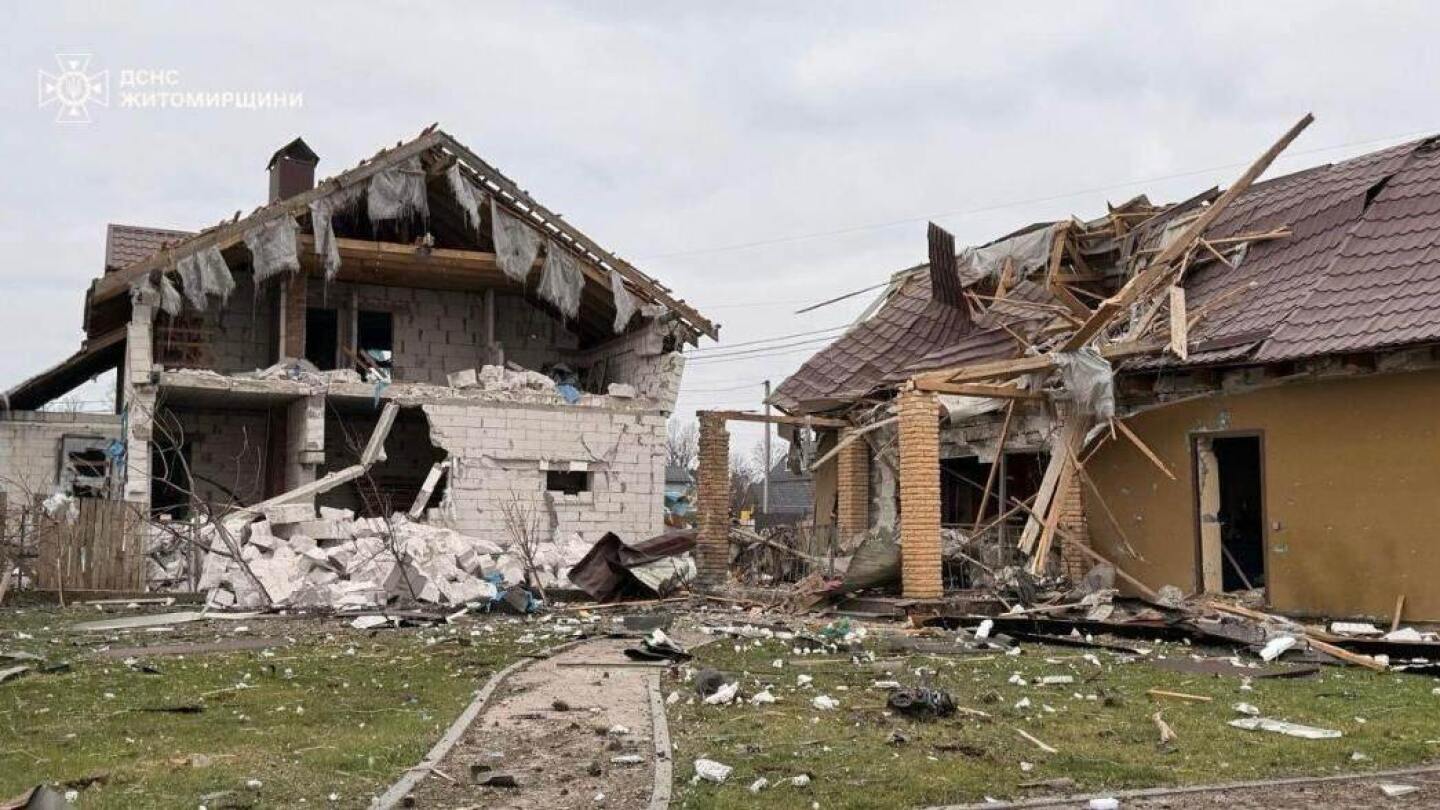
    In a devastating pre-Christmas offensive, Russian forces unleashed a massive barrage of 635 drones and 38 missiles across Ukraine, killing at least three civilians including a 4-year-old child. The large-scale attack, which began overnight and continued into daylight hours Tuesday, targeted civilian infrastructure across 13 regions, causing widespread power outages during bitter winter conditions.

    Ukrainian President Volodymyr Zelenskyy condemned the assault as a deliberate signal of Russia’s true intentions, coming just two days before Christmas and amid U.S.-led peace negotiations that he had previously described as showing ‘quite solid’ progress. The bombardment struck residential areas, energy facilities, and critical infrastructure, leaving multiple western regions without electricity and damaging over 120 homes in the Odesa region alone.

    According to Ukrainian defense reports, air interception systems successfully neutralized 587 drones and 34 missiles, though significant damage occurred to the country’s energy grid. This represents the ninth major Russian attack on Ukraine’s energy infrastructure this year, with private energy supplier DTEK reporting this as the seventh major strike on their facilities since October. The company’s thermal power plants have endured more than 220 attacks since the full-scale invasion began in February 2022, resulting in four worker fatalities and 59 injuries.

    The timing of the assault appears strategically significant, occurring alongside diplomatic efforts led by U.S. envoy Steve Witkoff, who characterized recent talks with Ukrainian and European representatives as ‘productive and constructive.’ President Zelenskyy interpreted the military escalation as Vladimir Putin’s explicit rejection of peaceful resolution, stating the attack demonstrated that Russia ‘cannot accept the fact that we must stop killing.’ Emergency services worked to restore power across affected regions as security conditions permitted, while international observers noted the stark contrast between diplomatic overtures and military actions on the ground.

  • Tea sector blends commerce with cross-Strait exchanges

    Tea sector blends commerce with cross-Strait exchanges

    In the mountainous landscapes of Fujian province, a unique agricultural collaboration across the Taiwan Strait is transforming tea cultivation into both an economic success story and a model for cross-border cooperation. Taiwan farmer Peng An-yuan has established an innovative eco-friendly tea garden in Sanming that demonstrates remarkable agricultural harmony, where tea plants coexist with wild grasses to create a natural habitat for beneficial insects.

    Peng introduced Oriental Beauty tea, a prized oolong variety from his hometown of Hsinchu, Taiwan, to Datian county in Sanming. The region’s similar climate and ecological conditions proved ideal for cultivating this distinctive tea, known for its unique production process where small green leafhoppers naturally enhance the leaves’ flavor profile. These insects bite the tea leaves, triggering a biochemical reaction that imparts a sought-after fruity and honey-like aroma, resulting in leaves with distinctive dark purple and brown tones covered with fine white hairs.

    “The tea jassids feeding on the leaves are essential, but their behavior is unpredictable,” explained Peng, who serves as the primary inheritor of Taiwan’s Oriental Beauty tea tradition on the Chinese mainland. “This unpredictability is precisely what makes this tea variety so exceptionally precious.”

    The successful cultivation has been bolstered by Sanming’s designation as China’s first cross-Strait rural integrated development pilot zone in November 2022. With 78 percent forest coverage earning it the nickname “Green City,” Sanming provides an ideal environment for this agricultural collaboration. The partnership has yielded substantial economic benefits: Datian county now produces 4,300 metric tons of Oriental Beauty tea annually, representing 70 percent of the mainland’s total output, with exports reaching European and Southeast Asian markets.

    In a significant step toward standardization, the Fujian Provincial Administration for Market Management recently released cross-Strait technical regulations for Oriental Beauty tea processing. These standards were jointly developed by tea associations and universities from both sides of the Strait, facilitating deeper industry integration.

    The collaboration extends beyond tea production. Driven by supportive policies, Sanming has approved 106 new Taiwan-invested enterprises over the past three years with total investments reaching 801 million yuan ($114 million). The region has established 12 specialized bases for Fujian-Taiwan agricultural integration, creating numerous opportunities for cross-border entrepreneurship.

    In Jianning county, Taiwan entrepreneur Lin Hsiu-ying operates an oil tea camellia cooperative that applies Taiwanese techniques to boost production, increasing income for 112 local households by an average of over 4,000 yuan per person. Lin attributes this success to mainland policies providing financial support for new plant varieties and equipment.

    The integration efforts align with China’s 15th Five-Year Plan (2026-30), which emphasizes high-quality development across the Taiwan Strait and strengthened industrial cooperation. According to Zhang Han, spokeswoman for the State Council Taiwan Affairs Office, implementation of the plan will create expanded opportunities for Taiwan compatriots to study, work, and live on the mainland.

    Fujian officials plan to capitalize on these developments by encouraging greater youth participation in rural vitalization projects. Sanming has already attracted 30 cross-Strait youth teams, including over 80 Taiwan professionals in architecture and design, who contribute to rural environmental renovation initiatives.

    Taiwan designer Tsai Hsingchueh, who works across Sanming’s villages, notes that the mainland’s rural vitalization blueprint offers significant opportunities for young Taiwan professionals with expertise in community development. His team brings graduate students from universities on both sides of the Strait for half-year internships, with many participants choosing to remain in the villages long after their programs conclude.

  • Five dead after plane carrying child burns victim crashes in Texas

    Five dead after plane carrying child burns victim crashes in Texas

    A humanitarian medical flight operated by the Mexican Navy met with tragedy on Monday when it crashed into the waters near Galveston, Texas, under dense fog conditions, resulting in five fatalities and one individual reported missing. The aircraft was conducting a critical mission for the Michou y Mau Foundation, transporting a child with severe burns for specialized medical treatment at the time of the incident.

    According to data from Flight Radar, the last known position of the aircraft was recorded at 15:01 local time over Galveston Bay, in close proximity to Scholes International Airport. The Mexican Secretariat of the Navy confirmed that two survivors were rescued from the wreckage, while search operations for the missing person continue in coordination with the U.S. Coast Guard.

    Eyewitness accounts and video footage obtained by the Associated Press depict a harrowing rescue scene. Local yacht captain Sky Decker Jr., who assisted first responders, described discovering a severely injured woman trapped in the wreckage with merely three inches of airspace for breathing amid toxic jet fuel fumes. ‘She was really fighting for her life,’ Decker recounted, highlighting the perilous conditions faced by both victims and rescuers.

    The Michou y Mau Foundation, renowned for providing medical care to Mexican children suffering from severe burns, issued an official statement on social media platform X expressing their deepest condolences to the families affected by this devastating tragedy. The organization has temporarily suspended medical transport operations pending preliminary investigation results.

    Aviation safety authorities from both Mexico and the United States have initiated a collaborative investigation into the circumstances surrounding the crash, with particular focus on the challenging meteorological conditions that characterized the flight path. The incident represents one of the deadliest aviation accidents involving cross-border medical missions in recent years.

  • Micro-dramas directed to tackle sports

    Micro-dramas directed to tackle sports

    China is strategically harnessing the explosive popularity of micro-dramas—brief, vertically-formatted serials designed for mobile consumption—as a powerful vehicle for implementing national social policy objectives. In a significant development, these digital narratives are being formally integrated into the country’s fitness strategy through the groundbreaking “Exercise Through Micro-dramas” initiative.

    The movement gained official momentum in October 2025 when China’s National Radio and Television Administration partnered with the General Administration of Sport to launch this innovative program. This followed an August State Council directive that explicitly listed micro-dramas as an approved tool for promoting public sports participation. The initiative encourages production companies to create sports-themed content that makes athletic engagement more accessible and compelling to mainstream audiences.

    Industry metrics reveal why micro-dramas present such an attractive policy implementation channel. According to the 2025 Micro-short Drama Industry White Paper, China’s micro-drama viewer base has swollen to 696 million people, with average daily consumption reaching 120.5 minutes per user. This represents a substantial captive audience for policy messaging.

    Academic experts highlight the natural synergy between sports content and the micro-drama format. Professor Liu Fan of the Communication University of China notes that “micro-dramas are becoming an important component of the sports industry” due to their emotional intensity, suspense-driven narratives, and ability to amplify athletic drama within compressed timeframes.

    The production ecosystem is rapidly adapting to this new directive. Migu Digital Media Co has already aligned its content pipeline with the government’s six creative directions, developing China’s first micro-dramas focused on scientific fitness and short-track speed skating. Meanwhile, Chongqing Maiya Media Co has completed 26 sports-centered productions, including the phenomenally successful billiards-themed ‘The Little Pool God,’ which garnered over 200 million views and topped industry popularity rankings.

    Despite this progress, challenges remain in balancing entertainment value with substantive sports education. Some productions still prioritize dramatic tropes like time travel or romantic fantasy over core athletic values such as teamwork and discipline. Experts suggest future development should explore integrations with local industries and cultures through approaches like “sports + tourism” and “sports + intangible cultural heritage.”

    As the industry evolves toward premiumization, creators face the challenge of meeting rising audience expectations while maintaining the authentic sports immersion that makes the format effective. The ultimate success of this innovative policy approach may depend on returning to ordinary people’s daily experiences and exploring how sports narratives can resonate with broader social emotions.

  • Hong Kong’s Southbound Travel for Guangdong Vehicles scheme officially implemented

    Hong Kong’s Southbound Travel for Guangdong Vehicles scheme officially implemented

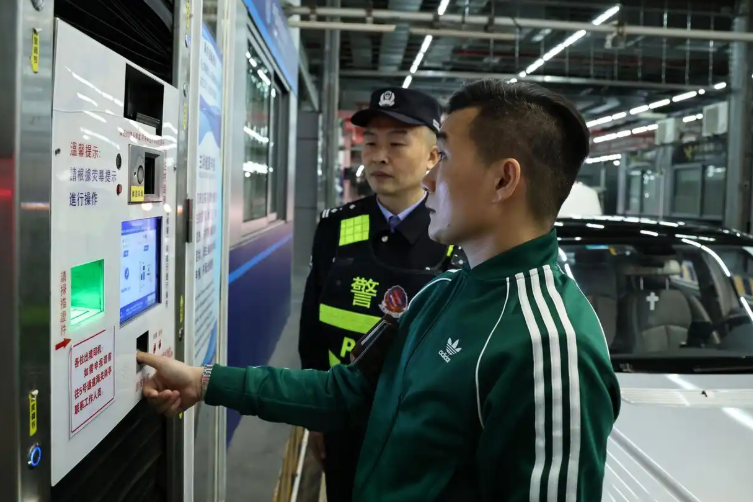
    HONG KONG – In a significant transportation policy shift, Hong Kong has officially launched its Southbound Travel for Guangdong Vehicles scheme, which took effect at midnight on Tuesday. This groundbreaking initiative permits eligible private car owners from China’s Guangdong Province to drive directly into Hong Kong’s urban centers through the Hong Kong-Zhuhai-Macao Bridge’s Zhuhai Port.

    The program’s initial phase encompasses four major Guangdong cities: Guangzhou, Zhuhai, Jiangmen, and Zhongshan. Authorities have outlined plans to extend the scheme to additional municipalities across the province following a six-month evaluation period.

    Application procedures for the cross-border driving initiative commenced on December 9 at 9:00 AM local time. The program operates with a carefully managed daily quota system, currently capped at 100 vehicle entries per day. Approved vehicles are permitted to remain in Hong Kong for a maximum duration of 72 hours per individual visit, provided owners have secured confirmed travel arrangements in advance.

    This transportation breakthrough represents a substantial step in regional integration, facilitating easier personal mobility while maintaining regulatory oversight through its quota and pre-approval systems. The implementation follows extensive planning between Hong Kong and mainland authorities to ensure smooth operational execution.

  • China’s top legislature convenes standing committee session

    China’s top legislature convenes standing committee session

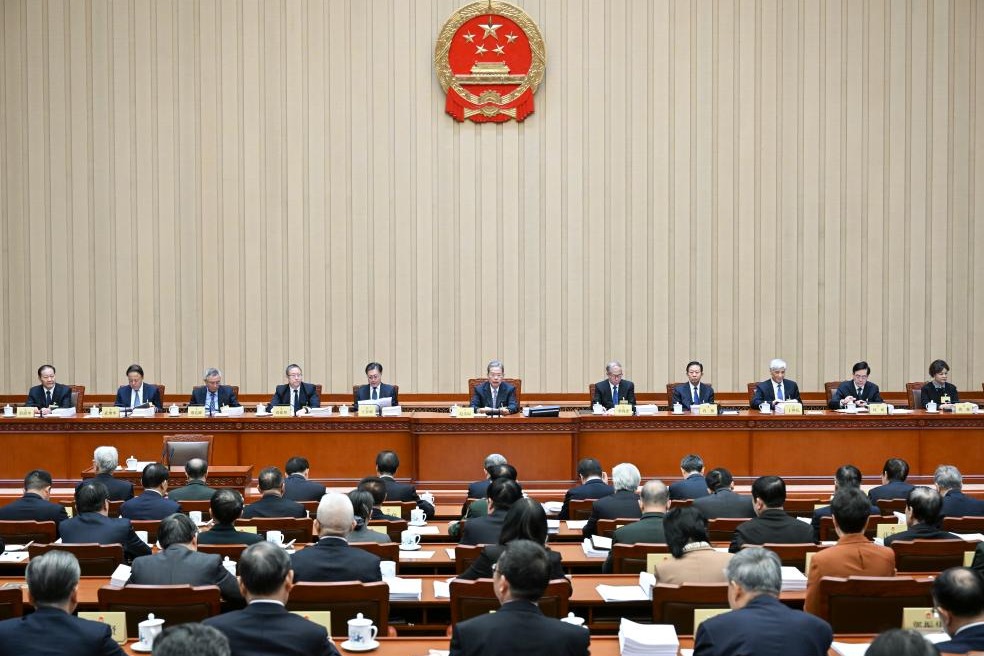
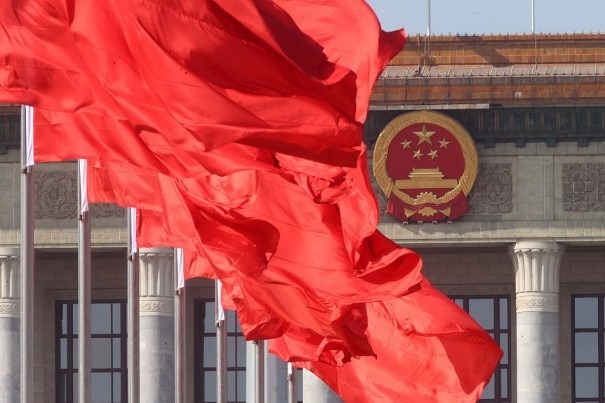
    The Standing Committee of China’s National People’s Congress (NPC) commenced its 19th session of the 14th legislature in Beijing on Monday, with Chairman Zhao Leji presiding over the inaugural plenary meeting at the Great Hall of the People. The session features an extensive legislative agenda addressing multiple sectors of national governance and international cooperation.

    Lawmakers engaged in thorough deliberations on several pivotal draft laws, including a comprehensive environmental code and legislation focused on promoting ethnic unity and progress. The agenda further encompasses draft laws concerning national development planning, hazardous chemicals safety management, state-owned assets oversight, childcare services enhancement, and Antarctic activities and environmental protection.

    The committee examined proposed revisions to multiple existing statutes, including the fisheries law, civil aviation law, regulations governing standard spoken and written Chinese language, foreign trade law, banking supervision and regulation law, and trademark law. These revisions aim to modernize legal frameworks in response to evolving economic and social requirements.

    Additional critical items under consideration include a bill proposing interpretations of specific provisions within the criminal procedure law and a draft decision regarding the convocation of the fourth session of the 14th NPC. The session also addressed reports on deputy qualifications and various personnel-related matters.

    Chairman Zhao subsequently participated in the session’s second plenary meeting, where legislators received multiple reports including inspection findings on the implementation of the energy conservation law and circular economy promotion law. Additionally, lawmakers reviewed a comprehensive report detailing rectification measures addressing issues identified during the audit of 2024 central budget implementation and other fiscal revenue and expenditure matters.

  • Afrobeats star Asake ‘devastated’ after fan dies in Kenya stadium crush

    Afrobeats star Asake ‘devastated’ after fan dies in Kenya stadium crush

    Nigerian Afrobeats sensation Asake has issued a heartfelt response following a deadly crowd crush at his Nairobi concert that resulted in the death of 20-year-old fan Karen Lojore. The tragic incident occurred Saturday evening at Nyayo National Stadium where excessive queues and entry delays, exacerbated by heavy rainfall, led to dangerous overcrowding near stadium gates.

    In an emotional Instagram statement released Monday, Asake expressed being ‘devastated by the tragic incident’ and extended condolences to Lojore’s family and friends. The artist, whose real name is Ahmed Ololade, emphasized that music should represent ‘love and joy’ and stated it ‘breaks my heart that anyone had to experience such loss.’ He explicitly called for accountability, asserting that ‘those responsible should be held accountable’ while pledging support for investigation efforts.

    The victim’s family has launched impassioned appeals for justice, with a woman believed to be Lojore’s mother directly addressing concert organizers and Asake via social media: ‘What happened to my child? Why her? I want justice for my child.’

    Kenyan police spokesperson Michael Muchiri confirmed to BBC that comprehensive investigations are underway to determine precisely how and why the incident occurred. Event organizers Tukutane Entertainment, known for hosting major African music events featuring stars like Tems and Rema, stated they are cooperating fully with authorities.

    Eyewitness accounts from attending journalists describe significant problems with crowd management and stadium entry procedures. This tragedy echoes a similar 2022 incident at London’s Brixton Academy where an Asake performance resulted in two fatalities and multiple injuries.

    Asake, celebrated as one of Nigeria’s most prominent musical exports since his breakthrough in 2022, has received multiple accolades including Grammy nominations and BBC Radio 1 recognition.