作者: admin

  • The fallout from Nigeria’s spectacular $25m museum and the Benin Bronzes

    The fallout from Nigeria’s spectacular $25m museum and the Benin Bronzes

    The much-anticipated opening of Nigeria’s Museum of West African Art (Mowaa) in Benin City has been marred by political disputes and protests, casting a shadow over what was meant to be a celebration of regional creativity. The six-hectare campus, designed by renowned British-Ghanaian architect Sir David Adjaye, was envisioned as a cultural hub to honor the legacy of the Benin Bronzes and foster contemporary African art. However, tensions escalated when the Edo state government revoked the museum’s land use rights, citing a name change from ‘Edo Museum of West African Art’ to simply ‘Mowaa.’ This decision followed protests demanding the museum be renamed the Benin Royal Museum and placed under the control of the local traditional ruler, Oba Ewuare II. The controversy highlights deeper political rivalries, with the new governor’s administration seeking greater influence over the project, which was championed by the previous governor, Godwin Obaseki. The museum, a $25 million initiative funded by international donors and the Edo state government, aims to create over 30,000 jobs and contribute $80 million annually to the regional creative economy. Despite its ambitious goals, the absence of the Benin Bronzes—looted by British soldiers in 1897 and now scattered across Western museums—remains a contentious issue. Mowaa’s executive director, Phillip Ihenacho, emphasized the museum’s broader vision to inspire contemporary African creativity across various art forms, rather than focusing solely on historical artifacts. As the government works to resolve the dispute, Mowaa’s staff remain committed to redefining the role of a modern African museum, even in the face of political and logistical challenges.

  • France wary of enemy that never went away, 10 years after Bataclan attacks

    France wary of enemy that never went away, 10 years after Bataclan attacks

    As France commemorates the 10th anniversary of the devastating Bataclan massacre, the nation is reminded of the persistent threat of jihadist violence. The arrest of Maëva B, a 27-year-old French convert to Islam and former associate of Salah Abdeslam, underscores the enduring danger. Abdeslam, the sole surviving jihadist from the 2015 attacks, is serving a life sentence. Investigations revealed that Maëva B had been in contact with Abdeslam and was allegedly planning her own jihadist attack, leading to her arrest alongside two associates. The Bataclan attacks, which claimed 130 lives and left hundreds injured, remain a symbol of extreme Islamist violence in France. Despite the decline of the Islamic State (IS) as a major force, the threat has evolved into what experts term ‘ambient jihadism,’ fueled by social networks and geopolitical tensions. France’s political instability further exacerbates the risk, as extremists gain influence. Commemorations include the lighting of the Eiffel Tower in the French tricolor and the opening of a memorial garden. Meanwhile, Abdeslam’s offer to participate in ‘restorative justice’ has sparked controversy, with some survivors rejecting the notion that terrorism can be equated with common crimes.

  • The case for and against counting castes in India

    The case for and against counting castes in India

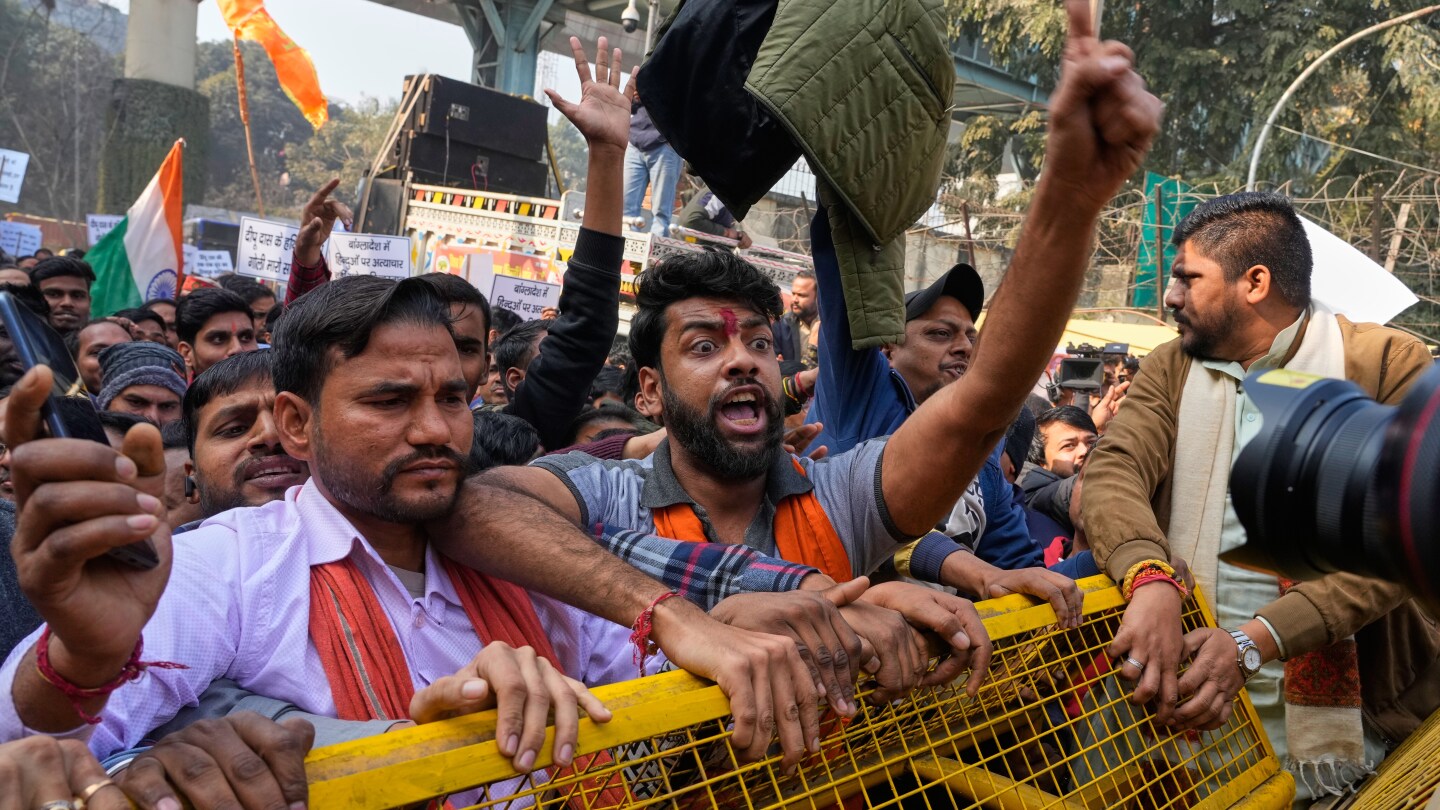
    India’s caste system, a deeply entrenched social hierarchy, continues to shape the nation’s socio-political landscape. The upcoming 2027 national census will mark a historic shift by including a full enumeration of castes for the first time in nearly a century. This move, driven by political pressure and demands for equitable distribution of government benefits, aims to provide a clearer picture of who benefits from affirmative action and who remains marginalized. However, the initiative has sparked intense debate among scholars and activists. Anand Teltumbde, a prominent scholar-activist, warns that counting castes risks legitimizing and perpetuating the very system it seeks to address. In his provocative book, *The Caste Con Census*, Teltumbde argues that caste is inherently hierarchical and defies measurement, echoing B.R. Ambedkar’s call for the annihilation of caste rather than its management. Critics like Teltumbde fear that the census could be exploited by political parties to redraw quotas or fuel caste-based resentment, further entrenching inequality. On the other hand, proponents such as sociologist Satish Deshpande and economist Mary E John view the census as a necessary tool for achieving social justice. They argue that reliable caste data can expose both privilege and deprivation, enabling more targeted welfare policies. Political scientist Sudha Pai suggests that linking caste data to income and educational indicators could shift India from a caste-based to a rights-based welfare system. Yet, challenges abound, from the complexity of data collection to the risk of solidifying caste identities. As India prepares for this monumental exercise, the question remains: Will the caste census pave the way for social justice, or will it deepen the divisions it seeks to address?

  • Fleetwood eyes ‘very special’ first DP World Tour Championship win

    Fleetwood eyes ‘very special’ first DP World Tour Championship win

    Tommy Fleetwood, the Dubai-based English golfer, is determined to secure his first-ever DP World Tour Championship win, a victory he describes as ‘very special.’ Having narrowly missed the title in 2019 and 2023, Fleetwood is eager to cap off an already remarkable 2025 season with this prestigious trophy. The world number four has been in exceptional form this year, clinching his maiden PGA TOUR title at the Tour Championship, contributing to Europe’s historic Ryder Cup victory, and winning the DP World India Championship. Despite a recent playoff loss at the Abu Dhabi HSBC Championship, Fleetwood remains optimistic and focused on finishing the season on a high note. ‘This is the last event I’m going to play this year. It has been a great year,’ Fleetwood remarked. ‘It would be very special to be on the 18th green having won.’ The DP World Tour Championship, held at a course familiar to Fleetwood and close to his home, holds significant personal and professional importance for him. Reflecting on his recent performances, Fleetwood highlighted the positives and expressed his determination to seize the opportunity this week. ‘I feel like I played so well and so consistently throughout the week,’ he said. ‘Now, one more week to go in the season.’

  • Indian government terms Delhi car blast as ‘terrorist incident’

    Indian government terms Delhi car blast as ‘terrorist incident’

    The Indian government has officially classified the devastating car explosion near Delhi’s historic Red Fort as a ‘terrorist incident.’ The tragic event, which occurred on November 11, 2025, claimed the lives of eight individuals and left at least 20 others injured. The declaration was made following a resolution by the country’s federal cabinet of ministers, as reported by Reuters. The blast, which took place on Monday, has sent shockwaves across the nation, prompting immediate action from authorities. On Wednesday, the government issued directives to investigative agencies, urging them to handle the case with ‘utmost urgency and professionalism’ to ensure that the perpetrators and their sponsors are swiftly brought to justice. The incident has raised concerns about security in the region, with officials emphasizing the need for heightened vigilance to prevent future attacks. The Red Fort, a UNESCO World Heritage Site and a symbol of India’s rich history, has been a focal point of national pride, making the attack particularly significant. The government’s swift response underscores its commitment to addressing terrorism and ensuring public safety. As investigations continue, the nation mourns the loss of lives and stands united in the face of this tragic event.

  • Japanese pitcher Tatsuya Imai to enter MLB posting process Nov. 19

    Japanese pitcher Tatsuya Imai to enter MLB posting process Nov. 19

    LAS VEGAS — Tatsuya Imai, the standout Japanese pitcher, is set to enter the Major League Baseball (MLB) posting process starting November 19, as announced by his agent, Scott Boras, on Wednesday. This initiates a 45-day window for Imai to secure a contract with an MLB team. Boras, a prominent figure in baseball negotiations, drew comparisons between Imai and Yoshinobu Yamamoto, the recent World Series MVP who played a pivotal role in the Los Angeles Dodgers’ victory over Toronto. Boras emphasized Imai’s durability and competitive spirit, stating, ‘He’s done everything Yamamoto’s done.’ Imai, a 27-year-old right-hander, boasts an impressive 10-5 record with a 1.92 ERA this season for the Seibu Lions in Japan’s Pacific League. He struck out 178 batters in 163.2 innings, showcasing his dominance on the mound. Over his eight-year career with Seibu, Imai has accumulated a 58-45 record, a 3.15 ERA, and 907 strikeouts in 963.2 innings. His accolades include three All-Star selections and notable achievements such as pitching eight innings in a combined no-hitter and setting a team record with 17 strikeouts in a single game. Boras highlighted Imai’s preference for big markets and his desire to compete at the highest level, stating, ‘He loves big markets and wants to be on a winning team.’ Under MLB’s posting agreement with Nippon Professional Baseball, the posting fee structure includes a 20% fee on the first $25 million of a contract, decreasing to 17.5% for the next $25 million and 15% for amounts exceeding $50 million. Additional fees apply for bonuses and options. Imai’s move to MLB is highly anticipated, with teams expected to vie for his talent.

  • India asks UN wildlife body to not curb animal imports amid Ambani zoo uproar

    India asks UN wildlife body to not curb animal imports amid Ambani zoo uproar

    India has appealed to the United Nations’ wildlife trade body, CITES, to refrain from imposing restrictions on its imports of endangered species. This comes amid allegations of improper animal shipments to Vantara, a sprawling 3,500-acre zoo in Gujarat, operated by the philanthropic arm of billionaire Mukesh Ambani’s conglomerate. The zoo has faced scrutiny from authorities in Germany and the European Union over claims of irregular imports. Despite a Supreme Court-appointed panel clearing Vantara of wrongdoing in September, CITES recently urged India to review its import procedures, citing discrepancies in trade data and insufficient checks on animal origins. In a submission dated November 10, India argued that any restrictive measures would be premature and disproportionate, potentially destabilizing the CITES framework. The government emphasized that it has already tightened oversight, including enhanced due diligence for all future acquisitions. Vantara, home to 2,000 species, including exotic animals from South Africa, Venezuela, and the Democratic Republic of Congo, maintains that all imports comply with regulations. The controversy highlights ongoing tensions between wildlife conservation efforts and the operations of private zoos.

  • Dying while waiting: Gaza’s wounded trapped as Israel blocks medical evacuations

    Dying while waiting: Gaza’s wounded trapped as Israel blocks medical evacuations

    In the besieged enclave of Gaza, Baraa Abu Zaid lies in a hospital bed in Khan Younis, her days marked not by hope but by the grim reality of a collapsing healthcare system. Once a mother of three, Abu Zaid fled her home in Rafah during Israel’s ground invasion in mid-2024. Tragedy struck when a drone attack hit her family’s tent, killing two of her children and leaving her and her 13-year-old son, Obaida, critically wounded. Despite being rushed to the hospital, the dire state of Gaza’s medical infrastructure meant they received inadequate care. Obaida succumbed to his injuries within weeks, leaving Abu Zaid to face her own deteriorating condition alone.

  • What we know about new Epstein emails that mention Trump

    What we know about new Epstein emails that mention Trump

    In a significant development, US lawmakers have released over 20,000 pages of documents from the estate of Jeffrey Epstein, the disgraced financier and convicted sex offender. These documents, which include email exchanges, shed light on Epstein’s connections with prominent figures, including President Donald Trump and Prince Andrew. The release, initiated by Democrats on the House Oversight Committee, has sparked a political firestorm, with Republicans accusing Democrats of selectively leaking information to create a false narrative. Among the released emails is a 2011 exchange between Epstein and his associate Ghislaine Maxwell, where Epstein mentions Trump, stating, ‘That dog that hasn’t barked is Trump.’ The victim’s name, later revealed to be Virginia Giuffre, was redacted in the initial release. Giuffre, a prominent Epstein accuser, died by suicide earlier this year. The White House has vehemently denied any wrongdoing by Trump, emphasizing that Giuffre had previously stated Trump was not involved in any misconduct. In another email exchange, author Michael Wolff discusses with Epstein the potential to ‘finish’ Trump through an interview. Wolff suggests that Epstein could use the opportunity to either harm or help Trump’s political career. Additionally, the documents mention Prince Andrew, who has consistently denied any involvement in Epstein’s illicit activities. The White House has dismissed the emails as a ‘bad-faith effort’ to distract from Trump’s accomplishments, asserting that the documents prove ‘absolutely nothing other than the fact that President Trump did nothing wrong.’

  • Thirteen hours by touch – inside one of the world’s longest exam days

    Thirteen hours by touch – inside one of the world’s longest exam days

    Every November, South Korea halts its usual pace for the Suneung, the nation’s rigorous college entrance exam. While most students complete the test by late afternoon, blind students often endure a grueling 13-hour marathon, finishing close to 10 p.m. This year, over 550,000 students are taking the Suneung, marking the highest number of applicants in seven years. Among them are 111 blind test-takers, including Han Dong-hyun and Oh Jeong-won from Seoul Hanbit School for the Blind. The Suneung, short for College Scholastic Ability Test (CSAT), is a pivotal moment in South Korean education, determining university admissions, job prospects, and even future relationships. For most students, the exam spans eight hours, covering subjects like Korean, mathematics, English, and social or natural sciences. However, blind students are granted 1.7 times the standard duration, extending their test day significantly. The physical demands of reading braille, coupled with the lack of dinner breaks, make the exam particularly exhausting. Braille test booklets are six to nine times thicker than standard ones, as every sentence, symbol, and diagram must be converted into tactile form. Additionally, blind students face challenges in accessing study materials, often receiving braille versions of state-produced EBS preparation books months later than their sighted peers. Despite these hurdles, students like Dong-hyun and Jeong-won remain determined. Dong-hyun, who was born completely blind, uses braille and screen-reading software to navigate the exam. He finds the Korean language section particularly challenging due to the extensive braille pages. Jeong-won, on the other hand, struggles with the late afternoon fatigue, as the exam continues without a dinner break. Both students emphasize the importance of perseverance, viewing the Suneung as a test of their resilience. Their teacher, Kang Seok-ju, praises their endurance, noting the physical toll of reading braille for hours. While the Suneung is a high-stakes exam, Mr. Kang reminds his students that it is not the sole measure of their worth. For these blind students, the Suneung is not just an academic challenge—it is a testament to their years of hard work and determination.