
作者: admin

  • Mother arrested after body of missing nine-year-old girl found

    Mother arrested after body of missing nine-year-old girl found

    In a devastating turn of events, California authorities have arrested a mother for the alleged murder of her nine-year-old daughter after the child’s remains were discovered in a remote area of Utah. Ashlee Buzzard, 40, was taken into custody Tuesday on suspicion of first-degree murder following the grim discovery of her daughter Melodee’s decomposed body earlier this month.

    The tragic case began when Melodee was reported missing by her school on October 14th, though she hadn’t been seen since August. According to the Santa Barbara County Sheriff’s Office, investigators faced significant challenges as the child’s mother failed to cooperate with the investigation from its inception.

    The breakthrough came when a couple photographing scenery in rural Utah stumbled upon human remains on December 6th. The body, later identified through DNA analysis on December 22nd as Melodee Buzzard, showed evidence of gunshot wounds and was found discarded off the side of the road.

    Sheriff-Coroner Bill Brown described the case as “extraordinarily tragic,” noting that evidence indicates the child was murdered by “the very person she relied upon and trusted the most.” Security camera footage from October 9th captured the mother and daughter together near the Colorado-Utah border, which investigators believe was shortly before the murder occurred.

    Buzzard had previously been arrested in early November on unrelated false imprisonment charges after allegedly holding a man against his will who had been assisting in the search for her daughter. Those charges were later dismissed by a judge before the murder charges were filed.

    The investigation continues as authorities work to build their case against Buzzard, who remains in custody without bail.
  • Yearender-China Focus: China builds integrated, intelligent monitoring network to safeguard biodiversity

    Yearender-China Focus: China builds integrated, intelligent monitoring network to safeguard biodiversity

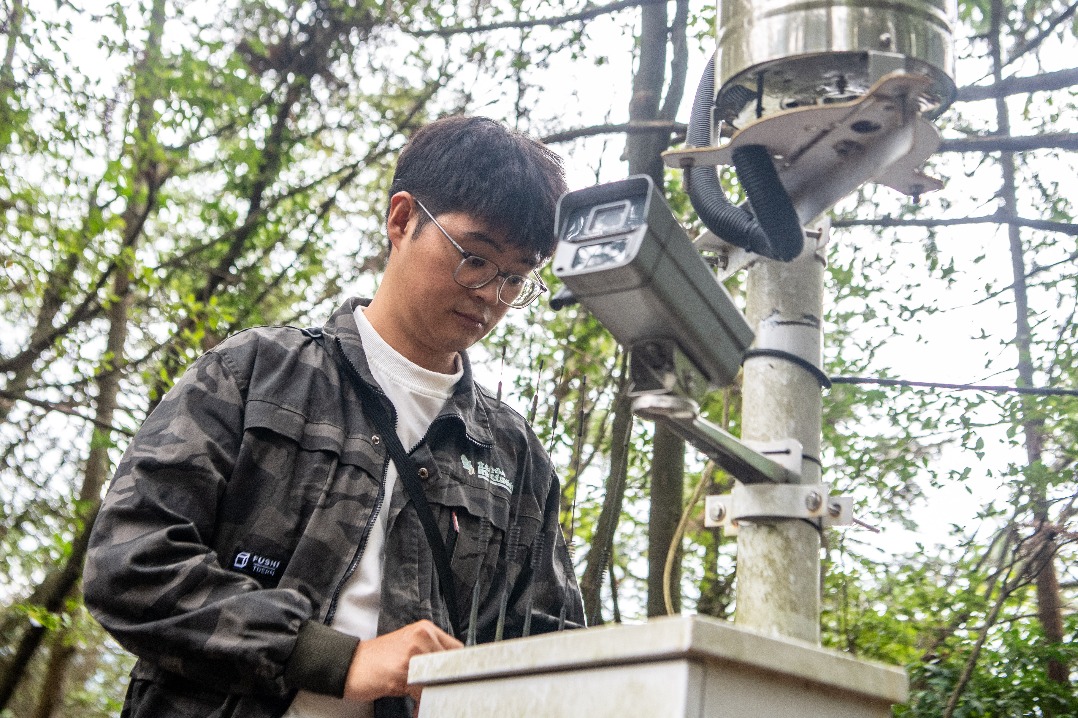
    A technological transformation is reshaping how China safeguards its natural heritage, replacing traditional manual surveys with an integrated network of advanced monitoring systems. Where researchers once carried heavy equipment through challenging terrain, a sophisticated ‘Five Platforms System’ now employs satellites, drones, monitoring towers, mobile patrols, and ground stations to conduct comprehensive biodiversity assessments.

    At the forefront of this revolution is the Satellite Application Center for Ecology and Environment (SACEE), where director Wu Jiyou explains the paradigm shift: ‘Previously, surveys were predominantly manual, limited in scope, slow and labor-intensive. Our integrated approach now covers larger areas, operates more efficiently, and is sustainable.’

    The system leverages China’s Gaofen satellite series, which provides frequent high-resolution data enhanced by hyperspectral imagery and lidar technology. Specialists like Wan Huawei have utilized these capabilities to address ecological challenges ranging from invasive Spartina alterniflora mapping to snow leopard conservation efforts through habitat connectivity analysis.

    On the grasslands of Inner Mongolia, engineers are building one of China’s most comprehensive biodiversity databases. Field engineer Wang Yongcai and his colleagues document grass species and ecosystem health during extensive summer fieldwork. ‘It’s demanding work, but we believe it’s extremely meaningful,’ says Wang, whose team has achieved over 80% accuracy in plant species identification in pilot areas.

    The technological advancement extends to specialized equipment including multifunctional ecological mobile patrol vehicles equipped with self-developed animal recognition models that automatically identify, count, and track wildlife populations. Innovation continues with four-legged robotic ‘dogs’ that autonomously navigate terrain, photograph vegetation, and transmit images in real-time for plant diversity surveys.

    According to SACEE chief scientist Gao Jixi, the system represents more than just monitoring tools: ‘It is a sophisticated, multidimensional network engineered specifically for ecological remote sensing needs. The integration of equipment, data and applications links every phase of the monitoring process, requiring extensive collaboration across regions and administrative levels.’

    This comprehensive approach supports China’s commitment to implementing the Kunming-Montreal Global Biodiversity Framework through sustained technological advancement in ecological monitoring capabilities.

  • S. Korea’s special counsel indicts ex-president Yoon on charge of political fund act violation

    S. Korea’s special counsel indicts ex-president Yoon on charge of political fund act violation

    In a significant development in South Korean politics, a special prosecution team has formally indicted former President Yoon Suk-yeol on charges related to violations of the Political Funds Act. The indictment was filed on Wednesday, December 24, 2025, marking a dramatic turn in the legal proceedings against the impeached leader.

    The case stems from allegations that Yoon’s campaign organization improperly handled political donations during his presidential run. The special counsel’s investigation, which has been ongoing for several months, uncovered evidence suggesting systematic irregularities in campaign financing that allegedly benefited Yoon’s electoral efforts.

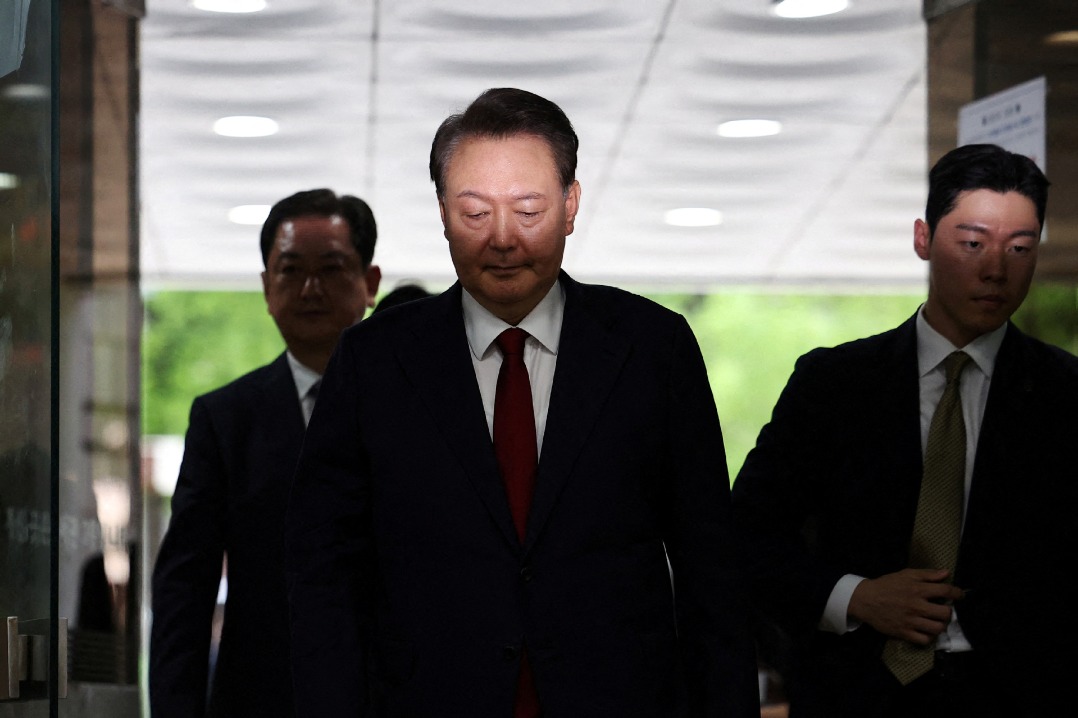
    This legal action follows the dramatic court appearance by the former president in July 2025, when he attended a hearing to review an arrest warrant requested by prosecutors. The indictment represents the culmination of an extensive probe into financial practices that prosecutors argue undermined the integrity of South Korea’s electoral process.

    The development carries substantial implications for South Korea’s political landscape, coming nearly three years after Yoon’s impeachment and subsequent removal from office. Legal experts suggest this case could set important precedents for accountability regarding campaign finance regulations in the country’s increasingly scrutinized political system.

    The indictment of a former head of state underscores the continuing efforts by South Korean authorities to address corruption allegations at the highest levels of government, maintaining the pattern of holding leaders accountable that has characterized the nation’s democracy in recent decades.

  • China sees marked rise in 5-year survival rate for pediatric, adolescent cancers

    China sees marked rise in 5-year survival rate for pediatric, adolescent cancers

    China has achieved a remarkable breakthrough in pediatric oncology care, with the nation’s five-year survival rate for childhood and adolescent cancers reaching 77.2% according to groundbreaking research published in The Lancet. The comprehensive study conducted by the National Center for Pediatric Cancer Surveillance (NCPCS) reveals unprecedented progress in China’s healthcare capabilities, with certain cancer types now demonstrating world-class treatment outcomes.

    The extensive research, analyzing 95,189 cases diagnosed between 2018-2020, shows distinct variations across age groups and cancer types. Children under 14 years achieved a 77.8% survival rate, while adolescents aged 15-19 recorded 75.3%. Female patients showed marginally better outcomes than males across the study cohort.

    Retinoblastoma emerged as the most successfully treated cancer with a 91.2% survival rate, contrasting with malignant bone tumors which presented the greatest challenge at 60.4%. Most significantly, China exceeded all expectations for the six high-priority cancers identified by the WHO’s Global Initiative for Childhood Cancer, achieving survival rates above 80% across all categories—far surpassing the WHO’s 60% target. The exceptional 93.8% survival rate for certain prioritized cancers demonstrates China’s capacity to match treatment outcomes of high-income nations.

    Professor Ni Xin, director of NCPCS and president of Beijing Children’s Hospital, attributed this dramatic improvement to systemic healthcare reforms. “Compared with estimates from a decade ago, the five-year survival rate for cancer patients aged 0-19 in China has improved markedly,” Ni stated. “Particularly for common childhood cancers such as leukemia and lymphoma, progress has been significant. The survival rates for neuroblastoma, retinoblastoma, and Hodgkin lymphoma are now close to the levels seen in high-income countries.”

    The transformation stems from China’s strategic investments in healthcare infrastructure, including enhanced inter-provincial medical billing systems, specialized policies for major disease treatment, standardized treatment protocols, and the development of a multi-center collaborative network encompassing 1,760 medical institutions across all 31 provincial-level regions.

    This landmark study addresses a critical knowledge gap in China’s healthcare landscape, providing the first comprehensive nationwide data on pediatric cancer survival rates since the establishment of NCPCS in 2019. The findings not only demonstrate measurable progress in cancer care but also establish a new benchmark for ongoing monitoring and improvement of childhood cancer treatment outcomes in China.

  • First-time homebuyers in UAE: Navigate the buying process

    First-time homebuyers in UAE: Navigate the buying process

    The United Arab Emirates’ real estate sector is witnessing a significant transformation as homeownership becomes an increasingly attainable objective for residents. This shift is propelled by evolving long-term visa policies, robust salary growth, and a more accommodating mortgage environment tailored for newcomers to the property market. Despite rising interest, numerous prospective buyers seek a clear, structured understanding of the purchasing journey. Contrary to common perceptions, acquiring property in the UAE is a well-defined process, empowering informed financial decision-making for those aiming to transition from renting, establish permanent roots, or diversify investment portfolios.

    A successful purchase begins with a thorough eligibility assessment. Financial institutions evaluate applicants based on minimum salary thresholds (typically Dh10,000–15,000), employment classification, credit history, existing debt obligations, and nationality—which influences loan-to-value (LTV) ratios. Expatriates often qualify for up to 80% LTV, while Emirati nationals may access 85–90% financing. Consulting a mortgage advisor early can streamline this preliminary phase.

    Understanding genuine affordability, distinct from property prices, is crucial. Banks employ a Debt Burden Ratio (DBR), capping total monthly debt repayments at 50% of income. Prospective buyers must evaluate maximum loan amounts, installment schedules (extending to 25 years), and the implications of fixed versus variable interest rates, including potential early settlement fees and recurring service charges.

    Financial planning must also incorporate all ancillary costs. In Dubai, these encompass a 4% DLD transfer fee, administrative charges of Dh4,000, trustee fees (Dh2,000–4,000), mortgage registration (0.25% of loan value), bank processing fees (up to 1%), and valuation costs (Dh2,500–3,500). Off-plan purchases involve additional Oqood registration fees and developer-specific payment plans.

    Securing a pre-approval serves as a powerful strategic tool, validating borrowing capacity for 60–90 days and enhancing negotiation leverage with sellers and brokers. With financing parameters established, buyers can then identify suitable properties—balancing factors like readiness (ready versus off-plan), community amenities, proximity to essential services, infrastructure developments, rental yields, and long-term capital appreciation potential.

    The final transaction phase involves executing a Memorandum of Understanding, depositing 10% payment, completing property valuation, obtaining the final mortgage offer, clearing any seller liabilities, and formalizing the transfer at the trustee office with payment of due fees. Post-acquisition, prudent long-term ownership entails budgeting for maintenance, understanding service charge schedules, securing adequate insurance, and monitoring mortgage rates for future refinancing opportunities.

  • UAE: Pooran, Waseem put MI Emirates in playoffs after 8-wicket win over Gulf Giants

    UAE: Pooran, Waseem put MI Emirates in playoffs after 8-wicket win over Gulf Giants

    MI Emirates secured their place in the playoffs with a commanding performance against Gulf Giants at Abu Dhabi’s Zayed Cricket Stadium on Tuesday. The team recorded their fourth consecutive victory in spectacular fashion, chasing down a target of 142 with 21 balls to spare.

    The match began dramatically with MI Emirates struggling at 2/2 within the first two overs after Mark Adair and Azmatullah Omarzai dismissed Jonny Bairstow and Tom Banton respectively. However, what followed was a breathtaking display of controlled aggression as Nicholas Pooran and Muhammad Waseem constructed an unbroken partnership of 140 runs from just 89 deliveries.

    Waseem anchored the innings with a composed 59 not out from 42 balls, featuring three boundaries and three sixes. Meanwhile, Pooran delivered a explosive performance, hammering 69 runs from 49 balls with six massive sixes and three fours. The turning point came after the strategic timeout at 58/2 in 10 overs, after which the duo unleashed an aggressive assault, scoring 84 runs in the subsequent 6.3 overs.

    Earlier in the evening, MI Emirates’ bowling unit had set the stage for victory. Fazalhaq Farooqi led the attack with impressive figures of 2/17, while Romario Shepherd claimed two crucial wickets. The Giants struggled throughout their innings, managing only 141/6 despite Moeen Ali’s fighting 51 from 48 balls. Kyle Mayers provided late momentum with an unbeaten 28 from 18 deliveries, but the total proved insufficient against MI Emirates’ formidable batting lineup.

    The victory was characterized by exceptional game management, with Pooran and Waseem strategically navigating the early bowling threat before accelerating at the perfect moment. Their partnership demonstrated both technical proficiency and explosive power, leaving the Giants’ bowlers with no answers.

    Post-match, Player of the Match Muhammad Waseem revealed their strategy: “We focused on surviving the initial challenging overs and building a foundation. Once we settled, we capitalized on loose deliveries and executed our natural game plan perfectly.”

    Gulf Giants captain James Vince acknowledged his team’s shortcomings: “We continue to struggle with setting competitive totals. Early wickets disrupted our momentum, and despite finishing stronger than recent matches, the damage was already done.”

  • UAE real estate shift: Sustainability and wellness redefine living

    UAE real estate shift: Sustainability and wellness redefine living

    The United Arab Emirates is experiencing a fundamental transformation in its real estate sector, with Sharjah emerging as a pioneering testing ground for sustainable community development. This paradigm shift represents a dramatic departure from traditional housing models, as buyers now demand integrated lifestyle features that combine environmental responsibility, wellness design, and long-term investment value as standard offerings rather than premium additions.

    Sharjah’s real estate market demonstrates remarkable momentum, attracting international investors while fundamentally reimagining urban development principles. The emirate recorded over 6,600 investors from 109 nationalities in the first half of 2025, with transactions exceeding Dh27 billion during this period. This growth is underpinned by a structural evolution in development philosophy that aligns with global sustainability trends while addressing local lifestyle priorities.

    The groundbreaking Sharjah Sustainable City stands as a testament to this transformation. Spanning 7.2 million square feet with approximately 1,250 villas, this community has established new benchmarks for low-emission living. Every residence incorporates solar panels and energy-efficient appliances, while the development treats all wastewater for irrigation purposes. The comprehensive approach reduces utility consumption significantly while simultaneously lowering carbon emissions.

    Beyond technical specifications, the community reshapes daily life through thoughtful urban design. Pedestrian-friendly pathways, abundant green spaces featuring native vegetation, and community facilities encourage sustainable living practices. The development includes a Sustainability Experience Center that educates residents about renewable energy, recycling, and responsible consumption—integrating environmental awareness into the community’s core ethos.

    Concurrently, the Ajwan Khorfakkan development represents a parallel shift toward wellness-oriented coastal living. This beachfront project combines dramatic natural surroundings with sophisticated design, responding to growing demand for waterfront communities that serve as both primary residences and retreat spaces. The development’s master plan incorporates shaded walking paths, recreational facilities, and hospitality offerings that emphasize connection to the natural environment.

    Market data confirms robust demand for sustainable properties, with reports indicating a 40% increase in demand for eco-friendly residential units since early 2025. Industry experts attribute this growth to improved consumer awareness, increased supply, and strengthened long-term confidence in sustainable investments. Developers are responding by accelerating new project launches that incorporate features such as water recycling systems, solar integration, energy-efficient appliances, and low-emission building materials.

    Sharjah’s government has played a crucial institutional role in this transformation through flexible legislation and updated construction standards. The widespread adoption of green concrete in public housing projects has yielded a 30% reduction in energy consumption and an 80% decrease in carbon emissions. This regulatory framework ensures that sustainability innovation extends beyond individual developments to become embedded in the emirate’s broader urban strategy.

    The convergence of developer commitment, consumer demand, and government support has established sustainability and wellness as fundamental determinants of real estate success rather than optional design trends. This comprehensive approach creates communities that demonstrate greater resilience to market fluctuations while attracting diverse investor profiles and supporting longer resident retention—ultimately contributing to Sharjah’s broader economic diversification objectives.

  • How smart homes are taking over UAE living: Over 500m voice interactions signal a new tech era

    How smart homes are taking over UAE living: Over 500m voice interactions signal a new tech era

    The United Arab Emirates is witnessing a transformative integration of voice-assisted technology into domestic life, with new regional data revealing unprecedented adoption rates. According to 2025 interaction metrics from Amazon Alexa, households across Saudi Arabia and the UAE have generated over 500 million voice commands this year alone, signaling a fundamental behavioral shift in how residents interact with their living environments.

    Smart-home automation emerged as the primary driver of voice technology usage, accounting for 175 million commands. UAE households particularly excel in implementing multi-step routines that simultaneously adjust lighting, climate control, and ambient audio through single voice prompts. Lighting commands specifically saw 30 million requests, representing a 25% year-over-year increase and establishing illumination control as a cornerstone of home automation.

    Entertainment functions constituted the second largest usage category with 106 million interactions, including 34 million music track plays. The UAE’s musical preferences reflect its multicultural composition, with Hindi music ranking as the second-most popular genre after children’s content, followed by funk and pop offerings. The data also revealed growing demand for atmospheric audio, with rain sounds and white noise triggered over 500,000 times for relaxation and focus enhancement.

    Beyond practical applications, voice technology demonstrates significant social impact. Half of surveyed respondents reported that Arabic voice assistants help younger family members maintain or improve their Arabic language skills, while 48% noted increased digital confidence among older relatives. Children remain central to voice interaction patterns, with nursery rhymes and kids’ songs representing the most requested audio category across both markets.

    The technology has also found spiritual applications, with families requesting morning and evening Athkar over 400,000 times and frequently accessing specific surahs from the Holy Quran including Al-Baqarah, Al-Kahf and Al-Mulk.

    Dr. Raf Fatani, Regional General Manager for Alexa Mena, emphasized the cultural significance of these developments: “These findings transcend technological trends, representing genuine integration into family life. Each statistic reflects meaningful moments—parents adjusting environments while holding children, elders managing schedules, and families creating new traditions through culturally responsive technology.”

    The convergence of these trends positions the UAE and Saudi Arabia as pioneers in developing culturally-aware, family-centered smart home ecosystems that seamlessly blend technological innovation with regional traditions and values.

  • ‘Homecoming Across the Seas’: A song bridging homeland and the world

    ‘Homecoming Across the Seas’: A song bridging homeland and the world

    A groundbreaking musical composition titled “Homecoming Across the Seas” is creating cultural waves this Spring Festival season, serving as an artistic bridge between Chinese traditions and global audiences. The innovative piece seamlessly blends Eastern cultural symbols with Western landmarks, creating a harmonious dialogue between civilizations through the universal language of music.

    Crafted through the collaborative efforts of lyricists Huang Yichuan and Xie Hua, with musical composition by Fan Xin and Huang Yichuan, the song features performances by an international ensemble including members of the “Belt and Road” Band. The artistic collective represents diverse cultural backgrounds, featuring talents such as Zhang Zhongxu, Huang Siyu, Nepal’s Nishad Kumar Pokharel, Algeria’s Majd Bentalha, Yemen’s Salma Saybari, and Liberia’s David Yekeh.

    The composition masterfully incorporates traditional Chinese imagery including red lanterns, the Yangtze River, and blue-and-white porcelain, while simultaneously referencing global landmarks like the Eiffel Tower and London Eye. These elements are not merely symbolic decorations but represent genuine cultural exchange and mutual understanding. The song demonstrates how Tai Chi movements can harmonize with coffee aromas, and how lion dances can animate classical European architecture.

    Particularly poignant is the chorus line: “The blood of the Yellow River pulses through the veins of the four seas, the Great Wall embraces the Earth in its day-and-night watch,” which extends familial connections into shared human experiences. The modern rap segments creatively converge traditional Chinese New Year customs with contemporary global scenes. A deeply moving French phrase, “Maman, je suis de retour” (Mother, I have returned), resonates powerfully with overseas Chinese communities, touching the emotional core of diaspora experiences.

    Beyond depicting festive reunion scenes, “Homecoming Across the Seas” embodies China’s growing cultural confidence and openness to global exchange. The composition demonstrates how the Spring Festival has evolved from a traditional Chinese celebration into a universal emotional language that transcends geographical boundaries. The work stands as both a warm cultural encounter and a collective love letter to the spring season, celebrating shared humanity through artistic expression.

  • Tears of joy as Nigerian families reunite with kidnapped schoolchildren

    Tears of joy as Nigerian families reunite with kidnapped schoolchildren

    PAPIRI, Nigeria — An emotionally charged Christmas reunion unfolded in north-central Nigeria as families embraced 130 students and educators freed after a month-long captivity in one of the nation’s most extensive mass abductions. The released individuals, comprising schoolchildren and teachers from St. Mary’s Catholic School, returned to Niger state’s Papiri community late Wednesday, representing the final group liberated since the November 21 attack. The scene witnessed tearful mothers clutching their children, villagers lifting youngsters skyward with beaming faces, and thorough examinations ensuring the returnees’ physical wellbeing. Yusuf Timothy, father of freed student Rejoice, expressed profound relief: “This Christmas, since we are celebrating with our children, we are so glad. And this Christmas will be different from the others.” Rita Marcus, reunited with her son through flowing tears, simply repeated: “I am happy, I am happy. This happiness, it is too much.”

    The incident highlights Nigeria’s escalating security crisis involving ransom-driven school kidnappings in Africa’s most populous nation. Authorities initially reported 303 students and 12 teachers seized in the Niger state attack, later revising the figure to 230 while confirming all had been released without elaboration on negotiation details. Most abducted children ranged from 10 to 17 years old, according to school records. Student Onyeka Chieme recounted to The Associated Press how gunmen threatened to shoot captives during the assault. The psychological toll on families was severe, with Timothy describing suspended lives: “Sometimes even though I’m asleep with my wife, if we wake up, we will start thinking. We will start crying. When are we going to see our child?”