作者: admin

  • Guizhou gives a new lease of life to idle land

    Guizhou gives a new lease of life to idle land

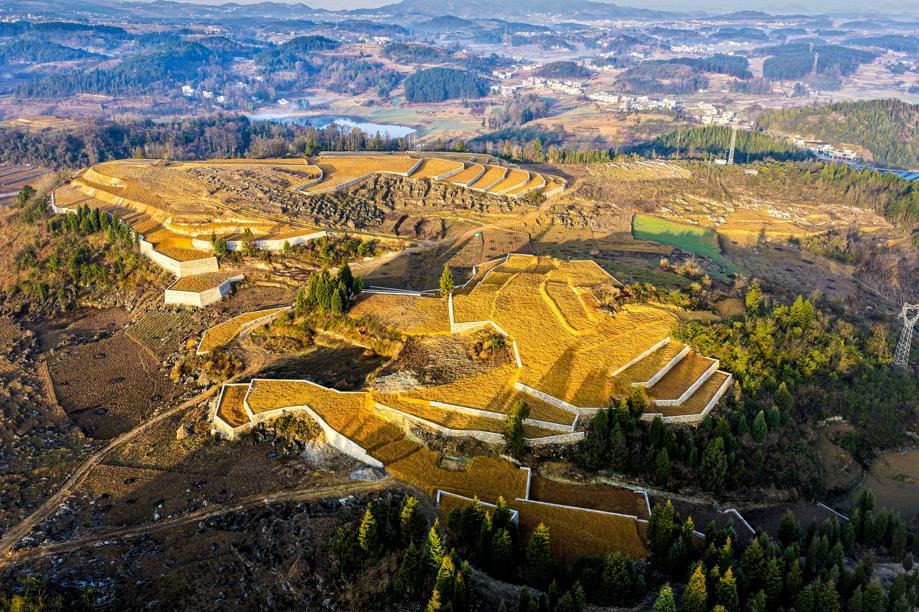
    In a remarkable environmental transformation, China’s southwestern Guizhou province has successfully revitalized previously unproductive mountainous terrain through comprehensive land rehabilitation initiatives. Aerial photography from Qianxi county reveals the striking metamorphosis of fragmented, erosion-prone fields into neatly organized agricultural plots following systematic conservation efforts.

    The challenging topography of this mountainous region had long suffered from severe runoff issues that consistently washed away vital water resources, nutrient-rich topsoil, and fertilizers, rendering extensive land areas practically unusable for cultivation. This persistent environmental degradation created significant agricultural limitations for local communities.

    In response, regional authorities implemented an integrated approach to watershed management that has yielded dramatic results. The multi-faceted program included constructing engineered stone terraces to prevent soil displacement, establishing specialized forestry systems specifically designed for soil and water conservation, and implementing strategic land-closure measures to facilitate natural recovery processes.

    These coordinated interventions have effectively reversed years of ecological decline, breathing new life into landscapes that had remained dormant and unproductive for extended periods. The successful regeneration represents a significant achievement in sustainable land management practices, demonstrating how targeted environmental policies can transform ecological challenges into agricultural opportunities.

    The project’s success offers valuable insights into addressing similar land degradation issues in mountainous regions worldwide, showcasing practical solutions that balance ecological restoration with agricultural productivity. This transformation stands as a testament to the potential of coordinated conservation efforts to create sustainable farming environments where previously only barren slopes existed.


  • Fenerbahce president detained in Istanbul drug investigation after positive narcotics test

    Fenerbahce president detained in Istanbul drug investigation after positive narcotics test

    ISTANBUL – Sadettin Saran, the recently elected president of Turkish sports powerhouse Fenerbahce, was taken into custody on Wednesday amid an expanding narcotics investigation that has implicated numerous high-profile figures from Turkey’s entertainment and media sectors. The detention follows forensic analysis that allegedly detected traces of illegal substances in his hair samples, according to state broadcaster TRT.

    The investigation, supervised by the Istanbul Chief Prosecutor’s Office, has resulted in the detention of over a dozen prominent individuals since early December. Those implicated include television presenters, journalists, musical artists, actors, and social media influencers facing charges ranging from narcotics production and distribution to facilitating prostitution. Many have undergone compulsory blood and hair testing for drug use.

    Saran, who holds dual Turkish-American citizenship and was born in Denver, Colorado, had been questioned last week on suspicions of supplying and enabling narcotics consumption. He underwent mandatory testing at a forensic medical facility after providing testimony to prosecutors.

    Following his detention, Fenerbahce issued an official statement expressing unwavering support for their president and assuring stakeholders that club operations would continue without disruption. “We maintain complete confidence that our president will navigate this process with the same composure and resilience he has consistently demonstrated,” the club stated via social media platform X.

    Saran has publicly contested the forensic findings, maintaining his innocence and pledging to formally request a retest. “I have never used the substance in question,” he declared in a statement released earlier Wednesday.

    This incident marks another chapter in Fenerbahce’s history with legal controversies. Former president Aziz Yildirim served over a year in prison in 2012 on match-fixing allegations before being exonerated when a new trial revealed corruption among judges, prosecutors, and law enforcement officials in the original case. The club currently remains involved in a separate investigation into illegal betting and match-fixing practices within Turkish football.

    Fenerbahce stands as one of Turkey’s most successful and popular sports organizations, fielding professional teams not only in football but also basketball, volleyball, athletics, swimming, and numerous other sports.

  • From predator to plate: Japan bear crisis sparks culinary craze

    From predator to plate: Japan bear crisis sparks culinary craze

    Japan is confronting an unprecedented bear crisis through an unexpected culinary transformation, as record-breaking bear attacks drive both ecological concerns and gastronomic innovation. With 13 fatal maulings recorded this year—doubling previous records—authorities have implemented aggressive culling measures while simultaneously promoting bear meat consumption as a sustainable solution.

    The phenomenon represents a complex intersection of wildlife management and rural economic development. Scientists attribute the surge in bear-human conflicts to multiple factors: rapidly expanding bear populations, declining rural human demographics, and poor acorn harvests that drive bears into human settlements seeking sustenance.

    In response, the government has deployed military personnel for trapping operations and even tasked riot police with shooting bears. The scale of intervention is substantial—over 9,100 bears were culled in the first half of this fiscal year, already surpassing the total for all of 2023-2024.

    This ecological challenge has sparked a remarkable culinary movement. Restaurants across northern Japan report unprecedented demand for bear meat dishes. Koji Suzuki, a 71-year-old restaurateur and hunter in Chichibu, notes, ‘With increasing bear-related news coverage, customer interest in consuming the meat has dramatically increased.’ His establishment serves bear prepared on stone slates or in traditional hot pots alongside vegetables.

    The government actively supports this trend, allocating $118 million in subsidies for bear population control and promoting sustainable consumption. ‘Transforming nuisance wildlife into positive resources is crucial,’ stated agriculture ministry officials earlier this month.

    From fine dining establishments in Sapporo serving bear consommé to village-owned restaurants in Aomori prefecture, bear meat has become an unexpected tourism draw. Chef Kiyoshi Fujimoto incorporates locally sourced brown bear into French cuisine, while Katsuhiko Kakuta’s restaurant developed its own processing facility to supply nearby hotels.

    Despite growing popularity, logistical challenges remain. A shortage of government-approved processing facilities means much culled bear meat still goes to waste. Only 826 game factories exist nationwide, with limited capacity in the most affected northern regions.

    The situation represents a pragmatic approach to wildlife management—addressing safety concerns while creating economic opportunities from what would otherwise be buried as waste. As restaurant owner Kakuta observes, ‘Bear meat has become a tourism resource for us, utilizing what would otherwise be discarded.’

  • Algerian law declares France’s colonisation a crime

    Algerian law declares France’s colonisation a crime

    In a historic parliamentary move, Algeria has formally declared France’s 132-year colonial occupation a criminal act through unanimous legislative action. The newly enacted law establishes colonial glorification as a criminal offense while formally demanding both apology and comprehensive reparations from France for historical injustices.

    The parliamentary session witnessed emotional displays of national pride, with lawmakers adorned in national flag-colored scarves chanting “long live Algeria” following the bill’s passage. The legislation explicitly states France bears “legal responsibility” for colonial-era tragedies, establishing compensation as an “inalienable right of the Algerian state and people.”

    This development marks the lowest point in Franco-Algerian relations since Algeria’s 1962 independence. The colonial period (1830-1962) remains a deeply contested historical chapter, with Algeria estimating 1.5 million fatalities during the independence war while French historians maintain significantly lower figures.

    The legislative action occurs amidst growing global pressure for former colonial powers to address historical wrongs. Algeria recently hosted an African conference advocating for colonial justice and continues demanding return of looted artifacts, including the 16th-century Baba Merzoug cannon currently housed in Brest, France.

    Diplomatic tensions escalated recently when France recognized Moroccan sovereignty over Western Sahara, a territory where Algeria supports the pro-independence Polisario Front. Additional strain emerged with the temporary imprisonment of French-Algerian novelist Boualem Sansal for allegedly questioning national borders.

    Despite French President Emmanuel Macron’s previous acknowledgment of colonization as a “crime against humanity,” France has maintained silence regarding Algeria’s new legislation and continues withholding formal apology.

  • Kenyans protest after roaming elephants kill 4 people in a week

    Kenyans protest after roaming elephants kill 4 people in a week

    NAIROBI, Kenya — Mounting tensions over human-wildlife conflicts have erupted in central Kenya following a series of fatal elephant attacks that claimed four lives within a single week. The incidents have highlighted the escalating competition for resources between animals and local communities.

    In Kajiado County, wildlife authorities were forced to euthanize one elephant suspected of killing two individuals. The Kenya Wildlife Service confirmed the animal bore injuries indicative of previous confrontations with humans, including spear and arrow wounds. “Preliminary observations indicate the elephant involved had injuries consistent with spears and arrows, pointing to a possible prior confrontation,” the agency stated in an official release.

    Ecologists attribute the increased elephant presence in the Ole Tepesi region to severe vegetation scarcity caused by inadequate rainfall during Kenya’s current short rains season. The most recent victim was a herdsman attacked while tending goats on Tuesday, underscoring the dangerous proximity between human activities and wildlife territories.

    The Kenya Wildlife Service has committed to enhancing preventive protocols, improving rapid response capabilities, and minimizing future risks. Meanwhile, the government’s compensation program continues to provide financial restitution to victims of wildlife attacks, having disbursed millions of Kenyan shillings to thousands affected over previous years.

  • UAE: Why do Mondays feel exhausting despite sleeping more on weekends?

    UAE: Why do Mondays feel exhausting despite sleeping more on weekends?

    Across UAE workplaces, a curious weekly pattern repeats itself: employees who theoretically should feel refreshed after extended weekend sleep instead report profound fatigue as the workweek begins. This phenomenon, characterized by heavy limbs, mental fog, and significant difficulty rising on Monday mornings, has become so widespread that sleep specialists are now explaining the biological mechanisms behind what they term ‘social jet lag.’

    Medical experts from leading UAE healthcare institutions reveal that the core issue isn’t sleep quantity but circadian rhythm disruption. Jasmine Ceus, sleep consultant at Medcare Royal Specialty Hospital, explains: ‘When individuals maintain drastically different sleep schedules on weekends versus weekdays, they effectively subject their bodies to weekly time zone shifts. The internal clock never stabilizes, making Monday awakenings feel like being roused in the middle of the biological night.’

    The weekend compensation approach—sleeping significantly longer than during the week—often backfires by delaying the body’s natural timing. When early alarms interrupt this shifted cycle, sleep quality diminishes regardless of duration, resulting in non-restorative sleep and persistent grogginess.

    Psychological dimensions compound the physical effects. Fedaa Hasan, clinical psychologist at Aspris by Alkalma Wellbeing Centre, notes: ‘The emotional weight of transitioning from weekend freedom to structured work routines creates anticipatory stress. Humans are creatures of habit, and this weekly rhythm disruption generates irritability, anxiety, and mistaken self-blame.’

    Wellness coach Njoud Majali observes tangible physical manifestations: ‘Monday workouts feel heavier, movement becomes effortful, and mental focus disperses. The body resists these drastic weekly pendulum swings between discipline and liberation.’

    Practical solutions emphasize gentle consistency rather than rigid perfection. Specialists recommend maintaining wake-up times within a one-hour window across all days, seeking morning sunlight exposure, establishing calming evening rituals, and avoiding late-day caffeine. These minor adjustments help stabilize circadian rhythms without sacrificing weekend relaxation.

    The consensus among experts offers reassurance: Monday exhaustion reflects biological adjustment processes, not personal failure. Understanding this physiological basis helps reduce guilt and enables more effective energy management throughout the weekly cycle.

  • China-led livestock project in Mauritania wins poverty reduction award

    China-led livestock project in Mauritania wins poverty reduction award

    A groundbreaking livestock technology initiative spearheaded by China in Mauritania has received international acclaim, being honored as one of the world’s most effective poverty alleviation programs. The recognition came during the 2025 International Seminar on Global Poverty Reduction Partnerships held in Beijing on December 10.

    The award-winning project, operating through the Animal Husbandry Technology Demonstration Center in Mauritania, represents the second consecutive year that initiatives from China’s Ningxia Hui Autonomous Region have been selected for the Global Solicitation on Best Poverty Reduction Practices. This prestigious recognition highlights the growing international appreciation for South-South cooperation models in addressing global development challenges.

    The seminar was jointly convened by the International Poverty Reduction Center in China alongside multiple United Nations agencies, including the Food and Agriculture Organization (FAO). This collaborative framework underscores the importance of multilateral partnerships in tackling poverty worldwide.

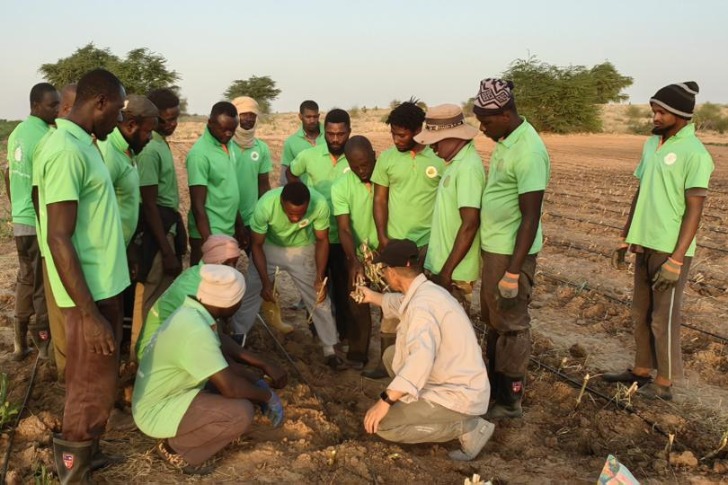
    Under the leadership of expert Zhang Hong’en, the Mauritania project has introduced advanced juncao cultivation techniques and modern animal husbandry practices to local communities. These innovations have demonstrated significant potential in enhancing food security, creating sustainable livelihoods, and building resilience against climate-related challenges in the West African nation.

    The recognition comes as global attention focuses on practical solutions that can deliver measurable results in poverty reduction, particularly in developing regions where agricultural development remains crucial to economic stability and food independence.

  • ‘There is nothing to celebrate’: Gaza’s Christians mark sombre Christmas amid fragile truce

    ‘There is nothing to celebrate’: Gaza’s Christians mark sombre Christmas amid fragile truce

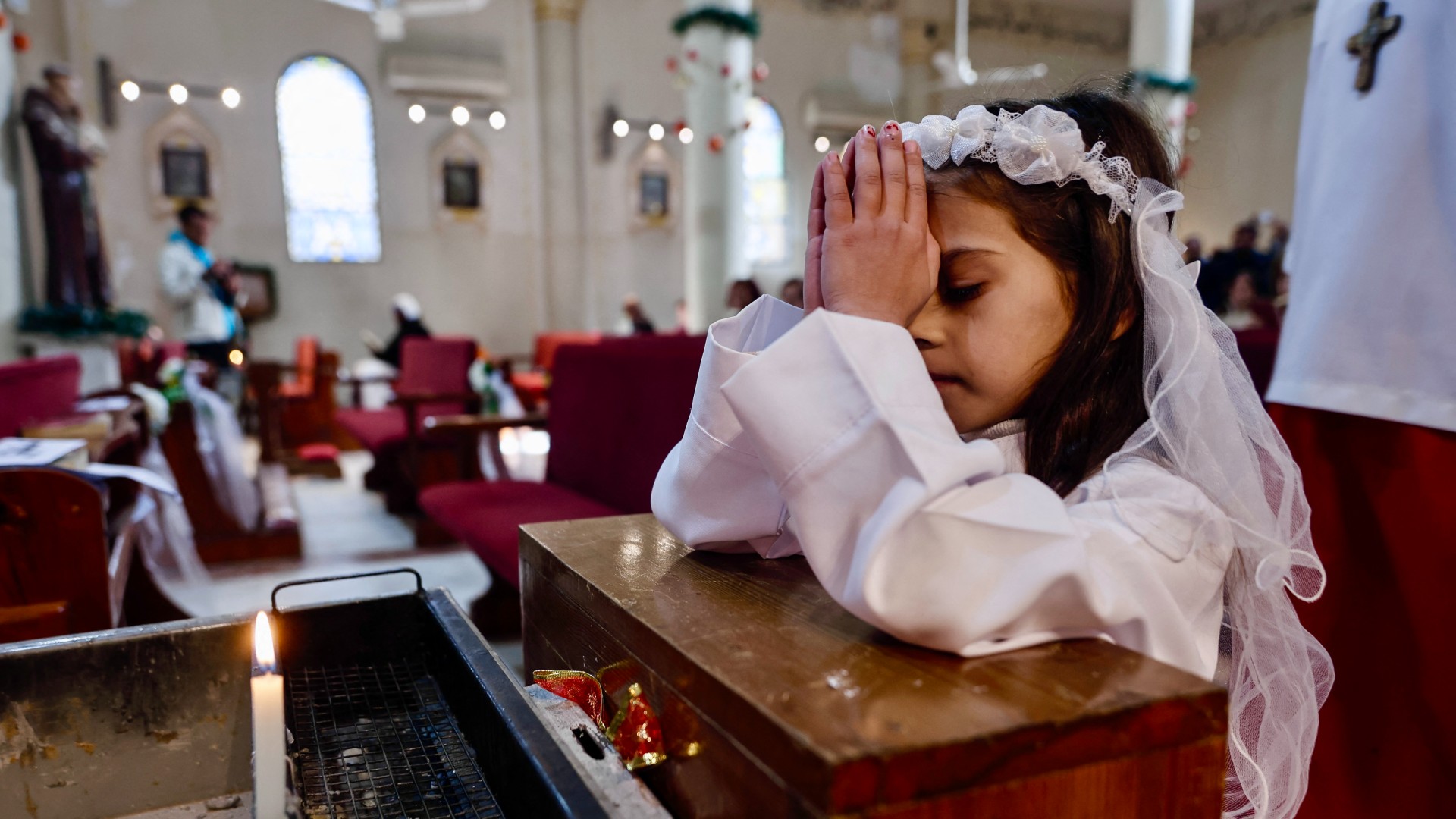
    The Christian community in Gaza has announced the cancellation of public Christmas festivities for the third consecutive year, marking a solemn holiday season amidst ongoing conflict and humanitarian crisis. Youssef Tarazi, a 31-year-old Palestinian Christian, confirmed that the traditional giant Christmas tree in Gaza City will remain unlit this year, symbolizing the community’s collective mourning.

    Church authorities have suspended all external celebrations, limiting observances to private prayers and indoor nativity scenes within church buildings. This decision reflects the profound grief shared across religious lines, with both Christians and Muslims experiencing devastating losses during the ongoing conflict.

    George Anton, director of operations at the Latin patriarchate in Gaza, emphasized the impossibility of celebration while the community continues to suffer. ‘We cannot celebrate while Christians and Muslims alike are mourning devastating losses caused by the war,’ Anton stated. ‘For us, the war has not ended.’

    The physical landscape of celebration has been fundamentally altered, with many homes and streets that once hosted festive gatherings now destroyed. Since October 2023, Israeli military operations have damaged or destroyed numerous Christian institutions, including three historic churches: the Church of Saint Porphyrius, the Holy Family Church, and the Gaza Baptist Church.

    The human toll has been equally devastating, with at least 53 Christians killed directly or indirectly during the conflict. Many casualties resulted from airstrikes, while others died due to inaccessible medical care and medicine shortages, particularly affecting elderly community members with chronic illnesses.

    Gaza’s Christian population has dwindled to approximately 580 people across 220 families—the smallest community in decades. Over 400 Christians have fled during the war, fearing for their safety after losing relatives and friends. Those remaining face deteriorating humanitarian conditions that may force additional families to seek medical care and stability elsewhere.

    The community, comprising approximately 70% Greek Orthodox and 30% Latin Catholics, emphasizes their shared fate with Gaza’s Muslim majority. ‘We are part of this society,’ Anton noted, ‘and what happens to Gaza happens to us.’

    Recent attacks on religious institutions have compounded the trauma, including an October 2023 strike on the ancient Church of Saint Porphyrius that killed 16 refugees and a July attack on Gaza’s only Catholic church that killed two women and injured several others.

    As Gaza’s Christians prepare for a holiday season without traditional celebrations, they emphasize that their spiritual observance continues through prayer, even as their joy remains incomplete amid the ongoing humanitarian crisis and collective grief.

  • Human activity on Qinghai-Tibet Plateau dates back 100,000 years

    Human activity on Qinghai-Tibet Plateau dates back 100,000 years

    Groundbreaking archaeological research has fundamentally reshaped our understanding of human habitation on the Qinghai-Tibet Plateau, with new evidence pushing the timeline of human activity back to approximately 100,000 years ago. This revelation emerged from comprehensive findings presented by the Xizang Autonomous Region’s cultural heritage authorities during a recent press briefing in Lhasa.

    The discoveries form part of the ongoing national ‘Archaeological China’ initiative, which has conducted extensive fieldwork across the region since 2021. Archaeologists have executed 42 systematic excavations spanning 19 distinct locations, covering approximately 8,100 square meters of investigation. This methodological approach has enabled researchers to construct a continuous chronological narrative of human occupation across diverse geographical areas.

    The archaeological record now demonstrates eight significant Paleolithic sites, four Neolithic locations, six early metal age sites with burial complexes, and one major Tubo period settlement. Particularly noteworthy is the emergence of advanced blade technology in northern Xizang approximately 40,000 years ago, followed by the proliferation of microlithic tools around 10,000 years ago.

    Cultural development milestones indicate the region’s transition to Neolithic practices around 5,000 years ago, with copper implements appearing roughly 3,800 years ago and iron technology developing about 2,800 years ago. The rise of the Tubo Kingdom around 1,400 years ago represents the region’s entry into documented historical periods.

    Concurrently, Xizang has completed its fourth national cultural relics survey, revealing unprecedented growth in archaeological site identification. By May 31, researchers had re-examined over 4,200 previously recorded sites while adding 3,346 newly discovered locations. This brings the region’s total documented cultural heritage sites to 7,623, with particularly significant concentrations in Shigatse, Lhokha, and Ngari prefecture—each contributing over 500 new sites.

    According to Xu Shaoguo, deputy director of the regional cultural heritage bureau, Xizang now ranks among China’s most rapidly expanding regions for archaeological discovery while maintaining exceptionally low rates of cultural relic loss. The comprehensive survey has yielded new findings across all county-level administrative units, demonstrating the region’s extraordinary archaeological richness and preservation.

  • Dubai Ruler announces Great Arab Minds winner in medicine, hails research in heart health

    Dubai Ruler announces Great Arab Minds winner in medicine, hails research in heart health

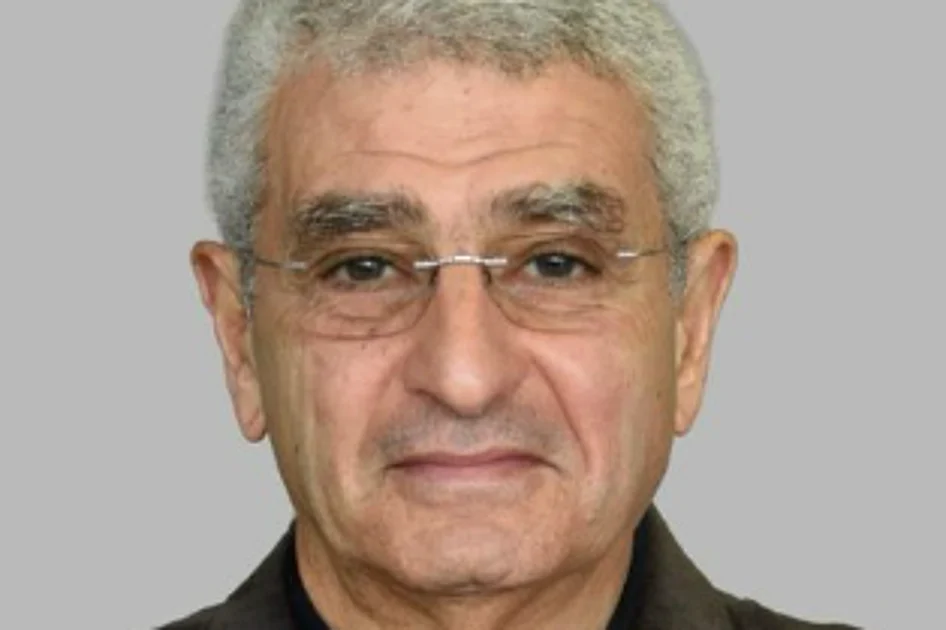
    In a prestigious ceremony recognizing Arab intellectual achievement, His Highness Sheikh Mohammed bin Rashid Al Maktoum, Vice President and Prime Minister of the UAE and Ruler of Dubai, has announced Dr. Nabil Seidah as the 2025 Great Arab Minds laureate in medicine. The Egyptian-Canadian scientist, who serves as Director of the Neuroendocrine Research Unit at the Montreal Clinical Research Institute, received this honor for his groundbreaking work in cardiovascular health and cholesterol metabolism.

    Dr. Seidah’s pioneering research has fundamentally advanced our understanding of biological processes regulating cholesterol and fat metabolism within the human body. His decades of scientific investigation have directly contributed to the development of an entirely new class of cholesterol-lowering medications now widely prescribed globally to combat heart disease and reduce cardiovascular risks.

    The scope of Dr. Seidah’s scientific contribution is evidenced by his publication of over 820 research papers, which have garnered more than 71,000 citations within the scientific community—a testament to the significant impact of his work on medical science.

    Sheikh Mohammed emphasized the importance of recognizing Arab intellectual achievement, stating: ‘Medicine represents a humanitarian mission, and our region has historically played a profound role in developing medical sciences, practices, and research tools. The Great Arab Minds Award reorients the compass to its proper direction, celebrating the contributions of Arab individuals and presenting them as role models for future generations.’

    Now in its third edition, the Great Arab Minds initiative has established itself as the most prestigious recognition of intellectual achievement in the Arab world, often referred to as the ‘Arab Nobel.’ The program’s credibility received substantial validation when the 2024 award recipient in the same category, Professor Omar Yaghi, subsequently won the 2025 Nobel Prize in Chemistry.