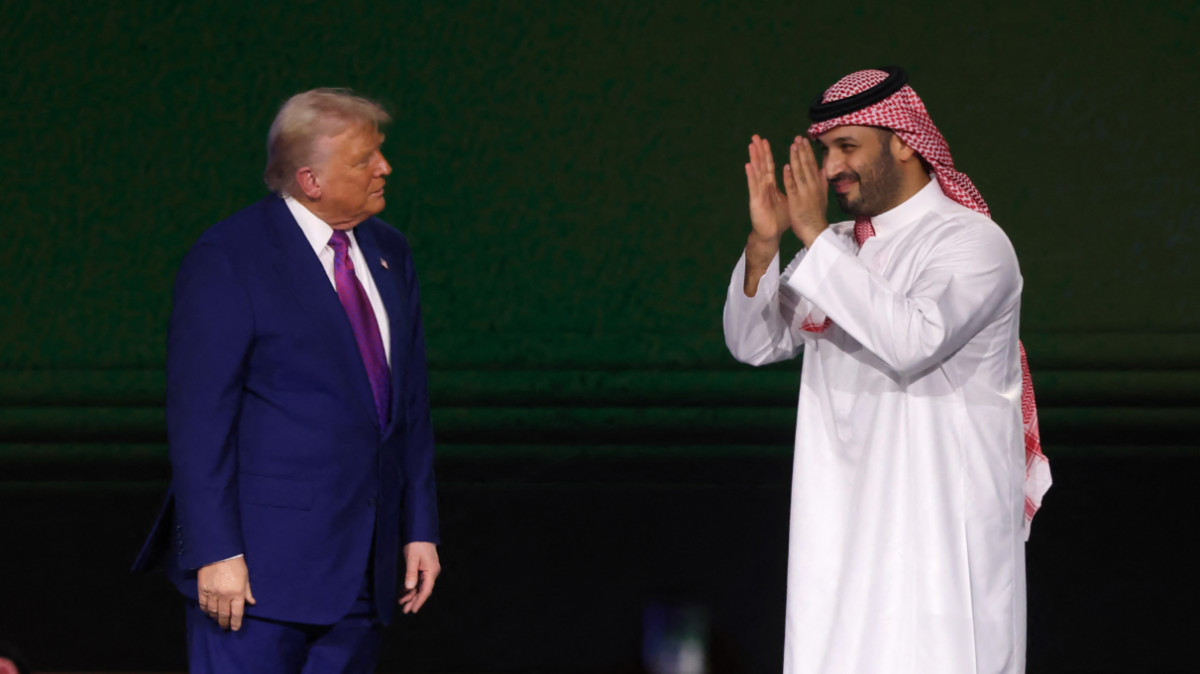
As U.S.-Iran ceasefire negotiations progress, Washington’s approach to the talks has come under sharp scrutiny from current and former Western and Arab officials, who argue that President Donald Trump’s decision to link the Abraham Accords peace process to a potential deal is a deliberate distraction from what they call a lopsided negotiating outcome favoring Tehran.
Aaron David Miller, a veteran former U.S. Middle East negotiator now serving as a senior fellow at the Carnegie Endowment for International Peace, told Middle East Eye that Trump is well aware the emerging agreement undermines every core war objective he laid out after launching the conflict against Iran in February. To offset this weakness, Miller says the president is seeking to frame the talks as part of a broader, more ambitious regional breakthrough.
“This is a typical Trump ploy,” Miller noted.
The tentative deal currently under discussion would extend the existing fragile 60-day ceasefire between the two countries. Under the proposed terms, Iran would agree to reopen the strategically vital Strait of Hormuz — where the U.S. has imposed a competing naval blockade — in exchange for a temporary waiver on crippling oil export sanctions. Critically, the agreement does not address Iran’s expanding ballistic missile program, which The New York Times reports has already recovered to 70% of its pre-war capacity.
When Trump launched the U.S. offensive against Iran in February, he offered conflicting justifications for the decision. At various points, he framed the war as an effort to block Tehran from acquiring a nuclear weapon, destroy the country’s conventional military infrastructure, or achieve full regime change in the Islamic Republic.
In a recent social media post, Trump stated that Iran’s stockpile of enriched uranium would either be transferred to the U.S. for destruction or eliminated at an “acceptable location” through a joint process. Many regional analysts interpreted the second option as a significant U.S. concession, opening the door for third parties such as China or Russia to oversee the process.
Despite repeated White House claims that a final deal is within reach, the fragile existing truce showed clear signs of fraying this week. On Tuesday, Iran leveled accusations of “flagrant” ceasefire violations against the U.S. after American forces carried out airstrikes targeting Iranian missile launchers and naval vessels, and Tehran vowed to launch retaliatory action.
A former senior U.S. administration official speaking to Middle East Eye claimed Trump is operating under the incorrect assumption that Gulf Arab states, which were dragged into the conflict and suffered widespread damage from Iranian retaliatory strikes, owe him political concessions in exchange for ending the war.
“Trump’s pitch on the Abraham Accords rests on a mistaken impression that the countries that he ensnared into a war that led to the bombings of their cities and critical infrastructure owe him a favour to conclude the war,” the former official said.
Shortly after holding separate calls with the leaders of Saudi Arabia, Qatar and Pakistan, followed by a separate conversation with Israeli Prime Minister Benjamin Netanyahu, Trump publicly called on all three countries — which currently lack formal diplomatic relations with Israel — to normalize ties as part of any broader Iran deal.
The U.S.-Israeli war on Iran has upended long-standing security calculations for Gulf Arab monarchies, which have relied on Washington for decades for their defense. Even before the outbreak of hostilities, the UAE, Saudi Arabia and Qatar privately lobbied the U.S. against launching an attack on Iran, but they still bore the full weight of Tehran’s retaliation: thousands of Iranian missiles and drones targeted their urban centers, energy infrastructure, and the U.S. military bases hosted on their territory.
In the immediate aftermath of the outbreak of war, most Gulf states granted the U.S. expanded access to their military bases and permission for overflight of their airspace. According to Reuters, key states including Saudi Arabia and the UAE even directly participated in coalition airstrikes against Iranian targets.
Still, widespread frustration with U.S. policy has emerged across the bloc, even as internal divisions have deepened. Abu Dhabi has at times pushed for a more aggressive military response to Iran, while Riyadh and Doha have prioritized diplomatic mediation to end the conflict.
Regional analysts and former U.S. officials note that the war has sparked urgent, high-level internal debates among Gulf leaders about whether they can continue to rely on long-standing U.S. security guarantees, but Trump has shown little willingness to acknowledge these concerns. At the start of the conflict, Trump made dismissive comments about Saudi Crown Prince Mohammed bin Salman, claiming “didn’t think this was going to happen…he didn’t think he’d be kissing my ass…he thought it’d be just another American president that was a loser…but now he has to be nice to me.”
“The most troubling part of Trump’s approach is that he genuinely thinks these countries owe him if he ends the war,” the former senior U.S. official added.
One senior Arab diplomat based in the region told Middle East Eye that Trump’s push to tie the Abraham Accords to the Iran talks is also aimed at appeasing Netanyahu, who analysts broadly oppose any end to the war against Iran. With Israel set to hold national elections this fall, framing a ceasefire as a breakthrough expansion of the Abraham Accords could help Netanyahu’s bloc politically at the ballot box, the diplomat explained. The move is also designed to shore up support from pro-Israel Republican hardliners in the U.S. Congress, who have openly pushed back against any peace deal.
“If it is perceived in the region that a deal with Iran allows the regime to survive and become more powerful over time, we will have poured gasoline on the conflicts in Lebanon and Iraq,” Republican Senator Lindsey Graham wrote on the social platform X after Trump announced a deal was close. Fellow GOP hardliner Senator Ted Cruz has already labeled any prospective peace deal a “disastrous mistake.”
The original Abraham Accords, brokered by Trump during his first term in 2020, saw the UAE, Bahrain and Morocco normalize formal diplomatic relations with Israel, and the president has repeatedly held up the agreement as his signature foreign policy achievement.
Netanyahu has also sought to lean on the Abraham Accords to improve Israel’s global image at a time when the country faces growing international isolation over its war efforts. Earlier this month, his office publicly claimed that the Israeli prime minister had made a wartime visit to the UAE, forcing Abu Dhabi to issue an awkward public denial of the claim.
The Iran war has deepened existing splits among Gulf states over relations with Israel and how to approach Iran. The UAE has moved significantly closer to Israel over the course of the conflict, seeking to build out a new security partnership with the Jewish state. During the war, Israel deployed Iron Dome air defense systems and Israeli military personnel to operate the batteries in the UAE, and Middle East Eye has previously revealed that the two countries have established a joint fund to develop and purchase new advanced weapons systems.
Conversely, Saudi Arabia — which Trump has lobbied unsuccessfully to normalize ties with Israel since his first term — has grown even more skeptical of Israel as a result of the war. Long locked in a subtle regional rivalry with the UAE, Riyadh has recently pivoted to deepen its own defense partnerships with Turkey, Pakistan and Egypt.
“The rivalry between the UAE and Saudi means Saudi Arabia is not going to join the Abraham Accords now. If they do normalise, it’s going to be under a different name,” Miller said. “The UAE has already doubled down [on Israel]. But why would any Gulf state tether itself to the most extreme, right-wing government in Israeli history that is in the process of annexing the West Bank and occupying Lebanon,” he added.