作者: admin

  • Dubai Ruler honours Gambia’s Minister of Tourism with Best Minister Award at WGS 2026

    Dubai Ruler honours Gambia’s Minister of Tourism with Best Minister Award at WGS 2026

    DUBAI, UAE – In a ceremony highlighting global governmental excellence, Sheikh Mohammed bin Rashid Al Maktoum, Vice President and Prime Minister of the UAE and Ruler of Dubai, presented Gambia’s Minister of Tourism and Culture Abdoulie Jobe with the distinguished Best Minister Award during the World Governments Summit 2026. The recognition celebrates transformative leadership and innovative approaches to public service that create substantial community impact.

    Sheikh Mohammed emphasized the award’s significance beyond individual achievement, stating: “This honor represents a celebration of governmental efficiency and acknowledges the positive role embodied by the world’s most effective ministers. It recognizes exceptional leaders dedicated to advancing public service sectors and enhancing quality of life through innovation, sustainable development, and diligent effort.”

    Minister Jobe’s recognition stems from his groundbreaking work in transforming Gambia’s tourism landscape through two pioneering initiatives. The Tourism Diversification and Resilience Enhancement Project has successfully promoted inclusive growth by providing comprehensive support to micro-, small-, and medium-sized tourism enterprises. Through the Yokuté Accelerator program, local entrepreneurs received extensive training in business development, entrepreneurship, and access to joint funding opportunities.

    A cornerstone of Jobe’s strategy involves building climate resilience within the tourism sector by developing ecotourism and domestic tourism assets, thereby reducing dependence on vulnerable coastal tourism. Under his leadership, the ministry conducted thorough assessments of potential riverfront and ecotourism projects, identifying and prioritizing ten climate-resilient tourism centers in collaboration with technical partners.

    Concurrently, Jobe oversaw the Digital Transformation and Evidence-Based Tourism Planning Project, which modernized tourism governance through advanced technology and enhanced data systems. By working with national institutions, the ministry significantly improved tourism statistics capabilities, establishing digital infrastructure that supports data-driven planning, strengthens transparency, and improves service delivery across the entire tourism value chain.

    The Best Minister Award, organized by the World Governments Summit Organisation in partnership with PricewaterhouseCoopers (PwC), aims to celebrate exceptional ministerial contributions that foster excellence in public service and implement sustainable initiatives driving socio-economic advancement. The award also recognizes efforts to inspire fellow government leaders to embrace innovation and foresight in addressing pressing global challenges.

  • US military shoots down Iranian drone in Arabian Sea: Official

    US military shoots down Iranian drone in Arabian Sea: Official

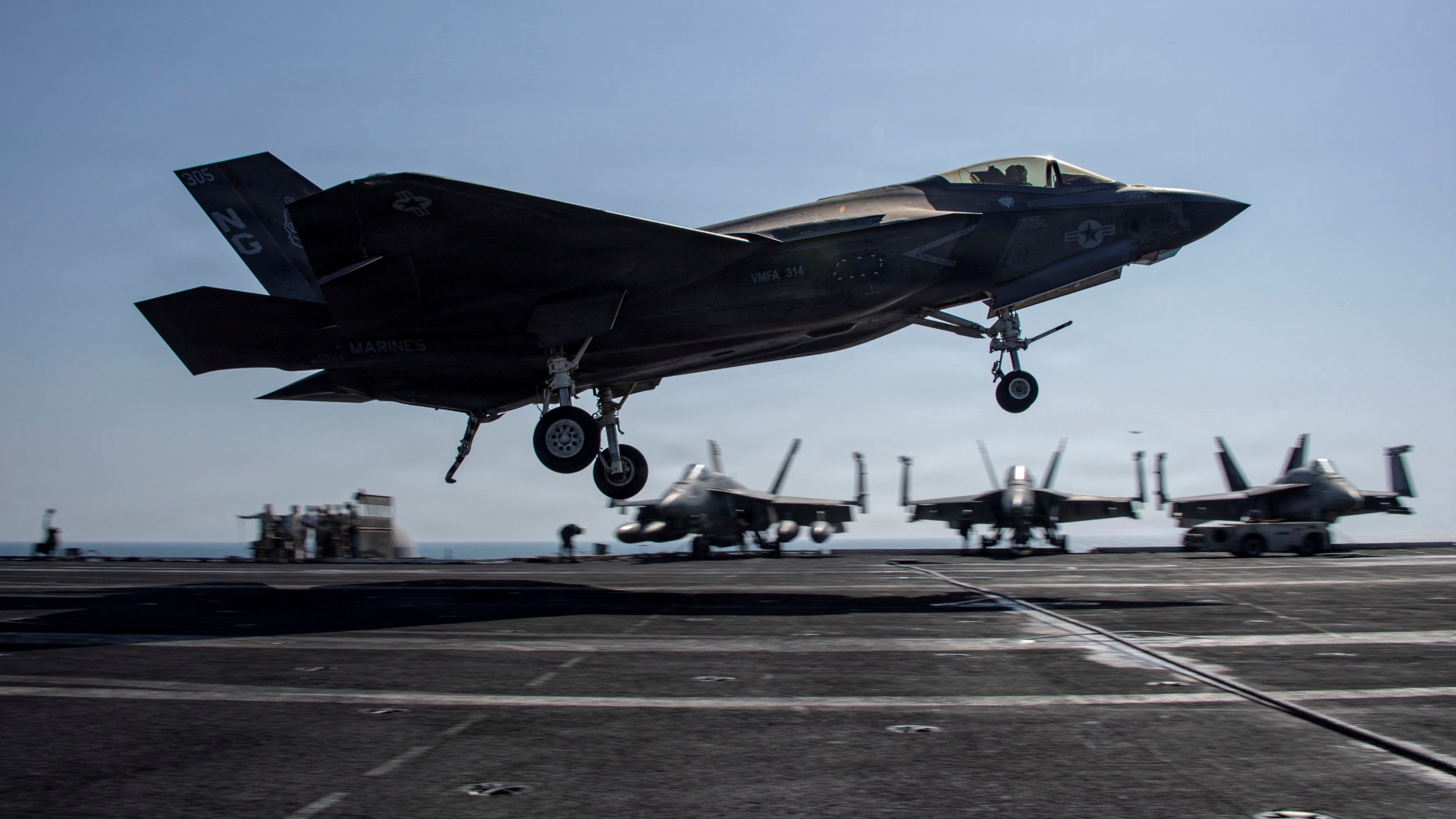
    A U.S. F-35 fighter jet engaged and destroyed an Iranian unmanned aerial vehicle over the Arabian Sea on Tuesday after the drone advanced toward the USS Abraham Lincoln aircraft carrier, according to an official statement from the U.S. military.

    The incident, which occurred on February 3, 2026, involved a Shahed-139 surveillance and attack drone manufactured by Iran. Military authorities confirmed the drone was operating in close proximity to the carrier strike group before being intercepted and neutralized by advanced aerial defenses.

    This confrontation represents the latest escalation in ongoing regional tensions between the United States and Iran. The Arabian Sea, a critical waterway connecting the Persian Gulf with international shipping routes, has frequently served as a stage for such military encounters. The USS Abraham Lincoln’s presence in the region comes as part of ongoing U.S. naval operations aimed at maintaining maritime security and stability.

    The engagement highlights continuing friction between Washington and Tehran, particularly regarding military movements in strategic Middle Eastern waters. Pentagon officials have repeatedly expressed concerns about Iranian surveillance attempts targeting U.S. naval assets, while Iranian authorities have consistently criticized the American military presence in the region.

    This incident follows previous reports of increased U.S. naval deployments to the Middle East, with approximately ten American warships currently operating in regional waters according to recent intelligence assessments. Military analysts suggest such encounters, while potentially dangerous, reflect established protocols for dealing with perceived threats to naval operations in international waters.

  • Iran looking to change nuclear talks venue to Oman, regional diplomat says

    Iran looking to change nuclear talks venue to Oman, regional diplomat says

    Iran is actively pursuing a relocation of its upcoming nuclear negotiations with the United States from Istanbul to Oman, according to a regional diplomat’s disclosure on Tuesday. The talks, initially scheduled for Friday in Turkey, now face potential restructuring in both location and diplomatic focus. Iranian authorities are reportedly advocating for a narrowed agenda that would concentrate exclusively on nuclear matters, while simultaneously seeking to exclude direct participation from other regional nations. This development follows Iranian President Masoud Pezeshkian’s confirmation that he had authorized the initiation of dialogue with Washington. In a social media statement, Pezeshkian emphasized his instruction to the Foreign Minister to pursue “fair and equitable negotiations” within a framework protecting Iran’s national interests, provided such discussions occur in an environment “free from threats and unreasonable expectations.” The diplomatic maneuvering occurs against a backdrop of heightened military posturing, including the recent deployment of a US aircraft carrier group to the Middle East following Iran’s lethal crackdown on anti-government protests. While US President Donald Trump expressed optimism about reaching an agreement, he concurrently issued a stark warning that “bad things would happen” should diplomacy fail. Tehran maintains its commitment to diplomatic solutions while reserving the right to deliver an uncompromising response to any perceived aggression.

  • Watch: Florida iguanas are ‘cold stunned’ and falling from trees

    Watch: Florida iguanas are ‘cold stunned’ and falling from trees

    An unusual meteorological event is unfolding across Florida as a sudden temperature plunge induces a biological phenomenon known as ‘cold stunning’ in the state’s invasive iguana population. The National Weather Service Miami-South Florida confirmed temperatures dipped into the 30s and 40s (°F), triggering a reptilian paralysis that causes the cold-blooded creatures to lose their grip on tree branches.

    While the spectacle of lizards dropping from trees has captivated residents, the Florida Fish and Wildlife Conservation Commission (FWC) issued a nuanced advisory. The agency clarified that these immobilized iguanas are not deceased but in a temporary state of suspended animation due to their inability to regulate body temperature. Officials cautioned against bringing the paralyzed reptiles into homes, noting they can rapidly regain mobility and potentially become aggressive when warmed.

    This event highlights the ecological impact of non-native species in subtropical environments. Green iguanas, native to Central and South America, have established significant populations in South Florida. While cold spells temporarily control their numbers, survivors often retreat into burrows that damage infrastructure through erosion and collapsing sidewalks. The FWC maintains that unlicensed capture and transport of iguanas remains prohibited despite their invasive status, though landowners may humanely remove them from their properties year-round.

  • Two Indian flights suffer wing collision on runway with passengers onboard

    Two Indian flights suffer wing collision on runway with passengers onboard

    A ground collision involving two commercial aircraft occurred at Mumbai’s Chhatrapati Shivaji Maharaj International Airport on Tuesday evening, resulting in significant wingtip damage to both planes. The incident unfolded when an Air India flight AI2732, preparing for departure to Coimbatore, was taxiing from position C1 toward M4 while an IndiGo flight was simultaneously arriving and joining at position B1.

    According to India’s Directorate General of Civil Aviation, the simultaneous movements caused the right wingtips of both aircraft to make physical contact during taxi operations. Both aircraft immediately returned to their respective bays for comprehensive safety inspections following the collision.

    Air India confirmed substantial damage to their aircraft’s wingtip structure and subsequently grounded the plane for detailed technical evaluation. All passengers were safely disembarked without injury, with airline representatives arranging alternative travel arrangements to minimize disruption to their journeys.

    The incident has been formally reported to aviation regulators, marking another significant event in India’s aviation sector that will likely prompt review of ground movement procedures at major airports. This occurrence follows previous aviation incidents in the country, including a recent event where an Air India plane engine sustained damage from cargo container ingestion.

  • Why a beauty spot in South Africa could be about to run out of water

    Why a beauty spot in South Africa could be about to run out of water

    The picturesque South African coastal town of Knysna, renowned for its azure waters and pristine beaches along the Garden Route, has declared a state of disaster as it confronts an impending water catastrophe. With approximately 55% of potable water vanishing through dilapidated pipelines, this tourist haven now grapples with the terrifying prospect of taps running completely dry—a scenario dubbed “day zero.”

    Beneath Knysna’s idyllic surface lies a crumbling water infrastructure exacerbated by persistent drought conditions. The Akkerkloof dam, the town’s primary reservoir, currently holds merely 20 days worth of reserves. This crisis has forced severe water rationing measures, limiting consumption to 50 liters per person daily—drastically lower than the 142 liters typically used by individuals in the United Kingdom.

    The water emergency has already manifested at local facilities. A retirement center endured a ten-day complete water outage last October, prompting owner Franco de Grandis to invest R250,000 ($15,700) in emergency infrastructure including storage tanks and pressure pumps. “Without water, we cannot function,” de Grandis emphasized, highlighting the critical nature of the situation.

    Non-governmental organizations have mobilized relief efforts. Gift of the Givers coordinates daily water deliveries via tankers from privately dug boreholes. Local coordinator Mario Ferreira noted concerning normalization of the crisis: “The disturbing thing is people start thinking this is the way of life and it shouldn’t be.”

    Newly inaugurated Mayor Thando Matika acknowledges inheriting decades of infrastructure neglect, with previous administrations citing financial constraints even for basic maintenance. The national government has allocated $1.25 million in emergency funding for immediate interventions including repairing seven existing boreholes, constructing an additional borehole, and revitalizing the desalination plant. Long-term strategies involve water recycling initiatives and potential dam construction.

    The tourism sector remains apprehensive about the “day zero” terminology. Elmay Bouwer of the Great Knysna Business Council cautions against alarmism while advocating for conservation education: “We should instead tell people how to preserve the water we have.”

    Experts warn that Knysna’s predicament reflects a national crisis. Dr. Ferial Adam of Watercan notes that millions of South Africans already experience perpetual “day zero” conditions without household running water. This reality is starkly evident in Khayalethu township, where 60-year-old Khanyiswa Sewula routinely carries buckets to municipal water distribution points.

    The convergence of climate change, infrastructure decay, and access inequality creates a precarious situation that demands urgent, comprehensive solutions beyond temporary measures.

  • 6.0-magnitude earthquake hits Myanmar, tremors felt in parts of India

    6.0-magnitude earthquake hits Myanmar, tremors felt in parts of India

    A substantial seismic event measuring 6.0 on the Richter scale struck Myanmar on Tuesday, according to data released by the German Research Center for Geosciences (GFZ). The earthquake originated at a relatively shallow depth of 10 kilometers (approximately 6.21 miles) beneath the Earth’s surface, potentially amplifying its impact across the region.

    The tremors extended beyond Myanmar’s borders, with multiple Indian media outlets reporting strongly perceptible shaking throughout eastern India. The metropolitan area of Kolkata experienced particularly noticeable tremors, though initial reports indicate no immediate structural damage or casualties within Indian territory.

    This seismic activity occurs within the broader context of the seismically active Southeast Asian region, which frequently experiences tectonic movements due to the complex interaction of the Indian and Eurasian plates. The relatively shallow depth of this earthquake contributed to its widespread perceptibility across national boundaries.

    Seismologists continue to monitor aftershock potential while emergency response teams in both Myanmar and India remain on alert. The event follows recent seismic activity in neighboring Indonesia, where a 6.3 magnitude earthquake was recorded, highlighting the region’s ongoing geological volatility.

  • ‘Never imagined this’: Indian village grapples with interfaith couple’s killing

    ‘Never imagined this’: Indian village grapples with interfaith couple’s killing

    A quiet village in India’s Uttar Pradesh state has been plunged into turmoil following the brutal murder of an interfaith couple, allegedly by the woman’s own brothers in what authorities describe as an honor killing. The victims, 19-year-old Kajal (Hindu) and 27-year-old Mohammad Arman (Muslim), were discovered buried near a riverbank on January 21st in Umri village, located 182km from Delhi.

    Police investigation reveals the couple was bludgeoned to death with a spade on the night of January 18-19 when Kajal’s brothers allegedly caught Arman visiting their home. The three brothers—Rajaram, Satish and Rinku Saini—have been arrested and remain in custody without offering any defense statements.

    This tragedy has shattered the peaceful coexistence that defined Umri village, where approximately 400 Hindu and Muslim families have lived harmoniously for years without religious disputes. Deputy Inspector General Muniraj G confirmed the case appears to be a classic honor killing, where relatives punish women for relationships outside their caste or religion.

    Kajal worked as a teacher at a local private school, while Arman had recently returned from Saudi Arabia after four years working in the food service industry. Though neighbors living merely 200 meters apart, both were described as introverts with limited social circles. Their relationship, the first interfaith romance in the village, remained hidden from both families until after the tragedy.

    Police deployment continues in Umri to prevent religious tensions, though villagers report an unsettling silence has descended upon the community. The case highlights India’s ongoing struggle with honor violence despite constitutional protections for interfaith relationships. Official data recorded 38 honor killings in 2023, though activists estimate actual numbers reach hundreds annually due to systematic underreporting.

    The incident exposes the persistent tension between modern individual rights and traditional social hierarchies in rural India, where over 93% of marriages remain arranged within caste and religious boundaries. While courts have mandated protective measures including safe houses for interfaith couples, deep-seated social attitudes continue to enable such violence across the country.

  • Trump accused of distorting history of Mexican-American War to justify heavy hand in Latin America

    Trump accused of distorting history of Mexican-American War to justify heavy hand in Latin America

    The Trump administration has ignited a firestorm of criticism from historians and political observers for its controversial commemoration of the Mexican-American War, which experts characterize as a deliberate attempt to reshape historical narrative to justify current foreign policy approaches toward Latin America.

    In an unsigned statement released Monday, the White House portrayed the 1846-1848 conflict as a “legendary victory that secured the American Southwest, reasserted American sovereignty, and expanded the promise of American independence.” The administration drew direct parallels between this historical period and its contemporary policies, asserting that its aggressive stance toward Latin America would “ensure the Hemisphere remains safe.”

    Historical scholars quickly identified multiple inaccuracies and omissions in the statement. Notably absent was any acknowledgment of slavery’s central role in provoking the conflict, nor mention of the devastating consequences for Native American populations displaced during the Manifest Destiny era. The statement instead glorified the territorial expansion while framing current border policies as continuations of this historical legacy.

    Alexander Aviña, a Latin American history professor at Arizona State University, condemned the revisionism: “U.S. political leaders have traditionally viewed this as an ugly aspect of U.S. history—a clear instance of imperialism against its southern neighbor. The Trump administration is embracing it as positive and framing it inaccurately as defensive measures.”

    The controversy gained diplomatic dimensions when Mexican President Claudia Sheinbaum responded with sarcastic disbelief during her news briefing, emphasizing the need to “defend sovereignty.” This response reflects the ongoing tension between the two nations as the Trump administration has increasingly intervened in Latin American affairs, including attempts to depose Venezuela’s president, alleged election meddling, and threatened military action in Mexico.

    The original conflict itself emerged from border disputes following the U.S. annexation of Texas in 1845, resulting in Mexico ceding over 525,000 square miles of territory. Former President Ulysses S. Grant later described the war as “one of the most unjust ever waged by a stronger against a weaker nation.”

    Stanford University history professor Albert Camarillo characterized the White House statement as part of a broader pattern of historical revisionism, noting similar efforts to alter Smithsonian exhibits and scrub government websites of uncomfortable historical facts, including references to slavery, Native American cultural destruction, and climate change.

    This incident represents the latest confrontation in the ongoing cultural battle over historical interpretation, with critics accusing the administration of attempting to “whitewash and reframe U.S. history while erasing generations of historical scholarship.”

  • Trump hails White House talks with ‘terrific’ Petro, after months of mutual insults

    Trump hails White House talks with ‘terrific’ Petro, after months of mutual insults

    In a remarkable diplomatic turnaround, U.S. President Donald Trump and Colombian President Gustavo Petro concluded a surprisingly cordial meeting on Tuesday, setting aside months of mutual criticism to find common ground on regional security and energy cooperation.

    The two-hour closed-door discussion at the White House focused primarily on combating drug trafficking and exploring potential energy exports from Venezuela through Colombian territory. President Trump emerged from the meeting praising his Colombian counterpart as ‘terrific,’ while Petro characterized the exchange as ‘optimistic and constructive.’

    This positive outcome contrasted sharply with previous tensions that had seen Trump label Petro a ‘sick man’ and the Colombian leader comparing Trump’s immigration policies to those of ‘the Nazis.’ These earlier exchanges had raised concerns that the meeting might mirror Trump’s contentious 2019 Oval Office encounter with Ukrainian President Zelensky.

    Significant progress was announced on several fronts. Trump revealed he was working to lift sanctions imposed on Petro last year over alleged drug trade connections—charges the Colombian president has consistently denied as ‘slander.’ Both leaders committed to joint efforts against the ELN rebel group and agreed to collaborate on targeting senior drug traffickers operating internationally, including those based in the United Arab Emirates, Europe, and the United States.

    On regional energy cooperation, Petro proposed a trilateral initiative involving Venezuela, Colombia, and the United States to facilitate Venezuelan oil and gas exports, arguing that all three nations have suffered economically from current sanctions and competition. Additionally, Trump agreed to mediate an ongoing trade dispute between Colombia and Ecuador.

    Despite the productive dialogue, both leaders acknowledged their fundamental policy differences remain. Petro noted that while their approaches to drug enforcement differ significantly—with Colombia favoring targeting high-level traffickers rather than aggressive interdiction methods—they focused on ‘what brings us together rather than what separates us.’

    The Colombian president concluded by proposing a ‘pact for life’ to ‘make the Americas great again,’ adapting Trump’s signature campaign slogan to frame a vision for regional cooperation between political opponents seeking common ground.