作者: admin

  • Zelensky says peace deal is 90% ready in New Year address

    Zelensky says peace deal is 90% ready in New Year address

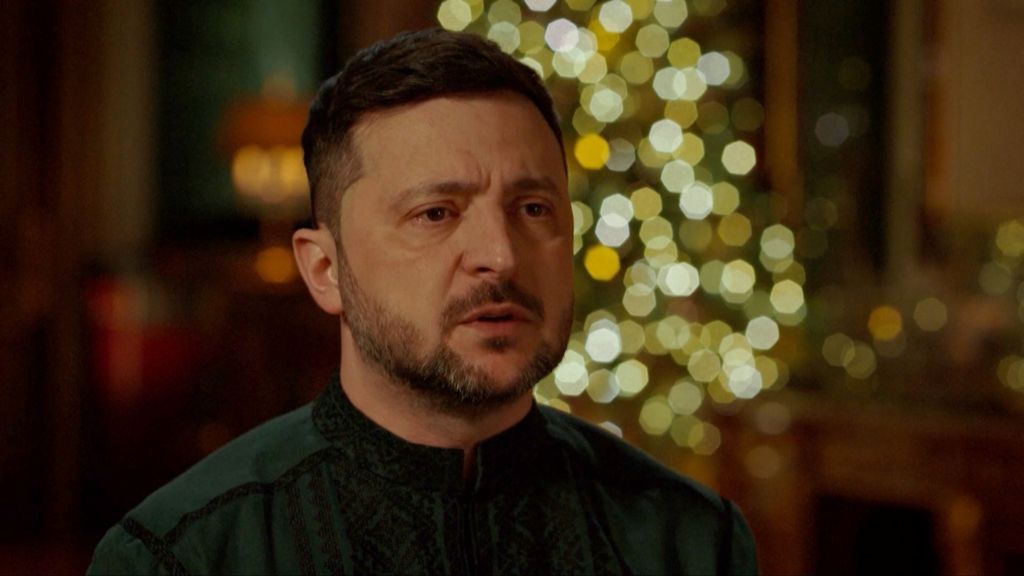
    Ukrainian President Volodymyr Zelensky announced in his New Year’s address that a comprehensive peace agreement to conclude nearly four years of conflict with Russia stands at 90% completion. The Ukrainian leader emphasized that the remaining 10% of negotiations would “determine the fate of peace, the fate of Ukraine and Europe,” while asserting that Ukraine seeks “the end of the war – not the end of Ukraine.”

    The diplomatic progress faces renewed challenges following Moscow’s allegations of a Ukrainian drone attack targeting President Vladimir Putin’s private residence at Lake Valdai. Russian authorities released purported evidence including flight path maps indicating drone launches from Ukraine’s Sumy and Chernihiv regions, along with footage of wreckage identified as a Ukrainian Chaklun drone. The Kremlin announced it would reassess its negotiation stance due to these allegations, which Ukrainian officials and EU diplomat Kaja Kallas have dismissed as a “deliberate distraction” from peace efforts.

    Central to the negotiation stalemate remains the status of Donbas, where Russia currently controls approximately 75% of Donetsk and 99% of Luhansk regions. Zelensky explicitly stated that Ukrainian withdrawal from the eastern industrial heartland would mean “everything will be over,” referencing Moscow’s persistent demand for full control of the territory.

    International involvement continues to intensify, with French President Emmanuel Macron announcing concrete commitments from European states and allies meeting in Paris on January 6. This follows high-level discussions between Zelensky and Trump administration advisers regarding proposed 15-year security guarantees for Ukraine. US special envoy Steve Witkoff confirmed ongoing talks with UK, French, and German security counterparts about “strengthening security guarantees and developing effective deconfliction mechanisms.”

    Meanwhile, Putin’s considerably shorter New Year message praised Russian troops participating in what Moscow terms a “special military operation,” asserting that “we believe in you and our victory.” In a concerning development, North Korean leader Kim Jong Un praised his country’s “invincible alliance” with Moscow, with South Korean officials confirming Pyongyang has sent thousands of troops, missiles, and long-range weapons to support Russian operations, suffering an estimated 600 casualties.
  • Viral ‘6-7′ tops 2025 list of overused words and phrases

    Viral ‘6-7′ tops 2025 list of overused words and phrases

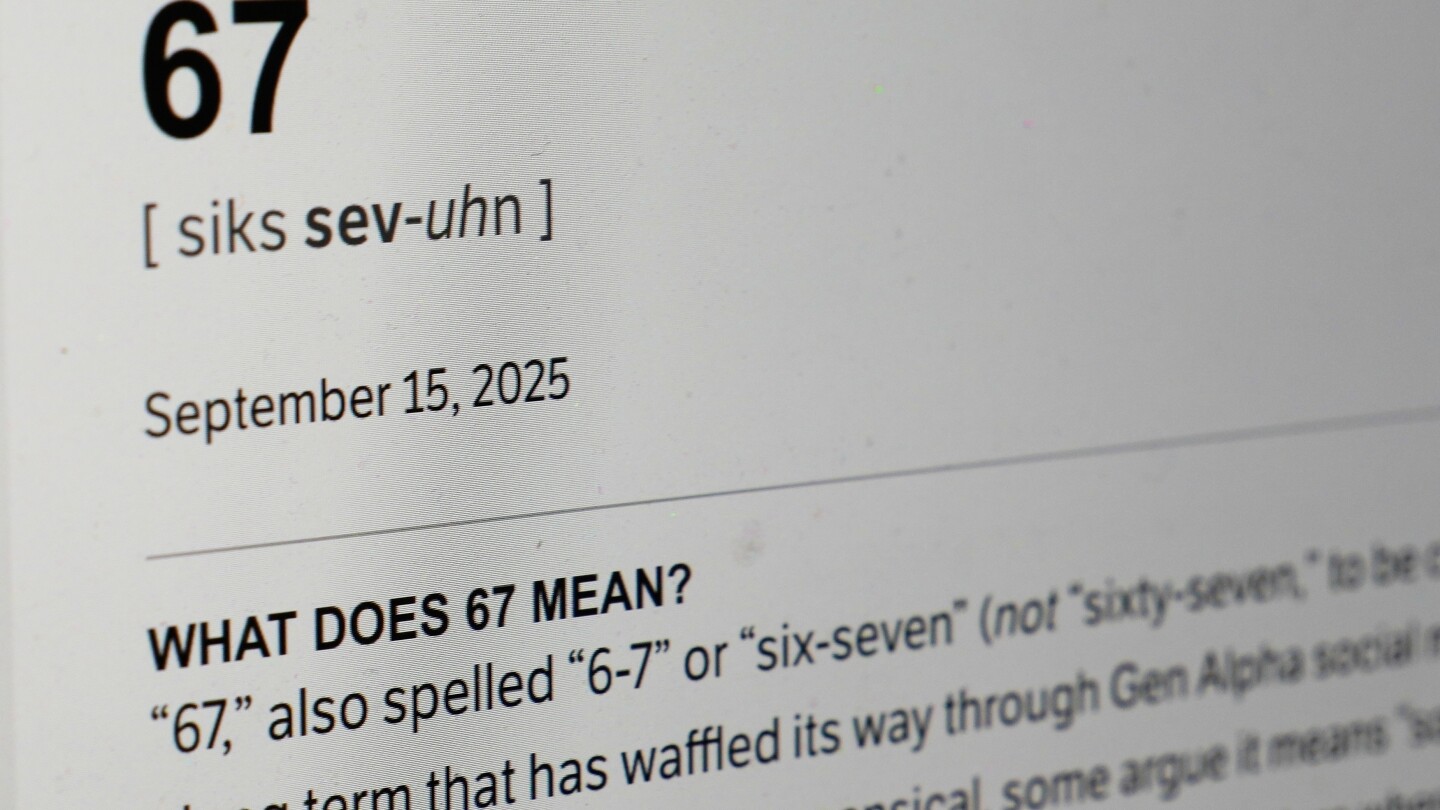
    In a landmark celebration of linguistic pet peeves, Lake Superior State University has unveiled its 50th annual “Banished Words List,” with Gen Z’s enigmatic phrase “6-7” claiming the dubious distinction of most unwanted terminology heading into the new year. The tongue-in-cheek tradition, born from a 1976 New Year’s Eve party concept, this year drew approximately 1,400 submissions from all 50 U.S. states and numerous countries worldwide.

    The 2025 list showcases a peculiar intersection of generational divides and digital-age communication trends. Alongside “6-7″—the viral expression that baffled those over 40 while dominating youth vernacular—the university identified “cooked,” “demure,” “incentivize,” and the perennial offender “my bad” as phrases deserving linguistic retirement. Notably, “my bad” and “reach out” demonstrate remarkable staying power, having previously appeared on the list in 1998 and 1994 respectively.

    University President David Travis attributes these linguistic phenomena to social media’s transformative impact on communication. “The list represents the fad and vernacular trends of the younger generation,” Travis observed. “We’re using terms shared through texting or posting without body language or tone context, making misunderstandings inevitable.”

    The ascendance of “6-7” exemplifies how digital platforms can propel seemingly nonsensical phrases into mainstream consciousness. Despite being named Dictionary.com’s 2025 Word of the Year, its meaning remains deliberately obscure—even to its primary users. University of Michigan student Alana Bobbitt acknowledged the phrase’s absurd appeal: “I find joy in it. It’s a little bit silly, and even though I don’t understand what it means, it’s fun to use.”

    Yet the list serves as more than mere complaint compilation. It documents language’s evolving nature, distinguishing between fleeting trends and enduring additions to the lexical landscape. While Travis predicts “6-7” will disappear by next year, he acknowledges some phrases achieve permanent residence in modern parlance, citing “my bad” as terminology that has comfortably transitioned across generations.

    The annual exercise continues to spark conversations about language preservation, generational identity, and how digital communication shapes linguistic evolution in increasingly connected societies.

  • A Kenyan barber who wields a sharpened shovel thrives on Africa’s social media craze

    A Kenyan barber who wields a sharpened shovel thrives on Africa’s social media craze

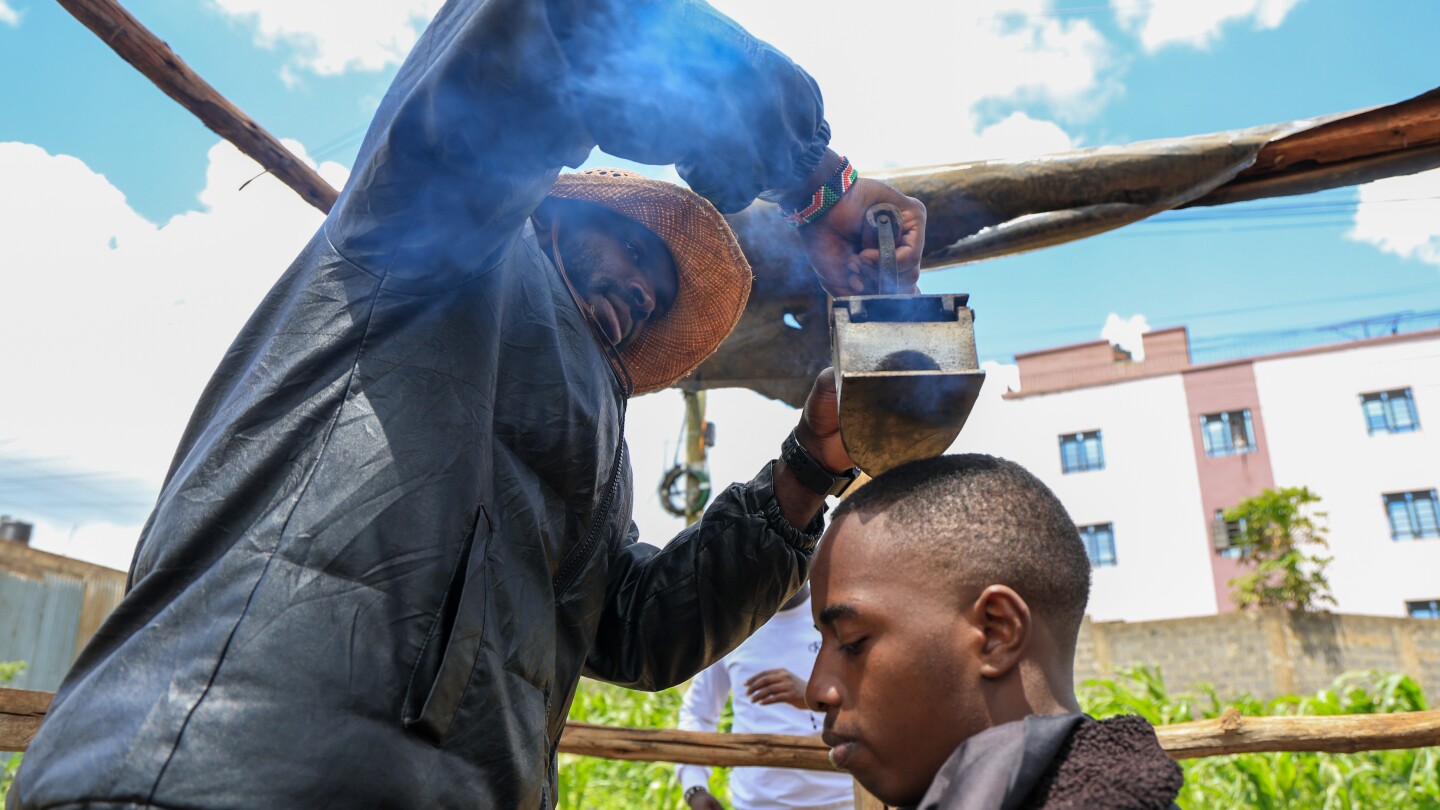
    In the outskirts of Nairobi, a remarkable barbering phenomenon is captivating social media audiences across Kenya. Safari Martins, known professionally as Chief Safro, has transformed a modest roadside shack in Kiambu into an unlikely grooming destination where traditional barbering converges with digital content creation.

    Martins’ unconventional approach involves replacing standard barbering equipment with sharpened shovels, agricultural shears, and iron tools to execute precise haircuts. His client Ian Njenga recently experienced this unique service, describing the results as both surprisingly clean and confidence-building. “When I get shaved here I get very comfortable,” Njenga remarked. “While walking in the streets I get very confident.”

    The barber’s journey began in 2018 using borrowed clippers in school dormitories before evolving into his current distinctive style. What distinguishes Martins from typical viral sensations is his deliberate incorporation of African cultural elements. He increasingly weaves traditional folk tales into his video narrations, drawing inspiration from his Rwandan heritage and Kenyan upbringing. “I’m motivated by African culture, by African stories,” Martins explains, noting that some tools receive blessings from village elders.

    His digital presence has exploded with approximately one million followers each on Instagram and TikTok, reflecting Kenya’s broader social media expansion. Market research indicates the country’s social media user base grew nearly 50% from 10.6 million in January 2023 to 15.1 million by January 2025.

    Despite charging premium rates of 1,500 Kenyan shillings (approximately $12) per cut—significantly above Nairobi’s typical barbering prices—clients willingly pay for both the unique experience and potential social media exposure. The Kenya Institute for Public Policy Research and Analysis reports that around 15% of Kenyan content creators rely on online work as their primary income source.

    However, Martins highlights an industry disparity: while barber-creators achieve viral visibility, they often receive less monetization than creators in gaming, education, or lifestyle categories. “Barbers get viral on social media but I feel like they are not respected,” he notes. “You are not paid as a content creator, even though you have the views, even if you have the engagement.”

  • Waiting for New Year: It’s still 2025 in these countries

    Waiting for New Year: It’s still 2025 in these countries

    While the United Arab Emirates spectacularly welcomed 2026 with breathtaking fireworks and drone displays, numerous nations worldwide remained immersed in the final hours of 2025 due to global time zone variations. This temporal disparity creates a fascinating, staggered celebration pattern across the planet.

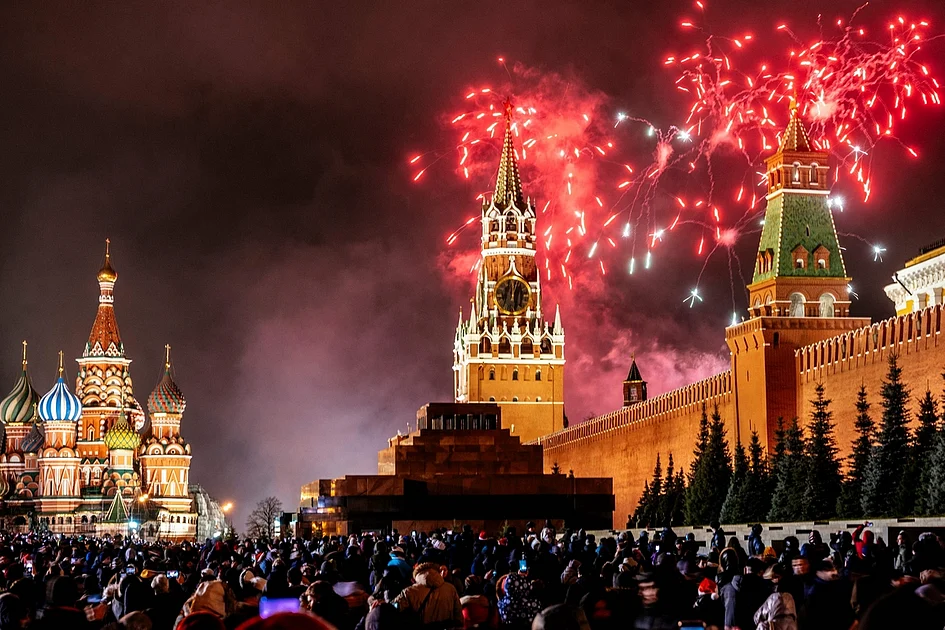
    Qatar, Russia, and Turkey, all operating in the UTC+3 time zone, celebrated precisely one hour after the UAE. Qatar marked the occasion with dazzling events at Lusail Boulevard and The Pearl-Qatar. Russia, for whom New Year is the most significant holiday, commenced an extended festive period from January 1st to 8th, characterized by lavish feasts, the iconic Kremlin chimes at midnight, and traditional activities like ice skating. Turkey celebrated with unique customs, including wearing red for good luck and purchasing lottery tickets, alongside large family dinners and fireworks over Istanbul.

    Egypt, two hours behind the UAE (UTC+2), welcomed the new year with vibrant parties in Cairo and coastal resorts, featuring traditional dishes such as stuffed pigeon. In Europe, France and Germany, both in the UTC+1 zone, celebrated three hours after the UAE. While France scaled back some public events for security reasons, Germany continued its tradition of grand firework displays and sharing lucky charms like marzipan pigs.

    Serbia, also on UTC+1, made the significant decision to cancel some public events in Belgrade due to safety concerns, particularly for children. The United Kingdom, observing UTC+0, celebrated four hours after the UAE with iconic traditions like singing ‘Auld Lang Syne’ and the Scottish custom of ‘first-footing’.

    The Americas witnessed the most delayed celebrations. Canada and the United States, operating across multiple time zones, began their festivities nine hours after the UAE. Cities like Vancouver were among the last to enter 2026. Mexico, ten hours behind, celebrated with symbolic rituals including eating twelve grapes at midnight and wearing colored underwear for luck, highlighting the diverse and rich global tapestry of New Year traditions.

  • Taiwan’s president pledges to defend island’s sovereignty after China’s military drills

    Taiwan’s president pledges to defend island’s sovereignty after China’s military drills

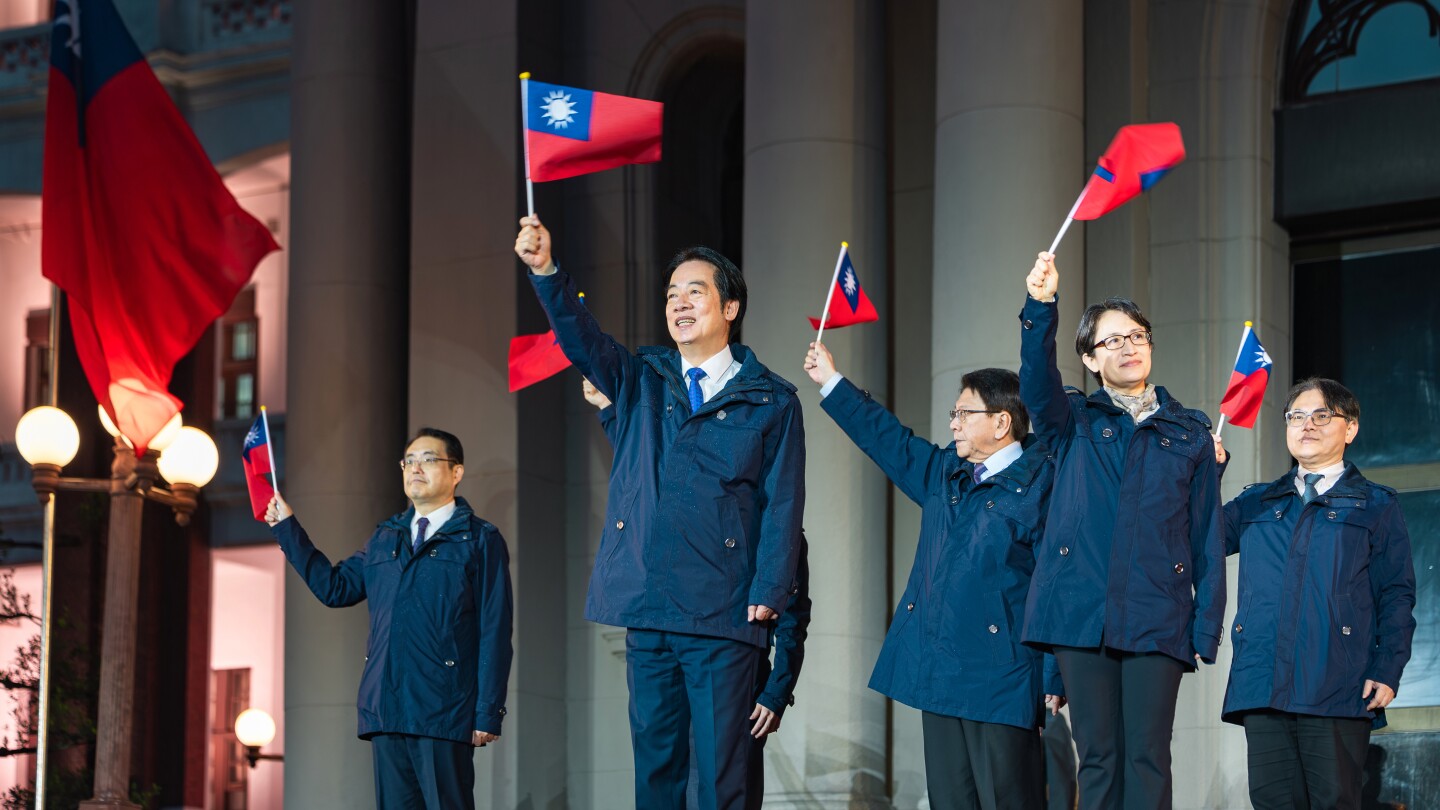
    TAIPEI, Taiwan — Taiwanese President Lai Ching-te has issued a resolute commitment to protect the island’s sovereignty in response to what he characterized as China’s “expansionist ambitions.” The declaration came during his New Year’s address, delivered shortly after Beijing concluded extensive live-fire military exercises encircling Taiwan.

    President Lai emphasized the international community’s scrutiny of Taiwan’s determination to maintain self-defense capabilities. “As president, my stance has always been clear: to firmly safeguard national sovereignty, strengthen national defense and the resilience of the whole society, and comprehensively construct an effective deterrence and democratic defense mechanism,” he stated.

    The address followed China’s demonstration of military prowess, which included rocket launches, aircraft sorties, and naval deployments. Beijing’s exercises were conducted in response to two primary provocations: a planned U.S. arms sale to Taiwan valued at over $11 billion—the largest such transaction to date—and comments from Japan’s new leader suggesting potential intervention in the event of a Chinese attack.

    The substantial American arms package includes advanced missiles, drone systems, artillery platforms, and military software. This transfer occurs under U.S. legal obligations to provide Taiwan with defensive capabilities, despite China’s persistent claims over the self-governed island.

    Chinese President Xi Jinping reinforced Beijing’s position in his own New Year’s address, describing eventual reunification as “unstoppable.” In preparation for continued tensions, Taiwan has approved a landmark $40 billion defense budget spanning 2026 to 2033. This allocation will fund the development of the ‘Taiwan Dome’—a comprehensive air defense network with advanced detection and interception capabilities—and supports President Lai’s pledge to increase defense spending to 5% of GDP.

    “Facing China’s serious military ambitions, Taiwan has no time to wait,” President Lai concluded, underscoring the urgency of these defensive measures.

  • Oil prices are set for biggest annual drop since 2020

    Oil prices are set for biggest annual drop since 2020

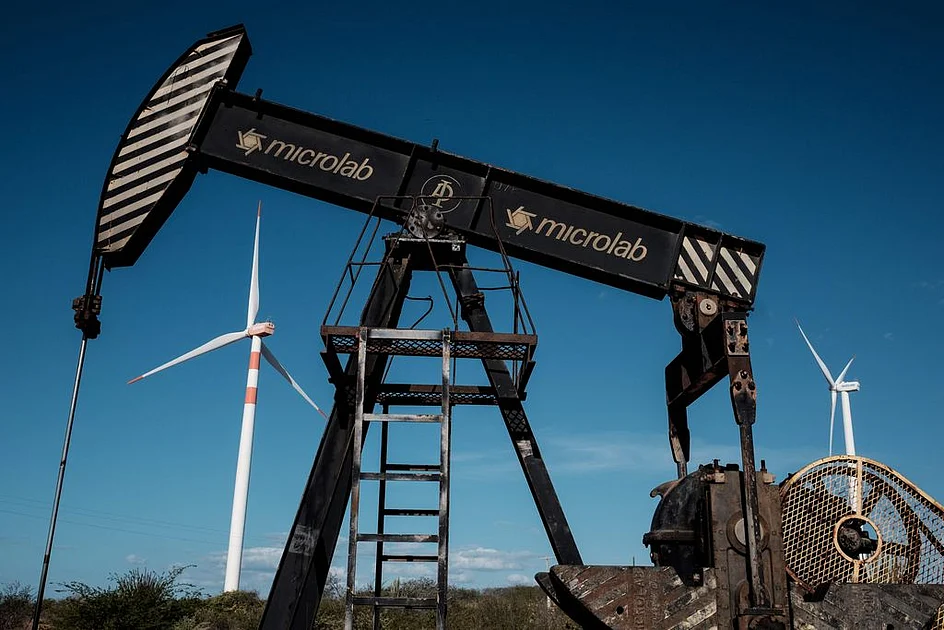
    Global crude benchmarks concluded 2025 with their most significant annual depreciation since 2020, cementing a third consecutive year of losses amid complex market dynamics. Brent crude futures registered a pronounced 17% annual decline while U.S. West Texas Intermediate crude witnessed a nearly 19% drop, marking the longest sustained downward trend in history.

    The year’s substantial price erosion stemmed from a confluence of factors including OPEC+ accelerated production increases, persistent concerns regarding global economic vitality under tariff pressures, and surprisingly resilient U.S. shale output. Despite geopolitical tensions that initially propelled prices upward—including strengthened sanctions on Russia, Iran-Israel conflicts disrupting Hormuz Strait shipping, and Yemen-related regional tensions—these supply threats ultimately proved insufficient to counterbalance burgeoning inventories.

    Market structure analysis reveals particular weakness in refined products. Recent Energy Information Administration data showed U.S. crude stocks drawing by 1.9 million barrels, yet this was overshadowed by substantial builds in distillates (5 million barrels) and gasoline (5.8 million barrels), significantly exceeding analyst projections.

    Looking toward 2026, analytical projections remain cautious. BNP Paribas commodities analyst Jason Ying anticipates Brent potentially dipping to $55/barrel in first-quarter 2026 before stabilizing around $60 as supply growth normalizes against flat demand trajectories. This bearish near-term outlook reflects the increased price insulation of U.S. shale producers who secured advantageous hedging positions.

    The OPEC+ alliance, having injected approximately 2.9 million barrels daily into markets since April 2025, has announced a production pause for 2026’s first quarter. With the cartel’s next meeting scheduled for January 4, market participants await signals regarding potential supply adjustments should prices deteriorate further into the $50s range.

    Despite overwhelming fundamental indicators suggesting sustained oversupply through 2026, some analysts caution against discounting geopolitical variables, particularly noting the unpredictable influence of U.S. foreign policy under the Trump administration regarding Venezuela, Iran, and broader global trade relationships.

  • Watch: Walk through palace doors as Sheikh Hamdan recounts key moments in 2025

    Watch: Walk through palace doors as Sheikh Hamdan recounts key moments in 2025

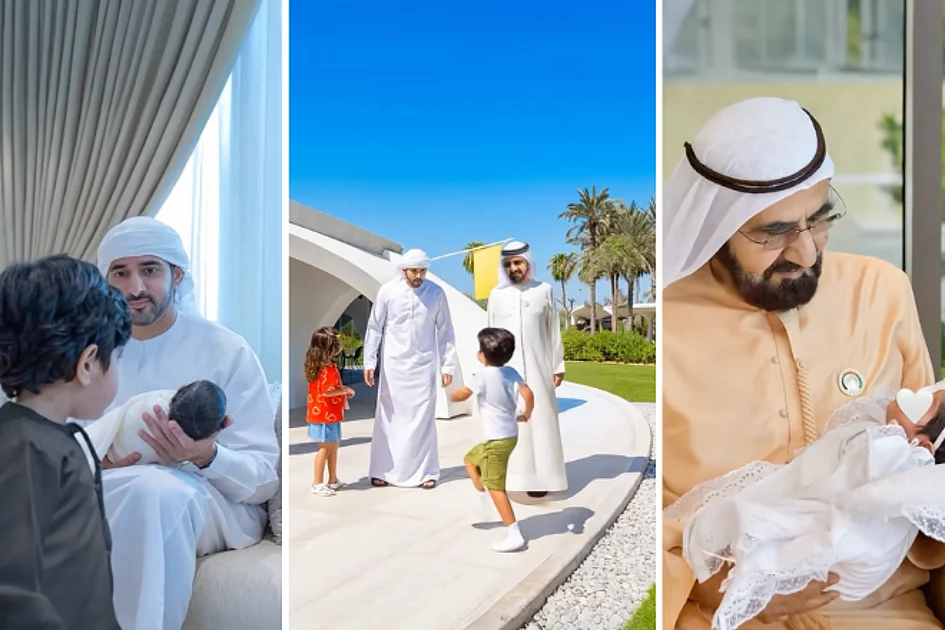
    In a heartfelt conclusion to 2025, His Highness Sheikh Hamdan bin Mohammed bin Rashid Al Maktoum, Crown Prince of Dubai, has captivated global audiences by sharing a profoundly personal video retrospective on social media. The visual narrative, shared with his nearly 17 million Instagram followers, provides unprecedented access into the dual aspects of his life as both a dedicated public figure and a devoted family man.

    The carefully curated footage begins symbolically with Sheikh Hamdan walking through palace doors, effectively inviting viewers into his private world. The video prominently features tender moments with his newborn daughter Hind, born earlier this year, alongside warm familial interactions that include the nation’s leadership. These genuine scenes of embrace and informal companionship reveal the human dimension behind the royal title.

    True to his reputation as an adventure enthusiast, the compilation also showcases Sheikh Hamdan’s adrenaline-fueled pursuits, including skydiving from aircraft, ocean swimming, and snow sledding. This balanced portrayal presents a multifaceted leader who seamlessly blends his governance responsibilities with adventurous passions and family commitments.

    The Crown Prince’s participation in this social media trend demonstrates his sophisticated understanding of digital communication, using visual storytelling rather than verbal explanation to connect with citizens and global observers alike. His approachable leadership style continues to redefine modern governance through authentic public engagement.

  • Disney worker hurt stopping 400-lb fake boulder from hitting audience

    Disney worker hurt stopping 400-lb fake boulder from hitting audience

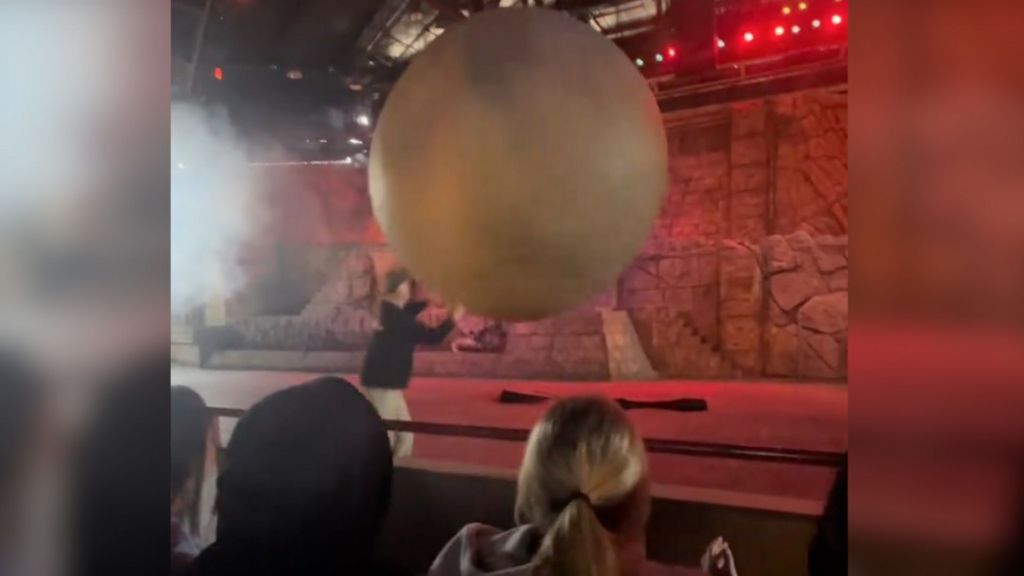
    A Walt Disney World employee sustained injuries while heroically intercepting a 400-pound (180kg) rogue prop during a live performance at the Florida theme park this week. The incident occurred during the Indiana Jones Epic Stunt Spectacular! show, which recreates iconic scenes from the classic film series.

    Video footage captured the moment the artificial boulder, constructed from rubber but weighing approximately 400 pounds, deviated from its intended track during Tuesday’s performance. As the massive prop careened toward audience seating areas, a quick-thinking staff member leaped into its path, successfully preventing it from reaching spectators but suffering injuries in the process.

    The employee remained on the ground immediately following the impact, with fellow cast members rushing to provide assistance. While Disney officials have not explicitly confirmed the boulder as the cause, they acknowledged that ‘a prop moved off its track’ during the performance.

    In an official statement released Wednesday, Disney representatives emphasized: ‘We’re focused on supporting our cast member, who is recovering. Safety is at the heart of what we do, and that element of the show will be modified as our safety team completes a review of what happened.’

    Eyewitnesses described the staff member’s actions as potentially life-saving. One attendee told People magazine that the worker had ‘saved’ the audience from injury, characterizing the event as ‘a crazy experience and definitely one that we will remember.’ Another video captured an audience member exclaiming, ‘He literally saved our lives, that guy.’

    The incident has prompted an immediate safety review of the popular stunt show, which features one of the most recognizable scenes from 1981’s ‘Raiders of the Lost Ark,’ where Indiana Jones narrowly escapes a massive rolling boulder triggered by a booby trap.

  • How Saudi-UAE tensions could reshape regional alignments in 2026

    How Saudi-UAE tensions could reshape regional alignments in 2026

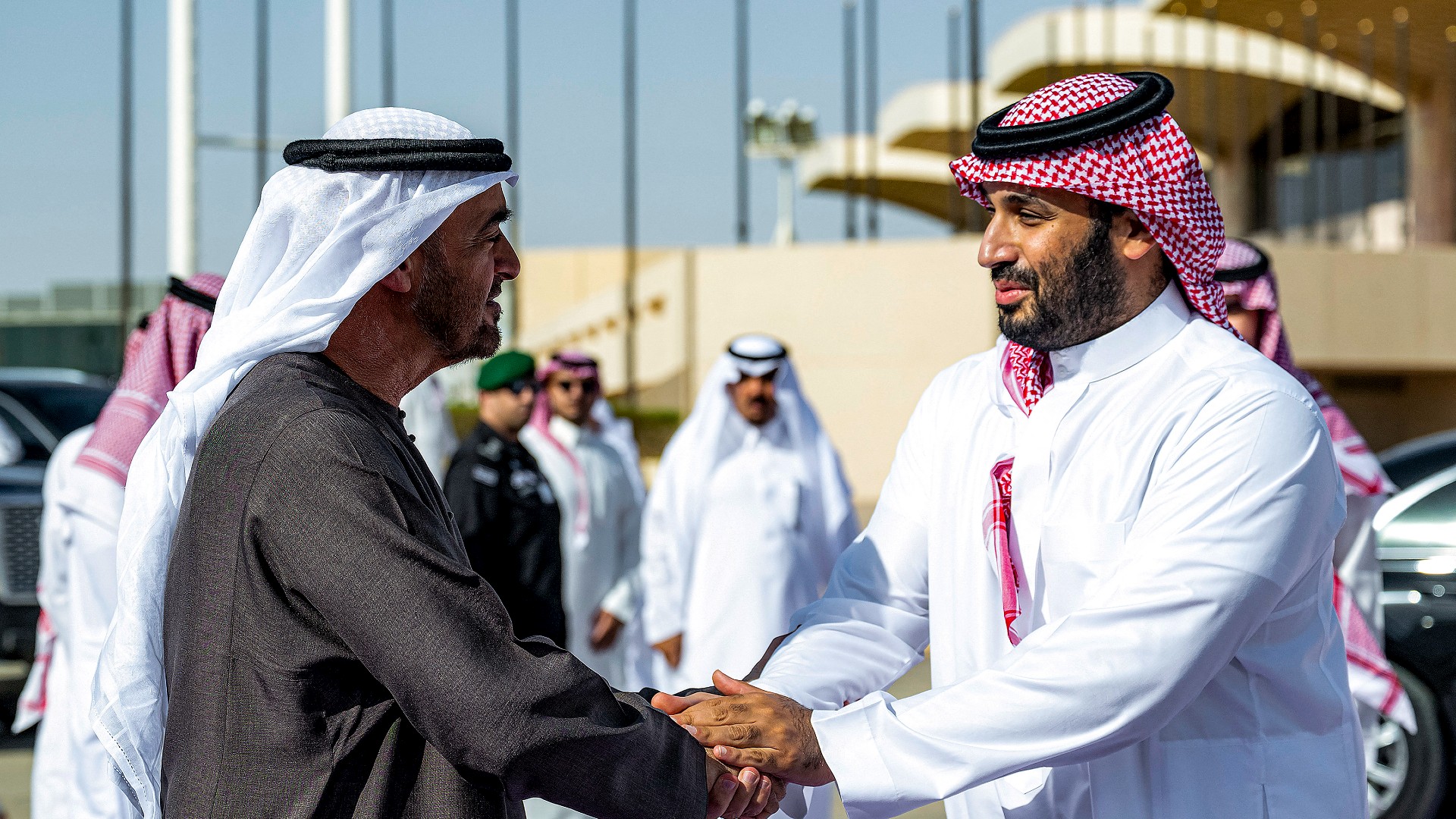
    A profound geopolitical shift is unfolding across the Arabian Peninsula as Saudi Arabia and the United Arab Emirates transition from strategic allies to overt adversaries, marking a significant deterioration in regional relations. This transformation, previously concealed behind diplomatic formalities, has now erupted into public view with tangible military actions and unprecedented diplomatic accusations.

    The rupture became starkly evident when Saudi forces conducted airstrikes on the Yemeni port of al-Mukalla, targeting what Riyadh identified as Emirati-linked weapons shipments destined for separatist factions. This direct military action against UAE-associated interests represents an unprecedented escalation, with Saudi officials publicly condemning Abu Dhabi’s activities as ‘highly dangerous’ threats to national security. The UAE promptly countered these allegations, dismissing them as containing ‘fundamental inaccuracies.’

    Regional analysts identify multiple conflict zones where the two powers’ strategies diverge fundamentally. In Sudan, Saudi Arabia supports the official army while the UAE backs the Rapid Support Forces paramilitary group. In Yemen, despite nominal cooperation against Houthi rebels, the UAE maintains longstanding support for secessionist Southern Transitional Council forces, which recently seized substantial territories in southeastern Yemen, prompting the Saudi military response.

    Further divisions emerge in Somalia, where the UAE pursues close cooperation with the breakaway region of Somaliland, including military base construction, while Saudi Arabia joined international consensus opposing recognition of the region’s independence. This pattern reveals emerging fault lines: the UAE frequently supports paramilitary and secessionist movements across the region, while Saudi Arabia builds coalitions to preserve existing state boundaries throughout the Middle East and Horn of Africa.

    Experts note this confrontation differs fundamentally from previous Gulf disputes, including the 2017 Qatar blockade where Riyadh and Abu Dhabi maintained unified positions. Kristian Ulrichsen of the Baker Institute observes the UAE may be ‘approaching a tipping point’ in balancing regional relationships with support for non-state actors. The normalization of UAE-Israel relations through the Abraham Accords further distinguishes Emirati and Saudi approaches to regional diplomacy, particularly following Israel’s military actions in Gaza.

    While some analysts suggest economic interdependence and shared Gulf Cooperation Council frameworks might eventually facilitate reconciliation, the current crisis reflects deeper strategic divergences that may reshape Middle Eastern geopolitics throughout 2026 and beyond, potentially creating new regional alignments and power structures.

  • Anthony Joshua discharged from hospital after Nigeria car crash

    Anthony Joshua discharged from hospital after Nigeria car crash

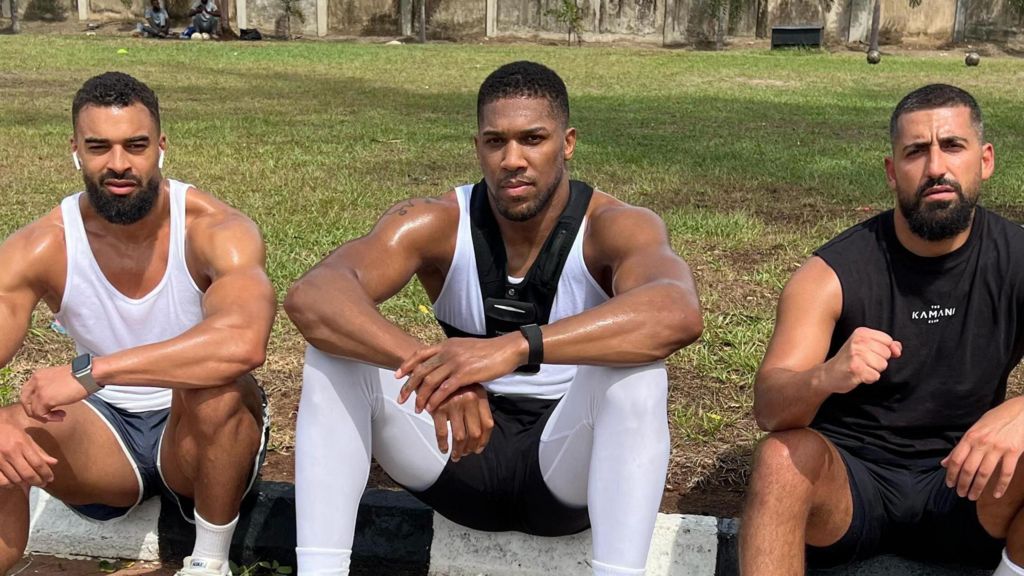
    British heavyweight boxing icon Anthony Joshua has been released from medical care in Nigeria following a devastating road accident that resulted in the deaths of two integral members of his personal team. The 36-year-old former world champion, described as ‘heavy hearted’ by officials, is now set to continue his recovery privately after being cleared by physicians.

    The tragic incident occurred Monday on a major expressway in Ogun State, near Lagos, when the Lexus SUV carrying Joshua as a passenger suffered a tire blowout before colliding with a stationary truck. The crash claimed the lives of Latif ‘Latz’ Ayodele and Sina Ghami, both longstanding members of Joshua’s inner circle who had traveled with him to Nigeria following his victory over Jake Paul in Miami on December 19th.

    Ghami served as Joshua’s dedicated sport and exercise rehabilitation coach for over a decade, while Ayodele was another trusted confidant within the boxer’s close-knit team. Following his hospital discharge Wednesday, Joshua visited the funeral home where preparations were underway to repatriate his friends’ remains to their families.

    The boxing world has united in grief, with promoter Eddie Hearn posting an emotional tribute on Instagram: ‘Rest in peace Latz and Sina. Your energy and loyalty among so many other great qualities will be deeply missed.’ Retired cruiserweight champion Tony Bellew expressed similar sentiments on social media, noting ‘there is no pain in life worse than grief.’

    Ogun State police confirm investigations remain ongoing and discreet, with preliminary findings from the Traffic Compliance and Enforcement Agency indicating mechanical failure preceded the collision. The boxing community, including champions Oleksandr Usyk and Tyson Fury, has flooded social media with support for Joshua and the families affected by this profound tragedy.