作者: admin

  • China’s top legislator meets ROK president

    China’s top legislator meets ROK president

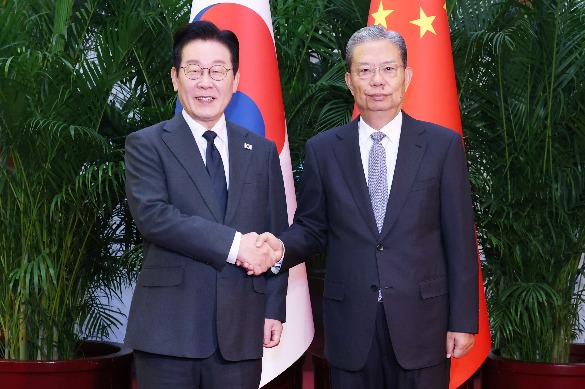
    In a significant diplomatic engagement, Zhao Leji, Chairman of China’s National People’s Congress Standing Committee, held substantive talks with South Korean President Lee Jae-myung in Beijing on Tuesday. The high-level meeting built upon Monday’s presidential discussions, marking a concerted effort to advance Sino-ROK relations through legislative channels.

    Zhao emphasized the distinctive cooperative nature that has characterized bilateral ties throughout the three decades since diplomatic normalization. He articulated China’s commitment to implementing the strategic consensus reached by both nations’ leaders, particularly focusing on reinforcing neighborly friendship, expanding mutually beneficial cooperation, and strengthening public support foundations for long-term partnership stability.

    The Chinese legislative leader specifically highlighted the NPC’s willingness to sustain high-level exchange momentum with South Korea’s National Assembly. This parliamentary cooperation aims to enhance communication across multiple tiers and diverse fields while establishing legal safeguards for bilateral collaborative initiatives.

    President Lee reciprocated these sentiments, expressing South Korea’s readiness to deepen economic and cultural cooperation with China. He advocated for intensified exchanges between legislative bodies and political parties, coupled with enhanced people-to-people interactions to further bolster bilateral relationship development.

    The meeting represents a strategic parliamentary complement to executive-level diplomacy, demonstrating both nations’ multi-branch governmental approach to fostering stable, long-term strategic cooperation amid evolving regional dynamics.

  • Ministry OKs new public college focused on cyberspace security

    Ministry OKs new public college focused on cyberspace security

    In a significant move to address national strategic needs, China’s Ministry of Education has greenlit the establishment and renaming of 15 tertiary institutions, with cybersecurity and emergency management education receiving particular emphasis. The newly published roster reveals a substantial commitment to specialized higher education reform.

    The most prominent addition is a public college exclusively dedicated to cyberspace security, which will operate under the sponsorship of Wuhan municipal government in Hubei province. This institution has been strategically positioned as a high-level, application-oriented university designed to cultivate specialized talent in the critical field of cybersecurity.

    Concurrently, a landmark development in emergency management education emerges through the merger of North China Institute of Science and Technology and the Institute of Disaster Prevention, both located in Hebei province. The consolidated institution will be renamed the University of Emergency Management, marking China’s first higher education establishment specifically bearing this nomenclature. Operated under the auspices of the Ministry of Emergency Management, the university will be situated in Yanjiao, Langfang, adjacent to Beijing’s municipal administrative center.

    The ministry clarified that these approvals followed thorough deliberations during official meetings and strict adherence to China’s higher education legislation and regulatory frameworks. The complete list encompasses nine newly established institutions, comprising seven public universities and two private ones, reflecting a diversified approach to educational expansion.

  • Residents rebuild lives in new homes a year after Xizang quake

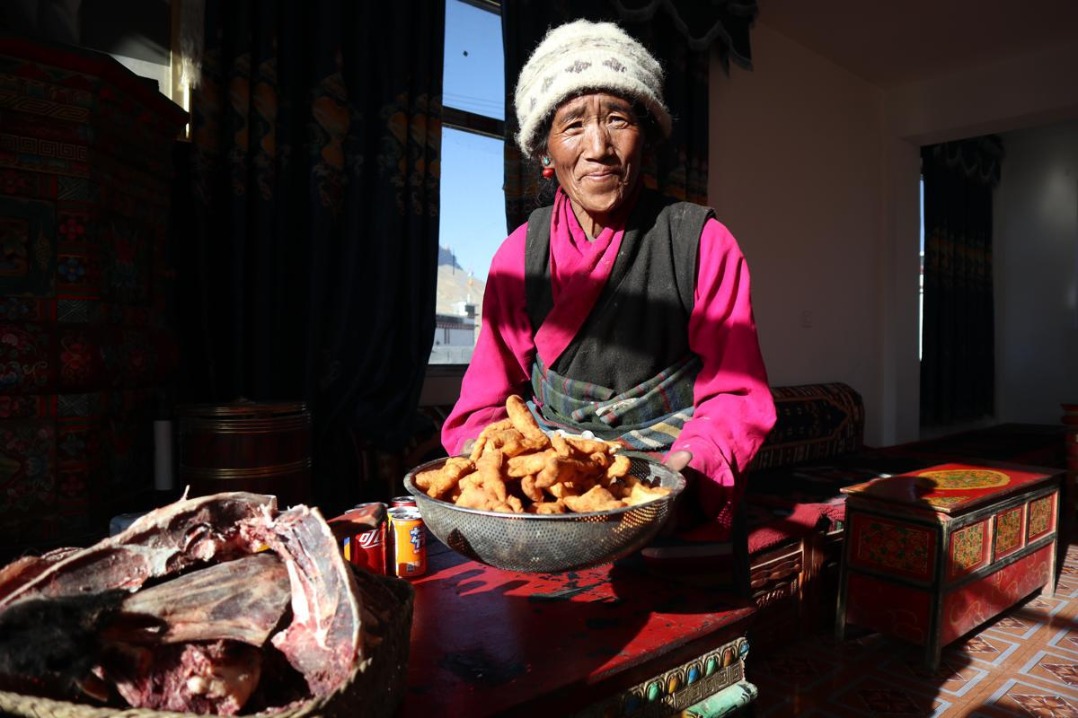
    Residents rebuild lives in new homes a year after Xizang quake

    Amidst the harsh winter temperatures plunging to -16°C at the foothills of snow-capped mountains, a remarkable story of resilience unfolds in Dingri county, Xizang Autonomous Region. Exactly one year after a catastrophic 6.8-magnitude earthquake devastated the area, local residents are celebrating new beginnings in recently reconstructed homes.

    The January 7, 2025 seismic event that struck Dingri and adjacent counties resulted in significant casualties and destroyed tens of thousands of residences. Today, the landscape tells a different story—one of recovery and renewal. Through comprehensive government-led reconstruction initiatives, survivors are actively rebuilding their lives with renewed optimism.

    Steam rises from cooking pots in newly constructed reinforced concrete houses, where families like that of Kyiba from Nesemo village in Shekar township are preparing for traditional celebrations. With the Losar New Year approaching in two weeks, Kyiba prepares fresh pastries for guests in her family’s new home, symbolizing both cultural continuity and physical recovery.

    The massive rehabilitation effort has extended across seven counties, 47 towns, and 486 villages throughout the affected region. Official reports indicate that reconstruction authorities have successfully rebuilt over 22,000 residential structures while performing essential repairs and reinforcements on more than 10,500 additional homes.

    This comprehensive rebuilding program represents one of the most significant post-disaster recovery operations in the region’s recent history. The transformation from devastation to habitation within twelve months demonstrates exceptional coordination between government agencies and local communities. As temperatures remain bitterly cold outside, the warmth inside these new homes reflects not just physical comfort but also the restored spirit of Tibetan communities moving forward from tragedy.

  • US Congressman Doug LaMalfa dies unexpectedly at 65

    US Congressman Doug LaMalfa dies unexpectedly at 65

    The sudden passing of California Republican Congressman Doug LaMalfa at age 65 has triggered both political repercussions and heartfelt tributes from colleagues, including former President Donald Trump. LaMalfa’s unexpected death was announced Tuesday, though the specific cause remains undisclosed at this time.

    Former President Trump delivered an emotional tribute, characterizing LaMalfa as “a defender of everybody” and “a fantastic person” who maintained perfect voting alignment with his administration. “We express our tremendous sorrow at the loss of a great member – a great, great, great member,” Trump stated in his commemorative remarks.

    Representing California’s 1st Congressional District since 2013, LaMalfa brought unique agricultural expertise to Capitol Hill. The former rice farmer held a degree in agricultural business from California Polytechnic State University and dedicated his legislative career to water policy, agricultural interests, and advocating for rural communities. His congressional website highlighted his efforts to secure assistance for wildfire victims in his northern California district and his work to protect families from excessive regulation.

    Minnesota Congressman Tom Emmer remembered his colleague as “a staunch advocate for his constituents and rural America,” reflecting the bipartisan respect LaMalfa commanded during his tenure.

    The political implications of LaMalfa’s death are immediately significant. Combined with the recent resignation of Georgia Representative Marjorie Taylor Greene, another Trump ally, the Republican majority in the House of Representatives has shrunk to a razor-thin 218-213 margin. This leaves the GOP with merely a two-vote cushion, meaning the absence or defection of just three members could result in legislative defeats.

    Further compounding Republican concerns, news emerged Tuesday that Indiana Congressman Jim Baird had been hospitalized following a car accident. While statements indicated Baird is “expected to make a full recovery,” the incident underscores the fragility of the Republican majority.

    Currently, four House seats remain vacant, with Democrats favored to secure two of them in upcoming special elections in Texas and New Jersey. Under California law, Governor Gavin Newsom must call a special election within 14 days to fill LaMalfa’s vacant seat, setting the stage for another critical electoral contest.

  • AU applauds Guinea’s peaceful electoral triumph

    AU applauds Guinea’s peaceful electoral triumph

    The African Union has formally recognized Guinea’s recent presidential election as a landmark achievement in the nation’s journey toward reestablishing constitutional governance. In an official statement, AU Commission Chairperson Mahamoud Ali Youssouf commended the peaceful conduct of the December 28 vote, highlighting the demonstrated maturity of Guinean citizens throughout the electoral process.

    Youssouf extended congratulations to President-elect Mamady Doumbouya on his decisive victory, which was subsequently validated by Guinea’s Supreme Court following the release of provisional results by the General Directorate of Elections. The AU leadership specifically praised the collaborative efforts of national stakeholders—including election management bodies, political candidates, party coalitions, government institutions, and civil society organizations—for ensuring the electoral proceedings aligned with both international standards and Guinea’s domestic legal framework.

    Significantly, the AU chairperson called for a comprehensive reassessment of existing sanctions against Guinea, suggesting the peaceful transition warranted reconsideration of restrictive measures. The Union reaffirmed its commitment to providing ongoing support for Guinea’s democratic consolidation, rule of law enforcement, and national unity strengthening—elements deemed essential for sustainable development.

    The AU’s endorsement follows a period of political transition in Guinea and represents international recognition of the country’s progress toward institutional normalization through democratic mechanisms.

  • Canada’s Indigenous governor general to visit Greenland as Trump renews talk of annexing it

    Canada’s Indigenous governor general to visit Greenland as Trump renews talk of annexing it

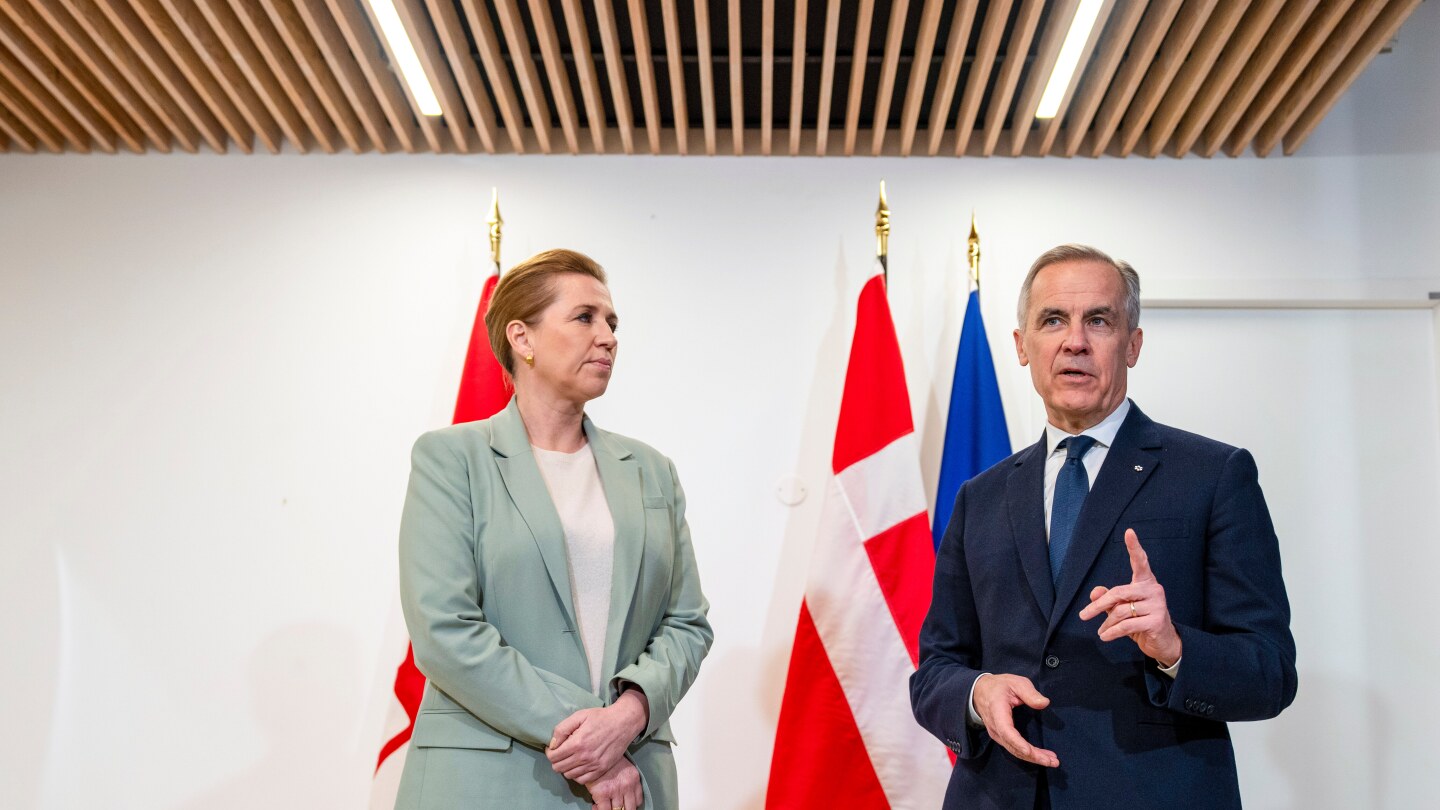
    In a strategic diplomatic move, Canada is deploying its highest-ranking Indigenous official and foreign minister to Greenland early next February. Prime Minister Mark Carney confirmed the visit would include Governor General Mary Simon, Canada’s first Indigenous governor general of Inuk descent, and Foreign Minister Anita Anand. The delegation plans to establish a Canadian consulate in Nuuk, Greenland’s capital.

    This development occurs against the backdrop of renewed territorial assertions from former U.S. President Donald Trump, who has repeatedly suggested American acquisition of Greenland and even referenced Canada becoming ‘the 51st state.’ Greenland, with its predominantly Inuit population of approximately 56,000, operates as a self-governing territory within the Kingdom of Denmark.

    Prime Minister Carney, during meetings with Danish Prime Minister Mette Frederiksen at Canada’s Paris embassy, emphatically stated that “the future of Greenland and Denmark are decided solely by the people of Denmark.” This position received robust international support as leaders from Canada, France, Germany, Italy, Poland, Spain, and the United Kingdom jointly affirmed Greenland’s sovereignty, recognizing the mineral-rich Arctic island “belongs to its people.”

    The diplomatic coordination took place alongside the Coalition of the Willing talks on Ukraine, with Carney specifically arranging meetings with Frederiksen and NATO’s secretary general. Both leaders emphasized their commitment to Arctic security cooperation within the NATO framework, with Frederiksen acknowledging Canada’s “respect for national sovereignty.”

    Professor Daniel Béland of McGill University highlighted the delicate balance Canada must maintain, noting that while demonstrating solidarity with Greenland is crucial for Arctic governance and international law principles, the Canadian government must simultaneously avoid jeopardizing ongoing trade negotiations with the United States.

  • New system erases duplicate enrollments, fake student records

    New system erases duplicate enrollments, fake student records

    China’s education sector has taken a significant step forward in combating academic fraud with the nationwide implementation of an upgraded student information management system. Deployed on January 6, 2026, this comprehensive platform operates across five administrative levels—national, provincial, municipal, county/district, and individual schools—creating an integrated digital ecosystem for student data management.

    The enhanced system directly addresses longstanding issues of duplicate student registrations and fabricated enrollment records that have plagued China’s education system. By integrating with the national population database, the platform employs advanced identity verification protocols that automatically detect and eliminate fraudulent registrations. This technological intervention comes amid growing public concern over cases where individuals obtained multiple school registrations or were enrolled without actual attendance.

    The development follows high-profile scandals, including the case of actress Nashi from Inner Mongolia, who was found to have fabricated her college entrance exam application using a false identity from Hohhot No 8 Middle School despite never attending the institution. Such incidents have sparked widespread social media discourse and demands for improved oversight mechanisms.

    Beyond fraud prevention, the revamped platform streamlines core educational processes including student enrollment, transfers, graduation procedures, and academic progression through unified online services. The system also enhances data application capabilities for broader educational management, enabling real-time attendance monitoring, precise subsidy allocation, and support for cross-sector initiatives such as family tax deductions and anti-trafficking efforts.

    The Ministry of Education emphasizes that this upgrade represents a crucial component of China’s digital transformation in education, providing a more reliable foundation for policy implementation, resource distribution, and equitable service delivery across the nation’s educational institutions.

  • China to further bolster flood, geological disaster rescue forces in northern regions

    China to further bolster flood, geological disaster rescue forces in northern regions

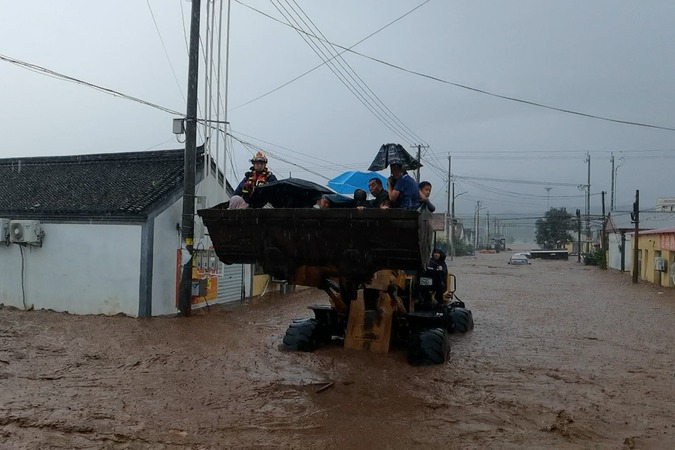
    In response to increasingly evident northward shifts in China’s rainfall patterns, national authorities have announced comprehensive measures to significantly enhance emergency response capabilities across northern regions. The strategic initiative emerged from Tuesday’s national conference on emergency management, highlighting growing concerns over intensified flood and geological disaster risks.

    The Ministry of Emergency Management revealed alarming trends in recent meteorological data, indicating substantial increases in the frequency, intensity, and precipitation volume of disaster-causing heavy rainfall events. This climatic transformation has prompted a fundamental reassessment of regional disaster preparedness frameworks.

    Core components of the reinforcement strategy include substantial upgrades to firefighting and rescue infrastructures, accelerated development of specialized aviation rescue teams, and establishment of geographically distributed emergency response centers tailored to regional vulnerability profiles. The ministry further emphasized parallel enhancements to specialized industrial rescue capacities spanning critical sectors including metallurgy, electrical infrastructure, passenger cableway systems, and inland waterway transportation networks.

    A particularly notable aspect involves the operational integration of large-scale firefighting aircraft, representing a significant technological advancement in China’s aerial emergency response capabilities. This multi-layered approach reflects China’s proactive stance in adapting to evolving environmental challenges through coordinated institutional, technological, and specialized workforce development.

  • Iran security forces use tear gas in Tehran bazaar as toll rises

    Iran security forces use tear gas in Tehran bazaar as toll rises

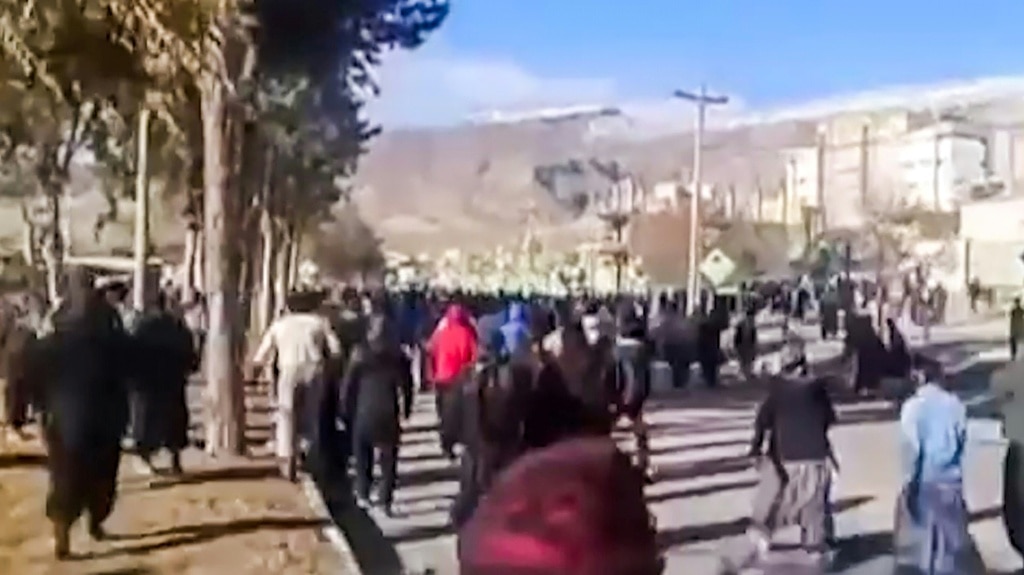
    Iranian security forces escalated their response to nationwide economic protests on Tuesday, deploying tear gas to disperse demonstrators at Tehran’s historic Grand Bazaar. The confrontation marks a significant intensification of the government’s crackdown on the most substantial wave of civil unrest to challenge the Islamic Republic since the 2022-2023 demonstrations.

    The protests, initially triggered by a severe currency devaluation and soaring living costs, have now resulted in significant casualties. According to Norway-based NGO Iran Human Rights (IHR), security forces have killed at least 27 protesters during ten days of demonstrations that began in late December. The victims include five minors under age 18, highlighting the violent nature of the state response.

    The movement originated on December 28th when merchants at Tehran’s economic hub initiated a shutdown protest against the Iranian rial’s collapse. The demonstrations have since spread to western regions with significant Kurdish and Lor minority populations. While not yet reaching the scale of previous nationwide uprisings, the protests represent a mounting challenge for Supreme Leader Ayatollah Ali Khamenei’s government amid persistent economic crisis and recent regional conflicts.

    Verified social media footage obtained by AFP shows protesters chanting anti-government slogans including ‘Pahlavi will return’ and ‘Seyyed Ali will be overthrown’—direct references to the ousted monarchy and current leadership. Additional footage from human rights organizations captures crowds shouting ‘freedom’ and ‘shameless’ before security forces respond with tear gas canisters that send protesters fleeing through narrow alleyways.

    Despite government announcements of modest economic relief payments, judiciary officials have warned there will be ‘no leniency’ for those deemed ‘rioters.’ Official Iranian media acknowledges at least 12 fatalities since protests began, including security personnel, but contradicts the higher casualty figures reported by independent organizations.

    IHR reports over 1,000 arrests nationwide, with particularly severe crackdowns in western provinces. In one incident in Ilam province’s Malekshahi district, security forces allegedly killed six protesters on Saturday. Amnesty International has condemned subsequent raids on hospitals to detain injured demonstrators as evidence of the regime’s extreme measures to suppress dissent.

    The economic grievances fueling the protests continue unabated. The Iranian rial hit a new record low of approximately 1.47 million to the US dollar on black markets, further eroding purchasing power and exacerbating the economic desperation driving citizens into the streets.

  • US adds 7 countries to list of nations needing visa bonds up to $15,000

    US adds 7 countries to list of nations needing visa bonds up to $15,000

    In a significant move set to reshape urban development timelines, Canadian real estate developer BNW Developments has entered into a strategic partnership with China Railway No. 4 Engineering Group (CREC4). This collaboration represents a major international fusion of Western real estate vision with Eastern engineering prowess, creating a powerful synergy in the construction sector.

    The partnership leverages CREC4’s extensive experience in large-scale infrastructure projects and rapid construction methodologies, honed through China’s massive domestic development initiatives. By integrating these advanced techniques and resources, BNW Developments aims to substantially accelerate project completion rates while maintaining quality standards across its portfolio of residential and commercial properties.

    Industry analysts note this alliance comes at a critical time when North American construction faces persistent challenges including labor shortages, supply chain disruptions, and rising material costs. The injection of CREC4’s engineering capabilities and potentially innovative prefabrication technologies could provide BNW Developments with a competitive advantage in meeting market demand more efficiently.

    The collaboration extends beyond mere contracting arrangements, representing a deep knowledge transfer partnership that will see both entities exchange best practices in project management, sustainable building techniques, and digital construction technologies. This trans-Pacific partnership may establish new benchmarks for international cooperation in the real estate development sector, potentially influencing how Western developers approach construction challenges through global partnerships.