作者: admin

  • Employee sorry for leaking pop star’s rehearsal clips

    Employee sorry for leaking pop star’s rehearsal clips

    A professional videographer has issued a formal public apology after leaking unauthorized rehearsal footage of Japanese pop icon Ayumi Hamasaki’s scheduled Shanghai performance, triggering the abrupt cancellation of her highly anticipated concert. The incident, which unfolded over the weekend, has exposed critical vulnerabilities in entertainment event security protocols.

    The staff member, identified as Lai Zonglong, confessed to covertly recording Hamasaki during private rehearsals and subsequently posting misleading content to his personal Douyin account last Friday. His actions occurred just one day before the artist’s scheduled performance, part of her broader 2025 Asian tour itinerary.

    In an official statement released through his Weibo account ‘Yanhuobinhai,’ Lai acknowledged his serious professional misconduct, including violating strict contractual prohibitions against recording or disseminating any media during closed rehearsals. His posts inadvertently fueled widespread misinformation across social media platforms, including the false narrative that Hamasaki had performed an entire concert to an empty venue.

    ‘The photographs I shared and the resulting misinformation have substantially disrupted both the performance and concert organization,’ Lai stated. ‘I profoundly regret my actions and offer my sincere apologies for breaching the established protocols set forth by the concert organizers.’

    Concert promoters officially canceled the event citing ‘force majeure circumstances’ and committed to processing full refunds for all ticket holders within a 30-day window. Lai has pledged to adhere strictly to workplace regulations and professional ethics moving forward, vowing to ‘resolutely refrain from publishing false information’ online in the future.

    The incident has sparked broader conversations about digital accountability, artist rights, and the ethical responsibilities of event staff within the entertainment industry, particularly regarding the protection of artists’ creative content during preparatory phases.

  • Tianjin turns hub for green electricity trade

    Tianjin turns hub for green electricity trade

    Tianjin has solidified its position as China’s premier hub for green electricity trading, with renewable energy transactions soaring to 17.3 billion kilowatt-hours in 2025—a staggering increase from just 12 million kWh recorded in 2021 when the national green electricity market launched. This exponential growth represents approximately 40% of the city’s energy trading activity, marking a transformative shift toward sustainable power infrastructure in the northern port city.

    The remarkable expansion has yielded substantial environmental benefits, dramatically reducing carbon dioxide emissions and harmful pollutants including sulfur dioxide, nitrogen oxides and particulate matter. According to State Grid Tianjin Electric Power Co, the emission reductions achieved are equivalent to the annual carbon absorption capacity of 767 million mature trees.

    China’s national green electricity market facilitates dual transactions encompassing both physical renewable energy and tradable green certificates. This innovative mechanism enables major energy consumers—particularly manufacturing facilities and data centers—to directly source verified clean power. The system provides corporate buyers with transparent documentation of their renewable energy usage, supporting both environmental targets and corporate sustainability reporting.

    The development aligns with China’s broader ecological civilization initiatives, demonstrating how regional energy markets can drive nationwide progress toward carbon neutrality goals. Tianjin’s strategic location as a major industrial center and port city has positioned it ideally to lead this transition, combining renewable energy generation—including offshore wind farms visible from the Binhai New Area—with advanced trading infrastructure.

  • Nation makes strides in climate governance

    Nation makes strides in climate governance

    China has dramatically transformed its role in global environmental governance, evolving from a participating nation to a definitive leader in climate action, according to officials and experts speaking at a recent seminar on Ecological Civilization in Xiamen. The gathering brought together provincial leaders, national ministry officials, researchers, and business representatives to discuss China’s expanding contributions to building a sustainable global future.

    Substantial environmental progress within China provides the foundation for this leadership claim. Public satisfaction with ecological conditions has remained above 90% for four consecutive years, demonstrating successful environmental protection alongside continued economic advancement. Air quality metrics show particularly dramatic improvement: concentrations of fine particulate matter (PM2.5) in major cities have plummeted by 56% compared to a decade ago, while heavily polluted days have decreased by an impressive 92%—representing the world’s most rapid air quality enhancement.

    The green transition has simultaneously fueled economic growth, with China dominating the global new energy vehicle market for ten straight years. The nation’s forest coverage has expanded to over 25%, accounting for a quarter of the planet’s new green growth. These domestic achievements are now complemented by extensive international cooperation through multiple channels.

    China has established 55 climate-focused South-South cooperation agreements with 43 developing nations while providing professional training to participants from over 120 countries. This effort aims to transform developing nations from passive recipients to active participants in global climate rule-making, advocating for equitable responsibility distribution and opposing green trade barriers.

    Juncao technology exemplifies China’s practical contributions to global sustainability. This innovative, adaptable grass hybrid developed by Professor Lin Zhanxi serves multiple purposes—growing edible mushrooms, providing livestock feed, and enabling ecological restoration. Introduced to 109 countries, it has particularly benefited less developed regions through over 400 training sessions for 16,000 international trainees. The technology’s symbolic significance was highlighted when King Tupou VI of Tonga personally planted Juncao during a recent visit to Fujian, with many now calling it ‘friendship grass’ for its role in strengthening international bonds and improving livelihoods.

  • Parcel deliveries in China surpass 180 billion mark

    Parcel deliveries in China surpass 180 billion mark

    China’s express delivery industry achieved an unprecedented milestone this week, with annual parcel volume exceeding 180 billion items for the first time in history. The State Post Bureau announced Monday that this record-breaking figure was reached on Sunday, highlighting the sector’s extraordinary growth trajectory and its increasing importance to the national economy.

    The landmark parcel—a smart learning device ordered by Shenzhen resident Li Xiaojun—underwent a fully automated journey representative of China’s advanced logistics infrastructure. Processed at JD.com’s automated warehouse, the package was transported via unmanned vehicle before final doorstep delivery, demonstrating the sophisticated integration of technology throughout the supply chain.

    At JD’s Pineshan grid warehouse station in Shenzhen, automation has become fundamental to operations. Station manager An Jixing reported handling approximately 15,000 parcels daily with five unmanned vehicles that manage over 1,000 orders. “These vehicles significantly reduce staff travel time, alleviate workload pressures, and enable longer community service hours, resulting in markedly improved customer experiences,” An explained.

    Recipient Li Xiaojun expressed surprise at his accidental role in the national milestone. “I placed the order yesterday and received it today—incredible efficiency for my child’s educational device,” he remarked. “Both my family’s shopping and factory business depend heavily on courier services, though I never realized annual volumes reached such astronomical levels.”

    Courier Zhang Fan, who delivered the historic package, described how automation has transformed his profession. Serving over 2,000 households, he noted that unmanned vehicles now bring parcels within hundreds of meters rather than requiring 6-kilometer trips for package retrieval. “This allows greater focus on delivery quality, customer interaction, and collection services,” Zhang emphasized.

    The industry’s technological transformation extends throughout the logistics chain: warehouse robots manage inventory operations, AI-powered vision systems scan parcels within milliseconds at sorting centers, and large language models optimize transportation routing. Drones and unmanned vehicles are expanding through pilot programs to further reduce operational costs.

    With monthly averages exceeding 16 billion parcels and peak daily volumes reaching 777 million items (over 6,200 parcels per second), China’s courier sector demonstrates extraordinary scale. Liu Jiang of the State Post Bureau’s research center attributed this growth to macroeconomic policies and national market integration. “The industry’s scale effect has made it crucial for driving consumption, domestic demand, and economic stability,” Liu stated, noting technology’s role as “a powerful engine injecting lasting vitality.”

    Shenzhen has emerged as an innovation leader within the sector, deploying 180 unmanned vehicles capable of handling 100,000+ daily parcels. According to Liu Xiaoqing of Shenzhen Municipal Postal Administration, the city has invested over 150 million yuan ($21 million) in equipment upgrades this year alone. Their drone delivery system now operates eight bases with 500+ routes, achieving two-hour intra-city delivery and three-hour service throughout the Guangdong-Hong Kong-Macao Greater Bay Area.

    The industry appears poised to exceed official 2025 targets of 190 billion parcels and 1.5 trillion yuan in revenue, having already surpassed the 180 billion mark within the first eleven months of 2025. This performance underscores the resilience and continued expansion of the world’s largest express delivery market.

  • Russia and the US threatened to resume nuclear testing after several decades. Here is why it matters

    Russia and the US threatened to resume nuclear testing after several decades. Here is why it matters

    VIENNA — The fragile international consensus against nuclear weapons testing faces unprecedented strain as both the United States and Russia have issued reciprocal threats to resume atomic experiments, triggering widespread alarm among nonproliferation experts and global security analysts.

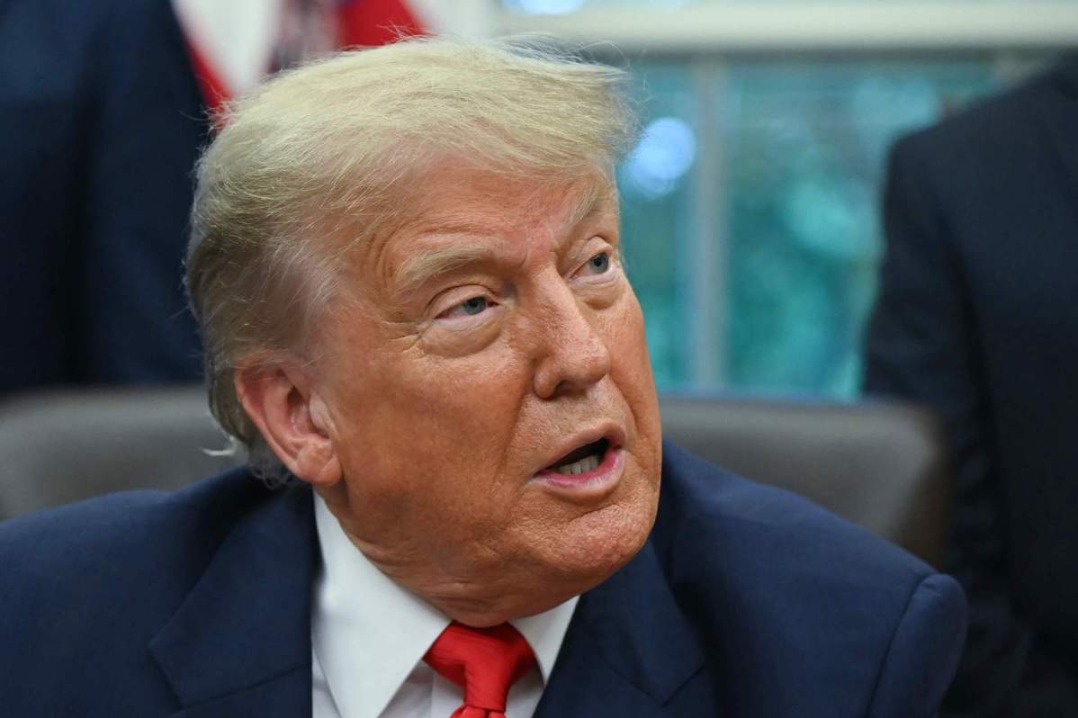
    In late October, U.S. President Donald Trump declared via his Truth Social platform that he had instructed the Department of War to initiate nuclear weapons testing “on an equal basis” with other nations’ programs, asserting this process would “begin immediately.” This pronouncement prompted a swift response from Moscow, where Russian President Vladimir Putin informed his Security Council that Russia would be “under obligation to take reciprocal measures” should the U.S. or any Comprehensive Nuclear-Test-Ban Treaty (CTBT) signatory conduct nuclear tests.

    The current crisis unfolds against the backdrop of the CTBT, adopted by the U.N. General Assembly in 1996 following decades of escalating concerns about atmospheric testing. Although the treaty has achieved near-universal acceptance with 187 signatories and 178 ratifications, it has never formally entered into force due to the requirement that 44 specific nuclear technology-capable states must ratify it. Nine nations remain outside the ratification framework: China, Egypt, Iran, Israel and the U.S. have signed but not ratified; India, North Korea and Pakistan neither signed nor ratified; while Russia recently revoked its ratification in 2023, citing “unacceptable” imbalance with the U.S. position.

    Vienna-based Comprehensive Nuclear-Test-Ban Treaty Organization (CTBTO) maintains an extensive global monitoring network comprising 307 stations utilizing seismic, hydroacoustic, infrasound and radionuclide technologies to detect nuclear explosions. With a 2025 budget exceeding $139 million, the organization has successfully detected all six North Korean tests between 2006-2017.

    Arms control experts warn that resumed testing would particularly benefit nations with less nuclear testing experience. Daryl Kimball of the Arms Control Association cautioned that U.S. testing would “open the door for states with less nuclear testing experience to conduct full-scale tests that could help them perfect smaller, lighter warhead designs,” ultimately decreasing both U.S. and international security. Joseph Rodgers of the Center for Strategic and International Studies noted that countries like China and India “stand to profit from a resumption of nuclear tests” more than the U.S. or Russia, who have conducted the vast majority of the approximately 2,000 tests occurring mostly before 1996.

    The nature of potential testing remains unclear. U.S. Energy Secretary Chris Wright indicated new tests would exclude nuclear explosions, referencing subcritical experiments that produce no self-sustaining chain reaction and thus don’t violate the CTBT. The treaty specifically bans supercritical tests creating nuclear yield—the energy release defining destructive power—under a zero yield standard.

    Detection challenges persist for extremely low-yield hydronuclear tests conducted underground in metal chambers, which Kimball describes as creating a “verification gap.” While the monitoring system was designed to detect 1 kiloton explosions (compared to Hiroshima’s 15 kilotons), CTBTO Executive Secretary Robert Floyd noted it actually performs at approximately 500 tons TNT sensitivity.

    In the current climate of uncertainty, Floyd emphasizes his organization’s role in providing “confidence to states” that they would detect any nuclear explosion “anywhere, anytime,” even as diplomatic tensions escalate between the world’s nuclear superpowers.

  • Chinese and Japanese boats face off near disputed islands as feud worsens

    Chinese and Japanese boats face off near disputed islands as feud worsens

    A maritime confrontation near the disputed Senkaku/Diaoyu Islands has intensified diplomatic friction between China and Japan, with both nations offering conflicting accounts of the incident. The uninhabited islands, administered by Japan but claimed by China under the name Diaoyu Islands, have long represented a geopolitical flashpoint in East Asia.

    According to China’s Coast Guard spokesperson Liu Dejun, Chinese vessels intercepted and issued warnings to a Japanese fishing boat that had ‘illegally entered Chinese territorial waters’ on Tuesday. The CCG stated it implemented ‘necessary law enforcement measures’ to protect what it considers sovereign territory, demanding Japan cease ‘all acts of infringement and provocation.’

    Contradicting this narrative, Japan’s Coast Guard reported that it had actually expelled two Chinese vessels that approached a Japanese fishing boat in the early hours of Tuesday. Japanese authorities stated their patrol ships monitored the situation until the Chinese vessels departed several hours later, ensuring the safety of their fishing vessel.

    This maritime incident occurs against a backdrop of rapidly deteriorating bilateral relations. The diplomatic downturn follows controversial remarks last month by Japanese Prime Minister Sanae Takaichi, a known China critic, who suggested Tokyo might consider military action should China attack Taiwan. Beijing considers Taiwan part of its territory and maintains a policy of potential reunification by force.

    The East China Sea tensions have been escalating for over fifteen years despite a 2008 principle agreement for joint resource exploitation. China has increasingly tested Japanese resolve through frequent coast guard deployments, with last year marking the third consecutive record for Chinese government vessel sightings in the contested waters. The previous patrol occurred on November 16, when Chinese vessels conducted what they described as ‘lawful patrol operations to uphold rights and interests.’

    The growing rift between Asia’s two largest economies has extended beyond diplomatic channels, affecting daily life and economic relations between the two nations while raising concerns about regional stability.

  • India tells smartphone makers to put state-run cyber safety app on new devices

    India tells smartphone makers to put state-run cyber safety app on new devices

    In a landmark move affecting one of the world’s largest telecommunications markets, the Indian government has mandated the compulsory pre-installation of its state-developed Sanchar Saathi application on all new smartphones. The directive, issued by India’s Department of Telecommunications, provides manufacturers a 90-day compliance window to integrate this non-removable cybersecurity tool into devices destined for the Indian market, which serves over 1.2 billion mobile subscribers.

    The government justification centers on enhancing telecom cybersecurity by combating device fraud through International Mobile Equipment Identity (IMEI) verification. Officials cite India’s substantial second-hand device market as particularly vulnerable, noting that stolen or blacklisted phones with duplicate IMEI numbers frequently resurface in consumer hands. The pre-loaded application enables users to authenticate handsets, report lost or stolen devices, and identify suspected fraudulent communications.

    However, digital rights organizations and cybersecurity experts have raised significant concerns about the implementation. The Internet Freedom Foundation characterizes the mandate as transforming every smartphone into ‘a vessel for state mandated software that the user cannot meaningfully refuse, control, or remove.’ Technical concerns focus on the application’s broad system permissions and its design as an immutable component within device operating systems, potentially creating surveillance vulnerabilities by bypassing standard inter-app security protocols.

    Industry compliance presents additional challenges, particularly for manufacturers like Apple that historically resist third-party software mandates. While Android devices dominate India’s market (approximately 95.5% share according to Counterpoint Research), Apple’s estimated 4.5% market share represents significant leverage in negotiations. Reuters reports the technology giant intends to formally communicate its reservations to Indian authorities rather than comply with the directive.

    This development places India alongside nations like Russia, which implemented similar pre-installation requirements for state-backed applications earlier this year, highlighting the growing global tension between national security objectives and digital privacy rights in telecommunications policy.

  • Ryukyu’s historical tributary ties with China highlighted

    Ryukyu’s historical tributary ties with China highlighted

    A significant historical exhibition currently underway at Dalian’s Lushun Museum in Liaoning Province presents compelling evidence of the Ryukyu Islands’ historical status as a tributary state to China during both the Ming (1368-1644) and Qing (1644-1911) dynasties. The exhibition features a meticulously crafted replica of a 1629 imperial edict from Emperor Chongzhen of the Ming Dynasty, with the original document preserved in the museum’s archival collection.

    The imperial decree, issued during the second year of Emperor Chongzhen’s reign, formally confirms Shang Feng’s legitimate succession to the Ryukyu throne following the death of King Shang Ning. The historical document praises the deceased monarch’s demonstrated loyalty and service to the Ming court while instructing the new ruler to exercise prudent governance, protect his domain, and maintain Ryukyu’s established tributary obligations to the Chinese empire.

    The edict concludes with an elaborate enumeration of imperial gifts designated for Ryukyu and officially authorizes Ming envoys to confer Emperor Chongzhen’s formal investiture upon the new king. This exhibition not only highlights the extensive historical and political connections between imperial China and the Ryukyu archipelago but also documents historical instances of Japanese aggression toward the islands, which are situated northeast of China’s Taiwan region.

    The display provides visitors with tangible historical evidence of the sophisticated tributary system that characterized East Asian international relations for centuries, offering crucial context for understanding contemporary geopolitical discussions regarding the region’s historical dynamics.

  • China delivers another letter to UN chief over Japan’s remarks on Taiwan

    China delivers another letter to UN chief over Japan’s remarks on Taiwan

    In a significant diplomatic escalation at the United Nations, China’s Permanent Representative Ambassador Fu Cong has delivered a second formal communication to Secretary-General António Guterres, vehemently rejecting Japan’s position regarding Taiwan. This development marks the latest chapter in an ongoing exchange of diplomatic correspondence between the two Asian powers at the international forum.

    The controversy stems from November 7th remarks by Japanese Prime Minister Sanae Takaichi, who suggested during a Diet session that a potential ‘Taiwan contingency’ could constitute a ‘survival-threatening situation’ for Japan, implying possible military involvement. Ambassador Fu characterized these statements as fundamentally challenging the outcomes of World War II, undermining the post-war international order, and violating core principles of the UN Charter.

    In his meticulously argued communication, the Chinese diplomat challenged Japan’s claim of maintaining a ‘consistent position’ on Taiwan, demanding Tokyo provide the international community with a ‘complete and accurate explanation’ of its stated policy. Fu substantiated China’s sovereignty claims by invoking foundational legal instruments including the Cairo Declaration, Potsdam Proclamation, and the Japanese Instrument of Surrender.

    The ambassador further referenced the landmark 1972 Sino-Japanese Joint Statement, wherein Japan explicitly recognized the People’s Republic of China as the sole legitimate government and acknowledged Taiwan as ‘an inalienable part of China’s territory.’ Fu dismissed Japan’s assertion that Prime Minister Takaichi’s remarks aligned with an ‘exclusively defense-oriented’ strategy, noting that linking Japan’s survival to Taiwan scenarios ‘clearly goes beyond passive defense’ and represents ‘self-contradictory arguments intended to mislead the international community.’

    The communication concluded with a stern warning against Japan’s perceived attempts to ‘expand its military capabilities and revive militarism,’ citing increased defense spending, adjusted arms-export principles, and ongoing nuclear policy debates. Ambassador Fu demanded Japan ‘clearly reaffirm the one-China principle,’ uphold bilateral political documents, immediately retract the controversial remarks, and take concrete steps to honor its commitments.

    Adding international perspective, seasoned Pakistani diplomat Munir Akram characterized Prime Minister Takaichi’s comments as ‘not appropriate,’ noting that Japan particularly should have demonstrated greater sensitivity given the historical context between the nations.

  • More than 1,200 dead from floods in Indonesia, Sri Lanka and Thailand as rescue efforts intensify

    More than 1,200 dead from floods in Indonesia, Sri Lanka and Thailand as rescue efforts intensify

    Emergency response teams across Southeast Asia are battling challenging conditions to reach survivors and recover victims following devastating monsoon floods that have claimed over 1,200 lives across Indonesia, Sri Lanka, and Thailand. The catastrophic weather event has left more than 800 people missing as rescue operations face significant obstacles due to damaged infrastructure and continuing adverse weather patterns.

    In the hardest-hit nation of Indonesia, catastrophic flooding has resulted in at least 659 confirmed fatalities with 475 individuals still unaccounted for. Rescue personnel on Sumatra island confront severely compromised access routes where roads have been completely washed away and critical bridges have collapsed. Despite deployment of helicopter and marine assets, officials report deteriorating weather conditions and infrastructure damage are substantially hampering relief efforts.

    Sri Lanka faces similarly dire circumstances with 390 confirmed deaths and 352 people missing in the wake of Cyclone Ditwah. The country’s Disaster Management Center reported that military-led rescue teams continue searching devastated regions despite multiple access challenges created by landslide-blocked roads and destroyed bridge networks.

    Thailand has recorded 181 fatalities with cleanup operations now underway across southern provinces where massive flooding affected approximately 1.5 million households representing nearly 4 million residents. Government authorities have initiated infrastructure restoration efforts while simultaneously establishing emergency public kitchens and preparing compensation distributions totaling 239 million baht ($7.4 million) for 26,000 affected citizens.

    Regional meteorological agencies warn of potentially worsening conditions with additional rainfall forecast in coming days, particularly concerning for Sri Lanka where residents in central Kandy are already relying on bottled water from natural springs due to compromised water systems.