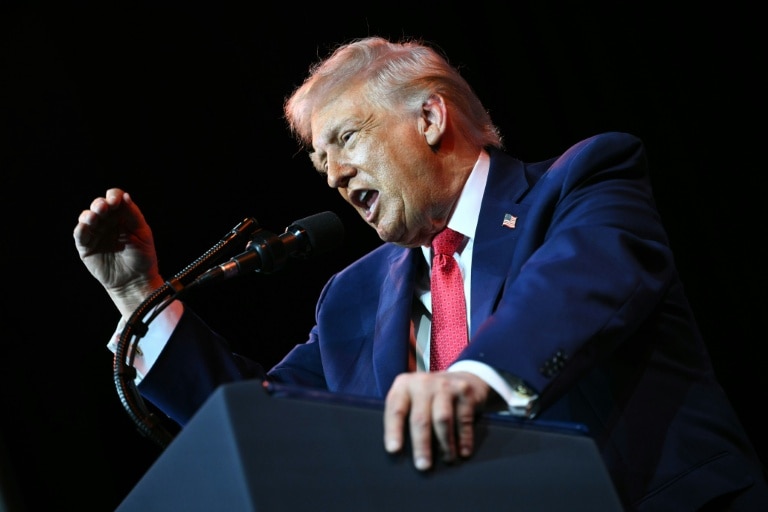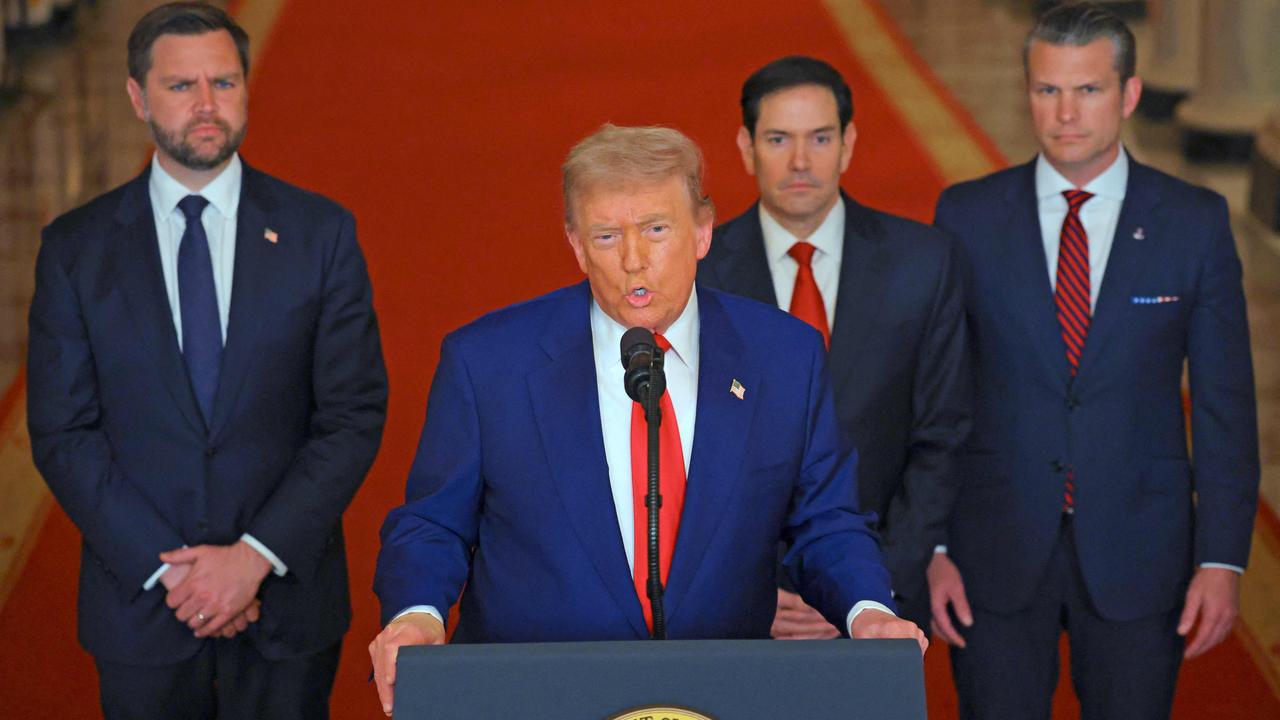
In a significant diplomatic move, Japan’s newly elected Prime Minister Sanae Takaichi and US President Donald Trump solidified their nations’ alliance through a series of economic and defense agreements during their meeting in Tokyo on Tuesday. The leaders signed a document reaffirming the implementation of a trade deal initially reached in July, which includes Japan’s pledge to invest $550 billion in critical US industries such as semiconductors, rare earths, and shipbuilding. Additionally, Japan committed to increasing its purchases of US agricultural products.
作者: admin
-

UN, humanitarian partners condemn attacks on civilians in Sudan’s El Fasher
The United Nations and its humanitarian partners have issued a stern condemnation of the escalating violence against civilians in El Fasher, the capital of Sudan’s North Darfur state. The UN Office for the Coordination of Humanitarian Affairs (OCHA) reported that the Rapid Support Forces (RSF) have been implicated in severe attacks on civilians, civilian infrastructure, and humanitarian workers. These violations include summary executions, house-to-house raids, and obstacles preventing civilians from reaching safety. Sexual violence, particularly against women and girls, continues to be reported, and local aid responders are at grave risk, with some detained or killed. The Office of the United Nations High Commissioner for Human Rights has documented approximately 1,850 civilian deaths in North Darfur, with an estimated 1,350 occurring in El Fasher from the beginning of the year to October 20. However, this figure is believed to underrepresent the actual number of conflict-related deaths due to challenges in telecommunications and access on the ground. Humanitarian workers are operating under extreme danger to assist those fleeing toward Tawila and surrounding areas. The UN Refugee Agency (UNHCR) is providing life-saving assistance and essential services to displaced families, including shelter, basic necessities, and cash assistance. However, access to El Fasher remains blocked, and humanitarian capacity is rapidly shrinking as needs soar. The humanitarian community in Sudan is calling for urgent action to protect civilians and humanitarian workers, guarantee safe passage and humanitarian access to people trapped in El Fasher, ensure accountability for all violations of international humanitarian law, and scale up funding to sustain life-saving operations. The United Nations and its humanitarian partners remain committed to scaling up their life-saving support across Darfur and re-establishing their presence on the ground. OCHA also reported that fighting has intensified in Sudan’s North Kordofan state, emphasizing that civilians must be protected wherever they are and allowed to flee safely and with dignity. The office urged all parties to immediately halt hostilities, respect their obligations under international humanitarian law, and enable safe, sustained humanitarian access.
-

Trump meets South Korean leader as trade deal remains elusive
US President Donald Trump and South Korean President Lee Jae Myung held a significant meeting during the final leg of Trump’s whirlwind tour across Asia. The discussions, which lasted nearly two hours, focused on resolving the ongoing trade deal impasse between the two nations. Despite previous agreements in July, where South Korea committed to investing $350 billion in the US to mitigate tariffs, negotiations have stalled over the structure of these investments. Historically strong allies, the US and South Korea have recently faced tensions following the detention of hundreds of South Koreans in a US immigration raid last month. Trump, who is on a week-long trip in Asia, is also scheduled to meet Chinese President Xi Jinping on the sidelines of the Asia-Pacific Economic Cooperation (Apec) summit in Gyeongju. This will be their first face-to-face meeting since Trump assumed office in 2025 and imposed global tariffs. During his address to CEOs in Gyeongju, Trump expressed optimism about reaching a beneficial trade deal with China and praised Apec countries for their efforts in reforming the global trading system. Trump was honored with South Korea’s highest decoration, the Grand Order of Mugunghwa, in recognition of his contributions to peace on the Korean Peninsula. Despite the high-profile meeting, no concrete agreements were announced, leaving South Korea’s electronics, chip, and auto industries in uncertainty. Earlier this year, Trump had imposed a 25% tariff on South Korea, which was later negotiated down to 15% after Seoul pledged significant investments in the US. However, the White House has since increased its demands, pushing for cash investments. The visit was marked by protests and rallies, reflecting the complex geopolitical dynamics in the region.
-

Australia wins the toss and sends India in to bat in Twenty20 series opener at Canberra
In a strategic move to assess form and readiness for the upcoming T20 World Cup, Australian captain Mitch Marsh elected to field first after winning the toss in the series-opening Twenty20 international against India on Wednesday. The match, held in Australia, marks the beginning of a five-game series designed to help both teams fine-tune their strategies in the shortest format of international cricket before transitioning back to test matches.
-

Studying the wrong ancient Roman ruler gets Australian high school seniors out of a history exam
In a surprising turn of events, teachers at nine high schools in northeastern Australia discovered just days before an ancient history exam that they had mistakenly taught their students about Augustus Caesar instead of his predecessor, Julius Caesar. The error, uncovered on Monday, led to an exemption for students in Queensland from the statewide exam scheduled for Wednesday. Education Minister John-Paul Langbroek described the situation as “extremely traumatic” for the students and pledged to investigate the mix-up. The affected 140 seniors were granted an exemption from the exam, which constitutes 25% of their annual marks. Instead, their grades will be determined based on assessments covering the remaining 75% of their coursework. The Queensland Curriculum and Assessment Authority revealed that the exam topic had been Augustus Caesar for the past four years, but schools were informed two years ago that the focus would shift to Julius Caesar in 2025. The incident has sparked criticism from parents, who argue that the panic surrounding the exam disrupted their children’s preparation for other tests, including one held earlier on Wednesday. Langbroek assured that the students would not be disadvantaged and emphasized the need for accountability in the education system.
-

Imprisoned Bahrain activist Abdulhadi al-Khawaja starts hunger strike over his detention
Abdulhadi al-Khawaja, a prominent Bahraini activist imprisoned since the 2011 Arab Spring protests, has initiated an open-ended hunger strike to draw attention to his internationally condemned detention. Al-Khawaja, who also holds Danish citizenship, began the strike on Wednesday while held at the Jaw Rehabilitation and Reform Center in Bahrain. This marks his second hunger strike; his first, in 2012, lasted 110 days. Medical professionals, including Dr. Damian McCormack, have warned that al-Khawaja’s health is precarious, citing his 10-kilogram (22-pound) underweight status and a pre-existing heart condition. McCormack emphasized that any duration of hunger strike poses a high risk of death for the 64-year-old activist. Bahraini authorities have not directly addressed the hunger strike but maintain that prisoners receive fair trials, full rights, and prompt medical care. Al-Khawaja’s detention has been widely criticized by human rights groups and UN experts, who describe it as arbitrary following a life sentence imposed by a military tribunal on terrorism charges. His hunger strike aims to pressure Denmark and the European Union to negotiate his release. The timing coincides with Bahrain’s annual Manama Dialogue, a security summit attracting global leaders. Al-Khawaja, a founder of the Bahrain Center for Human Rights, has long advocated for democratic reforms in the Shiite-majority nation governed by a Sunni ruling family. His activism has made him a symbol of the ongoing struggle for human rights in Bahrain, where unrest persists despite the violent suppression of the 2011 protests.
-

Trump imitates India’s PM Narendra Modi in South Korea
During a recent address in South Korea, former U.S. President Donald Trump impersonated Indian Prime Minister Narendra Modi while recounting his diplomatic engagements during the May 2019 India-Pakistan conflict. Trump’s mimicry, which included imitating Modi’s tone and mannerisms, highlighted the tense geopolitical dynamics between the two South Asian nations. The former president shared anecdotes about his conversations with Modi, emphasizing his role in de-escalating the crisis. This incident underscores the personal rapport Trump often sought to establish with world leaders, even as it drew mixed reactions from audiences. The speech also served as a reminder of the delicate balance of power in the region and the U.S.’s historical involvement in mediating such disputes.
-

German scents exhibition combines 1,000 years of fragrances with art and history
DÜSSELDORF, Germany — Have you ever imagined the scent of war, the aroma of love, or the pungent odor of medieval Paris? A groundbreaking exhibition in Germany is inviting visitors to embark on a sensory journey through history by exploring 81 distinct fragrances across 37 galleries. Titled ‘The Secret Power of Scents,’ the exhibition, which opened on Wednesday at the Kunstpalast museum in Düsseldorf, seamlessly blends art and olfactory experiences to traverse over 1,000 years of cultural history.
Curated as an experimental exploration, the exhibition encourages visitors to engage with history through their sense of smell. ‘This is an invitation to discover the history of scents with your nose,’ said Felix Krämer, the museum’s director general. The exhibition is organized chronologically, from medieval religious artifacts to contemporary 21st-century art. Each gallery is equipped with scent steles, atomizers, and diffusers to evoke the aromas of specific time periods or cultural contexts.
One gallery immerses visitors in the sacred fragrance of myrrh, used in Christianity, Judaism, and Islam for prayer and purification. In contrast, a World War I-themed gallery releases a jarring blend of gunpowder, blood, and sulfur, eliciting visceral reactions from visitors. ‘Anyone who has experienced war will recognize its brutality in this scent,’ said curator Robert Müller-Grünow, a leading expert in scent technology.
The exhibition also explores the romantic side of history, with a gallery dedicated to Peter Paul Rubens’ 1610 painting ‘Venus and Adonis,’ diffusing the scents of roses and civet, once considered erotic in the 17th century. Meanwhile, the stench of medieval Paris—a mix of canalization, mold, and unwashed bodies—offers a stark contrast.
The 1920s are celebrated with the uplifting aroma of tobacco, vanilla, and leather, accompanying Gert Wollheim’s 1924 painting ‘Farewell from Düsseldorf,’ which symbolizes the liberation of women. Modern art is represented through scents reminiscent of global brands like Coca-Cola and Eurowings, alongside contemporary fragrances like ‘Iso E Super,’ a velvety, cedarwood-like scent designed to enhance attractiveness.
Running through March 8, the exhibition has captivated visitors like Kirsten Gnoth, who described the experience as ‘completely new and exciting.’ By combining art with scents, the exhibition offers a unique and immersive way to explore history.
-

Xi highlights key role of 15th Five-Year Plan
Chinese President Xi Jinping has underscored the pivotal role of the 15th Five-Year Plan (2026-2030) in steering China toward sustained and robust development, laying a solid foundation for achieving socialist modernization by 2035. Speaking at the fourth plenary session of the 20th CPC Central Committee, Xi emphasized that the plan is a strategic blueprint for China’s economic and social progress over the next five years. The recommendations, adopted at the plenum, were made public on Tuesday, outlining a comprehensive framework for high-quality development, technological innovation, and green transformation. Xi highlighted the importance of systems thinking, deepening reforms, and expanding openness to the world. The drafting process, led by Xi, involved extensive research, public consultation, and intra-Party collaboration, reflecting a commitment to democratic decision-making. Experts and international observers have lauded the plan as a critical step toward China’s second centenary goal of becoming a modern socialist powerhouse by 2049.
-

Nigerian Nobel laureate Wole Soyinka says US revoked his visa
Nigerian Nobel Prize-winning author Wole Soyinka has revealed that the United States revoked his visa and imposed a travel ban on him. The 91-year-old literary icon, who was awarded the Nobel Prize in Literature in 1986, disclosed that the US consulate requested his passport to cancel his visa in person, citing unspecified new information. Soyinka described the invitation as a “rather curious love letter from an embassy” during a press conference on Tuesday. He advised organizations planning to invite him to the US to “not waste their time.” The US Embassy in Nigeria declined to comment on individual cases. Soyinka, who previously held US permanent residency, famously tore up his green card in 2016 to protest Donald Trump’s election. He humorously remarked that the card had “fallen between the fingers of a pair of scissors and got cut into pieces.” Soyinka has been a vocal critic of Trump’s immigration policies, linking the visa revocation to his outspoken remarks. He recently compared Trump to Uganda’s infamous dictator Idi Amin, calling him “Idi Amin in white face.” When asked if he would return to the US, Soyinka quipped, “How old am I?” The US State Department recently tightened visa policies for Nigeria and several other African countries, reducing validity periods significantly.