作者: admin

  • UAE temperatures to drop by up to 8°C as coldest winter stretch begins soon

    UAE temperatures to drop by up to 8°C as coldest winter stretch begins soon

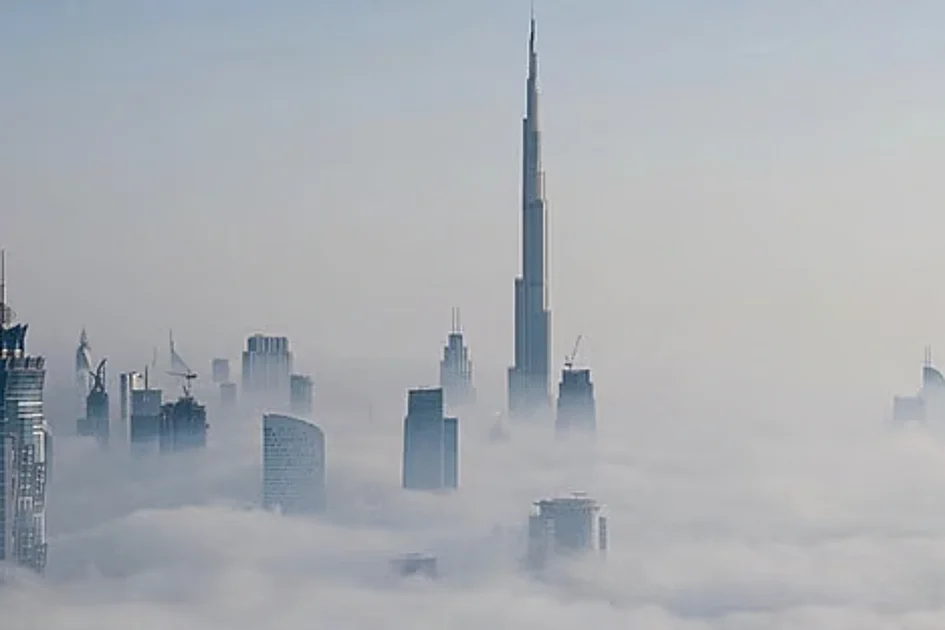
    Meteorological authorities have announced an impending cold spell set to sweep across the United Arab Emirates, with temperatures expected to plummet by up to 8°C within a remarkably brief timeframe. The National Centre of Meteorology (NCM) indicates this substantial thermal decline will manifest over a concentrated two-day period commencing January 15th, marking one of winter’s most pronounced cooling episodes.

    Dr. Ahmed Habib, NCM meteorologist, detailed the atmospheric mechanics behind this development, explaining that north-westerly winds will channel colder air masses from northern regions. The thermal transition will initiate in western territories before propagating across the nation. Western sectors will experience an initial decrease of 3-4°C on January 15th, succeeded by additional cooling of approximately 5°C in remaining areas throughout the subsequent 24 hours.

    Mountainous regions will confront the most severe conditions, with temperatures anticipated to descend below 10°C and early morning readings potentially reaching 5-7°C. Coastal zones will maintain comparatively milder conditions, with daytime temperatures stabilizing between 20-22°C, while interior desert locales—particularly areas within Ajman and other inland territories—may experience temperatures dipping below 10°C.

    Complementing the temperature decline, meteorological models predict occasional fresh to strong winds that will amplify the perceived cold through wind chill effects. The thermal disparity between coastal and inland areas stems from seawater’s capacity to gradually absorb and release heat, functioning as a natural temperature regulator that prevents abrupt coastal cooling—a buffering effect absent in desert regions where sand rapidly loses thermal energy.

    Concurrent atmospheric changes include possible early morning fog formation in interior regions and increased cloud coverage, particularly across northern and eastern emirates. Meteorological data suggests potential light precipitation in Ras Al Khaimah and northern Fujairah territories during this period.
  • Trump hits Iran trade partners with tariffs as protest toll soars

    Trump hits Iran trade partners with tariffs as protest toll soars

    In a significant escalation of economic pressure, U.S. President Donald Trump has declared an immediate 25% tariff on any nation engaging in trade with Iran. The move aims to isolate Tehran financially as reports emerge of a brutal government crackdown on protests, with estimates suggesting hundreds of fatalities.

    Iranian authorities claim to have reestablished control following nationwide demonstrations that began last Thursday, which represent the most substantial challenge to the country’s clerical leadership since the 1979 Islamic Revolution. However, human rights organizations accuse the government of employing lethal force against protesters and obscuring the true scale of violence through a prolonged internet blackout.

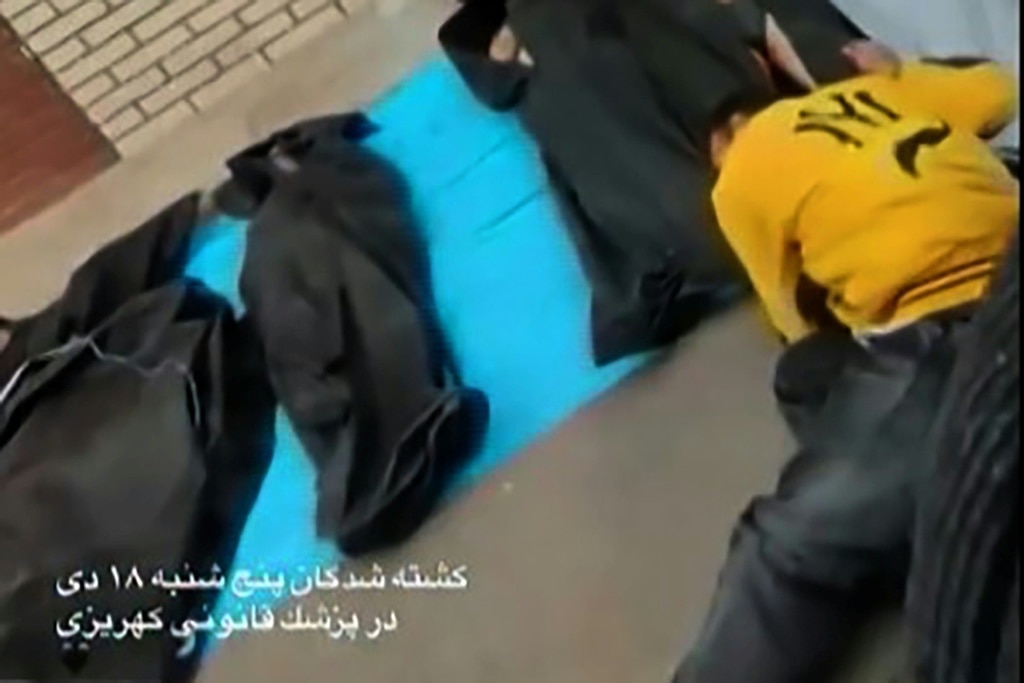
    According to Iran Human Rights (IHR), a Norway-based NGO, at least 648 individuals, including nine minors, have been killed during the unrest. The organization cautioned that the actual death toll might be significantly higher—potentially exceeding 6,000—while approximately 10,000 people have been arrested. The internet shutdown has severely hampered independent verification of these figures.

    In response to the turmoil, Iranian officials staged mass pro-government rallies, which Supreme Leader Ayatollah Ali Khamenei characterized as evidence of the protest movement’s defeat. Foreign Minister Abbas Araghchi defended the internet restrictions, alleging they were necessary to counter “terrorist operations” directed from abroad.

    The White House reiterated that President Trump remains prepared to employ military force against Iran but is prioritizing diplomatic measures. Meanwhile, international leaders have expressed concern over the situation. German Chancellor Friedrich Merz declared that regimes relying solely on violence to maintain power are “effectively finished,” while French President Emmanuel Macron condemned the “state violence” targeting Iranian citizens.

    Analysts note that while the protests pose a serious challenge to the Islamic Republic, the regime’s extensive repressive apparatus, including the Revolutionary Guards Corps, continues to provide significant stability. The outcome remains uncertain as both domestic tensions and international pressures intensify.

  • US foreign policy shift threatens global order, stability: Experts

    US foreign policy shift threatens global order, stability: Experts

    Academic experts are raising alarms about a fundamental transformation in United States foreign policy characterized by aggressive unilateral actions across the Western Hemisphere. Dubbed the ‘Donroe Doctrine’ by analysts, this approach represents a significant escalation from the historical Monroe Doctrine, prioritizing direct military intervention and expansionary power projection over established international legal frameworks.

    The doctrine’s implementation has manifested through several high-profile operations, including the military raid in Venezuela that resulted in the abduction of President Nicolas Maduro. Concurrently, the Trump administration has reaffirmed intentions to annex Greenland and suggested potential military movements in Colombia and Mexico, signaling a comprehensive strategic shift.

    Professor Wei Zongyou of Fudan University’s Center for American Studies identifies this doctrine as the organizing principle behind recent US foreign policy decisions. According to Wei, the core tenets include establishing absolute hegemony throughout the Western Hemisphere, eliminating adversarial governments through military force when necessary, excluding non-hemispheric powers from regional influence, and securing control over critical infrastructure and natural resources.

    Sun Chenghao, who leads the US-Europe program at Tsinghua University’s Center for International Security and Strategy, notes the doctrine represents a proactive redefinition of US security parameters amid changing global power dynamics. Unlike the historically defensive Monroe Doctrine, which sought to prevent European colonial expansion, the ‘Donroe Doctrine’ actively shapes regional order through direct intervention.

    International leaders have expressed deepening concern regarding these developments. Singapore’s Senior Minister Lee Hsien Loong criticized US actions in Venezuela as violations of international law and the UN Charter. French President Emmanuel Macron accused the United States of ‘breaking free from international rules,’ while German President Frank-Walter Steinmeier warned against allowing the global order to deteriorate into a ‘den of robbers.’

    Analysts warn that this policy shift threatens to undermine multilateral institutions and international legal frameworks, potentially triggering widespread adoption of power-based security strategies among nations. The resulting fragmentation could significantly increase global governance costs and create long-term challenges to international stability and predictability, particularly for smaller nations vulnerable to hegemonic pressure.

  • Mexico offers to mediate between US, Cuba

    Mexico offers to mediate between US, Cuba

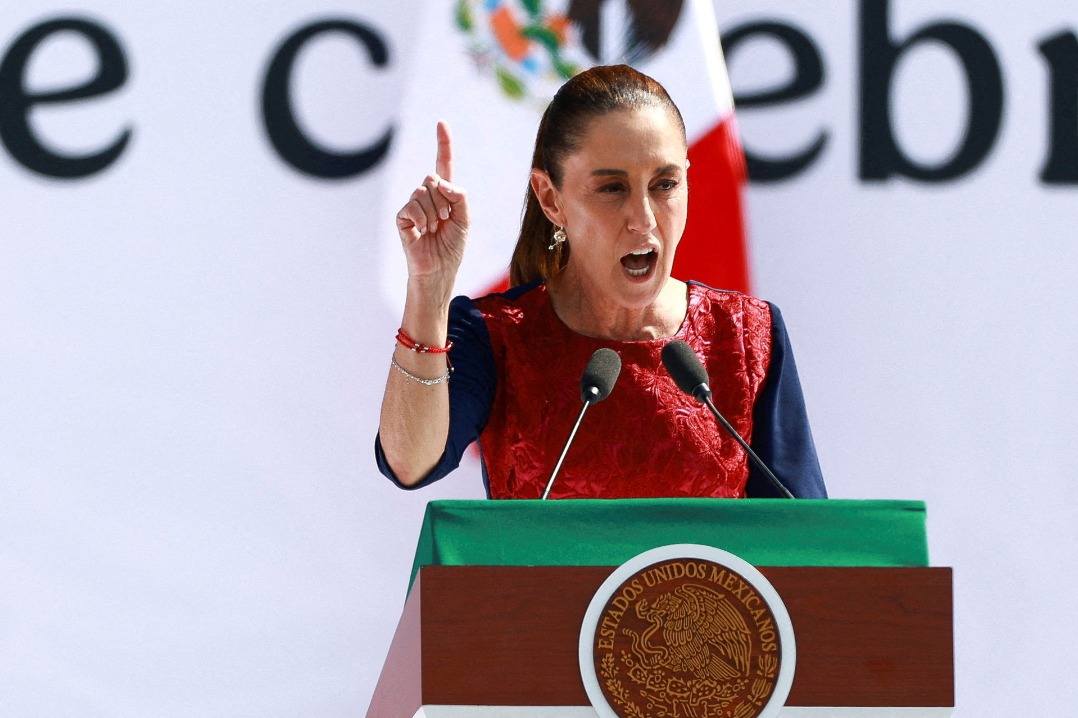
    Mexican President Claudia Sheinbaum has formally offered her nation’s diplomatic services to facilitate dialogue between the United States and Cuba, signaling a potential breakthrough in one of the Western Hemisphere’s most enduring geopolitical standoffs.

    Speaking at her regular morning press conference on Monday, President Sheinbaum revealed the mediation proposal followed her recent telephone discussion with US President Donald Trump. “If Mexico were to become a vehicle to facilitate communication between the United States and Cuba, both parties would agree,” she stated, emphasizing that “Mexico is in the best position to do so.”

    The offer comes amid renewed tensions following President Trump’s social media declaration on Sunday that “No more oil or money will be sent to Cuba,” while simultaneously urging Cuban leadership to negotiate with Washington “before it’s too late.”

    President Sheinbaum defended Mexico’s existing oil shipments to Cuba as both legal and humanitarian, noting this policy has enjoyed consistent bipartisan support across successive Mexican administrations regardless of political affiliation. She characterized the aid program as “not new” and firmly grounded in principles of national sovereignty.

    The proposed mediation represents a significant development in regional diplomacy, potentially positioning Mexico as a crucial intermediary between two nations whose relationship has remained largely frozen for decades. Mexico maintains diplomatic ties with both countries and possesses historical connections to Cuba that could provide unique leverage in facilitation efforts.

  • Unrest under total control, claims Iran

    Unrest under total control, claims Iran

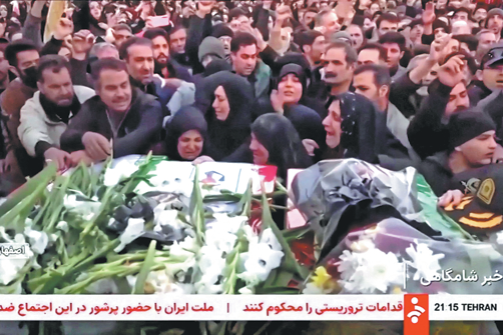
    Iranian authorities have declared the nationwide civil unrest that erupted in late December is now ‘under total control,’ despite mounting casualties and continued tensions. The protests, triggered by the collapse of Iran’s national currency and soaring living costs, have entered their third week with significant fatalities among both security forces and civilians.

    Foreign Minister Abbas Araghchi asserted to diplomats in Tehran that the demonstrations had been deliberately manipulated to turn ‘violent and bloody’ specifically to justify American intervention. This accusation comes as US President Donald Trump escalates threats of potential military action, stating Iran was ‘starting to cross US red lines’ and that he was considering ‘strong options.’

    The Iranian government has declared three days of national mourning for those killed in the clashes, with semiofficial Tasnim News Agency reporting at least 111 security force members dead. President Masoud Pezeshkian, in a broadcast interview, acknowledged economic grievances while blaming the same ‘forces that struck this country’ during the June conflict with Israel for orchestrating the current destabilization.

    China has entered the diplomatic fray with Foreign Ministry spokeswoman Mao Ning expressing hope that Iran could overcome its difficulties while reaffirming China’s opposition to foreign interference. Mao emphasized that China consistently opposes intervention in other nations’ internal affairs and advocates for protecting national sovereignty through international law.

    The crisis unfolds against a backdrop of increasingly assertive US foreign policy, including the recent forced abduction of Venezuelan President Nicolas Maduro and threats to annex Greenland. According to Reuters, Trump is scheduled to meet senior advisers to discuss options ranging from military strikes and cyber operations to expanded sanctions and support for anti-government elements.

    Regional tensions have escalated dramatically, with Iranian Parliament Speaker Mohammad Baqer Qalibaf warning that all US military bases in the Middle East and Israel would become ‘legitimate targets’ if Iran is attacked. Meanwhile, some US lawmakers including Republican Senator Rand Paul have questioned the wisdom of military action, suggesting it could unite Iranians against external aggression rather than undermine the government.

  • Hamas signals readiness to hand over Gaza governance

    Hamas signals readiness to hand over Gaza governance

    In a significant geopolitical development, Hamas has declared its willingness to relinquish governmental control over the Gaza Strip to an independent technocratic administration. This strategic shift emerges amid ongoing ceasefire negotiations mediated by Arab nations, Türkiye, and the United States.

    The announcement follows Israeli Prime Minister Benjamin Netanyahu’s recent meeting with former UN Middle East envoy Nickolay Mladenov in Jerusalem. Netanyahu’s office confirmed Mladenov is being considered to lead a proposed executive body for Gaza, reiterating Israel’s fundamental demand for Hamas to disarm and demilitarize the Palestinian enclave.

    Hamas spokesman Hazem Qassem stated the organization has made a definitive decision to transfer all governmental responsibilities to a technocratic committee following agreements with other Palestinian factions. The group now awaits formal establishment of this administrative body to manage Gaza’s various sectors, with Qassem emphasizing the urgency of implementation.

    The militant organization has maintained governmental institutions in Gaza since 2007, when violent clashes with Fatah resulted in separate administrations for Gaza and the West Bank.

    Academic analyst Jawaid Iqbal of Baba Ghulam Shah Badshah University interpreted Hamas’s offer as a tactical maneuver to pressure Israel into advancing ceasefire negotiations. “Continuation of the ceasefire serves Hamas’s interest by providing crucial breathing space to regroup and reorganize its battered military strength,” Iqbal noted.

    This development occurs against the backdrop of persistent violence despite the ceasefire. Israel’s military campaign since October 2023 has resulted in approximately 71,000 Palestinian casualties according to reports.

    Concurrently, the Organization of Islamic Cooperation convened in Jeddah, where foreign ministers adopted resolutions condemning Israel’s recognition of Somaliland’s independence and its policies toward Palestinian territories.

    Regional expert Khaldoon Abdulla suggested Israel’s recognition of Somaliland serves multiple strategic purposes: enhancing international legitimacy, capitalizing on Red Sea fragmentation, and expanding diplomatic partnerships to strengthen regional positioning.

  • Viral app bares ‘safety anxiety’ among solo dwellers

    Viral app bares ‘safety anxiety’ among solo dwellers

    A minimalist mobile application named ‘Sileme’ – directly translated as ‘Are You Dead?’ – has unexpectedly surged to the top of China’s paid app charts, revealing deep-seated safety anxieties among the nation’s growing population of solo dwellers. Developed by three Generation Z creators in just one month, the application requires no personal data or login credentials – users simply tap a daily check-in button. Should they miss consecutive check-ins, the system automatically dispatches an email alert to a pre-designated emergency contact.

    The app’s provocative title, far from being perceived as morbid, has resonated with thousands of young professionals like Li Wan, a 25-year-old from Shandong province. For Li, the service represents an 8-yuan ($1.14) investment in peace of mind. ‘I downloaded it because the name was amusing,’ she explained, noting it alleviates her mother’s concerns about her solitary living situation and enhances family communication.

    This digital phenomenon underscores a significant demographic shift detailed in the 2025 China Statistical Yearbook, which reports single-person households now constitute approximately 20% of China’s sampled population. Projections from the Beike Research Institute suggest this demographic could expand to 150-200 million people by 2030.

    Developer Guo, whose team recovered the app’s modest 1,000-yuan development cost shortly after launch, defends the blunt name as culturally significant. ‘The name is direct and reflects a shifting cultural attitude,’ Guo stated, observing that younger generations are becoming less hesitant about discussing mortality. Despite some user feedback requesting softer alternatives like ‘Are You Alive?’, the app’s user base has grown fifty-fold since its introduction, spawning several copycat applications.

    Beyond digital solutions, communities are developing innovative safety nets. In Taiyuan, Shanxi province, elderly residents participate in a ‘curtain signal’ initiative where opening curtains each morning indicates they are safe. Meanwhile, on social platform Douban, female solo dwellers have formed mutual aid communities to exchange services like appliance repairs, avoiding the need to invite strangers into their homes.

    Professor Wen Jun of East China Normal University’s social sciences department cautions that while apps like Sileme provide a valuable starting point, they are not comprehensive solutions. He advocates for stronger collaboration between government and local communities to establish an ‘online-offline synergy’ ensuring no one is left truly isolated during emergencies. As Sileme’s developers consider a potential name change in response to user feedback, the app continues to trend under its original, attention-grabbing title, symbolizing a broader technological response to urban solitude.

  • Research suggests causes of moon’s two different ‘faces’

    Research suggests causes of moon’s two different ‘faces’

    A groundbreaking study published in Proceedings of the National Academy of Sciences has potentially solved one of the Moon’s most enduring geological mysteries—why its Earth-facing near side and hidden far side exhibit such dramatically different characteristics. The research points to a cataclysmic asteroid impact billions of years ago that permanently altered the Moon’s chemical composition and volcanic capabilities.

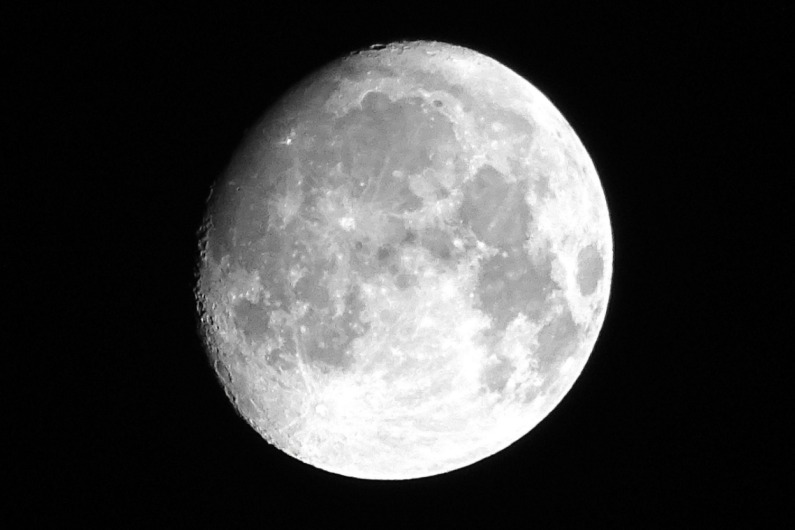
    For decades, planetary scientists have been perplexed by the lunar dichotomy. The near side displays extensive dark volcanic plains formed by ancient lava flows, while the far side presents a rugged, mountainous terrain with significantly fewer volcanic features and a thicker crustal layer.

    The international research team, led by Professor Tian Hengci from the Institute of Geology and Geophysics at the Chinese Academy of Sciences, analyzed microscopic samples retrieved by China’s historic Chang’e 6 mission—the first-ever collection of geological specimens from the Moon’s far side, specifically from the massive South Pole-Aitken basin impact crater.

    The investigation focused on potassium isotopes, which serve as chemical fingerprints of past thermal events. The researchers discovered an abundance of heavier potassium isotopes in the far side samples, indicating that an enormous asteroid impact generated such intense heat that it vaporized lighter volatile elements—including potassium, zinc, and sulfur—causing them to escape into space.

    This elemental loss had profound geological consequences. Volatile elements typically lower the melting point of subsurface rocks, facilitating magma formation and volcanic activity. Their depletion from the far side meant this region lost its capacity for significant volcanic eruptions, explaining its mountainous, geologically dormant nature.

    In contrast, the near side retained its volatile elements, allowing prolonged volcanic activity that created the expansive dark plains visible from Earth. The research demonstrates that asteroid impacts can fundamentally alter a planetary body’s internal chemistry and geological evolution, not merely create surface craters.

    While previous theories attributed the Moon’s asymmetry to Earth’s gravitational influence or uneven radioactive heating, this study provides direct chemical evidence highlighting the transformative power of giant impacts in shaping planetary bodies throughout our solar system.

  • AI software under lens for facilitating porn talk

    AI software under lens for facilitating porn talk

    In a groundbreaking legal ruling that establishes new precedents for artificial intelligence regulation, Chinese authorities have prosecuted developers of an AI chat application for facilitating sexually explicit conversations. The case involving the ‘Alien Chat’ app has triggered widespread calls for enhanced safety protocols and ethical guidelines within China’s rapidly expanding AI sector.

    The Shanghai-based company behind the controversial application integrated an overseas AI model to create software that enabled users to engage in intimate conversations with artificial intelligence systems. Marketed as providing emotional companionship and support for young users, the platform required membership fees and rapidly accumulated over 116,000 registered users, including 24,000 paying members, generating more than 3.63 million yuan ($520,494) in revenue before being reported to authorities in April 2024.

    A Shanghai court delivered its verdict in September, sentencing the primary developer to four years imprisonment and the operator to eighteen months for profiting from the production and distribution of obscene content. Judicial authorities determined that the software consistently generated explicit sexual material during user interactions, crossing legal and ethical boundaries despite defense claims that the technology was designed for legitimate companionship purposes.

    Legal representatives for the defendants have filed an appeal, arguing that the AI system was not originally intended to disseminate pornography and that prompt modifications were implemented merely to enhance emotional responsiveness. The defense further noted that the software commenced operations prior to China’s implementation of interim generative AI management measures in July 2023.

    However, the court maintained that as industry professionals, the defendants were aware of regulatory requirements but deliberately avoided conducting mandatory security assessments and failed to register with cybersecurity authorities. Evidence presented demonstrated that without repeated systematic adjustments, the AI model would not have persistently produced obscene content, indicating intentional design choices rather than accidental outcomes.

    Prominent legal experts emphasize that this case establishes critical benchmarks for AI companion services. Xu Hao of Beijing Jingsh Law Firm noted that while user-AI interactions may appear private, the underlying platforms remain public domains requiring rigorous content safety reviews. ‘Failure to implement protective measures can severely impact users’ physical and mental health, particularly concerning minors,’ Xu stated, adding that AI-generated content possesses significantly broader dissemination capabilities than traditional obscene materials.

    Professor Zhu Wei from China University of Political Science and Law emphasized that large language model development must strictly adhere to legal frameworks and ethical standards, noting that profit-driven platforms amplifying pornography transform private behavior into public harm requiring managerial accountability. The case underscores the necessity for generative AI providers to register with cybersecurity authorities and demonstrates the growing role of judicial oversight in technological regulation.

  • Test launch marks push in reusable space vehicles

    Test launch marks push in reusable space vehicles

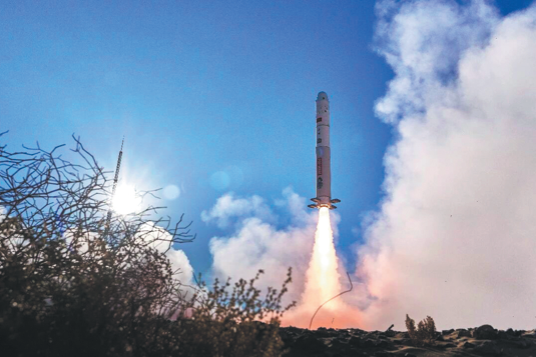
    In a significant advancement for commercial space capabilities, Chinese aerospace company CAS Space successfully conducted the inaugural test flight of its PH-1 suborbital spacecraft on Monday. The demonstration mission, launched from the Jiuquan Satellite Launch Center in Inner Mongolia’s Gobi Desert region, achieved critical milestones in reusable vehicle technology.

    The PH-1 vehicle ascended to approximately 120 kilometers altitude, crossing the internationally recognized Kármán line that demarcates Earth’s atmosphere from outer space. During its controlled descent, the spacecraft’s recoverable payload cabin successfully deployed parachutes at approximately 10 kilometers altitude before executing a precision landing at a predetermined site.

    Technical validation encompassed multiple breakthrough systems including atmospheric re-entry deceleration mechanisms, parachute recovery operations, and advanced landing control technologies. The mission design featured separation of the unpowered payload cabin from its booster at 70 kilometers altitude, with the cabin continuing upward through inertia before initiating its return trajectory.

    Notably, the spacecraft maintained a stable microgravity environment exceeding 300 seconds duration, substantially longer than achievable through conventional ground-based alternatives like drop towers or parabolic aircraft flights. The experimental payload included an innovative laser-based 3D printer engineered for microgravity operation and rose seeds with previous spaceflight heritage.

    According to Chief Designer Shi Xiaoning, the PH-1 platform primarily targets cost-effective suborbital scientific research applications. The technology demonstrates particular promise for space-based agricultural breeding, biomedical investigations, and advanced materials testing. Future iterations anticipate evolution toward orbital-grade spacecraft capable of year-long orbital operations with approximately 10 reuses, potentially revolutionizing in-orbit manufacturing capabilities.

    This achievement occurs within China’s rapidly expanding commercial space sector, where both state-owned enterprises and private companies are accelerating development of reusable launch systems to reduce space access costs and strengthen the nation’s position in the global space economy.