作者: admin

  • AFL 2026: Collingwood ‘definitely’ has depth to cover absent Bobby Hill

    AFL 2026: Collingwood ‘definitely’ has depth to cover absent Bobby Hill

    Collingwood Football Club faces a significant reshuffle in its offensive lineup following the indefinite absence of 2023 Norm Smith Medallist Bobby Hill, who has prioritized personal wellbeing over his athletic career. The Magpies’ forward structure will undergo substantial transformation, further compounded by Brody Mihocek’s recent departure to Melbourne.

    Senior player Jamie Elliott, coming off a career-best season, expressed strong confidence in the team’s capacity to adapt. He emphasized that this period presents a prime opportunity for emerging talents to secure positions in the senior squad. “Harvey Harrison, Will Hayes—there are players capable of stepping into that role,” Elliott stated, also mentioning Lachie Sullivan’s potential contribution upon returning from injury.

    Elliott acknowledged Hill’s unique qualities as a dynamic and skillful player with exceptional X-factor, while simultaneously highlighting the diverse strengths that replacement players might bring to the field. The club fully supports Hill’s decision to focus on health matters, with Elliott confirming that football remains secondary to the player’s wellbeing.

    With these changes, Collingwood is developing what Elliott describes as an “unpredictable” forward strategy for the upcoming season. This tactical shift leverages the defensive stability provided by captain Darcy Moore’s backline leadership. Elliott explained the strategic advantage: “When you are unpredictable, it’s hard to set up behind the ball and the defence gets tested out.”

    The Magpies aim to implement an exciting brand of football that maximizes offensive opportunities while capitalizing on their defensive security to punish opposing teams effectively.


  • ‘Game, set and match’: Huge number of Australians to be smashed on rate hikes

    ‘Game, set and match’: Huge number of Australians to be smashed on rate hikes

    Financial markets are overwhelmingly anticipating another interest rate increase from the Reserve Bank of Australia, potentially delivering another blow to millions of mortgage holders already facing economic pressure. With the RBA’s February 3 meeting approaching, consensus is building around a potential 25-basis-point hike that would push the official cash rate from 3.60% to 3.85%.

    According to Roy Morgan research, such a move could push an additional 41,000 Australian mortgage holders into financial distress, bringing the total to 1.23 million households classified as ‘at risk.’ Should the RBA implement two consecutive rate hikes totaling 50 basis points, that number would surge to approximately 1.32 million mortgage holders, representing 27.2% of all Australian homeowners with mortgages.

    The classification of ‘at risk’ applies when mortgage repayments exceed 25-45% of a household’s after-tax income, factoring in the standard variable rate and original borrowing amount. This financial pressure comes amid concerning inflation data from the Australian Bureau of Statistics, which showed headline inflation climbing to 3.8% annually in December, up from 3.4% in November.

    Key drivers of this inflationary surge include electricity prices soaring 21.5% as government rebates were phased out, meat prices experiencing double-digit increases, and services inflation rising to 4.1% annually. Notable contributors to services inflation included domestic holiday travel costs (up 9.5%, partially attributed to the Ashes cricket series) and rising rents increasing by 3.9%.

    Economic opinions remain divided on the appropriate response. Betashares chief economist David Bassanese stated, ‘All up, it appears to be game, set and match for a rate rise at the February policy meeting.’ However, AMP chief economist Shane Oliver advocated for patience, suggesting the RBA should determine whether recent inflation figures represent a temporary fluctuation rather than a sustained trend before implementing further rate increases.

    Oliver explained the mechanism of rate hikes: ‘People have less money to spend, so it may not be the case that local government rates or electricity prices come down because of interest rates but something else will come down because a 25 basis point rise will cost someone with the average mortgage $110 a month.’

  • ‘He’s the only option’: Luke Keary urges Newcastle to pick Sandon Smith at halfback

    ‘He’s the only option’: Luke Keary urges Newcastle to pick Sandon Smith at halfback

    NRL triple premiership winner Luke Keary has emphatically endorsed former Sydney Roosters teammate Sandon Smith as the essential choice for the Newcastle Knights’ halfback role, arguing it is the key to unlocking the potential of their marquee signing, Dylan Brown. This strategic recommendation comes as new head coach Justin Holbrook seeks to resolve the team’s significant attacking struggles, which plagued them throughout the previous season where they recorded the league’s least effective offense.

    Keary, speaking on the Fox League Podcast, dismissed suggestions that Brown—who is on the richest contract in rugby league history—should be burdened with the primary playmaking duties. Instead, he presented a compelling case for a Smith-Brown halves partnership, describing it as the most logical and potent combination available. Keary’s analysis is grounded in his own experience as a playmaker and his observation of both players’ recent form.

    The core of Keary’s argument centers on playing to each athlete’s natural strengths. He highlighted Brown’s phenomenal performance for New Zealand in the recent Pacific Championships, where he operated as a ‘second half’ alongside veteran Kieran Foran. This structure allowed Brown to play with exceptional freedom and focus on his running game, a facet of his play that is diminished when he is forced to assume the organizational responsibilities of the halfback role, as he had to do at Parramatta during Mitch Moses’ injury absences.

    Keary characterized Smith as an ‘out and out seven,’ a natural organizer who excels at controlling the game, directing the team around the park, and executing strategic kicks. Placing Smith in the halfback role, Keary contends, would relieve immense pressure from Brown, enabling the high-priced recruit to revert to the dynamic, game-breaking style that earned him his monumental contract, without the weight of Andrew Johns’ legendary jersey number on his shoulders.

    The only complication in this proposed plan is the future of talented youngster Fletcher Sharpe, who impressed in the halves last year before a severe injury ended his season. Keary acknowledged that Sharpe’s undeniable talent demands he be included in the lineup, potentially necessitating a shift to the wing for the 2026 season as Coach Holbrook works to assemble his most effective attacking puzzle.

  • Starmer calls for UK to have a deeper relationship with China during ‘challenging times’

    Starmer calls for UK to have a deeper relationship with China during ‘challenging times’

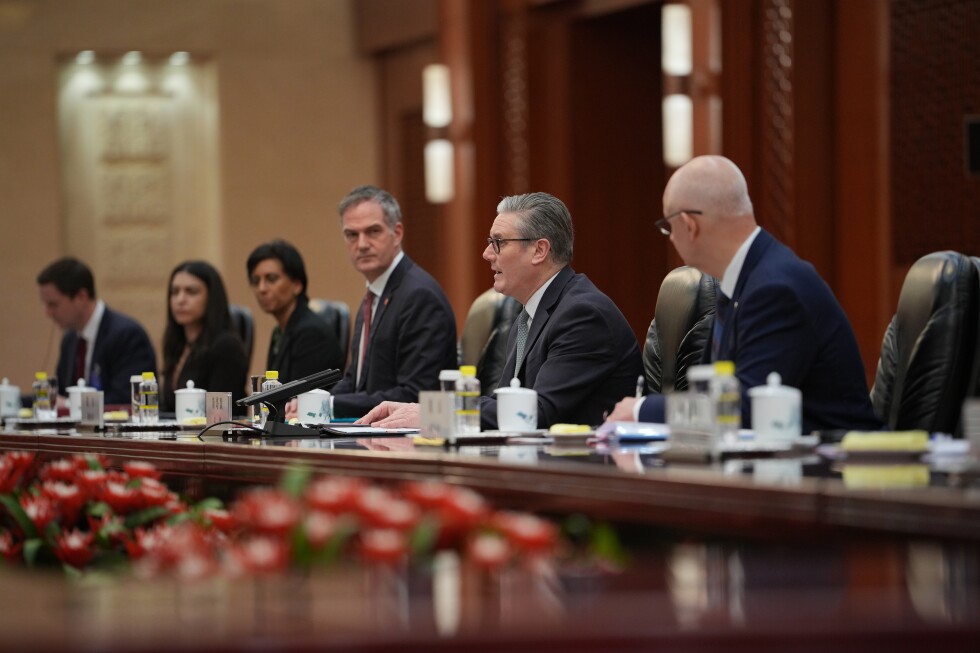
    In a significant diplomatic overture, British Prime Minister Keir Starmer advocated for strengthened bilateral ties with China during his Thursday meeting with President Xi Jinping in Beijing. The newly elected leader, making the first UK prime ministerial visit in eight years, emphasized the necessity of collaboration on pressing global issues including climate change and international stability.

    Speaking at the Great Hall of the People, Starmer articulated his vision for ‘a long-term, consistent and comprehensive strategic partnership’ between the two nations. This high-stakes diplomatic engagement marks a deliberate effort to mend relations following several years of heightened tensions stemming from concerns over Chinese espionage activities in Britain, Beijing’s support for Russia in the Ukraine conflict, and human rights issues in Hong Kong.

    The Prime Minister’s delegation, comprising over 50 prominent business executives and cultural organization leaders, underscores Britain’s dual objectives of pursuing economic opportunities while navigating complex geopolitical considerations. The visit occurs against the backdrop of sluggish domestic economic performance, making expanded trade and investment relationships increasingly imperative.

    Starmer’s Beijing engagement places him among a growing cohort of Western leaders seeking direct dialogue with China, following recent visits by counterparts from South Korea, Canada, and Finland, with Germany’s chancellor expected next month. This diplomatic pattern suggests a recalibration of international approaches to engaging with China amid evolving global trade dynamics and political uncertainties.

  • Britain’s Starmer meets China’s Xi for talks on trade, security

    Britain’s Starmer meets China’s Xi for talks on trade, security

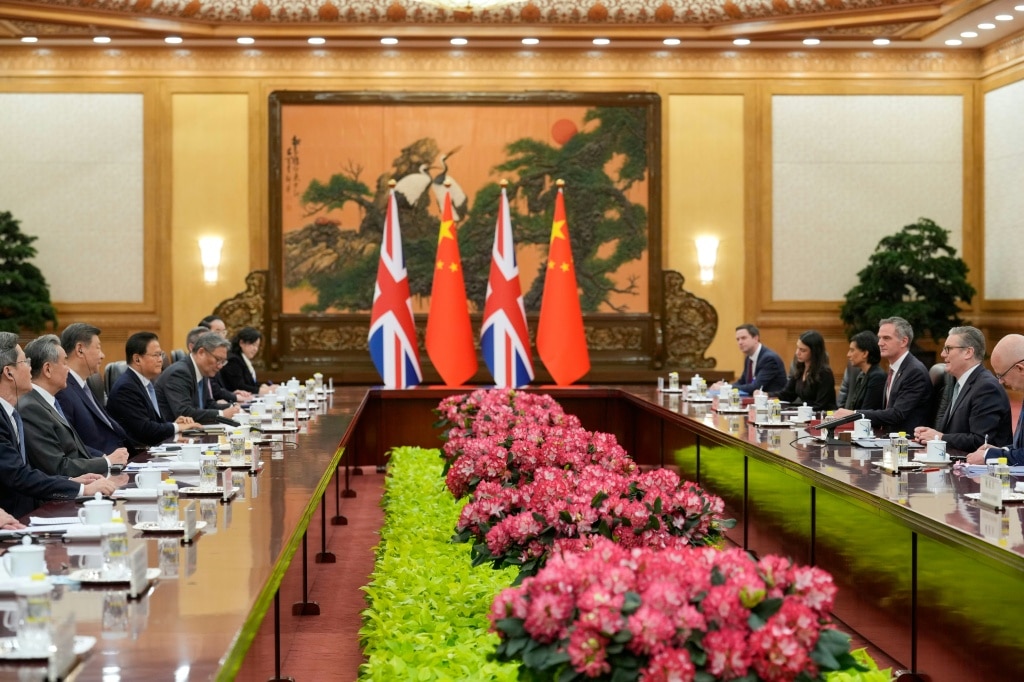
    In a significant diplomatic engagement, British Prime Minister Keir Starmer convened with Chinese President Xi Jinping at Beijing’s Great Hall of the People on January 29, 2026. This high-stakes dialogue marked the first official visit by a UK premier to China since 2018, signaling a potential recalibration of bilateral relations amidst global geopolitical shifts.

    The comprehensive agenda encompassed multifaceted issues including enhanced trade cooperation, national security considerations, and human rights discussions. The meeting occurred against the backdrop of Western nations increasingly seeking Beijing’s support amid uncertainties in traditional alliances, particularly with the United States.

    Prime Minister Starmer’s delegation included approximately sixty prominent business leaders from finance, pharmaceuticals, automotive industries, alongside cultural representatives. This composition underscored Britain’s dual objectives of pursuing economic opportunities while addressing security apprehensions.

    Prior to the presidential meeting, Starmer engaged with Zhao Leji, China’s third-ranking official, who characterized bilateral relations as progressing along ‘the correct track to improvement and development’ despite international turbulence. Subsequent discussions with Premier Li Qiang were scheduled to further elaborate on cooperative frameworks.

    The diplomatic initiative follows Chancellor Rachel Reeves’ earlier trade mission to Beijing, highlighting the Labour government’s strategic priority of stimulating UK economic growth through international partnerships. Notably, both nations prepared to sign a cooperative agreement targeting human smuggling supply chains—a particularly sensitive issue for Starmer’s administration given domestic political pressures.

    Historical context reveals a complex relationship trajectory, from the celebrated ‘Golden Era’ of Sino-British relations a decade ago to subsequent strains following Beijing’s implementation of national security legislation in Hong Kong and suppression of pro-democracy activists. Contemporary friction points include human rights cases such as imprisoned media magnate Jimmy Lai, alleged espionage activities, cyber intrusions, and China’s positioning regarding Russia’s conflict in Ukraine.

    Despite these challenges, China maintains its status as Britain’s third-largest trading partner, though UK exports to the Asian giant witnessed a dramatic 52.6% year-on-year decline in 2025 according to official statistics. Starmer’s itinerary included subsequent visits to Shanghai—China’s financial hub—and a brief stop in Japan for discussions with Prime Minister Sanae Takaichi, illustrating Britain’s broader Indo-Pacific engagement strategy.

    This diplomatic overture occurs concurrently with UK-US relations experiencing unusual strain following former President Trump’s territorial ambitions regarding Greenland and threatened tariffs against NATO allies, further contextualizing Britain’s geopolitical recalculations.

  • Man who exposed human rights abuses in China granted US asylum

    Man who exposed human rights abuses in China granted US asylum

    A United States immigration court has granted political asylum to Chinese national Guan Heng after determining he possessed legitimate grounds to fear persecution upon returning to China. The 38-year-old had clandestinely documented facilities in China’s northwestern Xinjiang region, where international human rights organizations allege over one million ethnic Uyghurs remain involuntarily detained.

    Guan’s legal journey began when he entered the US illegally in 2021 and subsequently filed for asylum. His case encountered complications when he was detained during a mass deportation initiative under the Trump administration in August. Initial plans to deport him to Uganda were abandoned in December following public outcry regarding his situation.

    During Wednesday’s judicial proceedings, Guan testified via video link from a US correctional facility that his motivation for filming was humanitarian rather than strategic. ‘I sympathized with the persecuted Uyghurs,’ he stated when questioned about whether his documentation effort was designed to support an asylum claim.

    The evidentiary footage, published primarily on YouTube after Guan’s departure from China, shows what he characterizes as ‘concentration camps’ in Xinjiang. His circuitous route to the United States included transit through Hong Kong, Ecuador, and the Bahamas before reaching Florida.

    This case unfolds against a backdrop of serious international allegations against China. Multiple nations including the United States, United Kingdom, Canada, and the Netherlands have accused China of committing crimes against humanity and potential genocide against Xinjiang’s Uyghur Muslim population. A 2018 UN human rights committee report cited credible evidence indicating China detained up to one million individuals in ‘counter-extremism centers’ within the heavily restricted region.

    China maintains consistent denial of all human rights abuse allegations, officially characterizing the facilities as ‘re-education camps’ essential for terrorism prevention and Islamist extremism eradication. Meanwhile, exiled Uyghurs continue reporting family members who have disappeared or live under constant surveillance.

    Additional evidence emerged through a 2022 BBC acquisition of police files detailing camp operations, including standard deployment of armed guards and implementation of shoot-to-kill protocols for escape attempts. Camp survivors have provided harrowing accounts of systemic physical, psychological, and sexual torture, with women reporting widespread rape and sexual abuse.

    Guan’s legal representative, Chen Chuangchuang, characterized the case as a ‘textbook example of why asylum should exist,’ emphasizing America’s ‘moral and legal responsibility’ to provide protection. The presiding judge recognized the validity of Guan’s fears, noting his family in China had already faced interrogation, thus establishing his legal eligibility for asylum. The Department of Homeland Security retains the right to appeal within a 30-day window.

  • US Fed keeps interest rate unchanged at 3.5-3.75 pct

    US Fed keeps interest rate unchanged at 3.5-3.75 pct

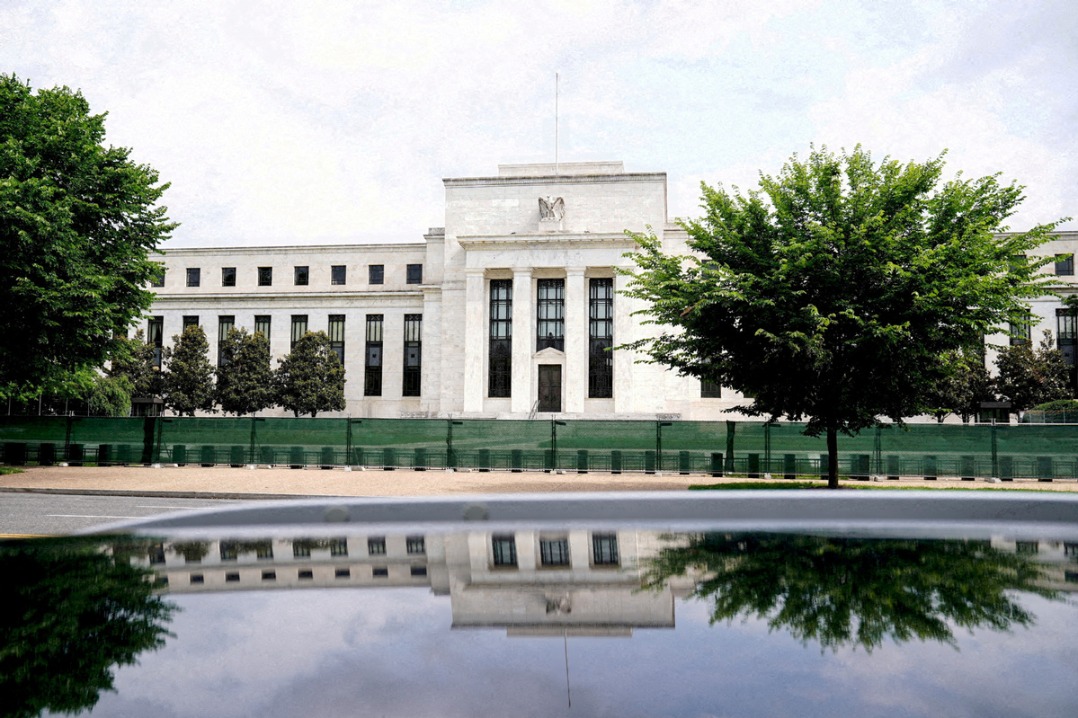
    The U.S. Federal Reserve maintained its benchmark interest rate within the 3.5% to 3.75% range during its inaugural policy meeting of 2026, signaling a period of strategic pause as economists assess the nation’s economic trajectory. This decision, announced on Wednesday from the Marriner S. Eccles Federal Reserve Board building in Washington, D.C., represents a continuation of the central bank’s careful approach to monetary policy following several years of economic turbulence and recovery efforts.

    The rate stabilization comes amid mixed economic indicators, with policymakers carefully balancing concerns about inflation against signs of potential economic softening. The federal funds rate, which influences borrowing costs across the economy including mortgages, credit cards, and business loans, remains at its highest level since the pre-2020 period, reflecting the Fed’s ongoing commitment to price stability.

    Financial markets had widely anticipated this decision, with most analysts predicting the Fed would maintain current rates while gathering additional economic data. The central bank’s statement emphasized a data-dependent approach, noting that future decisions would be guided by incoming information about labor market conditions, inflation pressures, and financial developments.

    This meeting marks the first under the Fed’s 2026 calendar and sets the tone for monetary policy in the coming months. Economists will closely monitor subsequent meetings for signals about potential rate adjustments, with many expecting the Fed to maintain its current stance through at least the first quarter unless economic conditions shift substantially.

  • US Fed holds interest rates, defies Trump tantrums

    US Fed holds interest rates, defies Trump tantrums

    In a decisive move demonstrating institutional independence, the U.S. Federal Reserve maintained its benchmark interest rates unchanged during Wednesday’s policy meeting, keeping the target range for the federal funds rate at 3.50% to 3.75%. This decision comes despite mounting pressure from President Donald Trump, who has repeatedly advocated for more aggressive monetary easing.

    The Federal Open Market Committee (FOMC) justified its position by pointing to sustained economic stability and persistently low unemployment figures that indicate a resilient economy requiring no immediate intervention. This marks a significant departure from the central bank’s recent trend of monetary accommodation, having implemented rate reductions during each of its previous three policy meetings amid concerns about a cooling labor market.

    Analysts interpret this steady-handed approach as evidence of the Fed’s commitment to data-driven decision-making rather than political considerations. The decision reflects confidence in current economic conditions and suggests policymakers see no imminent threats to the ongoing expansion that would warrant additional stimulus measures.

    The move highlights the ongoing tension between the executive branch and the independent Federal Reserve, illustrating the institution’s willingness to maintain its traditional separation from political influence despite unprecedented public criticism from the White House.

  • Dubai gold prices gain Dh115 per gram in a month after reaching record high globally

    Dubai gold prices gain Dh115 per gram in a month after reaching record high globally

    Dubai’s gold market witnessed an unprecedented rally as prices soared to record-breaking levels, with 24K gold reaching Dh635.5 per gram on Wednesday evening. This represents a remarkable increase of Dh115.5 per gram within the first month of 2026 alone, significantly outpacing the entire year’s performance of 2025 when prices closed at Dh520 per gram on December 31.

    The precious metal’s surge extended across all variants, with 22K, 21K, 18K, and 14K gold trading at Dh588.5, Dh564.25, Dh483.5, and Dh377.25 per gram respectively. The global benchmark spot gold surpassed the psychological $5,300 milestone before settling at $5,288.26 per ounce at 8pm UAE time.

    Financial analysts attribute this historic rally to multiple converging factors. Alex Kuptsikevich, Chief Market Analyst at FxPro, noted that the collapse of the USD index enabled gold to break through the $5,300 barrier for the first time in history. “Precious metals act as politically neutral assets,” Kuptsikevich explained. “They respond to White House policy but maintain independence from the direct influences that affect stocks, bonds, and the US dollar.”

    The current market dynamics reveal a significant shift in investment patterns. According to experts, gold is benefiting from dual capital movements: flight from US assets and simultaneous outflows from the cryptocurrency market. This contradicts earlier expectations that cryptocurrency would thrive under potential pro-crypto policies, instead demonstrating gold’s enduring appeal as a politically independent store of value.

    Vijay Valecha, Chief Investment Officer at Century Financial, emphasized that sustained central bank purchasing, combined with increasing investor preference for non-dollar assets, continues to drive strong underlying demand. Despite potential short-term corrections due to overbought conditions, the fundamental outlook remains bullish amid persistent geopolitical tensions, trade conflicts between the US and NATO allies with Canada, stalled Russia-Ukraine peace negotiations, and ongoing tariff uncertainties.

    Adding to the complex economic backdrop, US consumer confidence has plummeted to multi-year lows, further enhancing gold’s traditional role as a hedge against economic volatility, bond market fluctuations, and inflationary pressures. This convergence of factors has created ideal conditions for gold’s spectacular performance, establishing it as the preferred safe-haven asset during current global uncertainties.

  • Boeing expects India, South Asia to add 3,290 jets over next 20 years

    Boeing expects India, South Asia to add 3,290 jets over next 20 years

    In a significant upward revision of its regional forecast, Boeing has projected that airlines across India and South Asia will require 3,290 new commercial aircraft over the next two decades. This substantial increase from the previous estimate of 2,835 jets reflects the extraordinary transformation of the region into one of the world’s most dynamic aviation markets.

    The aerospace giant attributes this accelerated demand to multiple converging factors: robust economic expansion, rapidly growing middle-class populations, and an unprecedented surge of first-time air travelers. This perfect storm of conditions has created an environment where carriers are aggressively modernizing fleets and expanding capacity while airports undergo comprehensive upgrades.

    According to Boeing’s detailed breakdown, the projected fleet composition reveals 2,875 single-aisle aircraft—the workhorses of regional and domestic routes—alongside 395 wide-body jets destined for international expansion. This strategic allocation underscores the dual growth pattern occurring within the market: intensive domestic network development alongside international route expansion.

    Ashwin Naidu, Boeing’s Managing Director of Commercial Marketing for India and South Asia, emphasized the unique nature of this growth cycle: “While many global aviation markets have reached maturation focused primarily on fleet replacement, India represents the opposite phenomenon—explosive organic expansion that requires both new aircraft and infrastructure development.”

    The company specifically highlighted infrastructure challenges, noting that over 30% of India’s aviation network remains concentrated around Delhi and Mumbai, creating operational bottlenecks that must be addressed to sustain growth. This assessment comes as Boeing itself regains industrial momentum, having delivered the most aircraft in 2025 since 2018 and surpassing Airbus in net orders for the first time in seven years.

    Despite this optimistic outlook, the industry continues to face significant headwinds. Supply chain disruptions persist, limiting manufacturers’ ability to capitalize on strong demand and forcing airlines to allocate substantial resources toward maintaining older aircraft until new deliveries can be completed.